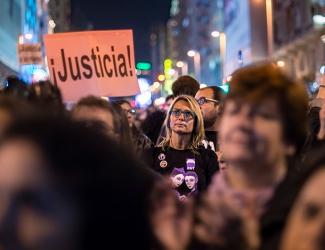
Adolfo Lujan | Flickr (CC BY-NC-ND 2.0)
Mass demonstration in Madrid on International Women's Day
Multitudinaria manifestación en Madrid en el día internacional de la mujer

Priority Areas

Supporting feminist, women’s rights and gender justice movements to thrive, to be a driving force in challenging systems of oppression, and to co-create feminist realities.

Advancing Universal Rights and Justice

Uprooting Fascisms and Fundamentalisms

Across the globe, feminist, women’s rights and gender justice defenders are challenging the agendas of fascist and fundamentalist actors. These oppressive forces target women, persons who are non-conforming in their gender identity, expression and/or sexual orientation, and other oppressed communities.


Discriminatory ideologies are undermining and co-opting our human rights systems and standards,  with the aim of making rights the preserve of only certain groups. In the face of this, the Advancing Universal Rights and Justice (AURJ) initiative promotes the universality of rights - the foundational principle that human rights belong to everyone, no matter who they are, without exception.

We create space for feminist, women’s rights and gender justice movements and allies to recognize, strategize and take collective action to counter the influence and impact of anti-rights actors. We also seek to advance women’s rights and feminist frameworks, norms and proposals, and to protect and promote the universality of rights.


Our actions

Through this initiative, we:

  • Build knowledge: We support feminist, women’s rights and gender justice movements by disseminating and popularizing knowledge and key messages about anti-rights actors, their strategies, and impact in the international human rights systems through AWID’s leadership role in the collaborative platform, the Observatory on the Universality of Rights (OURs)*.
  • Advance feminist agendas: We ally ourselves with partners in international human rights spaces including, the Human Rights Council, the Commission on Population and Development, the Commission on the Status of Women and the UN General Assembly.
  • Create and amplify alternatives: We engage with our members to ensure that international commitments, resolutions and norms reflect and are fed back into organizing in other spaces locally, nationally and regionally.
  • Mobilize solidarity action: We take action alongside women human rights defenders (WHRDs) including trans and intersex defenders and young feminists, working to challenge fundamentalisms and fascisms and call attention to situations of risk.  


Related Content

Snippet - CSW69 - Feminist Solidarity Space - EN

Feminist Solidarity Space

✉️ By registration for larger groups. Drop-ins for smaller groups. Register here

📅 Tuesday, March 11, 2025
🕒 12.00-2.00pm and 4.00-6.00pm EST

🏢 Chef's Kitchen Loft with Terrace, 216 East 45th St 13th Floor New York

Organizer: AWID

Snippet - CSW69 - Challenging the Status Quo - EN

Challenging the Status Quo

A Critical Dialogue on Gender Equality and Human Rights

✉️ Online registration available. Register here

📅 Friday, March 21, 2025
🕒 2.30pm EST

🏢 Church Center of the United Nations, 11th Floor. 777 United Nations Plaza, New York, NY 10017

🎙️AWID speaker: Anissa Daboussi, Manager, Advancing Universal Rights and Justice team

Organizer: IWRAW AP, OURs, AWID, SRI

Snippet - WCFM type of funding- EN

Type of funding:

Be it core funding, programmes & projects or rapid response/ emergency grants.

Body

Snippet WITM survey result - EN

DATA SNAPSHOTS

Where is the money for feminist organizing?

1,174 feminist, women's rights & LGBTQI+ organizations 
from 129 countries participated in AWID's 2024 survey.

The data reveals the state of resourcing for feminist movements between 2021-2023, amid current major defunding trends in aid and philanthropy.

Our collective power knows no boundaries, but our bank accounts do.

Body

Snippet - COP30 - The People's Summit

The People's Summit

The climate summit by movements, for movements.

📅 November 12 - November 16, 2025
📍 Universidade Federal do Pará, Belém

More info here

Struggling for Human Rights, Facing Injustice across LAC

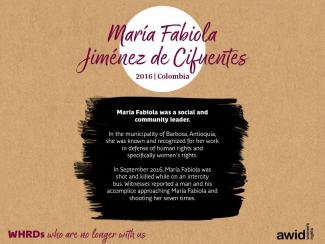
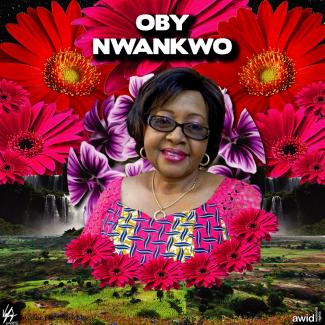
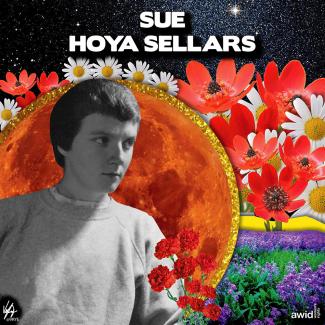
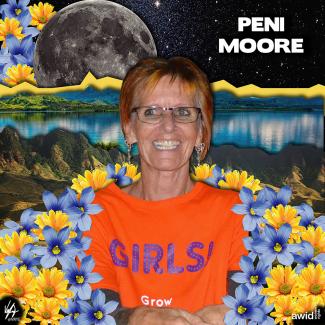
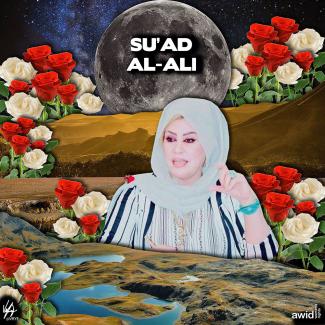
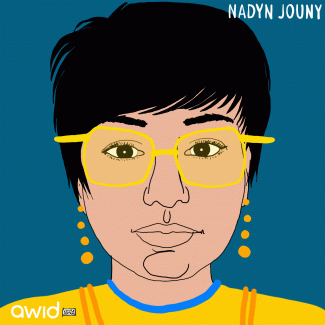
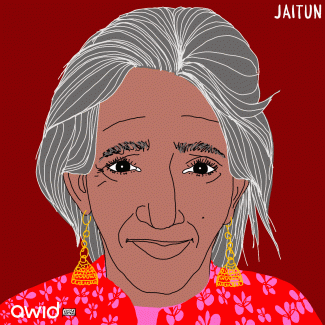
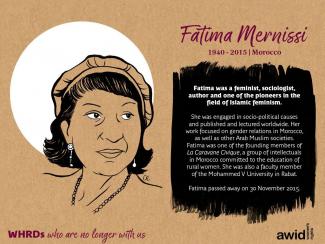
This year we are honoring 19 Women Human Rights Defenders from the Latin America and the Caribbean region. 16 defenders were murdered, including 6 journalists and 4 LGBTQI rights defenders. Please join us in commemorating the life and work of these women by sharing the memes below with your colleagues, friends and networks and by tweeting using the hashtags #WHRDTribute and #16Days.


Please click on each image below to see a larger version and download as a file


Snippet - COP30 - Ecozine card - EN

📰 Feminist Transnational Solidarity: an Antidote to Ecocide

This collaborative zine originated from a series of sharing circles that brought together feminists from around the world throughout 2022. The purpose was to exchange ideas and mutually learn how communities are responding to the climate crisis in various local contexts.

Download the Zine

3. Design your survey

After assessing your organization’s capacity and research goals, you may choose to conduct a survey as one of the methods of data collection for your research analysis.

In this section:

Why conduct a survey?

A survey is an excellent way to gather information on individual organizations to capture trends at a collective level.

For example, one organization’s budget size does not tell you much about a trend in women’s rights funding, but if you know the budgets of 1,000 women’s rights organizations or even 100, you can start to form a picture of the collective state of women’s rights funding.

As you develop your survey questions, keep in mind the research framing that you developed in the previous section.

Remember: Your framing helps you determine what information you are trying to procure through your survey. The data collected from this survey should allow you to accomplish your goals, answer your key questions, and create your final products.

See examples of survey questions in AWID’s Sample WITM Global Survey

Back to top


Identify your survey population

This is an important step – the clearer you are about which populations you want to survey, the more refined your questions will be. 

Depending on your research goals, you may want to create separate surveys for women’s rights organizations, women’s funds and donors. Or you may want to focus your survey on women’s groups and collect interviews for women’s funds and donors, as a survey for each population can be resource-intensive.

The questions you ask women’s groups may be different than ones you would ask women’s funds. If you plan on surveying more than one population, we encourage you to tailor your data collection to each population.

At the same time, some key questions for each population can and should overlap in order to draw comparative analysis from the answers.

Online survey

If you can reach your survey population online, it is useful and efficient to create an online survey.

We recommend two online tools, both which offer free versions:

Survey Gizmo allows you to convert your data for SPSS, a statistical software useful for advanced data analysis

Your data analyst person(s) will be the best person(s) to determine which tool is best for your survey based on staff capacity and analysis plans.

For accessibility, consider making a PDF form version of your survey that you can attach via email. This ensures organizations that have sporadic internet connections or those that pay for it by the minute can download the survey and complete it without requiring a constant online connection.

Paper survey

You may decide that an online approach is not sufficiently accessible or inclusive enough for your popuation.

In this case, you will need to create a paper survey and methods to reach offline populations (through popular events or through post, with pre-stamped envelopes for returning).

Back to top


Create your questions

Make it easy for participants to complete your survey.

1. Short and clear questions

If the questions are confusing or require complex answers, you risk having participants leave the survey unfinished or providing answers that are unusable for your analysis.

Ensure your questions only ask for one item of information at a time.

For example:

  • What is your organization’s budget this year?
    Easy to answer: participant can easily locate this information for their organization, and it is only asking for one item of information.
  • What percentage of your budget have you identified as likely sources for funding for your organization, but are still unconfirmed? 
    Confusing and difficult to answer: are you asking for a list of unconfirmed funding sources or percentage of funding that is likely but unconfirmed?
    This information is difficult to obtain: the respondent will have to calculate percentages, which they may not have on hand. This increases the risk that they will not complete the survey.

2. Simple and universal language

Many words and acronyms that are familiar to you may be unknown to survey participants, such as “resource mobilization”, “WHRD”, and “M&E”, so be sure to choose more universal language to express your questions.

If you must use industry lingo – phrases and words common to your colleagues but not widely known – then providing a definition will make your survey questions easier to understand.

Be sure to spell out any acronyms you use. For example, if you use WHRD, spell it out as “Women’s Human Rights Defenders".

3. "Closed” and "Open" questions

Closed questions:

Only one response is possible (such as “yes,” “no” or a number). Survey participants cannot answer in their own words and they typically have to choose from predetermined categories that you created or enter in a specific number. Responses to closed questions are easier to measure collectively and are often quantitative.

Example of a closed question: What is your organization’s budget?

Open-ended questions:

These are qualitative questions that are often descriptive. Respondents answer these questions entirely in their own words. These are more suitable for interviews than surveys.

They are harder to analyze at a collective level as compared to closed-end questions, especially if your survey sample is large. However, by making open-ended questions very specific, you will make it easier to analyze the responses.

Whenever possible, design your survey questions so that participants must select from a list of options instead of offering open-ended questions. This will save a lot of data cleaning and analysis time.

Example of open-ended question: What specific challenges did you face in fundraising this year?

Familiarize yourself with different types of questions

There are several ways to ask closed-ended questions. Here are some examples you can review and determine what fits best for the type of data you want to collect:

  • Multiple choice questions: the participant can select one or several options you pre-entered
  • Rating scales: the participant gives a note on a scale you pre-determine.
    For this type of questions, make sure to clearly state what the bottom and the top of your scale mean
  • Ranking: the participant will choose and organize a certain number of answers you pre-determine.

View more question types

4. Logical organization

If you plan to conduct this research at regular intervals (such as every two years), we recommend developing a baseline survey that you can repeat in order to track trends over time.

Set 1: Screening questions

Screening questions will determine the participant’s eligibility for the survey.

The online survey options we provided allow you to end the survey if respondents do not meet your eligibility criteria. Instead of completing the survey, they will be directed to a page that thanks them for their interest but explains that this survey is intended for a different type of respondent.

For example, you only want women’s rights groups in a given location to take this survey. The screening questions can determine the location of the participant and prevent respondents from other locations from continuing the survey.

Set 2: Standardized, basic demographic questions

These questions would collect data specific to the respondent, such as name and location of organization. These may overlap with your screening questions.

If resources permit, you can store these answers on a database and only ask these questions the first year an organization participates in your survey.

This way when the survey is repeated in future years, it is faster for organizations to complete the entire survey, increasing chances of completion.

Set 3: Standardized and mandatory funding questions

These questions will allow you to track income and funding sustainability. Conducted every year or every other year, this allows you to capture trends across time.

Set 4: Special issues questions

These questions account for current context. They can refer to a changing political or economic climate. They can be non-mandatory funding questions, such as attitudes towards fundraising.

For example, AWID’s 2011 WITM Global Survey asked questions on the new “women & girls” investment trend from the private sector.

5. Less than 20 mins

The shorter, the better: your survey shouldn’t exceed 20 minutes to ensure completion and respect respondents’ time.

It is natural to get excited and carried away by all the types of questions that could be asked and all the information that could be obtained. However, long surveys will lead to fatigue and abandonment from participants or loss of connection between participants and your organization.

Every additional question in your survey will add to your analytical burden once the survey is complete.

6. Simple and exciting

  • Let participants know the estimated time to complete the survey before they begin
  • Specify what information they will need to complete it so they have it on hand (for example, if you are asking for financial data, say it at the outset so they can prepare)
  • Request information that organizations can easily access and provide – for example, requesting financial information from 20 years ago may be difficult (or impossible) for organizations to provide.
  • Create an incentive to convince your survey population to complete the survey, such as a prize raffle. For example, AWID held a raffle draw for a round-trip flight to the AWID Forum as a prize for completing our 2011 WITM Global Survey.

General tips

  • Ask for exact budgets instead of offering a range (in our experience, specific amounts are more useful in analysis).
  • Specify currency! If necessary, ask everyone to convert their answers to the same currency or ask survey takers to clearly state the currency they are using in their financial answers.
  • Ensure you collect enough demographic information on each organization to contextualize results and draw out nuanced trends.
    For example, if you are analyzing WITM for a particular country, it will be useful to know what region each organization is from or at what level (rural, urban, national, local) they work in order to capture important trends such as the availability of greater funding for urban groups or specific issues.

Back to top


Test and translate

1. Your advisors

Involving your partners from the start will allow you to build deeper relationships and ensure more inclusive, higher quality research.

They will provide feedback on your draft survey, pilot test the survey, and review your draft research analysis drawn from your survey results and other data collection.

These advisors will also publicize the survey to their audiences once it is ready for release. If you plan on having the survey in multiple languages, ensure you have partners who use those languages.

If you decide to do both survey and interviews for your data collection, your advisor-partners on your survey design can also double as interviewees for your interview data collection process.

2. Draft and test

After your survey draft is complete, test it with your partners before opening it up to your respondents. This will allow you to catch and adjust any technical glitches or confusing questions in the survey.

It will also give you a realistic idea of the time it takes to take the survey.

3. Translation

Once the survey is finalized and tested in your native language, it can be translated.

Be sure to test the translated versions of your survey as well. At least some of your pilot testers should be native speakers of the translated languages to ensure clarity.

Back to top


Target the right population

1. Sample size

Your survey sample size is the number of participants that complete your survey.

Your survey sample should reflect the qualities of the larger population you intend to analyze.

For example: you would like to analyze the millions of women’s rights groups in Valyria but you lack the time and resources to survey every single one.
Instead, you can survey only 500 of the Valyrian women’s rights groups – a sample size - to represent the qualities of all the women’s groups in the region.

Recommended sample size

  • 100 survey participants or less tend to be unreliable
  • 250 to 400 will yield results of reasonable accuracy
  • over 400 are fully adequate and will also allow accurate analysis of subgroups (for example, age groups).

Although it is not necessary to determine your exact sample size before you launch your survey, having a size in mind will allow you to determine when you have reached enough participants or whether you should extend the dates that the survey is available, in case you feel that you have not reached enough people.

2. Degree of participation

Even more important than size of a sample is the degree to which all members of the target population are able to participate in a survey.

If large or important segments of the population are systematically excluded (whether due to language, accessibility, timing, database problems, internet access or another factor) it becomes impossible to accurately assess the statistical reliability of the survey data.

In our example: you need to ensure all women’s groups in Valyria had the opportunity to participate in the survey.

If a segment of women’s groups in Valyria do not use internet, and you only pull participants for your sample through online methods, then you are missing an important segment when you have your final sample, thus it is not representative of all women’s groups in Valyria.

You cannot accurately draw conclusions on your data if segments of the population are missing in your sample size; and ensuring a representative sample allows you to avoid this mistake.

3. Database and contact list

To gain an idea of what the makeup of women’s groups for your area of research (region, population, issue, etc) looks like, it may be useful to look at databases.

  • Some countries may have databases of all registered nonprofits, which will allow you to know your full population.
  • If databases are not available or useful, you can generate your own list of groups in your area of research. Start with networks and coalitions, ask them to refer you to additional groups not in the membership lists.

By understanding the overall makeup of women’s groups that you plan to target, you can have an idea of what you want your sample to look like - it should be like a mini-version of the larger population.

After participants have taken your survey, you can then gauge if the resulting population you reached (your sample size) matches the makeup of the larger population. If it doesn’t match, you may then decide to do outreach to segments you believe are missing or extend the window period that your survey is open.

Do not be paralyzed if you are unsure of how representative your sample size is – do your best to spread your survey as far and wide as possible.

Back to top


Previous step

2. Frame your research

Next step

4. Collect and analyze your data


Estimated time:
• 2 - 3 months
People needed:
• 1 or more Research person(s)
• Translator(s), if offering survey in multiple languages
• 1 or more Person(s) to assist with publicizing survey to target population
• 1 or more Data analysis person(s)
Resources needed:
• List of desired advisors: organizations, donors and activists
• Optional: an incentive prize to persuade people to complete your survey
• Optional: an incentive for your advisors
Resources available:
Survey Monkey or Survey Gizmo
Sample of WITM Global Survey

Previous step

2. Frame your research

Next step

4. Collect and analyze your data


Ready to Go? Worksheet

Download the toolkit in PDF

Snippet 8 - What's happening at HRC61 Intro

Alternative framework for economic governance

Context

The current global economic crisis provides stark evidence that the economic policies of the last 3 decades have not been working.

The devastation that the crisis has wrought on the most vulnerable households in the Global North and Global South is a reminder that the formulation of economic policy and the realization of human rights (economic, social, political, civil and cultural) have for too long been divorced from one another. Economic policy and human rights do not have to be opposing forces, but can exist symbiotically.

Macroeconomic policies affect the operation of the economy as a whole, shaping the availability and distribution of resources. Within this context, fiscal and monetary policies are key.

Definition

  • Fiscal policy refers to both public revenue and public expenditure, and the relationships between them as expressed in the government budget.
  • Monetary policy includes policies on interest and exchange rates and the money supply, as well as the regulation of the financial sector.
  • Macroeconomic policies are implemented using instruments such as taxation, government spending, and control over the supply of money and credit.

These policies affect key prices such as interest and exchange rates that directly influence, among other things, the level of employment, access to affordable credit, and the housing market.

Applying a human rights framework to macroeconomic policy allows States to better comply with their obligation to respect, protect, and fulfill economic and social rights. Human rights are internationally agreed-upon universal standards. These legal norms are articulated in United Nations treaties including, the Universal Declaration of Human Rights (UDHR), the International Covenant on Civil and Political Rights (ICCPR), and the International Covenant on Economic, Social and Cultural Rights (ICESCR).

Article 1 of the UDHR states that, “All human beings are born free and equal in dignity and rights.”

Although the UDHR was written about six decades ago its relevance is enduring. Many of the ideas address concerns and critical issues that people continue to face globally. Issues regarding inhuman punishment (Art. 5), discrimination (Art. 7), property ownership (Art. 17), equal pay for equal work (Art. 23/2), and access to education (Art. 26/1) are pertinent matters in countries South and North of the equator.

More specifically, States have an obligation under international law to respect, protect and fulfill human rights, including the economic and social rights of people within their jurisdiction. This is particularly relevant now given the financial crisis. In the U.S., regulation is skewed in favor of certain interests. The failure to extend government’s supervisory role in the context of social and economic change is a failure with regard to the obligation to protect human rights.

Feminist perspective

States should abide by key human rights principles to achieve economic and social rights. Some of the principles have potentially important implications for governance of financial institutions and markets, yet these possibilities have been underexplored.

Economic and social rights have a concrete institutional and legal grounding. Global declarations, international treaties, covenants, and, in a number of cases, national constitutions have incorporated aspects of the economic and social rights framework—providing an institutional infrastructure in national and international law.

Some have suggested that a consideration of global justice may not be a useful pursuit because of the institutional complexities involved. However, this does not get around that fact that global institutions already have an impact on social justice, both positive and negative.

It is useful to tease out the implications that elements of alternative frameworks have for economic governance, specifically those supported by existing institutions. Economic and social rights represent one such concrete framework. The framework is an evolving one, and ongoing discussion and deliberation is necessary to address underdeveloped areas and potential deficiencies.


Learn more about this proposition

This section is based on CWGL’s blog “Applying a Human Rights Framework to Macroeconomic Policies” (2012).

Part of our series of


  Feminist Propositions for a Just Economy

Protection of the Family

The Issue

Over the past few years, a troubling new trend at the international human rights level is being observed, where discourses on ‘protecting the family’ are being employed to defend violations committed against family members, to bolster and justify impunity, and to restrict equal rights within and to family life.

The campaign to "Protect the Family" is driven by ultra-conservative efforts to impose "traditional" and patriarchal interpretations of the family, and to move rights out of the hands of family members and into the institution of ‘the family’.

“Protection of the Family” efforts stem from:

  • rising traditionalism,
  • rising cultural, social and religious conservatism and
  • sentiment hostile to women’s human rights, sexual rights, child rights and the rights of persons with non-normative gender identities and sexual orientations.

Since 2014, a group of states have been operating as a bloc in human rights spaces under the name “Group of Friends of the Family”, and resolutions on “Protection of the Family” have been successfully passed every year since 2014.

This agenda has spread beyond the Human Rights Council. We have seen regressive language on “the family” being introduced at the Commission on the Status of Women, and attempts made to introduce it in negotiations on the Sustainable Development Goals.


Our Approach

AWID works with partners and allies to jointly resist “Protection of the Family” and other regressive agendas, and to uphold the universality of human rights.

In response to the increased influence of regressive actors in human rights spaces, AWID joined allies to form the Observatory on the Universality of Rights (OURs).  OURs is a collaborative project that monitors, analyzes, and shares information on anti-rights initiatives like  “Protection of the Family”.

Rights at Risk, the first OURs report, charts a map of the actors making up the global anti-rights lobby, identifies their key discourses and strategies, and the effect they are having on our human rights.   

The report outlines “Protection of the Family” as an agenda that has fostered collaboration across a broad range of regressive actors at the UN.  It describes it as: “a strategic framework that houses “multiple patriarchal and anti-rights positions, where the framework, in turn, aims to justify and institutionalize these positions.”


Related Content

Género y discapacidad: la lucha contra la discriminación en Senegal

Género y discapacidad: la lucha contra la discriminación en Senegal

La organización Vie Féminine et Handicap [vida femenina y discapacidad] se afilió a AWID en el año 2008. La Presidenta de la organización, Ndoye Kane, afirma que esto se hizo  « con el fin de defender mejor nuestras ideas, mejorar la concientización  sobre la discriminación experimentada por las mujeres que viven con discapacidad en África y para dar mayor visibilidad a nuestro trabajo». 


Tener en cuenta las necesidades específicas de las mujeres que viven con discapacidad

Vie Féminine et Handicap comenzó a operar en 2008 y su misión es luchar contra la pobreza que sufren las mujeres que viven con discapacidad en Senegal y en todo el mundo –aunque   especialmente en el continente africano. En su visión, la discapacidad dejar de ser una barrera para la dignidad o el bienestar de las mujeres. Los principales objetivos de la organización son la lucha contra la pobreza, las infecciones de transmisión sexual y el sida entre las mujeres que viven con diversidad funcional, fortaleciendo su acceso a las nuevas tecnologías de la información.

Vie Féminine et Handicap se creó para abordar cuestiones relevantes a las  mujeres con diversidad funcional — desde una perspectiva que toma en cuenta sus necesidades específicas como mujeres y personas que viven con una discapacidad —;   para garantizar que su situación económica evoluciona de manera positiva;  y para mejorar la sensibilidad social a temas relacionados con la discapacidad, eliminando los prejuicios negativos.

La organización cuenta con 15 integrantes y trabaja, principalmente,  en los departamentos de Pikine y Guédiawaye de la región de Dakar. Su tarea incluye crear conciencia y capacitar a mujeres que viven con diversidad funcional;  y también hacer incidencia con tomadores de decisión por los derechos humanos de las mujeres que viven con discapacidad, su empoderamiento económico y su salud sexual y reproductiva. «Creamos conciencia sobre el tema de la diversidad funcional en las comunidades, invitando a las autoridades, a la juventud y a las personas sin discapacidades, porque en Senegal y en el contexto africano hay, por lo general, muchos prejuicios negativos en torno a las capacidades diferentes. También participamos en conferencias regionales e internacionales para hablar de la situación de las mujeres discapacitadas en África y en el mundo; y para alinear mejor nuestras estrategias», subraya Kane.

«Sin solidaridad, sin una comprensión de que la lucha que nosotras lideramos no es para una sola organización de personas discapacitadas, sino para todas, nunca lograremos ningún resultado. Cada organización de personas con diversidad funcional debe comprender que la lucha que estamos librando es más importante que la competencia y que debemos avanzar juntas para seguir obteniendo resultados duraderos.», explicó Ndoya Kane,  en el 2010 en un informe de AWID.

Recursos combinados y el financiamiento autónomo de la membresía

En febrero de 2010, la organización creó un fondo de autofinanciamiento,  que combina los aportes de su membresía para que cada integrante financie pequeños proyectos personales y para iniciar actividades de generación de ingresos, particularmente bajo la forma de pequeños negocios. La idea de crear este fondo surgió de la propia membresía –un  grupo vulnerable con recursos económicos limitados y para  el que resulta casi imposible acceder al crédito.

Un ejemplo de este trabajo es la historia de Marétou Dio, quien vive en Guédiawaye: el fondo le permitió instalar un puesto en el mercado de su comunidad y vender productos alimenticios. «Ahora hay mujeres que se están sumando a nuestro fondo autofinanciado para obtener crédito y costear sus actividades», indica Ndoya Kane.

«Las conversaciones grupales son todavía más importantes porque  abren la oportunidad de reunirnos con otras mujeres que viven con discapacidad y  generar relaciones de confianza para hablar cómodamente sobre los problemas que nosotras enfrentamos. Decidimos colectivamente cuáles son los desafíos que afrontamos e intentamos traer especialistas para abordarlos», explica Kane.

Source
AWID

Vie Féminine et Handicap : lutter contre les discriminations au Sénégal

Vie Féminine et Handicap : lutter contre les discriminations au Sénégal

L’association Vie Féminine et Handicap est devenue membre de l’AWID en 2008 « pour mieux défendre nos idées, mieux sensibiliser sur les discriminations dont les femmes en situation de handicap sont victimes en Afrique et offrir une meilleure visibilité de nos actions », confie la Présidente de l’association, Ndoya Kane. 


Prendre en compte les besoins spécifiques des femmes en situation de handicap 

Créée en 2008, Vie Féminine et Handicap se donne pour mission de lutter contre la pauvreté des femmes en situation de handicap au Sénégal et de façon plus globale sur tout le continent africain. Dans le cadre d’une vision où le handicap ne devrait pas constituer un frein à la dignité et au bien-être des femmes, l’association se donne pour objectifs principaux de lutter contre la pauvreté, les Infections Sexuellement Transmissibles et le Sida chez les femmes en situation de handicap, tout en renforçant leur accès aux nouvelles technologies de l’information. 

Vie Féminine et Handicap a été créée pour que les problématiques des femmes handicapées soient gérées à partir d’une perspective qui prenne en compte leurs besoins spécifiques, liés à la fois à leurs statuts de femme et de personne handicapée, et pour que leur situation économique évolue de façon positive et que la société soit mieux sensibilisée aux questions du handicap sans préjugés négatifs. 
Constituée d’une cinquantaine de membres et agissant principalement sur les départements de Pikine et de Guédiawaye dans la région de Dakar, Vie Féminine et Handicap entreprend des activités de sensibilisation et de formation des femmes en situation de handicap ainsi que de plaidoyer envers les autorités, qui portent à la fois sur la question de l’exercice des droits humains des femmes handicapées, leur pouvoir économique et leur santé sexuelle et reproductive.  « Nous organisons des activités de sensibilisation sur le handicap dans les quartiers en y invitant les autorités communales, les jeunes et les personnes « valides » car le handicap est entouré de beaucoup de préjugés négatifs dans la culture sénégalaise et africaine en général. Nous participons aussi à des conférences aux niveaux africain et international pour débattre de la situation des femmes handicapées en Afrique et dans le monde pour une meilleure harmonisation de nos stratégies », souligne Ndoya Kane.

« Sans faire preuve de solidarité, sans comprendre que notre combat n’est pas mené pour défendre les intérêts d’une seule organisation de personnes handicapées, mais de tou-te-s, nous n’obtiendrons jamais de résultats. Toutes les organisations de personnes handicapées doivent comprendre que le combat que nous menons est plus important que les rivalités internes et que nous devons avancer ensemble pour réussir à obtenir des résultats durables », expliquait Ndoya Kane en 2010 dans un rapport de l'AWID.

Mutualisation des ressources et autofinancement des membres

L’association a mis en place depuis février 2010 une caisse d’autofinancement (CAF), qui consiste à mettre en commun les cotisations des membres pour permettre à chacune de disposer de financements de petits projets personnels et d’initier des activités génératrices de revenus pour ses membres, axées notamment autour du petit commerce. L’idée de créer cette CAF est née de la volonté des membres elles-mêmes, qui constituent un groupe très précaire disposant de faibles ressources économiques et dont l’accès aux crédits formels s’avère par conséquent impossible.

La CAF a par exemple permis à Marétou Diop, une habitante de Guédiawaye, d’ouvrir une boutique dans le marché de son quartier pour y vendre des denrées alimentaires. « Maintenant, les autres femmes viennent adhérer à notre Caisse d’Autofinancement pour trouver du crédit et financer leurs activités », souligne Ndoya Kane. 

« Les discussions de groupe sont d’autant plus importantes qu’elles permettent de nous retrouver entre femmes handicapées et renforcent la confiance chez certaines pour parler de leur condition de femme en toute aisance. Nous choisissons ensemble quel problème existe et essayons d’avoir recours à des spécialistes pour nous entretenir sur la question », raconte Ndoya Kane.

Source
AWID

Feminine Life and Disability: Fighting against the discrimination in Senegal

Feminine Life and Disability: Fighting against the discrimination in Senegal

The organization Vie Féminine et Handicap (Feminine Life and Disability) became an AWID member in 2008 “to better defend our ideas, to better promote awareness of the discrimination faced by women living with disability in Africa, and to increase visibility of our work,” says President of the organization, Ndoya Kane. 


Considering the specific needs of women living with disability

Launched in 2008, the mission of Vie Féminine et Handicap is to fight against poverty among women living with disability in Senegal and globally, but especially across the African continent. With a vision where disability is no longer a barrier to a woman’s dignity or well-being, the main objectives of the organization are to combat poverty, sexually transmitted infections, and AIDS among women living with disability, while strengthening their access to new information technologies.    

Vie Féminine et Handicap was created to address the issues of disabled women from a perspective that considers their specific needs, related to both their status as a woman and as a person living with a disability – and to ensure that their economic situation evolves in a positive way and to better sensitize society to disability issues without the negative prejudice. 

Comprised of some fifteen members and working mainly across the Pikine and Guédiawaye departments in the Dakar region, the work of Vie Féminine et Handicap includes awareness raising and training for women living with disability, as well as advocacy with decision-makers around the human rights of women living with disability, their economic empowerment, and their sexual and reproductive health. “We do awareness raising on the issue of disability in neighbourhoods by inviting community authorities, youth and ‘able-bodied’ people, because disability is surrounded by a lot of negative prejudice in the Senegalese and African context in general. We also participate in conferences at the African and International level to discuss the situation of disabled women in Africa and around the world to better align our strategies,” highlights Kane. 

 “Without solidarity, without an understanding that the fight that we lead is not done in the interest of a sole disabled people’s organization, but in the interest of all, we will never achieve any results. Each disabled people’s organization to understand that the fight that we lead outweighs the competition and that we have to go forward together to succeed in getting long lasting results,” explained Ndoya Kane in 2010, in a repport produced by AWID

Pooling resources and the self-financing of members

Since February 2010, the organization has established a self-financing fund, which consists of pooling member contributions to allow each one to finance small personal projects and to initiate income-generating activities for its members, mainly focused on small business. The idea to create the fund originated from our members themselves, a vulnerable group with limited economic resources and for which access to credit is nearly impossible.

The Fund for example allowed Marétou Diop, a resident of Guédiawaye, to open a shop in her neighbourhood market and sell foodstuffs. “Now the other women are joining our self-financing fund to receive credit and finance their activities,” highlights Ndoya Kane.  

“Group discussions are even more important as they give us the opportunity to meet among women living with disability and build confidence in some to comfortably talk about the issues they face as women. Together we decide which challenges exist and try to engage specialists in addressing the issue,” says Kane.    

Source
AWID

Defending our land and ourselves from corporate power

These industries 'extract' raw materials from the Earth: mining, timber, gas, oil are some examples

This economical model exploits nature and as it intensifies, so does the inequality between global North with their large corporations, and the global South, where resources are extracted.

Land contamination, water pollution, environmental damage, communities displaced are only some of the consequences.

Find more on our report on EXTRACTIVE INDUSTRIES

There are sustainable alternatives for the environment and women's rights.


Download your faciliation guide:

"A Feminist Approach to Understanding Illicit Financial Flows and Redirecting Global Wealth"

IFF Toolkit

Download your facilitation guide in English

This Guide is also available in Spanish and Russian


Thanks to the co-creators of this facilitation guide:

  • Daniela Fonkatz and Ana Ines Abelenda (AWID)
  • Zenaida Joachim (Mesoamericanas en Resistencia - El Salvador)
  • Olga Shnyrova (Ivanovo Center for Gender Studies - Russia)
  • Leah Eryenyu (Akina Mama Wa Afrika - Uganda)
  • Daryl Leyesa (Oriang and PKKK/National Rural Women Congress - the Philippines)