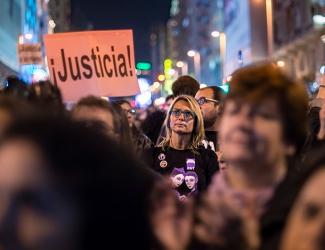
Mass demonstration in Madrid on International Women's Day
Multitudinaria manifestación en Madrid en el día internacional de la mujer
Priority Areas
Supporting feminist, women’s rights and gender justice movements to thrive, to be a driving force in challenging systems of oppression, and to co-create feminist realities.
Across the globe, feminist, women’s rights and gender justice defenders are challenging the agendas of fascist and fundamentalist actors. These oppressive forces target women, persons who are non-conforming in their gender identity, expression and/or sexual orientation, and other oppressed communities.
Discriminatory ideologies are undermining and co-opting our human rights systems and standards, with the aim of making rights the preserve of only certain groups. In the face of this, the Advancing Universal Rights and Justice (AURJ) initiative promotes the universality of rights - the foundational principle that human rights belong to everyone, no matter who they are, without exception.
We create space for feminist, women’s rights and gender justice movements and allies to recognize, strategize and take collective action to counter the influence and impact of anti-rights actors. We also seek to advance women’s rights and feminist frameworks, norms and proposals, and to protect and promote the universality of rights.
Our actions
Through this initiative, we:
Build knowledge: We support feminist, women’s rights and gender justice movements by disseminating and popularizing knowledge and key messages about anti-rights actors, their strategies, and impact in the international human rights systems through AWID’s leadership role in the collaborative platform, the Observatory on the Universality of Rights (OURs)*.
Advance feminist agendas: We ally ourselves with partners in international human rights spaces including, the Human Rights Council, the Commission on Population and Development, the Commission on the Status of Women and the UN General Assembly.
Create and amplify alternatives: We engage with our members to ensure that international commitments, resolutions and norms reflect and are fed back into organizing in other spaces locally, nationally and regionally.
Mobilize solidarity action: We take action alongside women human rights defenders (WHRDs) including trans and intersex defenders and young feminists, working to challenge fundamentalisms and fascisms and call attention to situations of risk.
Related Content
WITM - Refreshed DATA SNAPSHOTS - EN
Data Snapshots
Our collective power, wisdom, and commitment have no boundaries, but our bank accounts do.
Data snapshots are based on the responses of 1,174 feminist, women’s rights, LGBTQI+, and allied organizations (hereafter referred to as “feminist and women's rights organizations”) from 128 countries to the Where is the Money for Feminist Organizing? survey.
Explore these projects put together by AWID teams to promote feminist advocacy and perspectives.
Snippet - COP30 - Feminist Demands Title
Feminist Demands for COP30
Snippet 3 - What's happening at HRC61 Intro
Expected Resolutions Relevant to Gender and Sexuality
The rights of the child (EU & GRULAC)
Birth registration and the right of all to recognition as a person before the law (Mexico, Turkiye)
Adequate housing as a component of the right to an adequate standard of living and the right to non-discrimination in this context (Germany, Finland)
Negative impact of unilateral coercive measures on the enjoyment of human rights (Non-Aligned Movement)
Effects of foreign debt and other international financial obligations on the enjoyment of human rights (mandate renewal) (Cuba)
Rights of persons with disabilities, digital technologies, and inclusive disability infrastructure (Mexico, New Zealand)
Rights of the child (focus: Children in armed conflict) (Uruguay on behalf of a group of States from Latin America and the Caribbean and European Union)
Right to work (Egypt, Greece)
Right to food (Cuba)
Promotion of the enjoyment of cultural rights of all and respect for cultural diversity (Cuba)
Human rights situation in the Occupied Palestinian Territory, including East Jerusalem and the obligation to ensure accountability and justice (Organisation of Islamic Cooperation)
Right of the Palestinian people to self-determination (Organisation of Islamic Cooperation)
Israeli settlements in the Occupied Palestinian Territory, including East Jerusalem and in the occupied Syrian Golan (Organisation of Islamic Cooperation)
Snippet - WD2026 - Movement Hubs Intro - EN
Movement Hubs are locally organized spaces where AWID member organizations come together to engage with global feminist processes from their own territories. The Hubs in Fiji and Georgia are organizing workshops and dialogue that connect to conversations at Women Deliver around feminist resourcing, intersectional solidarity, climate justice and collective care. Check out their program and follow AWID on social media for live updates!
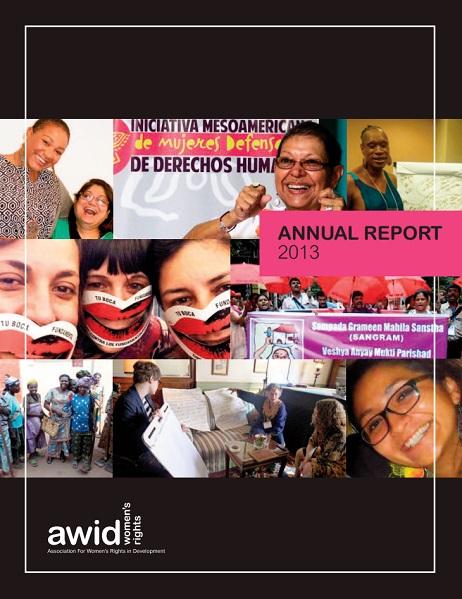
Our 2013 Annual Report provides key highlights of our work during the year to contribute to the advancement of women’s rights and gender equality worldwide.
2013 marked the beginning of our 2013-2016 Strategic Plan, developed in response to the current global context. This report provides highlights of our analysis of the global context, how we position ourselves as a global feminist membership organization in this context, the outcomes we seek to achieve, and how our work is organized to achieve these outcomes.
Organizing creatively, facing an increasing threat
Young feminist activists play a critical role in women’s rights organizations and movements worldwide by bringing up new issues that feminists face today. Their strength, creativity and adaptability are vital to the sustainability of feminist organizing.
At the same time, they face specific impediments to their activism such as limited access to funding and support, lack of capacity-building opportunities, and a significant increase of attacks on young women human rights defenders. This creates a lack of visibility that makes more difficult their inclusion and effective participation within women’s rights movements.
A multigenerational approach
AWID’s young feminist activism program was created to make sure the voices of young women are heard and reflected in feminist discourse. We want to ensure that young feminists have better access to funding, capacity-building opportunities and international processes. In addition to supporting young feminists directly, we are also working with women’s rights activists of all ages on practical models and strategies for effective multigenerational organizing.
Our Actions
We want young feminist activists to play a role in decision-making affecting their rights by:
Fostering community and sharing information through the Young Feminist Wire. Recognizing the importance of online media for the work of young feminists, our team launched the Young Feminist Wire in May 2010 to share information, build capacity through online webinars and e-discussions, and encourage community building.
Researching and building knowledge on young feminist activism, to increase the visibility and impact of young feminist activism within and across women’s rights movements and other key actors such as donors.
Promoting more effective multigenerational organizing, exploring better ways to work together.
Supporting young feminists to engage in global development processes such as those within the United Nations
Collaboration across all of AWID’s priority areas, including the Forum, to ensure young feminists’ key contributions, perspectives, needs and activism are reflected in debates, policies and programs affecting them.
Nana Adjoa Sifa Amponsah, una joven de Ghana, sueña con «una sociedad en la que las jóvenes que se gradúan sientan orgullo de ser 'agroemprendedoras' a cargo de emprendimientos agrícolas y en la que haya una buena relación precio-calidad para los productos de la agricultura a pequeña escala».
Nana confía en que las agroemprendedoras lograrán influir sobre la economía de Ghana e impulsarla, «produciendo alimentos saludables y campesinas ricas».
«Creo firmemente que si hay un sector que puede ayudar a reducir cinco de los problemas más urgentes del mundo —desempleo, inseguridad alimentaria, pobreza, hambre y desnutrición— es la agricultura».
Emprendedora social certificada por el Institute of Social Entrepreneurs [Instituto de Emprendedores Sociales, ahora conocido como Kanthari], Nana tiene experiencia directa de campo en seguridad alimentaria, gestión estratégica y agricultura adquirida en África, Asia y Europa. Con los años, Nana se ha convertido en una experta en gestión de proyectos y ha generado muchos proyectos y programas que ayudan a generar cambios duraderos. También está capacitada en movilización de recursos y en planificación de eventos y proyectos.
En la actualidad, Nana es la Presidenta de Direct Impact Foundation [Fundación Impacto Directo], una organización con sede en Ghana que se propone cerrar la brecha educativa entre las zonas rurales y las urbanas. También es la creadora de Guzakuza, un emprendimiento social que combina la agricultura y el espíritu emprendedor para generar mentalidades agroemprendedoras. Guzakuza es una palabra suajili que significa «cultivar para cambiar vidas». Para Nana, se trata de un enfoque para hacer frente a los problemas más urgentes, al que por su sigla en inglés ella llama ‘la solución ACT’ (incidencia , cooperativas y capacitación).
«La pregunta más importante que hago todo el tiempo es ¿cuál sería el cambio más profundo? ¿Cómo vamos a alimentar a una población que se estima será de 9 mil millones en 2050 si somos todas abogadas, médicas e ingenieras?»
Nana está afiliada a AWID desde comienzos de 2014. Le gusta viajar, escribir y cocinar, y le apasionan la fotografía y la agricultura.
Escucha su “Dream Speech” [Discurso sobre mi sueño] (en inglés) en el que podrás encontrar más información sobre la ‘solución ACT’.
Nana Adjoa Sifa Amponsah, une jeune femme ghanéenne, rêve d'une « société dans laquelle les jeunes diplômées seraient fières d'être des agro-entrepreneuses – entrepreneuses du secteur agricole – et où la petite agriculture serait rémunérée à sa juste valeur ». Elle est convaincue de la capacité des agro-entrepreneuses à faire évoluer et à stimuler l'économie du Ghana, qui pourrait ainsi « produire une nourriture saine et un secteur agricole prospère ».
« Je suis convaincue du fait que l'agriculture est un secteur qui, à lui seul, peut apporter beaucoup à la résolution des problèmes mondiaux les plus pressants : le chômage, l'insécurité alimentaire, la pauvreté, la faim et la malnutrition. »
Titulaire d'un diplôme d'entrepreneuse sociale de l'Institute of Social Entrepreneurs (aujourd'hui appelé Kanthari), en Inde, Nana possède une expérience de terrain dans les domaines de la sécurité alimentaire, du management stratégique et de l'agriculture en Afrique, en Asie et en Europe. Aujourd'hui, Nana est une experte de la gestion de projet qui a lancé de nombreux projets et programmes visant à l’obtention de changements durables. Elle est également spécialisée dans les activités de levée de fonds et de planification d'évènements et de projets.
Actuellement, Nana est la présidente de la Direct Impact Foundation, une organisation implantée au Ghana qui vise à combler le fossé entre éducation urbaine et éducation rurale. Elle est également à l’initiative de la création de Guzakuza, une entreprise sociale qui a vocation à concilier agriculture et entrepreneuriat pour favoriser l'épanouissement d'une mentalité agro-entrepreneuriale. Guzakuza est un mot swahili que l’on pourrait traduire par « des pépinières qui changent la vie ». Nana y voit une approche susceptible de résoudre les problèmes les plus pressants, approche qu’elle désigne aussi par l’expression « solution PDF » (Plaidoyer, Coopératives et Formation).
« Je reviens toujours à la même question : quel est véritablement le grand changement que nous devons espérer ? Comment allons-nous nourrir une population qui atteindra les 9 milliards de personnes en 2050 si nous sommes tous et toutes des avocat-e-s, des médecins et des ingénieur-e-s ? »
Nana est membre de l'AWID depuis début 2014. Elle adore voyager, écrire et cuisiner. Ses deux grandes passions sont la photographie et l'agriculture.
Écoutez Nana vous présenter ses rêves.
Vous en apprendrez plus sur la « solution PDF » (en anglais).
Nana Adjoa Sifa Amponsah, a young woman from Ghana, dreams of “a society where young women graduates are proud to be ‘agripreneurs’, agricultural entrepreneurs, and where the smallholder farmer gets value for money”.
She is confident that women agripreneurs will influence and drive Ghana's economy, “grow healthy food and wealthy farmers”.
“I strongly believe that agriculture is one single sector that can help reduce five of the world's most pressing problems which are unemployment, food insecurity, poverty, hunger and malnutrition.”
A certified social entrepreneur from the India-based Institute of Social Entrepreneurs (now called Kanthari), Nana has direct field experience in food security, strategic management and agriculture in Africa, Asia and Europe. Over the years, Nana has become a project management expert and has initiated numerous projects and programs that help create lasting change. Nana is also skilled in fundraising and events and projects planning.
Currently, Nana is the President of Direct Impact Foundation in Ghana, an organization aiming to bridge the gap between rural and urban education. She is also an initiator of Guzakuza, a social enterprise committed to combining agriculture and entrepreneurship to create agrpreneurial mindsets. Guzakuza is a Swahili word meaning ‘grow to touch lives’. She sees it as an approach to tackle the most pressing problems, calling it ‘solution ACT’ which stands for Advocacy, Cooperatives, and Training.
“The big question I keep asking is what would be the greatest change? How do we feed the population on track to 9 billion in 2050 if we are all lawyers, doctors and engineers?”
Nana has been a member of AWID since early 2014. She loves to travel, write and cook and is passionate about photography and farming.
Listen to her “Dream Speech” where you can also find out more about ‘solution ACT’.
“Our voice” to advance the social, cultural and economic well-being of women and girls
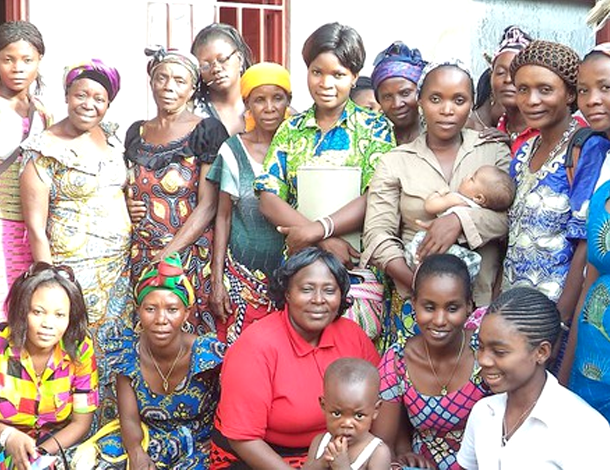
Founded in 2008, La Floraison’s mission is to mobilize, convene and support young women human rights activists in Fizi territory[1], a rural area in the South Kivu province of the Democratic Republic of Congo, to advance their social, cultural and economic wellbeing. Its mission is part of a broader vision for the emergence of a new group of young women concerned about their development and resolutely committed to becoming agents of sociocultural and economic progress within their environment. This brought about the slogan “Young women serving the community” which has been part of the association since its launch.
“I sacrificed all of my time to serve the most vulnerable, especially women victims of sexual violence,” Magdeleine Rusia Abwe, psychosocial assistant of one of the Floraison projects.
The organization uses an approach they call ‘Our Voice’ which ranges from awareness-building and information-sharing via a theatrical troupe, a newspaper and community radio, to advocacy, and mobilizing resources for women’s groups. ‘Our Voice’ is proof of our support and engagement toward a world without violence,” says Loy Honore, founder of La Floraison.
A counseling center for survivors of sexual and gender-based violence
For three years, La Floraison has supported the psychosocial care and socioeconomic reintegration of women and girls who are survivors of sexual and gender-based violence within the Nemba, Katenga and Rubana health centers in Fizi territory. Through the counselling center the project seeks to inform communities about sexual violence against women and girls, available services, and women’s rights and their legal implementation, as well as provide victims with counseling, referral to medical and legal support services and ensure their economic reintegration through Village Saving and Lending Associations (VSLA), while strengthening community activism against gender-based violence.
In addition to documenting, counselling, supporting, and providing referrals to survivors of sexual and gender-based violence, La Floraison mediates between survivors who have been shunned and their families. To compliment, the project includes community outreach on sexual and gender-based violence, creating and strengthening Committees for Surveillance and Alert, social and community conflict resolution, and women’s rights advocacy.
“Through the group, I found something worth more than money: solidarity!”
A 17 year old Burundian survivor of violence, and beneficiary of La Floraison support, tells her story:
“At 15, I gave birth to my first child with an old loyal client who offered a cow to my mother. The brutality of that old drunkard – beatings, death threats – wouldn’t allow for a moment’s peace at home. I came home but my mother wasn’t pleased with my behaviour. In October 2013, an old Congolese man, older than 49, presented the need to bring me to the DRC with him, my mother gave him her permission for marriage without asking me and the suiter gave 3 goats and 2 pairs of loincloths[2] as my dowry.
When we arrived in the DRC, I found out that he had 3 wives and that I had become the fourth; he had children older than me. After a month, the three first wives didn’t want me on the plot of land. The husband abandoned me without any support. I went to see the village chief but there was a language barrier. Without any ration or means of survival, I started to cultivate for people so that I could eat. When my husband learned that I was working for someone, he would come and threaten them by saying that I was his wife and that no one could use me without his consent. I did not understand anything because everything was happening in a language I don’t understand. Many people were scared to give me work. One day, three men came to my unprotected home around midnight. They raped me one by one. One of them heard my screams in Kirundi – who was also Burundian – and asked his friends to let me live. He advised me to leave because my husband was planning to kill me. In the morning, the neighbours came to my rescue.
I didn’t tell anyone what happened to me that night – the rape – because according to our customs, if others find out that you have been raped, no one can marry you any longer. In light of these threats, the village chief brought me to his home and the police came to investigate. It was not easy to help me because I was in the DRC illegally, but they began to look for my husband. My life became very difficult because I had already sold all of the goods I had for survival, and those of my child. I asked the village chief to send me to Burundi. That cost more than $30, it was not easy.
One day, a women working at the health centre came to look for me and asked me to come to the health centre for a private meeting. I was scared, but when I arrived at the location, she welcomed me very kindly, she reassured me, but I was so emotional and the meeting couldn’t take place because of all my crying. She gave me a new meeting, and this time, I told her everything that happened beginning from Burundi. The nurse also saw me and I went to Sebele[3] for care. She helped me a lot, with counselling and visits, even though I don’t speak fluent Swahili. I would go and see her at the health center and one day she came with me to the police station to follow-up on the progress of my case and asked the police officer to facilitate my repatriation to Burundi.
She also recommended that I join a savings and credit group founded in the village so that I could receive a loan to conduct small business transactions. Through the group, I found something worth more than money: solidarity! I didn’t know that I could find such generous people by my side, especially during such hardship. I received a small loan of 16,000FC, which allows me to sell fry (12,000FC) and corn flour (4,000FC). I can’t starve to death anymore.
Mentally, I feel good, but I still need to return to my country to live with my mother.”
[1] Fizi territory includes four rural communities, 27 groups, 142 towns and 1,634 villages. The infrastructure is in poor condition, particularly for education, health, employment, transportation and recreation. The area lacks electricity and few households have access to potable water and proper sanitation.
"Nuestra voz” para promover el bienestar social, cultural y económico de las mujeres y las niñas
La Floraison fue fundada en 2008 y su misión es movilizar, reunir y brindar apoyo a mujeres jóvenes activistas por los derechos humanos en el territorio de Fizi[1] –un área rural de la provincia de Kivu del Sur en la República Democrática del Congo– con el propósito de fomentar el bienestar social, cultural y económico de estas jóvenes. Su misión forma parte una visión más amplia para el surgimiento de un nuevo grupo de jóvenes preocupadas por su desarrollo y firmemente decididas a convertirse en agentes de progreso sociocultural y económico en su entorno. Así surgió el eslogan “Mujeres jóvenes al servicio de la comunidad”, que ha sido parte de la asociación desde su lanzamiento.
“Sacrifiqué todo mi tiempo para servir a las personas más vulnerables, en especial a las mujeres víctimas de violencia sexual”, Magdeleine Rusia Abwe, asistente psicosocial de uno de los proyectos de La Floraison.
La organización trabaja desde un enfoque al que denomina “Nuestra voz” y que incluye la concienciación y la información a través de una radio, un grupo de teatro y un periódico comunitarios, así como la incidencia y la movilización de recursos para los grupos de mujeres. ‘Nuestra voz’ es prueba de nuestro apoyo y compromiso con la construcción de un mundo sin violencia”, afirma Loy Honore, fundadora de La Floraison.
Un centro de atención para sobrevivientes de violencia sexual y de género
Desde hace tres años, La Floraison apoya la atención psicosocial y la reintegración socioeconómica de las mujeres y las niñas sobrevivientes de violencia sexual y de género en centros de salud de Nemba, Katenga y Rubana, en el territorio de Fizi. A través de los centros de atención, el proyecto busca informar a las comunidades sobre la violencia sexual contra las mujeres y las niñas, los servicios disponibles y los derechos de las mujeres y su implementación legal. La iniciativa se propone también asesorar a las víctimas, derivarlas a servicios médicos y de apoyo legal y asegurar su reintegración económica a través de las Asociaciones Aldeanas de Ahorro y Préstamo, a la vez que fortalece el activismo comunitario contra la violencia de género.
Además de documentar, asesorar, apoyar y derivar a las sobrevivientes de violencia sexual y de género, La Floraison media entre las sobrevivientes que han sido rechazadas y sus familias. Como complemento, el proyecto incluye la divulgación entre la comunidad sobre la violencia sexual y de género a través de la creación de comités de vigilancia y alerta, la resolución de conflictos sociales y comunitarios y la promoción y defensa de los derechos de las mujeres.
“A través del grupo encontré algo más valioso que el dinero: ¡la solidaridad!”
Una joven burundiana de 17 años sobreviviente de violencias y beneficiaria del apoyo de La Floraison, cuenta su historia:
“A los 15 años di a luz a mi primer hijo con un viejo buen cliente que le ofreció una vaca a mi madre. La brutalidad de ese viejo borracho –me propinaba golpizas y amenazas de muerte– no daban un momento de paz en el hogar. Volví a la casa de mi madre, pero ella no aprobó mi comportamiento. En octubre de 2013, un congoleño mucho mayor que yo, de más de 49 años, planteó la necesidad de llevarme con él a la República Democrática del Congo. Mi madre dio su permiso para el matrimonio sin consultarme y el pretendiente entregó 3 cabras y 2 pares de taparrabos[2] como dote.
Cuando llegamos a la RDC, descubrí que él tenía tres esposas y que yo me había converitdo en la cuarta; él tenía hijos mayores que yo. Al cabo de un mes las tres primeras esposas no me querían en la parcela de tierra. El esposo me abandonó sin ningún apoyo. Fui a ver al jefe de la aldea pero estaba la barrera del idioma. Sin comida ni medios de superviviencia, empecé a cultivar para otras personas para poder comer. Cuando mi esposo se enteraba de que yo estaba trabajando para alguien, venía y los amenazaba diciendo que yo era su esposa y que nadie podía usarme sin su consentimiento. Yo no entendía nada porque todo sucedía en un idioma que no comprendo. Muchas personas tenían miedo de darme trabajo. Un día, tres hombres llegaron a mi hogar desprotegido alrededor de la medianoche. Me violaron uno a uno. Uno de ellos oyó mis gritos en kirundi –él también era de Burundi– y le pidió a sus amigos que me dejaran vivir. Me aconsejó que huyera porque mi esposo planeaba matarme. Por la mañana, los vecinos vinieron a rescatarme.
No Ie dije a nadie lo que me había sucedido esa noche –la violación– porque de acuerdo con nuestras costumbres, si los demás saben que has sido violada, ya nadie querrá casarse contigo. A la luz de estas amenazas, el jefe de la aldea me llevó a su casa y la policía empezó a investigar. No era fácil ayudarme porque estaba en la RDC ilegalmente, pero empezaron a buscar a mi esposo. Mi vida se volvió muy difícil porque para sobrevivir había vendido todo lo que tenía, y también las cosas de mi hijo. Le pedí al jefe de la aldea que me enviara a Burundi. Eso costaba más de $30, y no era fácil.
Un día, una mujer que trabajaba en el centro de salud vino a verme y me dijo que fuera al centro de salud para una cita privada. Yo tenía miedo, pero cuando llegué al lugar, ella me recibió con mucha amabilidad, me reconfortó, pero yo estaba muy conmovida y la reunión no pudo tener lugar a causa de mi llanto. Me dio una nueva cita, y esa vez le conté todo lo sucedido desde el principio en Burundi. También me vio la enfermera y fui a Sebele[3] para que me atendieran. Ella me ayudó mucho, con asesoramiento y visitas, aunque yo no hablaba swahili fluidamente. Yo iba a verla al centro de salud y un día fue conmigo a la estación de policía para ver cómo iba mi caso y le pidió al funcionario policial que facilitara mi repatriación a Burundi.
Ella también me recomendó que me uniera a un grupo de ahorro y crédito fundado en la aldea ya que así podría recibir un préstamo y hacer pequeñas transacciones comerciales. A través del grupo encontré algo más valioso que el dinero: ¡la solidaridad! No sabía que podría encontrar personas tan generosas a mi lado, en especial durante momentos tan duros. Recibí un pequeño préstamo de 16.000FC, que me permite vender pescado (12.000FC) y harina de maíz (4.000FC). Ya no moriré de hambre.
Mentalmente me siento bien, pero todavía necesito regresar a mi país a vivir con mi madre”.
[1] El territorio de Fizi incluye cuatro comunidades rurales, 27 grupos, 142 pueblos y 1634 aldeas. La infraestructura es insuficiente, en especial para la educación, la salud, el empleo, el transporte y la recreación. El área carece de electricidad y pocos hogares tienen acceso a agua potable y a saneamiento adecuado.
« Notre voix » pour améliorer le bien-être social, culturel et économique des femmes et des filles
Créée en 2008, La Floraison se donne pour mission de mobiliser, consolider et appuyer les énergies de jeunes femmes activistes des droits humains dans le territoire de Fizi[1], zone rurale de la province du Sud-Kivu en République démocratique du Congo, afin d’améliorer leur bien-être social, culturel et économique. Sa mission s’inscrit dans le cadre d’une vision plus globale de l’éclosion d’une nouvelle catégorie de jeunes femmes soucieuses de leur développement et résolument engagées à être des actrices de progrès socioculturel et économique dans leur environnement. C’est ainsi qu’est né le slogan « Jeunes femmes au service de la communauté », porté par l’association depuis sa création
« Je me suis sacrifiée à passer tout mon temps au service des vulnérables et surtout des femmes victimes de violences sexuelles», Magdeleine Rusia Abwe, assistante psychosociale dans le cadre d’un des projets de La Floraison.
L’organisation utilise une approche qu’elle intitule « Notre voix », qui va de la sensibilisation et l’information via une troupe théâtrale, un journal écrit et des radios communautaires, au plaidoyer et à la mobilisation des ressources de groupements féminins. « « Notre voix » est la preuve de notre souci et de notre engagement vers un monde sans violence », dit Loy Honore, Fondatrice de La Floraison.
Une maison d’écoute pour les survivantes de violences sexuelles et basées sur le genre
Depuis trois ans, La Floraison appuie la prise en charge psychosociale et la réinsertion socioéconomiques des femmes et des filles qui ont survécu aux violences sexuelles et basées sur le genre, dans les aires de santé de Nemba, Katenga et Rubana, en territoire de Fizi. Dans le cadre d’une maison d’écoute, ce projet cherche à informer les communautés sur les violences sexuelles faites aux femmes et aux filles, les services disponibles, les droits des femmes et leur cadre légal d’exécution, ainsi qu’à fournir aux victimes un accompagnement, une orientation vers des services de soutien médical et juridique et assurer leur réinsertion économique à travers des Associations Villageoises d’Epargne et de Crédit (AVEC), tout en renforçant l’activisme communautaire contre les violences basées sur le genre.
En plus des activités d’identification, d’écoute, de soutien et d’orientation des survivantes de violences sexuelles et basées sur le genre, La Floraison assure une médiation entre les survivantes qui ont été rejetées et leurs familles. De façon complémentaire, le projet comprend des activités de sensibilisation communautaire sur les violences sexuelles et basées sur le genre, la création et le renforcement de Comités d’Alerte et de Surveillance, la résolution de conflits sociaux et communautaires et la consolidation d’un plaidoyer en faveur des droits des femmes.
« Au sein du groupe, j’ai trouvé quelque chose qui dépasse même l’argent : la solidarité ! »
Une survivante burundaise de la violence, âgée de 17 ans et bénéficiaire de l’assistance proposée par La Floraison, raconte son histoire :
« A 15 ans, j’ai mis au monde mon premier enfant avec un vieux et fidèle client qui a proposé une vache à ma mère. Le comportement brutal de ce vieux soulard – coups, menaces de mort – n’a pas permis une entente dans le foyer. Je suis rentrée à la maison mais ma mère n’a pas été satisfaite de ma réaction. En octobre 2013, un vieil homme congolais âgé de plus de 49 ans a voulu m’amener avec lui en RDC, ma mère a donné son accord pour me marier sans me demander mon avis et le prétendant lui a remis 3 chèvres et deux paires de pagnes[2] pour ma dot.
Quand nous sommes arrivés en RDC, j’ai trouvé qu’il avait 3 femmes et que j’étais devenue la quatrième ; il avait des enfants plus âgés que moi. Après un mois, les trois premières femmes n’ont pas accepté que je reste dans la parcelle agricole. Le mari m’a abandonnée sans aucun soutien. Je suis allée voir le chef de village mais la communication a posé problème en raison de la différence de langue. Sans ration ni moyen de survie, j’ai commencé à cultiver pour les gens pour que je puisse manger. Quand mon mari apprenait que je travaillais pour quelqu’un, il venait le menacer en disant que j’étais son épouse et que personne ne pouvait m’utiliser sans son consentement. Je ne comprenais rien car tout se passait dans une langue que je ne comprends pas. Plusieurs personnes avaient peur de me faire travailler. Un jour, trois hommes se sont introduits dans ma maison non protégée vers minuit. Ils m’ont violée à tour de rôle. L’un d’eux a entendu mes cris en Kirundi – il était aussi burundais – et a demandé à ses amis de me laisser en vie. Il m’a conseillée de partir car mon mari avait l’intention de me tuer. Le matin, les voisins sont venus à mon secours.
Je n’ai dit à personne ce qui m’est arrivée cette nuit – le viol – car selon nos coutumes, si l’entourage apprend que vous avez subi le viol, personne ne peut plus se marier avec vous. Au vu de ces menaces, le chef de village m’a installée chez lui et la police est venue faire des investigations. Ça n’a pas été facile de m’assister car j’étais installée illégalement en RDC, mais ils ont commencé à chercher mon mari. Ma vie était devenue très difficile car j’avais déjà vendu tous les biens que j’avais pour ma survie et celle de mon enfant. J’ai demandé au chef de village de me faire partir au Burundi, il fallait plus de 30$, ce n’était pas facile.
Un jour, une femme travaillant au centre de santé est venue me chercher et m’a demandé de venir au centre de santé pour un entretien en privé. J’avais peur, mais lorsque je suis arrivée sur le lieu, elle m’a très bien accueillie, elle m’a rassurée, mais l’émotion était si grande que les pleurs n’ont pas permis un entretien libre. Elle m’a donnée un nouveau rendez-vous et cette fois-là, je lui ai révélé tout ce qui m’est arrivée à partir du Burundi. L’infirmier m’a aussi reçu et je suis allée à Sebele[3] pour les soins. Elle m’a beaucoup aidée par des conseils et des visites, même si je ne parle pas convenablement le Swahili. Je passais la voir au centre de santé et un jour elle m’a accompagnée au poste de la police pour suivre le déroulement de mon dossier et a demandé à la police de faciliter mon rapatriement vers le Burundi.
Elle m’a aussi conseillée de rejoindre un groupe d’épargne et crédit créé dans le village pour que je puisse bénéficier du crédit pour me permettre de mener des petites activités commerciales. Au sein du groupe, j’ai trouvé quelque chose qui dépasse même l’argent : la solidarité ! Je ne savais pas que je pouvais trouver des personnes généreuses à mes côtés surtout pendant ces moments de dures épreuves. J’ai eu un petit crédit de 16000FC qui me permet de commercialiser les fretins (12000FC) et la farine de maïs (4000FC). Je ne peux plus mourir de faim.
Mentalement je me sens bien, mais j’ai encore besoin de regagner mon pays pour vivre avec ma mère. »
[1] Le territoire de Fizi comprend quatre collectivités rurales, 27 groupements, 142 localités et 1.634 villages. Ses structures de base sont en mauvais état, notamment pour l’éducation, la santé, l’emploi, les transports et les loisirs. La région n’est pas électrifiée et peu de ménages disposent d’un accès à l’eau potable et aux infrastructures hygiéniques appropriées.
"Overcoming adversity and healing the pain" - Iniobong Usanga
Iniobong, an AWID member since January 2015, is an Irish citizen with Nigerian roots. In 2001, she migrated to Ireland because she was forced to leave Nigeria after experiencing domestic, sexual and reproductive abuse.
“I don’t think anyone should be put in that situation where they are a slave to someone…. It shouldn’t happen to anyone”, she says.
Her arrival to Ireland as an asylum seeker and a single mother was extremely difficult at the beginning.
“People judge you even without knowing your situation”, she says. But due to her determination, Iniobong completed post-secondary education and has since worked in different paid and voluntary positions.
For years Iniobong kept her experience of abuse and forced migration to herself. She feared her family’s reactions and did not want to be judged, pitied or labelled.
In 2014, Iniobong chose to break her silence.
She spoke out for herself but also “for people who are currently experiencing what I had gone through, for survivors, for those who have given up hope and those who want to make a fresh start.”
“I am grateful because I have a voice and I can use it freely.”
Iniobong also uses her voice to advocate for the rights of women and children who are facing different kinds of violence.
With the help of some friends, she founded Love and Care for People Worldwide, a non-governmental organisation that supports women, children and youth affected by abuse, poverty and other forms of social exclusion. “I wanted to offer people hope and make them know their determination combined with some support.” The organisation offers diverse activities to help strengthen children’s and women’s self-confidence, learning and vocational skills.
“I would not sell my happiness for anyone. I have to be happy for me. And not continue living my life to please every other person but me.”
"Superando la adversidad y sanando el dolor" - Iniobong Usanga
Iniobong es una ciudadana irlandesa con raíces nigerianas, que forma parte de AWID desde enero de 2015. Llegó a Irlanda en 2001 tras ser obligada a abandonar Nigeria por sufrir violencia doméstica, sexual y reproductiva.
“Nada justifica que una persona sea puesta en la situación de ser esclava de otra. Es algo que no debería sucederle a nadie, declara.
Su llegada a Irlanda como solicitante de asilo y madre soltera fue muy difícil al principio. Las personas te juzgan incluso sin conocer tu situación, afirma. Con determinación, Iniobong completó sus estudios superiores y ha realizado numerosos trabajos, tanto remunerados como voluntarios.
Durante varios años, guardó silencio sobre sus experiencias de abuso y migración forzada. Sentía temor de la reacción de su familia y no quería ser juzgada, etiquetada o que sintieran lástima por ella. En 2014, Iniobong decidió romper el silencio, lo hizo por ella misma, pero también por aquellas personas que ahora están sufriendo lo que yo sufrí, por las supervivientes, por quienes han perdido la esperanza y por quienes desean comenzar de nuevo.
“Agradezco tener voz y poder usarla con libertad."
Iniobong también usa su voz para defender los derechos de aquellas mujeres, niñas y niños que están viviendo algún tipo de violencia. Con la ayuda de algunas amistades, fundó Love and Care for People Worldwide (Amor y protección para las personas de todo el mundo), una organización no gubernamental que apoya a las mujeres, niñas y niños afectados por el abuso, la pobreza y otras formas de exclusión social. Quería dar esperanzas a la gente, que conocieran su valor y que tuvieran cierto apoyo. La organización ofrece distintas actividades para ayudar a fortalecer la confianza de las mujeres, las niñas y niños, sus habilidades para aprender y sus destrezas vocacionales.
“No vendería mi felicidad por nadie. Es por mí que debo ser feliz y no dejar de vivir mi vida por complacer a nadie que no sea yo.”
Escuche la historia de Iniobong con sus propias palabras. (en inglés)
Salome is a feminist activist from Tbilisi, Georgia, devoted to social and gender justice. She holds a Master's degree in gender studies, and has been engaged in feminist, queer and green movements for over twelve years, working amongst others on issues of gender based violence, domestic violence, sexual and reproductive health and rights, LGBTIQ rights, [women’s] Labor Rights, Healing Justice and holistic and digital security and rights.
Since 2014 she has been actively working on safety and security issues of activists and Women Human Rights Defenders, providing integrated security and digital security workshops specifically for activists from under-privileged groups (queer persons, ethnic and religious minorities, rural women and girls, etc) as well as bigger feminist organisations. Salome is a member of the Independent Group of Feminists - a non-formal, non-hierarchical and non-registered initiative that unites feminists with diverse backgrounds in Georgia. Currently, she is the Executive Director of the Women's Fund in Georgia, fully engaged in women's/feminist movement building, providing feminist funding, and encouraging local feminist philanthropy.
A nomad of cultures, born in Hong Kong, rooted in Turkish-Pakistani heritage, Fatima’s love for narratives - both in reading and co-creating them - fueled her passion for communications activism. Supported by her education in journalism, Fatima has worked for 7 years in digital and media communications fields with NGOs that provide education opportunities and legal aid to refugee and asylum seekers, as well as with the Muslim feminist movement which applies feminist and rights-based lenses in understanding and searching for equality and justice within Muslim legal tradition. She is a regular op-ed writer on feminist issues in the Global South.
Through storytelling in this hyper-digital age of social media, Fatima continues to collaborate with community organizers and grassroots activists to create audiovisual content with the aim to cultivate bridges of understanding towards collective liberation and decolonization. On days when she’s not working, she intently watches independent feminist films coming from Iran, Morocco and Pakistan and on other days, she performs spoken word poetry with her comrades in Kuala Lumpur.
One of the follow up mechanisms to the Monterrey conference are the UN General Assembly High-level Dialogues on Financing for Development held every two years. In total eight roundtable meetings took place following the Dialogue on various issues including agricultural subsidies, trade, debt relief and funding of the MDGs. All the discussions focused on dealing with the structural hindrances on these issues that disadvantaged ‘developing’ nations.
Other follow up mechanisms to Monterrey included:
The UN Economic and Social Council (ECOSOC) special high-level meeting, held annually, with the leadership of the World Bank, the International Monetary Fund, the World Trade Organization and UNCTAD on the follow-up to the Monterrey Consensus. ECOSOC also devotes up to two days to deliberate the FfD agenda item during its substantive session.
Committee of Experts on International Cooperation in Tax Matters, the specialized United Nations tax body, addresses the various tax policy issues identified in the Monterrey Consensus and provides a framework for dialogue with a view to enhancing and promoting international tax cooperation among national tax authorities.
Development financing has specific threats and opportunities for women's and all people’s human rights. Transformative development financing and policies can make an important contribution to the systemic changes that are needed to ensure the respect, protection and fulfillment of women’s human rights.
The current stage of the FfD process is an important opportunity to establish a financing framework that will ensure effective financing for the implementation of the post 2015 agenda and the Sustainable Development Goals (SDGs). It is also an opportunity to address the structural conditions, and systemic changes needed, for the full implementation of other agendas and commitments such as Human Rights Conventions, and the Beijing Platform for Action.
Over the last 13 years, women’s rights and feminist organizations have actively engaged in the FfD process.