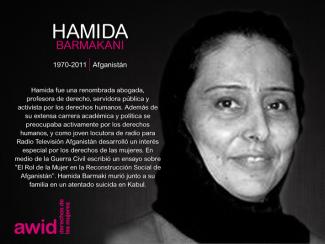
Hamida Barmakani
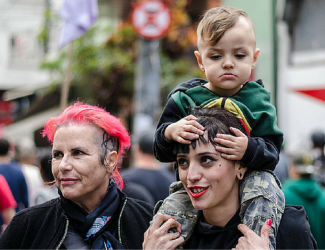
Over the past few years, a troubling new trend at the international human rights level is being observed, where discourses on ‘protecting the family’ are being employed to defend violations committed against family members, to bolster and justify impunity, and to restrict equal rights within and to family life.
The campaign to "Protect the Family" is driven by ultra-conservative efforts to impose "traditional" and patriarchal interpretations of the family, and to move rights out of the hands of family members and into the institution of ‘the family’.
Since 2014, a group of states have been operating as a bloc in human rights spaces under the name “Group of Friends of the Family”, and resolutions on “Protection of the Family” have been successfully passed every year since 2014.
This agenda has spread beyond the Human Rights Council. We have seen regressive language on “the family” being introduced at the Commission on the Status of Women, and attempts made to introduce it in negotiations on the Sustainable Development Goals.
AWID works with partners and allies to jointly resist “Protection of the Family” and other regressive agendas, and to uphold the universality of human rights.
In response to the increased influence of regressive actors in human rights spaces, AWID joined allies to form the Observatory on the Universality of Rights (OURs). OURs is a collaborative project that monitors, analyzes, and shares information on anti-rights initiatives like “Protection of the Family”.
Rights at Risk, the first OURs report, charts a map of the actors making up the global anti-rights lobby, identifies their key discourses and strategies, and the effect they are having on our human rights.
The report outlines “Protection of the Family” as an agenda that has fostered collaboration across a broad range of regressive actors at the UN. It describes it as: “a strategic framework that houses “multiple patriarchal and anti-rights positions, where the framework, in turn, aims to justify and institutionalize these positions.”
Le 14e Forum a pour thème « Réalités féministes: notre pouvoir en action ».
Nous concevons les Réalités féministes comme différentes façons d’exister et d’être qui nous révèlent ce qui est possible, au mépris et malgré les systèmes de pouvoir dominants, et en résistance à ces derniers. Nous concevons ces réalités féministes comme des revendications et des incarnations d’espoir et de pouvoir, et comme des réalités multidimensionnelles, dynamiques et ancrées dans des contextes et des moments historiques spécifiques.

Thanks to our global feminist community! From May to August 2024, nearly 1,200 organizations working for Women's rights, gender justice, and LBTQI+ equality shared their experiences in the WITM survey. The results offer a unique picture of how feminist movements are resourced and where gaps remain.
Nous avons toujours veillé à ce que nos Forums soient développés conjointement avec nos partenaires, nos mouvements et nos groupes prioritaires.
Pour cette édition 2020, nous visons à approfondir et renforcer cet esprit et cette pratique de co-création et de collaboration. Nous reconnaissons également la nécessité d’améliorer l’équilibre entre l’inclusion de nombreuses voix et les expériences, tout en laissant aux participant-e-s et au personnel la possibilité de respirer, faire une pause et profiter de certains temps d’arrêt.
Ce Forum sera différent des diverses façons suivantes:
When walking in the heart of the Raval district of Barcelona, you might come across Metzineres, a feminist cooperative by and for womxn2 who use drugs surviving multiple situations of vulnerability.
Imagine a place free of stigma, where womxn can be safe. A safe place that provides shelter, support and accompaniment for womxn whose rights are systematically violated by the war on drugs and those who experience violence, discrimination and repression as a result.
Right outside the entrance, passers by and visitors are greeted with a massive chalkboard that outlines tips, tricks, wishes and drawings by drug users. There is also a calendar that boasts a range of activities self-organized by the Metzineres community. Whether it’s hairdressing and cosmetics workshops, radio shows, theater, communal meals offered to the community, or self-defense classes - there is always something going on.
The cooperative provides safe consumption sites as well as utilities that cover people’s basic needs. There are beds, storage spaces, showers, toilets, washing machines and a small outdoor terrace where people can chill or have a goat gardening.
Metzineres operates within a harm reduction framework, which attempts to reduce the negative consequences of using drugs. But harm reduction is so much more than a set of practices: it is a politics anchored in social justice, dignity and rights for people who use drugs.
2 Womxn is a term used by the collective to describe cis and trans women as well as non-binary people
To build feminist-realities centered evidence on how money moves and who it is reaching
Veuillez visiter la page « Financement » pour obtenir des idées et vous inspirer sur les façons dont financer votre participation au prochain Forum, y compris pour vous informer sur le soutien limité que l’AWID sera en mesure de fournir.
El cuidado como base de las economías
La pandemia de COVID-19 puso de relieve la crisis mundial de los cuidados y demostró los fracasos del modelo económico dominante que está destruyendo servicios públicos esenciales, infraestructuras sociales y sistemas de atención en todo el mundo.
Cozinha Ocupação 9 Julho, Asociación de Mujeres Afrodescendientes del Norte del Cauca (ASOM) y Metzineres son solo algunos ejemplos de economías de cuidado que centran las necesidades de las personas marginalizadas y la Naturaleza, así como el trabajo de cuidados, el trabajo reproductivo, invisibilizado y no remunerado necesario para garantizar la sostenibilidad de nuestras vidas, nuestras sociedades y nuestros ecosistemas.
Des partenaires mondiaux et régionaux nous ont déjà communiqué certaines idées de rassemblements préalables au Forum, dont nous vous ferons part sous peu.
Si vous projetez d’organiser une réunion avant le Forum, n’hésitez pas à nous le faire savoir !
Plusieurs belles choses ont émergé du Forum des féminismes noires (BFF, selon son acronyme anglais), qui avait été organisé en 2016 par un Groupe consultatif et financé par l’AWID. À l’issue de ce BFF, certaines organisations indépendantes ont ainsi pu voir le jour, telles ques des organisations féministes noires au Brésil. Bien que le BFF n’aura pas lieu cette année, nous nous engageons à partager certains apprentissages clés avec toute personne intéressée à poursuivre le travail d'organisation féministe noire.
Nos entusiasma compartir nuestro nuevo Plan Estratégico (2023-2027) con el mundo. Próximamente, AWID anunciará a nuestra comunidad y membresía al respecto.
La Asociación para los Derechos de las Mujeres y el Desarrollo es una organización feminista mundial, de membresía, que se dedica a brindar apoyo a los movimientos.
Por más de 35 años hemos formado parte de un increíble ecosistema de movimientos feministas que trabajan para alcanzar la justicia de género y los derechos humanos de las mujeres de todo el mundo.
AWID imagina un mundo donde las realidades feministas florezcan, donde los recursos y el poder sean compartidos de maneras que permitan a todxs, y a las generaciones futuras, prosperar y concretar plenamente su potencial con dignidad, amor y respeto, y donde la Tierra nutra la vida en toda su diversidad.
Nuestra misión es apoyar a los movimientos feministas, de derechos de las mujeres y por la justicia de género para que progresen y para que sean una fuerza impulsora de retos a los sistemas de opresión y para la creación conjunta de realidades feministas.
Desarrollamos nuestro trabajo a través de estas tácticas:
Hacemos uso colaborativo de nuestro acceso, poder, recursos y relaciones para influir estratégicamente sobre las políticas y las prácticas. Nos proponemos impulsar agendas feministas a través de nuestro trabajo con quienes tienen poder de decisión política, con financiadoras y con activistas en los espacios regionales y mundiales. Para reforzar nuestro poder e influencia colectivos, también procuramos influir sobre los movimientos feministas y de derechos de las mujeres para que pongan en lugar central a los movimientos históricamente oprimidos.
Utilizamos nuestro poder de convocatoria para facilitar el diálogo y pensar estrategias sobre temas clave. Conectamos a nuestra membresía y aliadxs entre sí, para que compartan e intercambien recursos, ideas y acciones sobre temas relevantes. Organizamos y facilitamos espacios en los que participan y se fortalecen diversos movimientos, espacios para imaginar y concebir nuevos futuros, para desarrollar tácticas de influencia efectivas y para crear juntxs agendas y procesos transformadores.
Trabajamos para movilizar a nuestra membresía y a los movimientos que apoyamos para fortalecer la acción colectiva en solidaridad con causas feministas y con lxs defensorxs que están en peligro. Construimos colaboraciones de largo plazo, nos comprometemos en la escucha activa y la solidaridad continua. Trabajamos con defensorxs para construir conocimiento, redes de apoyo y solidaridad para la protección y el bienestar.
Reconocemos el valor único y estratégico de las iniciativas culturales y creativas en la lucha contra la opresión y la injusticia. Trabajamos con artistas que le dan un lugar central a las voces feministas y a las narrativas de la comunidades históricamente oprimidas. En esta táctica emergente, vemos al arte y la expresión creativa como algo que nos ayuda a concebir un mundo donde las realidades feministas siguen floreciendo y sigan siendo celebradas.
Nuestras iniciativas trabajan en las intersecciones de escenarios de cambio que buscamos abordar, de los movimientos que priorizamos y de las tácticas que usamos:
Monitoreamos, documentamos y hacemos visible cómo están operando y aglutinándose lxs actorxs anti-derechos en los espacios multilaterales y apoyamos a los movimientos feministas, de derechos de las mujeres y por la justicia de género y sus aliadxs para contrarrestar esa influencia e impacto.
Desde perspectivas como el extractivismo, la justicia impositiva y la rendición de cuentas corporativa, construimos conocimiento sobre el poder corporativo y su influencia; abogamos por que las empresas asuman sus responsabilidad así como por la distribución equitativa de la riqueza, y amplificamos las propuestas feministas para lograr economías justas.
Desarrollamos análisis accesibles y orientados a la acción acerca del estado del financiamiento para los movimientos feministas. Nos proponemos influir sobre las políticas y prácticas de las financiadoras, incrementar y sostener el financiamiento para el cambio social feminista, y apoyar las necesidades y estrategias de los movimientos.
Además del impacto que pretendemos tener en el mundo, AWID está expresamente comprometida con el fortalecimiento de nuestro propio aprendizaje y resiliencia organizacionales, para poder fortalecer mejor a los movimientos feministas del mundo.
¡Muchas Gracias!
Sin el generoso aporte y apoyo de nuestros donantes, nuestro trabajo no sería posible.