
Jacky Sutton
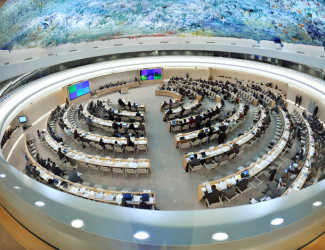
The Human Rights Council (HRC) is the key intergovernmental body within the United Nations system responsible for the promotion and protection of all human rights around the globe. It holds three regular sessions a year: in March, June and September. The Office of the UN High Commissioner for Human Rights (OHCHR) is the secretariat for the HRC.
Debating and passing resolutions on global human rights issues and human rights situations in particular countries
Examining complaints from victims of human rights violations or activist organizations on behalf of victims of human rights violations
Appointing independent experts (known as “Special Procedures”) to review human rights violations in specific countries and examine and further global human rights issues
Engaging in discussions with experts and governments on human rights issues
Assessing the human rights records of all UN Member States every four and a half years through the Universal Periodic Review
AWID works with feminist, progressive and human rights partners to share key knowledge, convene civil society dialogues and events, and influence negotiations and outcomes of the session.
AWID’s working languages are English, French and Spanish. Thai will be added as the local language, as well as sign language & other accessibility measures. Other languages may be added if funding permits, so check back regularly for updates. We care about language justice and will try to include as many languages as we can and as our resources allow. We hope to create multiple opportunities for many of us to be present in our languages and to communicate with each other.
Lorsque notre travail incarné devient un profit entre les mains de systèmes que nous cherchons à démanteler, il n’est pas étonnant que nos sexualités et nos plaisirs soient une fois de plus relégués à la marge – surtout lorsqu’ils ne sont pas assez rentables. À plusieurs reprises au cours de la production de ce numéro, nous nous sommes demandé ce qui se passerait si nous refusions de nous plier aux services essentiels du capitalisme. Mais pouvons-nous oser poser cette question, lorsque nous sommes épuisé·e·s par le monde? Peut-être que nos sexualités sont si facilement rejetées parce qu’elles ne sont pas considérées comme des formes de soins. Peut-être que ce dont nous avons besoin, c’est de réimaginer le plaisir comme une forme de soin radical – un soin qui est également anticapitaliste et anti-institutionnel.
The climate summit by movements, for movements.
📅 November 12 - November 16, 2025
📍 Universidade Federal do Pará, Belém
Cette politique régit toutes les pages hébergées sur le site www.awid.org, et tout autre site web géré par l'AWID, ainsi que les pages d’inscription à ces sites. Elle ne s'applique pas aux pages hébergées par des organisations autres que l'AWID auxquelles nous pouvons nous associer, et dont les politiques de confidentialité peuvent différer. Veuillez lire le document suivant pour comprendre notre politique de confidentialité concernant la nature, le but, l'utilisation et le partage de vos données personnelles collectées via ce site web.
D’une manière générale, vous pouvez naviguer sur ce site web sans nous soumettre vos informations personnelles. Cependant, dans certaines circonstances, nous vous demanderons de nous fournir certaines données personnelles.
Lorsque vous êtes sur le site web et que nous vous demandons des données personnelles, ces informations ne sont pas partagées en dehors de l’AWID.
1.1.1 Les données que vous fournissez pour obtenir des mises à jour de l'AWID :
Lorsque vous vous inscrivez pour avoir accès au site web - par exemple, que vous vous abonnez pour recevoir des courriels de notre part ou que vous demandez à devenir membre – nous vous demandons de fournir des données personnelles telles que votre nom, pays, langue, courriel pour recevoir les mises à jour. Vous nous transmettez ces informations grâce à des formulaires sécurisés et elles sont stockées sur des serveurs sécurisés.
1.1.2 Les données de paiement que vous envoyez pour devenir membre ou vous inscrire à un événement :
En devenant membre ou en vous inscrivant à des événements, vous devrez peut-être également fournir des données de paiement. L’AWID ne stocke aucune information de carte de crédit sur ses serveurs et utilise des systèmes de paiement sécurisés pour traiter ces informations.
1.1.3 Les informations facultatives que vous avez choisi de nous fournir (avec votre consentement) :
Lorsque vous communiquez avec l’AWID ou que vous fournissez des informations facultatives via des formulaires en-ligne ou utilisez le site pour communiquer avec d'autres membres, nous recueillons ces informations et toute information que vous choisissez de donner.
1.1.4 Les données que nous recueillons via des formulaires de contact ou lorsque vous communiquez directement avec nous :
Lorsque vous communiquez avec nous, nous recueillons ces données ainsi que toute autre information que vous choisissez de nous fournir.
Nous collectons et stockons également certaines autres informations concernant l'utilisation de notre site web par nos utilisateurs-trices afin que des tiers puissent nous fournir des rapports et des analyses concernant l'utilisation et les modes de navigation des utilisateurs-trices.
Pour plus d'informations sur les cookies, veuillez consulter la page suivante : www.allaboutcookies.org/fr/.
Si vous ne souhaitez pas recevoir de cookies, vous pouvez facilement modifier le paramétrage de votre navigateur web pour refuser de recevoir des cookies, ou pour demander d’être informé-e lorsque vous recevez un nouveau cookie. Cliquez ici pour voir comment procéder.
L'AWID utilise les informations collectées à propos de vous pour :
Si vous vous êtes abonné-e aux bulletins électroniques de l'AWID ou à des mises à jour par courrier électronique ou si vous êtes devenu-e membre, nous vous enverrons régulièrement des informations, ainsi qu’indiqué dans la section correspondante du site web. Vous pouvez vous désabonner à tout moment des bulletins électroniques ou des mises à jour par courriel en suivant les liens vers les informations de désabonnement incluses dans nos courriels.
L'exactitude des données vous concernant personnellement est importante pour l'AWID. Nous sommes en permanence à la recherche de moyens pour vous faciliter l’accès aux données que l'AWID conserve à votre sujet via notre site web et à la possibilité et les modifier. Si vous changez votre adresse e-mail, ou si l'une des autres informations que nous détenons est inexacte ou n’est plus d’actualité, merci de nous contacter ici.
Si vous avez consenti à ce que l’AWID utilise vos données personnelles, vous pouvez néanmoins changer d’avis à tout moment en nous contactant et en spécifiant l’autorisation que vous annulez. Veuillez noter que le retrait de votre consentement n'affecte pas la légalité des activités de traitement basées sur ce consentement avant son retrait.
Excepté dans le cas détaillé ci-dessous, l'AWID ne divulgue aucune de vos informations personnelles et ne vend ni ne loue des listes contenant vos informations à des tiers. L'AWID peut divulguer des informations quand elle a votre permission de le faire ou dans des circonstances particulières, par exemple lorsqu’elle croit de bonne foi que la loi l'exige.
Nous mettons continuellement en œuvre et mettons à jour les mesures de sécurité administratives, techniques et physiques afin de protéger vos données contre tout accès non autorisé, perte, destruction ou altération de celles-ci. Certaines des mesures de protection que nous utilisons pour protéger vos informations sont les pare-feu, le cryptage des données et les contrôles d'accès aux informations. Si vous savez, ou avez des raisons de croire, que vos informations d'identification AWID ont été perdues, volées, détournées ou autrement compromises, ou en cas d'utilisation non autorisée réelle ou suspectée de votre compte d'adhésion à l’AWID, veuillez nous contacter.
Cette politique est susceptible d’être modifiée de temps à autre. La dernière version de la politique sera postée sur notre site web, ainsi que la date de sa dernière mise à jour. En cas de modification(s) apportées à cette politique, vous recevrez une mise à jour par courriel. Au cas où vous ne seriez pas d'accord avec la politique ainsi révisée, vous aurez la possibilité d'annuler votre (vos) abonnement(s) chez nous. N’hésitez pas à nous contacter. Tous vos commentaires au sujet de cette politique sont les bienvenus !
Dernière mise à jour : mai 2019
The rising power of anti-rights actors is not happening in a vacuum. Understanding the rise of ultra-nationalism, unchecked corporate power, growing repression, and diminishing civic space is key to contextualize the anti-rights threats we face today.
Avec Dre Vandana Shiva, Dre Dilar Dirik et Nana Akosua Hanson..
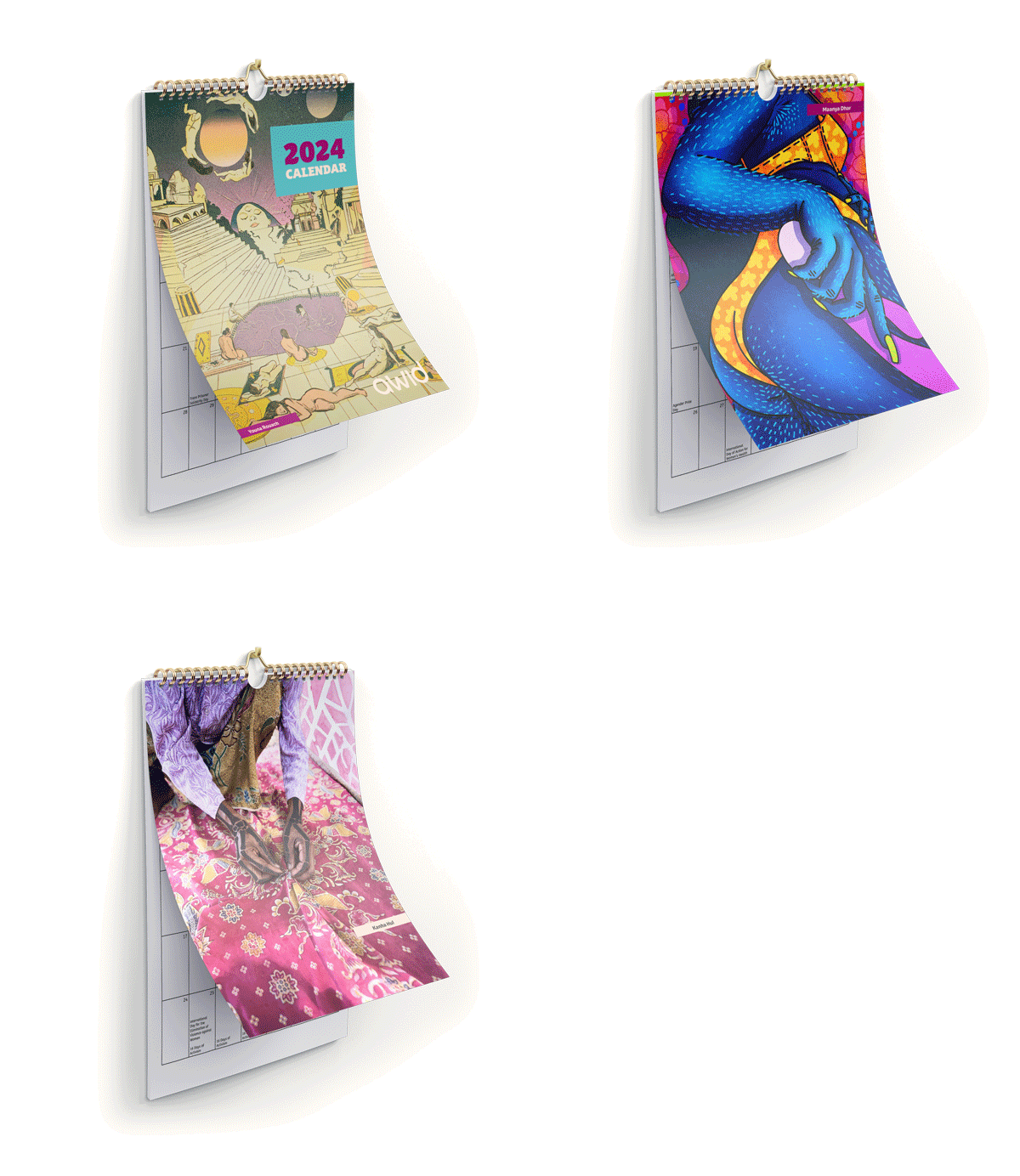
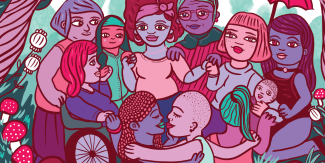
This calendar invites us to immerse ourselves in the inspiring world of feminist artistry. Each month, as it gently unfolds, brings forth the vivid artwork of feminist and queer artists from our communities. Their creations are not mere images; they are profound narratives that resonate with the experiences of struggle, triumph, and undying courage that define our collective quest. These visual stories, bursting with color and emotion, serve to bridge distances and weave together our diverse experiences, bringing us closer in our shared missions.
This calendar is our call to you: Use it, print it, share it. Let it be a daily companion in your journey, a constant reminder of our interconnectedness and our shared visions for a better world.
Let it inspire you, as it inspires us, to keep moving forward together.

Get it in your preferred language! |
| English |
| Français |
| Español |
| Português |
| عربي |
| Русский |
| Thai |
New
Participants will physically gather at a number of sites outside the Bangkok venue, in different parts of the world, on each day of the Forum. All of these self-organized sites will be virtually connected to the Forum venue in Bangkok. As with individuals connecting online, Hub participants will be able to facilitate activities, participate in conversations and enjoy a rich and diverse program.
Hub locations to be announced in 2024!
قضايا تتعلق بالجسد والجندر ومختلف أنواع الجنسانية، واستكشف الروابط المتشابكة بين القضايا هذه وكونها تجاربَ مجسّدة بعمق ومكانًا يُعترض فيه على الحقوق تكون فيه الأخيرة مهدّدة في المجتمع.
تكمن قوّة الحركات النسوية في طريقة تنظيمنا وتنسيق نشاطنا، ليس ضمن مجتمعاتنا وحركاتنا فحسب إنما بالتعاون مع قضايا ومجموعات حليفة في مجال العدالة الاجتماعية. وفّرت المساحة هذه فرصًا للحركات لمشاركة طرق التنظيم واستراتيجيات تكتيكية مع بعضنا البعض وتعزيزها.
لقد أوضحت جائحة كوفيد-١٩ العالمية فشل الرأسمالية النيوليبرالي فبدا أكبر من قبل وكشفت عن التفكك الموجود في أنظمتنا أكثر من أي وقت سابق، فشددت على ضرورة بناء أنواع واقع جديد وفرص بنائها. يتطلّب التعافي النسوي الاقتصادي والاجتماعي منّا جميعًا أن ننجح كلّنا معًا. نصدر النسخة هذه من المجلة بالشراكة مع «كحل: مجلة لأبحاث الجسد والجندر»، وسنستكشف عبرها الحلول والاقتراحات وأنواع الواقع النسوية لتغيير عالمنا الحالي وكذلك أجسادنا وجنسانياتنا.
يمكنك تصفح المقالات عبر الإنترنت أو
قم بتنزيل ملف PDF
Denunciar la captura corporativa. Comprender las soluciones falsas. Elaborar alternativas. Todo lo que necesitas para ejecutar la campaña “¿De quién es esta COP?”
La construction d’économies féministes a pour objet de créer un monde où l’air est respirable et l’eau buvable, où le travail est significatif et où nous bénéficions de soins pour nos communautés et nous-mêmes, où chacun-e peut jouir de son autonomie économique, sexuelle et politique.
Dans ce monde où nous vivons aujourd’hui, l’économie continue de s’appuyer sur le travail de soins non rémunéré et sous-évalué des femmes au service des autres. La poursuite de la “croissance” ne fait que développer l’extractivisme--un modèle de développement fondé sur l’extraction et l’exploitation massives des ressources naturelles, qui continue de détruire les populations et la planète tandis qu’elle concentre les richesses entre les mains des élites mondiales. Parallèlement, l’accès aux soins de santé, l’éducation, les salaires décents et la sécurité sociale sont réservés à une poignée de privilégiés. Ce modèle économique repose sur la suprématie blanche, le colonialisme et le patriarcat.
En adoptant la seule « approche pour l’autonomisation économiques des femmes», on ne fait guère qu’intégrer davantage les femmes dans ce système. Cela peut constituer un moyen temporaire de survie. Nous devons semer les graines d’un nouveau monde possible pendant que nous abattons les murs du monde existant.
Nous croyons en la capacité des mouvements féministes à créer de vastes alliances entre mouvements qui leur permettent d’oeuvrer pour le changement. En multipliant les propositions et visions féministes, nous cherchons à construire les nouveaux paradigmes d’économies plus justes.
Notre approche doit être interconnectée et intersectionnelle, car nous ne pourrons jouir d’aucune autonomie sexuelle et corporelle tant que chacun·e d’entre nous ne jouira pas de ses droits économique ni d’une autonomie financière. Nous voulons travailler avec celles et ceux qui s’opposent à la montée mondiale de la droite conservatrice et des fondamentalismes religieux et la contrent, car tant que nous n’aurons pas ébranlé les fondements même du système actuel, aucune économie ne saura être juste.
Promouvoir des programmes féministes : Nous nous opposons au pouvoir des entreprises et à l’impunité concernant les violations des droits humains en travaillant avec des allié-e-s afin de nous assurer que les perspectives féministes, relatives aux droit des femmes et à la justice de genre sont intégrées dans les espaces politiques. A titre d’exemple, vous pouvez vous informer sur le futur instrument juridiquement contraignant concernant “les sociétés transnationales et autres entreprises en matière de droits humains” au Conseil des droits humains des Nations Unies.
Mobiliser des actions solidaires : Nous oeuvrons à renforcer les liens qui existent entre les mouvements féministes et les mouvements en faveur de la justice fiscale, y compris à réclamer les ressources publiques perdues à cause de flux financiers illicites afin de garantir une justice de genre et sociale.
Enrichir nos connaissances : Nous fournissons aux Défenseuses des droits humains (WHRD) des informations stratégiques qui s’avèrent vitales dans la lutte contre le pouvoir des entreprises et l’extractivisme. Nous contribuerons à développer une base de connaissances autour du financement local et mondial et les mécanismes d’investissements qui alimentent l’extractivisme.
Créer et élargir les alternatives : Nous participons et mobilisons nos membres et nos mouvements à envisager des économies féministes et à partager nos savoirs, nos pratiques et nos programmes féministes en faveur d’une justice économique.
« La révolution corporative s’effondrera si nous refusons d’acheter ce qu’ils nous vendent: leurs idées, leurs versions de l’histoire, leurs guerres, leurs armes, leur notion d’inéluctabilité. Un autre monde est non seulement possible, mais il est aussi déjà en bonne voie. Quand tout est tranquille, je peux l’entendre respirer. » Arundhati Roy, War Talk.

Panel: In Panel discussions, explore an issue or challenge from different perspectives, or share a learning or experience, followed by audience questions if time allows.
Talk Show: Have a more spontaneous conversation in Talk-Show style. Talk Shows can be a conversation among several people, facilitated by a talk-show host. Audience questions can determine the conversation’s direction.
Discussion: These can take the form of world cafes, fishbowls, and other methodologies that facilitate participants’ active involvement in conversations. Highly participatory.
Workshop: Interactive sessions that invite participants to build new skills in any and all areas of life and activism.
Strategy Session: This is an invitation to think through an issue or strategy, in depth, with others. A space to learn from each other: what works, what doesn’t, and how do we develop new and collective strategies to create the worlds we dream of.
Sharing Circle (also known as “Birds of a Feather”): Ideal for small groups, in a more intimate setting, to hear from each other, spark discussion and carefully address topics that may be specific, sensitive and complex.
Arts – Participatory Workshop: Participatory activities involving arts and creative expression. Whether through visual art, theater, film, mural, dance, music, collective craft or artmaking, etc., we welcome all ideas celebrating feminist art and creativity as forms of social change, healing, expression and transformation.
Arts – Performances, Installations and Exhibitions: We welcome submissions that offer Forum participants new experiences and perspectives, expand our horizons, and challenge and inspire us to think, feel and organize in new ways.
Healing: Diverse activities tailored both for groups and individuals, from learning relaxation techniques to discussing burnout prevention, from trauma-informed practices of care for our body, mind and soul to healing rifts within our movements.
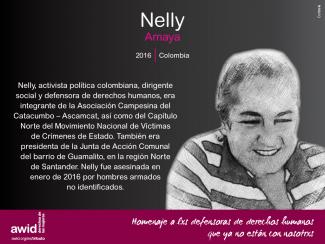
AWID members will explore and critically evaluate the role that mutual aid can play in resourcing our movements, through collective collage making.
📅 Wednesday, November 12, 2025
📍 The People’s COP Space

We ramped up preparations for the 13th AWID international Forum, focused a lot of energy on the Post 2015 Development Agenda and Financing for Development processes, and continued the core work of our priority areas:
In response, we are moving out of our silos.
Increasingly, women’s rights and other movements worldwide are articulating the systemic and intersectional nature of these and other problems. We are making better connections with the agendas of other social and environmental movements for solidarity, alliance building and collective responses. We are also seeing greater visibility of these movements fighting for justice on the ground.
