Related content
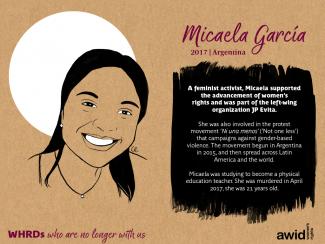
TeleSUR: Outrage Shakes Argentina After Murder of Anti-Femicide Activist
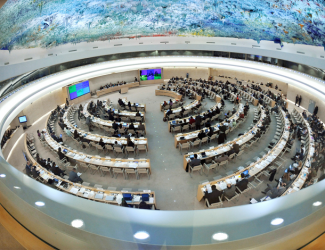
The Human Rights Council (HRC) is the key intergovernmental body within the United Nations system responsible for the promotion and protection of all human rights around the globe. It holds three regular sessions a year: in March, June and September. The Office of the UN High Commissioner for Human Rights (OHCHR) is the secretariat for the HRC.
Debating and passing resolutions on global human rights issues and human rights situations in particular countries
Examining complaints from victims of human rights violations or activist organizations on behalf of victims of human rights violations
Appointing independent experts (known as “Special Procedures”) to review human rights violations in specific countries and examine and further global human rights issues
Engaging in discussions with experts and governments on human rights issues
Assessing the human rights records of all UN Member States every four and a half years through the Universal Periodic Review
AWID works with feminist, progressive and human rights partners to share key knowledge, convene civil society dialogues and events, and influence negotiations and outcomes of the session.
Por el momento, la encuesta en KOBO está disponible en árabe, español, francés, inglés, portugués y ruso. Tendrás oportunidad de seleccionar el idioma de preferencia al inicio de la encuesta.
Related content
TeleSUR: Outrage Shakes Argentina After Murder of Anti-Femicide Activist

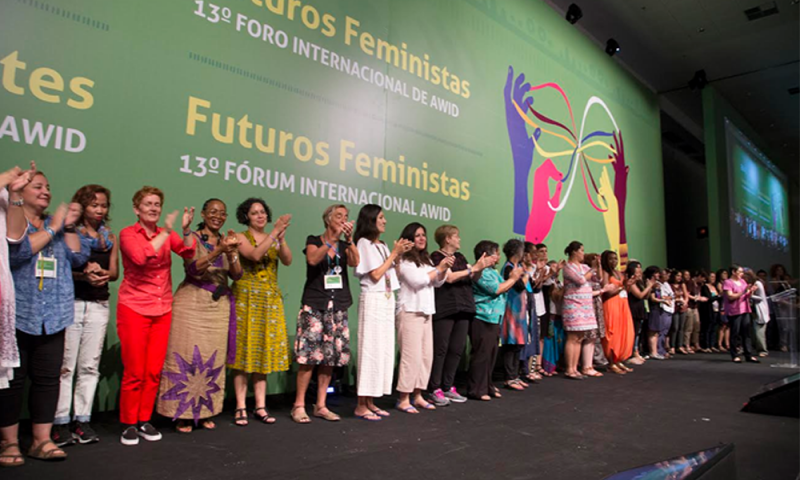
Thank you to all of you who have joined us, physically or virtually, for the past four days of learning, celebrating, envisioning, dreaming and building our Feminist Futures together at the 2016 AWID Forum!
We are incredibly inspired, amazed, and re-energized by all the collective work we have done together in creating our diverse futures.
L’enquête WITM portant sur les réalités du financement des organisations féministes, la plupart des questions traitent du financement de votre groupe entre 2021 et 2023. Vous aurez besoin de disposer de ces informations pendant que vous répondez aux questions de l’enquête (vos budgets annuels et principales sources de financement, par exemple)
Nous Sommes la Solution eleva y multiplica el liderazgo de las mujeres rurales que trabajan por soluciones realmente africanas para la soberanía alimentaria.
En este momento, muchos sistemas de conocimientos comunitarios están en riesgo.
Los cambios vertiginosos que se dan a nivel económico, político y cultural están arrasando con ambientes, prácticas y medios de vida. Diversas formas de conocimiento están siendo borradas como prácticas, mercantilizadas y colonizadas por una globalización que se lo devora todo y a cambio de la promesa de logros en el corto plazo o paliativos.
El Buen Vivir /Vivir Bien, un concepto adaptado de los conocimientos de los pueblos indígenas andinos, se define como el logro colectivo de una vida en plenitud, basada en las relaciones armónicas y equilibradas entre los seres humanos y todos los seres vivientes, con reciprocidad y en complementariedad. Implica reconocer que los seres humanos formamos parte de la naturaleza, dependemos de ella y somos interdependientes entre nosotrxs.
Una visión que integra la producción y la reproducción como procesos inseparables de la economía, la producción de riqueza y las condiciones de vida es inherente al Buen Vivir / Vivir Bien.
Una mirada del Buen Vivir /Vivir Bien desde una óptica feminista valora las relaciones y los recursos que se movilizan en los ciclos de producción y reproducción — a favor de un equilibrio que no tiene que ver solo con el mercado — para garantizar la continuidad y los cambios siempre que sean compatibles con la justicia económica y la sostenibilidad de la vida.
Desde una perspectiva feminista también se ha criticado la concepción binaria del género y de la complementariedad entre hombres y mujeres en el Buen Vivir /Vivir Bien. Las concepciones binarias dejan poco espacio para un análisis más profundo del heteropatriarcado y de las relaciones de género disidentes.
Sin embargo, uno de los principales aportes que ofrece el principio del Buen Vivir / Vivir Bien cuando se le otorga un lugar central en los marcos de referencia políticos, económicos y sociales, es que la igualdad deja de ser el paradigma de los derechos individuales y su lugar pasa a ser ocupado por la transformación de la sociedad como un todo.

We are asking for this data to facilitate the review of responses, avoid duplication and be able to contact your group in case you have been unable to complete the questionnaire and/or you have doubts or further questions. You can learn more about how we use the personal information we collect through our work here.
Coopérative Textile Nadia Echazú
This project is built in collaboration with:


We would also like to thank the following people for their valuable contribution:
La encuesta permanecerá abierta hasta fines de agosto de 2024. Te pedimos que la respondas dentro de dicho lapso para asegurarte de que tus respuestas se incluyan en el análisis.
