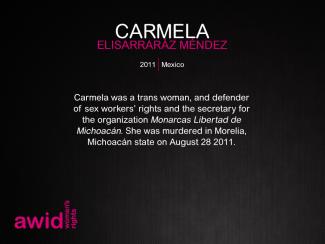
Carmela Elisarraraz Mendez
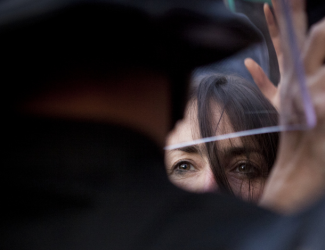
WHRDs are self-identified women and lesbian, bisexual, transgender, queer and intersex (LBTQI) people and others who defend rights and are subject to gender-specific risks and threats due to their human rights work and/or as a direct consequence of their gender identity or sexual orientation.
WHRDs are subject to systematic violence and discrimination due to their identities and unyielding struggles for rights, equality and justice.
The WHRD Program collaborates with international and regional partners as well as the AWID membership to raise awareness about these risks and threats, advocate for feminist and holistic measures of protection and safety, and actively promote a culture of self-care and collective well being in our movements.
WHRDs are exposed to the same types of risks that all other defenders who defend human rights, communities, and the environment face. However, they are also exposed to gender-based violence and gender-specific risks because they challenge existing gender norms within their communities and societies.
We work collaboratively with international and regional networks and our membership
We aim to contribute to a safer world for WHRDs, their families and communities. We believe that action for rights and justice should not put WHRDs at risk; it should be appreciated and celebrated.
Promoting collaboration and coordination among human rights and women’s rights organizations at the international level to strengthen responses concerning safety and wellbeing of WHRDs.
Supporting regional networks of WHRDs and their organizations, such as the Mesoamerican Initiative for WHRDs and the WHRD Middle East and North Africa Coalition, in promoting and strengthening collective action for protection - emphasizing the establishment of solidarity and protection networks, the promotion of self-care, and advocacy and mobilization for the safety of WHRDs;
Increasing the visibility and recognition of WHRDs and their struggles, as well as the risks that they encounter by documenting the attacks that they face, and researching, producing, and disseminating information on their struggles, strategies, and challenges:
Mobilizing urgent responses of international solidarity for WHRDs at risk through our international and regional networks, and our active membership.
Por Michel’le Donnelly
El Festival Feminista Crear | Resister | Transform de septiembre fue una bocanada de aire fresco en estos tiempos tan inciertos, turbulentos y dolorosos.
El espacio que creó este festival era muy necesario. Necesario para el alma de quienes buscamos consuelo en estas horas sombrías. Necesario para esas ansias de comunidad en un mundo que se siente cada vez más aislado y, sobre todo, necesario para quienes luchamos contra los mismos sistemas que nos han puesto a muchxs de nosotrxs de rodillas, en especial durante los últimos dos años.
«Las crisis no son un fenómeno nuevo para los movimientos feministas y sociales; tenemos una dilatada historia de supervivencia ante la opresión y de construcción de nuestras comunidades y de nuestras propias realidades».
Defender visiones alternativas y realidades alternativas a la que estamos viviendo ahora es la piedra basal de la agenda feminista. Hay muchísimas personas maravillosas que están abocadas a explorar distintas formas de existencia para nosotrxs en el mundo. Son alternativas centradas en las personas. Son equitativas y justas. Son mundos colmados de amor, ternura y cuidados. Las visiones descritas son prácticamente demasiado bellas para imaginar, pero debemos forzarnos a imaginar porque es la única forma de seguir.
Durante los últimos 10 años, he tenido la increíble fortuna de trabajar con un colectivo feminista que no solo está imaginando una realidad alternativa, sino que está viviendo en ella activamente. Nos inspira la labor de tantos otros movimientos feministas de todo el globo que no han permitido que el patriarcado blanco supremacista y capitalista los disuadan de su visión. Este colectivo me mantuvo en pie cuando todo lo que deseaba era desmoronarme. Muy similar a la historia que relató María Bonita el cuarto día del festival; la liberación que he encontrado en los movimientos feministas es demasiado potente como para que solo yo la experimente. Es algo para compartir, algo que tenemos que gritarlo a los cuatro vientos para invitar a otras personas a sumarse.
El cuarto día del festival nos trajo una conversación cautivante entre Felogene Anumo, la Dra. Dilar Dirik, Nana Akosua Hanson y Vandana Shiva, quienes alentaron a quienes asistimos al festival a creer no solo que un futuro alternativo es posible, sino que se hace imperiosamente necesario. Los feminismos venimos hablando de mundos alternativos desde hace muchos años, y escuchar hablar sobre ellos en el panel no solo nos abrió los ojos, sino que además nos reconfortó. Cuando digo que nos reconfortó quiero decir que me hizo sentir seguridad al saber que ciertamente existen sólidas redes feministas globales que trabajan en las fronteras nacionales e internacionales para descolonizar los marcos establecidos de nuestras realidades actuales.
Durante la sesión, la Dra. Dirik destacó el hecho de que la convicción, el sacrificio y la paciencia son lo más necesario para abolir los sistemas opresivos en los que vivimos hoy. La colaboración, el compañerismo, la creatividad, la solidaridad y la autonomía. Estos son los pilares fundamentales para erigir una sociedad global feminista a los que todos los movimientos feministas del mundo deberíamos aferrarnos.
En todo el globo se pueden encontrar varios ejemplos prácticos de estas realidades, incluido el Movimiento Soulaliyate para los Derechos de las Mujeres al Uso de la Tierra. En referencia a las mujeres tribales de Marruecos que viven en tierras colectivas, el Movimiento de Mujeres Soulalyate es la primera movilización nacional de base por los derechos a la tierra de ese país. Si bien, en un principio, el movimiento era bastante pequeño, este creció hasta convertirse en una agenda de orden nacional que desafió la naturaleza de género de las leyes que rigen el uso de la tierra en Marruecos. En 2019, el grupo contribuyó a modificar el marco legislativo nacional sobre la gestión de los bienes comunitarios a través de la adopción de tres conjuntos de leyes que garantizan la igualdad entre mujeres y hombres.
Otro ejemplo práctico es el de Casa Trans Zuleymi de Perú. La casa, que funciona desde 2016, es un refugio para mujeres, niñas y adolescentes migrantes trans a quienes el Estado ha dejado atrás. Ha brindado albergue seguro a 76 mujeres migrantes trans de Venezuela, junto a 232 de zonas selváticas, comunidades indígenas y la costa norte de Perú.
Saber de estos movimientos feministas que están haciendo su parte para convertir en realidad los futuros alternativos es sumamente inspirador y necesario, en especial cuando me cuesta tanto lidiar con la sucesión interminable de malas noticias que parecen fluir sin interrupción.
«El patriarcado capitalista es como un cáncer. No se sabe cuándo para de crecer». Dra. Vandana Shiva
Desde siempre, AWID ha sido un movimiento inspirado en las realidades feministas que podemos vivir. Con sus festivales, así como con la revista y la caja de herramientas sobre las realidades feministas, nos ha mostrado otro modo de hacer las cosas. Podemos imaginar un mundo donde el cuidado sea prioridad, donde las economías feministas y la justicia de género sean la norma. La creación de futuros alternativos es nuestra forma de devolver el golpe, es nuestra forma de resistir a la violencia que se perpetra contra nuestros cuerpos todos los días.
El Festival Crear | Resister | Transform me permitió sentirme muy conectada con una comunidad global, a muchxs de lxs cuales nunca voy a conocer. Saber que todxs estamos reclamando y trabajando en pos de otro mundo encendió una llama en mi alma y no veo la hora de conocer qué nos traerá el próximo festival.
Si te lo perdiste, cerciórate de ver la sesión «Otro mundo está en camino: alternativas, feminismos y otro mundo» celebrada el cuarto día del festival. Y recuerda, como expresó la Dra. Shiva de modo tan elocuente: «La energía de las mujeres mantendrá la vida en la tierra. No nos vencerán».
AWID no ofrece descuentos para grupos, pero sí ofrece descuentos en la inscripción a sus afiliadxs. (Haz clic aquí para obtener más información sobre cómo sumarte a la membresía)
In the African Commission and the Inter-American System, anti-rights actors push essentialist notions of culture and gender to hamper progress on rights and undermine accountability. As we see, anti-rights actors are exerting influence in regional human rights systems, as well as international spaces.
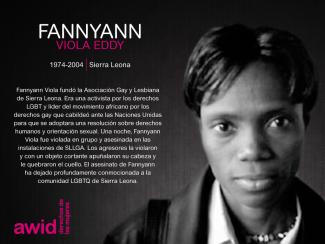
In 2023, feminist and women's rights organizations had a median annual budget of USD 22,000. Behind that median lies disparity and inequality: while a few groups access large-scale resources, the vast majority survive on shoestring budgets.
A closer look at actual budgets reveals major income diversity and inequality.

Nous sommes ensemble depuis plus de 20 ans, et je chéris toujours autant votre amour et votre soutien. Il est intéressant de remarquer que vous parvenez à la même étape que l’AWID en tentant toutes, de manière synchrone, de définir comment mobiliser et soutenir la communauté. Aux mères du mouvement : votre leadership et votre orientation sont sans égal. Je pense particulièrement à Prudence Mabele, Kate Thompson, Darien Taylor, Patricia Perez, Martha Tholanah, Deloris Dockery, Iris De La Cruise, Doris Peltier, Cecilia Chung, et bien d’autres encore. Bien que vous ne soyez pas parfaites (comme aucune de nous ne l’est), vous faites toujours passer la communauté en premier et défendez l’inclusion de TOUTES les femmes vivant avec le VIH dans les sphères féministes.
J’aime la manière dont vous m’avez tenue lorsque personne d’autre ne pouvait le faire, et plus important encore, la manière dont nous nous tenons mutuellement. Vous comprenez la stigmatisation, la discrimination, la violence et la douleur, mais également la joie, l’amour et le pardon. En tant que féministes vivant avec le VIH, nous sommes glorieuses et puissantes dans notre intersectionnalité. Nous comprenons que le féminisme inclut et est mené par les communautés - nos sœurs noires, racisées et autochtones, les communautés de personnes trans et de genres divers, queer et lesbiennes, de travailleureuses du sexe, de celles qui ont été incarcérées et celles qui consomment des drogues - comme défini dans le principe GIPA (une participation accrue des personnes vivant avec le VIH). Votre féminisme englobe tout. Nous parlons des questions difficiles et des communautés criminalisées, parce qu’en tant que personnes vivant avec le VIH, nous sommes nous-mêmes criminalisées.
Je manquerais à mes devoirs si je n’envoyais pas plein d’amour aux jeunes femmes vivant avec le VIH, le pouls de notre mouvement. Je parle de vous, Kia Lebejia, Keren Dunaway, Liz Onyango, Faith Ona, Sara Thapa Maga, Doreen Moraa, Yana Panfilova et les millions d’autres activistes incroyables vivant avec le VIH. Vous êtes ce pouvoir qui continuera à nous propulser vers l’avant et permettra que les mouvements féministes traditionnels reconnaissent toute notre importance. Merci de faire progresser notre mouvement, de TOUJOURS inclure les personnes trans et de genres divers, de parler des liens entre changements climatiques et santé des droits sexuels reproductifs.
Je vous aime, vous aime, vous aime, vous aime tellement. Pour le meilleur et pour le pire, continuons à avancer ensemble, parce que c’est notre communauté - c’est ma communauté.
Avec tout mon amour,
Jessica Whitbread
Ayant conscience des nombreuses difficultés que les déplacements impliquent, nous vous fournirons davantage d’informations et de détails sur les modalités de voyage jusqu’à Bangkok lorsque les Inscriptions ouvriront, au début de l’année prochaine.
¿Quieren sumarse al creciente número de personas que le están diciendo «basta» a la infiltración de lxs actores anti-derechos en la ONU?

Con 1773 cabilderos de los combustibles fósiles presentes en la COP29 del año pasado, nos dirigimos, junto con otres feministas a Belém (Brasil) del 10 al 21 de noviembre de 2025. Allí continuaremos denunciando las soluciones falsas, llamando la atención sobre la captura corporativa, y exigiendo que los Estados cumplan sus compromisos bajo las Responsabilidades Comunes pero Diferenciadas y las Capacidades Respectivas (en inglés) para impulsar las alternativas económicas feministas.
USD 2,7 billones para gasto militar. USD 300.000 millones para la justicia climática. Estamos aquí para dar vuelta el relato.
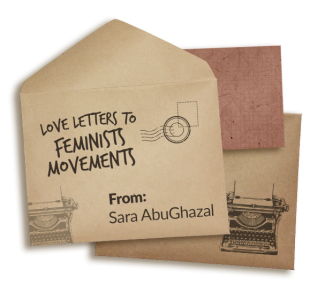
هكذا تبدأ الحركات
أشباحا تطردنا من البيت والعائلة والوطن
فنصل متعبات إلى مساحة (أيضا مكان) وغالبا حالة
وصلت إليها قبلنا نجمة سقطت
ربما نصل أكثر من متعبات
مذعورات
ربما أكثر من مذعورات نصل
غاضبات
من أمور لا تنفك تعيد نفسها
طعنة في القلب (أيضا كسور)
رصاصة في الظهر (أيضا خيانة)
اختفاء قسري
جسد محكوم عليه بزواج أو تشويه أو تعب مزمن
لكننا حين نصل نتجمع ونهمس ونبوح وننوح
هكذا تبدأ حركاتنا، حين نصل إلى الأخريات
فنصبح بذورا
هكذا تبدأ الحركات، حين نزرع بعضا زهورا وأيضا أشواكا وأيضا ثمارا
نحن واحات
لنا كلنا نصنع منها ما نشاء
أغنيات للمعارك
وصفات للشفاء
مخازن لوجوه عشيقاتنا وشكل ابتسامتهن وضحكة انتصاراتهن اليومية
السر لتحويل الصمت الى لغة
تعاليم كل الساحرات
هكذا تكون حركاتنا: لنا كلنا
حين نصل بذورا فنزهر.
سرى أبو غزال
www.badiya.blog
Asking ourselves the same question, we believe there are no simple answers. For many participants the AWID Forum might be one of the few international trips they undertake in their life. The pandemic taught us the possibilities but also the limitations of virtual spaces for movement-building: there is nothing like in-person connection. Movements need cross-border connections to build our collective power in the face of the threats we face, notably the climate crisis. We believe that the upcoming AWID Forum can be a strategic space to hold these conversations and to explore alternatives to international travel. The hybrid element of the Forum is an important part of this exploration.
Ghiwa Sayegh es una anarcoescritora queer, editora independiente y archivista. Es la editora fundadora de Kohl, una revista para la investigación sobre cuerpo y género, y la cofundadora de Intersectional Knowledge Publishers. Posee una maestría en estudios de género de Université Paris 8 Vincennes, Saint-Denis. Le apasionan la teoría queer, las circulaciones transnacionales y las historias imaginadas o desconocidas. Sus influencias son Audre Lorde y Sara Ahmed.
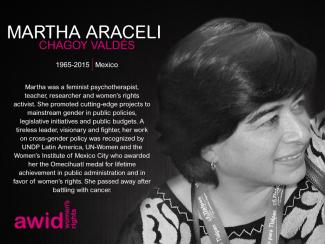
Paneles, talleres, plenarias y espacios de intercambio entre colectivos, activistas y organizaciones que luchamos para recorrer de forma colectiva el camino hacia una agenda y un programa de lucha por el ecosocialismo.
📅 8 - 11 de noviembre de 2025
📍 Buenos Aires, Argentina
Nous commençons une nouvelle année - 2023. Le COVID-19 continue d'infecter et de réinfecter de très nombreuses personnes dans le monde. Nous assistons à la résurgence de gouvernements droites et fascistes, même dans des endroits auxquels nous ne nous attendions peut-être pas comme la Suède. La guerre, les conflits armés et l'augmentation spectaculaire de la militarisation, du militarisme et des dépenses militaires permettent l'accumulation effrénée du capital par quelques-uns, avec la participation d'alliances apparemment « étranges » qui verrouillent les armes, à la fois visiblement et invisiblement, où les élites économiques et politiques du monde Le Nord et le Sud global en profitent au-delà de notre imagination la plus folle. Entre-temps, notre peuple et l'environnement naturel paient des coûts énormes et subissent toutes les conséquences attendues et inattendues.
Comme vous le savez tous et nous tous à l'AWID, les féministes de multiples mouvements à travers le monde résistent et s'organisent contre les multiples visages de la tyrannie, créant des structures alternatives, mettant en œuvre des stratégies de base et construisant des alliances transnationales. Nous générons de la joie, nous inspirons les unes les autres, chantons et dansons dans et contre la culture dominante du meurtre et du cynisme qui semble avoir englouti une si grande partie du monde.
Nous - le personnel et le conseil d'administration - de l'AWID sommes préparés et inspirés plus que jamais pour relever les défis en renforçant nos relations avec nos membres et nos partenaires organisationnels, en rencontrant et en apprenant à connaître ceux que nous n'avons pas encore rencontrés et en faisant ce que nous faisons le mieux : soutenir les mouvements féministes mondiaux. Bien que nous soyons tristes face au départ de notre ancienne Co-Direction générale Cindy et Hakima, notre merveilleuse nouvelle Co-Direction générale Faye et Inna ainsi que notre personnel engagé et créatif ont embrassé le moment qui englobe à la fois les opportunités et les menaces.
Bien sûr, nous tous à l'AWID et tous les membres de notre mouvement le savons : comme l'écrivait la poétesse et militante américaine des Caraïbes June Jordan aux militantes sud-africaines au plus fort du régime d'apartheid : « Nous sommes celles et ceux que nous attendions » !
avec Luam Kidane, Mariama Sonko, Yannia Sofia Garzon Valencia et Nomsa Sizani.