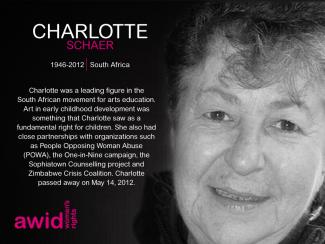
Sakine Cansiz
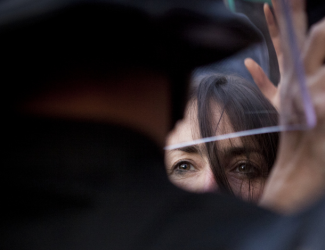
WHRDs are self-identified women and lesbian, bisexual, transgender, queer and intersex (LBTQI) people and others who defend rights and are subject to gender-specific risks and threats due to their human rights work and/or as a direct consequence of their gender identity or sexual orientation.
WHRDs are subject to systematic violence and discrimination due to their identities and unyielding struggles for rights, equality and justice.
The WHRD Program collaborates with international and regional partners as well as the AWID membership to raise awareness about these risks and threats, advocate for feminist and holistic measures of protection and safety, and actively promote a culture of self-care and collective well being in our movements.
WHRDs are exposed to the same types of risks that all other defenders who defend human rights, communities, and the environment face. However, they are also exposed to gender-based violence and gender-specific risks because they challenge existing gender norms within their communities and societies.
We work collaboratively with international and regional networks and our membership
We aim to contribute to a safer world for WHRDs, their families and communities. We believe that action for rights and justice should not put WHRDs at risk; it should be appreciated and celebrated.
Promoting collaboration and coordination among human rights and women’s rights organizations at the international level to strengthen responses concerning safety and wellbeing of WHRDs.
Supporting regional networks of WHRDs and their organizations, such as the Mesoamerican Initiative for WHRDs and the WHRD Middle East and North Africa Coalition, in promoting and strengthening collective action for protection - emphasizing the establishment of solidarity and protection networks, the promotion of self-care, and advocacy and mobilization for the safety of WHRDs;
Increasing the visibility and recognition of WHRDs and their struggles, as well as the risks that they encounter by documenting the attacks that they face, and researching, producing, and disseminating information on their struggles, strategies, and challenges:
Mobilizing urgent responses of international solidarity for WHRDs at risk through our international and regional networks, and our active membership.
Lost For Words |
 |
 |
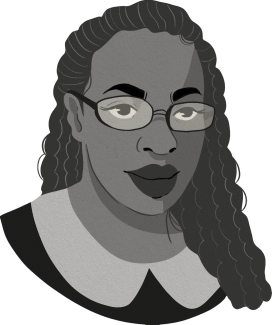
| Chinelo Onwualu | Ghiwa Sayegh |
When we are desperate for change, as we are both in illness and insurrection, our language drains of complexity, becomes honed to its barest essentials... As illness and revolution persist, though, the language made in them and about them deepens, lets in more nuance, absorbed in the acutely human experience of encountering one’s limits at the site of the world’s end.
Johanna Hedva
When we began scheming for such an issue with Nana Darkoa, ahead of AWID’s Crear | Résister | Transform: a festival for feminist movements!, we departed from a question that is more of an observation of the state of the world – a desire to shift ground: why do our sexualities and pleasures continue to be tamed and criminalized even as we are told, over and over again, that they bring neither value nor progress? We came to the conclusion that when they are embodied, something about our sexualities works against a world order that continues to manifest itself in border controls, vaccine apartheids, settler colonialism, ethnic cleansing, and rampant capitalism. Could we speak, then, of the disruptive potential of our sexualities? Could we still do that when, in order to be resourced, our movements are co-opted and institutionalized.
When our embodied labor becomes profit in the hands of the systems we seek to dismantle, it is no wonder that our sexualities and pleasures are once again relegated to the sidelines – especially when they are not profitable enough. In many instances during the production of this issue, we asked ourselves what would happen if we refused to accommodate the essential services of capitalism. But can we dare ask that question when we are exhausted by the world? Perhaps our sexualities are so easily dismissed because they are not seen as forms of care. Perhaps what we need is to reimagine pleasure as a form of radical care – one that is also anti-capitalist and anti-institutional.
As we enter our second full year of a global pandemic, our approach to transnational embodiments has had to focus on a single political realization: that taking care is a form of embodiment. And because right now so much of our work is being done without consideration for the borders between and within ourselves, we are all Transnationally Embodied – and we are all failing. We are failing to take care of ourselves and more critically, to take care of each other.
This failure is not of our own making.
Many of our parents thought of labor as transactional, something to be given in exchange for compensation and a guarantee of care. And while that exchange was not always honored, our parents did not expect that their work would provide them fulfillment. They had their leisure, their hobbies, and their communities for that. Today, we their children, who have been conditioned to think of our labor as intertwined with our passion, have no such expectations. We think of work and leisure as one and the same. For too many of us, work has come to embody our whole selves.
However, heteropatriarchal capitalism doesn’t value us, let alone our labor or our sexualities. This is a system that will only demand more and more until you die. And when you die, it will replace you with somebody else. Expectations to be online round the clock mean we simply can’t get away from work, even when we want to. This commercialization of labor, divorcing it from the person, has infiltrated every aspect of our lives and is being perpetuated even in the most feminist, the most radical and revolutionary circles.
Capitalist expectations have always been particularly pernicious to bodies who don’t fit its ideal. And those seeking to consolidate their powers have used the pandemic as an opportunity to target women, sexual minorities, and any others that they see as less than.
This special issue exists because of, and certainly in spite of this.
Almost every contributor and staff member was pushing themselves past their capacity. Every single piece was produced from a place of passion, but also incredible burnout. In a very real way, this issue is an embodiment of transnational labor – and in the digital world we live in, all labor has become transnational labor. As we have to contend with new borders that do not break an old order but reify it, we experienced firsthand, alongside our contributors, how capitalism drains our limits – how it becomes difficult to construct cohesive arguments, especially when these come with a deadline. We collectively became lost for words – because we are lost for worlds.
Feeling lost and alone in the world of heteropatriarchal capitalism is exactly why we need to re-evaluate and rethink our systems of care. In many ways, we turned this issue into a mission of finding pleasure in care. Because it has become more difficult to construct cohesive arguments, visual and creative mediums have come to the forefront. Many who used to write have turned to these mediums as ways to produce knowledge and cut through the mental fog that’s enveloped us all. We brought into the issue other voices, in addition to many whom you heard at the festival, as a way of opening up new conversations, and extending our horizons.
As we are robbed of our words, it is our political duty to continue to find ways to maintain and care for ourselves and each other. So much of our current realities are trying to erase and displace us, while still exploiting our labor. Our embodiment, therefore, becomes a form of resistance; it is the beginning of us finding our way out and into ourselves.
Es exactamente el mismo proceso, con la misma fecha límite. Por favor utiliza el mismo formulario para presentar tu propuesta de actividad, ya sea esta presencial, en línea o híbrida (presencial y en línea).
Ressources en soutien aux mouvements féministes, aux décideur·euse·s et aux allié·e·s pour résister aux tendances antidroits.
«Este sería un buen momento para repensar cómo podría ser la revolución. Quizás no sera una marcha por las calles de cuerpos enojados y sin discapacidades. Quizás será más como el mundo detenido porque todos los cuerpos que hay en él están exhaustos: porque el cuidado debe ser priorizado antes de que sea demasiado tarde.»
- Johanna Hedva
Los hospitales son instituciones, espacios vivientes del capitalismo, y lo que se manifiesta cuando alguien está supuestamente haciendo reposo allí es un microcosmos del sistema en que vivimos.
Las instituciones están organizadas para separarnos de nuestros sistemas de cuidados: en ellas nos encontramos aisladxs en estructuras rígidamente jerárquicas, y a menudo sentimos como si ese cuidado fuera algo que se nos hace a nosotrxs, en lugar de algo dado/recibido como parte de una conversación. Debido a su integración en la demanda capitalista, el cuidado institucional está compartimentado: una persona trata tu pierna y solo tu pierna, otra persona trata tu presión arterial, etc.
El mes pasado, la fotógrafa Mariam Mekiwi tuvo que someterse a una cirugía y documentó el proceso. Sus imágenes de entornos esterilizados (luces blancas de neón, filas y filas de estructuras repetitivas), con una paleta de colores desteñidos, reflejan un lugar que estaba vaciado de vida y de movimiento. Esta fue una de las formas en que Mariam mantuvo vivo su propio espíritu. Era una forma de protesta desde dentro de los confines de una institución con la cual tenía que interactuar.
Las fotos constituyen un retrato de algo increíblemente vulnerable, porque observar a alguien atravesar el colapso de su propio cuerpo es siempre un recordatorio sagrado de nuestra fragilidad. Son también un testimonio de la fragilidad de estos sistemas de cuidado, que nos pueden ser negados por diversas razones: desde no tener dinero hasta no estar en un cuerpo considerado lo suficientemente valioso, un cuerpo que es quizás demasiado femenino, demasiado queer, o demasiado marrón.
El cuidado experimentado como algo desencarnado y solitario, que puede ser revocado en cualquier momento, no nos ayuda a prosperar. Y es muy diferente del modo en que los seres humanos se comportan en la realidad cuando cuidan unos de otros. ¿En qué sería diferente nuestro mundo si nos comprometiéramos a desmantelar las actuales estructuras capitalistas referidas a nuestra salud? ¿Cómo sería nuestro mundo si lo reinventáramos en forma radical?
Entrevista realizada por Chinelo Onwualu

 |
Naike Ledan es una defensora de la justicia social, una feminista comprometida y con 20 años de experiencia en la defensa de los derechos humanos y la justicia social, el empoderamiento de las mujeres, la lucha por el acceso universal a los servicios básicos y la inclusión social, así como por el desarrollo de las capacidades de la sociedad civil. Tiene una vasta trayectoria de trabajo en Canadá, en África occidental y meridional, y en Haití, en la promoción de los derechos civiles, el desarrollo de las capacidades de las organizaciones de la sociedad civil, enfocada sobre todo en los determinantes sociales de la exclusión estructural. Valora los principios de un liderazgo compartido, anticolonial, contra la opresión y los espacios antipatriarcales. |
Chinelo Se te conoce como activista por los derechos trans; me intriga cómo fue tu recorrido hasta allí.
Naike Crecí en Haití donde viví hasta los 18 años y luego me fui a vivir a Montreal donde pasé 19 años. Cuando volví a Haití, en 2016, pensaba que estaba regresando a casa pero el lugar había cambiado y tuve que readaptarme. No volví a conectarme como había esperado hacerlo con la familia y las amistades de mi infancia. Volví habiendo vivido en el exterior, con una situación laboral cómoda y durante mucho tiempo me sentí bastante extranjera. Y a la vez me sentía muy en casa por el idioma, los silencios entendidos, no tener que explicar nada cuando empezamos a cantar un anuncio publicitario. Ya sabes: esas cosas que compartimos, esa energía, ese espacio, ese espíritu.
Lo que me ayudó fue que me gustó mucho la tarea de andar por el país y documentar lo que la gente sabía. Entonces, dejé la comodidad de lado. Me convertí en directora nacional de una organización regional que era completamente queer. Mi trabajo consistía sobre todo en conseguir recursos y desarrollar capacidades en la sociedad civil. Mi estrategia era salir a las zonas rurales, buscar a todas las organizaciones pequeñas que había ahí, ayudarlas a desarrollar su capacidad y financiarlas. No me interesaban lxs polítiquxs, ni andar a los apretones de manos o sacarme fotos (risas). Tuve un muy buen aliado: Charlot Jeudy, el activista (queer) que fue asesinado hace tres años en su casa. Nos acercamos mucho después de que se prohibió en Haití un festival de cine afro-queer que habíamos planeado juntxs. La prohibición hizo mucho ruido y logró que se hablara de ser queer en todas partes, entonces Charlot me presentó a todas las OSC pequeñitas que había en cada rincón del país. Y ahí estaba yo para ayudarlas a registrarse o a elaborar sus planes estratégicos. Fue esa clase de trabajo la que me convirtió en activista queer y, por extensión, en activista trans. Aunque yo no me defino como activista. Es una palabra con mucho peso, ¿no crees? Es algo que otrxs dicen de ti. Yo creo que solo soy amante y luchadorx (risas).
Chinelo Cuéntame sobre el taller que facilitaste durante el Festival de AWID. ¿De qué se trataba y en qué contexto surgió?
Naike Los medios internacionales no hablan en serio sobre Haití, pero en un ambiente político tan malo como el que estamos viviendo, el ambiente económico se torna aún más catastrófico. Como haitianx más bien de clase media, que habla otros idiomas, que tiene otros pasaportes, al principio dudé de si yo debía ocupar ese espacio o no. Pero muchas veces me veo como un puente más que como alguien que va a hablar de sí mismx. Entonces decidí invitar a Semi, una joven mujer trans brillante que vive fuera de Puerto Príncipe, para que tomara el espacio y la palabra, y nos trazara un recorrido sobre el ecosistema de las realidades que viven las mujeres trans en Haití. Terminamos creando una sesión sobre el feminismo que no incluye — o, diría yo, los espacios feministas formales (que no lo hacen) — y cómo en Haití las chicas trans no cuentan con espacios donde puedan contribuir al conocimiento de las mujeres y compartir sus realidades. Por eso el Festival de AWID me dio la oportunidad de ceder el espacio a las mujeres que deben ocuparlo. Lo pasamos muy bien, tomamos vino en línea mientras charlábamos. Mi cofacilitadora, Semi, contó cómo fue haber sido unx niñx/niña/mujer trans en distintas etapas de su vida. También habló de los peligros de la calle, de la pobreza, la exclusión, lo que ocurre cuando «se te nota», así como de sus victorias.
Chinelo ¿Qué relación existe en Haití entre las mujeres trans y las organizaciones feministas? ¿Cómo ha sido tu experiencia en este sentido?
Naike La experiencia de las mujeres trans en Haití ha sido realmente difícil; devastadora en realidad. Pasaron de la invisibilidad absoluta a estar extremadamente sexualizadas. Otra cosa que sucede es que las están matando y los medios no informan acerca de esos asesinatos. Así de inexistentes, de borradas son y están las mujeres trans. Están en todas partes pero no en los espacios laborales, ni en los espacios feministas ni en las organizaciones. Ni siquiera en las organizaciones LGBT. Solo muy recientemente, y gracias a mucha presión del activismo, algunas de estas organizaciones de alguna manera se están readaptando, pero en los espacios feministas esto sigue estando fuera de toda consideración. Todavía tenemos que escuchar el viejo discurso excluyente que dice «No son mujeres. Por supuesto, si no se les nota … » La cultura de que no se note es una conversación sobre gestión de riesgos: cuánto se te nota y cuánto no se te nota, y lo que eso implica para tu cuerpo y en términos de la violencia que causa. En las realidades trans-excluyentes que vivimos, que se reproducen en muchos espacios feministas, a las que no «se les nota» en absoluto tal vez se las considere chicas, pero solo hasta cierto punto. Pero, ¿qué pasa cuando se enamoran, cuando quieren conversar, cuando están en el armario, cuando quieren adoptar una determinada estética o seguir una carrera? La conversación sobre la terapia hormonal termina centrándose en la reducción de riesgos, como lo dijo la propia Semi en el taller. Pero no tenemos la opción de las terapias hormonales, no tenemos ni el marco médico ni un sistema que apoye a las que quieran tomar por ese camino.
Chinelo Cuando hablas de lo que piensa la sociedad acerca de las personas trans y las personas queer, suena bastante similar a lo que ocurre en Nigeria que puede ser un ambiente profundamente homofóbico.
Naike Haití es un país muy complejo de maneras muy hermosas. Aquí nada es simple, ¿sabes?, las cosas nunca son de una sola forma. La gente es muy tolerante, y también muy homofóbica. Hay zonas rurales en las que la gente no es para nada homofóbica porque allí hay muchos templos vudús y esa es una religión que respeta la vida. Un principio básico de la religión vudú es que todxs lxs niñxs son niñxs. Por eso es una religión que no define lo que está bien ni lo que está mal. Durante muchísimo tiempo la gente pensó en Haití como un refugio, un lugar donde había tolerancia — estamos hablando de los setenta, ochenta, antes del VIH, inclusive los noventa. Luego vino el terremoto (en 2010) donde murieron casi 300 000 personas. Y entonces llegó todo ese dinero de las iglesias evangélicas del sur de Estados Unidos para reconstruir el país y encontrar a Jesús. Por eso la homofobia en Haití es algo muy reciente. En lo profundo, en el corazón del alma de su cultura, no puedo realmente decir que sea un país homofóbico. Pero en la vida cotidiana no hay duda de que esa violencia lastima la piel de las personas queer. Y de las mujeres, de las mujeres empobrecidas, las mujeres de piel oscura, porque el colorismo está muy arraigado en el Caribe.
Chinelo ¿Cómo te has enfrentado a esto? ¿Cuál ha sido tu estrategia para sobrevivir?
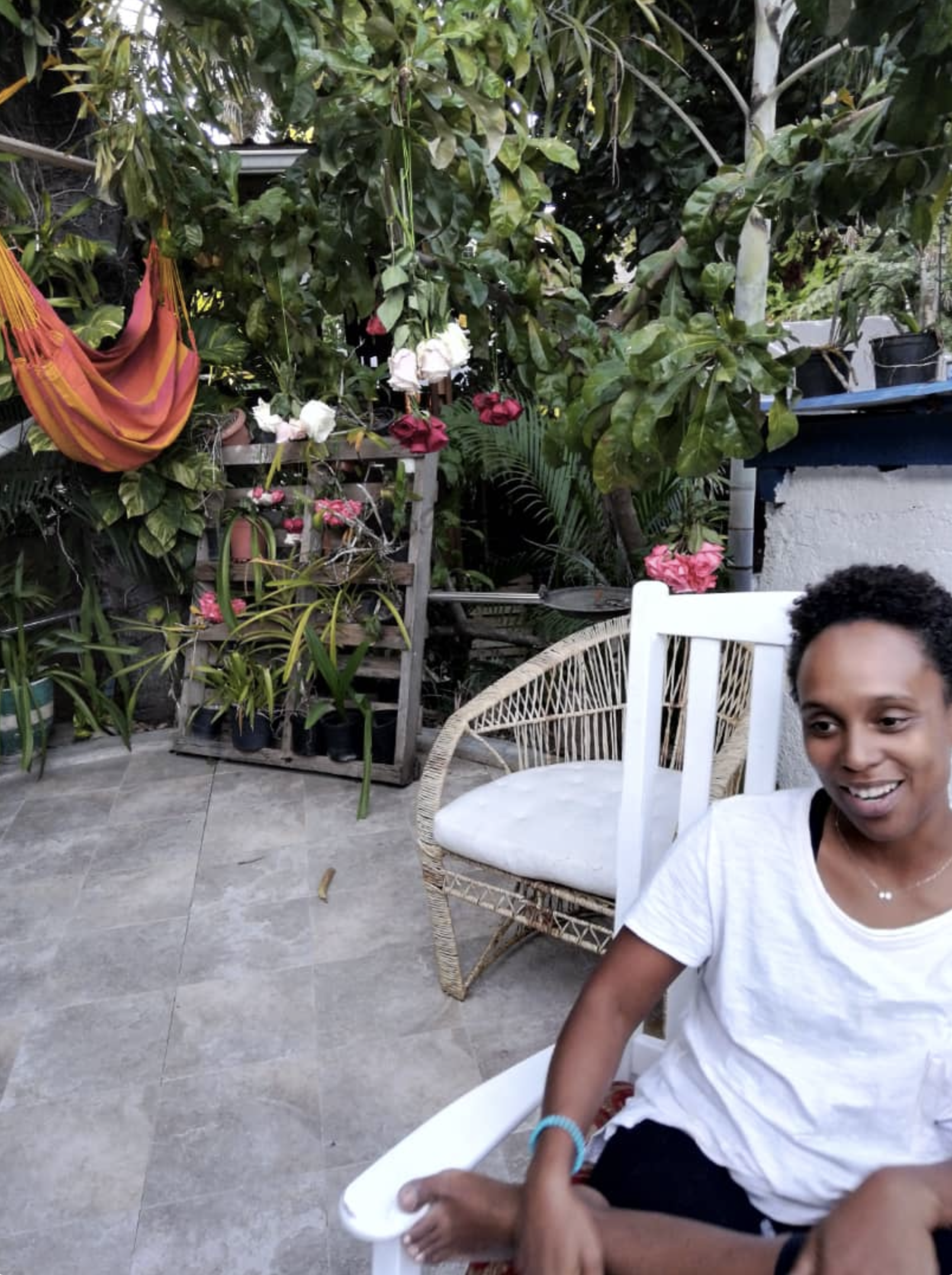
NaikeEstoy enamoradx de mi trabajo. Me encanta trabajar. Cuando recién llegué trabajaba en una ONG horrible pero el trabajo que hacía era maravilloso. Estaba siempre en zonas rurales, conversando y aprendiendo de la gente, de las mujeres. Y eso me colmó el corazón durante mucho tiempo porque adoro mi cultura, a la gente negra, a las mujeres negras, a las ancianas negras, lxs bebés negrxs. Es algo que me colma espiritualmente. Cuando vivíamos en Canadá, mis hijxs iban a esas escuelas sólo de blanquxs donde lxs trataban como mascotas. No hablaban creole ni francés. Y ahora corren libres por el jardín y ya están empezando a pelearse en creole. También encontré espacios de supervivencia en la gente a la que conocí. Forjé lazos con gente queer y con otra gente rara como yo, y eso ha sido realmente maravilloso. Pero ahora todo se ha vuelto más difícil porque ya no me siento segurx en Haití. En Puerto Príncipe ocurren casi 40 secuestros por semana, y esto es así desde 2018. Ahora tengo ataques de ansiedad y de pánico. Entonces, es hora de irme y he comenzado a preguntarme dónde está mi hogar. Pasé 19 años en Montreal pero allí nunca sentí que estuviera en mi casa. Desde que me fui, nunca lo extrañé y por eso no quiero volver. Últimamente estoy llorando mucho porque siento como que está comenzando mi segundo exilio.
Chinelo ¿Cómo es tu relación con el placer, el tiempo libre y el descanso?
Naike Mi relación con el placer, el tiempo libre y el descanso es la misma, porque para mí son una sola cosa. Son esos momentos vividos en los que disfruto del sol sobre mi rostro, por ejemplo. Es placer, tiempo libre y descanso a la vez.
Placer: Es el espacio al que siempre voy, casi siempre como refugio donde puedo celebrarme a mí mismx. Me reservo el poder y el derecho de hacer mucho ruido o nada de ruido cuando disfruto del placer que siento — de todo el placer en el que me deleito en abundancia, viciosamente, que incluye el placer de la soledad y el silencio pero no se limita a eso.
Tiempo libre: andar en bicicleta, ir a festivales de música, comer, descubrir vinos, bailar las danzas vudús tradicionales de Haití son algunas de las muchas opciones que se me ocurren en este momento.
Descanso: Para eso vivo. Como persona que sobresale en su trabajo y que está literalmente enamorada de él, es una paradoja lo haraganx que soy. Nadie lo sabe porque lo que todo el mundo ve es una persona que trabaja muchísimo y es muy exitosa. No saben que puedo ser inflexible en cuanto a disfrutar profundamente de no hacer nada.
Esta edición en alianza con Kohl: una publicación para Body and Gender Research analizará soluciones, propuestas y realidades feministas para transformar nuestro mundo actual, nuestros cuerpos y nuestras sexualidades.

نصدر النسخة هذه من المجلة بالشراكة مع «كحل: مجلة لأبحاث الجسد والجندر»، وسنستكشف عبرها الحلول والاقتراحات وأنواع الواقع النسوية لتغيير عالمنا الحالي وكذلك أجسادنا وجنسانياتنا.
«Si podemos heredar un trauma, ¿podemos heredar una huella relacionada con el amor?»
La conspiration du cercle des écrivain·e·s | Wazina Zondon
 |
 |
 |
| Également connue sous le nom de Réseau de recherche Teta, la conspiration des écrivain·e·s a été fondée en 2021 dans le cadre des cercles d’écriture hebdomadaires de Kohl. Le Réseau est un groupe transnational d’écrivain·e·s queer et féministes qui se consacrent à l’écriture, à la réflexion et à la création de monde collectifs. | Wazina Zondon est une Afghane élevée à New York. Elle centre son travail de recueil d’histoires et de narration sur les souvenirs collectifs et les rites de passage dans la diaspora. Elle travaille actuellement sur Faith : in Love/faith in love (Foi : en amour / Foi en l’amour), travail qui (re)retrace l’histoire d’amour de ses parents et l’empreinte d’amour héritée de sa famille. |
L’amour est sur le marché noir en enfer
car l’amour est un acide
qui ronge nos barres de fer.
Mais toi, moi et demain,
on jure en se tenant la main
que les luttes se multiplieront.
La scie à métaux a deux lames.
Le fusil a deux canons.
Nous portons la liberté en notre sein.
Nous sommes un complot.
Il est de notre devoir de lutter pour la liberté.
Il est de notre devoir de vaincre.
Nous devons nous aimer et nous soutenir mutuellement.
Nous n’avons rien d’autre à perdre que nos chaînes.
« Love » d’Assata Shakur

Voilà la question que pose Wazina Zondon dans son récit de souvenir collectif Loveprint. Loveprint est une déambulation, un chevauchement, un détour qui (re)crée, là où se rejoignent les entrevues et les essais personnels, nos histoires de famille et nos connaissances sur l’amour, les relations de couple et les aventures amoureuses. Sur les conseils de Wazina, la conspiration du cercle des écrivain·e·s s’est retrouvée autour d’une tentative de reproduction de cette épreuve littérale, sous la forme d’une écriture collective dans laquelle nos différentes histoires, nos genres et nos identités sexuelles se complètent et se contredisent. Nos voix empiètent les unes sur les autres, les unes complètent les phrases des autres et nous créons une conversation, un mémorial, des morceaux de nous qui parlent à un « nous ».
Je suis ce que l’on appelle un « joyeux accident ». Il y aurait beaucoup à dire à ce propos – une vie accidentelle, mais dans le même temps totalement voulue. Je sens que cela a façonné ma manière d’aimer. Je ne tombe pas simplement amoureuse, je prends le risque de la glissade qui me fera tomber. Ça a peut-être fait de moi une amor fati.
On m’a dit que je n’étais pas une enfant voulue. Donc, j’ai grandi et je suis devenue une adulte non voulue. Les origines de mon impression d’amour viennent d’avoir été éternellement non bienvenue. Je ne suis pas le fruit d’un amour ou d’une quelconque émotion joyeuse, mais bien plutôt de douleur et de fardeau. Je n’ai pas d’impression d’amour – du moins pas dans ce sens-là.
Je sais avec certitude que mes parents se sont aimés à un moment, mais la santé mentale est un tel démon – si personne ne lui tient tête, il n’y a pas de gagnant.
Je n’associerai jamais « l’amour » à mes parents ou à la famille normative. En grandissant, l’amour était accompagné de tant de violence et de responsabilités que je n’avais pas demandées, et pour lesquelles je n’étais pas prête. Alors que mes parents « s’aimaient », c’était un éthos toxique de violence, de jalousie et d’insécurité dans lequel grandir. J’ai grandi avec une immense faim de stabilité, et c’est ce que je suis aujourd’hui. Je prends des risques, mais jamais dans mon « espace d’amour ».
Je ne sais pas pourquoi ma mère a choisi d’accueillir une enfant
(moi) en son sein. Elle ne m’aime pas sous cette forme.
Ma mère me dit que si je dois penser à « trouver » l’amour, je ne devrais jamais prendre son mariage en exemple. Mon impression d’amour vient au contraire des chiens que j’élève depuis deux décennies (18 ans précisément). Le contraire est également vrai – ils m’ont élevée. Je comprends de mieux en mieux cet amour et ses différents niveaux, en leur compagnie.
Je n’ai pas découvert l’amour avec une « impression ». Dans notre maison, nous ne parlons pas d’amour. J’ai dû m’enseigner à aimer. J’ai dû y travailler dur. Malgré cela, j’échoue et malgré cela, je continue d’essayer et d’échouer tous les jours. L’échec est peut-être mon impression d’amour.
Mon impression d’amour est l’attention, la chaleur et la compréhension
que je donne aux personnes qui m’entourent, qu’il s’agisse d’un inconnu,
d’une amie, d’une proche ou d’une amante.
Mon impression d’amour est politique – sans calcul et sans réflexion.
Je suis né·e sous une pluie de bombes.
Mon impression d’amour est le négatif
de ce moment-là.
J’en sais plus sur ce que l’amour n’est pas que je n’en sais sur ce qu’est l’amour.
L’amour, ce n’est ni l’anxiété ni la panique.
L’amour, ce n’est pas de demander la permission de vivre ou de respirer. C’est toujours à propos de l’amour et il n’y a pas d’amour sans liberté.
Tout ce que l’on fait, on le fait avec le cœur, sauf l’amour. L’amour, c’est se servir de son esprit.
Je crains parfois que le langage de mon amour ne se perde dans la traduction.
--- Il y a de nombreuses manières
de cartographier les origines
de
la manière de ne pas
aimer
aimer juste assez
aimer beaucoup trop
aimer un peu
perdre un peu
à l’amour
à l’amour perdu ---
Je ne supporte pas l’idée du couple. Je ne supporte pas l’idée de vivre seule en vieillissant non plus. Je suis fatiguée de tout faire toute seule, de déménager seule, de payer le loyer et les factures toute seule… Je m’imagine avoir un arrêt cardiaque toute seule, et ça m’effraie. Je n’ai absolument pas envie de « me mettre en couple ». Je veux un monde où je peux épouser une amie, acheter une maison avec une amie, ne pas avoir de rapports sexuels.
Aimer plusieurs personnes ne corrompt
absolument pas l’amour partagé à deux, et que l’amour
soit romantique ou non n’est vraiment pas si
important que cela.
Lorsque je réfléchis à l’état déplorable de mes relations, je me rends compte que je suis dans le type de relation auquel on m’a formée. Malgré toute ma « radicalité », je n’ai toujours pas désappris les foutues normes de genre.
Mon besoin de stabilité ne me semble pas « assez radical ». Je veux sortir de cette catégorisation. Je veux quelque chose que je n’ai jamais eu. Je veux le rendre beau. Je veux me sentir belle et en sécurité – et seule la stabilité me procure ces sensations. Sûre, hors de danger, savoir que le foyer n’a rien à voir avec la violence ni les tensions.
--- Impression d’amour – j’aime sentir les livres pour voir où ils
ont été imprimés
Je tente de réfléchir à l’origine de ma compréhension et de ma
pratique de l’amour
A-t-on besoin d’origine, n’est-ce pas pareil à la pureté? Pas de
pureté ni d’origine de l’amour.
Pourquoi est-ce la compréhension et la pratique, et non
« l’émotion » qui vient à l’esprit? ---
Lorsque j’appelle mes parents, je ne raccroche pas après que l’on se soit dit au revoir, pour pouvoir entendre les bruits de la maison.
Lors de mon enterrement sunni, je veux que toutes les femmes et tous les hommes se rassemblent pour mon enterrement. Qu’est-ce que c’est que cette histoire de ne pas pouvoir dire au revoir à des morts d’un autre sexe? Il sera sunni parce que ma mère voudrait qu’il le soit. Il sera écologique – pas besoin de pierre tombale. J’adore tous les rituels funéraires. Le Coran c’est bien, mais je veux aussi de la musique. J’aime vraiment Asmahan, Oum Koulthoum et The Stones Roses.
J’ai une liste de musiques pour la semaine, du lundi au vendredi. Et deux autres pour la fin de semaine : une pour les samedis et une pour les dimanches. Je voudrais que celles et ceux qui m’ont aimée mettent la musique que j’écoutais, en respectant les jours – avec une légère tolérance tant que l’on respecte les listes de musiques.
Je veux être entourée par la ou les personnes qui m’auront aimée, même pour un bref instant. En musique et entourée de bouquets de fleurs coupées. Je ne veux pas qu’on me trouve morte; je veux mourir en riant avec des êtres aimés.
Je veux que l’on se rappelle de moi comme de quelqu’un qui aimait.
I don’t need to feel loved in death. I need the people around me to feel I loved them, even after I die. Being loved in death is about those who are alive. So I think more about how we come together as a living and loving community in the death of those we love and live with. How we take their memories with us. How we become archives of their lives.
--- Parfois, on ne peut aimer les gens que dans leur mort ---
Je dois revenir en arrière à l’idée du corps connecté à un espace. Ma famille est très réduite et, bien que ne venions pas de différents endroits, c’est comme si chaque génération était partie dans un nouveau lieu. C’est peut-être la raison pour laquelle la mort n’est pas reliée à un endroit spécial, à un cimetière. Il est courant dans notre famille d’enterrer les morts sans nom ou pierre tombale, ou de disperser les cendres dans le vent. Je me sens apaisée par ce genre de commémoration sans lieu fixe. L’idée que mes cendres puissent fertiliser une nouvelle vie me donne le sentiment d’être aimée, d’être remémorée par la re-création. Ma grand-mère est décédée en début d’année du fait de complications suite à la vaccination. Deux heures après son décès, ma famille riait aux larmes en repensant aux blagues qu’elle faisait, à sa manière hilarante de raconter des histoires. Nous avons ri et l’avons aimée, et c’était comme si elle était à nouveau assise avec nous. Voilà ce qui me ferait me sentir bien – pouvoir fertiliser les sols, fertiliser les conversations et une commémoration collective.
--- Il y avait
Deux rues dans lesquelles
Je marchais
Je courais
Je jouais
Je demeurais
Il y avait
Cinq heures pendant lesquelles
Le soleil était chaud
Le ciel était bleu
La terre était verte
Il y avait
Une fleur que je pouvais
Sentir
Toucher
Pincer
Écraser
Il y avait
Les amies que je pouvais
Caresser
La nourriture
Que je pouvais
inhaler
La langue
Qui me glissait des
lèvres
Il pourrait toujours y avoir
Tous ces nombreux lieux
Et des choses
Et des gens
Après moi ---
Peut-être qu’une promesse que je serai « spatialement commémorée » en tant que plante et soignée à tour de rôle, jusqu’à ce qu’elle devienne un arbre, serait suffisante. Pas de nom, pas de plaque – juste la plante/l’arbre, et savoir qu’on en prendra soin. Quant à mon corps, je veux qu’il soit incinéré sans aucune forme de rituel et que les cendres de mes os soient libérées dans la mer d’Arabie.
J’ai besoin que l’on traite mon corps aussi subversivement qu’il a vécu.
Je ne veux pas être enterrée à côté de ma famille. Dans ce petit tiroir à côté de toutes les personnes qui ne m’ont jamais connue. Coincée dans la mort comme je l’ai été dans la vie. Je veux être incinérée, et que mes cendres soient finalement libres.
Je veux être autorisé·e à passer, pas pendre dans l’entre-deux, pour être une présence, un processus actif, un trépas.
Je vous demanderai de :
Je veux que l’on se souvienne de moi pour l’amour que j’ai mis dans ce monde. Je veux que
mon corps soit donné, et que mes organes continuent d’alimenter
l’amour d’une ou d’autres vies.
--- L’odeur du jasmin ---
Cette édition du journal, en partenariat avec Kohl : a Journal for Body and Gender Research (Kohl : une revue pour la recherche sur le corps et le genre) explorera les solutions, propositions et réalités féministes afin de transformer notre monde actuel, nos corps et nos sexualités.
نصدر النسخة هذه من المجلة بالشراكة مع «كحل: مجلة لأبحاث الجسد والجندر»، وسنستكشف عبرها الحلول والاقتراحات وأنواع الواقع النسوية لتغيير عالمنا الحالي وكذلك أجسادنا وجنسانياتنا.
เราจะติดต่อกับองค์กรพาร์เนอร์ในอดีตเพื่อให้มั่นใจว่าความพยายามที่เคยเตรียมไว้ในอดีตมีความหมาย หากองค์กรของคุณมีการเปลี่ยนแปลงข้อมูลติดต่อจากฟอรัมครั้งก่อนหน้ากรุณาแจ้งให้พวกเราทราบเพื่อให้เราสามารถติดต่อถึงคุณได้
Mientras el capitalismo heteropatriarcal continúa forzándonos al consumismo y el acatamiento, observamos que nuestras luchas están siendo compartimentadas y separadas por fronteras tanto físicas como virtuales.
Por María Bonita - Venezuela
Las ancestras hacen un círculo
Sagrado, vivo, poderoso
Estamos en el medio
Sintiendo su fuerza.
Suena el tambor de la tierra
Nuestra piel se viste de colores
Somos verdes, rojas, naranja, azules, violetas, negras
Suena el tambor de la tierra
La voz vibra, el grito ocupa, el canto se presenta, arrulla el sueño, despierta conciencia.
Suena el tambor de la tierra
Y la mirada se hace cómplice, amiga, profunda.
Suena el tambor de la tierra
El corazón es uno solo, percuta el alma, nos invita a movernos, nos vuelve deseo, nos indica un camino.
El de la juntanza comunera, el del poder popular, el del autogobierno, el de la revolución de las mujeres, el del cuidado subversivo.
Suena el tambor de la tierra
Y yo les invito a entrar, a ser voz, piel, mirada, semilla, fuego, canción, comunión.
Suena el tambor de la tierra
Y yo les invito a descubrirla, a amarla, a conocerla, a defenderla, desde el corazón de la comuna
Hace 25 años que habitan las mismas calles polvorientas, en lo más alto de una loma con nombre de león, vienen de diferentes lugares, muchas con tradición campesina, tienen la piel color rebeldía, color cardón, porque en ellas habita el semiárido larense, de allí su amor por la vida, su aprecio, el cuidado y resguardo por el agua y el territorio, es que son herederas de la estirpe Gayón, Ayaman, comunidades indígenas que habitaron y habitan el norte del estado Lara.
Desde muy jóvenes aprendieron que la maternidad es un signo del que no se escapa con facilidad, cuidar a los hijos, la casa, el marido, lavar, planchar, cocinar, fregar, todo tenía que estar impecable, insisten.
Y la vida era eso, eso y la violencia, el insulto, el maltrato, el golpe, el reclamo, la queja era algo de esperar, algo que parecía natural, así se vivían los días, la cotidianidad, en aquellas calles de tierra viviendo en pequeñas casitas de chapa, de zinc, sin servicios básicos, esa era pobreza, la precariedad cuando llego un hombre, si, un hombre, un proyecto, una revolución inusual porque se hizo sin la guerra.
Entonces las invitaron a salir, las invitaron a tomar la calle, el espacio público y ellas en ese proceso derribaron puertas y ventanas, rompieron cadenas, se soltaron el cabello, se sintieron libres, libres cimarronas, rebeldes caribes, guerreras libertadoras.
Y es que eso de independencia y soberanía es algo que las que pudieron estudiar lo habían leído, pero sentirse, sentirse protagonistas de un proceso de cambio de transformación social, eso es una importante conquista que tenemos que mencionar, que no podemos olvidar.
En lo alto de esa loma se siente la complicidad, el fuego compartido, los años de lucha, cuentan que una de ellas se iba con su paragua por las tardes y de casa en casa tomando un cafecito, conversando con la gente iba convocando, convenciendo
¡Vamos a hacer el consejo comunal!
¡Avancemos hacia la comuna!
Hagamos planes de trabajo para la educación, el deporte, la salud, la alimentación, el comité de mujer e igualdad de género, la economía.
¡Vamos a ser Gobierno Popular para que el Barrio se Ponga Bonito!
Y así llegaron las casas, el consultorio popular, el simoncito, el proyecto de electrificación, el de agua potable son algunos de los logros comunales, de los sueños comunales hechos realidad.
Y ustedes se preguntaran como llego una cuentera, una cuenta cuentos a esa loma con nombre de león
Y yo les digo: es que nací bochinchera, dando pelea, nací callejera diría mi abuela, disposicioner agregaría el Comandante Chávez, de tanto andar, renegar, pelear y dudar de aquel militar, me termino convenciendo con el proyecto comunal, con eso de ser autogobierno, de que el pueblo administre sus recursos, con eso de todo el poder para las comunas, con eso me convenció.
Pero yo sabía que algo faltaba porque las mujeres, las mujeres comuneras seguimos construyendo poder popular y nuestro corazón se viste de lucha antiimperialista y anticapitalista pero hay algo que nos duele, que nos sigue afectando, hay heridas del patriarcado que están presente.
Entonces un día, me descubro llorando y sonó el tambor de la tierra y las ancestras hablaron.
Me vi rodeada de un grupo de mujeres que me sostuvo, me contuvo mientras me derramaba frente a ellas, mientras dolía y me liberaba al mismo tiempo, así que descubrí que el amor entre mujeres te sana, te salva, que nuestra amistad en profundamente política y que la sororidad es una manera de andar, de vivir la vida, a partir de ese momento no me volví a sentir sola, no me sentí más nunca una isla, porque sé que hay un grupo de mujeres que me llevan, me traen, me aman, me cuidan y viceversa, sé que esta forma de hacerme feminista con la mística de mujeres por la vida es una experiencia de sentirse conectada, amada por mujeres aunque no las vuelvas a ver, entonces como no querer que esto que me ocurrió, le pase a otras, este amanecer, este parirme un nuevo corazón es un regalo de las diosas que tiene que ser compartido.
Por eso decidí unirme a ellas y echar a andar por las comunas, comencé a caminar, a conocer otras experiencias, comenzamos a debatir sobre salud, educación, alimentación, nos fuimos predicando el verbo antipatriacal y las comunas libres de machismo, insistimos en recuperar la sabiduría ancestral, la intuición, decidimos defender la vida hablando de aborto y nos vemos riendo, llorando, debatiendo, reflexionando, me encuentro con macu, con la china, yenni, carolina, maria, ramona, irma y hasta con nuestra hermana yenifer que se nos fue hace poco.
Este es mi homenaje a ellas, a las mujeres loma a las mujeres leonas, ellas sin duda se sembraron en mí con tanta fuerza que son parte de mis latidos.
Ellas sin duda marca un camino, ellas son las que hacen posible el cuidado familiar, el cuidado colectivo, ellas son también una fuerza, una fuerza en el territorio para superar el bloqueo, la violencia patriarcal, la traición política, para superar la burocracia la corrupción.
Ellas sin duda marcan un camino
Ellas sin duda son una brújula
Ellas sin duda son el corazón de la comuna
Gracias.
ถ้ากลุ่มหรือองค์กรของคุณได้รับการสนับสนุนเงินทุน คุณสามารถพูดคุยกับแหล่งทุนของคุณได้ตั้งแต่ตอนนี้หากพวกเค้าสามารถสนับสนุนการเดินทางและการเข้าร่วมของคุณได้ หลายองค์กรวางแผนงบประมาณปีหน้าในปี 2566 จึงเป็นการดีกว่าหากสามารถพูดคุยกับพวกเค้าก่อนภายในปีนี้
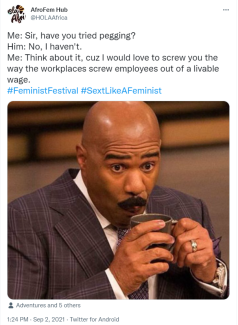
Yo: Señor, ¿probó por el culo?
Él: No, no probé.
Yo: Piénselo, porque me gustaría cogérmelo / joderlo tal como a lxs trabajadorxs nos cogen / joden en los trabajos cuando lo que nos pagan no alcanza para vivir.