Paula Ettelbrick
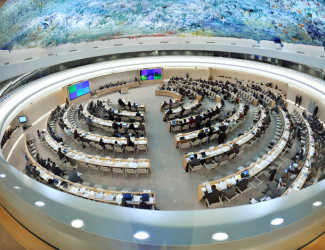
The Human Rights Council (HRC) is the key intergovernmental body within the United Nations system responsible for the promotion and protection of all human rights around the globe. It holds three regular sessions a year: in March, June and September. The Office of the UN High Commissioner for Human Rights (OHCHR) is the secretariat for the HRC.
Debating and passing resolutions on global human rights issues and human rights situations in particular countries
Examining complaints from victims of human rights violations or activist organizations on behalf of victims of human rights violations
Appointing independent experts (known as “Special Procedures”) to review human rights violations in specific countries and examine and further global human rights issues
Engaging in discussions with experts and governments on human rights issues
Assessing the human rights records of all UN Member States every four and a half years through the Universal Periodic Review
AWID works with feminist, progressive and human rights partners to share key knowledge, convene civil society dialogues and events, and influence negotiations and outcomes of the session.
Esta historia es sobre la manera en que un grupo cada vez más diverso de feministas del Pacífico se organizaron a lo largo de los años para asistir a los Foros de AWID, y el modo en que ese proceso lxs transformó en forma personal, como organizaciones y como movimiento a través de lo que aprendieron, descubrieron y experimentaron. Ilustra la importancia de los Foros como espacio que permitió que una región que tiende a ser marginada o ignorada a nivel global pueda construir una presencia sólida en el movimiento feminista, que luego es replicada en otros espacios internacionales de derechos de las mujeres.
Au besoin, vous avez la possibilité de sauvegarder vos réponses en cours d’enquête, pour y revenir plus tard. KOBO enregistrera vos brouillons de réponses dans le coin supérieur gauche de la page de l'enquête et rechargera votre dossier lorsque vous reviendrez à l'enquête. Assurez-vous simplement de continuer à partir du même ordinateur et du même navigateur.
Écoutez cette histoire :

Thank you for your interest, but the page you're looking for no longer exists.
You can explore more content and updates at https://www.awid.org.
No, it's not. This survey builds on AWID’s 20-year history of mobilizing more and better funding for feminist-led social change and is the third iteration of our Where is the money for feminist organizing? research. Our aim is to repeat the WITM survey every 3 years.
Contenu lié
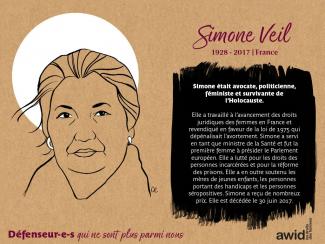
Huffington Post: Mort de Simone Veil: l'ancienne ministre de la Santé est décédée ce vendredi
Le Monde: Mort de Simone Veil, icône de la lutte pour les droits des femmes

Le Forum international de l'AWID est un événement mondial qui offre aux participant·e·s une occasion unique de se rencontrer, tisser des alliances, de faire la fête et d’apprendre des autres dans une ambiance stimulante, riche en émotions et en toute sécurité.
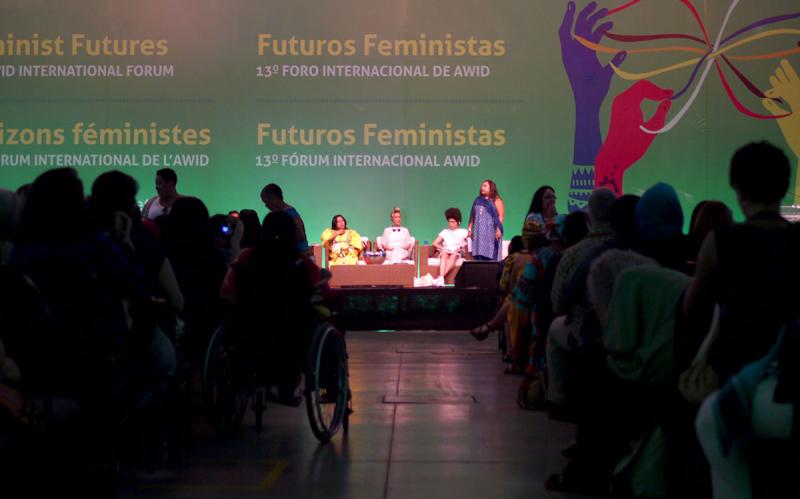
De plus en plus, nous nous efforçons de penser le processus du Forum au-delà des limites de l’événement lui-même. Nous ouvrons des discussions avec des partenaires et renforçons des alliances tout au long de l’année. Nous essayons d’être au plus proches des mouvements locaux pour comprendre leurs difficultés et co-créer des solutions.
Le Forum de l’AWID un espace propice aux discussions en profondeur, qui repousse nos limites internes et externes et favorise le développement personnel et professionnel, en plus de renforcer nos mouvements pour la justice sociale, de genre et les droits des femmes.
Nous envisageons ce moment de rencontre comme une réponse à l’urgence de favoriser un engagement plus marqué et une action mieux concertée entre les organisations féministes, les défenseur·e·s des droits des femmes et les autres activistes de justice sociale. Pour nous, le Forum est plus qu’un événement. Il nourrit nos réflexions respectives et nous aide à cerner des initiatives concrètes dans lesquelles les mouvements féministes et peuvent s’engager avec d’autres acteurs·trices.
Au départ un événement national d’environ 800 personnes, le Forum rassemble aujourd'hui plus de 2 000 féministes, des dirigeant·e·s communautaires, des activistes de justice sociale et des bailleurs de fonds du monde entier.
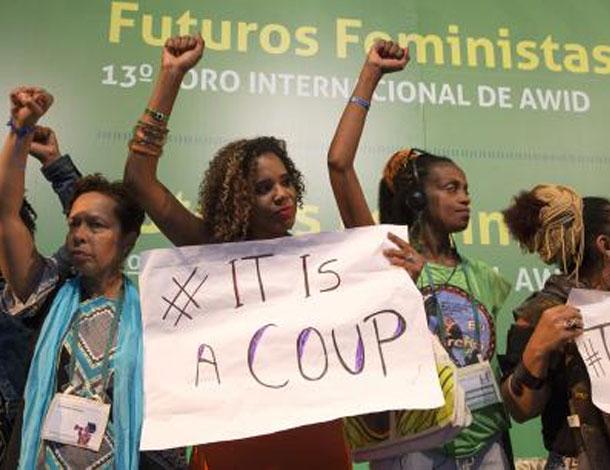
Compte tenu de la complexité du monde d'aujourd'hui, le Forum de l'AWID 2016 ne s'est pas concentré sur un « problème » particulier mais a plutôt exploré comment créer des moyens efficaces de travailler ensemble !
Malgré le contexte difficile dans lequel s’est déroulé le Forum de 2016 (l’épidémie de Zika, la grève au ministère des Affaires étrangères brésilien, la destitution de la présidente Dilma Rousseff et l’instabilité qui a suivi), il a rassemblé plus de 1800 participant-e-s issu-e-s de 120 pays et territoires de toutes les régions du monde.
Téléchargez le rapport d’évaluation
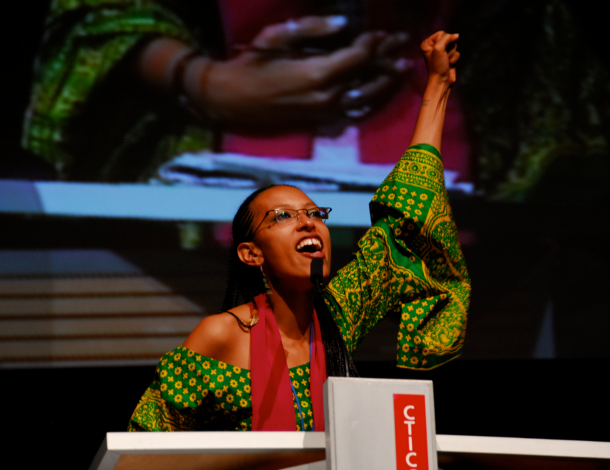
Le 12e Forum de l’AWID s’est tenu à Istanbul en Turquie en 2012, avec pour thème central Transformer le pouvoir économique pour avancer les droits des femmes et la justice. Ce Forum fut le plus important et le plus diversifié de l’histoire, rassemblant quelque 2 239 activistes pour les droits des femmes en provenance de 141 pays différents. Parmi elles-eux, environs 65 % venaient de pays du Sud, près de 15 % étaient des jeunes femmes de 30 ans et moins, alors que 75 % participaient au Forum pour la première fois.
Le Forum s’est focalisé sur la transformation du pouvoir économique pour faire progresser les droits des femmes et la justice en proposant plus de 170 activités incluant des ateliers de formation en économie féministe, en passant par toute une séries d’ateliers de discussion et autres tables rondes solidaires autour de 10 grandes questions cruciales.
Dans l’élan du Forum, nous avons transformé la page qui lui était dédiée en un outil multimédia en ligne qui intègre également les contenus générés par les participant-e-s sur toutes les composantes du Forum.
Visitez l'archive web du Forum 2012
Si tienes alguna pregunta o duda, contáctanos a través del formulario disponible aquí, indicando «Encuesta ¿Dónde está el dinero?» en el título del mensaje. También puede escribirnos a witm@awid.org.
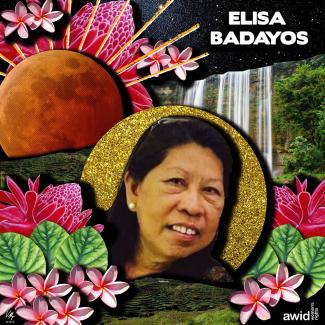
She also served as an organiser of urban poor communities in Cebu Province, and worked with Desaparecidos, an organization of families of the disappeared.
Elisa and two of her colleagues were killed on November 28, 2017 by two unidentified men at Barangay San Ramon, Bayawan city in the Negros Oriental province during a mission to investigate alleged land rights abuses in the area.
She is survived by four children.
Escucha esta historia aquí:
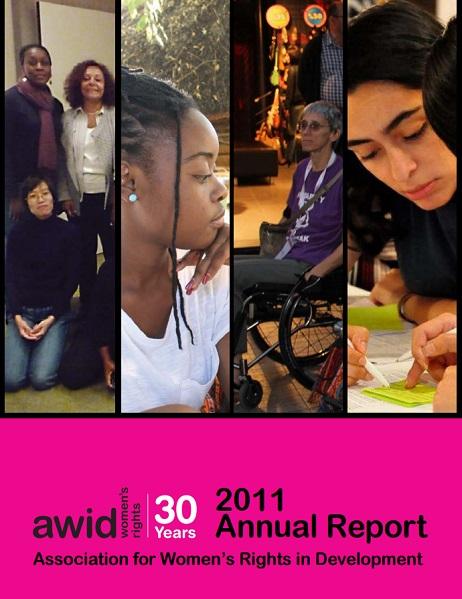
In order to achieve our mission, AWID works through multi-year interconnected programs which encompass a variety of strategies including knowledge production and dissemination, action-research, advocacy, alliance building, and convening strategic dialogues.
Our 2011 Annual Report provides key highlights of our work during the year to contribute to the advancement of women’s rights and gender equality worldwide.
Создать ориентированную на феминистские реалии доказательную базу движения денег их получателей
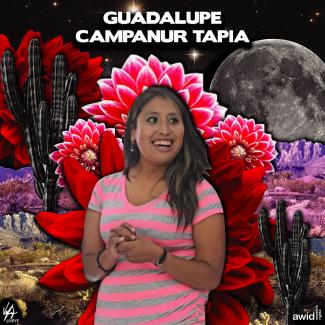
Guadalupe fue una activista ambiental comprometida en la lucha contra el crimen en Cherán, México.
En abril de 2011 ayudó a derrocar el gobierno local, y participó en patrullas locales de seguridad, que abarcaban los bosques municipales. Era unx de lxs líderes indígenas de Cherán que llamaban a la población a defender sus bosques contra la tala forestal ilegal y despiadada. Su trabajo en defensa de adultxs mayores, niñxs y trabajadorxs la convirtió en un ícono de su comunidad.
Fue asesinada en Chilchota, México, aproximadamente 30 kilómetros al norte de su ciudad natal de Cherán.