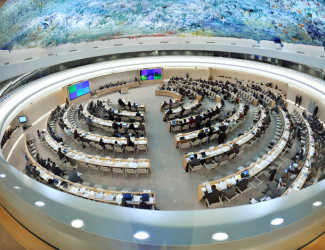
The Human Rights Council (HRC) is the key intergovernmental body within the United Nations system responsible for the promotion and protection of all human rights around the globe. It holds three regular sessions a year: in March, June and September. The Office of the UN High Commissioner for Human Rights (OHCHR) is the secretariat for the HRC.
The HRC works by:
Debating and passing resolutions on global human rights issues and human rights situations in particular countries
Examining complaints from victims of human rights violations or activist organizations on behalf of victims of human rights violations
Appointing independent experts (known as “Special Procedures”) to review human rights violations in specific countries and examine and further global human rights issues
Engaging in discussions with experts and governments on human rights issues
Assessing the human rights records of all UN Member States every four and a half years through the Universal Periodic Review
AWID works with feminist, progressive and human rights partners to share key knowledge, convene civil society dialogues and events, and influence negotiations and outcomes of the session.
With our partners, our work will:
◾️ Monitor, track and analyze anti-rights actors, discourses and strategies and their impact on resolutions
◾️Support the work of feminist UN experts in the face of backlash and pressure
◾️Advocate for state accountability
◾️ Work with feminist movements and civil society organizations to advance rights related to gender and sexuality.
Related Content
Когда будут доступны результаты опроса?
Мы проанализируем ответы, чтобы получить представление о тенденциях, и представим результаты на 15-м Международном форуме AWID в Бангкоке, а также в режиме онлайн, в декабре 2024 года. Зарегистрируйтесь для участия в Форуме здесь!
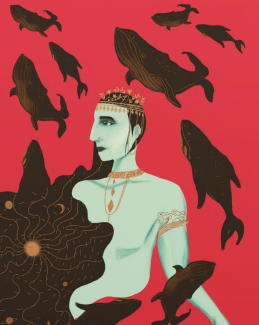
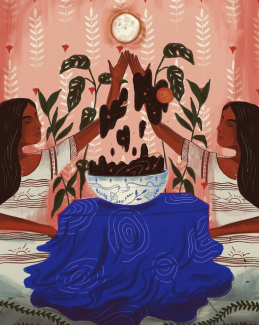
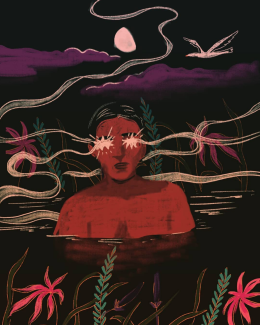
Upasana Agarwal
Forgotten SongOde to the MoonVapour and Fire
About Upasana Agarwal
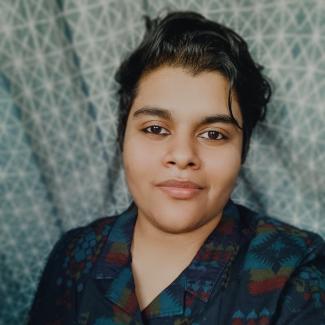
Upasana is a non binary illustrator and artist based out of Kolkata, India. Their work explores identity and personal narratives by using a visual remnant or evidence of the contexts they work with. They are especially drawn to patterns which to them communicate complex truths about the past, present and future. When Upasana is not illustrating they organise and run a queer and trans community art centre in the city.
Bessy Ferrera a défendu sans relâche les droits humains des personnes trans, travailleuses du sexe et séropositives au Honduras.
Bessy était aussi membre d’Arcoíris, une organisation qui soutient la communauté LGBTI+. Elle était en outre la personne référente de la plateforme Derechos aquí y Ahora (les droits ici et maintenant) au Honduras et plaidait fermement en faveur d’une pleine citoyenneté pour les personnes trans, ainsi que pour l’adoption d’une loi sur l’identité de genre qui permettrait aux personnes trans de changer légalement d’identité de genre.
« Depuis le début de l’année [2019], la communauté trans a été victime d’une série d’attaques, parce qu’elle a défendu et demandé des droits. » Rihanna Ferrera (sœur de Bessy)
Bessy était une travailleuse du sexe qui a été tuée par balle par deux hommes, au début du mois de juillet 2019, alors qu’elle travaillait dans les rues Comayagüela. Ses assaillants ont par la suite été arrêtés.
Bessy fait partie des nombreux·ses activistes des droits LGBTI+ du Honduras, assassiné·e·s en raison de leur identité et de leur travail, parmi qui se trouvent : Cynthia Nicole, Angy Ferreira, Estefania "Nia" Zuniga, Gloria Carolina Hernandez Vasquez, Paola Barraza, Violeta Rivas et Sherly Montoya.
Le cas de Bessy incarne l’injustice, de même qu’un problème plus large de violence systémique à laquelle se confronte la communauté LGBTI+ au Honduras, puisque l’État ne parvient pas à garantir l’offre de droits ni à fournir une protection. Cela est à l’origine d’une culture de l’impunité.
Malgré les risques auxquels sont confronté.e.s les activistes LGBTI+ au Honduras, tous et toutes continuent leur travail pour défier et résister à la violence, ainsi que pour combattre la stigmatisation et la discrimination au quotidien.
« Si je meurs, il faut que ce soit pour quelque chose de bien, pas pour une futilité. Je ne veux pas mourir en fuyant, en étant lâche. Si je meurs, je veux que les gens disent que je suis mort·e en me battant pour ce qui m’appartient » - membre d’Arcoíris
FRMag - United against violence
United against the violence
by Karina Ocampo
In a hidden corner of Chiapas, Mexico, women and sexual dissidents have come to organize our actions. (...)
"This community is a place for connections, to understand our individual fights as part of global struggles, and sometimes even dance! There aren’t places like this online where you can meet real grassroots activists from all over the world and build solidarity and sisterhood."
- Paz Romero, Argentina
Entender el contexto de las amenazas anti-derechos
Capítulo 2
El creciente poder de los actores anti-derechos no se está desarrollando en un vacío. Entender el auge del ultranacionalismo, del poder corporativo irrestricto, del incremento de la represión y de la disminución del espacio cívico resulta clave para contextualizar las amenazas anti-derechos que enfrentamos actualmente.
Hoy en día, una cantidad considerablemente mayor a la mitad de la población mundial está gobernada por líderes de extrema derecha. En este escenario, lxs defensorxs de derechos humanos y lxs feministas están trabajando arduamente para «mantenerse firmes» y proteger el multilateralismo y el sistema internacional de derechos humanos. También enfrentan el riesgo de que su compromiso acarree represalias violentas. Al mismo tiempo, estas instituciones están cada vez más sujetas a los intereses del sector privado. Las grandes empresas (en particular, las corporaciones transnacionales) están ocupando asientos en la mesa de negociación y posiciones de liderazgo en una gran cantidad de instituciones multilaterales, incluida la ONU. Este nexo de ultranacionalismo, espacio cívico restringido y captura corporativa está teniendo un tremendo impacto sobre la posibilidad de que, alguna vez, logremos obtener derechos humanos para todxs.
Índice de contenidos
Nacionalismo y ultranacionalismo
Captura corporativa: el poder corporativo irrestricto está poniendo los derechos en riesgo
Represalias y espacio cívico restringido para lxs activistas feministas y lxs defensorxs de los derechos humanos de las mujeres y personas LGBTIQ+
Historia de movimiento de resistencia: El artículo 16 de la CEDAW: un camino hacia la reforma de las leyes de familia discriminatorias en contextos musulmanes
Incluso en tiempos de crisis climática, los gobiernos continúan alentando el crecimiento de las industrias agrícolas a gran escala. Estas actividades envenenan la tierra, amenazan la biodiversidad y destruyen la producción de alimentos y los medios de vida locales. Mientras tanto, aunque las mujeres producen la mayoría de nuestros alimentos en el mundo, casi no poseen tierra.
¿Qué pasaría si percibiéramos la tierra y la Naturaleza no como una propiedad privada para ser explotada, sino como una totalidad con la cual aprender y coexistir en armonía? ¿Y si repararíamos nuestras relaciones con la tierra y adoptaríamos alternativas más sostenibles que nutran tanto al planeta como a sus comunidades?
Nous Sommes la Solution (Somos la Solución, NSS) es uno de los muchos movimientos liderados por mujeres que se esfuerzan por lograr este objetivo.
"She was not a person. She was a power."
- a fellow activist remembering Navleen Kumar
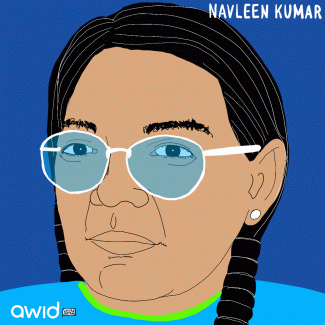
Navleen Kumar was a fervent land rights and social justice activist in India.
With commitment and integrity, she worked for more than a decade to protect and restore the lands of Indigenous people (adivasi) in Thane district, an area taken away by property and land developers using such means as coercion and intimidation. She fought this injustice and crime through legal interventions at different courts, realizing that manipulation of land records was a recurrent feature in most cases of land acquisition. In one of the cases, that of the Wartha (a tribal family), Navleen found out that the family had been cheated with the complicity of government officials.
Through her work, she helped restore the land back to the Wartha family and continued to pursue other cases of adivasi land transfers.
“Her paper on the impact of land alienation on adivasi women and children traces the history and complexities of tribal alienation from the 1970s, when middle class families began to move to the extended suburbs of Mumbai as the real estate value in the city spiralled.
Housing complexes mushroomed in these suburbs, and the illiterate tribals paid the price for this. Prime land near the railway lines fetched a high price and builders swooped down on this belt like vultures, to grab land from tribals and other local residents by illegal means.” -Jaya Menon, Justice and Peace Commission
During the course of her activism, Navleen received numerous threats and survived several attempts on her life. Despite these, she continued working on what was not only important to her but contributed to changing the lives and realities of many she supported in the struggle for social justice.
Navleen was stabbed to death on 19 June 2002 in her apartment building. Two local gangsters were arrested for her murder.
FRMag - Resistance from the Kitchen
Nuestra arepa: Cocina en resistencia
por Alejandra Laprea
Vivo en un país de lo imposible, donde no caen bombas pero padecemos una guerra. (...)
Se rassembler à l’échelle mondiale, en tant qu’individus et mouvements, nous permet de générer une force considérable. Rejoignez-nous à Bangkok, en Thaïlande et en ligne en décembre 2024.
Promouvoir les programmes féministes : principales avancées en matière de genre et de sexualité
Chapitre 1
Alors que les fondamentalismes, les fascismes et autres systèmes d’oppression se métamorphosent et trouvent de nouvelles tactiques et stratégies pour consolider leur pouvoir et influence, les mouvements féministes persévèrent et célèbrent leurs victoires nationales, régionales et internationales.
La [MB1] reconnaissance en 2019 par le Conseil des droits de l’Homme du droit à l’intégrité et à l’autonomie corporelles, par exemple, a marqué une étape cruciale. Des résolutions du Conseil sur la discrimination envers les femmes et les filles admettent cependant un recul lié à des groupes de pression rétrogrades, des conceptions idéologiques ou un détournement de la culture ou la religion pour s’opposer à l’égalité de leurs droits. Des avancées féministes sont aussi notées dans le travail des Procédures spéciales, qui soulignent notamment l’obligation des États de contrer les doctrines de l’idéologie du genre, rappellent à l’ordre les antidroits qui détournent des références à la « culture », et signalent que les convictions religieuses ne peuvent pas servir à justifier la violence ou la discrimination.
Sommaire
Niveau national
Sphères mondiales
Exercice : Cartographions et célébrons nos victoires!
Gender Impact Investing & The Rise of False Solutions:
An Analysis for Feminist Movements
Gender Impact Investing (GII) is now trending as a solution to gender inequality. Yet, as our report indicates, it is actually part of the problem. Public and private institutions marketing GII equate it with promotion of gender equality and with increased resources for women and girls.
Neither claim is evidence-based.
Rather, GII is another expression of subjecting our lives and societies to the same financial logic that has shaped, and continues shaping, the profound inequalities in our world.
With this report, AWID offers the readers - feminists, gender justice advocates and stakeholders in gender impact investing - a critical analysis and substantiated evidence to understand GII, its narratives, and economic and political implications for feminist movements.
Lo personal es político, y la apasionada y valiente Nadyn Jouny personificó este mantra feminista. Nadyn experimentó de primera mano el dolor de la violencia estructural de los sistemas legales que despojan a las mujeres de sus derechos.
Cuando Nadyn decidió solicitar el divorcio, los tribunales religiosos chiítas, bajo las Leyes de Estatuto Personal Libanesas, le negaron la custodia de su joven hijo Karam. Nadyn, como tantas otras mujeres del Líbano y de otros países, se vio atrapada entre el dolor imposible de dejar una relación no deseada y abusiva y de perder a la vez los derechos sobre su hijo. Sin embargo, Nadyn se defendió, y lo habría de hacerlo hasta el último día.
Nadyn utilizó su habilidad con los medios de comunicación para convertirse en una voz franca a favor de las mujeres que luchan contra la discriminación en la legislación familiar, en el Líbano y a nivel internacional. Nadyn cofundó el grupo autofinanciado "Protecting Lebanese Women" [Protegiendo a las Mujeres Libanesas] (PLW, por sus siglas en inglés) y se unió a muchas otras madres libanesas que se enfrentaban a problemas similares de custodia. Juntas, trabajaron para crear conciencia sobre las injusticias extremas a las que se enfrentaban, a nivel nacional, protestaron ante los tribunales religiosos por sus derechos y, a nivel internacional, llamaron la atención de los medios de comunicación.
Nadyn también trabajó con ABAAD - Resource Center for Gender Equality [Centro de Recursos para la Igualdad de Género], otra organización por los derechos de las mujeres en el Líbano, para realizar campañas en favor de los derechos de las mujeres, la igualdad en la legislación familiar y relativa a las custodias y contra los matrimonios forzados y precoces.
Para muchxs de sus colegas, Nadyn llegó a "simbolizar la lucha de una madre libanesa contra la supresión y la misoginia de todo tipo" (en inglés), al utilizar "su experiencia personal y trayectoria individual de empoderamiento, dio a otras mujeres esperanza para que ellas también pudieran ser un catalizador para el cambio positivo" - ABAAD - Centro de Recursos para la Igualdad entre los Géneros, Líbano.
El 6 de octubre de 2019, Nadyn murió trágicamente en un accidente de automóvil cuando se dirigía a protestar por los injustos aumentos de impuestos en un país que ya se enfrentaba a una espiral de crisis financiera. Nadyn Jouny tenía solo 29 años en el momento de su muerte.
FRMag - Armenians
Arménien·ne·s, le féminisme est notre passé et notre avenir
par Sophia Armen
Que cela vous plaise ou non, les ungerhouis font partie intégrante de nos histoires de résistance et elles ne disparaîtront pas de sitôt. (...)
✉️ By registration for larger groups. Drop-ins for smaller groups. Register here
📅 Tuesday, March 11, 2025
🕒 12.00-2.00pm and 4.00-6.00pm EST
🏢 Chef's Kitchen Loft with Terrace, 216 East 45th St 13th Floor New York
Organizer: AWID
Illumination par la lumière de la pleine lune : une expérience BDSM africaine
Akosua Hanson est une activiste artistique, basée à Accra, au Ghana. Son travail se répartit entre la radio, la télévision, la presse écrite, le théâtre, le cinéma, les expositions de bandes dessinées, les installations artistiques et le roman graphique. L’activisme d’Akosua se concentre sur le panafricanisme et le féminisme et s’intéresse particulièrement au point d’intersection entre l’art, la culture pop et l’activisme. Elle a une maîtrise de philosophie en études africaines axée sur le genre et la pensée philosophique africaine. Akosua Hanson est la créatrice de Moongirls, une série de romans graphiques qui suit les aventures de quatre super-héroïnes luttant pour une Afrique libérée de la corruption, du néocolonialisme, des fondamentalismes religieux, de la culture du viol, de l’homophobie, entre bien d’autres choses. Elle travaille comme animatrice radio à Y 107.9 FM, au Ghana.
Avez-vous déjà vécu des moments de clarté profonde pendant ou après un rapport sexuel?
Dans ces panneaux, la Moongirl (fille de la lune) Wadjet est en train de faire l’amour BDSM avec un démon de deux genres. Parmi les quatre Moongirls, Wadjet est la guérisseuse et la philosophe la conduit vers l’Oracle. Elle fait cela pour lancer un processus scientifique et spirituel – une expérience qu’elle appelle « Illumination par la lumière de la pleine lune » – à travers laquelle elle trace un arc temporel vibratoire entre ses souvenirs, ses sensations, ses émotions, ses visions et son imagination. C’est une forme de voyage sensationnel dans le temps pour découvrir ce qu’elle appelle « des révélations de vérité ».
Au cours de l’expérience, Wadjet a des visions troubles, entre autres sur : une apocalypse imminente provoquée par la destruction de l’environnement par les humains au service d’un capitalisme vorace; un souvenir d’enfance sur son hospitalisation après un diagnostic de santé mentale; et une vision de l’histoire d’origine des Moongirls par la figure biblique de Noé présentée comme une ancienne Moongirl noire avertissant des dangers de la pollution de l’environnement.
Plus qu’une entorse amusante pour explorer des sensations, le BDSM peut être un moyen d’aborder la douleur émotionnelle et les traumatismes. Cela a été pour moi un moyen de guérison sexuelle, offrant une forme radicale de libération. Une purge survient lorsque la douleur physique est infligée au corps. Infligée avec consentement, elle fait ressortir la douleur émotionnelle - presque comme un « appel ». Le fouet sur mon corps me permet de libérer des émotions refoulées : l’anxiété, la dépression, mon sentiment d’impuissance face aux stress qui me submergent parfois.
En s’engageant dans le BDSM comme moyen de guérison, les amoureux·ses doivent apprendre à faire preuve d’attention et de responsabilité envers l’autre. Car même si le consentement a été initialement donné, nous devons demeurer aux aguets face aux changements qui pourraient survenir durant le processus, notamment à mesure que les sentiments s’intensifient. J’aborde le BDSM avec la compréhension que pour abandonner la douleur, l’amour et l’empathie doivent être la base du processus, et ainsi, je crée un espace où je m’ouvre à l’amour.
L’implication avec suivi après l’infliction de la douleur vient compléter le processus. Cela peut se faire de manière très simple, en se faisant des caresses, en vérifiant si la personne a besoin d’eau, en regardant un film ensemble, en se prenant dans les bras ou simplement en partageant un joint. Cela peut se faire par n’importe quel langage amoureux que l’on a choisi. Cet espace de soutien, sachant que les plaies ont été ouvertes, est nécessaire pour achever le processus de guérison. C’est la plus importantes des leçons pour mettre en pratique l’empathie, ainsi qu’un apprentissage pour vraiment soutenir son·sa partenaire, notamment en raison de la finesse des lignes entre la douleur et le plaisir. De cette façon, le BDSM est une forme de travail de soins pour moi.
Après le sexe BDSM, je ressens une clarté et un calme qui me placent dans un vaste espace créatif et qui me renforcent sur le plan spirituel. C’est une expérience presque magique de voir la douleur se transformer en quelque chose d’autre instantanément. De même, cette expérience personnelle libératrice du BDSM permet à Wadjet d’accéder à la prescience, à la sagesse et à la clarté, l’aidant dans ses fonctions de Moongirl à lutter contre le patriarcat africain.
Moongirls est née durant mon mandat de directrice de Drama Queens, une jeune organisation militante artistique basée au Ghana. Depuis notre création en 2016, nous avons eu recours à différents modes artistiques dans le cadre de notre activisme féministe, panafricaniste et écologiste. Nous avons utilisé la poésie, les nouvelles, le théâtre, les films et la musique pour traiter de problèmes comme la corruption, le patriarcat, la dégradation de l’environnement et l’homophobie.
Notre production théâtrale inaugurale, « The Seamstress of St. Francis Street » (La couturière de la rue Saint-François) et « Until Someone Wakes Up » (Jusqu’à ce que quelqu’un·e se réveille), abordait le problème de la culture du viol dans nos communautés. De son côté, « Just Like us » (Tout comme nous), a sans doute été l’une des premières productions théâtrales ghanéennes à aborder directement le problème profondément ancré de l’homophobie dans le pays. Notre atelier de cinéma queer pour les cinéastes africains, Queer Universities Ghana (Universités queer Ghana), a formé des cinéastes du Ghana, du Nigéria, d’Afrique du Sud et d’Ouganda. Des films sont nés pendant cet atelier, comme « Baby Girl: An Intersex Story » (Bébé fille : une histoire intersexe) de Selassie Djamey, et ont continué à être projetés durant des festivals de cinéma. Ainsi, le passage aux bandes dessinées fut une évolution naturelle.
Il y a environ sept ans, j’ai commencé un roman, que je n’ai jamais terminé, sur la vie de quatre femmes. En 2018, l’Open Society Initiative for West Africa (OSIWA, Initiative de société ouverte pour l’Afrique de l’Ouest) a initié une opportunité de subvention, laquelle a lancé la production du projet et mon roman inachevé est devenu Moongirls.
Il y a eu deux saisons de Moongirls, comprenant chacune six chapitres. Les auteur·e·s et éditeurs·rices contribuant à la première saison étaient Suhaida Dramani, Tsiddi Can-Tamakloe, George Hanson et Wanlov the Kubolor. Les auteur·e·s de la deuxième saison comprenaient Yaba Armah, Nadia Ahidjo et moi-même. Les illustrations et conceptualisations des personnages ont été réalisées par l’artiste ghanéenne Kissiwa. Et AnimaxFYB Studio, un studio premium d’animation, de conception et d’effets visuels, a réalisé les illustrations.
Au cours de l’expérience, Wadjet a des visions troubles, entre autres sur : une apocalypse imminente provoquée par la destruction de l’environnement par les humains au service d’un capitalisme vorace; un souvenir d’enfance sur son hospitalisation après un diagnostic de santé mentale; et une vision de l’histoire d’origine des Moongirls par la figure biblique de Noé présentée comme une ancienne Moongirl noire avertissant des dangers de la pollution de l’environnement.
L’écriture de Moongirls entre 2018 et 2022 a été pour moi un travail d’amour, voire un travail de libération. Je cherche à faire preuve de beaucoup d’exploration dans la forme et le style : j’ai essayé de convertir d’autres formes d’écriture, telles que des nouvelles et de la poésie, en format bande dessinée. En fusionnant illustration et texte, comme le font les bandes dessinées, Moongirls vise à s’attaquer aux grands problèmes et à honorer les activistes de la vie réelle. Ma décision de mettre au centre des super-héroïnes queer – ce qui est rare à voir dans ce canon – a pris une signification bien plus importante lorsqu’un contexte dangereux a commencé à se développer au Ghana en 2021.
L’année dernière a été le témoin d’une augmentation très claire des violences contre la communauté LGBT+ ghanéenne, déclenchée par la fermeture d’un centre communautaire LGBT+. S’en sont suivies des arrestations arbitraires et l’emprisonnement de personnes soupçonnées d’appartenir au spectre queer, ainsi que de personnes accusées de promouvoir un « agenda LGBT ». Pour couronner le tout, un projet de loi anti-LGBT intitulé « Droits sexuels humains appropriés et valeurs familiales ghanéennes » fut introduit au Parlement ghanéen. C’est sans doute le projet de loi anti-LGBT le plus draconien jamais rédigé dans la région, après des tentatives précédentes dans des pays comme le Nigeria, l’Ouganda et le Kenya.
Je me souviens très bien de la première fois où j’ai lu ce projet de loi.
C’était un vendredi soir, un soir où d’habitude je me repose ou je fais la fête après une longue semaine de travail. Par pure chance, le projet a été divulgué et partagé avec moi sur un groupe WhatsApp. En le lisant, un profond sentiment de peur et d’alerte venait plomber l’ambiance du vendredi soir ordinairement détendu. Ce projet de loi proposait de frapper tout plaidoyer LGBT+ de cinq à dix ans d’emprisonnement, de sanctionner et d’emprisonner les personnes qui s’identifient comme LGBT+, sauf si elles se « rétractaient » et qu’elles acceptaient une thérapie de conversion. Ce projet de loi criminalisait même les personnes asexuées. Il touchait à toutes les libertés fondamentales : la liberté de pensée, d’être, la liberté de détenir sa propre vérité et de choisir de vivre sa vie en fonction. Le projet touchait même aux réseaux sociaux et à l’art. S’il passait, Moongirls aurait été une littérature interdite. Ce que le projet de loi proposait de faire était si néfaste et si large que j’ai chuté dans une dépression à la profondeur de la haine à partir de laquelle il avait été conçu.
En parcourant mon fil Twitter de cette nuit-là, on voit bien la terreur que je ressentais en moi. Le fil était un flux d’émotions en direct alors que les gens réagissaient en temps réel à ce qu’ils lisaient : de la stupéfaction à la terreur en passant par une profonde déception et de la peine en réalisant à quel point le projet de loi voulait aller loin. Certain·e·s ont tweeté être prêt·e à se replier et à quitter le pays. Ensuite, à la manière ghanéenne, le chagrin et la peur se sont transformés en humour. De l’humour est né le zeste d’élever le combat.
Ainsi, le travail continue toujours. J’ai créé Moongirls pour fournir une forme alternative d’éducation, pour fournir des connaissances là où elles ont été supprimées par un patriarcat violent et pour créer de la visibilité là où la communauté LGBT+ a été effacée. Il est également important que le BDSM africain utilise ce support de représentation alors qu’une grande partie de la représentation BDSM est blanche. Le plaisir sexuel, par le biais du BDSM ou autre, ainsi que l’amour non hétérosexuel transcendent les races et les continents, car le plaisir sexuel et sa diversité d’expériences sont aussi vielles que le temps.