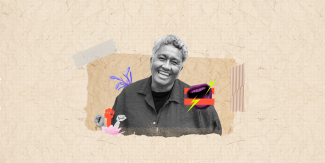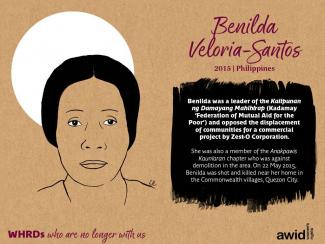
Benilda Valoria-Santos
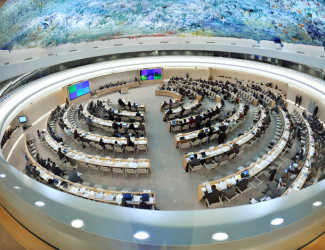
The Human Rights Council (HRC) is the key intergovernmental body within the United Nations system responsible for the promotion and protection of all human rights around the globe. It holds three regular sessions a year: in March, June and September. The Office of the UN High Commissioner for Human Rights (OHCHR) is the secretariat for the HRC.
Debating and passing resolutions on global human rights issues and human rights situations in particular countries
Examining complaints from victims of human rights violations or activist organizations on behalf of victims of human rights violations
Appointing independent experts (known as “Special Procedures”) to review human rights violations in specific countries and examine and further global human rights issues
Engaging in discussions with experts and governments on human rights issues
Assessing the human rights records of all UN Member States every four and a half years through the Universal Periodic Review
AWID works with feminist, progressive and human rights partners to share key knowledge, convene civil society dialogues and events, and influence negotiations and outcomes of the session.
 |
 |
 |
 |
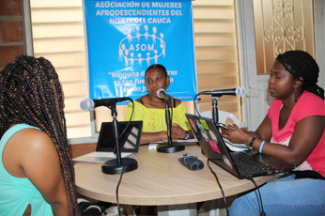 |
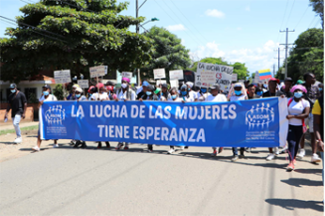
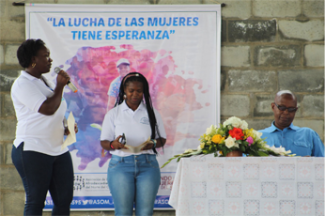
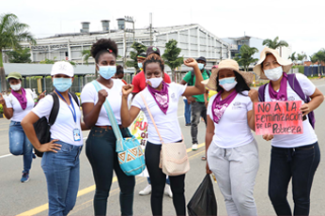
ASOM’s activists in encounters, parades and events
 While funders committed significantly more money to gender equality over the last decade, still only 1% of philanthropic and development funding has actually been moved to directly resource feminist-led social change.
In solidarity with movements that continue to be invisibilized, marginalized and without access to core, long-term, flexible and trust-based funding, the WITM survey highlights the actual state of resourcing, challenges false solutions, and points to how funding models must change for movements to thrive and meet the complex challenges of our times.
«Mientras estaba en la primera línea de la protesta, fui sometida a violencia sexual, a lesiones físicas y a otras formas de violencia. Pero no me detendré hasta que logremos pleno gobierno civil en Sudán. Debemos impedir la militarización del Estado. Nuestros cuerpos no deben seguir siendo tratados como campos de batalla»
dijo Amal,1 una manifestante de 23 años.2
Durante los últimos cuatro años, las mujeres lideraron la revolución en Sudán. Su liderazgono fue solo callejero, sino que constituyó el poder que impulsó la resistencia constante en todos los niveles. Las mujeres y las jóvenes feministas se convirtieron en la conciencia alerta del movimiento de cambio y democratización sudanés. Desde la primera protesta del 13 de diciembre de 2018 contra el régimen anterior, en la ciudad de Aldmazein, en el área de conflicto del Nilo Azul, las jóvenes estudiantes fueron las voces que demandaron el fin de la dictadura de los militares y los Hermanos Musulmanes, que ya lleva treinta años en el poder.
El movimiento feminista, liderado por mujeres de entre 16 y 35 años, ha entablado una revolución dentro de la revolución en Sudán durante los últimos cuatro años de lucha ininterrumpida. Las potentes voces de las jóvenes que ocupan espacios en las calles, las redes sociales, la sociedad civil y las organizaciones políticas se elevaron lo suficiente como para reconfigurar la opinión pública y desafiar las normas sociales. Por primera vez en la historia de Sudán, las discusiones sobre violencia sexual y de género y sobre los tabúes de la violencia doméstica y los procesos de toma de decisiones dominados por los hombres se convirtieron en debates generalizados. Los equipos de fútbol de mujeres designaron voceras ante los comités de resistencia, y los sindicatos profesionales liderados por mujeres son parte de la expresión de la nueva ola del movimiento feminista de Sudán. El logro más importante es que las jóvenes se identifican como feministas en forma orgullosa y pública, en un país regido por el fundamentalismo islámico durante tres décadas. Los jóvenes varones que apoyan el activismo feminista -y se identifican como feministas- son otra señal de progreso notable.
Bajo el actual régimen del golpe militar, las jóvenes que lideran estas iniciativas y los grupos de mujeres que trabajan en el territorio no pueden mencionarse aquí debido a varios problemas de seguridad. Pero su resiliencia, su fuerza y su valentía serán incluidas en los libros de historia. Las audaces jóvenes que encabezan la resistencia en las calles y detrás de las pantallas, y que trabajan en diferentes profesiones y áreas de activismo están dando forma al futuro de Sudán. Las jóvenes feministas de Sudán están creando nuevos espacios para que las narrativas y los discursos feministas reestructuren la distribución del poder a nivel político, económico y social.
A pesar de la inmensa violencia, del resurgimiento del islamismo fundamentalista, de la militarización y de la reducción de los espacios cívicos, las activistas feministas de Sudán se mantienen arraigadas en su sororidad. Siguen siendo una gran inspiración para los movimientos feministas de todo el mundo.
Nazik Awad
1 «Amal» es un seudónimo utilizado para proteger a la joven activista citada.
2 Desde 2018, Sudán vive en una revolución constante. Una nueva ola opositora arrancó a partir del golpe militar del 25 de octubre de 2021.
Ven a conocer a Aura Roig, activista feminista visionaria, antropologa y directora-fundadora de la cooperativa Metzineres.
Dedicó las últimas dos décadas a la investigación, el diseño y la implementación de políticas con perspectivas de reducción de daños, derechos humanos y feminismo interseccional.
Después de experimentar y aprender de comunidades que usan drogas a través del mundo, volvió a Barcelona y creó la Xarxa de Dones que Usen Drogues (la Red de Mujeres que Usan Drogas, XADUD). XADUD era un espacio de apoyo mutuo y de solidaridad con la lucha por los derechos de los grupos marginalizados que, más tarde, se convirtió en la cooperativa Metzineres.
Actualmente, Aura está trabajando para expandir el modelo Metzineres y brindar apoyo a grupos más grandes, al mismo tiempo que documenta ampliamente su prolífico viaje y aprendizaje.
Provide AWID members, movement partners and funders with an updated, powerful, evidence-based, and action-oriented analysis of the resourcing realities of feminist movements and current state of the feminist funding ecosystem.
Identify and demonstrate opportunities to shift more and better funding for feminist organizing, expose false solutions and disrupt trends that make funding miss and/or move against gender justice and intersectional feminist agendas.
Articulate feminist visions, proposals and agendas for resourcing justice.
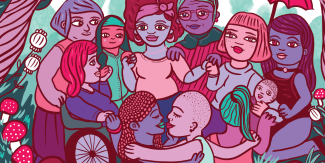
AWID is a part of an incredible ecosystem of feminist movements working to achieve gender justice and social justice worldwide. With our 40th anniversary, we are celebrating all that we’ve built over these last 40 years. As a global feminist movement support organization we know that working with fierce feminisms is our way forward, acknowledging both the multiplicity of feminisms and the value of fierce and unapologetic drive for justice. The state of the world and of feminist movements calls for brave conversations and action. We look forward to working together with our members, partners and funders in creating the worlds we believe in, celebrating the wins and speaking truth to power in service of feminist movements globally.
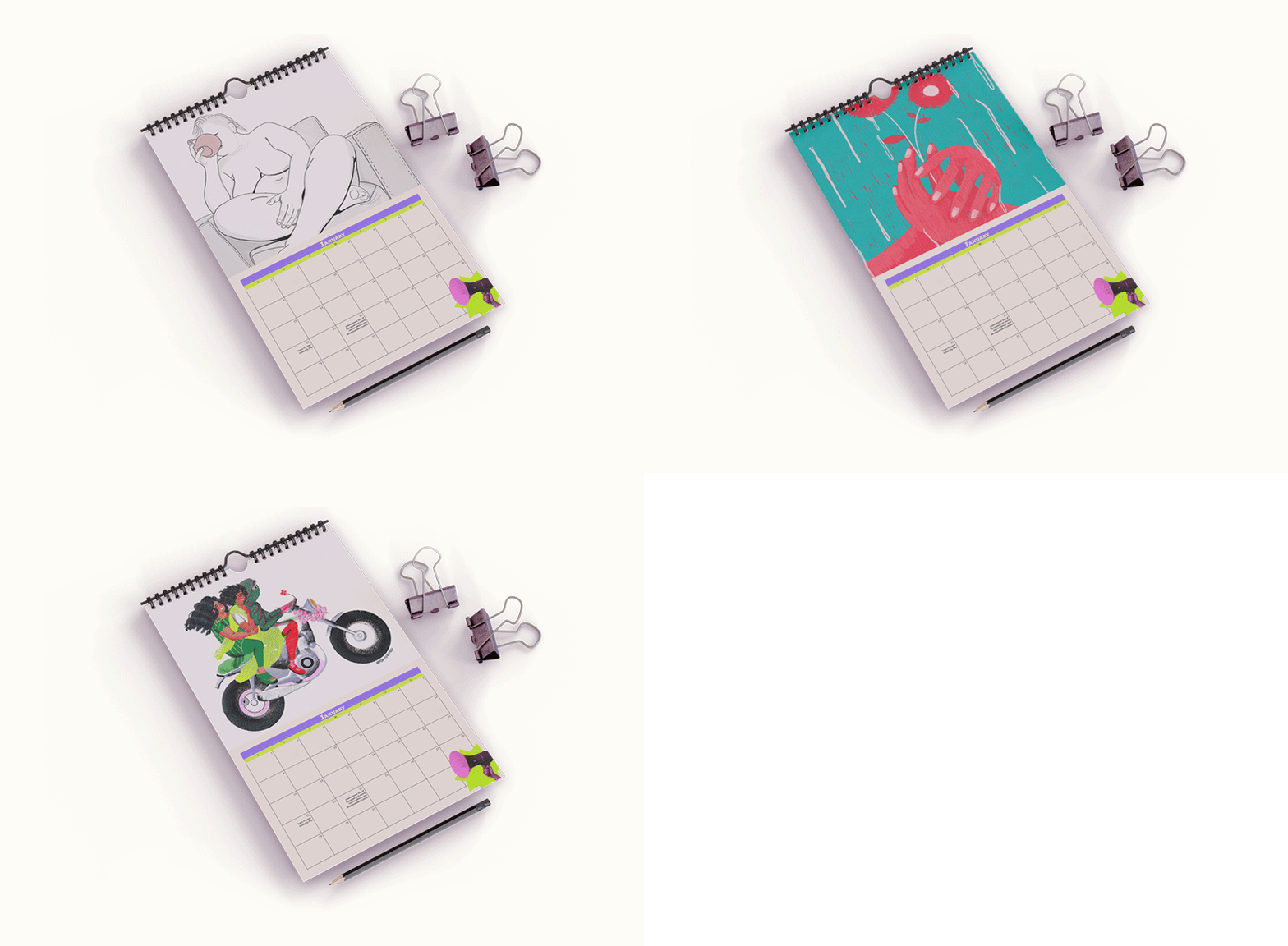
The 2023 Feminist Calendar is our gift to movements. It features the artwork of some of our amazing AWID members.
Get it in your preferred language! |
Select image quality |
| English | Print Quality | Digital Version |
| Français | Print Quality | Digital Version |
| Español | Print Quality | Digital Version |
| Português | Print Quality | Digital Version |
| عربي | Print Quality | Digital Version |
| Русский | Print Quality | Digital Version |
Si vous êtes de passage à Sao Paulo, au Brésil, visitez l'Occupation 9 de Julho et prenez un repas collaboratif. Vous pouvez aussi acheter leurs produits dans leur boutique en ligne depuis l'étranger.
Visitez la boutique en ligne de l'Association des Femmes Afro-Descendantes du Cauca du Nord où vous pouvez trouver de superbes produits faits à la main.
Il existe plusieurs façons de soutenir Metzineres : vous pouvez faire un don financier, offrir du matériel et des services, proposer une formation, un atelier ou une activité (pour plus d'informations, cliquez ici).
Groups, organizations and/or movements working specifically or primarily for women, girls, gender justice, LBTQI+ and allied people’s rights in all regions and at all levels, both newly formed and long-standing.
We’re committed to protecting your privacy, so here we explain how we use cookies on our website.
If you have any questions, please get in touch via the form on our contact page.
A cookie is a small data file downloaded by your web browser (for example Chrome or Internet Explorer) and stored on your computer. They are downloaded automatically when you visit websites. Cookies are used to perform essential tasks on a website, to record how people use a website and to gather data for marketing.
We provide essential information on our website to millions of people every year. To do this, we have to manage our website effectively and to reach out to more people who need our support and information. Cookies are a small, but essential way to make all this happen. We use cookies to:
You can update your cookie preferences by clicking on the button below.
In addition, most browsers allow you to manage cookies saved on your device – just go to the help section of your browser. To learn more about cookies and how to manage them, visit the ICO website.
Cookies never record your credit card details or easily identifiable personal data such as your name and address. You have every right to refuse to accept cookies from our website.
If you disable cookies you will still be able to access nearly all the information on our website. But please remember that this may affect some functionality.
You can disable cookies by changing your settings in your web browser or you can use the incognito option on Google Chrome. To find out more about your browser settings, visit the relevant support page below: