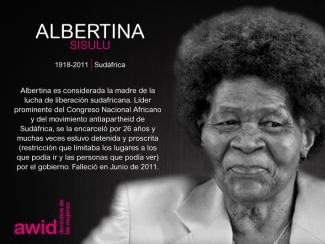
Albertina Sisulu

In September 2016, the 13th AWID international Forum brought together in Brazil over 1800 feminists and women’s rights advocates in a spirit of resistance and resilience.
This section highlights the gains, learnings and resources that came out of our rich conversations. We invite you to explore, share and comment!
One of the key takeaways from the 2016 Forum was the need to broaden and deepen our cross-movement work to address rising fascisms, fundamentalisms, corporate greed and climate change.
With this in mind, we have been working with multiple allies to grow these seeds of resistance:
And through our next strategic plan and Forum process, we are committed to keep developing ideas and deepen the learnings ignited at the 2016 Forum.
AWID Forums started in 1983, in Washington DC. Since then, the event has grown to become many things to many peoples: an iterative process of sharpening our analyses, vision and actions; a watershed moment that reinvigorates participants’ feminisms and energizes their organizing; and a political home for women human rights defenders to find sanctuary and solidarity.
Да, опрос доступен людям с различными нарушениями слуха, зрения, движений и когнитивных способностей.
Nos pensées vont actuellement aux nombreuses personnes à travers le monde qui sont les plus affectées par les conséquences de la pandémie mondiale de la COVID-19, et notamment aux communautés marginalisées, historiquement opprimées.
Nous invitons ici les artistes et les activistes qui font preuve de créativité à rejoindre un espace virtuel pour se connecter, créer une communauté et se soutenir les un·e·s les autres durant ces moments difficiles. Ainsi, nous avons créé une nouvelle communauté Slack qui nous permettra de partager en toute sécurité des réflexions, des apprentissages, des astuces de la vie de tous les jours, des ressources, des conseils, des craintes et des angoisses, des élans d’espoir et de bonheur, et de discuter plus généralement de nos activités.
Après avoir rempli le formulaire, nous vous enverrons votre invitation personnelle pour rejoindre la communauté.

Pour les personnes qui ne connaissent pas Slack, nous aurons des sessions et des tutoriels d’introduction une fois que vous êtes inscrit·e·s.
Nous travaillons en trois langues (français, anglais, espagnol), et nous vous encourageons donc à écrire dans la langue dans laquelle vous sentez le plus à l’aise et à utiliser des outils de traduction en ligne (Google Traduction ou autres) pour participer aux discussions.
Merci de lire les règles de la communauté
La cocréation de nos réalités féministes commence par nous-mêmes, et nos façons de nous traiter les un·e·s les autres. Nous nous efforçons de créer et de protéger des espaces qui sécurisent et soutiennent nos communautés, à la fois en ligne et en personne. Nous envisageons aussi les espaces sécurisés et accueillants, tout comme cocréés, et dont la possession est partagée. Nous attendons de nos membres d’agir de façon éthique, responsable et cohérente vis-à-vis des valeurs de l’AWID, et d’assumer une responsabilité collective pour garantir un environnement de respect mutuel et de solidarité.
Dans le cadre de nos échanges continus, nous partagerons un sujet hebdomadaire dans Slack dans le but de faciliter le dialogue et d’inspirer des processus de création artistique. Il pourra s’agir d’un processus introspectif, mais pour tirer le maximum de cette communauté, nous vous encourageons à interagir avec d’autres membres de la communauté, et de partager vos réflexions dans le cadre de discussions. L’objectif est d’inviter les gens à répondre librement et progressivement en écrivant ou en réalisant de l’art, de la manière qui leur convient le mieux.
Nous espérons tenir avec vous des échanges pertinents et vivants, et nous vous invitons donc à partager vos suggestions et vos commentaires. De manière générale, les thèmes se concentreront sur les expériences et les perspectives d’artistes, d’écrivain·e·s et de créateurs·rices -- lesquellesfourniront un espace aux gens pour concevoir à travers et au-delà du contexte mondial actuel via le prisme des réalités féministes.
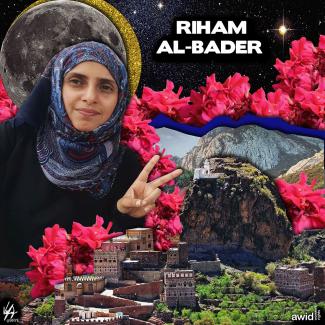
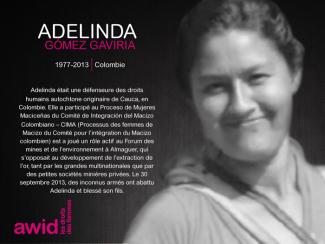
Riham était avocate et activiste engagée à suivre de près la question des violations des droits au Yémen.
Elle a travaillé avec d'autres activistes pour fournir de la nourriture et de l'eau aux civils piégés par les milices houthies dans la banlieue de la ville de Taiz.
Riham a été tuée en février 2018. La cause de son décès, soit par la main d’un tireur d'élite ou par un tir de mortier, n’a pas été confirmée. Personne n'a été tenu responsable de son meurtre.
By joining AWID, you are becoming part of worldwide feminist organizing, a collective power that is rooted in working across movements and is based on solidarity.
O tempo estimado para preencher o inquérito é 30 minutos.
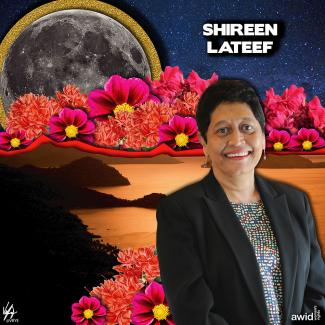
Shireen was an inspiration to many feminists in Fiji and a powerful ally to the women’s movement. She advocated tirelessly for gender equality locally and regionally.
She began her career as a junior gender specialist at the Asian Development Bank and brought about drastic changes to the institution’s gender policies.
Her research, “Rule by the Danda: Domestic violence amongst Indo Fijians” was one of the earliest pieces of research on domestic violence, marriage and women in Fiji. This seminal work has been a catalyst for feminist work in this area.
Shireen’s legacy lives on as many remember her influence, commitment and support to the women’s movement in Fiji and the Pacific.
Luchar contra viento y marea: la historia de la victoria sin precedentes de la Red de Solidaridad
En enero de 2022, la Red de Solidaridad organizó una huelga con 400 trabajadorxs. ¿Su principal demanda? Aumentar los salarios. La huelga fue convocada después de meses de conversaciones fracasadas con el Ministerio de Asuntos Sociales de Georgia como parte de un conflicto laboral.
Después de semanas de protestar, negociar, hablar con la prensa, resistir represalias y soportar el frío del invierno georgiano, lxs trabajadorxs obtuvieron concesiones sin precedentes del gobierno: aumento de los salarios, prestaciones por maternidad, cobertura de los costos de transporte, el cese de despidos, la compensación por los días de huelga, y más.
La huelga no solo resultó en ganancias materiales, sino que también hizo que lxs trabajadorxs se sintieran unidxs y empoderadxs para defenderse y luchar por condiciones de trabajo dignas ahora y en el futuro. Se convirtieron en una fuente de inspiración para todxs lxs trabajadorxs del país.
Puedes leer más sobre su victoria aquí.
Expande tus fronteras. Lxs afiliadxs de AWID representan de forma creciente una intersección diversa y vibrante de feministas que trabajan, entre otras cosas, en temáticas asociadas a la tierra, los derechos de lxs trabajadorxs, los derechos sexuales y la autonomía corporal. Al afiliarte, puedes conectar tus luchas con las de otros movimientos.
طبعاً! هذه الأسئلة اختيارية. نقدّر جداً حقكم بالسرية. الرجاء تعبئة الاستطلاع دون علاقة بقراركم/ن بمشاركة اسم المجموعة، المنظمة أو الحركة أو تفاصيل التواصل معكم/ن.
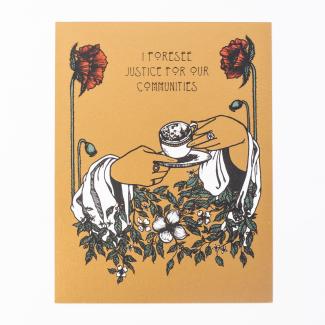
La taseografía es el estudio de los posos de café y/o de las hojas de té para la adivinación. Es una práctica que ha sido transmitida por las mujeres del lado armenio de mi familia, y me fue enseñada por mi madre, que a su vez la aprendió de su madre y así sucesivamente. Cuando miraba a mi Nana leer los posos del café armenio preparado para la familia y lxs amigxs, veía muchas veces como ella veía lo que quería decir. Estas impresiones dicen algunas de las cosas que quiero ver en el mundo: espero que sean las mismas cosas que ustedes quieren ver.
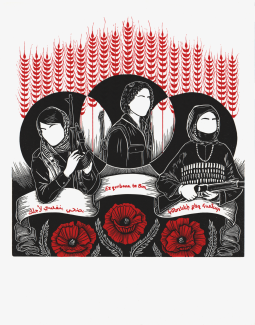
Esta impresión celebra la resiliencia, el sacrificio y la fortaleza de lxs luchadorxs por la libertad de SWANA, a través de la historia y la solidaridad existente. La inspiración original provino de un artículo que leí sobre una exposición en Tatvan, un distrito de Bitlis, que mostraba la presencia armenia en la región. Mis antepasadxs eran de Bitlis, que ahora se encuentra dentro de las fronteras de la Turquía moderna.
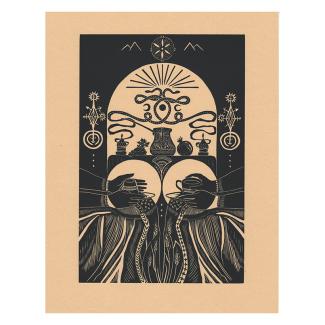
La taseografía (el estudio de la lectura de los posos de café) es una práctica cultural que las mujeres armenias han utilizado durante cientos de años para hablar entre sí. Es un lenguaje codificado para iniciar conversaciones, construir conexiones interrelacionadas y entretejidas.
![]Ali Chavez Leeds portrait](/sites/default/files/styles/max_325x325/public/2021-10/portrait.jpeg?itok=0yU3PqLe)
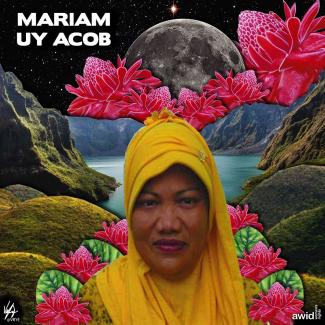
Mariam era asistente jurídica en la Alianza Kawagib Moro por los Derechos Humanos.
Fue una acérrima crítica de la militarización de las comunidades moro, y denunció sistemáticamente los bombardeos aéreos y la concentración de campamentos militares. Tuvo que buscar refugio luego de exponer y denunciar las injusticias cometidas contra las comunidades musulmanas en Filipinas.
Se cree que fue asesinada por agentes militares sospechosos debido a su trabajo como defensora de derechos humanos. Los atacantes que mataron a Mariam la esperaron, se pusieron a la par del vehículo en el que se desplazaba y le dispararon siete veces.
L’Organisation Sindicale des Travailleur·euses du Sexe (Organización Sindical de Trabajadoras del Sexo, OTRAS) est le premier syndicat de travailleur·euses du sexe de l'histoire de l'Espagne. Le syndicat est née de la nécessité de garantir les droits sociaux, juridiques et politiques des travailleur·euses du sexe dans un pays où les mouvements d'extrême droite se renforcent au jour le jour.
Après des années de lutte contre le système juridique espagnol et les groupes abolitionnistes du travail du sexe qui ont appelé à sa fermeture, OTRAS a finalement obtenu son statut légal de syndicat en 2021.
Son objectif? Décriminaliser le travail du sexe et garantir des conditions et des environnements de travail décents pour tous·tes les travailleur·euses du sexe.
Le syndicat représente plus de 600 travailleur·euses du sexe, dont beaucoup de personnes immigrantes, racialisées, trans, queer, ou de genre non-conforme.