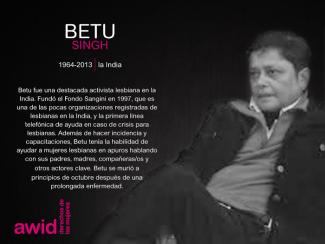
Betu Singh

En septiembre de 2016, 1800 feministas y activistas por los derechos de las mujeres de todos los rincones de nuestros movimientos se congregaron en las costas de Bahia, en el 13º Foro Internacional de AWID.
En esta sección se destacan los logros, los aprendizajes y los recursos que surgieron de las ricas conversaciones mantenidas. Te invitamos a analizar, compartir y comentar.
Uno de los aportes más importantes del Foro fue la necesidad de ampliar y profundizar nuestro trabajo entre movimientos, frente a la confluencia de los fascismos en auge, fundamentalismos, codicia corporativa y cambio climático.
Nuestras Iniciativas Semilla han ayudado a 20 ideas que surgieron en el Foro para crecer en forma de acciones concretas
El vídeo «Defendiendo a las Personas y al Planeta» y la guía «Tejiendo la resistencia a través de la acción» estan protagonizados por defensoras de derechos humanos y presentan estrategias concretas para confrontar al poder corporativo
Con nuestras animaciones El estado de nuestros movimientos feministas y Justicia climática y ambiental, los movimientos ahora tienen herramientas creativas para apoyar su trabajo.
La compilación de las expresiones artísticas «Los Movimientos Importan», sigue inspirando una organización más fuerte y creativa en todo el mundo.
Los movimientos también pueden beneficiarse de nuevas metodologías para imaginar nuestros futuros feministas (¡pronto!)
AWID se ha comprometido, mediante su próximo plan estratégico y su proceso del Foro, a continuar y profundizar las relaciones, las lecciones y los procesos iniciados en el Foro 2016 y basándonos en el momento actual.
Los Foros de AWID comenzaron en 1983 en Washington DC. Desde entonces, el evento ha crecido hasta convertirse en muchas cosas para muchas personas: un proceso iterativo para darle forma a nuestros análisis, objetivos y acciones; un hito crucial que fortalece los feminismos de lxs participantes e infunde energías a sus procesos de organización; un hogar político donde lxs defensoras de derechos humanos encuentran un santuario y solidaridad.
Да. Ваши ответы будут удалены по окончании обработки и анализа данных и будут использованы исключительно в исследовательских целях. Данные НИКОГДА не будут переданы за пределы AWID и будут обрабатываться только сотрудниками AWID и консультантками(-тами), работающими с нами над проектом «Где деньги?». Для нас ваша конфиденциальность и безопасность– приоритет. С нашей политикой конфиденциальности можно подробно ознакомиться здесь.
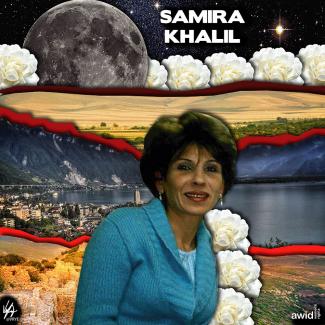
Samira was a Syrian activist under Bashar al-Asad's regime.
From a young age Samira opposed all forms of despotism, particularly vis-a-vis the authoritarian regime in which she lived.
Samira was kidnapped in 2013 along with three other prominent activists. She is believed to have been taken from the Center for the Documentation of Violations in Duma, in rural Damascus.
The main suspect associated with her disappearance is the Army of Islam (which denies its involvement). There has been no formal investigation of Samira’s disappearance and she has not been heard from since. Samira was committed to her country and refused to leave Syria until she felt her role in empowering women and documenting crimes was no longer necessary.
Tous nos rapports annuels sont accessibles sur notre site web.
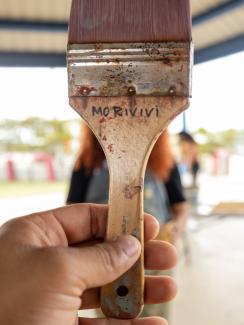
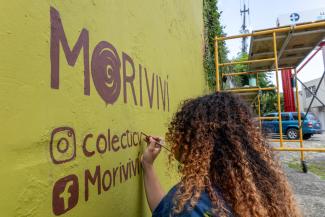
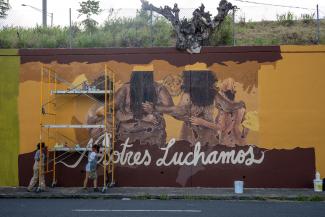
Colectivo Moriviví is an all women artistic collective. Our artistic production consists of muralism, community-led muralism, and protest performance/actions. Our work is about democratizing art and bringing the narratives of Puerto Rican communities to the public sphere to create spaces in which they are validated. We believe that through artivism we can promote consciousness on social issues and strengthen our collective memory.
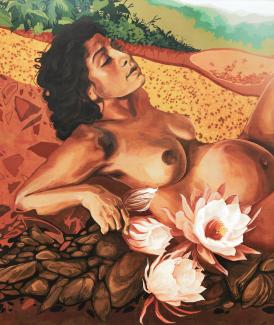
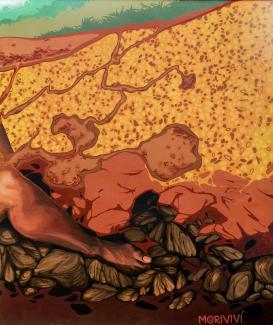
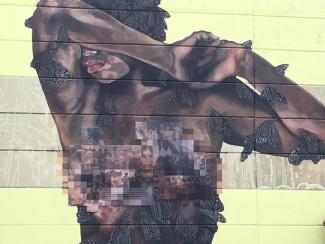
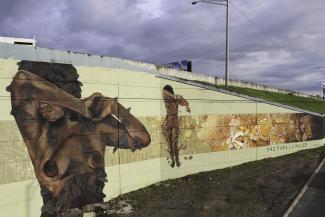
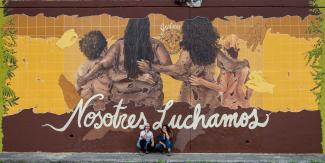
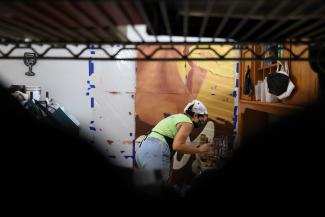
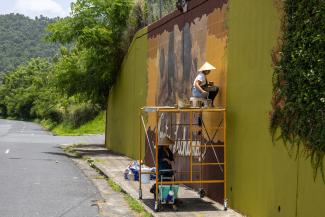
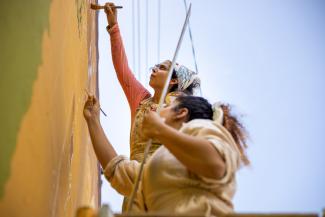
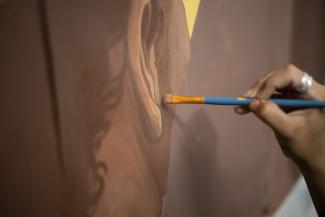
As part of their participation in AWID’s Artist Working Group, Colectivo Morivivi gathered a diverse group of members, partners and staff to facilitate a collaborative process of dreaming into, informing, and deciding on the content for a community mural through a multi-stage co-creation process. The project began with a remote conceptualization with feminists from different parts of the planet brought together by AWID, and then it evolved to its re-contextualization and realization in Puerto Rico. We were honored to have the input of local artists Las Nietas de Nonó(@lasnietasdenono), the participation of local women in the Community Painting Session, the logistics support from the Municipality of Caguas, and FRIDA Young Feminist Fund’s additional support to the collective.
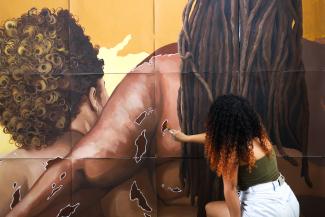
The mural explores the transcendence of borders by presenting bodies like a map, in an embrace that highlights the intersection of the different feminist manifestations, practices and realities.
We also thank Kelvin Rodríguez, who documented and captured the different stages of this project in Puerto Rico:


L’Organisation Sindicale des Travailleur·euses du Sexe (Organización Sindical de Trabajadoras del Sexo, OTRAS) est le premier syndicat de travailleur·euses du sexe de l'histoire de l'Espagne. Le syndicat est née de la nécessité de garantir les droits sociaux, juridiques et politiques des travailleur·euses du sexe dans un pays où les mouvements d'extrême droite se renforcent au jour le jour.
Après des années de lutte contre le système juridique espagnol et les groupes abolitionnistes du travail du sexe qui ont appelé à sa fermeture, OTRAS a finalement obtenu son statut légal de syndicat en 2021.
Son objectif? Décriminaliser le travail du sexe et garantir des conditions et des environnements de travail décents pour tous·tes les travailleur·euses du sexe.
Le syndicat représente plus de 600 travailleur·euses du sexe, dont beaucoup de personnes immigrantes, racialisées, trans, queer, ou de genre non-conforme.
Nous célébrons le droit de chacun·e à choisir son identité, ses relations, ses objectifs, son travail, ses rêves et ses plaisirs, et ce qu'iel fait de son esprit, de son corps et de son âme. Nous croyons qu'il est nécessaire de travailler à l'accès aux ressources, aux informations et à des environnements sûrs et favorables qui permettent d'atteindre cet objectif.
O nosso objetivo é alcançar um total de 2000 respostas, quase o dobro do último questionário WITM em 2011.
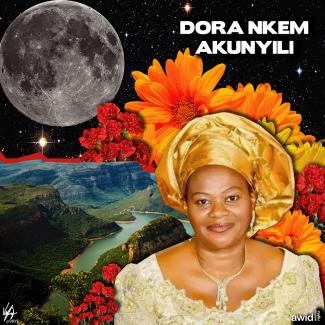
Dora nació en el estado de Benue, Nigeria. Fue una farmacéutica, tecnócrata, investigadora erudita y líder comunitaria reconocida mundialmente.
El trabajo revolucionario de Dora produjo un cambio de paradigma en el servicio público nigeriano cuando se desempeñó como Directora General de la Agencia Nacional para la Administración y Control de Alimentos y Medicamentos, entre 2001 y 2008. Encabezó reformas en la aplicación de políticas y regulaciones que redujeron drásticamente la cantidad de drogas falsas que asolaban el sector farmacéutico nigeriano cuando asumió su cargo.
Se convirtió en un ícono del empoderamiento de las mujeres, porque fue un ejemplo real de mujer valiente y competente que desafió los males de una sociedad predominantemente patriarcal. Fue nombrada Ministra de Información y Comunicación entre 2008 y 2010.
Murió luego de una batalla contra el cáncer, y le sobreviven su esposo, seis hijxs y tres nietxs.
We invite you to explore the Priority Areas and Stay Informed sections of our website, or use the search function to find information about the specific topics you are researching.
We particularly recommend that you explore our toolkit “Where is the Money for Women’s Rights” (WITM Toolkit). This is a Do-it-Yourself Research methodology to support individuals and organizations who want to conduct their own research on funding trends for a particular region, issue or population by adapting AWID’s research methodology.
Los actores anti-derechos adoptan una estrategia doble. Además de atacar abiertamente al sistema multilateral, los actores anti-derechos también socavan los derechos humanos desde adentro. Se involucran con el fin de cooptar procesos, consolidar normativas regresivas, y erosionar responsabilidades.
El involucramiento de los actores anti-derechos en espacios internacionales de derechos humanos tiene un objetivo principal: socavar el sistema y su capacidad de respetar, proteger y satisfacer los derechos humanos para todas las personas, y de exigir rendición de cuentas a los Estados miembro por su violación. Algunas tácticas anti-derechos operan por fuera de la ONU, e incluyen la deslegitimación y la presión política para desfinanciar a la ONU, o para que ciertos Estados miembro se retiren de acuerdos internacionales sobre derechos humanos. En los últimos años, algunos actores antiderechos han logrado una creciente influencia dentro de la ONU. Sus tácticas internas incluyen la capacitación de representantes, la distorsión de los marcos de derechos humanos, el debilitamiento de acuerdos sobre derechos humanos, la infiltración en comités de organizaciones no gubernamentales, las solicitudes de ingreso al Consejo Económico y Social bajo nombres neutrales, la infiltración en los espacios de la juventud, y las presiones para ubicar a actores antiderechos en posiciones clave.
Given the current world situation, our Board of Directors has taken the difficult decision to cancel Forum scheduled in 2021 in Taipei.
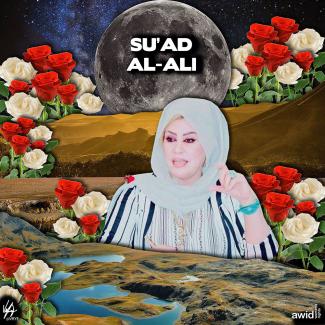
Ardente défenseure des droits des femmes et des enfants, Su’ad dirigeait Al-Weed Al-Alaiami, une organisation irakienne de défense des droits humains.
Elle a participé aux manifestations de juillet 2018 qui ont eu lieu à Bassorah et dans plusieurs autres villes irakiennes pour protester contre le chômage, réclamer des emplois et des services publics appropriés pour les citoyen-ne-s, ainsi que pour exiger l'élimination de la corruption endémique. Le 25 septembre 2018, Su’ad a été assassinée dans le quartier d’Al-Abbasiyah, dans le centre-ville de Bassorah.
Une vidéo de l’incident a montré une personne qui s'est approchée d'elle alors qu'elle montait dans sa voiture, et lui a tiré une balle dans la tête avant de pointer son arme sur son chauffeur, Hussain Hassan, qui a été blessé à l'épaule. Su’ad Al-Ali avait 46 ans et était mère de quatre enfants.
Segundo Diálogo de Alto Nivel sobre la Financiación para el Desarrollo
Las naciones ‘en desarrollo’ exhortaron a que se tuvieran en cuenta los desafíos globales así como las necesidades y posibilidades locales en la interacción con diferentes grupos (mujeres, jóvenes, personas con discapacidad, etc.) para abordar las temáticas identificadas en el Consenso de Monterrey.
Une expérience magique de narration féministe animée par la féministe panafricaine Coumba Touré, dans la tradition séculaire des griots d’Afrique de l’Ouest
Et nous nous réunissons à nouveau
Nous avons rassemblé nos histoires, notre force
nos chansons
nos larmes
notre rage
nos rêves
nos succès
nos échecs
nous les avons rassemblés dans un grand bol pour le partage
pendant une lune de pensées
Aussi, nous restons en contact
Nous nous secouons l'esprit
nous nous caressons l'âme
Alors que nos mains sont toujours liées
Et que nos baisers et nos câlins sont interdits
Pourtant, nous nous renforcons d’heure en heure
Tissant ensemble nos voix
Franchissant les barrières sonores
comme nous parlons en langues
Nous sommes de plus en plus fortes
Nous connaissons ce qui nous différencie des autres
et les différences entre nous,
alors nous cousons nos beautés en patchwork de pensées
De nos apprentissages les plus profonds
de nos pouvoirs
Parfois, nous sommes entourées de terreur,
Par la confusion, la malhonnêteté
Mais nous nous purifions dans l'océan de l'amour
Nous sommes des tisserands de rêves
Pour vêtir un nouveau monde
Fil après fil
Aussi petites que nous soyons,
comme de petites fourmis construisant nos mouvements
comme de petites gouttes construisant nos rivières
Nous faisons des pas en avant et des pas en arrière
dansons notre chemin de retour à un mental sain
Nous soutenons le rythme de nos coeurs
Continuez à battre,
s'il vous plaît, ne vous arrêtez pas
ainsi nous sommes les transmetteurs d'une générosité oubliée
Goutte après gouttes, grandissant comme l'océan
grandissant comme la rivière qui coule de nos âmes
montrant notre force pour être l'eau qui lavera ce monde
et nous nous rassemblons à nouveau,
peux-tu nous sentir ?
Je mentirais si je disais que ça va
Que cela ne me dérange pas de ne pas vous voir.
Vos voix non filtrées et non enregistrées me manquent
Nos murmures et nos cris me manquent.
Nos cris de la révolution avortée
Nous voulonsêseulement donner naissance à de nouveaux mondes
Alors luttons pour effacer les frontières entre nous
Sil vous plait n’arrêtez pas