Anit-Racism Movement (ARM) / Flickr (CC BY-NC-ND 2.0)

Priority Areas

Supporting feminist, women’s rights and gender justice movements to thrive, to be a driving force in challenging systems of oppression, and to co-create feminist realities.

Resourcing Feminist Movements

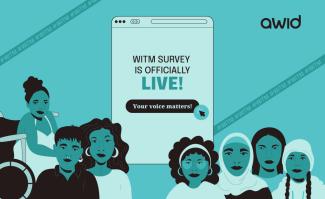
Banner image announcing that WITM Survey is live.


The “Where is the Money?” #WITM survey is now live! Dive in and share your experience with funding your organizing with feminists around the world.

Learn more and take the survey


Around the world, feminist, women’s rights, and allied movements are confronting power and reimagining a politics of liberation. The contributions that fuel this work come in many forms, from financial and political resources to daily acts of resistance and survival.


AWID’s Resourcing Feminist Movements (RFM) Initiative shines a light on the current funding ecosystem, which range from self-generated models of resourcing to more formal funding streams.

Through our research and analysis, we examine how funding practices can better serve our movements. We critically explore the contradictions in “funding” social transformation, especially in the face of increasing political repression, anti-rights agendas, and rising corporate power. Above all, we build collective strategies that support thriving, robust, and resilient movements.


Our Actions

Recognizing the richness of our movements and responding to the current moment, we:

  • Create and amplify alternatives: We amplify funding practices that center activists’ own priorities and engage a diverse range of funders and activists in crafting new, dynamic models  for resourcing feminist movements, particularly in the context of closing civil society space.

  • Build knowledge: We explore, exchange, and strengthen knowledge about how movements are attracting, organizing, and using the resources they need to accomplish meaningful change.

  • Advocate: We work in partnerships, such as the Count Me In! Consortium, to influence funding agendas and open space for feminist movements to be in direct dialogue to shift power and money.

Related Content

ฉันจะสามรถหาทุนสนับสนุนการเข้าร่วม AWID ฟอรัมได้อย่างไร

ถ้ากลุ่มหรือองค์กรของคุณได้รับการสนับสนุนเงินทุน คุณสามารถพูดคุยกับแหล่งทุนของคุณได้ตั้งแต่ตอนนี้หากพวกเค้าสามารถสนับสนุนการเดินทางและการเข้าร่วมของคุณได้ หลายองค์กรวางแผนงบประมาณปีหน้าในปี 2566 จึงเป็นการดีกว่าหากสามารถพูดคุยกับพวกเค้าก่อนภายในปีนี้

Gloria Chicaiza

Gloria Chicaiza, an Ecuadorian social and environmental activist, was a fervent defender of land and water. She defied the status quo, fighting against a model of development based on extraction and worked tirelessly for ecological justice and the rights of communities affected by mining.  

In diverse areas of Ecuador, Gloria was part of resistance actions in favour of protecting the ecosystem. With passion and dedication, Gloria supported the indigenous and environmental movement, its communities and organizations who oppose mining projects and protect their territories and collective life projects. She spoke out, in local and international foras, against the criminalization of dissent and resistance, the pressure and violence being enacted against community activists, in particular, women human rights defenders and in support of community led efforts for food sovereignty and sustainability

She was the Mining Justice Coordinator at Acción Ecológica, member of the Latin American Network of Women Defenders of the Social and Environmental Rights and a Board member at the Observatory of Mining Conflicts of Latin America.

In October 2010, Gloria was accused by the mining company Curimining / Salazar Resources S.A. (with Headquarters in Vancouver, Canada) of sponsoring an act of terrorism, sabotage and illegal association to commit a crime. Acción Ecológica believed this to be “in retaliation for her work of denouncing the impacts of mining activities in the country.”

In 2014, Gloria supported the coordination of a delegation to the UN COP 20 Dialogue on Climate Change. The group consisted of 25 Indigenous women from Latin America.

Gloria passed away due to complications from a lung transplant on December 28, 2019. She is remembered for her resistance and tireless work. 

"The fastest way to achieve sustainability is still resistance." -  Gloria Chicaiza (2010 interview)


Tributes:

“Para GLORIA. GLORIA Agua. GLORIA Tierra. GLORIA Madre. GLORIA Revolución. GLORIA Hermana. GLORIA Cielo. GLORIAmiga. GLORIAstral. Thank you for weaving us together.” -Liliana Gutierrez

“Thank you Glorita, for sustaining hope, for keeping the fabric strong, for connecting the community, for the united hands, for solidarity, thank you Glorita for standing with us in the most difficult moments. Thank you for teaching us that throughout life, nobody gets tired.” (Chakana News)

“Gloria Chicaiza cherished and flourished in being one of many. And as humble as she was, she had an uncanny ability to lead and maintain a steady and thunderous beat, a life-affirming pulse that guided, mobilized, and inspired communities and networks in the protection of Mother Earth. She denounced all forms of violence against cuerpos-territorios. She endorsed el buen vivir.” - Gabriela Jiménez, Latin America Partnerships Coordinator, KAIROS

“Thank you Gloria Chicaiza from infinity we are sure that you will continue to support our struggle. You who continued to struggle with us despite your failing health. You will live on in the forests and the water that you defended with such courage. You will live on in our hearts.”- The community of Intag in Ecuador

Read more Tributes to Gloria
 

กระบวนการเสนอกิจกรรมแบบเสมือนจริงแตกต่างจากการเสนอกิจกรรมที่เป็นแบบกายภาพหรือไม่?

เป็นกระบวนการเดียวกันและกำหนดเวลาเดียวกันทุกประการ โปรดใช้แบบฟอร์มเดียวกันนี้ในการส่งกิจกรรมของคุณ ไม่ว่าจะเป็นกิจกรรมที่จัดแบบพบกันทางกายภาพ ทางออนไลน์ หรือทั้งสองแบบ (ไฮบริด)

Ayanda Denge

“I am a wonder… Therefore I have been born by a mother! As I begin to stutter, my life has been like no other…” - Ayanda Denge  (read the whole poem below)

Ayanda Denge was a transwomxn, sex worker, activist, poet. She was Xhosa, from Port Elizabeth in the Eastern Cape of South Africa. After travelling through different cities of the country, she moved to Cape Town. 

As a committed and fervent social justice activist, she fought for the rights of sex workers, trans persons, and for those of people living with HIV and AIDS. She was also a motivational speaker on cancer awareness, and campaigned for affordable and social housing, especially for poor and working-class people. Ayanda stood tall as a mountain against different and often abusive faces of discrimination. 

“Being transgender is not a double dose, but it’s a triple dose of stigmatisation and discrimination. You are discriminated against for your sexual identity, you are discriminated against for your work, and you are discriminated against for your HIV status.” - Ayanda Denge, 2016

She was acting chairperson at the Sex Workers Education and Advocacy Taskforce (SWEAT) and also worked as an Outreach Coordinator at Sisonke, a national sex workers’ movement in South Africa. 

“From us, from our regional head office, to SWEAT where I sit on the board, to Sisonke, a movement of sex workers in Cape Town. We all amalgamate, we have one cry and it’s a cry that is recognised internationally by international sex workers. We want decriminalisation of sex work.” - Ayanda Denge, 2016

She lived in the Ahmed Kathrada House, which was being occupied by the Reclaim the City campaign for social housing. In 2018, Ayanda was elected house leader. On 24 March 2019, she was stabbed to death in her room. The year prior, another resident was killed.

Reclaim the City draws a connection between the safety of the house residents and the Provincial Government withholding electricity and the human right to water: 

“We cannot separate the safety of women and LGBTQI people living in the occupation from the refusal by the Western Cape Provincial Government to turn the electricity and water back on at Ahmed Kathrada House.

The house is pitch black at night. We need lights to keep each other safe. It is as if the Province wishes to punish poor and working class people, whose only crime is that we needed a home. While they may disagree with our reasons for occupying, they should be ashamed of themselves for putting politics before the safety and dignity of residents of this city.

Rest in Peace comrade Ayanda Denge, we shall remember you as we carry the torch forward in the struggle for decent well-located housing.”

Poem by Ayanda: 

I am a wonder…
Therefore I have been born by a mother!
As I begin to stutter,
My life has been like no other.
Born in pain
Nourished by rain
For me to gain
Was living in a drain.
As I shed a tear
I stand up and hold my spear.
Voices echo, do not fear
Challenges within a year,
Challenges of hurt are on my case;
Community applauds as they assume I have won my race;
But in reality my work strides at a tortoise pace;
On bended knee I bow and ask for grace.
For the Lord
Is my Sword;
To remind humanity
That he provides sanity.
Why Lord am I this wonder?
The Lord answers me with the rain and thunder,
For questioning my father
Who has in the book of lambs
A name called Ayanda.
From the streets my life was never sweet
The people I had to meet;
At times I would never greet;
Even though I had to eat;
I’d opt to take a bow
Rather than a seat

Listen to the poem in Ayanda’s voice

“For my life represents that of a lotus flower, that out of murky and troubled waters I bloomed to be beautiful and strong...” - Ayanda Denge, watch and listen 


Tributes: 

“Ayanda, I want to say to you that you are still a survivor, in our hearts and minds. You are gone but you are everywhere, because you are love. How beautiful it is to be loved, and to give love. And Ayanda, that is the gift that you have given us. Thank you for all of the love, we truly did need you. Going forward, I promise to you that we will all commit to continue with the struggle that you have dedicated so much energy and your time to. And we will commit ourselves to pursuing justice in this awful ending to your life.” - Transcript of a message, in a farewell Tribute to Ayanda

“Ayanda was an activist by nature. She knew her rights and would not mind fighting for the rights of others. For me, it was no shock that she was involved with many organizations and it was known that she was a people’s person. It did not need to be the rights of LGBTI but just the rights of everyone that she stood for.” - Ayanda’s sister
 

ถ้าฉันไม่สามารถเข้าร่วมทางกายภาพได้ จะมีการจัดประชุมแบบออนไลน์ควบคู่หรือไม่

มี! ขณะนี้พวกเรากำลังค้นหานวัตกรรมทางเทคโนโลยีที่จะช่วยให้เกิดการเชื่อมต่อและการเข้าร่วมอย่างมีความหมาย

CFA 2023 - breadcrumbs Menu _ FAQ-ar

Snippet - WITM survey is focused on - EN

The WITM survey is focused on the feminist resourcing realities of the last 3 years (2021 to 2023), and has five key sections:

  1. Group information
  2. Financial status
  3. Shifting power
  4. Sustainability
  5. Key aspirations

It consists of mandatory* and optional questions, most of which are multiple-choice. You will have a chance to share more on issues that are important to you by responding to the open question(s) at the end of the survey.

Hand holding magnifying glass

To respond to the questions quickly and easily, we advise that you have your key financial information at hand (e.g., your annual budgets from 2021 to 2023). However, if you wish to save your responses and come back to the survey later, you are able to do this whenever needed.

Body

Snippet - WITM about research - EN

About Where is the Money? research

The global survey is a key pillar of the third iteration of our action-oriented research: “Where is the Money for Feminist Organizing?” (in short, Where is the Money or WITM). The results of the survey will be further elaborated and explored through in-depth conversations with activists and funders and cross-referenced with other existing analysis and research on the state of funding for feminists and gender equality globally. 

The full “Where is the Money for Feminist Organizing” report will be published in 2026.

To learn more how AWID has been shining a light on money for and against feminist movements check out the work of our Resourcing Feminist Movements Initiative here.

Les femmes autochtones défenseuses de droits

Ces défenseuses ont fait campagne pour les droits fonciers et ont lutté pour les droits des femmes et des peuples autochtones. Elles se sont opposées aux industries extractives, ont écrit de la poésie et se sont battues pour que l'amour prévale. L'une d'entre elles nous a quitté il y a dix-neuf ans. Nous vous invitons à vous joindre à nous pour rendre hommage à ces défenseuses, à leur travail et à l’héritage qu’elles nous ont laissé. Faites circuler ces mèmes auprès de vos collègues et amis ainsi que dans vos réseaux et twittez en utilisant les hashtags #WHRDTribute et #16Jours.


S'il vous plaît cliquez sur chaque image ci-dessous pour voir une version plus grande et pour télécharger comme un fichier 


Body

Our group, organization and/or movement has not taken or mobilized funding from external funders, should we take the survey?

Yes! We recognize and appreciate different reasons why feminists, in their respective contexts, don’t have external funding: from being ineligible to apply for grants and/or receive money from abroad, to relying on resources generated autonomously as a political strategy in its own right. We want to hear from you regardless of your experience with external funding.

4. Collect and analyze your data

This section will guide you on how to ensure your research findings are representative and reliable.

In this section:

Collect your data

1. Before launch

  • First determine the best way to reach your survey population.
    For example, if you want to focus on indigenous women’s rights organizers, do you know who the key networks are? Do you have contacts there, people who can introduce you to these organizations or ways of reaching them?
  • Determine if your key population can be easily reached with an online survey, if you need to focus on paper survey distribution and collection or a mix of both. This decision is very important to ensure accessibility and inclusiveness.
  • Be prepared! Prior to advertizing, create a list of online spaces where you can promote your survey.
    If you are distributing paper versions, create a list of events, spaces and methods for distributing and collecting results.
  • Plan your timeline in advance, so you can avoid launching your survey during major holidays or long vacation periods.
  • Make it easy for your advisors and partners to advertize the survey – offer them pre-written Twitter, Facebook and email messages that they can copy and paste.

2. Launch

  • Send the link to the survey via email through your organization’s email databases.
  • Advertize on your organization’s social media. Similar to your newsletter, you can regularly advertize the survey while it is open.
  • If your organization is hosting events that reach members of your survey population, this is a good space to advertize the survey and distribute paper versions as needed.
  • Invite your advisors to promote the survey with their email lists and ask them to copy you so you are aware of their promotional messages. Remember to send them follow-up reminders if they’ve agreed to disseminate.
  • Approach funders to share your survey with their grantees. It is in their interest that their constituencies respond to a survey that will improve their own work in the field.

3. During launch

  • Keep the survey open for a minimum of four weeks to ensure everyone has time to take it and you have time to widely advertize it.
  • Send reminders through your email databases and your partners databases asking people to participate in the survey. To avoid irritating recipients with too many emails, we recommend sending two additional reminder emails: one at  midway point while your survey is open and another a week before your survey closes.
  • As part of your outreach, remember to state that you are only collecting one response per organization. This will make cleaning your data much easier when you are preparing it for analysis.
  • Save an extra week! Halfway through the open window for survey taking, check your data set. How have you done so far? Run initial numbers to see how many groups have responded, from which locations, etc. If you see gaps, reach out to those specific populations. Also, consider extending your deadline by a week – if you do so, include this extension deadline in one of your reminder emails, informing people know there is more time to complete the survey. Many answers tend to come in during the last week of the survey or after the extended deadline.

If you also plan to collect data from applications sent to grant-making institutions, this is a good time to reach out them.

When collecting this data, consider what type of applications you would like to review. Your research framing will guide you in determining this.

Also, it may be unnecessary to see every application sent to the organization – instead, it will be more useful and efficient to review only eligible applications (regardless of whether they were funded).

You can also ask grant-making institutions to share their data with you.

See a sample letter to send to grant-making institutions

Back to top


Prepare your data for analysis

Your survey has closed and now you have all this information! Now you need to ensure your data is as accurate as possible.

Depending on your sample size and amount of completed surveys, this step can be lengthy. Tapping into a strong pool of detail-oriented staff will speed up the process and ensure greater accuracy at this stage.

Also, along with your surveys, you may have collected data from applications sent to grant-making institutions. Use these same steps to sort that data as well. Do not get discouraged if you cannot compare the two data sets! Funders collect different information from what you collected in the surveys. In your final research report and products, you can analyze and present the datasets (survey versus grant-making institution data) separately.

1. Clean your data

  • Resolve and remove duplications: If there is more than one completed survey for one organization, reach out to the organization and determine which one is the most accurate.
  • Remove ineligible responses: Go through each completed survey and remove any responses that did not properly answer the question. Replace it with “null”, thus keeping it out of your analysis.
  • Consistently format numerical data: For example, you may remove commas, decimals and dollar signs from numerical responses. Financial figures provided in different currencies may need to be converted.

2. Code open-ended responses

There are two styles of open-ended responses that require coding.

Questions with open-ended responses

For these questions, you will need to code responses in order to track trends.

Some challenges you will face with this is:

  1. People will not use the exact same words to describe similar responses
  2. Surveys with multiple language options will require translation and then coding
  3. Staff capacity to review and code each open-ended response.

If using more than one staff member to review and code, you will need to ensure consistency of coding. Thus, this is why we recommend limiting your open-ended questions and as specific as possible for open-ended questions you do ask. 

For example, if you had the open-ended question “What specific challenges did you face in fundraising this year?” and some common responses cite “lack of staff,” or “economic recession,” you will need to code each of those responses so you can analyze how many participants are responding in a similar way.

For closed-end questions

If you provided the participant with the option of elaborating on their response, you will also need to “up-code” these responses.

For several questions in the survey, you may have offered the option of selecting the category “Other” With “Other” options, it is common to offer a field in which the participant can elaborate.

You will need to “up-code” such responses by either:

  • Converting open-ended responses to the correct existing categories (this is known as “up-coding”). As a simple example, consider your survey asks participants “what is your favorite color?” and you offer the options “blue,” “green,” and “other.” There may be some participants that choose “other” and in their explanation they write “the color of the sky is my favorite color.” You would then “up-code” answers like these to the correct category, in this case, the category “blue.”
  • Creating a new category if there are several “others” that have a common theme. (This is similar to coding the first type of open-ended responses). Consider the previous example question of favorite color. Perhaps many participants chose “other” and then wrote “red” is their favorite. In this case, you would create a new category of “red” to track all responses that answered “red.”
  • Removing “others” that do not fit any existing or newly created categories.

3. Remove unecessary data

Analyze the frequency of the results

For each quantitative question, you can decide whether you should remove the top or bottom 5% or 1% to prevent outliers* from skewing your results. You can also address the skewing effect of outliers by using median average rather than the mean average. Calculate the median by sorting responses in order, and selecting the number in the middle. However, keep in mind that you may still find outlier data useful. It will give you an idea of the range and diversity of your survey participants and you may want to do case studies on the outliers.

* An outlier is a data point that is much bigger or much smaller than the majority of data points. For example, imagine you live in a middle-class neighborhood with one billionaire. You decide that you want to learn what the range of income is for middle-class families in your neighborhood. In order to do so, you must remove the billionaire income from your dataset, as it is an outlier. Otherwise, your mean middle-class income will seem much higher than it really is.

Remove the entire survey for participants who do not fit your target population. Generally you can recognize this by the organizations’ names or through their responses to qualitative questions.

4. Make it safe

To ensure confidentiality of the information shared by respondents, at this stage you can replace organization names with a new set of ID numbers and save the coding, matching names with IDs in a separate file.

With your team, determine how the coding file and data should be stored and protected.

For example, will all data be stored on a password-protected computer or server that only the research team can access?

Back to top


Create your topline report

A topline report will list every question that was asked in your survey, with the response percentages listed under each question. This presents the collective results of all individual responses. 

Tips:

  • Consistency is important: the same rules should be applied to every outlier when determining if it should stay or be removed from the dataset.
  • For all open (“other”) responses that are up-coded, ensure the coding matches. Appoint a dedicated point person to randomly check codes for consistency and reliability and recode if necessary.
  • If possible, try to ensure that you can work at least in a team of two, so that there is always someone to check your work.

Back to top


Analyze your data

Now that your data is clean and sorted, what does it all mean? This is the fun part where you begin to analyze for trends.

Are there prominent types of funders (government versus corporate)? Are there regions that receive more funding? Your data will reveal some interesting information.

1. Statistical programs

  • Smaller samples (under 150 responses) may be done in-house using an Excel spreadsheet.

  • Larger samples (above 150 responses) may be done in-house using Excel if your analysis will be limited to tallying overall responses, simple averages or other simple analysis.

  • If you plan to do more advanced analysis, such as multivariate analysis, then we recommend using statistical software such as SPSS, Stata or R.
    NOTE: SPSS and Stata are expensive whereas R is free.
    All three types of software require staff knowledge and are not easy to learn quickly.

Try searching for interns or temporary staff from local universities. Many students must learn statistical analysis as part of their coursework and may have free access to SPSS or Stata software through their university. They may also be knowledgeable in R, which is free to download and use.

2. Suggested points for analysis

  • Analysis of collective budget sizes
  • Analysis of budget sizes by region or type of organization
  • Most common funders
  • Total amount of all funding reported
  • Total percentages of type of funding (corporate, government, etc)
  • Most funded issues/populations
  • Changes over time in any of these results.

Back to top


Previous step

3. Design your survey

Next step

5. Conduct interviews


Estimated time:

• 2 - 3 months

People needed:

• 1 or more research person(s)
• Translator(s), if offering survey in multiple languages
• 1 or more person(s) to assist with publicizing survey to target population
• 1 or more data analysis person(s)

Resources needed:

• List of desired advisors: organizations, donors, and activists
• Optional: an incentive prize to persuade people to complete your survey
• Optional: an incentive for your advisors

Resources available:

Survey platforms:

Survey Monkey
Survey Gizmo (Converts to SPSS for analysis very easily)

Examples:
2011 WITM Global Survey
Sample of WITM Global Survey
Sample letter to grantmakers requesting access to databases

Visualising Information for Advocacy:
Cleaning Data Tools
Tools to present your data in compelling ways
Tutorial: Gentle Introduction to Cleaning Data


Previous step

3. Design your survey

Next step

5. Conduct interviews


Ready to Go? Worksheet

Download the toolkit in PDF

Body

Why are you asking for the name of the group, organization and/or movement completing the survey and our contact information?

We are asking for this data to facilitate the review of responses, avoid duplication and be able to contact your group in case you have been unable to complete the questionnaire and/or you have doubts or further questions. You can learn more about how we use the personal information we collect through our work here.