Sabriya Simon
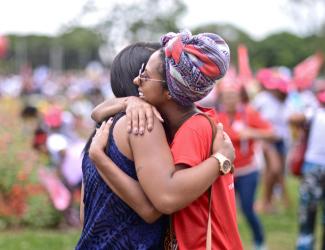
Marcha da Mulheres Negras 2016

Priority Areas

Supporting feminist, women’s rights and gender justice movements to thrive, to be a driving force in challenging systems of oppression, and to co-create feminist realities.

Co-Creating Feminist Realities

While we dream of a feminist world, there are those who are already building and living it. These are our Feminist Realities!

What are Feminist Realities?

Feminist Realities are the living, breathing examples of the just world we are co-creating. They exist now, in the many ways we live, struggle and build our lives.

Feminist Realities go beyond resisting oppressive systems to show us what a world without domination, exploitation and supremacy look like.

These are the narratives we want to unearth, share and amplify throughout this Feminist Realities journey.

Transforming Visions into Lived Experiences

Through this initiative, we:

  • Create and amplify alternatives: We co-create art and creative expressions that center and celebrate the hope, optimism, healing and radical imagination that feminist realities inspire.

  • Build knowledge: We document, demonstrate & disseminate methodologies that will help identify the feminist realities in our diverse communities.

  • Advance feminist agendas: We expand and deepen our collective thinking and organizing to advance just solutions and systems that embody feminist values and visions.

  • Mobilize solidarity actions: We engage feminist, women’s rights and gender justice movements and allies in sharing, exchanging and jointly creating feminist realities, narratives and proposals at the 14th AWID International Forum.


The AWID International Forum

As much as we emphasize the process leading up to, and beyond, the four-day Forum, the event itself is an important part of where the magic happens, thanks to the unique energy and opportunity that comes with bringing people together.

We expect the next Forum to:

  • Build the power of Feminist Realities, by naming, celebrating, amplifying and contributing to build momentum around experiences and propositions that shine light on what is possible and feed our collective imaginations

  • Replenish wells of hope and energy as much needed fuel for rights and justice activism and resilience

  • Strengthen connectivity, reciprocity and solidarity across the diversity of feminist movements and with other rights and justice-oriented movements

Learn more about the Forum process

We are sorry to announce that the 14th AWID International Forum is cancelled

Given the current world situation, our Board of Directors has taken the difficult decision to cancel Forum scheduled in 2021 in Taipei. 

Read the full announcement

Find out more!

Related Content

Understanding the Context of Anti-Rights Threats

Chapter 2

While fundamentalisms, fascisms and other systems of oppression shapeshift and find new tactics and strategies to consolidate power and influence, feminist movements continue to persevere and celebrate gains nationally and The rising power of anti-rights actors is not happening in a vacuum. Understanding the rise of ultra-nationalism, unchecked corporate power, growing repression, and diminishing civic space is key to contextualize the anti-rights threats we face today.

Protester holding a flyer that reads "Danger - Trump and the Far Right."
© Alisdare Hickson / Flickr
Danger - Trump and the Far Right.

Today, considerably more than half of the world’s population is governed by far-right leaders.  Against this backdrop, human rights defenders and feminists are working hard to “hold the line” and protect multilateralism and the international human rights system. They also face the risk that their engagement may bring with it violent reprisals. At the same time, these institutions are increasingly subject to private sector interests. Large businesses, particularly transnational corporations, are occupying seats at the negotiating table and leadership positions in a number of multilateral institutions, including the UN. This nexus of ultra-nationalism, closing civic space, and corporate capture is having a tremendous impact on whether human rights for all can ever be achieved. 

Table of Contents

  • Nationalism and Ultra-nationalism
  • Corporate Capture: Untamed Corporate Power is Putting Rights at Risk
  • Reprisals and Closing Civic Spaces for Feminist Activists, and LGBTIQ+ and Women Human Rights Defenders
  • Movement Resistance Story: CEDAW’s Article 16: A Pathway for Reformation of Discriminatory Family Laws in Muslim Contexts 
     

Read Full Chapter >

Young Feminist Activism

Organizing creatively, facing an increasing threat

Young feminist activists play a critical role in women’s rights organizations and movements worldwide by bringing up new issues that feminists face today. Their strength, creativity and adaptability are vital to the sustainability of feminist organizing.

At the same time, they face specific impediments to their activism such as limited access to funding and support, lack of capacity-building opportunities, and a significant increase of attacks on young women human rights defenders. This creates a lack of visibility that makes more difficult their inclusion and effective participation within women’s rights movements.

A multigenerational approach

AWID’s young feminist activism program was created to make sure the voices of young women are heard and reflected in feminist discourse. We want to ensure that young feminists have better access to funding, capacity-building opportunities and international processes. In addition to supporting young feminists directly, we are also working with women’s rights activists of all ages on practical models and strategies for effective multigenerational organizing.

Our Actions

We want young feminist activists to play a role in decision-making affecting their rights by:

  • Fostering community and sharing information through the Young Feminist Wire. Recognizing the importance of online media for the work of young feminists, our team launched the Young Feminist Wire in May 2010 to share information, build capacity through online webinars and e-discussions, and encourage community building.

  • Researching and building knowledge on young feminist activism, to increase the visibility and impact of young feminist activism within and across women’s rights movements and other key actors such as donors.

  • Promoting more effective multigenerational organizing, exploring better ways to work together.

  • Supporting young feminists to engage in global development processes such as those within the United Nations

  • Collaboration across all of AWID’s priority areas, including the Forum, to ensure young feminists’ key contributions, perspectives, needs and activism are reflected in debates, policies and programs affecting them.

Related Content

From the heart of the comuna

Our women ancestors form a circle
Sacred, alive, powerful
We are in the middle
Feeling their strength.
The drum beats a sound of earth  
Our skin dresses in colours
We are green, red, orange, blue, violet, black
The drum beats a sound of earth  
A voice vibrates, a scream emanates, a song rings out, lulling to sleep, awakening consciousness.
The drum beats a sound of earth  
A gaze of complicity, friendship profound.
The drum beats a sound of earth  
Ours is but one heart, beating a rhythm of the soul, inviting us to move, inspiring desire, and showing us a path.
One of communal togetherness, power of the people, self-government, a women’s revolution of subversive communal care.
The drum beats a sound of earth  
And I invite you to join, to be voice, skin, gaze, seed, fire, song, communion.
The drum beats a sound of earth  
And I invite you to discover it, to love it, to know it, and to defend it from the heart of the community
 
For 25 years they have lived along the same dusty streets, at the top of a hill named after a lion. They come from different places, many from traditional farming communities. Their skin is the colour of rebellion, the colour of a cardon cactus, because in them lives the spirit of the semi-arid Lara State, which is where their love for life comes from, their appreciation, care and protection of water and land. They are heiresses of the Gayon and Ayaman lineages, Indigenous communities that lived and live in the northern part of Lara State.

From the time they were very young they learned that maternity is a role from which it is not easy to escape. Caring for children, home and husband, washing, ironing, cooking, cleaning—everything had to be impeccable, people insisted.

And that was life—that and violence, insults, abuse, hitting, scheming, complaints were to be expected. It seemed almost natural, and that is how they spent their days. Everyday life on those dirt streets living in little houses of tin sheet metal without any electricity or running water. That was poverty, the precarity of when a man would arrive, yes, a man, a project. And then, an unusual revolution because it came about without war.

Then they were invited to go out, they were invited to take to the streets and occupy public space. In the process, the women tore down doors and windows, broke chains, let their hair down and they felt free, free like runaway slaves, Caribbean rebels, freedom fighters.

And those concepts of independence and sovereignty are something that those who had the chance to study had read about, but feeling it, feeling like the protagonists of a process of social transformation—that is an important victory that we have to mention and we cannot forget.

At the top of that hill one can feel the complicity, the shared fire, the years of struggle. They tell of how one of them would go around with her parasol in the afternoons from house to house having coffee and conversing with the people she would invite, convincing them
We are going to make a community council!
Let’s move forward together as a community!
Let’s make plans for education, sports, health, nutrition, a women and gender equality committee, the economy.
We can form our own People’s Government so our Neighbourhood can Be Beautiful!

And that is how the houses came, the doctor’s office, daycare, electricity, potable water. These are some of the community’s achievements, some of our common dreams come true.
And you might ask how a cuentera, a storyteller, made her way to a hill with the name of a lion
And I will tell you: it’s that I was born rowdy, always fighting, I was born a wanderer my grandmother would say, born ready Comandante Chavez would add, from so much walking, grumbling, fighting, and doubting that military man, that I would end up becoming convinced by the community project, by the idea of self-government, of the people managing their own resources, of all the power going to the communities, and so I was convinced.

But I knew something was missing because the women, the women of the community kept building up the people’s power and putting our hearts in the anti-imperialist and anti-capitalist fight, but there is something that hurts and continues to affect us. There are wounds from a patriarchy still present.
So one day, I found myself crying and the drum of the earth beat and our women ancestors spoke.
I found myself surrounded by a group of women who held me up, who contained me as I spilled over in front of them, as it both hurt and liberated me at the same time. That is how I discovered that love among women heals you, saves you, and that our friendship is profoundly political and that sisterhood is a way of being, of living life. From that moment on I never felt alone again, I never felt like an island again, because I know there is a group of women who carry me, bring me, love me, care for me and me for them. I know that this way of becoming a feminist with the mysticism of women loving life is an experience of feeling connected and loved by women, even if you never see them again. How not to want this that happened to me, to happen also to other women, this new beginning, this birth of a new heart is a gift from the goddesses that must be shared.  

So I decided to join the women and I began walking from community to community to learn about others’ experiences. We began debating health, education, nutrition, we began preaching the anti-patriarchal word and calling for communities free of machismo. We insisted on recovering ancestral knowledge, intuition, we decided to defend life by talking about abortion and we found ourselves laughing, crying, debating, reflecting. I find myself with Macu, with the China, Yenni, Carolina, Maria, Ramona, Irma, and even with our sister Yenifer who left us not long ago.

This is my homage to them, the women of the hill, the lioness women, the ones who without a doubt have sown a seed in me with so much force it now beats with my heart.
Without a doubt they blaze a path, they are the ones who make caring for a family possible, collective care. They are also a force, a force in a territory that fights to overcome the embargo, the patriarchal violence, the political treason, to overcome the bureaucracy and the corruption.

Without a doubt they blaze a path
Without a doubt they are a compass
Without a doubt they are the heart of the community

Many thanks, I am Maria Bonita, Mharyha Morales from Venezuela. I hope you will continue to enjoy this beautiful festival that brings us women together, in all our diversity, that brings us together from the heart of the community to create, resist, and transform.

Thank you.

Brenda Salas Neves

Biography

Brenda Salas Neves es une estratega feminista queer nacide y criade en los Andes del Sur. Elle trabaja en la organización para el cambio de narrativas y movilizar recursos para apoyar los movimientos de justicia racial y climática en todo el mundo. Ha producido proyectos mediáticos para potenciar el poder de la población migrante y alzarse contra la intervención militar estadounidense en toda América Latina, con Deep Dish TV y el Comité de Solidaridad con Centroamérica de Portland. Elle es une orgullose integrante del Proyecto Audre Lorde y egresade del movimiento de los United World Colleges (UWC).

Position
Secretarie
Add to stories
Off

Snippet - That Feminist Fire Logo (ES)

Texto en blanco que dice el título de nuestro podcast en español: Ese fuego feminista

FRMag - Ashawo Work na Work

"Ashawo Work na Work": Cómo lxs jóvenes feministas de Ghana están haciendo realidad los futuros feministas

por Fatima B. Derby

En 2017, la campaña de AWID #PracticaSolidaridad destacó cómo lxs jóvenes feministas podían construir un futuro feminista apoyándose mutuamente, participando en conversaciones interregionales entre ellxs, marchando en solidaridad con otrxs activistas y abriendo canales de colaboración entre los movimientos. (...)

Leer

< arte: «Let it Grow» [Déjalo crecer], Gucora Andu 

Andaiye

Andaiye in Swahili means ‘a daughter comes home’. Born Sandra Williams on 11 September 1942 in Georgetown, Guyana, she changed her name to ‘Andaiye’ in 1970 as the Black Power movements swept her country and the wider Caribbean region. 

Andaiye was seen as a transformative figure on the frontlines of the struggles for liberation and freedom. She was an early member and active in the leadership of the Working People’s Alliance (WPA), a socialist party in Guyana which fought against authoritarian rule and continued throughout her life to focus on justice for the working-class and rural women’s rights and on bridging ethnic barriers between Indo and Afro-Guyanese women. 

Andaiye was a founding member of Red Thread Women, an organization that advocated for women’s care work to be fairly remunerated, worked at the University of the West Indies and with CARICOM. Never afraid to challenge governments, she pointed out gender imbalances in state boards, laws that discriminated against sex workers, called for abortion rights in Jamaica and spoke out against trade agreements such as the Caribbean Single Market and Economy (CSME) that allowed for the free movement of women domestic migrant workers but did not give their children the same rights.  

Andaiye published several scholarly essays, wrote newspaper columns and also edited the last books of Walter Rodney, the Guyanese political activist and fellow WPA leader, who was assassinated in 1980. A cancer survivor, Andaiye was one of the founders of the Guyana Cancer Society and the Cancer Survivors’ Action Group. She also served on the executive of the Caribbean Association for Feminist Research and Action (CAFRA), as a Director of Help and Shelter and as Board Member of the Guyana National Commission on Women. She received a number of awards, including the Golden Arrow of Achievement in Guyana (the fourth highest national award).

Andaiye passed away on 31 May 2019 at the age of 77. The subsequent tributes that flowed in from activists, friends and those inspired by her life spoke eloquently to her amazing legacy and her beautiful humanity.

Here are but a few: 

“Andaiye had a profound effect on me...she was so many things, an educator, fighter, she taught me to be self-critical, to think more clearly, she taught me about survival, about incredible courage, about compassion, about going beyond external appearances and treating people as people and not being distracted by status, class, race...anything.”
- Peggy Antrobus, Feminist Activist, Author, Scholar, Barbados

“The kind of confident idealism Andaiye expressed, this willingness to confront the world and a stubborn belief that you could actually change it... That politics of hope...How else to honour her life, legacy and memory but to keep doing the work ethically and with ongoing self-critique? And to put women’s caring work at the center of it.”
- Tonya Haynes, Barbados

“I can hear her quip at our collective keening. So through the tears I can laugh. Deep bows to you beloved Andaiye, thank you for everything. Love and light for your spirit’s journey. Tell Walter and all the ancestors howdy.” - Carol Narcisse, Jamaica

Read more tributes to Andaiye

What Our Members Say - FR

Ce que disent nos membres

Carta de amor a los movimientos feministas #3

Carta de amor al feminismo

Por Marianne Mesfin Asfaw

Sobres de álbum de recortes que dicen Cartas de amor a los movimientos feministas. El sobre en la parte superior dice De Marianne Mesfin Asfaw

Tengo muchos recuerdos queridos de mi recorridofeminista, pero hay uno en particular que se destaca. Fue durante mi época en la escuela de posgrado, una conferencia a la que asistí como parte de un curso de Teoría Feminista. La conferencia trataba sobre feminismo africano y, en ella, la profesora habló de la historia del panafricanismo, de su carácter patriarcal, centrado en los hombres, y de cómo los estudiosos panafricanistas perpetuaban el borramiento de las mujeres africanas. La conferencista señaló que las contribuciones de las mujeres africanas a las luchas anticoloniales y descoloniales en el continente rara vez, o nunca, se analizany no se les da el debido crédito. Leímos acerca de las académicas feministas africanas que desafían ese borramiento y dan a conocer  activamente las historias de los movimientos y los esfuerzos de resistencia liderados por mujeres africanas. Parecetan sencillo, pero lo que más me llamó la atención fue que alguien juntara las palabras africana y feminista. Mejor aún: descubrir que había muchas más de nosotras ahí afuera, luchando contra las complicaciones de la historia, la política y las normas sociales en distintos rincones del continente, y que todas estábamos utilizando una perspectiva feminista para hacerlo. Salí de esa conferencia conmovida y completamente alucinada. res de mis amigas (todas feministas africanas) y yo nos quedamos un rato comentando fuera del aula. Todas estábamos impresionadas por la genialidad de la conferencia y su contenido pero, sobre todo, sentimos que estábamos siendo tenidas en cuenta. Ese sentimiento fue el que más me llamó la atención.

Enamorarse del feminismo fue electrizante. Fue como sentir que por fin puedes hablar con la persona que te gusta desde hace mucho tiempo y descubres que también le gustas. Lo llamo mi enamoramiento porque durante la escuela secundaria me consideraba feminista pero sentía que no sabía lo suficiente sobre el tema. ¿Había una forma correcta de ser feminista? ¿Y si no lo estaba haciendo bien? Cuando asistí a mi primera conferencia de Estudios de las Mujeres obtuve respuestas para algunas de estas preguntas. Fue emocionante conocer historias de resistencia feminista y de desmantelamiento del patriarcado. Me sentí muy afirmada y validada, pero también sentí que algo me faltaba.

Profundizar mi relación con el feminismo a través de la academia en una institución en la que el estudiantado y el personal docente eran en su mayoría blancx, significó que, durante esos primeros años, me diera cuenta de que rara vez hablábamos sobre cómo la raza y la antinegritud se ponen en juego en los movimientos feministas hegemónicos. En la mayoría de las asignaturas teníamos tal vez una semana, o peor aún, una clase, dedicada a la raza donde por lo general leíamos algo de bell hooks, el trabajo de Kimberly Crenshaw sobre interseccionalidad, y tal vez, a Patricia Hill Collins. A la semana siguiente volvíamos a dejar de lado el tema. Lidié con todo esto dándole un lugar central a la raza y al feminismo negro en casi todas mis tareas, escribiendo sobre el pelo negro y las políticas de respetabilidad, la hipersexualización de los cuerpos de las mujeres negras, y mucho más. Con el tiempo me di cuenta de que intentaba llenar un vacío, pero no sabía muy bien cuál era.


El momento en que el círculo se cerró de manera perfecta fue cuando descubrí que había un feminismo africano y lo estudié. Me di cuenta de que teníamucho más por aprender, principalmente que mi africanidad y mi práctica feminista no tenían por qué estar separadas. Al contrario: tenían mucho que aprender la una de la otra, y había feministas africanas que ya estaban haciendo este trabajo. Esa era la pieza que faltaba y que me fue tan esquiva durante mi exploración del feminismo a lo largo de mi carrera académica.


Para mí, el feminismo es la antítesis de la apatía social y política. También significa que una vez que adoptas una perspectiva feminista, nada puede ser igual. Con mis amigas solíamos decir que era como ponerse unos anteojos que nunca te puedes quitar porque ahora ves el mundo tal y como es, con todos sus desastres. Desastres que no puedes ignorar ni dejar de lado. Es por eso que mi compromiso con el movimiento feminista es no dejar nunca de aprender, seguir ampliando el alcance de mi empatía y no vivir nunca de forma pasiva. Dedicar más tiempo y espacio en mi vida a los movimientos feministas, y seguir amplificando, celebrando, documentando y citando el trabajo de las feministas africanas. También me comprometo a darle un lugar central al cuidado y a dar prioridad al placer en este recorrido feminista porque no podemos sostener nuestros movimientos sin esto.

Rachel Mabaudi

Biography

Rachel es una profesional financiera con más de dos décadas de experiencia. Ha supervisado negocios y proyectos financieros para entidades privadas y públicas, organizaciones sin fines de lucro y organizaciones internacionales no gubernamentales. Es una contadora pública con una maestría global en administración de empresas, e integra el instituto sudafricano de contadores públicos. En su tiempo libre, Rachel diseña arte tipográfico, y disfruta de viajar y de pasar tiempo con familia y amigues con una botella de vino.

Position
Finance Manager
Add to stories
Off

Snippet Forum Stories Download (EN)

FRMag - The Story of An Unhappy Tale

Histoire d’un conte non féérique

par Gabriela Estefanía Riera Robles

Juliana. Comme j’aimerais m’appeler Juliana! C’est un prénom plein de pouvoir et de présence, plein de force et de véhémence.  (...)

Lire

< illustration : «Born Fighters», par Borislava Madeit et Stalker Since

Paula Andrea Rosero Ordóñez

"[Ella] era una persona que se caracterizaba por su arduo trabajo a favor de la defensa de los derechos humanos y la construcción de la paz en Nariño, especialmente en el municipio de Samaniego-Nariño". - Jorge Luis Congacha Yunda para Página10.

Paula Andrea Rosero Ordóñez fue abogada de primera instancia en la oficina del Ministerio Público en Samaniego, Nariño, la principal agencia de defensa de los derechos de la ciudadanía en Colombia.

Paula se  especializó en los derechos civiles y políticos, las  problemáticas de la impunidad y la justicia, y contribuyó a descubrir abusos de poder, incluida la corrupción. Paula participó también en proyectos para la consolidación de la paz en su ciudad natal, Samaniego, a través del Consejo Municipal de Paz y la Junta Municipal de Mujeres.

Paula recibió amenazas de muerte tras exponer el manejo irregular de los recursos y de denunciar actos de corrupción en el Hospital Lorencita Villegas del municipio nariñense. Fue asesinada el 20 de mayo de 2019, cuando dos hombres se acercaron y le dispararon a corta distancia. 

Snippet - CSW69 spaces to watch out for - EN

CSW69 spaces to watch out for

Learn more about upcoming CSW69 events that AWID is co-organizing

Lettre d’amour aux mouvements féministes #5

Féministes soudanaises : « une révolution au sein de la révolution »

« J’ai subi des violences sexuelles, des blessures physiques et d’autres formes de violence lorsque je manifestais sur les lignes de front. Mais je ne m’arrêterai jamais, tant et aussi longtemps que nous n’aurons pas de régime civil au Soudan. Nous devons arrêter la militarisation de l’État. Nos corps ne doivent plus être traités comme des champs de bataille »

déclarait Amal*, une manifestante de 23 ans** 

Les femmes sont à la tête de la révolution au Soudan depuis quatre ans. Leur leadership ne s’est pas limité à la rue : elles étaient la force motrice de la résistance continue à tous les niveaux. Les femmes et les jeunes féministes sont devenues la conscience alerte du mouvement pour le changement et la démocratisation au Soudan. Dès la première manifestation contre l’ancien régime dans la ville d’Aldmazein, dans la région en conflit du Nil Bleu, le 13 décembre 2018, de jeunes écolières sont devenues les porte-voix réclamant la fin de 30 années de dictature militaire et de Frères musulmans.

Love letter to feminist movements from Your dramatically cloaked jungle nymph.

Le mouvement féministe mené par de jeunes femmes âgées de 16 à 35 ans a créé une révolution au sein de la révolution incessante depuis quatre ans au Soudan. Les voix des jeunes femmes qui occupent l’espace dans les rues, sur les réseaux sociaux, au sein de la société civile et des organisations politiques sont suffisamment fortes pour avoir remodelé l’opinion publique et questionné les normes sociales. Les discussions sur les violences sexuelles et basées sur le genre et les tabous de la violence domestique et des processus décisionnels dominés par les hommes sont devenues des débats courants pour la première fois dans l’histoire du Soudan. Les équipes de football féminines, les femmes porte-parole de comités de la résistance et les syndicats professionnels dirigés par des femmes sont quelques-uns des faits saillants de la nouvelle vague du mouvement féministe au Soudan. Des jeunes femmes se définissant fièrement et publiquement comme féministes est le gain le plus important, dans un pays dirigé depuis trois décennies par un islam fondamentaliste. De jeunes hommes soutenant l’activisme féministe et s’identifiant eux-mêmes comme féministes est un autre progrès qu’il convient de souligner.

Ce progrès n’est pas sans coût, tout comme il n’est pas parfait. Les activistes féministes, les groupes et les activistes se retrouvent face aux difficultés typiques rencontrées dans les contextes conservateurs et affectés par des conflits. Mais l’impact du mouvement des jeunes féministes au Soudan mérite d’être encensé. Dépasser les obstacles internes des différences de culture, de religion et des conflits historiques est un défi en soi, que les jeunes féministes au Soudan semblent relever activement. La création d’écoles féministes au Darfour et dans le Kordofan révèle la trajectoire unique du travail des jeunes féministes au Soudan, dont nous pouvons tirer des enseignements.

Il n’est pas possible de nommer les jeunes femmes à la tête de ces efforts et les groupes de femmes actives sur le terrain, du fait des nombreuses préoccupations sécuritaires suite au coup d’État militaire toujours en cours. Mais leur résilience, leur force et leur courage devront figurer dans les livres d’histoire. Ces jeunes femmes audacieuses à la tête de la résistance dans les rues, derrière leurs écrans, dans différentes professions et sur différents terrains d’activisme façonnent l’avenir du Soudan. Les jeunes féministes au Soudan créent de nouveaux espaces pour que des récits et des discours féministes restructurent la distribution du pouvoir, dans ses aspects politiques, économiques et sociaux.

Malgré l’immensité de la violence, la résurgence d’un islam fondamentaliste, la militarisation et la réduction des espaces civiques, les activistes féministes au Soudan restent ancrées dans leurs sororités. Elles demeurent une incroyable source d’inspiration pour les mouvements féministes à travers le monde.


Nazik Awad


* Amal est un pseudonyme afin de protéger la jeune activiste citée. 
** Le Soudan vit une révolution constante depuis 2018. Une nouvelle vague a démarré après le coup d’État militaire du 25 octobre 2021. 

Que fait l’AWID ?

Snippet AWID Forum Location Announcement Title (FR)

La date et le lieu du Forum de l’AWID ont été annoncés!

Film club - swana

You can now watch the AWID Feminist Film Club program “Feminist Embodiments of Hope and Power” - a film series on Feminist Realities from the SWANA region curated by Esra Ozban

WATCH

Carol Thomas

Carol Thomas était une pionnière de la défense des droits sexuels et reproductifs des femmes en Afrique du Sud. Gynécologue aguerrie et fondatrice du WomenSpace, elle pratiquait et promouvait des modes de prestation de soins aux femmes non traditionnels, en proposant des soins à la fois de haute qualité, empathiques et accessibles.

« Elle inscrivait cela non seulement dans la joie de la grossesse et des nouveaux bébés, mais également dans les angoisses de la stérilité, des accouchements prématurés et des cancers féminins et dans le déchirement des fausses couches et des mortinaissances. » -Helen Moffett

Carol fonctionnait selon de nouveaux paradigmes, mettant au centre de sa pratique les besoins des femmes ayant le moins d’accès aux services et aux droits dans la société :

« L’environnement socioéconomique dans lequel nous nous trouvons majoritairement implique que les femmes supportent un fardeau disproportionné de maladies et du chômage... En tant que femme noire précédemment désavantagée, je comprends très bien ce qui se passe dans nos communautés. » - Carol Thomas

Son entreprise sociale innovante «iMobiMaMa», s’étant mérité de nombreux prix, prend appui sur les kiosques de téléphonie mobile et la technologie interactive pour connecter directement les femmes avec les services, l’information et le soutien en soins prénataux et de santé sexuelle dans les communautés de toute l’Afrique du Sud.

Carol soutenait les femmes à la fois lors des grossesses désirées et non désirées, et a encadré de nombreux·ses infirmier·ère·s et médecins au cours de sa vie.

On la décrivait également comme la gynécologue chez qui se rendre « pour les trans qui souhaitaient des soins trans affirmatifs. Elle savait y faire lorsque tant d’autres butaient sur les pronoms ou les mots à employer. Ses couvertures chaudes, son écoute attentive et ses mots qui tombaient toujours justes étaient vraiment réconfortants. » - Marion Lynn Stevens

On disait de Carol Thomas qu’elle était au point culminant de sa carrière lorsqu’elle est décédée, le 12 avril 2019, des complications d’une double transplantation pulmonaire.

Les très nombreux hommages qui lui ont été rendus suite à son décès inattendu faisaient mention qu’elle était, entre autres :

« un modèle à suivre, une guerrière, une innovatrice, une leader dynamique, une rebelle, une boule d’énergie, une brillante scientifique, une doctoresse bienveillante ».

Nul doute que Carol Thomas restera dans nos mémoires et que nous lui rendrons hommage pour avoir été tout cela, et bien plus.

الفرح للعالم: ستّة أسئلة مع نايكي ليدان

أجرت المقابلة تشينيلو أونوالو
ترجمة فيفيان عقيقي

Decorative Element


Naike Ledan Portrait

نايكي ليدان، مدافعة عن العدالة الاجتماعية وناشطة نسوية ملتزمة، تتمتع بـ 20 عامٍ من الخبرة في مجال الدفاع عن حقوق الإنسان والعدالة الصحية وتمكين المرأة، والنضال من أجل الوصول الشامل إلى الخدمات الأساسية والإدماج الاجتماعي، فضلاً عن بناء قدرات المجتمع المدني. قامت بعمل مكثف في كندا وغرب وجنوب إفريقيا وهايتي في مجال الدفاع عن الحقوق المدنية، وبناء القدرات لمنظمات المجتمع المدني، مع التأكيد على المحددات الاجتماعية للإقصاء الهيكلي. إنها تقدر مبادئ القيادة المشتركة والمساحات المعادية للاستعمار والقمع والأبوية.

Article Cover for A Joy to the World: Six Questions with Naike Ledan

السؤال الأوّل: تُعَدّين ناشطة في قضايا حقوق العابرين/ات جنسياً؛ أشعر بالفضول لمعرفة كيف عبّدتِ مسيرتك.

نشأتُ في هايتي حتّى بلغت سنّ الثامنة عشرة، ثمّ عشتُ في مونتريال لمدّة 19 عاماً. في العام 2016 عدتُ إلى هايتي معتقدة أنني سوف أعود إلى الوطن، لكن المكان تغيّر، وكان عليّ التكيّف مجدّداً. لم أُعِدْ ربط الصلات مع العائلة وأصدقاء الطفولة بالطريقة التي كنت أتوقّعها. عدت كمُغتربة مع ظروف عمل مريحة، وبقيت أشعر أنني غريبة لفترة طويلة جداً. لكن في الوقت نفسه، شعرت أنني في وطني بسبب اللغة، وحتى الصمت المألوف، وعدم اضطراري إلى تبرير غنائي لشارة إعلان تجارية – تعلمين... تلك الأمور التي نتشاركها، تلك الطاقة، تلك المساحة، وتلك الروح.

عودتي إلى حبّ الذات – أو ما أسمّيه "ولادة جديدة" – التي تتزامن مع ولادة طفلي الأوّل، وولادة نفسي، ووقوعي في حبّ حبيبتي الكويرية. (مصدر الصورة: نايكي ليدان)​​​​​​

 ما ساعدني في ذلك هو حبّي للعمل في كافة أنحاء البلاد، وتوثيق معارف الناس. لذلك تركت مساحتى المريحة، وأصبحت مديرة قطرية لمنظّمة إقليمية كويرية. تركَّز معظم عملي على إيجاد الموارد وبناء قدرات المجتمع المدني. بنيتُ استراتيجيتي على الذهاب إلى الريف، والبحث عن كلّ المنظّمات الصغيرة، والمساعدة في بناء قدراتها وتمويلها. لم أكن مُهتمّة بالسياسيين وبمصافحتهم والتقاط الصور معهم <ضحكة>. كان لديّ حليف رائع: شارلوت جودي، الناشط الكويري الذي قُتِل قبل ثلاث سنوات في منزله. تقرّبنا كثيراً بعد حظر مهرجان أفلام أفرو كويرية في هايتي كنا نخطّط له. أحدث المهرجان ضجّة كبيرة، وأثار نقاشات عن الكويرية في كلّ مكان، لذلك قدّمني شارلوت إلى منظّمات المجتمع المدني الصغيرة، المُنتشرة في كلّ ركن من البلاد. كان عليّ أن أكون هناك لمساعدة المنظّمة (المنظّمات)، على التسجيل بشكل قانوني أو بناء خطّتها الاستراتيجية. جعلتني هذه الأعمال ناشطة كويرية، وبالتالي ناشطة في قضايا المتحوّلين/ات جنسياً. مع ذلك لا أسمّي نفسي ناشطة. إنّها كلمة ثقيلة كما تعلمين. لكنّها الصفة التي يناديك بها الناس. أعتقد أنني مجرّد عاشقة ومقاتلة <ضحكة>.

السؤال الأوّل: أخبريني عن ورشة العمل التي نظّمتها للمهرجان مع AWID. ما هو مضمونها وسياقها؟

وعيي الذاتي العميق خلال سنوات طفولتي، وانخراطي في البحث عن أسباب انعدام المساواة والظلم في سنّ مُبكرة جدّاً (في الرابعة من عمري تقريباً). (مصدر الصورة: نايكي ليدان))

ا تتحدّث وسائل الإعلام الدولية عن هايتي، لكن مع وجود بيئة سياسية سيّئة فإن البيئة الاقتصادية تكون أكثر كارثية. نظراً لانتمائي إلى الطبقة الوسطى في هايتي، وتحدّثي بلغات عدّة، وامتلاكي جوازات سفر مختلفة، تردّدت بدايةً في أخذ هذه المساحة. غالباً ما أرى نفسي كجسر، لا شخص يتحدّث عن نفسه. لذلك دعوت سيمي، شابّة لامعة متحوّلة جنسياً من خارج بورت أو برنس، لتأخذ المساحة وتتحدّث عن نفسها، وترشدنا إلى واقع النساء المتحوّلات في هايتي. انتهى بنا الأمر بعقد جلسة عن النسوية غير الشمولية – أو كما أسمّيها المساحات النسوية الرسمية – وكيف أن الفتيات المتحوّلات في هايتي لا يملكن مساحات للمساهمة في التعريف عن المرأة ومشاركة واقعها. من هنا، كان مهرجان AWID فرصة لي لإعطاء مساحة للنساء اللواتي يجب أن يحصلن على فرص. أمضينا وقتاً رائعاً؛ احتسينا النبيذ أثناء جلستنا عبر الإنترنت، وشاركتنا سيمي، التي ساعدتني في إدارة الجلسة، بما يعنيه أن تكوني طفلة/ فتاة/ امرأة متحوّلة في مراحل مختلفة من حياتها، وتحدّثت عن أخطار الشارع والفقر والإقصاء والفشل في ظهورها كامرأة بعد التحوّل، وأيضاً عن انتصاراتها.

السؤال الأوّل: ما علاقة النساء المتحوّلات بالمنظّمات النسوية في هايتي؟ كيف كانت تجربتك في هذا السياق؟

لقد كانت تجربة النساء المتحوّلات صعبة، وفي الواقع مفجعة. من عدم الاعتراف بوجودهن إلى التعامل معهنّ بأسلوب جنسي مُتطرّف، فضلاً عن تعرّضهن للقتل من دون حتّى الإعلان عن هذه الحالات في الإعلام. وهو ما يعبّر عن مدى عدم الاعتراف بوجودهن، وعن كيفيّة محوهن. إنهنّ موجودات في كلّ مكان، لكن ليس في أماكن العمل، ولا في البيئات النسوية، ولا في بيئات المؤسّساتية. ولا حتّى في منظّمات مجتمع الميم. في الآونة الأخيرة فقط، ونتيجة حملات المناصرة، صحّحت بعض المنظّمات نوعاً ما هذه الوضعيّة. لكن لا يزال الأمر غير وارد في المساحات النسوية. ما زلنا مضطرّات للتعامل مع الخطاب الإقصائي القديم بـ»إنهنّ لسنا نساء. بالطبع، إذا نجحن في الظهور كنساء بعد عمليّات التحوّل...». إن ثقافة الفشل أو النجاح في التحوّل ليست إلّا محادثة عن إدارة المخاطر – إلى أي درجة ينجح التحوّل، وما الذي يعنيه لجسمكِ، والعنف الذي يلحق به. في الواقع الإقصائي للمتحوّلين/ات الذي نعيش فيه، ويُعاد إنتاجه في الكثير من المساحات النسوية، قد تُعتبر فتيات، وإلى حدّ معيّن، أولئلك اللواتي ينجحن في الظهور بما يتوافق مع الجنس الذي تحوّلن إليه. لكن ماذا عن الوقوع في الحبّ، وإجراء محادثة، وإخفاء الهوية الجنسية، والرغبة في الحصول على مظهر معيّن، أو مهنة معيّنة؟ في الحقيقة، أصبح العلاج بالهرمونات حديثاً عن الحدّ من المخاطر كما عبّرت سيمي في ورشة العمل. لكن ليس لدينا خيار العلاج الهرموني، ولا الإطار الطبي أو النظام لدعم أولئك الذين يرغبون في متابعته.

السؤال الأوّل: عندما تتحدّثين عن الطريقة التي يُنظر بها إلى الأشخاص المتحوّلين/ا جنسياً والكويريين/ات في المجتمع، يبدو أنها مشابهة لنظرة المجتمع في نيجيريا، حيث يبرز رهاب المثلية بعمق.

هايتي بلد مُعقّد للغاية وبطريقة جميلة جداً. لا يوجد شيء بسيط، كما تعلمين، لا يوجد شيء يُمكن القيام به بطريقة واحدة فقط. الهايتيون متسامحون للغاية – لكنّهم وفي الوقت نفسه يعانون من رهاب المثلية. سوف تجد مناطق في الريف، لا يعاني المقيمون فيها من رهاب المثلية على الإطلاق نظراً لوجود معابد فودو فيها، وهذه ديانة تحترم الحياة. أحد المبادئ الأساسية لديانة فودو هو عدم وجود ما هو صحيح أو خطأ. لفترة طويلة، كان الناس يعتقدون أن هايتي ملاذ ومكان حيث يعيش أناس متسامحون – نحن نتحدّث عن السبعينيات والثمانينيات وقبل انتشار فيروس نقص المناعة البشريّة، وحتّى التسعينيات. من ثمّ وقع زلزال العام 2010 وقتل نحو 300 ألف شخص، وبعدها تدفّقت كلّ هذه الأموال من جنوب الولايات المتّحدة عبر الإنجيليين لإعادة بناء البلاد والعثور على يسوع. لذلك، يُعدّ رهاب المثلية حديث النشأة في هايتي. في العمق، في روحية الثقافة، لا أستطيع القول إنّ هايتي معادية للمثليين. لكن في الحياة اليومية، من المؤكّد أن هناك عنفاً يقع على المثليين، وكذلك على النساء، والنساء الفقيرات، والنساء داكنات البشرة أيضاً، خصوصاً أنّ التمييز العرقيّ بارز جداً في منطقة الكاريبي.

السؤال الأوّل: كيف تمكّنت من إدارة الأمر؟ ما كانت استراتيجيّتك 

عودتي إلى هايتي كان جزءاً من مساري الهادف نحو التخلّص من الاستعمار، وكان محاولةً منّي لموضعة حواسي وحواس عائلتي ضمن فضاءٍ يحتوي قصص التمرّد على المعيارية وعلى واقع العنصرية ضد السود. (مصدر الصورة: نايكي ليدان)

أنا أحبّ عملي حقّاً. أحبّ العمل بشكل عام. عندما وصلت، عملت بداية مع تلك المنظّمة غير الحكومية الرهيبة لكنني قمت بعمل رائع. كنت موجودة دائماً في الريف، وأتحدّث وأتعلّم من الناس والنساء. وهو ما أسعدَ قلبي لفترة طويلة لأنني أحبّ ثقافتي بشدّة، وأحبّ الأشخاص السود، والنساء السود – النساء السود المُسنّات، والأطفال السود. يملأني الأمر بروحانية. عندما كنّا في كندا، ارتاد أطفالي مدارس البيض المرموقة. لم يتحدّثوا بلغة شعب الكريول ولا الفرنسية. أمّا الآن فإنّهم يركضون بحرّية في حديقة المنزل، ويتقاتلون بلغة الكريول. أيضاً وجدت مع الأشخاص الذين قابلتهم محاور للبقاء. خلقت روابط مع الكويريين/ات وغيرهم من غريبي الأطوار مثلي. كان الأمر رائعاً حقاً. لكنّي أعاني الآن. لم أعد أشعر بالأمان في هايتي. أسبوعياً تُسجّل نحو 40 عملية خطف في بورت أو برنس – وهو وضع مستمرّ منذ العام 2018. أصبت بنوبات من القلق والذعر. لقد حان وقت الذهاب، فيما أسأل نفسي: «أين هو الوطن؟». قضيت 19 عاماً في مونتريال لكنّني لم أشعر مطلقاً بأنني في وطني. عندما غادرت، لم أفتقدها أبداً، لذلك لا أريد العودة إليها. أيضاً بكيت كثيراً مؤخّراً كوني أشعر بأنني دخلت إلى منفى ثاني.

السؤال الأوّل:  كيف هي علاقتك مع المتعة والترفيه والراحة؟

علاقتي مع المتعة والترفيه والراحة مماثلة وواحدة. إنها لحظة أعيشها عندما أدلّل نفسي بحرارة الشمس على وجهي على سبيل المثال. هي المتعة والترفيه والراحة في الوقت نفسه.

المتعة: مساحتى المُفضّلة، ملاذ للاحتفال بنفسي، حيث أحفظ لنفسي القوّة والحقّ في أن أكون هادئة أو صاخبة خلال لحظات المتعة التي أختبرها. أنغمس بكلّ لحظة متعة، بما في ذلك، متعة الوحدة والصمت.

الترفيه: ركوب الدرّاجة، والمهرجانات الموسيقية، والأكل، وتذوّق النبيذ، المشاركة في رقصات الفودو الهايتية التقليدية. كلّها من ضمن الأنشطة العديدة التي أشارك فيها حالياً.

الراحة: هو ما أعيش من أجله. بما أنني شخص متفوّق وأحبّ العمل، فمن المفارقة أن أكون كسولة أيضاً. لا أحد يعلم بالأمر، لأن ما يرونه هو أنني أعمل بجدّ وبأكثر من طاقتي. إنهم لا يعرفون كيف يمكنني الانغماس في الكسل بشكل عميق وبلا تردّد.

Cover image for Communicating Desire
 
Explore Transnational Embodiments

This journal edition in partnership with Kohl: a Journal for Body and Gender Research, will explore feminist solutions, proposals and realities for transforming our current world, our bodies and our sexualities.

Explore

Cover image, woman biting a fruit
 

التجسيدات العابرة للحدود

نصدر النسخة هذه من المجلة بالشراكة مع «كحل: مجلة لأبحاث الجسد والجندر»، وسنستكشف عبرها الحلول والاقتراحات وأنواع الواقع النسوية لتغيير عالمنا الحالي وكذلك أجسادنا وجنسانياتنا.

استكشف المجلة

Nominate bold feminists to join AWID's Board of Directors

Every year, AWID seeks to renew and enrich the perspectives and experience reflected in our Board of Directors by bringing in new members.

Currently, we are looking for individuals to serve 3-year terms on AWID’s Board, starting in early 2023. This is an opportunity to contribute to our organisation’s governance and to be part of an amazing group of feminists from around the world. 

Please help us to identify thoughtful and bold feminists to nominate for election by July 29, 2022.

Submit your nomination

Please also share this invitation to nominate with your networks!

Who are we looking for?

First and foremost, we are looking for candidates who are committed to AWID’s mission, who can make connections between local and global struggles, and who can help us to be thoughtful about how to best leverage AWID's positioning and strengths in a constantly evolving context. Candidates must be willing to uphold the legal duties and responsibilities of the AWID Board in the best interests of the organization. 

This is a voluntary role that requires commitment and engagement throughout the year. Board members are expected to commit a minimum of 10-15 days per year to attend in-person and virtual meetings, and contribute to other communications.  

We aspire for our Board to reflect diversity in all its forms, particularly in terms of gender identity, sexual orientation, age, geography and background. Additionally, we seek Board members with experience relevant to AWID’s priority areas of work. 

While we will consider all candidates, in light of the current composition of the board, priority consideration will be given to:

Candidates with experience working at the intersections of women’s rights/gender justice and :

  • Finance
  • Climate justice
  • Disability justice, and/or 
  • Technology

 Candidates from the following regions:

  • Africa
  • South America

What Board members bring to AWID

The Board of Directors is key to inform AWID’s strategic direction and support our organisation to fulfill its mission in coherence with the world we live in and the needs of our movements. 

Board members contribute to the organization in many ways: bringing governance experience from other spaces, perspectives from diverse sectors of feminist movements, and substantive expertise in areas relevant to AWID’s strategy. 
The candidates who are ultimately elected will be joining the AWID Board in 2023, accompanying us for the launch of our new strategic plan led by AWID’s new Co-Executive Directors, and the planning of our next international Forum.   

Do you know someone with this profile?

Submit your nomination

(You can nominate yourself or someone you know - with their consent)

Please also share this invitation to nominate with your networks!

While anyone can nominate a person for the AWID Board, only AWID members can vote in our Board Elections - Become an AWID member today!

Thank you, in advance, for helping us find our next wonderful Board members to support AWID in its journey ahead!  

Love letter to Feminist Movements #9

The body is a powerful entity. As women, our bodies are controlled, oppressed and policed from the womb. The way we look, move, dress, walk, speak, gesture, laugh. I often wondered at what drives patriarchal fears around the power of female bodies. Where I come from sex work and sex workers were whispered of with simultaneous contempt, disgust, fascination, pity and condemnation.

Where I come from sex work and sex workers were whispered of with simultaneous contempt, disgust, fascination, pity and condemnation.

Love letter to feminist movements from Khin Khin.

I first encountered sex work and sex workers at age 22. Simple conversations, sitting in circles, chatting over coffee and tea, we explored each other’s lives, experiences, thoughts and feelings.

For sex workers, sex work was the most worthwhile choice out of all other options to pay bills, to support family, to have more flexible working hours, to have sex. Just as I chose my job as the most worthwhile, to pay bills, to support family, to have more flexible working hours. 

These individuals, women and men, taught me that I made my own decisions about my body… where I focus its life and energy, whether I use it for pleasure or pain, whether I trade it in or give it freely, and how I want to feel about my body. The awareness was as exciting as it was empowering.

Crear | Résister | Transform: a festival for feminist movements – 2021… you accompanied me through a series of life-changing moments (!!!) 
We call these ‘events,’ though in truth, to me, your feminist learning spaces are, where I take a little of what’s inside me, a little of what your speakers say and some from the discussions to go deeper into our understanding.

Sharing… Partaking… Immersing…
in strength, in vulnerability, in pleasure.

Simply being the transformative feminist that I am, without pretentions, without misgivings… 

Welcoming the transformative feminist that I have always been, without even knowing the term or acknowledging it in such a manner or in such terms… 

Finding home for the fiercely transformative feminist living within me… 

Despite the anger, rage and frustration of not being treated as equals and being treated with ‘less __ than,’ 

I did not always consider myself a feminist nor did I recognise myself within the feminist movement or discourse… Truly, I appreciate doors being held open, chairs being pulled out to be seated, acknowledgement as a woman, of my femininity.

At times I dismissed the patriarchy with annoyance, at times, I responded with frustration and anger but I did not address it… I did not notice its sinister, insidious toxicity… I was privileged enough to be able to work through it, to survive it, to overcome it, to excel in spite of it… I did not question enough, challenge enough, push my boundaries enough… I did not do enough…
connecting with sex workers, exploring sexuality, and the women for peace and security...

Until I became fully aware and understood the implications of both privilege and oppression that was intersectional.

Until I realised what it meant to fight for gender justice and not simply ‘equality for all.’

Practitioner and facilitator no longer, I am a transformative feminist practitioner and facilitator.
Being a feminist means that I will act 

  • – through my daily activities: the way I live, the work that I do, the processes that I am invited to lead, the workshops and lectures that I am invited to give – 
  • to push back against patriarchal toxicity, to dismantle patriarchal structures and systems, 
  • to work to decolonise values, beliefs, thoughts, to smash the myths of gender norms and expectations, 
  • to address power imbalances imposed by patriarchal beliefs and socialisation, 
  • to foster relationships built on inclusion, holism, equity, care, reciprocity, accountability and justice, 
  • to stand and act in solidarity in the frontlines of the fight towards inclusion, equity and justice.

Plunging into uncertain, fragile, complex (and possibly quite violent) future…

  • I want to discover myself and be myself more intimately, authentically and deeply through the movement… 
  • I want to be more actively involved in and interconnected through this love relationship. 

I am deeply grateful for you and I promise to remain fierce in addressing and redressing problematic issues around gender, race, ethnicity, social class, sexual orientation and ability, and remain present and faithful to the struggle for inclusion, equity and justice.

Khin Khin