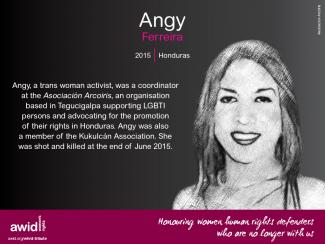
Angy Ferreira
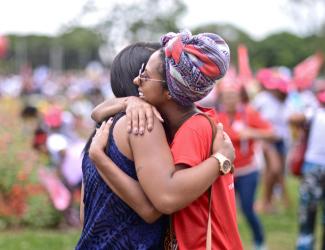
Feminist Realities are the living, breathing examples of the just world we are co-creating. They exist now, in the many ways we live, struggle and build our lives.
Feminist Realities go beyond resisting oppressive systems to show us what a world without domination, exploitation and supremacy look like.
These are the narratives we want to unearth, share and amplify throughout this Feminist Realities journey.
Create and amplify alternatives: We co-create art and creative expressions that center and celebrate the hope, optimism, healing and radical imagination that feminist realities inspire.
Build knowledge: We document, demonstrate & disseminate methodologies that will help identify the feminist realities in our diverse communities.
Advance feminist agendas: We expand and deepen our collective thinking and organizing to advance just solutions and systems that embody feminist values and visions.
Mobilize solidarity actions: We engage feminist, women’s rights and gender justice movements and allies in sharing, exchanging and jointly creating feminist realities, narratives and proposals at the 14th AWID International Forum.
As much as we emphasize the process leading up to, and beyond, the four-day Forum, the event itself is an important part of where the magic happens, thanks to the unique energy and opportunity that comes with bringing people together.
Build the power of Feminist Realities, by naming, celebrating, amplifying and contributing to build momentum around experiences and propositions that shine light on what is possible and feed our collective imaginations
Replenish wells of hope and energy as much needed fuel for rights and justice activism and resilience
Strengthen connectivity, reciprocity and solidarity across the diversity of feminist movements and with other rights and justice-oriented movements
Learn more about the Forum process
We are sorry to announce that the 14th AWID International Forum is cancelled
Given the current world situation, our Board of Directors has taken the difficult decision to cancel Forum scheduled in 2021 in Taipei.

Filter for funders that support initiatives in your geographical area.
Trauma is not the event; it is how our bodies respond to events that feel dangerous to us. It is often left stuck in the body, until we address it. There’s no talking our body out of this response – it just is.
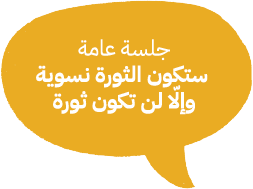
جلسة عامة | ستكون الثورة نسوية وإلّا لن تكون ثورة
مع منال التميمي وبوبولينا مورينو وكارولينا فيكيفيتش وأنووليكا نوجوزي أوكونجو
How movements are resisting fascist agendas in relation to climate change.
📅 Tuesday, November 11, 2025
📍 Beira Rio Hotel, Belém, Pará

منجزاتك الأكاديمية جسر عبور نحو شهوتك الجنسيّة (جدّيًا، سلِّم الأوراق المطلوبة، الكترونية كانت أم ورقيّة)
A tool for feminist activists at COP30 fighting for transformative, equitable and community-centred solutions to address the climate crisis.
In partnership with young feminist activists and youth-led organizations, AWID co-organized Beijing Unfettered in parallel to and independently from Beijing+25.
Movement Hubs are locally organized spaces where AWID member organizations come together to engage with global feminist processes from their own territories. The Hubs in Fiji and Georgia are organizing workshops and dialogue that connect to conversations at Women Deliver around feminist resourcing, intersectional solidarity, climate justice and collective care. Check out their program and follow AWID on social media for live updates!
WHRDs are self-identified women and lesbian, bisexual, transgender, queer and intersex (LBTQI) people and others who defend rights and are subject to gender-specific risks and threats due to their human rights work and/or as a direct consequence of their gender identity or sexual orientation.
WHRDs are subject to systematic violence and discrimination due to their identities and unyielding struggles for rights, equality and justice.
The WHRD Program collaborates with international and regional partners as well as the AWID membership to raise awareness about these risks and threats, advocate for feminist and holistic measures of protection and safety, and actively promote a culture of self-care and collective well being in our movements.
WHRDs are exposed to the same types of risks that all other defenders who defend human rights, communities, and the environment face. However, they are also exposed to gender-based violence and gender-specific risks because they challenge existing gender norms within their communities and societies.
We work collaboratively with international and regional networks and our membership
We aim to contribute to a safer world for WHRDs, their families and communities. We believe that action for rights and justice should not put WHRDs at risk; it should be appreciated and celebrated.
Promoting collaboration and coordination among human rights and women’s rights organizations at the international level to strengthen responses concerning safety and wellbeing of WHRDs.
Supporting regional networks of WHRDs and their organizations, such as the Mesoamerican Initiative for WHRDs and the WHRD Middle East and North Africa Coalition, in promoting and strengthening collective action for protection - emphasizing the establishment of solidarity and protection networks, the promotion of self-care, and advocacy and mobilization for the safety of WHRDs;
Increasing the visibility and recognition of WHRDs and their struggles, as well as the risks that they encounter by documenting the attacks that they face, and researching, producing, and disseminating information on their struggles, strategies, and challenges:
Mobilizing urgent responses of international solidarity for WHRDs at risk through our international and regional networks, and our active membership.
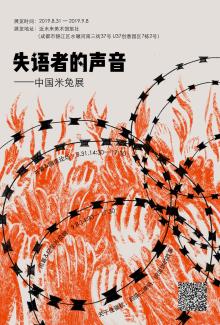
En China, el movimiento #MeToo [«Yo También»] se encendió en enero de 2018, empujado por el ímpetu del movimiento #MeToo de todo el planeta. Fue una respuesta a los problemas culturales y sistémicos relacionados con el género y el poder dentro de China. Las bases del movimiento habían sido establecidas durante décadas, y los muchos años de debate y promoción de la igualdad de género, finalmente, hicieron erupción con tremenda fuerza en toda la sociedad. El movimiento #MeToo fue impulsado fundamentalmente por jóvenes, que incluyen a innumerables mujeres anónimas y sus aliadxs, en busca de oportunidades para hacer realidad el principal «sueño chino»: transformar a China en un país con igualdad de género.
En China, el contexto para el movimiento #MeToo es extremadamente adverso: el Estado de derecho, la justicia y la transparencia de las acciones gubernamentales y la libertad de expresión no pueden darse por descontados, pero estos son precisamente los objetivos por los cuales lucha el movimiento. Ha sido, desde el principio, una lucha intensa, y cada víctima o activista que se visibiliza corre enormes riesgos: desde ser silenciadx o humilladx o de sufrir represalias hasta poner en peligro su seguridad. Todos los éxitos del movimiento #MeToo han sido logrados por quienes son lo suficientemente valientes como para asumir los costos de manifestarse y desafiar la censura.
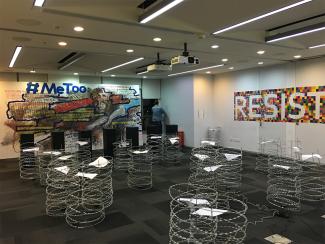
La exhibición «#MeToo in China» fue inaugurada en 2019 y recorrió cinco ciudades. Su objetivo es dar mayor prominencia a las experiencias personales de lxs víctimas y lxs activistas, para inspirar al público a unirse a la lucha a través del contacto con estas historias. La exposición misma se ha convertido en parte de la lucha #MeToo: ha debido enfrentar desafíos en su itinerario por toda China y, en más de una ocasión, fue amenazada con la clausura.


Dada la situación global, nuestra Junta Directiva tomó la difícil decisión de cancelar el Foro que estaba programado en 2021, enTaipei.
Cuando les líderes se reúnen en Brasil, los movimientos feministas hacemos incidencia, nos congregamos y alteramos el statu quo. Nos dirigimos, junto con otres feministas a Belém (Brasil) del 10 al 21 de noviembre de 2025. Allí continuaremos denunciando las soluciones falsas
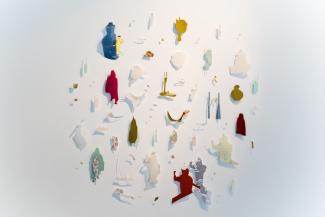
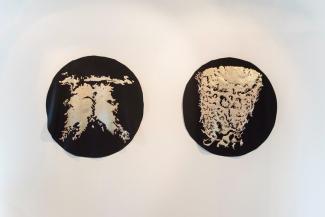

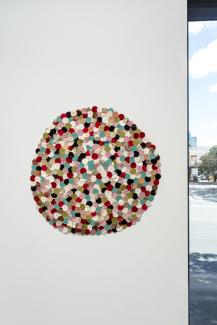
Une exposition de Nicole Barakat qui incarne sa reconnexion avec la diaspora d'objets provenant de ses terres ancestrales dans l'Asie du Sud-Ouest et l'Afrique du Nord.
Barakat présente une collection d'œuvres textiles en tant que manifestations de sa démarche consistant à travailler avec des objets déplacés, souvent volés, détenus dans les collections de musées occidentaux, notamment le Louvre, le British Museum et le Nicholson Museum.
Pour contourner les gardiens et pénétrer dans les vitrines contenant ces objets ancestraux, Barakat récupère des formes de connaissances précoloniales, non linéaires et réceptives qui sont souvent dévaluées et rejetées par les institutions coloniales et patriarcales. Elle utilise ainsi la cafédomancie, le travail du rêve, l'écoute intuitive et les conversations avec les objets eux-mêmes (source).
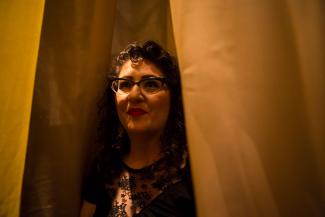
Ses œuvres comprennent des dessins en tissu et en papier cousus et découpés à la main, des formes sculpturales réalisées avec ses propres cheveux, du tissu et des matériaux végétaux, ainsi que des œuvres en direct où elle utilise sa voix comme matériau.
La pratique créative de Nicole s'enracine dans la re-mémoration et le re-couvrement de son savoir ancestral, y compris la cafédomancie et, plus récemment, le travail avec des plantes et des essences de fleurs pour le soin et la guérison de la communauté.
L’AWID propose la Boîte à outils « Où est l’argent pour les droits des femmes? » (« Where Is The Money for Women's Rights? », WITM) pour soutenir les individus et les organisations qui souhaitent mener leur propre recherche sur les tendances de financement en adaptant la méthodologie de recherche de l’AWID à une région, une question ou une population spécifique.
La Boîte à outils WITM de l’AWID est le produit de dix ans de recherches. La rméthologie WITM de l’AWID proposent une démonstration politique et pratique des ressources et des étapes qu’exige une solide recherche-action.
L’équipe 'Ressources des mouvements féministes' offre également un soutien technique et politique, avant et pendant le processus de recherche. Parcourez la boîte à outils et contactez fundher@awid.org si vous souhaitez plus de renseignements.
AWID began in 1982 and has grown and transformed since then into a truly global organization.
Read From WID to GAD to Women's Rights: The First 20 Years of AWID
Lisez nos recherches sur le financement, sur les défenseuses des droits humains, sur la création de mouvements, sur les fondamentalismes, la justice économique et beaucoup plus
A complex and evolving network of anti-rights actors is exerting increasing influence in international spaces as well as domestic politics. Often backed by obscure funding, these actors build tactic alliances across issues, regions, and faiths to increase their impact.
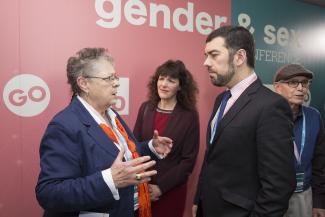
We are witnessing fascist and fundamentalist actors that, while nationalist in their discourse, are completely transnational in their ideological underpinnings, political alliances, and networks of financing. In some cases these groups are backed by obscure funding flows, linked with big business, or far-right political parties. However, they also create strategic alliances, including, in some cases, with segments of the feminist and women’s rights movements, and distance themselves from more outwardly extreme elements to appear more legitimate. Anti-rights actors are also spreading and replicating their brand of anti-rights organizing - be that campaigning and lobbying or strategic litigation - across the globe.
by Karina Ocampo
In a hidden corner of Chiapas, Mexico, women and sexual dissidents have come to organize our actions. (...)
< artwork by Sonia Carolina Madrigal Loyola
Trabajamos para fortalecer las voces y el impacto de lxs activistas, organizaciones y movimientos por los derechos de las mujeres.
Las áreas prioritarias de AWID se relacionan con temas estrechamente vinculados con tendencias globales dominantes. Estos temas reflejan los crecientes desafíos que afectan negativamente a los derechos de las mujeres en todo el mundo.
Sign up to be an AWID member to connect with 9,600+ global feminist movements and co-create a range of platforms and spaces designed especially for activists and organizations from teach-ins to solidarity spaces and member mixers.
The AWID Membership community is available as an app. Download the app and start connecting with movements!
 |
 |
Sin palabras |
 |
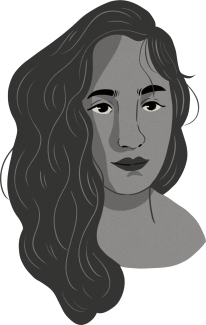 |
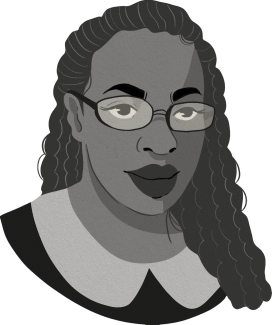
| Chinelo Onwualu | Ghiwa Sayegh |
«Cuando estamos desesperadxs por el cambio, como sucede tanto en la enfermedad como en la insurrección, nuestro lenguaje se vacía de complejidad, se queda con sus componentes más esenciales… Sin embargo, a medida que la enfermedad y la revolución persisten, el lenguaje que se hizo en ellas y sobre ellas se profundiza, admite más matices, inmerso en la aguda experiencia humana de encontrar los propios límites en el lugar del fin del mundo».
Cuando comenzamos a delinear este número con Nana Darkoa, antes de Crear | Résister | Transform: un festival para movimientos feministas! de AWID, partimos de una pregunta que es más bien una observación sobre el estado del mundo, un deseo de cambiar el terreno: ¿por qué nuestras sexualidades y placeres siguen siendo domesticados y criminalizados incluso cuando nos dicen, una y otra vez, que no tienen valor ni contribuyen al progreso? Llegamos a la conclusión de que cuando se corporizan, hay algo en nuestras sexualidades que opera contra un orden del mundo que sigue manifestándose en los controles fronterizos, los apartheids en relación a las vacunas, el colonialismo de asentamiento, la limpieza étnica, y el capitalismo descontrolado. ¿Podemos hablar, entonces, del potencial disruptivo de nuestras sexualidades? ¿Podemos seguir haciendo eso cuando, para poder obtener recursos, nuestros movimientos deben ser cooptados e institucionalizados?
Cuando el trabajo de nuestros cuerpos se convierte en ganancias en las manos de los sistemas que buscamos desmantelar, no sorprende que nuestras sexualidades y placeres queden relegados una vez más a las márgenes, especialmente cuando no son lo suficientemente rentables. En muchos momentos durante la producción de este número, nos preguntamos qué sucedería si nos negáramos a dar cabida a los servicios esenciales del capitalismo. Pero ¿podemos atrevernos a hacer esa pregunta cuando estamos agotadxs por el mundo? Quizás nuestras sexualidades son desestimadas con tanta facilidad porque no son vistas como formas de cuidado. Quizás lo que necesitemos sea reimaginar el placer como una forma radical de cuidado, una que también es anticapitalista y anti-institucional.
Estamos entrando en nuestro segundo año completo de pandemia global y nuestro abordaje de la corporalidad transnacional ha tenido que concentrarse en un único descubrimiento político: que cuidar es una forma de habitar la corporalidad. Y como ahora tanto de nuestro trabajo se hace sin tomar en cuenta los límites entre y dentro de nosotrxs, todxs somos Corporalidades Transnacionales, y eso a todxs nos sale mal. Estamos fallando en cuanto a cuidarnos y, lo que es más grave, en cuidar a lxs otrxs.
Ese fracaso no es producto de nuestras acciones.
Muchxs de nuestras madres y padres pensaban que el trabajo era transaccional, algo que debía darse a cambio de una compensación y una garantía de cuidado. Y si bien ese intercambio no siempre se cumplió, nuestrxs madres y padres no esperaban que su trabajo les diera satisfacción. Para eso tenían su ocio, sus pasatiempos, y sus comunidades. Hoy, nosotrxs, sus hijxs, que hemos sido condicionadxs para pensar en nuestro trabajo como entrelazado con nuestra pasión, no tenemos esas expectativas. Pensamos el trabajo y el ocio como una sola y misma cosa. Para demasiadas personas, el trabajo ha llegado a encarnar todo lo que somos.
Sin embargo, el capitalismo heteropatriarcal no nos valora, ni hablar de que valore nuestro trabajo o nuestras sexualidades. Este es un sistema que solo te exigirá más y más hasta que mueras. Y cuando mueras, te reemplazará por otra persona. Que se espere que estemos en línea todo el día significa que simplemente no podemos tomar distancia del trabajo, ni siquiera cuando queremos hacerlo. Esta comercialización del trabajo, divorciándolo de la persona, ha permeado cada aspecto de nuestras vidas y está siendo perpetuado incluso en los círculos más feministas, más radicales y más revolucionarios.
Las expectativas capitalistas siempre han sido particularmente dañinas para los cuerpos que no se ajustan a su ideal. Y quienes buscan consolidar sus poderes han utilizado la pandemia como una oportunidad para concentrar sus ataques en las mujeres, las minorías sexuales y cualquier otrx a quien subestimen.
Este número especial existe debido a eso y ciertamente a pesar de eso.
Casi todxs lxs colaboradorxs e integrantes del equipo se estaban presionando para ir más allá de su capacidad. Cada una de las colaboraciones fue producida desde un lugar de pasión, pero también de un increíble agotamiento. De una forma muy real, este número encarna el trabajo transnacional y, en el mundo digital en el cual vivimos, todo trabajo se ha convertido en trabajo transnacional. A medida que nos enfrentamos a nuevas fronteras que no han roto un viejo orden sino que lo reifican, experimentamos de primera mano, junto a nuestrxs colaboradorxs, cómo el capitalismo vacía nuestros límites, cómo se hace difícil construir argumentos coherentes, especialmente cuando tenemos una fecha límite para hacerlo. Nos quedamos colectivamente sin palabras, porque nos quedamos sin mundos.
Es precisamente porque nos sentimos perdidxs y solxs en el mundo del capitalismo heteropatriarcal que tenemos que reevaluar y repensar nuestros sistemas de cuidado. En muchos sentidos, hicimos de este número una misión de encontrar placer en el cuidado. Porque se ha vuelto más difícil construir argumentos coherentes, los medios visuales y creativos han pasado al primer plano. Muchas personas que solían escribir se han volcado a estos medios como una vía para producir conocimiento y atravesar la niebla mental que nos ha envuelto a todxs. Trajimos otras voces a este número, además de muchxs a quienes ya escucharon en el Festival, como una manera de abrir nuevas conversaciones y ampliar nuestros horizontes.
Dado que nos roban nuestras palabras, es nuestro deber político seguir encontrando maneras de mantenernos y cuidarnos a nosotrxs mismxs y a lxs otrxs. Muchas de nuestras realidades actuales están tratando de borrarnos y desplazarnos, mientras que siguen explotando nuestro trabajo. Nuestra corporización, por lo tanto, se convierte en una forma de resistencia; es el comienzo de que encontremos nuestro camino hacia afuera y hacia nosotrxs mismxs.
Incluso en tiempos de crisis climática, los gobiernos continúan alentando el crecimiento de las industrias agrícolas a gran escala. Estas actividades envenenan la tierra, amenazan la biodiversidad y destruyen la producción de alimentos y los medios de vida locales. Mientras tanto, aunque las mujeres producen la mayoría de nuestros alimentos en el mundo, casi no poseen tierra.
¿Qué pasaría si percibiéramos la tierra y la Naturaleza no como una propiedad privada para ser explotada, sino como una totalidad con la cual aprender y coexistir en armonía? ¿Y si repararíamos nuestras relaciones con la tierra y adoptaríamos alternativas más sostenibles que nutran tanto al planeta como a sus comunidades?
Nous Sommes la Solution (Somos la Solución, NSS) es uno de los muchos movimientos liderados por mujeres que se esfuerzan por lograr este objetivo.
Esta es su historia.
From the rising right in many countries and the flurry of funding cuts hitting hard civil society of the Global Majority, to the ongoing genocide in Gaza, the intensification of violent conflicts in Sudan, and climate crisis in many parts of our planet, we are facing real forces of fascism and a world order of impunity. This makes our opportunities to come together and build solidarity particularly valuable and imperative for our survival as a global feminist community. Of course, in 2024, the 15th AWID International Forum finally happened, and what a powerful space it was.
Download the full 2024 Annual Report
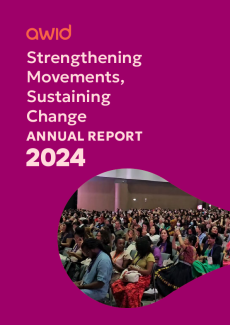
As we look ahead, we build on the powerful calls to action made by feminists at the AWID Forum; Together we can build a world where justice, liberation and care are not aspirations but realities.
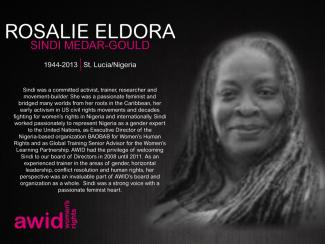
Marta is a queer, transfeminist non-binary activist-researcher from ex-Yugoslavia, currently based in Barcelona. They work as a transnational movement organizer, a feminist economist and a weaver of systemic alternatives. They are the co-founder and one of the coordinators of the Global Tapestry of Alternatives, a global process that seeks to identify, document and connect alternatives on local, regional and global levels. Locally, they are engaged in anti-racist, transfeminist, queer, migrant organizing. They also hold a doctoral degree in Environmental Science and Technology from the Autonomous University of Barcelona, dedicated to decolonial feminist perspectives of a pluriverse of systemic alternatives and the creation of feminist alternative systems based on care and the sustainability of life. During their free time, they enjoy boxing, playing the guitar and the drums as part of a samba band, photography, hiking, cooking for loved ones and spoiling their two cats.
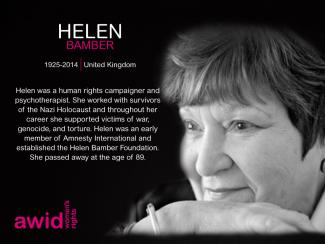
With over 30 years of finance experience, Christine has devoted her career to furthering nonprofit missions on a global scale. Her contributions extend to serving as Treasurer on the Board of an NGO. Christine joined AWID in 2007 as Controller and in 2023 took on the role as Director of Finance. During her spare time she enjoys traveling, gardening and hiking.
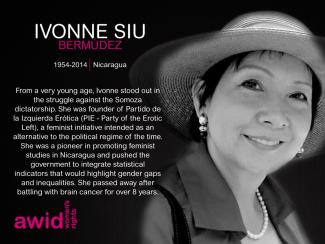
A dynamic network of people around the world, AWID members are researchers, academics, students, educators, activists, business people, policy-makers, development practitioners, funders, and more. Our members - of every age - are those who make AWID a unique global feminist association.
We offer different types of memberships geared to income level and whether you are an individual or an organization. Currently we have over 5000 members, individual and institutional, from 164 countries.
We collaborate for advocacy on specific issues, members vote in elections for our Board, and can also participate in and contribute to our Priority Areas through webinars, surveys, or urgent actions, for example.
Our institutional membership draws from a broad range of organizations interested in advancing gender justice and women’s human rights, including women’s rights organizations, from the local to the global levels, grassroots networks, major international institutions, government departments, university programs and more. 63% of our members are from the global South and 38% are under the age of 30.