Jean-Marc Ferré | Flickr (CC BY-NC-ND 2.0)
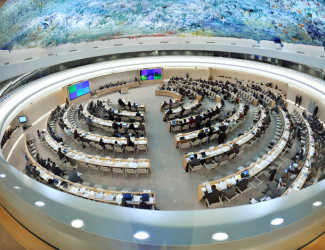
A general view of participants at the 16th session of the Human Rights Council in Geneva, Switzerland.

Special Focus

AWID is an international, feminist, membership organisation committed to achieving gender equality, sustainable development and women’s human rights

Human Rights Council (HRC)

The Human Rights Council (HRC) is the key intergovernmental body within the United Nations system responsible for the promotion and protection of all human rights around the globe. It holds three regular sessions a year: in March, June and September. The Office of the UN High Commissioner for Human Rights (OHCHR) is the secretariat for the HRC.

The HRC works by:

  • Debating and passing resolutions on global human rights issues and human rights situations in particular countries

  • Examining complaints from victims of human rights violations or activist organizations on behalf of victims of human rights violations

  • Appointing independent experts (known as “Special Procedures”) to review human rights violations in specific countries and examine and further global human rights issues

  • Engaging in discussions with experts and governments on human rights issues

  • Assessing the human rights records of all UN Member States every four and a half years through the Universal Periodic Review

Learn more about the HRC


AWID works with feminist, progressive and human rights partners to share key knowledge, convene civil society dialogues and events, and influence negotiations and outcomes of the session.

With our partners, our work will:

◾️ Monitor, track and analyze anti-rights actors, discourses and strategies and their impact on resolutions

◾️ Raise awareness of the findings of the 2017 and 2021 OURs Trends Reports.

◾️Support the work of feminist UN experts in the face of backlash and pressure

◾️Advocate for state accountability
 
◾️ Work with feminist movements and civil society organizations to advance rights related to gender and sexuality.
 

Related Content

Astitva Trust defends the rights of sexual minorities groups

Astitva Trust defends the rights of sexual minorities groups

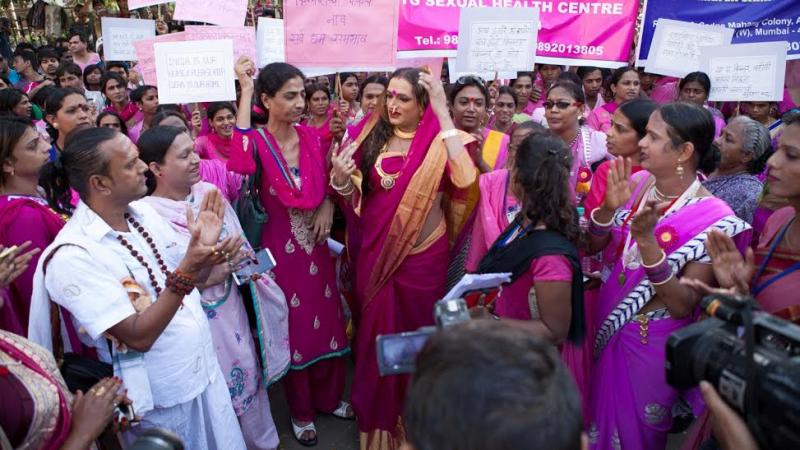
In April 2014, the Astitva Trust along with its President Laxmi Narayan Tripathi, a prominent transgender rights activist, petitioned in support of an Indian Supreme Court judgement that would recognize a third gender. It was a landmark ruling, the Court granting all constitutional rights to transgender persons. "It is the right of every human being to choose their gender,” the Court stated.


Yet even though legally transgenders are equal citizens, they still face extreme discrimination in mainstream society. The Astitva Trust, a community-based organisation of sexual minorities (mainly hijras[1]), aims to eradicate stigma and discrimination of LGBTQ* and especially the transgender community. The organisation works with sexual minority groups, campaigning for their rights, promoting their health and general well-being, helping to improve their living standards and quality of life.

Some of the objectives of the Trust include raising awareness and increasing knowledge of HIV and AIDS and other sexually transmitted infections among sexual minorities; promoting safer sex; and increasing access to community friendly sexual health services. Astitva has so far registered 4652 transgender persons and has networked with 56 transgender organisations in India, providing support in numerous areas.

The organisation is a co-founder and part of the governing board of the Integrated Network for Sexual Minorities, a founder and working group member of Maharashtra Transgender Welfare Board, and a member of both the Asia - Pacific Transgender Network and the Asia Pacific Network of Sex Workers.

In April 2015, Astitva (along with Member of Parliament Trichy Shiva) pushed for a historical unanimous passing of the Rights of Transgender Persons Bill in Rajya Sabha,[2] calling for equal rights of transgender people. Next step is to have it passed in Lok Sabha[3] so the Bill can become law.


Listen to Laxmi Narayan Tripathi TEDx Talk


[1] Hijra is a term used particularly in India to refer to a transgender individual
[2] Upper House of Parliament of India
[3] Lower House of Parliament of India
Region
Asia
South Asia
Source
AWID

Astitva Trust defiende los derechos de los grupos de las minorías sexuales

Astitva Trust defiende los derechos de los grupos de las minorías sexuales

En abril de 2014, el Astitva Trust y su Presidenta Laxmi Narayan Tripathi, destacada activista por los derechos de las personas trans*, presentaron una petición apoyando el reconocimiento de un tercer género por parte de la Corte Suprema de la India. Fue una decisión histórica y a través de ella la Corte reconoció todos los derechos constitucionales a las personas trans*, afirmando que: «Todo ser humano tiene derecho a elegir su género».


Pero aunque para la ley las personas trans* son ciudadanas en pie de igualdad, todavía se enfrentan a una discriminación social extrema. Astitva Trust es una organización comunitaria de minorías sexuales (en su mayoría hijras[1]) cuyo objetivo es erradicar el estima y la discriminación contra las personas LGBTQ* y particularmente contra la comunidad trans*. Trabaja con grupos de las minorías sexuales, defiende sus derechos, promueve su salud y su bienestar integral, y ayuda a mejorar su calidad y sus estándares de vida.

Entre los objetivos de Astitva se cuentan generar conciencia y difundir conocimientos acerca del VIH, el SIDA y otras enfermedades de transmisión sexual entre las minorías sexuales, promover el sexo más seguro, e incrementar el acceso a servicios de salud sexual comunitaria amigables. Hasta el momento, hay 4652 personas trans* registradas en Astitva y la organización mantiene contacto con 56 organizaciones trans* de la India, a las que apoya en numerosos aspectos.

Astitva es una de las fundadoras de la Integrated Network for Sexual Minorities [Red Integrada de Minorías Sexuales] cuyo consejo directivo integra; también es fundadora del Maharashtra Transgender Welfare Board [Comité para el Bienestar de la Población Trans* en Maharashtra], e integrante de su grupo de trabajo; y forma parte de la Asia - Pacific Transgender Network [Red Trans* de Asia y el Pacífico], y de la Asia Pacific Network of Sex Workers [Red de Trabajadoras/es Sexuales de Asia y el Pacífico].

En abril de 2015 y junto con el parlamentario Trichy Shiva, Astitva trabajó para lograr una histórica aprobación unánime del Proyecto de Ley por los Derechos de las Personas Trans* en la Rajya Sabha,[2] que reconoce la igualdad de derechos para las personas tras*. El paso siguiente es lograr su aprobación por parte de la Lok Sabha[3], para que se convierta en ley.


Escucha la charla de TEDx de Laxmi Narayan Tripathi (en inglés)


[1] Hijra es un término que se utiliza particularmente en la India para referirse a una persona trans*
[2] Cámara Alta del Parlamento de la India
[3] Cámara Baja del Parlamento de la India
Source
AWID