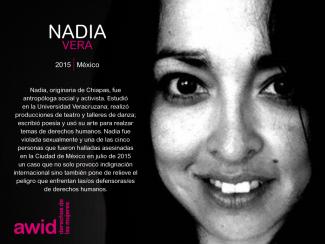
Nadia Vera
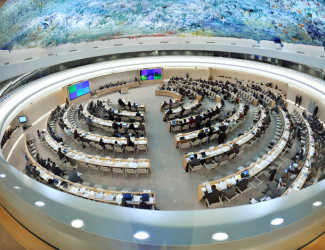
The Human Rights Council (HRC) is the key intergovernmental body within the United Nations system responsible for the promotion and protection of all human rights around the globe. It holds three regular sessions a year: in March, June and September. The Office of the UN High Commissioner for Human Rights (OHCHR) is the secretariat for the HRC.
Debating and passing resolutions on global human rights issues and human rights situations in particular countries
Examining complaints from victims of human rights violations or activist organizations on behalf of victims of human rights violations
Appointing independent experts (known as “Special Procedures”) to review human rights violations in specific countries and examine and further global human rights issues
Engaging in discussions with experts and governments on human rights issues
Assessing the human rights records of all UN Member States every four and a half years through the Universal Periodic Review
AWID works with feminist, progressive and human rights partners to share key knowledge, convene civil society dialogues and events, and influence negotiations and outcomes of the session.
El creciente poder de los actores anti-derechos no se está desarrollando en un vacío. Entender el auge del ultranacionalismo, del poder corporativo irrestricto, del incremento de la represión y de la disminución del espacio cívico resulta clave para contextualizar las amenazas anti-derechos que enfrentamos actualmente.
with Luam Kidane, Mariama Sonko, Yannia Sofia Garzon Valencia, and Nomsa Sizani.
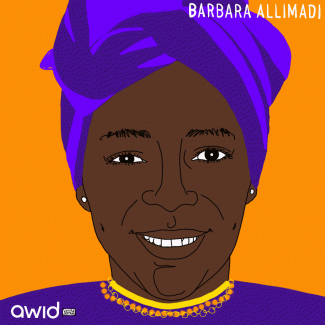
Barbara Allimadi was a political and human rights activist from Uganda. In 2012, she co-organized a protest against a televised police assault of Ingrid Turinawe, an opposition politician who had her breast squeezed by a police officer.
During the protest, Barbara, along with other fellow activists stripped to their bras in front of the Central Police Station in Kampala. This came to be known as the infamous ‘bra protest’ in Uganda.
“We settled on the bra protest. We thought it would be most appropriate for what had happened. It’s not like we were saying we don’t respect ourselves. We were disgusted by what had been done.” - Barbara Allimadi, 2013 (Daily Monitor)
With a Degree in Electronics and Communications Engineering from the London Metropolitan University, Barbara was a network engineer in the United Kingdom and an avid fan of reggae music. She returned to Uganda In 2007, when her mother passed away.
In 2019, she was appointed Coordinator for International and Diaspora Affairs at the Alliance for National Transformation (ANT), a political party launched that year by an opposition leader.
“We want security of life and property, not pain, injury and even death at the hands of security forces who are meant to protect us. Most importantly, we want a stable and enabling environment where we can realize our dreams and aspirations.” - Barbara Allimadi, ANT video
Barbara passed away on 27 April 2020.
“I was so proud of my sister for many things but in particular her fearless pursuit of peace, democracy, justice and equality in Uganda. At the height of her activism she led many marches on the streets of Kampala, to police stations, and Parliament.” - Doris Allimadi, Barbara’s sister
“It is with deep sadness that we have learnt of the untimely passing of Barbara Allimadi. She has been a valiant, relentless and courageous force for the liberation movement of Uganda. Our deepest condolences to her family. She will be sorely missed.” - Akina Mama wa Afrika (tweet on 28 April 2020)
“The passing on of Barbara is so sad for us and her entire family. She dedicated herself to fighting for justice, freedom and rights of others while serving in the civil society until she recently joined us at the party.” Maj Gen Mugisha Muntu, ANT national coordinator
“A beautiful, charming, funny, charismatic and inspirational sister. My children lost their aunty. Uganda lost a brave and courageous freedom fighter. Barbara once said, ‘As long as there is still breath in you, keep working towards your dreams.’” - Doris Allimadi, Barbara’s sister
Por Michel’le Donnelly
El Festival Feminista Crear | Resister | Transform de septiembre fue una bocanada de aire fresco en estos tiempos tan inciertos, turbulentos y dolorosos.
El espacio que creó este festival era muy necesario. Necesario para el alma de quienes buscamos consuelo en estas horas sombrías. Necesario para esas ansias de comunidad en un mundo que se siente cada vez más aislado y, sobre todo, necesario para quienes luchamos contra los mismos sistemas que nos han puesto a muchxs de nosotrxs de rodillas, en especial durante los últimos dos años.
«Las crisis no son un fenómeno nuevo para los movimientos feministas y sociales; tenemos una dilatada historia de supervivencia ante la opresión y de construcción de nuestras comunidades y de nuestras propias realidades».
Defender visiones alternativas y realidades alternativas a la que estamos viviendo ahora es la piedra basal de la agenda feminista. Hay muchísimas personas maravillosas que están abocadas a explorar distintas formas de existencia para nosotrxs en el mundo. Son alternativas centradas en las personas. Son equitativas y justas. Son mundos colmados de amor, ternura y cuidados. Las visiones descritas son prácticamente demasiado bellas para imaginar, pero debemos forzarnos a imaginar porque es la única forma de seguir.
Durante los últimos 10 años, he tenido la increíble fortuna de trabajar con un colectivo feminista que no solo está imaginando una realidad alternativa, sino que está viviendo en ella activamente. Nos inspira la labor de tantos otros movimientos feministas de todo el globo que no han permitido que el patriarcado blanco supremacista y capitalista los disuadan de su visión. Este colectivo me mantuvo en pie cuando todo lo que deseaba era desmoronarme. Muy similar a la historia que relató María Bonita el cuarto día del festival; la liberación que he encontrado en los movimientos feministas es demasiado potente como para que solo yo la experimente. Es algo para compartir, algo que tenemos que gritarlo a los cuatro vientos para invitar a otras personas a sumarse.
El cuarto día del festival nos trajo una conversación cautivante entre Felogene Anumo, la Dra. Dilar Dirik, Nana Akosua Hanson y Vandana Shiva, quienes alentaron a quienes asistimos al festival a creer no solo que un futuro alternativo es posible, sino que se hace imperiosamente necesario. Los feminismos venimos hablando de mundos alternativos desde hace muchos años, y escuchar hablar sobre ellos en el panel no solo nos abrió los ojos, sino que además nos reconfortó. Cuando digo que nos reconfortó quiero decir que me hizo sentir seguridad al saber que ciertamente existen sólidas redes feministas globales que trabajan en las fronteras nacionales e internacionales para descolonizar los marcos establecidos de nuestras realidades actuales.
Durante la sesión, la Dra. Dirik destacó el hecho de que la convicción, el sacrificio y la paciencia son lo más necesario para abolir los sistemas opresivos en los que vivimos hoy. La colaboración, el compañerismo, la creatividad, la solidaridad y la autonomía. Estos son los pilares fundamentales para erigir una sociedad global feminista a los que todos los movimientos feministas del mundo deberíamos aferrarnos.
En todo el globo se pueden encontrar varios ejemplos prácticos de estas realidades, incluido el Movimiento Soulaliyate para los Derechos de las Mujeres al Uso de la Tierra. En referencia a las mujeres tribales de Marruecos que viven en tierras colectivas, el Movimiento de Mujeres Soulalyate es la primera movilización nacional de base por los derechos a la tierra de ese país. Si bien, en un principio, el movimiento era bastante pequeño, este creció hasta convertirse en una agenda de orden nacional que desafió la naturaleza de género de las leyes que rigen el uso de la tierra en Marruecos. En 2019, el grupo contribuyó a modificar el marco legislativo nacional sobre la gestión de los bienes comunitarios a través de la adopción de tres conjuntos de leyes que garantizan la igualdad entre mujeres y hombres.
Otro ejemplo práctico es el de Casa Trans Zuleymi de Perú. La casa, que funciona desde 2016, es un refugio para mujeres, niñas y adolescentes migrantes trans a quienes el Estado ha dejado atrás. Ha brindado albergue seguro a 76 mujeres migrantes trans de Venezuela, junto a 232 de zonas selváticas, comunidades indígenas y la costa norte de Perú.
Saber de estos movimientos feministas que están haciendo su parte para convertir en realidad los futuros alternativos es sumamente inspirador y necesario, en especial cuando me cuesta tanto lidiar con la sucesión interminable de malas noticias que parecen fluir sin interrupción.
«El patriarcado capitalista es como un cáncer. No se sabe cuándo para de crecer». Dra. Vandana Shiva
Desde siempre, AWID ha sido un movimiento inspirado en las realidades feministas que podemos vivir. Con sus festivales, así como con la revista y la caja de herramientas sobre las realidades feministas, nos ha mostrado otro modo de hacer las cosas. Podemos imaginar un mundo donde el cuidado sea prioridad, donde las economías feministas y la justicia de género sean la norma. La creación de futuros alternativos es nuestra forma de devolver el golpe, es nuestra forma de resistir a la violencia que se perpetra contra nuestros cuerpos todos los días.
El Festival Crear | Resister | Transform me permitió sentirme muy conectada con una comunidad global, a muchxs de lxs cuales nunca voy a conocer. Saber que todxs estamos reclamando y trabajando en pos de otro mundo encendió una llama en mi alma y no veo la hora de conocer qué nos traerá el próximo festival.
Si te lo perdiste, cerciórate de ver la sesión «Otro mundo está en camino: alternativas, feminismos y otro mundo» celebrada el cuarto día del festival. Y recuerda, como expresó la Dra. Shiva de modo tan elocuente: «La energía de las mujeres mantendrá la vida en la tierra. No nos vencerán».
Nuevo
Lxs participantes se reunirán físicamente en varios lugares fuera de la sede de Bangkok, en diferentes partes del mundo, durante cada día del Foro. Todos estos lugares autoorganizados se conectarán en forma virtual con la sede del Foro en Bangkok. Como en el caso de las personas que se conecten en línea, lxs participantes de los nodos podrán facilitar actividades, unirse a conversaciones y disfrutar de un programa rico y diverso.
En 2024, informaremos sobre las localizaciones de los nodos.
Chinelo Onwualu is an editorial consultant with nearly 10 years of experience in crafting strategic communications for nonprofits across the world. Her clients have included ActionAid Nigeria, The BBC World Trust, Open Society Initiative for West Africa (OSIWA), and AWID. She has a master’s degree in Journalism from Syracuse University and has worked as a writer, editor, and researcher in Nigeria, Canada, and the United States. She is also the non-fiction editor of Anathema magazine and co-founder of Omenana, a magazine of African Speculative Fiction. Her short stories have been featured in several award-winning anthologies and she’s been nominated for the British Science Fiction Awards, the Nommo Awards for African Speculative Fiction, and the Short Story Day Africa Award. She’s from Nigeria but lives in Toronto with her partner and child.
Dénoncer l’emprise des multinationales. Comprendre les fausses solutions. Construire des alternatives. Tout ce qu’il vous faut pour mener votre propre campagne « À qui appartient vraiment la COP ? ».

Nous sommes ensemble depuis plus de 20 ans, et je chéris toujours autant votre amour et votre soutien. Il est intéressant de remarquer que vous parvenez à la même étape que l’AWID en tentant toutes, de manière synchrone, de définir comment mobiliser et soutenir la communauté. Aux mères du mouvement : votre leadership et votre orientation sont sans égal. Je pense particulièrement à Prudence Mabele, Kate Thompson, Darien Taylor, Patricia Perez, Martha Tholanah, Deloris Dockery, Iris De La Cruise, Doris Peltier, Cecilia Chung, et bien d’autres encore. Bien que vous ne soyez pas parfaites (comme aucune de nous ne l’est), vous faites toujours passer la communauté en premier et défendez l’inclusion de TOUTES les femmes vivant avec le VIH dans les sphères féministes.
J’aime la manière dont vous m’avez tenue lorsque personne d’autre ne pouvait le faire, et plus important encore, la manière dont nous nous tenons mutuellement. Vous comprenez la stigmatisation, la discrimination, la violence et la douleur, mais également la joie, l’amour et le pardon. En tant que féministes vivant avec le VIH, nous sommes glorieuses et puissantes dans notre intersectionnalité. Nous comprenons que le féminisme inclut et est mené par les communautés - nos sœurs noires, racisées et autochtones, les communautés de personnes trans et de genres divers, queer et lesbiennes, de travailleureuses du sexe, de celles qui ont été incarcérées et celles qui consomment des drogues - comme défini dans le principe GIPA (une participation accrue des personnes vivant avec le VIH). Votre féminisme englobe tout. Nous parlons des questions difficiles et des communautés criminalisées, parce qu’en tant que personnes vivant avec le VIH, nous sommes nous-mêmes criminalisées.
Je manquerais à mes devoirs si je n’envoyais pas plein d’amour aux jeunes femmes vivant avec le VIH, le pouls de notre mouvement. Je parle de vous, Kia Lebejia, Keren Dunaway, Liz Onyango, Faith Ona, Sara Thapa Maga, Doreen Moraa, Yana Panfilova et les millions d’autres activistes incroyables vivant avec le VIH. Vous êtes ce pouvoir qui continuera à nous propulser vers l’avant et permettra que les mouvements féministes traditionnels reconnaissent toute notre importance. Merci de faire progresser notre mouvement, de TOUJOURS inclure les personnes trans et de genres divers, de parler des liens entre changements climatiques et santé des droits sexuels reproductifs.
Je vous aime, vous aime, vous aime, vous aime tellement. Pour le meilleur et pour le pire, continuons à avancer ensemble, parce que c’est notre communauté - c’est ma communauté.
Avec tout mon amour,
Jessica Whitbread
Conférence internationale de suivi sur le financement du développement, Doha, Qatar

Panel: en las discusiones de panel, explora un tema o un desafío desde diferentes perspectivas, o comparte un aprendizaje o una experiencia, con preguntas del público a continuación, si el tiempo lo permite.
Programa de entrevistas: puedes tener una conversación más espontánea al estilo de un programa de entrevistas. Estos programas de entrevistas pueden ser una conversación entre varias personas, facilitadas por la persona que presenta el programa. Las preguntas del público pueden determinar la dirección de la conversación.
Conversación: estas pueden tomar la forma de «world café», de pecera y de otras metodologías que facilitan el involucramiento activo de lxs participantes en las conversaciones. Es un formato sumamente participativo.
Taller: actividades o clases interactivas que invitan a lxs participantes a adquirir nuevas habilidades en cualquiera y todas las áreas de la vida y el activismo.
Sesión estratégica: esta es una invitación a pensar en profundidad sobre un tema o una estrategia, junto con otras personas. Un espacio para aprender unxs de otrxs: qué funciona, qué no funciona, y cómo desarrollamos estrategias nuevas y colectivas para crear los mundos que soñamos.
Círculo para compartir [«birds of a feather»]: ideal para grupos pequeños, en un ambiente más íntimo, para oírse unxs a otrxs, iniciar una conversación y tratar con cuidado temas que pueden ser específicos, sensibles y complejos.
Artes – Taller participativo: actividades participativas de arte y expresión creativa. Ya sea a través de artes visuales, teatro, cine, pintura mural, danza, música, creación de artesanías y obras de arte colectivas, etc., apreciamos todas las ideas que celebren el arte y la creatividad feministas como formas de cambio social, sanación, expresión y transformación.
Artes – Performances, instalaciones y exhibiciones: son bienvenidas todas las propuestas que ofrezcan a lxs participantes del Foro nuevas experiencias y perspectivas, que expandan nuestros horizontes y que nos desafíen e inspiren para pensar, sentir y organizarnos de manera innovadora.
Sanación: actividades diversas diseñadas tanto para grupos como para personas individuales: desde aprender técnicas de relajación hasta hablar sobre la prevención del desgaste, desde prácticas informadas por el trauma para el cuidado de nuestro cuerpo, nuestra mente y nuestra alma hasta la reparación de fisuras dentro de nuestros movimientos.

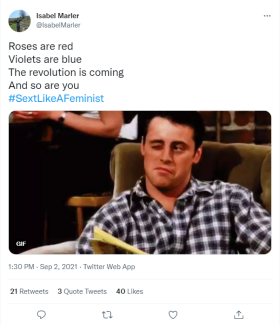
Las rosas son rojas
Las violetas son azules
Viene la revolución
Y te vienes tú
Les afiliades de AWID analizarán y evaluarán críticamente el rol que la ayuda mutua puede cumplir en la dotación de recursos de nuestros movimientos, a través de la creación de collages colectivos.
📅 Miércoles, 12 de noviembre de 2025
📍 Espacio de la COP Popular
هكذا تبدأ الحركات
أشباحا تطردنا من البيت والعائلة والوطن
فنصل متعبات إلى مساحة (أيضا مكان) وغالبا حالة
وصلت إليها قبلنا نجمة سقطت
ربما نصل أكثر من متعبات
مذعورات
ربما أكثر من مذعورات نصل
غاضبات
من أمور لا تنفك تعيد نفسها
طعنة في القلب (أيضا كسور)
رصاصة في الظهر (أيضا خيانة)
اختفاء قسري
جسد محكوم عليه بزواج أو تشويه أو تعب مزمن
لكننا حين نصل نتجمع ونهمس ونبوح وننوح
هكذا تبدأ حركاتنا، حين نصل إلى الأخريات
فنصبح بذورا
هكذا تبدأ الحركات، حين نزرع بعضا زهورا وأيضا أشواكا وأيضا ثمارا
نحن واحات
لنا كلنا نصنع منها ما نشاء
أغنيات للمعارك
وصفات للشفاء
مخازن لوجوه عشيقاتنا وشكل ابتسامتهن وضحكة انتصاراتهن اليومية
السر لتحويل الصمت الى لغة
تعاليم كل الساحرات
هكذا تكون حركاتنا: لنا كلنا
حين نصل بذورا فنزهر.
سرى أبو غزال
www.badiya.blog
The 1st drafting session on the outcome document for the 3rd Financing for Development Conference
Por primera vez, el Foro de AWID ofrece tres modos de participación:
Lxs participantes se reunirán en Bangkok, Tailandia. ¡No podemos esperar!