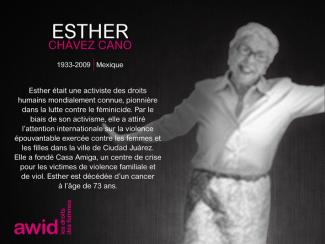
Esther Chávez Cano
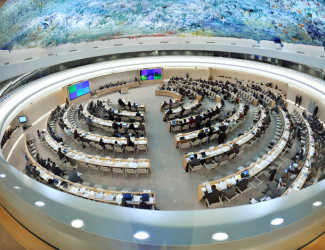
The Human Rights Council (HRC) is the key intergovernmental body within the United Nations system responsible for the promotion and protection of all human rights around the globe. It holds three regular sessions a year: in March, June and September. The Office of the UN High Commissioner for Human Rights (OHCHR) is the secretariat for the HRC.
Debating and passing resolutions on global human rights issues and human rights situations in particular countries
Examining complaints from victims of human rights violations or activist organizations on behalf of victims of human rights violations
Appointing independent experts (known as “Special Procedures”) to review human rights violations in specific countries and examine and further global human rights issues
Engaging in discussions with experts and governments on human rights issues
Assessing the human rights records of all UN Member States every four and a half years through the Universal Periodic Review
AWID works with feminist, progressive and human rights partners to share key knowledge, convene civil society dialogues and events, and influence negotiations and outcomes of the session.

تتواجد الحركات النسوية، حركات حقوق النساء، حركات العدالة الجندرية، حركات مجتمع الميم - عين وحلفاءها/ يفاتها في مفترق شديد الأهمية وتواجه هجمات عصيبة على حقوق وحريات حصلت عليها. فتصاعد الاستبداد في الأعوام الأخيرة، وكذلك القمع العنيف للمجتمع المدني وتجريم النساء والأشخاص المتنوعين/ات جندرياً المدافعين عن حقوق الإنسان، تصاعد الحروب والأزمات في الكثير من أنحاء العالم، استمرار الظلم الاقتصادي والتقاطع بين الصحة، البيئة والأزمة المناخية.
La domination croissante des marchés financiers internationaux et des institutions dans la définition des politiques économiques mondiales a pour effet de confisquer le pouvoir des personnes dans l’intérêt des élites mondiales et des grandes entreprises.
Notre rapport sur les flux financiers illégaux explore leur impacts disproportionnés sur la justice de genre. Il expose les cadres politique et juridique qui permettent aux entreprises de jouir d'abus fiscaux au détriment des personnes et de la planète.
Le rapport conclut avec ces sept recommandations politiques féministes pour demander plus de transparence et de responsabilité des entreprises afin de stopper les flux financiers illégaux.
Les flux financiers illicites attirent une attention sans précédent, par exemple dans le cadre de négociations sur le développement autour du Programme de développement à l’horizon 2030 ou lors de la Conférence sur le financement du développement d’Addis-Abeba en 2015. Ils font également les gros titres dans les médias traditionnels avec la diffusion de documents concernant des opérations financières offshore ayant fait l’objet de fuites, une affaire connue sous le nom des « Panama Papers ».
Pour donner un autre exemple, lors d’un référendum en février 2017, le peuple équatorien a voté pour empêcher les politiciens et les fonctionnaires de posséder des actifs, des entreprises ou des capitaux dans des paradis fiscaux. Le gouvernement équatorien est maintenant une voix de premier plan au sein du G77, aux Nations Unies, en faveur de la création d’un organisme fiscal mondial de l’ONU pour mettre un terme aux paradis fiscaux.
Ce coup de projecteur constitue potentiellement une opportunité pour les féministes, les mouvements sociaux et les défenseur-euse-s de la justice fiscale de faire pression en faveur de la transformation du système financier mondial qui renforce les inégalités au niveau mondial, y compris les inégalités de genre.
Nous proposons ci-dessous sept revendications politiques pour contribuer aux actions de plaidoyer des féministes et des activistes oeuvrant en faveur de la justice sociale, des droits des femmes et de l’égalité de genre :
Madiha fue una destacada profesora de Sociología con activa participación en la sociedad civil como defensora de los derechos de las mujeres en la región árabe.
Presidió la Alianza para las Mujeres Árabes y dentro del Consejo Nacional de Mujeres fue miembro del Comité de la Sociedad Civil y del Comité para el Desarrollo de la Gobernación de Minia. Fue autora de numerosas publicaciones en las que analizó y arrojó luz sobre las desigualdades de género y la discriminación contra las mujeres.
Es recordada con cariño por colegas, estudiantes y amigxs.

(متوفرة باللغة الإنجليزية)

Anti-rights mobilization at the United Nations constitutes a response to the significant feminist and progressive organizing. It involves a constant threat for women's rights, especially when it comes to sexual and reproductive rights and an open door to racism, xenophobia and all kinds of discrimination.
Get to know all their tactics and discourses worldwide.
We’re looking at an attack on the human rights system, and all of these fundamentalisms are coming together to try to weaken the fabric of multilateralism, and that’s happening in large part at the expense of marginalized groups of people. It’s happening at the expense of women, and it’s happening through tactics that are often about gender and sexuality.
Cynthia Rothschild
Independent human rights expert, OURs member
We’ve experienced a lot of pushback from different states, from different civil society actors, from private corporations and large donors who are funding the activities of these anti-rights actors.
Meghan Doherty
Director of Global Policy and Advocacy with Action Canada
Read more on what we do at the Human Rights Council
Zhan Chiam
ILGA's Gender Identity and Gender Expression Senior Programme Officer
Paola Salwan Daher
Global Advocacy Adviser at the Center for Reproductive Rights
We bring you an inspiring curated collection of powerful stories and images of transformation and resistance created by feminist activists, writers and artists from all over the world.
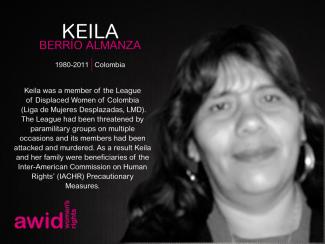
Considérée par le Guardian comme l'une des icônes nationales de Kiribati, Teresia était une avocate téméraire.
Elle travaillait en étroite collaboration avec des groupes féministes aux îles Fidji. Ses travaux de recherche ont servi à aborder les problèmes du féminisme et de l'égalité de genre dans le Pacifique. Elle était également corédactrice de l’International Feminist Journal of Politics. En Océanie, son influence a traversé les frontières académiques, ainsi que les mouvements pour la justice sociale.
المجموعات، المنظمات والحركات التي تعمل خصوصاً وبالأساس على حقوق النساء، حقوق الفتيات، العدالة الجندرية، حقوق مجتمعات الميم - عين وحلفائها/يفاتها في جميع المناطق وعلى جميع المستويات، إن كانت مجموعات جديدة أو قديمة.

Six thematic anchors hold the Feminist Realities framework of the Forum. Each anchor centers feminist realities, experiences and visions, on the continuum between resistance and proposition, struggle and alternative. We seek to explore together what our feminist realities are made of and what enables them to flourish in different spheres of our life.
These realities may be fully articulated ways of living, dreams and ideas in the making, or precious experiences and moments.
The anchors are not isolated themes, but rather interconnected containers for activities at the Forum. We envision many activities to be at the intersection of these themes, at the intersection of different struggles, communities and movements. The descriptions are preliminary, and continue to evolve as the Feminist Realities journey continues.
This anchor centers questions of how we -- as individuals, communities, and movements -- meet our basic needs and secure the resources that we need to thrive, in ways that center care for people and nature. By “resources” we mean food, water, clean air, as well as money, labor, information, knowledge, time, and more.
Drawing on feminist resistance to the dominant economic system of exploitation and extractivism, the anchor highlights the powerful and inspiring feminist proposals, experiences and practices of organizing our economic and social life. Food and seed sovereignty, feminist visions of work and labor, just and sustainable systems of trade, are just some of the questions to explore. We will bravely face the contradictions that emerge from the need to survive in oppressive economic systems.
This anchor positions funding and resourcing for organizations and movements in a broad feminist analysis of economic justice and wealth creation. It explores how to move resources where they are needed, from tax justice and basic income to different models of philanthropy and creative & autonomous resourcing for movements.
We seek to build new visions and amplify existing realities and experiences of feminist governance, justice and accountability. In the face of the global crisis and rising fascisms and fundamentalisms, this anchor centers feminist, radical and emancipatory models, practices and ideas of organizing society and political life, - locally and globally.
The anchor will explore what feminist governance looks like, from feminist experiences of municipalism to building institutions outside of nation-states, to our visions of multilateralism. We will exchange experiences of justice and accountability processes in our communities, organizations and movements, including models of restorative, community-based and transformative justice that reject state violence and the prison-industrial complex.
Centering experiences of travel, migration and refuge as well as feminist organizing, we seek a world without deadly border regimes; a world of free movement and exciting journeys.
The role of technology in our lives is ever increasing and the line between online and offline realities blurred. Feminists make widespread use of technologies and online space to build community, learn from each other, and mobilise action. With online spaces, we can expand the boundaries of our physical world. On the flip side, digital communications are largely owned by corporations with minimal accountability to users: data mining, surveillance and security breaches have become the norm, as well as online violence and harassment.
This anchor explores the feminist opportunities and challenges within digital realities. We’ll look at alternatives to privately owned platforms that dominate the digital landscape, well-being strategies for navigating online spaces, and uses of technology to overcome accessibility challenges. We’ll explore the potentials of technology in relation to pleasure, trust and relationships.
We hold feminist realities also within ourselves -- the embodied experience. Control of our labour, mobility, reproduction, and sexuality continues to be central to patriarchal, cis-heteronormative and capitalist structures. Defying this oppression, people of diverse genders, sexualities and abilities create encounters, spaces and sub-cultures of joy, care, pleasure and deep appreciation for ourselves and each other.
This anchor will explore multiple ideas, narratives, imaginations, and cultural expressions of consent, agency and desire as held by women, trans, non-binary, gender non-conforming and intersex people in different societies and cultures.
We will exchange strategies for winning reproductive rights and justice, and articulate social practices that enable and respect bodily autonomy, integrity and freedom. The anchor links different struggles and movements to inform each other’s perceptions and experiences of wellbeing and pleasure.
Imagine a feminist planet. What is the sound of the water, the smell of the air, the touch of the earth? What is the relationship between the planet and its living beings, humans included? Feminist realities are realities of environmental and climate justice. Feminist, indigenous, decolonial and ecological struggles are often rooted in transformative visions and relations among people and nature.
This anchor centers the wellbeing of our planet, and reflects on the ways in which humans have interacted with and reshaped our planet. We seek to explore aspects of traditional knowledge and biodiversity as part of sustaining a feminist planet, and learn about feminist practices around degrowth, commoning, models of parallel economies, agro-ecology, food and energy sovereignty initiatives.
While we see all the anchors as related, this one is truly cross-cutting so we invite you to add an organizing dimension to whatever anchor(s) your proposed activity links to.
How is feminist organizing happening in the world today? This question turns our attention to actors, power dynamics, resources, leadership, to the economies we are embedded within, to our understanding of justice and accountability, to the digital age, to our experiences of autonomy, wellbeing and collective care. Across all anchors, we hope to create a space for honest reflection on power and resources distribution and negotiation within our own movements.
The Forum is more than a four-day convening. It is one more stop on a movement strengthening journey around Feminist Realities that has already begun and will continue well beyond the Forum dates.
Comparte tus historias y conoce las de otrxs. Al conectar nuestras experiencias, relatos y propuestas ayudamos a crear en conjunto y amplificar las Realidades Feministas.
Amal was a prominent politician and parliamentarian in Libya. She was a faculty member at Benghazi University from 1995 until her death in 2017.
Amal was a civil society activist and a member of various social and political initiatives. She assisted the families of martyrs and the disappeared, and was a founding member of a youth initiative called ‘’Youth of Benghazi Libya”. In the 2014 parliamentary elections, Amal was elected to the House of Representatives with more than 14,000 votes (the highest number of votes anyone received in the 2014 elections).
Amal will remain in the memories of many as a woman politician working to ensure a better future in one the most difficult and conflict-ridden contexts in the region.