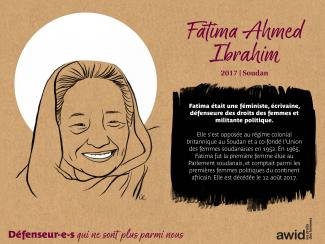
Fatima Ahmed Ibrahim
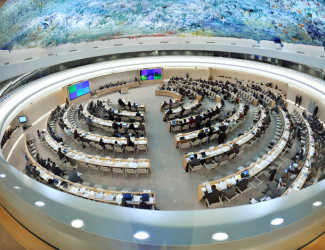
The Human Rights Council (HRC) is the key intergovernmental body within the United Nations system responsible for the promotion and protection of all human rights around the globe. It holds three regular sessions a year: in March, June and September. The Office of the UN High Commissioner for Human Rights (OHCHR) is the secretariat for the HRC.
Debating and passing resolutions on global human rights issues and human rights situations in particular countries
Examining complaints from victims of human rights violations or activist organizations on behalf of victims of human rights violations
Appointing independent experts (known as “Special Procedures”) to review human rights violations in specific countries and examine and further global human rights issues
Engaging in discussions with experts and governments on human rights issues
Assessing the human rights records of all UN Member States every four and a half years through the Universal Periodic Review
AWID works with feminist, progressive and human rights partners to share key knowledge, convene civil society dialogues and events, and influence negotiations and outcomes of the session.
มี! ขณะนี้พวกเรากำลังค้นหานวัตกรรมทางเทคโนโลยีที่จะช่วยให้เกิดการเชื่อมต่อและการเข้าร่วมอย่างมีความหมาย
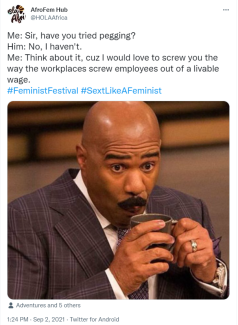
Yo: Señor, ¿probó por el culo?
Él: No, no probé.
Yo: Piénselo, porque me gustaría cogérmelo / joderlo tal como a lxs trabajadorxs nos cogen / joden en los trabajos cuando lo que nos pagan no alcanza para vivir.
With over ten years of finance experience, Lucy has devoted her career to for profit and furthering nonprofit missions. She also worked and volunteered at non-for-profit organizations. From the fast-paced world of Finance, Lucy has passion for staying tuned with tech skills in the finance field. Lucy joined AWID in 2014. During her spare time she enjoys music, traveling, and variety sports.
Moriviví is a collective of young female artists, working on public art since April 2013. Based in Puerto Rico, we’ve gained recognition for the creation of murals and community led arts.
Kasia viene apoyando la labor de los movimientos feministas y por la justicia social desde hace 15 años. Antes de sumarse a AWID, se lideró las acciones de política e incidencia ActionAid y Amnistía Internacional, a la vez que participaba en procesos de organización feministas y de distintas agrupaciones por la justicia social en Polonia, en pro del acceso al aborto y contra la violencia en las fronteras europeas. Es una apasionada del financiamiento para la movilizaciónfeminista en toda su audacia, riqueza y diversidad. Reparte su tiempo entre Varsovia y su aldea comunitaria de trabajo artesanal en el bosque. Le encanta tomar saunas y adora con locura a su perro Wooly.

En colaboración con la artista Naadira Patel, creamos un álbum que resalta algunos momentos de las últimas cuatro décadas de apoyo a los movimientos feministas por parte de AWID.
Faye est une féministe panafricaine passionnée, engagée dans les mouvements pour les droits des femmes, la justice raciale, les droits des migrant·e·s et des travailleur·euse·s, et la justice environnementale. Son activisme s'appuie sur l'héritage de la lutte contre l'apartheid en Afrique du Sud et de ses suites au Zimbabwe.
En 2019, Faye rejoint l'AWID en tant que Directrice des Finances, des Opérations et du Développement. Elle s’est efforcée de garantir que l’AWID respecte les principes et les valeurs féministes dans toutes ses opérations. Elle y apporte plus de 20 années d’expérience en leadership féministe, en stratégie et autres aspects du développement organisationnel et financier.
Faye est membre engagée du conseil d'administration de Urgent Action Fund-Africa et d'autres organisations de défense des droits des femmes. Auparavant, elle a occupé des postes de responsable des finances et des opérations chez Pediatric Adolescent Treatment for Africa et JASS - Just Associates Inc. en Afrique australe. Elle a également occupé des postes de direction chez International Computer Driving Licence (ICDL) en Afrique centrale et australe. Elle est titulaire d'une licence en sciences comptables de l'Université d'Afrique du Sud ainsi que membre du Southern African Institute for Business Accountants.
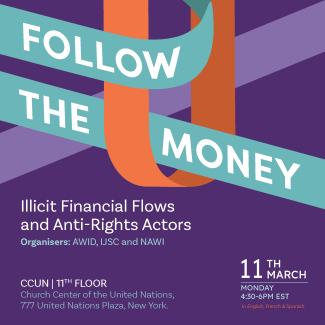
📅Wednesday, March 13 🕒10.30am-12pm EST
Organisers: AWID, ESCR-Net, Franciscan International, Womankind Worldwide as part of Feminists For a Binding Treaty
🏢 Church Center of the United Nations, 777 United Nations Plaza, New York, 11th Floor
L’AWID, le Centre pour le leadership mondial des femmes (CWGL en anglais) et le Réseau de Développement et de Communication des Femmes Africaines (FEMNET), proposent ce document de réflexion pour questionner les concepts traditionnels liés au développement. Il inclut également une série de propositions pour un programme féministe en faveur de la justice de genre, de la justice économique et de la justice en matière de développement.
En savoir plus sur les origines du projet
Ces propositions sont formulées pour être discutées, débattues, mises en pièces, adaptées, adoptées ou encore pour en inspirer d’autres.
Elina is a young afro-Dominican intersectional feminist and human rights lawyer, committed to use her voice and skills to build a more just, empathic and inclusive world. She started Law school at 16, convinced it would give her the tools to understand and promote social justice. After a J.D. in the Dominican Republic, she pursued an LL.M. in Public International Law and Human Rights in the UK as a Chevening Scholar. She was the only Latinx-Caribbean woman in her class, graduating with honours.
Elina has worked at the intersection of human rights, gender, migration and policy, from government, grassroots collectives and international organizations. She helped litigate cases on gender-based violence before the Inter-American Court of Human Rights. As a member of the Youth Advisory Panel of UNFPA, she contributed to strengthening sexual and reproductive rights in the Dominican Republic. She co-led Amnesty International’s first campaign on sex workers’ rights in the Americas, developing strong partnerships with sex-worker led organizations and using Amnesty’s position to amplify women human rights defenders and sex workers’ voices.
Elina is part of Foro Feminista Magaly Pineda and the Global Shapers Community. She speaks Spanish, French and English. Thanks to her diverse background, Elina brings strong governance and strategic planning skills, substantive expertise on the United Nations and regional human rights mechanisms and her bold determination to keep AWID as an inclusive organization for all women, especially young and Caribbean feminists. With these offerings, joins a global sisterhood of feminist badasses, where she can keep nurturing her feminist leadership and never again feel alone in her path.