Special Focus

AWID is an international, feminist, membership organisation committed to achieving gender equality, sustainable development and women’s human rights

AWID Forum: Co-creating Feminist Futures

In September 2016, the 13th AWID international Forum brought together in Brazil over 1800 feminists and women’s rights advocates in a spirit of resistance and resilience.

This section highlights the gains, learnings and resources that came out of our rich conversations. We invite you to explore, share and comment!


What has happened since 2016?

One of the key takeaways from the 2016 Forum was the need to broaden and deepen our cross-movement work to address rising fascisms, fundamentalisms, corporate greed and climate change.

With this in mind, we have been working with multiple allies to grow these seeds of resistance:

And through our next strategic plan and Forum process, we are committed to keep developing ideas and deepen the learnings ignited at the 2016 Forum.

What happens now?

The world is a much different place than it was a year ago, and it will continue to change.

The next AWID Forum will take place in the Asia Pacific region (exact location and dates to be announced in 2018).

We look forward to you joining us!

About the AWID Forum

AWID Forums started in 1983, in Washington DC. Since then, the event has grown to become many things to many peoples: an iterative process of sharpening our analyses, vision and actions; a watershed moment that reinvigorates participants’ feminisms and energizes their organizing; and a political home for women human rights defenders to find sanctuary and solidarity.

Learn more about previous Forums

Related Content

What measures to protect public health and contain risks of Covid19 outbreak will be in place?

We are monitoring this and other risks carefully, and will publish comprehensive health and safety information when the registration opens, so you could make an informed decision. In addition, the hybrid format is designed to provide a meaningful engagement experience to the participants who will prefer not to travel or are not able to travel.

Laurie Carlos

Laurie Carlos était une comédienne, réalisatrice, danseuse, dramaturge et poétesse aux États-Unis. Artiste hors pair et visionnaire, c’est avec de puissants modes de communication qu’elle a su transmettre son art. 

« Laurie entrait dans la pièce (n’importe quelle pièce/toutes les pièces) avec une perspicacité déroutante, un génie artistique, une rigueur incarnée, une féroce réalité – et une détermination à être libre... et à libérer les autres. Une faiseuse de magie. Une devineresse. Une métamorphe. Laurie m’a dit un jour qu’elle entrait dans le corps des gens pour trouver ce dont ils et elles avaient besoin. » - Sharon Bridgforth

Elle a employé plusieurs styles de performance alliant les gestes rythmiques au texte. Laurie encadrait les nouveaux·elles comédien·ne·s, performeur·euse·s et dramaturges, et a contribué à développer leur travail dans le cadre de la bourse Naked Stages pour les artistes émergent·e·s. Associée artistique au Penumbra Theatre, elle a participé à la sélection de scripts à produire, dans l’objectif « d’intégrer des voix plus féminines dans le théâtre ». Laurie faisait également partie des Urban Bush Women, une compagnie de danse contemporaine reconnue qui contait les histoires de femmes de la diaspora africaine.

Elle fit ses débuts à Broadway dans le rôle de Lady in Blue, en 1976, dans la production originale et primée du drame poétique For colored girls who have considered suicide / when the rainbow is enuf de Ntozake Shange. L’oeuvre de Laurie inclut White Chocolate, The Cooking Show et Organdy Falsetto. 

« Je raconte les histoires à travers le mouvement – les danses intérieures qui se produisent spontanément, comme dans la vie – la musique et le texte. Si j’écris une ligne, ce n’est pas forcément une ligne qui sera dite ; ce peut être une ligne qui sera bougée. Une ligne à partir de laquelle de la musique est créée. Le geste devient phrase. Tant de ce que nous sommes en tant que femmes, en tant qu’êtres, tient aux gestes que nous exprimons les un·e·s par rapport aux autres, tout le temps, et particulièrement dans les moments d’émotion. Le geste devient une phrase, ou un état de fait. Si j’écris “quatre gestes” dans un script, cela ne signifie pas que je ne dis rien;cela veut dire que j’ai ouvert la voie à ce que quelque chose soit dit physiquement. » Laurie Carlos

Laurie est née et a grandi à New York, a travaillé et vécu à Minneapolis-Saint-Paul. Elle est décédée le 29 décembre 2016, à l’âge de 67 ans, après un combat contre le cancer du côlon. 


Hommages :

« Je pense que c’était exactement l’intention de Laurie. De nous sauver. De la médiocrité. De l’ego. De la paresse. De la création artistique inaboutie. De la paralysie par la peur.
Laurie voulait nous aider à briller pleinement.
Dans notre expression artistique.
Dans nos vies. » - Sharon Bridgforth pour le Pillsbury House Theatre

« Quiconque connaissait Laurie aurait dit que c’était une personne singulière. Elle était sa propre personne. Elle était sa propre personne, sa propre artiste ; elle mettait en scène le monde tel qu’elle le connaissait avec un vrai style et une compréhension fine, et elle habitait son art. » – Lou Bellamy, Fondatrice de la Penumbra Theatre Company, pour le Star Tribune 

Lire un hommage complet par Sharon Bridgforth (seulement en anglais)
Nos droits en danger - OURs 2021 résumé

Nos droits en danger : il est temps d’agir

Un réseau complexe et mouvant d’acteur·rice·s antidroits exerce aujourd’hui une influence croissante dans les espaces internationaux et nationaux, ainsi qu’au niveau des politiques locales. Les antidroits pénètrent les espaces multilatéraux de collaboration entre pays, dans le but de les transformer et les saboter de l’intérieur. C’est en s’appropriant le langage des droits et de la justice pour travestir leurs véritables intentions qu’ils et elles parviennent à acquérir une certaine légitimité.

Ce rapport est le deuxième d’une série sur les droits humains, produite par l’Observatoire sur l’universalité des droits (OUR). Outre une analyse des principales parties antidroits, de leurs discours, stratégies et impacts, ce rapport inclut des nouvelles féministes pleines d’inspiration et des exercices de renforcement des connaissances qui nous permettront d’assurer notre résistance collective.

Lire le rapport 

Les conséquences sur nos droits sont déjà importantes, mais il est encore possible de réagir. Nous pouvons toutes et tous participer à la résistance face aux programmes antidroits et récupérer nos droits.

Rejoignez l’appel à l’action collective dès aujourd’hui!

Signer l’appel à l’action

Carta de amor a los movimientos feministas #1

Querida y maravillosa persona:

Sé que estás muy cerca. Puedes sentirlo, ¿verdad?: cómo las cosas necesitan cambiar y cómo necesitas centrarte.

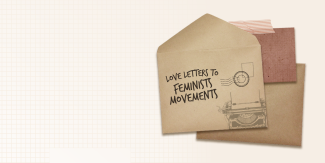
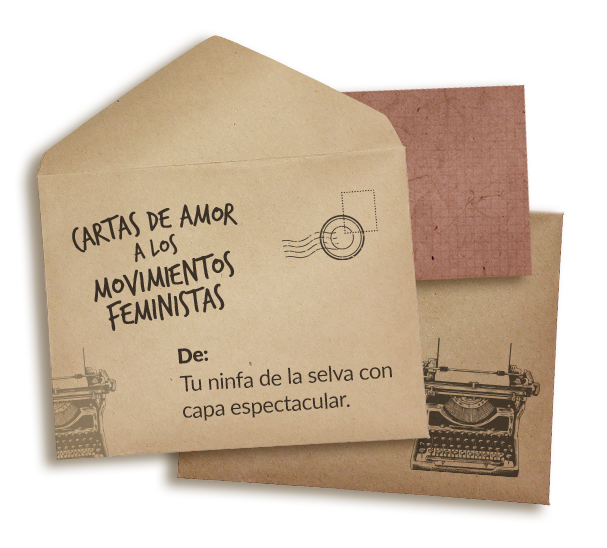
Sobres de álbum de recortes que dicen Cartas de amor a los movimientos feministas. El sobre en la parte superior dice Tu ninfa de la selva con capa espectacular.

Esta es una carta para decirte que lo hagas. Elige tu sanación. Elige estar bien. Mejor que bien. Elige estar plenx, ser feliz. Llora a lágrima viva solo por tí y por nadie más. Elige cerrar la puerta ante el mundo y decirle «Vuelvo en 5 minutos». O en cinco días. O en cinco años.

O nunca.

Elige no hacerte cargo de todo. Elige no asumir nada. Porque nada de eso es tuyo. Nunca lo fue. Te dijeron desde que naciste que eran tuyos. Los problemas de tu familia. Los problemas de tus amantes. Los problemas de tus vecinxs. Los problemas del mundo. Ese susurro constante de que esos problemas te pertenecen. Que son tuyos. Tuyos para cargarlos, tuyos para llevarlos sobre los hombros. Tuyos para solucionarlos. 

Eso fue una mentira.
Un engaño 
         Un engaño de larga duración.
                                             Una estafa.

Los problemas del universo no son tuyos.

Los únicos problemas que son tuyos son los tuyos. Todxs lxs demás pueden irse de paseo. 

Permítete dejarlo todo y adentrarte en la selva. Hazte amigx de una ninfa vestida de margaritas, crea una biblioteca pequeña en las raíces de un árbol. Baila desnudx y aúlla a la luz de la luna. Conversa con Oshun en el lecho del río. 

            O simplemente tómate una taza de té cuando necesites un momento para respirar.

Permítete desaparecer en la niebla y reaparecer tres países más allá como unx misteriosx chocolaterx con un pasado dudoso y afición por capas espectaculares y cigarros puros.

            O deja de responder a las llamadas del trabajo durante los fines de semana.

Permítete nadar hasta una isla desierta con unx amante y vestirte solo con las cáscaras de los cocos que usaron para hacer el ron de coco que beben al atardecer. 

            O di que no cuando no tengas la capacidad de crear un espacio de contención para alguien.

Las opciones para sostenerte a ti mismx son infinitas. 

Hagas lo que hagas, debes saber que el mundo siempre seguirá girando. Por eso es bello y por eso duele.. No importa a quién o qué elijas por encima de tí mismx y de tu alma, el mundo siempre seguirá girando. 

Por lo tanto, elígete a tí mismx. 

Por la mañana, con la primera luz, elígete a tí mismx. Cuando sea la hora del almuerzo, o te den ganas de llorar durante las horas de trabajo, elígete a tí mismx.  Por la noche, cuando estés calentando las sobras porque no tuviste tiempo de volver a cocinar, elígete a vos mismx. Cuando la ansiedad te despierte y la existencia esté en silencio a las 3:45 am.

Elígete a tí mismx.

Porque el mundo siempre seguirá girando, inclinado, y tú mereces tener a alguien que siempre intente acomodarlo para tí. 

Cariños,
tu ninfa de la selva con capa espectacular.

Elina Margarita Castillo Jiménez

Biography

Elina is a young afro-Dominican intersectional feminist and human rights lawyer, committed to use her voice and skills to build a more just, empathic and inclusive world.  She started Law school at 16, convinced it would give her the tools to understand and promote social justice. After a J.D. in the Dominican Republic, she pursued an LL.M. in Public International Law and Human Rights in the UK as a Chevening Scholar. She was the only Latinx-Caribbean woman in her class, graduating with honours.

Elina has worked at the intersection of human rights, gender, migration and policy, from government, grassroots collectives and international organizations. She helped litigate cases on gender-based violence before the Inter-American Court of Human Rights. As a member of the Youth Advisory Panel of UNFPA, she contributed to strengthening sexual and reproductive rights in the Dominican Republic. She co-led Amnesty International’s first campaign on sex workers’ rights in the Americas, developing strong partnerships with sex-worker led organizations and using Amnesty’s position to amplify women human rights defenders and sex workers’ voices.

Elina is part of Foro Feminista Magaly Pineda and the Global Shapers Community. She speaks Spanish, French and English. Thanks to her diverse background, Elina brings strong governance and strategic planning skills, substantive expertise on the United Nations and regional human rights mechanisms and her bold determination to keep AWID as an inclusive organization for all women, especially young and Caribbean feminists. With these offerings, joins a global sisterhood of feminist badasses, where she can keep nurturing her feminist leadership and never again feel alone in her path. 

Position
Co-President
Add to stories
Off

Snippet - WITM INFOGRAPHIC_1_EN_2 Annual budget size

In 2023, feminist and 
women's rights organizations 
had a median annual budget of

In contrast, over $1 billion went 
to three anti-rights groups in 2021-2022, 
with funding for anti-gender networks still rising.

Diferentes personas de mi organización planean asistir al Foro. ¿Hay algún descuento para grupos en el Foro?

AWID no ofrece descuentos para grupos, pero sí ofrece descuentos en la inscripción a sus afiliadxs. (Haz clic aquí para obtener más información sobre cómo sumarte a la membresía)

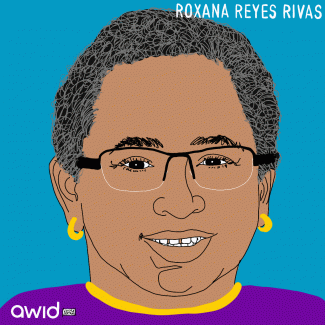
Roxana Reyes Rivas

Roxana Reyes Rivas, philosopher, feminist, lesbian, poet, politician and LGBT and women’s rights activist from Costa Rica. Owner of a sharp pen and incisive humour, a laugh a minute. She was born in 1960 and raised in San Ramón of Alajuela, when it was a rural town, and her whole life she would break away from the mandates of what it meant to be a woman.   

With El Reguero (Costa Rican lesbian group) she organized lesbian festivals for over a decade, fun-filled formative spaces to come together at a time when the Costa Rican government and society persecuted and criminalized the lesbian existence. For hundreds of women the lesbian festivals where the only place they could be themselves and come together with others like them.  

Roxana would often say founding political parties was one of her hobbies. “It’s important for people to understand there are other ways to do politics, that many issues need to be solved collectively”. She was one of the founders of the New Feminist League and VAMOS, a human rights focused political party.

“The philosophical trade is meant to jab, to help people ask themselves questions. A philosopher who doesn’t irritate anyone is not doing her job”. For 30 years Roxana taught philosophy at several Costa Rican public universities. Through her guidance, generations of students reflected about the ethical dilemmas in science and technology.  

Roxana’s favourite tool was humour, she created the Glowing Pumpkin award, an acknowledgement to ignorance that she would bestow upon public figures, through her social media channels, mocking their anti-rights expressions and statements.  

An aggressive cancer took Roxana at the end of 2019, before she could publish a compilation of her poems, a departing gift from the creative mind of a feminist who always raised her voice against injustice.

ours chapter 6

Chapter 6
Anti-Rights Trends in Regional Human Rights Systems

In the African Commission and the Inter-American System, anti-rights actors push essentialist notions of culture and gender to hamper progress on rights and undermine accountability. As we see, anti-rights actors are exerting influence in regional human rights systems, as well as international spaces.

Read more

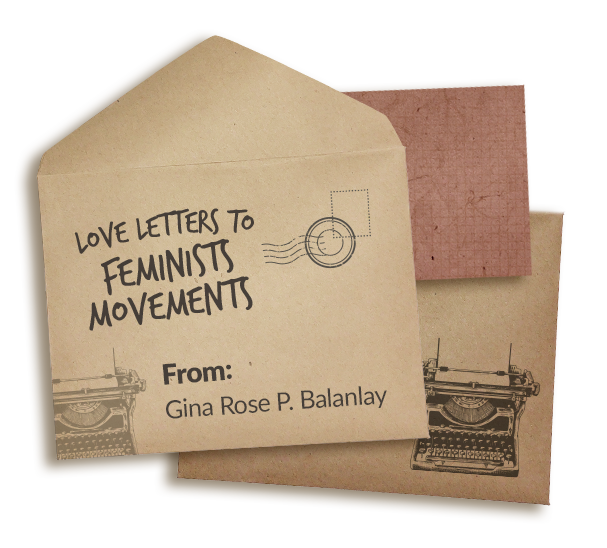
Love letter to Feminist Movements #7

Dearest Feminist community,

I am pleased to share with you one of my remarkable dates as feminist with disability. It was May 30, 2014 when we (the Nationwide Organization of Visually-Impaired Empowered Ladies NOVEL) participated in the Philippine Fashion Week Holiday 2014 for our white cane advocacy campaign.  Two ladies who are blind walked down the catwalk to promote the white cane as one of the symbols of gender equality, empowerment, full inclusion and equal participation of women and girls with visual impairment in society. 

Love letter to feminist movements from Your dramatically cloaked jungle nymph.

Their walk in front of the crowd were extremely a nerve-wracking experience for me, as the proponent of our project with the Runway Productions (I enduringly waited for a year for its approval), knowing that they were not models, they were the crowned Ms. Philippines Vision and 1st Runner Up of 2013 Ms. Philippines on Wheels, Signs and Vision by Tahanang Walang Hagdanan, Inc. (House with No Steps). Also, they fell on their orientation and practiced the evening before the event and they didn’t have practice with professional models. Before the show started, I talked to them via mobile phone to boost their confidence and to pray together for God’s guidance. When they exited the catwalk, I breathed deeply while my tears were flowing. I was feeling euphoric because we did it despite the challenges we’ve been through! Our message to the world that women and girls with visual impairment can walk with dignity, freedom and independence on an equal basis with others, with the use of our assistive device - white canes was successfully delivered! We trended in social media and we were featured by television networks. 

My life as a feminist with disability started as a means to mend my broken spirit and to see a different path towards finding my life’s purpose after I became victim-survivor to a vicious acid attack in 2007  while I was waiting for a ride going home from office. My eyes were severely damaged, to the point that I became a woman with low vision.

I never knew how joyful and purposeful my life could be again until I met women leaders in the gender and disability movement who influenced me to keep going. Their words of encouragement attracted me and became the sweetest music to my ears. My broken heart leaped like a hummingbird in flight every time I think of them and feminism which stimulated me to partake in making difference for our invisible sisters with disabilities and to those who continue to experience discrimination. To date, I am consumed by the desire to be with the movement. I cannot hide my excitement whenever I submit project proposals to different stakeholders for our sisters with disabilities' empowerment, development and advancement; and to make representations in local, national and international conversations to amplify our voices even at my expense.

Unexpectedly, I was selected as our country’s female representative in the 2012 World Blind Union (WBU) General Assembly in Thailand even though I was a newcomer in the disability movement.  In the same year, I was elected as the only woman officer of the Philippine Blind Union (PBU) in its assembly. I was inspired to reach out, gather and empower our sisters with visual impairment on their rights and to know their intersecting issues. In 2013, we officially launched the Nationwide Organization of Visually-Impaired Empowered Ladies (NOVEL) to support the empowerment of our sisters with disabilities, build coalitions with cross-disability and women’s movements and promote gender and disability-inclusive development.

My participation as co-focal person of women with disabilities in our 2016 CEDAW Shadow Report submission convened by Women’s Legal and Human Rights Bureau (WLB) with the marginalized groups of women, opened many doors such as working with various women’s organizations and attending the 2017 Inclusion Days International in Berlin, Germany together with 3 Filipino women leaders with disabilities to share our good practices, mainly our engagement with the women’s movement in our country. 

My journey as feminist with disability has been an emotional roller coaster for me. It gave me  happiness and a sense of worth when I participated in promoting for our sisters with disabilities full inclusion, equal and effective participation in society, yet I felt frustrated and upset when I gave my all but I received negative remarks. Nevertheless, I feel that way because I am in love with the movement.    
I see my future working in solidarity with the movement to ensure that our sisters with and without disabilities can equally and fully enjoy and participate in society. 
 

Love lots, 
Gina Rose P. Balanlay
Feminist with disability
Philippines 

Maria Olivo

Biography

María es diseñadora gráfica y comunicadora visual. Ha trabajado con ONG e instituciones por los derechos humanos como Profamilia y OXFAM. Como mujer del Sur Global, se siente especialmente atraída a usar sus competencias para trabajar con organizaciones que ayudan a proteger el bienestar, así como los derechos de millones de niñas y mujeres de América Latina.

Position
Coordinadora, Comunicaciones Digitales
Add to stories
Off

WITM - Refreshed INFOGRAPHIC 2 ES

¿De qué manera el financiamiento no satisface las necesidades de los movimientos  feministas?

Los movimientos feministas necesitan financiamiento básico y de largo plazo (incluidos ahorros y reservas) para poder mantenerse focalizados en el cambio sistémico. Las reservas no son algo extra: son esenciales para la sostenibilidad.

Consulta los datos sobre la calidad del financiamiento

Je n’ai encore jamais voyagé. Que devrais-je savoir ?

Ayant conscience des nombreuses difficultés que les déplacements impliquent, nous vous fournirons davantage d’informations et de détails sur les modalités de voyage jusqu’à Bangkok lorsque les Inscriptions ouvriront, au début de l’année prochaine.

Dorothy Masuka

«Yo no planeaba ser una cantante, el canto planeó estar en mí.» - Dorothy Masuka (entrevista de Mail & Guardian)

Dorothy Masuka, nacida en 1935 en Bulawayo (en ese momento Rodesia del Sur, ahora Zimbabue), creció en Sudáfrica, y se convirtió en una reconocida compositora, cantante de jazz, activista, y defensora ferviente de  la lucha contra el apartheid. Definida como «una arquitecta del discurso de la música popular africana de liberación», Dorothy a menudo cantaba sobre política en lenguas indígenas africanas y, a través de todo su trabajo, confrontó las políticas racistas del gobierno sudafricano.

Una de estas canciones, titulada «Dr. Malan» (por el político pro-apartheid D.F. Malan) fue prohibida. Luego, en 1961, grabó «Lumumba», una canción sobre el asesinato del líder anticolonial Patrice Lumumba. El trabajo y el activismo de Dorothy atrajeron la atención de la División Especial de la policía sudafricana, y fue forzada a un exilio político que se prolongaría durante tres décadas. Durante ese tiempo, trabajó con grupos independentistas, incluido el Congreso Nacional Africano. En 1992, cuando el apartheid comenzó a desmoronarse y Nelson Mandela fue liberado de prisión, Dorothy regresó a Sudáfrica.

Su trabajo incluye la primera canción que grabó, en 1953, titulada «Hamba Notsokolo», que fue un éxito durante la década de 1950, y hoy es un clásico muy valorado. También escribió «El Yow Phata Phata», una canción que fue adaptada por Miriam Makeba, quien hizo de «Pata, Pata» un hit internacional.

Arraigados en la resistencia, la música y el activismo de Dorothy (popularmente conocida como «Auntie Dot» [«Tía Dot»]) estaban entretejidos, y dejaron un legado magnífico e inspirador.

Dorothy falleció en Johannesburgo el 23 de febrero de 2019 a la edad de 83 años, por problemas de salud.


Entrevista a Dorothy Masuka de Mail & Guardian (en inglés)

Escucha su música:

Hamba Nontsokolo
El Yow Phata Phata
 

Llamado a la acción: ¡Basta de infiltración antiderechos en la ONU!

Llamado a la acción

¡Basta de infiltración antiderechos en la ONU!

¿Quieren sumarse al creciente número de personas que le están diciendo «basta» a la infiltración de lxs actores anti-derechos en la ONU?

Suma tu nombre

El Calendario Feminista 2023

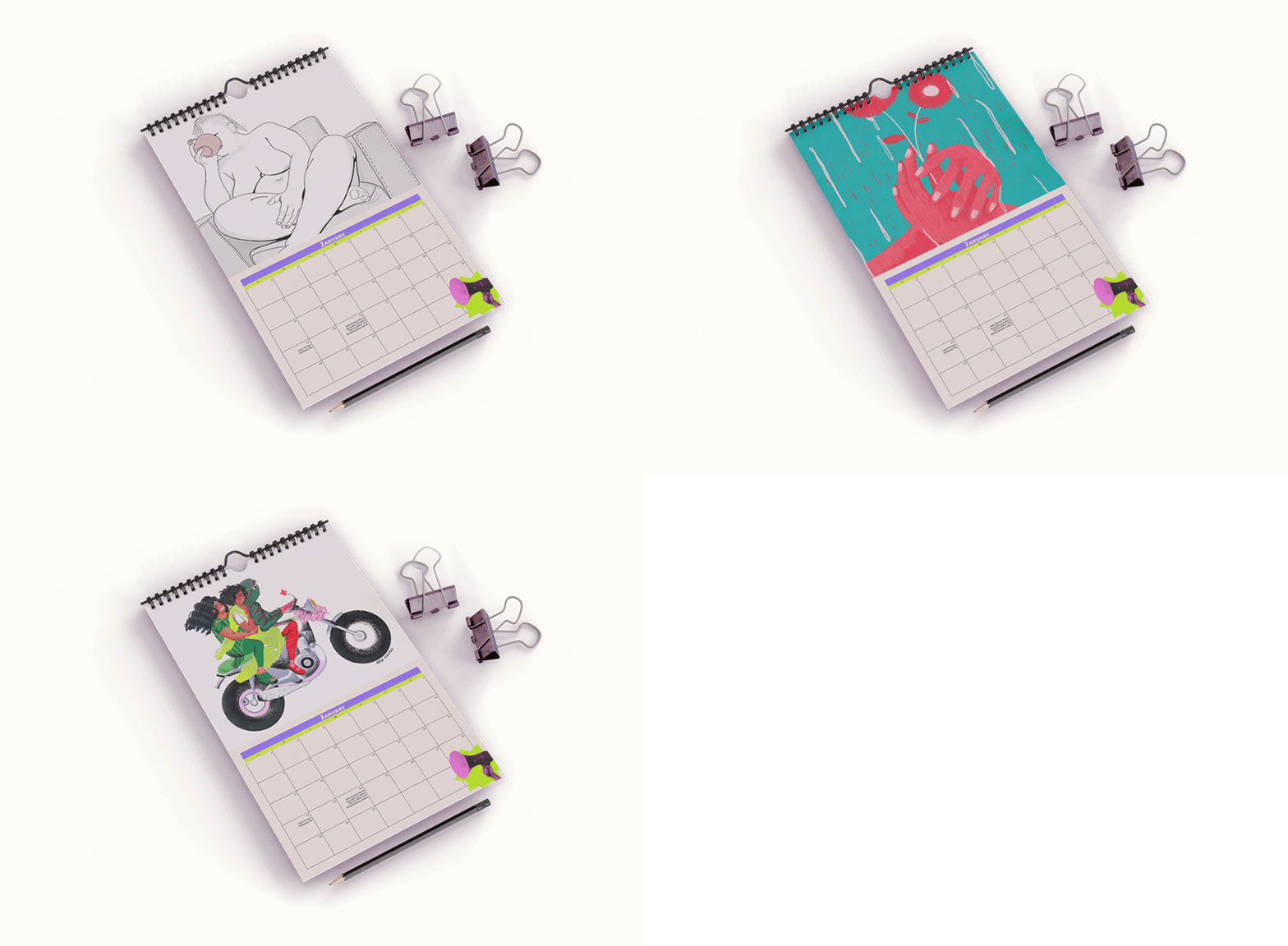
Image of a calendar on a flat surface. The images decorating each month change every second: first there is a naked person sitting enjoying a hot drink in relaxation, then we see two pink hands over a blue background and finally a couple riding a motorcycle. This looks indefinitely.

AWID es parte de un impresionante ecosistema de movimientos feministas que trabajan para alcanzar la justicia de género y la justicia social en todo el mundo. Al acercarse nuestro 40° aniversario estamos celebrando todo lo que hemos construido a lo largo de estos últimos cuarenta años. Como organización global de apoyo a los movimientos feministas, sabemos que nuestro camino hacia adelante es trabajar con feminismos apasionados, reconociendo tanto la multiplicidad de los feminismos como el valor de un impulso por la justicia apasionado y sin reservas. El estado del planeta y de los movimientos feministas requiere conversaciones y acciones valientes. Esperamos con ansia trabajar junto con nuestrxs afiliadxs, asociadxs y donantes para crear los mundos en los que creemos,celebrar los logros y expresar la verdad ante el poder, al servicio de los movimientos feministas a nivel global.

El Calendario Feminista 2023 es un regalo para los movimientos. Presenta las obras de arte de algunxs de nuestrxs maravillosxs afiliadxs de AWID.

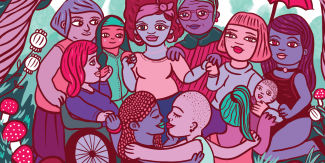
This is the cover for the 2023 Feminist Calendar. It shows a diverse group of people of all ages embracing and holding hands.

Úsalo. Imprímelo. Compártelo.

¡Consíguelo en tu idioma preferido!

Escoge la calidad de imagen

English Descarga para impresión |  Versión digital
Français Descarga para impresión |  Versión digital
Español Descarga para impresión |  Versión digital
Português Descarga para impresión |  Versión digital
عربي Descarga para impresión |  Versión digital
Русский Descarga para impresión |  Versión digital

Leila Hessini

Biography

Leila est une dirigeante, défenseuse et conseillère féministe transnationale qui compte plus de 25 ans d'expérience dans la promotion des droits humains, de l'égalité des genres et de la santé et des droits sexuels et reproductifs, ainsi que de la justice au niveau local et mondial. Née en Algérie, Leila a fait ses études aux États-Unis, en France et au Maroc. Au cours de sa carrière professionnelle, elle a vécu et travaillé en Afrique, en Europe et aux États-Unis.  

Elle a occupé le poste de vice-présidente des programmes au Fonds mondial pour les femmes (GFW) pendant plus de cinq ans, où elle a supervisé son octroi de subventions stratégiques, le renforcement des mouvements, le plaidoyer mondial et les collaborations philanthropiques.  Au sein du GFW, elle a doublé le montant de ses subventions pour atteindre plus de 17 millions de dollars, a lancé son travail sur les mouvements et les crises féministes et axées sur le genre, a créé un programme pour les adolescentes dirigé par un conseil consultatif de filles et a dirigé son travail de plaidoyer philanthropique.  Avant cela, elle a fait partie de l'équipe de direction d'Ipas de 2002 à 2016, où elle a publié de nombreux articles sur le droit à l'avortement et la justice, dirigé des actions de plaidoyer mondiales et établi des partenariats avec des groupes féministes travaillant sur l'autogestion, la mobilisation communautaire et la réduction de la stigmatisation autour de l'intégrité corporelle et des droits sexuels et reproductifs.  Alors qu’elle était basée en Afrique du Nord, elle a cofondé une société de conseil féministe intersectionnelle, Strategic Analysis for Gender Equality (SAGE), qui travaillait sur les intersections entre l'économie, le genre et les droits sexuels et reproductifs, et a dirigé le travail national, régional et mondial sur le genre du bureau du Caire de la Fondation Ford pendant 5 ans. 

Leila dispose d'une vaste expérience dans les domaines de l'éducation populaire, le plaidoyer, l'organisation à but non lucratif, le développement de conseils d'administration, la philanthropie et le suivi et l'évaluation. C'est une communicatrice compétente qui privilégie une approche intersectionnelle pour centrer et amplifier les voix et les expériences des personnes les plus marginalisées.  Elle a reçu la bourse Op-ed Public Voices de la Fondation Ford et a été boursière Fulbright au Maroc.  Ses publications couvrent un large éventail de sujets, notamment les approches féministes et décoloniales de la philanthropie, la promotion des droits humains des femmes dans les contextes majoritairement musulmans, les stratégies féministes visant à promouvoir la justice reproductive, la promotion du recours des femmes aux avortements autogérés et la lutte contre la stigmatisation et la discrimination. 

 Leila est actuellement coprésidente du conseil du Center for Constitutional Rights et membre du conseil de Highlander Research and Education. Elle fait également partie du conseil de responsabilité du Numun Feminist Technology Fund et du comité consultatif de la Plateforme des femmes défenseuses des droits humains d'Afrique.  Elle a précédemment siégé aux conseils d'administration de SisterSong Women of Color Reproductive Justice Collective, du Réseau mondial des femmes pour les droits sur la reproduction, du Fonds mondial pour les femmes, du Safe Abortion Access Fund et du Reproductive Health Technologies Project. Elle a été élue trésorière et membre du comité exécutif du conseil d'administration de Prospera et a siégé au comité directeur du Fonds Fenomenal pendant quatre ans. Leila est titulaire d'une maîtrise en santé publique et d'une maîtrise en études sur la région du Moyen-Orient et de l'Afrique du Nord, a étudié le droit islamique au Maroc et a poursuivi des études doctorales en sociologie en France. Elle a étudié l'arabe et l'allemand et parle couramment le français et l'anglais.

Position
Trésorier
Add to stories
Off