In September 2016, the 13th AWID international Forum brought together in Brazil over 1800 feminists and women’s rights advocates in a spirit of resistance and resilience.
This section highlights the gains, learnings and resources that came out of our rich conversations. We invite you to explore, share and comment!
What has happened since 2016?
One of the key takeaways from the 2016 Forum was the need to broaden and deepen our cross-movement work to address rising fascisms, fundamentalisms, corporate greed and climate change.
With this in mind, we have been working with multiple allies to grow these seeds of resistance:
Movements can also benefit from new methodologies on Visioning Feminist Futures (Coming up soon!)
And through our next strategic plan and Forum process, we are committed to keep developing ideas and deepen the learnings ignited at the 2016 Forum.
What happens now?
The world is a much different place than it was a year ago, and it will continue to change.
The next AWID Forum will take place in the Asia Pacific region (exact location and dates to be announced in 2018).
We look forward to you joining us!
About the AWID Forum
AWID Forums started in 1983, in Washington DC. Since then, the event has grown to become many things to many peoples: an iterative process of sharpening our analyses, vision and actions; a watershed moment that reinvigorates participants’ feminisms and energizes their organizing; and a political home for women human rights defenders to find sanctuary and solidarity.
Dois-je répondre à toutes les questions en même temps, ou puis-je y répondre en plusieurs fois?
Au besoin, vous avez la possibilité de sauvegarder vos réponses en cours d’enquête, pour y revenir plus tard. KOBO enregistrera vos brouillons de réponses dans le coin supérieur gauche de la page de l'enquête et rechargera votre dossier lorsque vous reviendrez à l'enquête. Assurez-vous simplement de continuer à partir du même ordinateur et du même navigateur.
Les défenseuses de l’Afrique subsaharienne
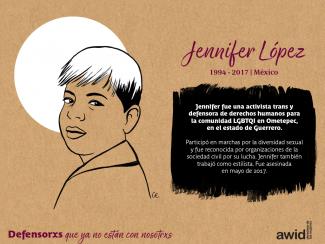
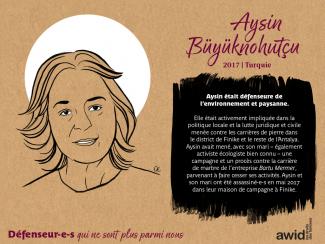
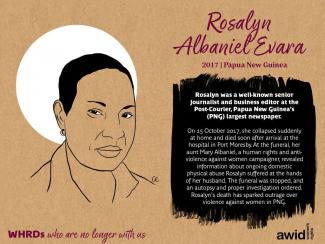
Cette année, dans le cadre de notre hommage en ligne aux défenseuses des droits humains qui ne sont plus parmi nous, nous célébrons la mémoire de quatre femmes originaires d’Afrique subsaharienne. Trois d’entre elles ont été assassinées en raison de leur travail et/ou à cause de leur identité de genre ou de leur orientation sexuelle. Leur mort souligne la violence à laquelle les personnes LGBT* sont confronté-e-s dans cette région et dans le monde entier. Nous vous invitons à vous joindre à nous pour commémorer la vie de ces femmes, leur activisme et l’héritage qu’elles nous ont laissé. Faites circuler ces mèmes après de vos collègues et amis ainsi que dans vos réseaux et twittez en utilisant les hashtags #WHRDTribute et #16Jours.
S'il vous plaît cliquez sur chaque image ci-dessous pour voir une version plus grande et pour télécharger comme un fichier
The resourcing realities and state of funding for feminist movements change quickly, is this survey a one-off?
No, it's not. This survey builds on AWID’s 20-year history of mobilizing more and better funding for feminist-led social change and is the third iteration of our Where is the money for feminist organizing? research. Our aim is to repeat the WITM survey every 3 years.
Por qué y cómo renovar tu membresía a AWID
Conoce a otras/os afiliadas/os
Nuestras/os afiliadas/os tanto individuales como institucionales provienen de todas las regiones del mundo y de 163 países; las/os más recientes se nos han unido desde Zimbabue, Turquía y los Estados Unidos. ¡Todas/os nuestras/os afiliadas/os aportan una rica y diversa gama de perspectivas, experiencias, conocimiento, energía e inspiración!
¿Sabías que cada semana publicamos perfiles de afiliadas/os?
Uno de los beneficios de ser afiliada/o de AWID es que tu historia sea destacada en nuestro boletín informativo, el cual llega a 35,000 suscriptoras/es, y a través de nuestros canales en las redes sociales que tienen más de 60,000 seguidores.
Publicaciones recientes:
Conoce a Angila Ashitua, una joven afiliada a AWID que vive en el condado de Vihiga, Kenia Occidental.
Aprendiendo más acerca del trabajo que hace AWID y de temas relativos a los derechos de las mujeres y la justicia social por medio de nuestras publicaciones y recursos, incluyendo el último video "Cambiando sistemas, cambiando vidas". [disponible solo en inglés]
Participando en nuestras sesiones de aprendizaje electrónico. ¡Mira lo más destacado de nuestro seminario en línea sobre justicia fiscal! [disponible solo en inglés]
¡Y mucho más!
Puedes renovar tu membresía por uno, dos o tres años; también ofrecemos membresías individuales e institucionales gratis a quienes tengan bajos ingresos o presupuestos.
Si tienes alguna dificultad y necesitas apoyo con el proceso de inscripción, por favor no dudes en comunicarte conmigo a través de membership@awid.org
Testemonios de nuestras/os afiliadas/os
"AWID nos ha resultado una red muy interesante y estamos participando en muchas de sus plataformas". - Engabu Za Tooro (afiliada/o institucional AWID)
"Espero una colaboración fructífera con el equipo. Me siento excelente. Gracias por aceptarme como afiliada". - R. Chakraborty (afiliada individual AWID)
"Muchas gracias, AWID, pues el trabajo que hacen es formidable. Aprecio realmente sus esfuerzos". - E. Khan (afiliada individual AWID)
Body
Snippet FEA Objectives NSS Advocacy (EN)
ADVOCACY
To influence decision makers and promote more equitable access to land for women working in agriculture
¿Puedo contactarme con alguien si tengo alguna pregunta o duda?
Si tienes alguna pregunta o duda, contáctanos a través del formulario disponible aquí, indicando «Encuesta ¿Dónde está el dinero?» en el título del mensaje. También puede escribirnos a witm@awid.org.
7. Synthétisez les résultats de votre recherche
Une fois que vous aurez analysé l’ensemble des données issues du sondage, des interviews, de la recherche documentaire et possiblement d’autres sources, vous pourrez créer votre produit final.
Votre produit final sera le document qui synthétisera, analysera et posera un regard critique sur vos données. Ce sera la composante que vous partagerez avec votre communauté afin de présenter et d’expliquer votre recherche à votre auditoire.
À l’AWID, nous rédigeons fréquemment un rapport complet qui analyse chaque ensemble de données et qui synthétise tous nos résultats pour ensuite créer des produits plus concis comme des infographies et des sommaires (expliqué plus loin dans la section « Finalisez et mettez en forme »).
1. Écrivez clairement
Organisez vos données comme si vous vouliez raconter une histoire. Vous pouvez suivre l’ordre de votre sondage. Vous pouvez également regrouper certaines questions qui mènent à votre conclusion de façon cohérente et progressive.
Adaptez votre langage à votre public. Employez un langage universel et évitez le jargon ou les termes trop techniques.
L’importance de la révision
La personne chargée de la révision relira votre document, s’assurera qu’il est rédigé de manière concise, procédera à la vérification des faits, soulèvera les incohérences qui doivent être résolues, assurera la fluidité du texte et suggérera éventuellement des titres.
Il est préférable que cette personne connaisse et comprenne votre travail WITM, sans être engagée dans la recherche. Ainsi, elle apportera au document une nouvelle perspective.
2. Rendez-le attrayant
Créez des tableaux et des graphiques à l’aide des données recueillies. Ce type de documents visuels est très utile pour faire ressortir les principaux résultats de votre recherche et pour valider votre analyse.
Utilisez des images pertinentes qui illustrent vos propos.
Mettez en évidence les principaux chiffres et/ou les témoignages percutants.
Rappel : Plus votre produit est accessible, plus les gens auront envie de le lire…et de le partager!
À cette étape, vous avez recueilli toutes vos données, vous les avez analysées et vous avez transformé ces renseignements en produit final, probablement en un long rapport.
1. Peaufinez vos résultats
Avant de passer à la prochaine étape, vous devriez partager votre produit final avec les organisations, les activistes et les donateurs qui vous conseillent.
C’est le moment idéal pour vérifier les aspects suivants :
Est-ce qu’il manque des points clés à votre analyse des tendances et du panorama actuels du financement ?
Est-ce qu’il manque des points clés à vos conclusions ?
Y a-t-il des données inexactes qui doivent être corrigées ?
Y a-t-il des suggestions de nature générale sur la manière de renforcer le rapport afin d’atteindre les objectifs fixés dans le cadre de référence de la recherche.
Lorsque vous aurez intégré toutes les réactions de vos conseillers et conseillères, assurez-vous de présenter le document à la personne chargée des révisions.
Vous aurez ainsi en main la version finale et complète de votre rapport. Si vous prévoyez de publier votre rapport final en d’autres langues, il est temps de le faire traduire.
2. Encouragez les réactions
Les personnes qui vous conseillent seront probablement très occupées. Assurez-vous de leur accorder un délai raisonnable lorsque vous leur demandez de commenter le texte.
Soyez brefs et spécifiques lorsque vous sollicitez des commentaires, de sorte qu’il leur soit facile d’y répondre. Si vous le souhaitez, vous pouvez simplement copier et coller la liste des points que nous vous avons fournie.
Si vous publiez en plusieurs langues, assurez-vous que vos conseillers et conseillères vérifient la ou les versions finales traduites de vos produits.
Il s’agit d’une contribution considérable de la part de vos conseillers et conseillères. Pensez à leur offrir une forme de reconnaissance.
• 1 personne (ou plus) chargée de la recherche
• 1 éditeur-trice (spécialisé-e web si vous créez des prduits en ligne)
• Traducteur(s)-trice(s), si vous réalisez votre recherche en différentes langues
Ressources requises :
• Liste d’organisations, de donateurs et d’activistes agissant à titre consultatif
• Note conceptuelle (définie par votre cadre de référence)
• Résultats préliminaires de votre sondage
• Questions d'interview
• Résultats de vos interview
• Données de votre recherche documentaire
• Toutes les données utilsées dans le rapport