Priority Areas

Supporting feminist, women’s rights and gender justice movements to thrive, to be a driving force in challenging systems of oppression, and to co-create feminist realities.

Movement Building

Related Content

Quais são os idiomas oficiais do inquérito WITM?

Por enquanto, o inquérito no KOBO está disponível em árabe, inglês, francês, português, russo e espanhol. Terá a oportunidade de selecionar um dos idiomas no início do inquérito.

A Joy to the World: Six Questions with Naike Ledan

Interviewed by Chinelo Onwualu

Decorative Element


Naike Ledan Portrait

Naike Ledan is a social justice defendant, a committed feminist that brings forward 20 years of experience in human rights and health justice advocacy, women’s empowerment, the fight for universal access to basic services and social inclusion, as well as civil society capacity building. She has built extensive work in Canada, West and southern Africa, as well as in Haiti, in civil rights advocacy, capacity building for CSOs, while emphasising the social determinants of structural exclusion. She values the principles of shared leadership, anticolonial, anti-oppressive, and anti-patriarchal spaces. 

Article Cover for A Joy to the World: Six Questions with Naike Ledan

Chinelo You’re billed as a trans rights activist; I’m curious about how you made that journey.

Naike So, I grew up in Haiti until I was 18, then I lived in Montreal for 19 years. Coming back to Haiti in 2016, I thought I would be coming back home, but the place had changed and I had to readjust. I did not necessarily reconnect in the way that I’d expected to with childhood family and friends. I came back as an expat with a comfortable work situation, and I felt very much like a foreigner for a very long time. And at the same time, I felt very much at home because of the language, the understood silence, the not having to explain when we start singing a commercial – you know, that thing we share, that energy, that space, that spirit.

My return to self-love – I would call “rebirth” – coinciding with giving birth to my first child, giving birth to myself, and falling in love with my queerness or same-gender lovingness. (Photo credit: Naike Ledan)

What helped me was, I loved the work of going into the country and documenting people’s knowledge. So I left the comfort. I became a country director of a regional organisation that was queer as fuck! Most of my work was to find resources and build the capacity of civil society. My strategy was to go into the countryside, look for all these little organizations, help build their capacity, and fund them. I was not interested in politicians and shaking hands and taking pictures . I had a very good ally, Charlot Jeudy – the [queer] activist that got killed three years ago in his house. We got very close after an Afro-queer film festival we were planning got banned in Haiti. But it made a lot of noise and sparked conversations about queerness everywhere, so Charlot introduced me to every little CSO in every little corner of the country. And I would just be there to help organisation[s] with registering legally or building their strategic plan. So it’s been a lot of these kinds of work that made me a queer activist and by extension, a trans activist. Although I don’t call myself that – an activist. It’s such a loaded word, you know? And it’s something people call you. I think I’m just a lover and a fighter .

Chinelo Tell me about the workshop you conducted with AWID for the festival. What was it about and what was the context?

My deep self awareness during my childhood years and my engagement in questioning inequalities and injustice at a very very young age (+/- 4 years old). (Photo credit: Naike Ledan)

Naike International media doesn’t really talk about Haiti, but with a political environment that is as bad as ours, the economic environment is even more catastrophic. Being a more middle class Haitian, speaking different languages, having different passports, I was initially hesitant to take the space. But I often see myself as a bridge more than someone that would talk about themself. That is how I came to invite Semi, who is a brilliant young trans woman from outside Port-au-Prince, to take the space to talk for herself and walk us through the ecosystem of the realities for trans women in Haiti. We ended up building a session about uninclusive feminism – or, I would say, formal feminist spaces – and how trans girls in Haiti do not have spaces where they can contribute to women’s knowledge and sharing of women’s realities. So the AWID festival was the opportunity for me to give the space to the women who should have it. We had a wonderful time; we had wine online while hosting the conversation. My co-facilitator, Semi, shared what it is like to be a trans child/girl/woman at different stages of her life. She also shared the dangers of the street, of poverty, of exclusion, of “not passing,” and her victories as well.

Chinelo What is the relationship of trans women to feminist organizations in Haiti? What has been your experience with that?

Naike It’s been really hard – heartbreaking, actually – the experience of trans women in Haiti. From not existing at all to just being extremely sexualized. The other thing that’s been happening is how they’re being killed, and how those killings have gone unreported in the media. This is how non-existent, how erased trans women are. They’re everywhere but not in job settings, not in feminist settings, not in organizational settings. Not even in LGBT organizations. It’s only recently, and because of a lot of advocacy push, that some of these organization are kind of readjusting, but in feminist spaces, this is still out of the question. We are still having to deal with the old exclusionary discourse of “They’re not women. Of course, if they can pass…” The culture of passing, it’s a risk management conversation – how much you pass and how much you don’t pass and what it means for your body and the violence it inflicts. In the trans-exclusionary realities we live in, which are reproduced in a lot of feminist spaces, those that pass completely may be considered girls, but only to a certain extent. But how about falling in love, how about having a conversation, how about being in the closet, how about wanting a certain aesthetic, or a career? So really, the conversation about hormone therapy becomes about risk reduction, as Semi herself shared at the workshop. But we don’t have the option of hormone therapy, we don’t have the medical framework nor the system to support those who would like to pursue that option.

Chinelo When you talk about the way that trans people and queer people are thought of in society, it sounds like it might be similar to Nigeria, which can be a deeply homophobic environment.

Naike Haiti is a very complex country in a very beautiful way. Nothing is simple, you know, nothing is ever one way. Haitians are very tolerant – and they’re also very homophobic. You’re going to find regions in the countryside where people aren’t that homophobic at all because all the Vodou temples there, and this is a religion that respects life. One basic principle of the Vodou religion is that all children are children. So, there is no right or wrong in the religion. For the longest time, people thought of Haiti as a haven, a place where people are tolerant – we’re talking 70s, 80s, pre-HIV, 90s even. Then you had the earthquake [in 2010] where around 300,000 people died. And then all this money came from the south of the US through the Evangelicals to rebuild the country and find Jesus. So, the homophobia in Haiti is very recent. In the depth, in the heart of the soul of the culture, I cannot really say that it is homophobic. But in the everyday life, it surely lands on the skin of queer people, that violence. And that of women, of poor women, of dark women as well, because colorism runs deep in the Caribbean.

Chinelo How have you managed this? What’s been your strategy for survival?

My return to Haiti as part of my decolonizing process, and choosing to physically position my senses and my family’s senses to magic and blackness uncompromisingly. (Photo credit: Naike Ledan)

Naike I’m really in love with my work. I love working. When I first arrived, I was working with this horrible NGO but I was doing amazing work. I was always in the countryside, conversing and learning from people, from women. And that filled my heart for so long because I’m very much in love with my culture, with black people, with black women – old black women, black babies. It just fills me up in a spiritual way. When we were in Canada my kids were in these all-white schools and tokenized. They did not speak Creole nor French. And now, they’re running free in the yard and starting to fight in Creole. I also found hubs of survival with the people I met. I created bonds with the queers and others who were weirdos like me and it’s been really wonderful. But now I’m struggling because I don’t feel safe in Haiti anymore. We have about 40 kidnappings per week in Port-Au-Prince – and it’s been like that since 2018. I’ve developed anxiety and panic attacks. So It’s time to go, and I’ve been asking myself, “where is home?” I spent 19 years in Montreal but I never felt at home there. When I left, I never missed it so I don’t want to go back. I’ve been crying a lot lately because it feels like entering a second exile.

Chinelo What’s your relationship to pleasure, leisure, and rest?

Naike My relationship with pleasure, leisure, and rest are for me one and the same. It is the lived moment when I indulge in the heat of the sun on my face for example. It is pleasure, leisure, and rest at the same time.

Pleasure: My go-to space, most solely a haven of celebration of myself. I reserve myself the power and the right to be loud or quiet in the enjoyment of the pleasure I experience. All the pleasure I viciously and abundantly indulge in, including and not limited to the pleasure of solitude and silence.

Leisure: biking, music festivals, eating, wine discoveries, dancing in Haitian traditional Vodou dances are amongst many that occur at the moment.

Rest: is what I live for. As an overachiever and a person that is literally in love with work, it is a paradox how lazy I am. No one knows that because all of what the world sees is this: an accomplished overworker. They do not know how I can just, uncompromisingly and profoundly indulge in idleness.

Cover image for Communicating Desire
 
Explore Transnational Embodiments

This journal edition in partnership with Kohl: a Journal for Body and Gender Research, will explore feminist solutions, proposals and realities for transforming our current world, our bodies and our sexualities.

Explore

Cover image, woman biting a fruit
 

التجسيدات العابرة للحدود

نصدر النسخة هذه من المجلة بالشراكة مع «كحل: مجلة لأبحاث الجسد والجندر»، وسنستكشف عبرها الحلول والاقتراحات وأنواع الواقع النسوية لتغيير عالمنا الحالي وكذلك أجسادنا وجنسانياتنا.

استكشف المجلة

هل عليّ القيام بأي تجهيزات قبل تعبئة الاستطلاع؟

يركّز استطلاع "أين المال" على وقائع التمويل للتنظيمات النسوية، تسأل أغلبية الأسئلة عن تمويل مجموعتكم/ن بين الأعوام 2021-2023. سوف تحتاجون أن تكون لديكم/ن معلومات معيّنة عند تعبئة الاستطلاع مثل ميزانيتكم/ن السنوية ومصادر التمويل الأساسية.

Introducing AWID’s next Co-Executive Directors

Dear Feminist Movements,

On behalf of the AWID Board of Directors, I am proud to introduce AWID’s next Co-Executive Directors: Faye Macheke and Inna Michaeli!  

Portrait of CoED Faye Macheke smiling and standing in front of greenery
Faye Macheke is a passionate Pan-African feminist, active in movements for women's rights, racial justice, migrant and labor rights, and environmental justice.  Her activism builds on the legacy of the struggle against apartheid in South Africa and the aftermath of the apartheid era in Zimbabwe. In 2019, Faye joined AWID as the Director of Finance, Operations and Development. She brings extensive experience in feminist leadership, strategy, and all aspects of organisational development. Faye is a committed Board Member of UAF-Africa and other women's rights organizations. She is based in Cape Town, South Africa.
Portrait of CoED Inna Michaeli smiling. Behind them is a wall with grafiti.
Inna Michaeli is a feminist lesbian queer activist and sociologist with many years of deep engagement in feminist and LGBTQI+ struggles, political education and organizing by and for migrant women, and Palestine liberation and solidarity. Inna joined AWID in 2016 and served in different roles, most recently as the Director of Programs. She brings extensive experience in research and knowledge building, policy advocacy and organizational development. Inna serves on the Board of the Jewish Voice for Peace - Germany. She is based in Berlin, Germany.

This decision is the result of a rigorous process with full participation of the Board and the staff of AWID. The Board recognised and honoured the skills and talents of AWID staff by opening an internal hiring search.  As a result, we had two brilliant candidates, who embody the integrity, ethic of care, and feminist intersectional values that drive AWID’s work, apply together as a team. Faye and Inna brought forward a brave and exciting vision to meet the challenges of this moment: building a global feminist community, resisting and disrupting systems of oppression, and supporting feminist movements to thrive.
 
As AWID celebrates 40 years we are excited for Inna and Faye to co-lead AWID into our next strategy and a new phase of evolving, pushing boundaries, and supporting feminist movements worldwide. 
 
Appointing and supporting AWID’s Co-Executive Directors to lead the organisation is a fiduciary responsibility we take seriously as a Board. How we engage those processes is also a reflection of AWID’s brilliant and diverse membership, which elects AWID’s Board.
 
As we say good-bye to Cindy and Hakima, we, the Board, unanimously and enthusiastically welcome Faye and Inna as our next Co-EDs as of September 5, 2022. Stay tuned for more updates about our leadership transition in the months ahead.

Most of all, thank you for your ongoing support!

In feminist solidarity and love,
Margo Okazawa-Rey
President, AWID Board

Вы просите указать название группы/организации и/или движения и контактную информацию – почему?

Мы запрашиваем эти данные, чтобы облегчить просмотр ответов, избежать дублирования и иметь возможность связаться с вашей организацией в случае, если вы не смогли завершить опрос и/или если у вас возникли сомнения или дополнительные вопросы. Здесь вы можете узнать больше о том, как мы используем личную информацию, которую собираем в ходе нашей работы.

The 2023 Feminist Calendar

Image of a calendar on a flat surface. The images decorating each month change every second: first there is a naked person sitting enjoying a hot drink in relaxation, then we see two pink hands over a blue background and finally a couple riding a motorcycle. This looks indefinitely.

AWID is a part of an incredible ecosystem of feminist movements working to achieve gender justice and social justice worldwide. With our 40th anniversary, we are celebrating all that we’ve built over these last 40 years. As a global feminist movement support organization we know that working with fierce feminisms is our way forward, acknowledging both the multiplicity of feminisms and the value of fierce and unapologetic drive for justice. The state of the world and of feminist movements calls for brave conversations and action. We look forward to working together with our members, partners and funders in creating the worlds we believe in, celebrating the wins and speaking truth to power in service of feminist movements globally.

The 2023 Feminist Calendar is our gift to movements. It features the artwork of some of our amazing AWID members.

This is the cover for the 2023 Feminist Calendar. It shows a diverse group of people of all ages embracing and holding hands.

Use it. Print it. Share it. 

Get it in your preferred language!

Select image quality

English Print Quality |  Digital Version
Français Print Quality |  Digital Version
Español Print Quality |  Digital Version
Português Print Quality |  Digital Version
عربي Print Quality |  Digital Version
Русский Print Quality |  Digital Version

O questionário está disponível durante quanto tempo?

O questionário está disponível até o final de julho de 2024. Queira preencher o mesmo dentro deste prazo para garantir que as suas respostas são incluídas na análise.

Thank you

Thank you for your interest, but the page you're looking for no longer exists.

You can explore more content and updates at https://www.awid.org.

Membership why page - Paz Romero

"This community is a place for connections, to understand our individual fights as part of global struggles, and sometimes even dance! There aren’t places like this online where you can meet real grassroots activists from all over the world and build solidarity and sisterhood."

- Paz Romero, Argentina

Snippet - Feminist Community Evening - EN

A Feminist Community Evening

✉️ By registration only. Register here

📅 Wednesday, March 12, 2025
🕒 5.00-7.00pm EST

🏢 Chef's Kitchen Loft with Terrace, 216 East 45th St 13th Floor New York

Organizers: Women Enabled International and AWID

Snippet - if the positions have closed

If the positions advertised have closed, or just don’t match your area of interest and expertise, we suggest the following resources for your job search.

Snippet - WCFM Registration status - EN

icon-registration status

Registration status:

Search for funders based on their requirements for groups to be registered.

Snippet - Take the quiz

Take the Quiz!

"Where is the money for feminist organizing?"

How much do you know about feminist resourcing? 📊 Take AWID's "Where is the Money for Feminist Organizing?" quiz to test your knowledge:


Take the quiz onlineDownload and print it


Snippet - COP30 - Resistance Hubs Section Title - EN

Resistance Hubs for Climate Justice

Snippet - COP30 Join thousands CTAs - EN

Join thousands demanding real climate justice:

Follow the campaign: 

Instagram| BlueSky

Join us!

Join our Membership| Join AWID Community

Stay updated

Subscribe for updates

Questions?
Contact us: communications @ awid.org

Snippet - WD2026 - Program title_EN

AWID at Women Deliver Conference

Women Human Rights Defenders

WHRDs are self-identified women and lesbian, bisexual, transgender, queer and intersex (LBTQI) people and others who defend rights and are subject to gender-specific risks and threats due to their human rights work and/or as a direct consequence of their gender identity or sexual orientation.

WHRDs are subject to systematic violence and discrimination due to their identities and unyielding struggles for rights, equality and justice.

The WHRD Program collaborates with international and regional partners as well as the AWID membership to raise awareness about these risks and threats, advocate for feminist and holistic measures of protection and safety, and actively promote a culture of self-care and collective well being in our movements.


Risks and threats targeting WHRDs  

WHRDs are exposed to the same types of risks that all other defenders who defend human rights, communities, and the environment face. However, they are also exposed to gender-based violence and gender-specific risks because they challenge existing gender norms within their communities and societies.

By defending rights, WHRDs are at risk of:

  • Physical assault and death
  • Intimidation and harassment, including in online spaces
  • Judicial harassment and criminalization
  • Burnout

A collaborative, holistic approach to safety

We work collaboratively with international and regional networks and our membership

  • to raise awareness about human rights abuses and violations against WHRDs and the systemic violence and discrimination they experience
  • to strengthen protection mechanisms and ensure more effective and timely responses to WHRDs at risk

We work to promote a holistic approach to protection which includes:

  • emphasizing the importance of self-care and collective well being, and recognizing that what care and wellbeing mean may differ across cultures
  • documenting the violations targeting WHRDs using a feminist intersectional perspective;
  • promoting the social recognition and celebration of the work and resilience of WHRDs ; and
  • building civic spaces that are conducive to dismantling structural inequalities without restrictions or obstacles

Our Actions

We aim to contribute to a safer world for WHRDs, their families and communities. We believe that action for rights and justice should not put WHRDs at risk; it should be appreciated and celebrated.

  • Promoting collaboration and coordination among human rights and women’s rights organizations at the international level to  strengthen  responses concerning safety and wellbeing of WHRDs.

  • Supporting regional networks of WHRDs and their organizations, such as the Mesoamerican Initiative for WHRDs and the WHRD Middle East and North Africa  Coalition, in promoting and strengthening collective action for protection - emphasizing the establishment of solidarity and protection networks, the promotion of self-care, and advocacy and mobilization for the safety of WHRDs;

  • Increasing the visibility and recognition of  WHRDs and their struggles, as well as the risks that they encounter by documenting the attacks that they face, and researching, producing, and disseminating information on their struggles, strategies, and challenges:

  • Mobilizing urgent responses of international solidarity for WHRDs at risk through our international and regional networks, and our active membership.

Related Content

Feminism, motherhood and the struggle for gender equality

Feminism, motherhood and the struggle for gender equality

“In our struggle for equality, we tend to forget that women are also mothers (if they chose to be).  We should not be ashamed of our ability to give birth to a human being. The rights of mothers are also women's rights. Being a mother and a feminist is not a contradiction” says Aleksandra Miletić-Šantić, a lawyer and single mother of three children.


Aleksandra is originally from Mostar in Bosnia and Herzegovina (BH). She currently lives and works in Sarajevo as a BH focal point person for the Council of Europe’s Human Education for Legal Professionals Programme. She is also a specialist in the Monitoring and Evaluation of Development Programmes.

The years 1992-1995 was a tumultuous period in war torn Bosnia and Herzegovina when Aleksandra worked as a War Studio of Mostar correspondent for the Sarajevo-based Radio-Television BH. The multi-ethnic Studio had been created with the goal of being a source of optimism to citizens and as part of an attempt to preserve cultural and artistic life under abnormal conditions.  This studio was attacked and subsequently closed. In 1993 it was permanently destroyed when the building it occupied with the Headquarters of the BH Army was set on fire.

Aleksandra’s journalistic background and experience of living through armed conflict as a young woman has made her a passionate advocate for peace building.

In her current professional capacity she works on the implementation of the United Nations (UN) Security Council Resolution 1325 on Women, Peace and Security. She has designed and facilitated training programs on gender and security, and also engages with the UN Women Office in BH to support national gender mechanisms in the implementation of the Resolution 1325.

“In the ideal world, being a feminist would be a matter of decency as it would be considered normal that all people have the same rights and liberties. That would include all rights - civil, social, economic and political.”

For the past 15 years, Aleksandra has been working on the improvement of human rights in BH, and was one of the pioneer gender advisors for the Common Security and Defence Policy missions of the European Union (EU).

In her role as gender advisor for the EU Police Mission (EUPM) in BH she introduced the action plan for gender mainstreaming as a tool that focuses on improving the internal position of women staff members, while integrating gender in the EUPM mandate activities in BH.

Aleksandra’s dream of a better world drives her in the work she does:

“My dream is a world where everybody will be able to achieve their full potential, where not a single person will know about poverty or insecurity. Sadly, so many years after the adoption of basic human rights instruments, a way of life is still not a matter of individual choice.”

Aleksandra has been an AWID member since February 2014.

“I have become an AWID member as its mission and the way it is implemented strongly correspondents to my ideals. I also cherish the way AWID treats its members by paying due attention to every single member regardless of any basis. It makes every member feel as an important actor of change.”  

Feminismo, maternidad y la lucha por la igualdad de género

Feminismo, maternidad y la lucha por la igualdad de género

«En nuestra lucha por la igualdad, tendemos a olvidar que las mujeres también son madres (si así lo deciden). No deberíamos sentirnos avergonzadas por tener la capacidad de dar a luz a un ser humano. Los derechos de las madres son también parte de los derechos de las mujeres. Ser madre y feminista no es una contradicción», dice Aleksandra Miletić-Šantić, abogada y madre soltera de tres hijas/os.


Aleksandra es oriunda de Mostar, Bosnia y Herzegovina (BH). Actualmente vive y trabaja en Sarajevo como la persona de contacto en BH para el programa Human Rights Education for Legal Professionals [Formación en Derechos Humanos para Profesionales del Derecho] del Consejo de Europa. Aleksandra también es especialista en el seguimiento y evaluación de programas de desarrollo.

El período que va de 1992 a 1995 fue tumultuoso en una Bosnia y Herzegovina devastada por la guerra. Aleksandra trabajó en la estación de radio War Studio [Estudio de Guerra] de Mostar como corresponsal para la Radio-Televisión BH de Sarajevo. Era una estación de radio multiétnica que había sido creada con el objetivo de ser una fuente de optimismo para la ciudadanía y de preservar la vida cultural y artística en una situación anormal, pero que fue atacada y posteriormente cerrada. En 1993, la estación fue destruida para siempre cuando incendiaron el edificio que ocupaba junto al Cuartel General del Ejército de BH.

Su experiencia como periodista y como mujer joven que vivió durante un conflicto armado ha hecho que hoy día Aleksandra sea una ferviente defensora de la consolidación de la paz. En su actual rol como profesional, trabaja en la implementación de la Resolución 1325 del Consejo de Seguridad de las Naciones Unidas (ONU) sobre Mujeres, Paz y Seguridad. Aleksandra ha diseñado y facilitado programas de capacitación sobre género y seguridad y colabora con la Oficina de ONU Mujeres en BH para apoyar  a los organismos estatales que se ocupan del género en la implementación de la Resolución 1325 a nivel nacional.

«En un mundo ideal, ser feminista sería simplemente una cuestión de decencia, ya que sería considerado normal que todas las personas tuvieran los mismos derechos y libertades. Esto incluiría todos los derechos—civiles, sociales, económicos y políticos.»

Durante los últimos quince años, Aleksandra ha trabajado para mejorar los derechos humanos en BH y ha sido una de las asesoras pioneras en temas de género para las misiones de la Política Común de Seguridad y Defensa de la Unión Europea (UE). En su rol como asesora en género para la Misión de Policía de la UE en BH, Aleksandra introdujo el plan de acción para la transversalización de género como una herramienta enfocada a mejorar la situación del personal femenino al interno de la organización, al mismo tiempo que incorporaba temas de género en el mandato de la Misión para sus actividades en BH.

El sueño de Aleksandra por lograr un mundo mejor es lo que la impulsa a hacer el trabajo que hace:

«Mi sueño es un mundo donde todas las personas puedan alcanzar su máximo potencial y donde nadie sepa lo que son la pobreza o la inseguridad. Lamentablemente, tantos años después de haber adoptado las herramientas básicas de derechos humanos todavía hay personas que no tienen la libertad de elegir de qué forma quieren vivir.»

Aleksandra es afiliada a AWID desde febrero de 2014.

«Me afilié a AWID porque su misión y la forma en que la implementan coinciden totalmente con mis ideales. También valoro la forma como AWID trata a su membresía, prestando la debida atención a cada una/o, independientemente de quienes sean. Eso hace todas/os sientan que son agentes de cambio importantes.”  


Para comunicarte con ella, por favor envía un mensaje a membership@awid.org y/o encuéntrala en nuestro directorio en línea.

Féminisme, maternité et combat pour l’égalité de genre

Féminisme, maternité et combat pour l’égalité de genre

« Dans notre combat pour l’égalité, nous avons tendance à oublier que les femmes sont aussi des mères (si elles ont choisi de l’être). Nous ne devons pas avoir honte de notre capacité à donner naissance à un être humain. Les droits des mères font aussi partie des droits des femmes. Être une mère et être une féministe n’est pas contradictoire », affirme Aleksandra Miletić-Šantić, une avocate qui élève seule ses trois enfants.


Aleksandra est originaire de Mostar en Bosnie-Herzégovine. Elle vit actuellement à Sarajevo, où elle exerce en tant que point focal du Programme de formation aux droits de l’homme pour les professionnels du droit du Conseil de l’Europe. Elle est aussi spécialiste du suivi et de l’évaluation des programmes de développement.

Lors de la tourmente des années 1992-1995, pendant lesquelles la Bosnie-Herzégovine était déchirée par la guerre, Aleksandra était correspondante au War Studio de Mostar pour la Radio-télévision nationale basée à Sarajevo. Ce studio pluriethnique avait été créé dans l’objectif de redonner espoir aux habitants de la ville et il contribuait aux efforts pour préserver une vie culturelle et artistique malgré les conditions anormales. Le studio a dû fermer suite à un attentat, et en 1993 il a été complètement détruit lorsque l’immeuble dans lequel il se trouvait, qui abritait également le quartier général de l’armée de Bosnie-Herzégovine, a été incendié.

Son passé de journaliste et le conflit armé qu’elle a vécu alors qu’elle était une jeune femme ont fait d’elle une militante passionnée de la construction de la paix. De par ses fonctions actuelles elle participe activement à la mise en œuvre de la Résolution 1325 du Conseil de Sécurité de l’ONU sur les femmes, la paix et la sécurité. Elle a conçu et organisé des programmes de formation sur le genre et la sécurité, et elle collabore avec le Bureau de ONU Femmes en Bosnie-Herzégovine pour que soient créés des mécanismes de genre au niveau national favorisant la mise en œuvre de la Résolution 1325.

« Dans un monde idéal, être féministe serait la moindre des corrections car il serait considéré comme normal que toutes et tous aient les mêmes droits et les mêmes libertés. Tous les droits - civils, sociaux, économiques et politiques. »

Ces 15 dernières années, Aleksandra a œuvré à l’amélioration des droits humains en Bosnie-Herzégovine, et elle a été l’une des toutes premières conseillères en matière de genre auprès des missions de la Politique de sécurité et de défense commune (PSDC) de l’Union Européenne (UE). En tant que conseillère en matière de genre auprès de la Mission de police de l’Union européenne (MPUE) en Bosnie-Herzégovine, elle a mis en place un plan d’action pour l’intégration de la dimension du genre ; un outil axé sur l’amélioration du statut du personnel féminin, et qui visait aussi à intégrer la question du genre dans les activités entreprises par la MPUE au titre de son mandat en Bosnie-Herzégovine.

Aleksandra rêve d’un monde meilleur et c’est ce qui la motive dans sa vie professionnelle :

« Je rêve d’un monde où chacune et chacun pourra réaliser pleinement son potentiel, où personne ne connaîtra la pauvreté et l’insécurité. Malheureusement, alors qu’il y tant d’années que les instruments des droits humains fondamentaux ont été mis en place, le mode de vie n’est toujours pas une affaire de choix personnel. »

Aleksandra est membre de l’AWID depuis février 2014.

« Je suis devenue membre de l’AWID car sa mission et la façon dont elle la met en œuvre correspondent en tout point à mon idéal. J’apprécie aussi la façon dont l’AWID traite ses membres, en accordant la même attention à chacun d’entre eux sans aucun préjugé. Grâce à cela, chaque membre se sent un acteur/une actrice important-e du changement. »


Pour la contacter, vous pouvez écrire à membership@awid.org et/ou la retrouver dans l'annuaire des membres en ligne.

WE-Change: faire entendre les voix des femmes LBT dans les Caraïbes

WE-Change: faire entendre les voix des femmes LBT dans les Caraïbes

Dans les Caraïbes, le plaidoyer en faveur de la reconnaissance et du respect des droits des personnes lesbiennes, gaies, bisexuelles et trans* (LGBT) s’effectue dans un climat homophobe, transphobe et non-inclusif.


L’organisation Women’s Empowerment for Change - WE-Change (l’autonomisation des femmes pour le changement), membre de l’AWID depuis sa création en mai 2015, œuvre pour sensibiliser et défendre les droits des femmes lesbiennes, bisexuelles et trans* (LBT) en Jamaïque et dans les Caraïbes. Cette organisation communautaire est dirigée par des femmes. Sur la base du constat que la majorité des espaces dédiés à la sensibilisation en faveur des personnes lesbiennes, gaies, bisexuelles et trans* (LGBT) sont dominés par et centrés sur les hommes et que les femmes y sont souvent marginalisées, une vingtaine de femmes LBT ont créé WE-Change, avec l’objectif de renforcer le mouvement des femmes au sein de la communauté LGBT et d’augmenter la participation des femmes LBT aux actions de plaidoyer et de sensibilisation en faveur de la justice sociale en Jamaïque et dans la région.

« De plus en plus de personnes lesbiennes, gaies, bisexuelles et trans* (LGBT) se mobilisent pour faire valoir leurs droits, pour l’égalité devant la loi, pour l’équité en matière de services et de protection sociale et exigent d’être traitées avec la dignité qui leur est due. Je suis une de ces personnes LGBT et je m’engage en faveur de l’élimination de tout forme de stigmatisation et de discrimination contre ma communauté en général et contre les femmes de ma communauté en particulier. » Latoya Nugent, Co-fondatrice et Directrice associée de WE-Change

Deux mois à peine après sa création, le groupe a déjà organisé des ateliers de formation sur les aspects juridiques de la violence domestique, une formation de formatrices sur la manière de traiter et de répondre à la violence basée sur le genre et à la violence dans les relations intimes, ainsi qu’une formation sur la loi relative à la violence domestique. Ces sessions ont été co-organisée avec le Jamaica Forum of Lesbians, All-Sexuals and Gays ou J-FLAG (forum jamaïcain des personnes lesbiennes, bisexuelles et gaies). Découvrez ce que les participantes en ont pensé. (en anglais)

« WE-Change envisage une société où les droits de chaque personne sont reconnus, respectés, et protégés et où les responsables et le personnel soignant s’engagent à créer un environnement propice dans lequel chaque personne peut contribuer au développement durable de la Jamaïque. »

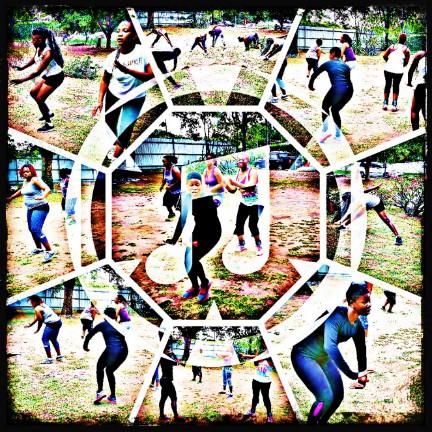
En parallèle de la création d’espaces alternatifs et sécurisants pour que la communauté LBT puisse s’exprimer et pour faire reculer l’homophobie et la transphobie, WE-Change promeut également le souci de soi et le bien-être grâce à des cours de danse, de yoga et des sessions de fitness intensives. Pendant les ‘dancerobics’ par exemple, les participantes ont pu apprendre « des mouvements de danse sur les nouveaux tubes de soca et de dancehall ». Pour célébrer l’amour pendant la #Pride2015, les femmes de WE-Change ont réalisé cette vidéo (en anglais) car #LoveWins (l’amour triomphe) !

Region
Les Caraïbes
Source
WE-Change

WE-Change: Stronger voices of LBT women in the Caribbean

WE-Change: Stronger voices of LBT women in the Caribbean

Across the Caribbean, advocacy for the recognition and fulfillment of Lesbian, Gay, Bisexual and Transgender (LGBT) rights occur in a non-inclusive, homophobic and transphobic context.


Women’s Empowerment for Change (WE-Change), an AWID member since their launch in May 2015, works on raising awareness and defending the rights of lesbian, bisexual and transgender (LBT) women in Jamaica and the Caribbean. The organisation is women-led and community-based. Recognising that LGBT advocacy spaces in the Caribbean are largely dominated by and focused on men - and women are often marginalized -, 20 LBT women founded WE-Change with the aim of strengthening the women’s movement within the LGBT community and increasing the participation of LBT women in social justice advocacy in Jamaica and the region.

“More and more LGBT people [are] standing for their rights, for equality before the law, for equity in social services and protection, and demanding that they be treated with the inherent dignity with which they were born. I am one of those LGBT people. And I remain committed to eliminating all forms of stigma and discrimination against my community in general and against the women in my community in particular.” – Latoya Nugent, Co-founder and Associate Director of WE-Change

Within just a couple of months of existence, the group organised legal literacy training sessions on domestic violence, training of facilitators on responding to and addressing gender-based violence and intimate partner violence, and a training on the Domestic Violence Act. Hosted in partnership with the Jamaica Forum of Lesbians, All-Sexuals and Gays (J-FLAG), watch what these participants had to say.

”WE-Change envisions a society where the rights of every person are recognised, respected, and protected, and where duty bearers and caregivers commit to creating an enabling environment for every person to contribute to the sustainable development of Jamaica.”

While working on creating alternative and safe spaces for the vocalisation of the LBT community and reducing homophobia and transphobia, WE-Change also promotes self-care and wellness through dance, yoga and fitness boot camp classes. During the ‘dancerobics’ for example participants were taught “several dance moves to the tune of new soca and dancehall hits.” And to celebrate love during #Pride2015, the women of WE-Change made this video because #LoveWins!

Region
The Caribbean
Source
WE-Change

WE-Change: Las voces de las mujeres LBT* en el Caribe se escuchan más fuerte

WE-Change: Las voces de las mujeres LBT* en el Caribe se escuchan más fuerte

En todo el Caribe, la incidencia por el reconocimiento y la realización de los derechos de lesbianas, gays, personas bisexuales y trans* (LGBT*) tiene lugar en un contexto excluyente, homofóbico y transfóbico.


Women’s Empowerment for Change [Empoderamiento de las Mujeres para el Cambio, WE-Change], afiliada a AWID desde su creación en mayo de 2015, crea conciencia acerca de los derechos de las mujeres lesbianas, bisexuales y trans* (LBT*) en Jamaica y el Caribe y los defiende. Es una organización de base comunitaria, liderada por mujeres. Veinte mujeres LBT* crearon WE-Change con el objetivo de fortalecer el movimiento de mujeres dentro de la comunidad LGBT* e incrementar la participación de las mujeres LBT* en la promoción y defensa de la justicia social en Jamaica y la región, reconociendo que en el Caribe los espacios de incidencia LGBT* en general están dominados por los hombres, se centran en ellos y suelen marginar a las mujeres.

“Las personas LGBT* cada vez defienden más sus derechos, la igualdad ante la ley, la equidad en los servicios sociales y la protección, y exigen ser tratadas con la dignidad intrínseca con la que nacieron. Yo soy una de esas personas LGBT*. Y tengo un compromiso permanente con la eliminación de todas las formas de estigma y discriminación contra mi comunidad en general y contra las mujeres de mi comunidad en particular”. – Latoya Nugent, Cofundadora y Directora Adjunta de WE-Change

A los pocos meses de haber sido creado, este grupo organizó sesiones de capacitación en nociones básicas de derecho aplicado a la violencia doméstica y sobre la Ley de Violencia Doméstica, además de preparar a facilitadoras para que supieran cómo dar respuesta a y abordar la violencia de género y la causada por la pareja. Para esta actividad se asoció con el Jamaica Forum of Lesbians, All-Sexuals and Gays [Foro Jamaiquino de Lesbianas, Pansexuales y Gays, J-FLAG]; aquí podrás escuchar lo que dijeron las participantes (en inglés).

“WE-Change quiere una sociedad en la que se reconozcan, respeten y protejan los derechos de cada persona, y en la que garantes de obligaciones y proveedores de cuidados se comprometan a crear un ambiente que permita a todas las personas aportar al desarrollo sostenible de Jamaica”.

Al mismo tiempo que procura crear espacios alternativos y seguros en los que la comunidad LBT* pueda expresarse y reducir la homofobia y la transfobia, WE-Change también promueve el autocuidado y el bienestar a través de clases de danza, el yoga y entrenamiento físico (fitness boot camp). Por ejemplo: en la ‘danza aeróbica’, a las participantes se les enseñan “distintos pasos de danza al ritmo de los últimos éxitos de la soca y el dancehall (géneros musicales caribeños)”. Y para celebrar el amor durante #Pride2015 [Orgullo 2015], las mujeres de WE-Change hicieron el video siguiente (en inglés) porque ¡#LoveWins [El amor triunfa]!

Region
El Caribe
Source
WE-Change

El cultivo de 'agroemprendedoras' en Ghana

El cultivo de 'agroemprendedoras' en Ghana

Nana Adjoa Sifa Amponsah, una joven de Ghana, sueña con «una sociedad en la que las jóvenes que se gradúan sientan orgullo de ser 'agroemprendedoras' a cargo de emprendimientos agrícolas y en la que haya una buena relación precio-calidad para los productos de la agricultura a pequeña escala».


Nana confía en que las agroemprendedoras lograrán influir sobre la economía de Ghana e impulsarla, «produciendo alimentos saludables y campesinas ricas».

«Creo firmemente que si hay un sector que puede ayudar a reducir cinco de los problemas más urgentes del mundo —desempleo, inseguridad alimentaria, pobreza, hambre y desnutrición— es la agricultura».

Emprendedora social certificada por el Institute of Social Entrepreneurs [Instituto de Emprendedores Sociales, ahora conocido como Kanthari], Nana tiene experiencia directa de campo en seguridad alimentaria, gestión estratégica y agricultura adquirida en África, Asia y Europa. Con los años, Nana se ha convertido en una experta en gestión de proyectos y ha generado muchos proyectos y programas que ayudan a generar cambios duraderos. También está capacitada en movilización de recursos y en planificación de eventos y proyectos.

En la actualidad, Nana es la Presidenta de Direct Impact Foundation [Fundación Impacto Directo], una organización con sede en Ghana que se propone cerrar la brecha educativa entre las zonas rurales y las urbanas. También es la creadora de Guzakuza, un emprendimiento social que combina la agricultura y el espíritu emprendedor para generar mentalidades agroemprendedoras. Guzakuza es una palabra suajili que significa «cultivar para cambiar vidas». Para Nana, se trata de un enfoque para hacer frente a los problemas más urgentes, al que por su sigla en inglés ella llama ‘la solución ACT’ (incidencia , cooperativas y capacitación).

«La pregunta más importante que hago todo el tiempo es ¿cuál sería el cambio más profundo? ¿Cómo vamos a alimentar a una población que se estima será de 9 mil millones en 2050 si somos todas abogadas, médicas e ingenieras?»

Nana está afiliada a AWID desde comienzos de 2014. Le gusta viajar, escribir y cocinar, y le apasionan la fotografía y la agricultura.


Escucha su “Dream Speech” [Discurso sobre mi sueño] (en inglés) en el que podrás encontrar más información sobre la ‘solución ACT’.

« Cultiver l’agro-entrepreneuriat » au Ghana

« Cultiver l’agro-entrepreneuriat » au Ghana

Nana Adjoa Sifa Amponsah, une jeune femme ghanéenne, rêve d'une « société dans laquelle les jeunes diplômées seraient fières d'être des agro-entrepreneuses – entrepreneuses du secteur agricole – et où la petite agriculture serait rémunérée à sa juste valeur ». Elle est convaincue de la capacité des agro-entrepreneuses à faire évoluer et à stimuler l'économie du Ghana, qui pourrait ainsi « produire une nourriture saine et un secteur agricole prospère ».


« Je suis convaincue du fait que l'agriculture est un secteur qui, à lui seul, peut apporter beaucoup à la résolution des problèmes mondiaux les plus pressants : le chômage, l'insécurité alimentaire, la pauvreté, la faim et la malnutrition. »

Titulaire d'un diplôme d'entrepreneuse sociale de l'Institute of Social Entrepreneurs (aujourd'hui appelé Kanthari), en Inde, Nana possède une expérience de terrain dans les domaines de la sécurité alimentaire, du management stratégique et de l'agriculture en Afrique, en Asie et en Europe. Aujourd'hui, Nana est une experte de la gestion de projet qui a lancé de nombreux projets et programmes visant à l’obtention de changements durables. Elle est également spécialisée dans les activités de levée de fonds et de planification d'évènements et de projets.

Actuellement, Nana est la présidente de la Direct Impact Foundation, une organisation implantée au Ghana qui vise à combler le fossé entre éducation urbaine et éducation rurale. Elle est également à l’initiative de la création de Guzakuza, une entreprise sociale qui a vocation à concilier agriculture et entrepreneuriat pour favoriser l'épanouissement d'une mentalité agro-entrepreneuriale. Guzakuza est un mot swahili que l’on pourrait traduire par « des pépinières qui changent la vie ». Nana y voit une approche susceptible de résoudre les problèmes les plus pressants, approche qu’elle désigne aussi par l’expression « solution PDF » (Plaidoyer, Coopératives et Formation).

« Je reviens toujours à la même question : quel est véritablement le grand changement que nous devons espérer ? Comment allons-nous nourrir une population qui atteindra les 9 milliards de personnes en 2050 si nous sommes tous et toutes des avocat-e-s, des médecins et des ingénieur-e-s ? »

Nana est membre de l'AWID depuis début 2014. Elle adore voyager, écrire et cuisiner. Ses deux grandes passions sont la photographie et l'agriculture.


Écoutez Nana vous présenter ses rêves.

Vous en apprendrez plus sur la « solution PDF » (en anglais).

Growing ‘Agripreneurs’ in Ghana

Growing ‘Agripreneurs’ in Ghana

Nana Adjoa Sifa Amponsah, a young woman from Ghana, dreams of “a society where young women graduates are proud to be ‘agripreneurs’, agricultural entrepreneurs, and where the smallholder farmer gets value for money”.


She is confident that women agripreneurs will influence and drive Ghana's economy, “grow healthy food and wealthy farmers”.

“I strongly believe that agriculture is one single sector that can help reduce five of the world's most pressing problems which are unemployment, food insecurity, poverty, hunger and malnutrition.”

A certified social entrepreneur from the India-based Institute of Social Entrepreneurs (now called Kanthari), Nana has direct field experience in food security, strategic management and agriculture in Africa, Asia and Europe. Over the years, Nana has become a project management expert and has initiated numerous projects and programs that help create lasting change. Nana is also skilled in fundraising and events and projects planning.

Currently, Nana is the President of Direct Impact Foundation in Ghana, an organization aiming to bridge the gap between rural and urban education. She is also an initiator of Guzakuza, a social enterprise committed to combining agriculture and entrepreneurship to create agrpreneurial mindsets. Guzakuza is a Swahili word meaning ‘grow to touch lives’. She sees it as an approach to tackle the most pressing problems, calling it ‘solution ACT’ which stands for Advocacy, Cooperatives, and Training.

“The big question I keep asking is what would be the greatest change? How do we feed the population on track to 9 billion in 2050 if we are all lawyers, doctors and engineers?”

Nana has been a member of AWID since early 2014. She loves to travel, write and cook and is passionate about photography and farming.


Listen to her “Dream Speech” where you can also find out more about ‘solution ACT’.