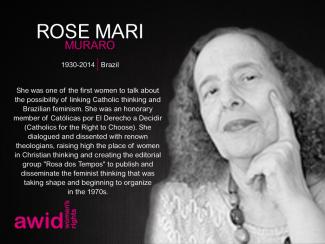
Rose Marie Muraro
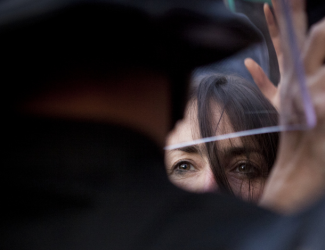
WHRDs are self-identified women and lesbian, bisexual, transgender, queer and intersex (LBTQI) people and others who defend rights and are subject to gender-specific risks and threats due to their human rights work and/or as a direct consequence of their gender identity or sexual orientation.
WHRDs are subject to systematic violence and discrimination due to their identities and unyielding struggles for rights, equality and justice.
The WHRD Program collaborates with international and regional partners as well as the AWID membership to raise awareness about these risks and threats, advocate for feminist and holistic measures of protection and safety, and actively promote a culture of self-care and collective well being in our movements.
WHRDs are exposed to the same types of risks that all other defenders who defend human rights, communities, and the environment face. However, they are also exposed to gender-based violence and gender-specific risks because they challenge existing gender norms within their communities and societies.
We work collaboratively with international and regional networks and our membership
We aim to contribute to a safer world for WHRDs, their families and communities. We believe that action for rights and justice should not put WHRDs at risk; it should be appreciated and celebrated.
Promoting collaboration and coordination among human rights and women’s rights organizations at the international level to strengthen responses concerning safety and wellbeing of WHRDs.
Supporting regional networks of WHRDs and their organizations, such as the Mesoamerican Initiative for WHRDs and the WHRD Middle East and North Africa Coalition, in promoting and strengthening collective action for protection - emphasizing the establishment of solidarity and protection networks, the promotion of self-care, and advocacy and mobilization for the safety of WHRDs;
Increasing the visibility and recognition of WHRDs and their struggles, as well as the risks that they encounter by documenting the attacks that they face, and researching, producing, and disseminating information on their struggles, strategies, and challenges:
Mobilizing urgent responses of international solidarity for WHRDs at risk through our international and regional networks, and our active membership.
par Marianne Mesfin Asfaw
J’ai de nombreux souvenirs émotifs de mon aventure vers le féminisme, mais un en particulier me vient à l’esprit. Je suis alors en études supérieures, à une conférence dans le cadre d’un cours sur la théorie féministe. La conférence porte sur le féminisme africain et la professeure nous parle de l’histoire du panafricanisme et explique en quoi ce mouvement est patriarcal, centré sur les hommes, et comment les universitaires panafricanistes perpétuent l’effacement des femmes africaines. Elle commente la manière dont les contributions des Africaines aux luttes anticoloniales et décoloniales sur le continent ne sont que rarement, voire jamais l’objet de discussions et que l’on ne crédite que rarement les autrices. Nous lisons alors des textes sur des universitaires africaines féministes qui remettent en question cet effacement et mettent en lumière les récits de mouvements et efforts de résistance menés par des Africaines. Cela semble naïf, mais ce qui me paraissait le plus frappant était que l’on puisse juxtaposer les termes « africaine » et « féministe ». Et également que nous étions très nombreuses dans les différents coins du continent à nous débattre avec une histoire, des politiques et des normes sociétales compliquées, que nous envisagions cependant toutes selon le prisme du féminisme. Je suis sortie de cette conférence à la fois émue et complètement chamboulée. Trois de mes amies (toutes féministes africaines) et moi-même sommes sorties discuter du contenu de ce que nous venions d’entendre. Nous étions ébahies par l’excellence de la conférence et du contenu mais, plus que tout encore, nous nous sentions véritablement vues. Et c’est cette sensation qui m’est restée.
Tomber en amour avec le féminisme était époustouflant. C’était comme de finalement pouvoir parler à un coup de cœur de longue date, et de se rendre compte qu’on lui plaît aussi. Je parle de coup de cœur parce qu’au lycée je me disais féministe, tout en sentant que je n’en savais pas assez. Y avait-il une bonne manière d’être féministe? Et si je ne m’y prenais pas bien? Ma première conférence en Études féministes a répondu à toutes ces questions. C’était génial d’apprendre toutes ces histoires de résistance féministe et de démantèlement du patriarcat. Je sentais que je m’affirmais et que j’étais validée, mais je sentais également qu’il manquait quelque chose.
Approfondir ma relation avec le féminisme dans une institution universitaire où la majorité des élèves et du corps enseignant étaient blancs signifiait que pendant ces premières années, nous ne discutions que rarement de la place de la race ou du dénigrement des Noir·es dans les mouvements féministes traditionnels. Dans la plupart des cours, il y avait peut-être une semaine, ou pire une seule séance qui portait sur la race et nous lisions alors généralement un texte de bell hooks ou de Kimberly Crenshaw sur l’intersectionnalité, et peut-être un autre de Patricia Hill Collins. Et la semaine suivante, nous continuions à botter le sujet en touche. Je gérais cette situation en incluant la race et le féminisme noir dans presque tous mes travaux, en écrivant sur les cheveux des Noir·es et la politique de respectabilité, sur l’hypersexualisation du corps des femmes noires, et bien plus encore. Avec le temps, j’ai pris conscience que je tentais de combler une lacune, sans toutefois saisir laquelle.
Découvrir le féminisme africain et en apprendre davantage me permettait de boucler la boucle. Je comprenais que j’avais encore tant de choses à apprendre. Et principalement, que mon africanité et mon féminisme politique n’avaient pas à être écartés. Ils avaient en réalité tant à apprendre l’un de l’autre, et des féministes africaines faisaient déjà ce travail. C’était la pièce manquante et insaisissable lors de mon exploration du féminisme pendant mes années universitaires.
Pour moi, le féminisme est l’antithèse de l’apathie sociale et politique. Il signifie également que dès lors que l’on adopte une optique féministe, plus rien ne peut être pareil. Mes amies et moi parlions de ce que ça fait de mettre des lunettes qu’on ne peut plus jamais enlever, parce que l’on voit le monde pour ce qu’il est, avec tout son désordre. Un désordre qu’on ne peut pas simplement ignorer ou laisser tomber. J’ai donc fait la promesse aux mouvements féministes de ne jamais arrêter d’apprendre, de continuer à étirer les limites de mon empathie et de ne jamais vivre passivement. De dédier davantage de temps et d’espace dans ma vie aux mouvements féministes et de continuer à amplifier, célébrer, documenter et citer les travaux de féministes africaines. Je m’engage également à placer l’attention et le soin au centre de tout et à donner la priorité au plaisir dans cette aventure féministe, parce que nos mouvements en ont besoin pour durer.
Ika Vantiani is an Indonesian artist, curator and crafter based in Jakarta. Her works explores the idea of being a woman in today’s society with the intertwined between media and consumption. Ika uses the discipline of collage and expands it into workshop, installation, and street art. Ika is the member of artist collectives including Micro Galleries, The Collage Club and It’s In Your Hands Collective.
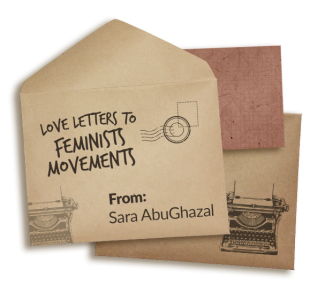
How does a movement start?
we get expelled by ghosts from a house, a family, and a nation
we arrive fatigued to a space (sometimes an actual address) but mainly to a state of being
preceded by a fallen star
perhaps our arrival isn’t accompanied by fatigue,
maybe accompanied by fear
perhaps our arrival isn’t accompanied by fear
maybe accompanied by anger
from issues that keep on repeating themselves:
a stab in the heart (read heartache)
a bullet in the back (read betrayal)
forced disappearances
bodies sentenced by marriage, disfiguration, and chronic fatigue
yet when we arrive, we gather, whisper, speak and weep.
This is how our movements begin when we arrive at each other
We become seeds,
This is how our movements start when we plant each other
Becoming flowers, sometimes just thorns, sometimes fruits,
we are each other’s oasis
to sing for the battles
to make remedies
to place the faces of our lovers, the shape of their smiles, the sound of their laughter
the secret of turning silences into language
the detailed instructions of witches
our movement is: for all of us
when we arrive as seeds with the purpose of flowering.
Sara AbuGhazal
www.badiya.blog
Explora estos proyectos elaborados por los equipos de AWID para promover la defensoría de derechos y perspectivas feministas.
Lorsque des milliers de féministes se réunissent, nous créons une grande force de solidarité qui a le pouvoir de changer le monde. Le Forum de l’AWID sera pour nous un moment de repos et de guérison ensemble, de connexion au-delà des frontières et de découverte de nouvelles orientations stratégiques courageuses.
La date et le lieu seront annoncés l'année prochaine, dès que possible. Nous sommes ravi.es et nous savons que vous le serez aussi. Restez à l'écoute!
Assurez-vous de nous suivre sur les médias sociaux et de vous inscrire à notre liste de diffusion pour rester informé!
Hakima Abbas, AWID
"Nous utilisons les outils dont nous disposons pour partager notre résistance, nos stratégies et continuer à renforcer notre pouvoir d'agir et de créer de nouveaux mondes courageux et justes."
As we are submitting the application almost one year before the actual event.
Yes! Currently the form requests to list presenters even if they are not confirmed yet. We understand that changes are likely to occur within a year.
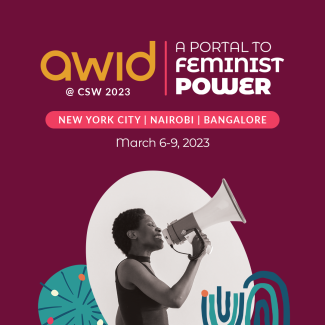
Imagine opening a door which takes you into a conversation with feminist activists in other continents. This portal will transcend the barriers of UN CSW by pushing beyond language barriers, unaffordable travel, unequal protection from COVID19, and racist visa regimes.
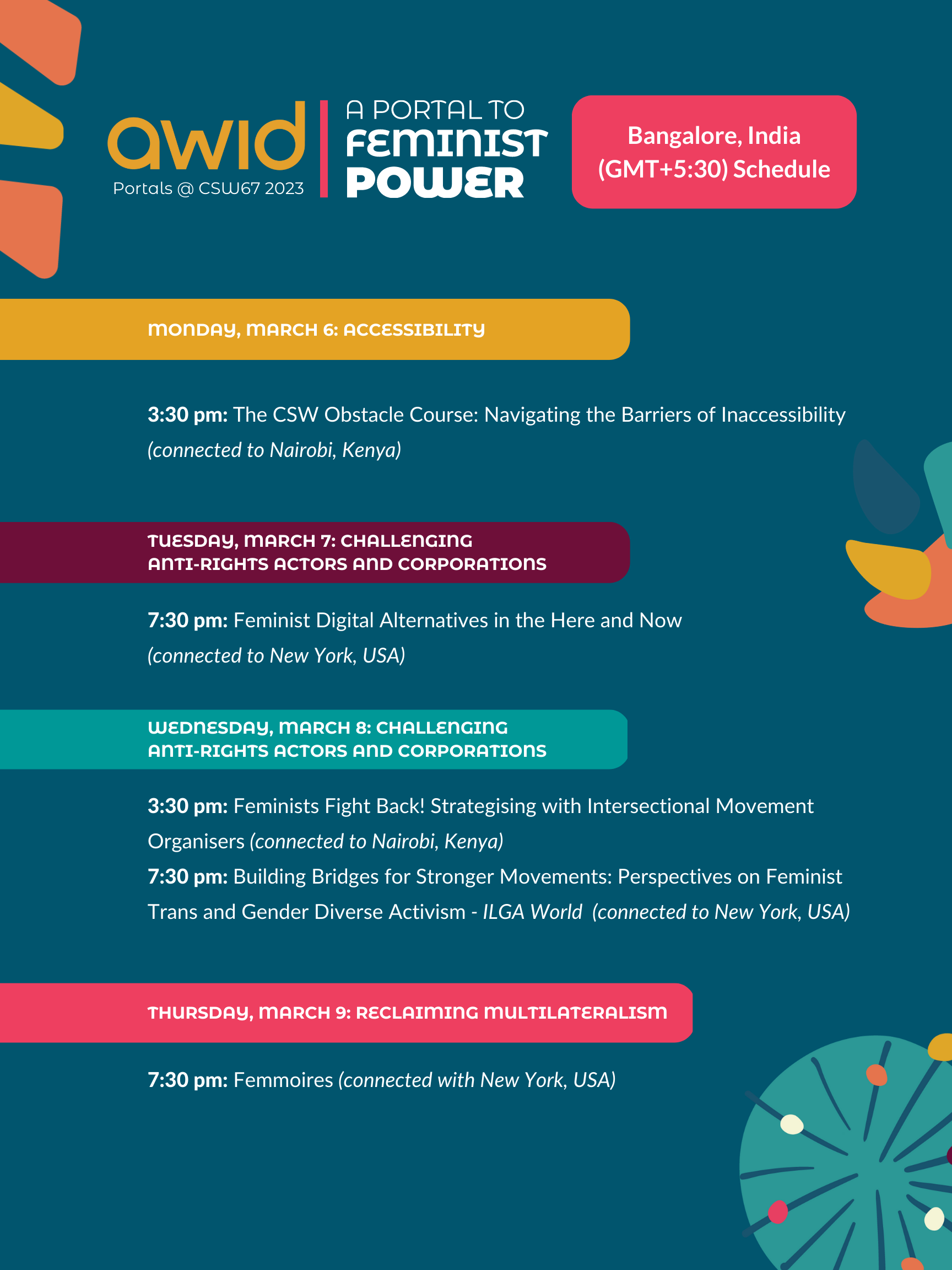
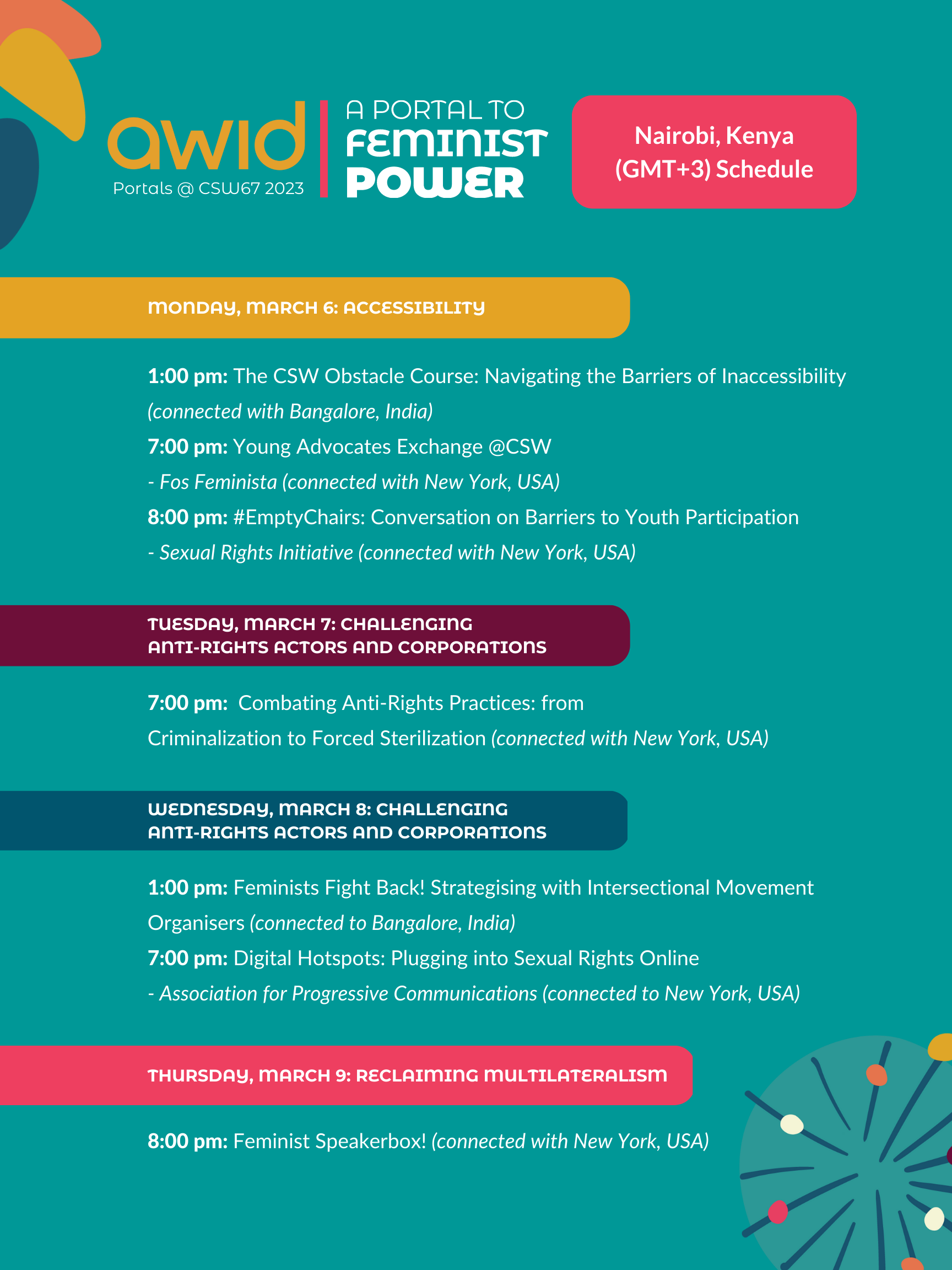
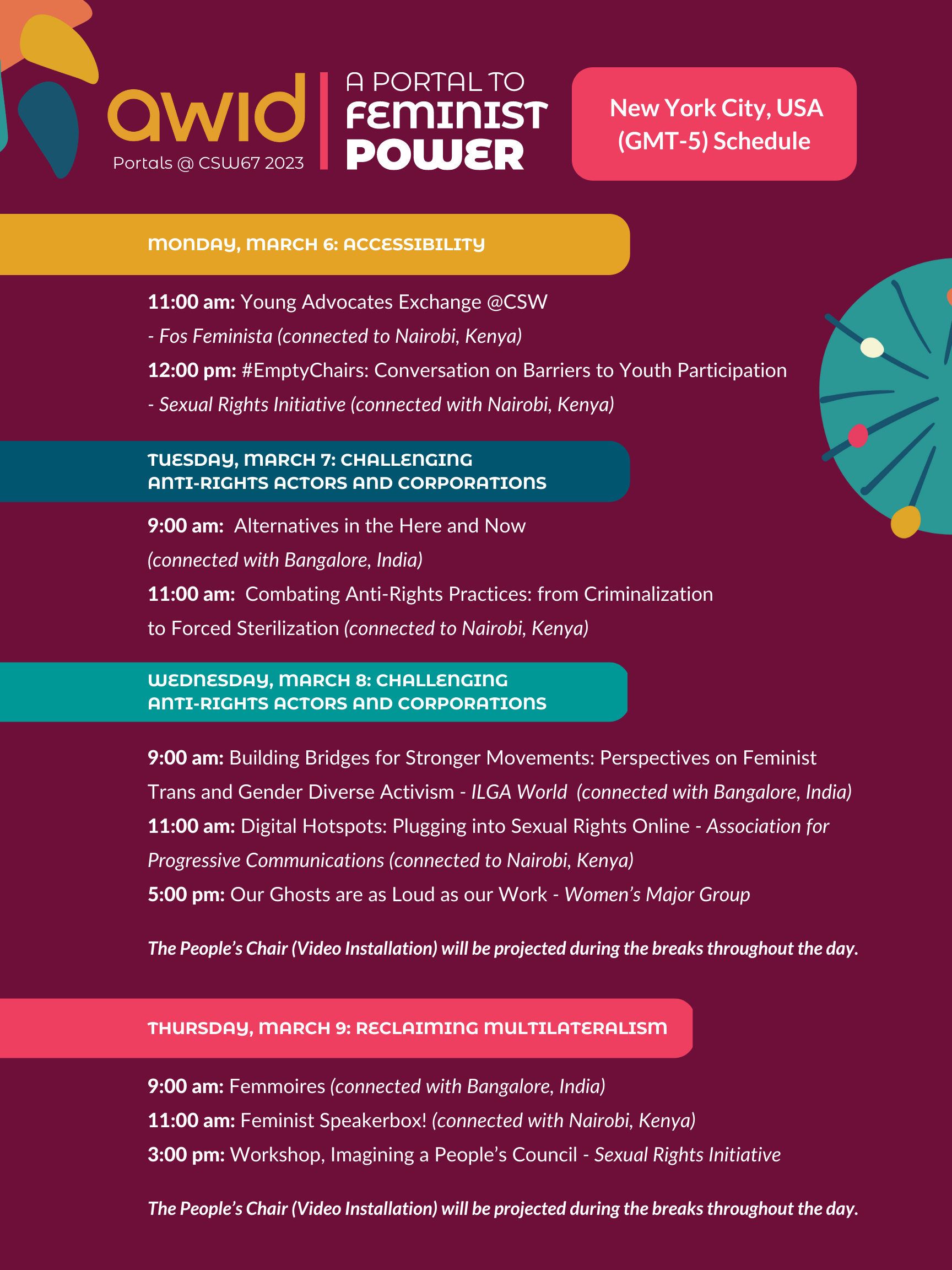
This week, we’re putting a virtual spin on CSW by connecting and amplifying feminist activists' voices, to challenge the discriminatory barriers that limit participation and influence. By setting up connecting “portals” in New York City, Nairobi & Bangalore, we'll host a physical-virtual hybrid space for feminists to connect their struggles and build collective power.
Day 1: March 6 - Accessibility
Day 2: March 7- Challenging Anti-Rights Actors And Corporations
Day 3: March 8 - Challenging Anti-Rights Actors And Corporations
Day 4: March 9- Reclaiming Multilateralism
Download full program here (PDF)
Bangalore Schedule (PNG) Nairobi Schedule (PNG) New York City Schedule (PNG)
 |
Assembly as Pleasure: Weaving Feminist Collaborative ProjectsGhiwa Sayegh, Kohl: A Journal for Body and Gender Research Witchcraft, shamanism and other insurgent knowledge against patriarchySofía Blanco Sixtos, Colectiva Feminista MAPAS |
ภาษาที่ AWID ใช้งานคือ ภาษาอังกฤษ ภาษาฝรั่งเศส และภาษาสเปน โดยภาษาไทยจะถูกเพิ่มเข้ามาในฐานะภาษาท้องถิ่น รวมถึงภาษามือและมาตราการในการช่วยให้เข้าถึงอื่นๆ โดยภาษาอื่นๆอาจถูกเพิ่มเข้ามาหากมีงบประมาณเพียงพอ สามารถเข้ามาดูการอัปเดทว่ามีการเพิ่มภาษาอื่นใดบางได้เรื่อยๆ เราใส่ใจในความยุติธรรมด้านภาษาและจะพยายามให้มีภาษามากที่ที่สุดเท่าที่งบประมาณจะสามารถครอบคลุมได้ เราหวังว่าเราจะสามารถสร้างโอกาสมากมายให้พวกเราสามารถสื่อสารกันหรือนำเสนอในภาษาของตัวเองได้
Esta historia es sobre la manera en que un grupo cada vez más diverso de feministas del Pacífico se organizaron a lo largo de los años para asistir a los Foros de AWID, y el modo en que ese proceso lxs transformó en forma personal, como organizaciones y como movimiento a través de lo que aprendieron, descubrieron y experimentaron. Ilustra la importancia de los Foros como espacio que permitió que una región que tiende a ser marginada o ignorada a nivel global pueda construir una presencia sólida en el movimiento feminista, que luego es replicada en otros espacios internacionales de derechos de las mujeres.
กรุณาคำนวณค่าใช้จ่ายโดยรวมถึงค่าเดินทางมายังกรุงเทพมหานคร ค่าที่พัก ค่าเบี้ยเลี้ยง ค่าวีซ่า ค่าสนับสนุนในการเข้าถึงต่างๆ และอื่นๆ ยังไม่รวมถึงค่าลงทะเบียนที่จะมีการประกาศเร็วๆนี้ โรงแรมในบริเวณสุขุมวิท กรุงเทพฯ มีราคาตั้งแต่ 1,700-6,800 บาทต่อคืน สำหรับการพักสองคน
โดยหากเป็นสมาชิก AWID จะได้รับส่วนลดค่าลงทะเบียน หากคุณยังไม่ได้เป็นสมาชิก เราขอเชิญชวนให้คุณสมัครสมาชิกและเข้าร่วมชุมชนเฟมินิสต์ระดับโลก
Thank you for your interest, but the page you're looking for no longer exists.
You can explore more content and updates at https://www.awid.org.