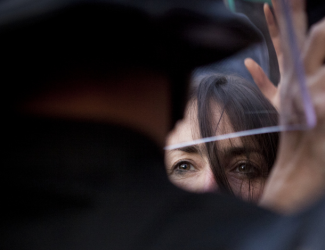
Philippe Leroyer | Flickr (CC BY-NC-ND 2.0)

Special Focus

AWID is an international, feminist, membership organisation committed to achieving gender equality, sustainable development and women’s human rights

Women Human Rights Defenders

WHRDs are self-identified women and lesbian, bisexual, transgender, queer and intersex (LBTQI) people and others who defend rights and are subject to gender-specific risks and threats due to their human rights work and/or as a direct consequence of their gender identity or sexual orientation.

WHRDs are subject to systematic violence and discrimination due to their identities and unyielding struggles for rights, equality and justice.

The WHRD Program collaborates with international and regional partners as well as the AWID membership to raise awareness about these risks and threats, advocate for feminist and holistic measures of protection and safety, and actively promote a culture of self-care and collective well being in our movements.


Risks and threats targeting WHRDs  

WHRDs are exposed to the same types of risks that all other defenders who defend human rights, communities, and the environment face. However, they are also exposed to gender-based violence and gender-specific risks because they challenge existing gender norms within their communities and societies.

By defending rights, WHRDs are at risk of:

  • Physical assault and death
  • Intimidation and harassment, including in online spaces
  • Judicial harassment and criminalization
  • Burnout

A collaborative, holistic approach to safety

We work collaboratively with international and regional networks and our membership

  • to raise awareness about human rights abuses and violations against WHRDs and the systemic violence and discrimination they experience
  • to strengthen protection mechanisms and ensure more effective and timely responses to WHRDs at risk

We work to promote a holistic approach to protection which includes:

  • emphasizing the importance of self-care and collective well being, and recognizing that what care and wellbeing mean may differ across cultures
  • documenting the violations targeting WHRDs using a feminist intersectional perspective;
  • promoting the social recognition and celebration of the work and resilience of WHRDs ; and
  • building civic spaces that are conducive to dismantling structural inequalities without restrictions or obstacles

Our Actions

We aim to contribute to a safer world for WHRDs, their families and communities. We believe that action for rights and justice should not put WHRDs at risk; it should be appreciated and celebrated.

  • Promoting collaboration and coordination among human rights and women’s rights organizations at the international level to  strengthen  responses concerning safety and wellbeing of WHRDs.

  • Supporting regional networks of WHRDs and their organizations, such as the Mesoamerican Initiative for WHRDs and the WHRD Middle East and North Africa  Coalition, in promoting and strengthening collective action for protection - emphasizing the establishment of solidarity and protection networks, the promotion of self-care, and advocacy and mobilization for the safety of WHRDs;

  • Increasing the visibility and recognition of  WHRDs and their struggles, as well as the risks that they encounter by documenting the attacks that they face, and researching, producing, and disseminating information on their struggles, strategies, and challenges:

  • Mobilizing urgent responses of international solidarity for WHRDs at risk through our international and regional networks, and our active membership.

Related Content

Principles of Engagement

Welcome to Crear | Résister | Transform: a festival for feminist movements!

Principles of Engagement

AWID is committed to creating an online space that invites and challenges us all to operate from a place of courage, curiosity, generosity and shared responsibility.

We invite you to co-create spaces with us that are free of harassment and violence, where everyone is respected in their gender identity and expression, race, ability, class, religion, language, ethnicity, age, occupation, type of education, sexuality, body size, and physical appearance. Spaces where we recognize inequalities in our world and strive to transform them in our own interactions with each other.


We want to create a space where ...

  • we can all be present

This means that we are able to listen, understand and relate to each other. To feel close, in spite of it all being virtual.  For this, we will make interpretation available and open channels (like chat and other tools) for you to react and share. To hear each other better, we invite you to wear headphones during the conversation. If it is possible for you , we suggest  that you close your email and any other likely source of distraction while you are in the conversation. 

  • all forms of knowledge are valued

Let us celebrate the multiple ways in which knowledge shows up in our lives. We invite you to approach the conversation with curiosity and openness to learn from others, allowing ourselves to unlearn and relearn through the exchange, as a way to start collectively building knowledge.  

  • all of us feel welcome

We are committed to holistically approaching accessibility by being mindful of different physical, language, mental and safety needs. We want a space that is welcoming of folks from various  backgrounds, beliefs, abilities and experiences. We will be proactive but we also ask that you communicate your needs with us, and we will do our best within our capacity to address these needs.

  • all of us feel safe and respected:

We all commit individually and collectively to respect each other’s privacy and to seek people’s consent before sharing any images or content generated during the conversation that involves them.


Creating a safer, respectful and enjoyable environment for the conversations, is everybody's responsibility.


Reporting

If you notice that someone is behaving in a discriminatory or offensive manner, please contact the reference person who will be indicated at the beginning of the session.

Any participants that express oppressive language or images, will be removed from the call and will not be readmitted. We will not engage with them in any way.

14th AWID international Forum is cancelled (forum page)

Le Forum international de l’AWID est annulé

Étant donnée la situation mondiale, notre Conseil d’administration a pris la décision difficile d’annuler le Forum, qui devait avoir lieu en 2021 à Taipei. 

Lire le communiqué

Будет ли у меня возможность поделиться мыслями по вопросам, которые не учтены в опросе?

Да, в конце опроса мы попросим вас поделиться более подробной информацией по важным для вас аспектам, ответив на открытые вопросы.

Snippet FEA Principles of work Transparency (EN)

A pink umbrella

TRANSPARENCY

Paula Andrea Rosero Ordóñez

“[She] was a person who was characterized by her hard work in favor of the defense of human rights and the construction of peace in Nariño, especially in the municipality of Samaniego-Nariño.”
- Jorge Luis Congacha Yunda for Página10

Paula Andrea Rosero Ordóñez was a trial lawyer in the office of the Public Ministry in Samaniego, Nariño, the main agency defending citizens’ rights in Colombia.

She focused on civil and political rights, issues of impunity and justice, and contributed to uncovering the abuse of power, including corruption. She also participated in peacebuilding projects in her hometown Samaniego, such as the Municipal Peace Council and the Municipal Women’s Board. 

Paula received death threats after exposing the irregular handling of resources and complaining about acts of corruption at the Lorencita Villegas Hospital in the Nariñense municipality. She was murdered on 20 May 2019, when two men approached and shot her at close range. 

Main image
banners-10.png
Body

Upasana Agarwal

Forgotten Song
“Forgotten Song” [«Canción Olvidada»]
Ode to the Moon
“Ode to the Moon” [Oda a la Luna»]
Vapour and Fire
“Vapour and Fire” [«Vapor y Fuego»]

Sobre Upasana Agarwal

Upasana Agarwal
Upasana es unx ilustradorx y artista no binarie de Calcuta, India. Su obra explora narrativas identitarias y personales, que empean restos o evidencias visuales de los contextos con los que trabaja. Le atraen especialmente los diseños en patrones que, para ellx, comunican verdades complejas sobre el pasado, el presente y el futuro. Cuando Upasana no está ilustrando, organiza y dirige un centro de arte comunitario queer y trans de la ciudad.

Contributors of toolkit (WITM landing page)

We would like to thank the contributors and advisors of this toolkit:

  • Angelika Arutyunova
  • Cindy Clark
  • Kamardip Singh
  • Martin Redfern
  • Pei Yao Chen
  • Srilatha Batliwala
  • Veronica Vidal

    Download the Toolkit in PDF

Como é que os dados recolhidos através do questionário serão divulgados e processados?

Os dados serão processados para fins estatísticos para esclarecer o estado de financiamento dos movimentos feministas globalmente e serão divulgados apenas em forma agregada. A AWID não divulgará informações sobre uma organização específica ou informações que permitam identificar uma organização através da respetiva localização ou características sem o respetivo consentimento comprovado.

Snippet FEA Get Involved Story 4 (ES)

¡INVOLÚCRATE!

Sigue a Unión Red Solidaria en Facebook y Twitter

Apoya el trabajo de Solidarity Network Union donando aquí

Sigue a OTRAS en Twitter, Instagram y Facebook

Apoya el trabajo de OTRAS donando aquí

Carol Thomas

Carol Thomas fue una pionera en el trabajo por los derechos sexuales y reproductivos de las mujeres en Sudáfrica. Fue una ginecóloga de gran talento y la fundadora del WomenSpace [EspacioDeMujeres].

No sólo las empleó en su práctica, sino que también abogó por proporcionar formas no tradicionales de asistencia sanitaria a las mujeres, ofreciendo servicios de alta calidad, empáticos y accesibles.

"Ella recibió no sólo la alegría de los embarazos y la llegada de nuevxs bebés, sino también la ansiedad que puede generar la infertilidad, un parto prematuro, el cáncer femenino, así como también la angustia de los abortos espontáneos y lxs mortinatxs". Helen Moffett

Carol pensó en nuevos paradigmas cuyo centro de atención fuesen las necesidades de las mujeres con menor acceso a los servicios y derechos que puede aportar una sociedad:

"El entorno socioeconómico imperante en el que nos encontramos hoy se traduce en una carga desproporcionada de enfermedades y desempleo que las mujeres tienen que soportar... Como mujer negra, desfavorecida en el pasado, tengo una idea clara de lo que está sucediendo en nuestras comunidades". - Carol Thomas

La innovadora y multipremiada empresa social de Carol, "“iMobiMaMa”, utilizaba los quioscos móviles y la tecnología interactiva para conectar directamente a las mujeres con servicios de salud prenatal y reproductiva, información y apoyo en  las comunidades de toda Sudáfrica. 

Carol apoyó a las mujeres tanto en los embarazos deseados como en los no deseados, y fue mentora de muchxs enfermerxs y doctorxs a lo largo de su vida.

Fue calificada, además, como ginecóloga de referencia "para las personas trans que podían recibir de ella una atención afirmativa. Ella supo cómo manejarse cuando muchas personas no tenían todavía en claro el lenguaje o los pronombres. Sus mantas calientes, su capacidad para escuchar y decir lo que necesitabas oír eran muy reconfortantes." -Marion Lynn Stevens.

Carol Thomas falleció el 12 de abril de 2019 a causa de una serie de complicaciones tras un doble trasplante de pulmón, en el punto más álgido de su carrera profesional.

Los homenajes que llegaron después de su muerte inesperada se refieren a ella de muchas formas: como " modelo a seguir, mujer guerrera, innovadora, líder dinámica, rompe-moldes, dínamo, científica brillante, doctora compasiva".

Sin duda, Carol Thomas será recordada y honrada por ser todo esto y mucho más.

Comprendre le contexte des menaces antidroits

Chapitre 2

Bien plus de la moitié de la population mondiale est aujourd’hui dirigée par l’extrême droite. C’est sur cette toile de fond que défenseur·e·s des droits humains et féministes luttent pour « tenir bon », protéger le multilatéralisme et le système international des droits humains, alors que leurs engagements les exposent à de violentes répressions. Ces institutions sont cependant de plus en plus soumises aux intérêts du secteur privé. Les grandes entreprises, surtout les sociétés transnationales, siègent à la table des négociations et occupent des fonctions de leadership dans plusieurs institutions multilatérales, l’ONU notamment. Le lien entre ultranationalisme, restriction de l’espace civique et emprise des entreprises a un impact considérable sur la réalisation ou non des droits humains pour tout le monde.

Protester holding a flyer that reads "Danger - Trump and the Far Right."
© Alisdare Hickson / Flickr
Danger - Trump and the Far Right.

Sommaire

  • Nationalisme et ultranationalisme
  • Emprise des entreprises : le pouvoir débridé des entreprises met nos droits en danger
  • Répression et restriction des espaces civiques pour les activistes féministes et les défenseur·e·s des droits humains des femmes et des personnes LGBTIQ+
  • Histoire du mouvement de la résistance. L’Article 16 de la CEDAW : vers une réforme des codes de la famille discriminatoires dans les contextes musulmans
     

Lire le chapitre complet >

FRMag - United against violence (ES)

Juntas contra la violencia

por Karina Ocampo

A un rincón escondido de Chiapas, México, llegamos mujeres y disidencias sexuales para organizar nuestras acciones. (...)

Leer

< arte: «Proyecto fotográfico: La muerte sale por el Oriente», de Sonia Madrigal

حالة التمويل للحركات النسوية ووقائعها تتغير بسرعة. هل هذا الاستطلاع لمرة واحدة؟

كلا. يبني هذا الاستطلاع على المعلومات التي حشدتها جمعية حقوق المرأة في التنمية حول كيفية الحصول على تمويل أكبر وأفضل للحركات النسوية وحركات التغيير الاجتماعي وهذه الدورة الثالثة لاستطلاع "أين التمويل للتنظيمات النسوية". نهدف للقيام بالاستطلاع مرة كل ثلاثة أعوام.

Snippet FEA We are living in a world right (FR)

Nous vivons dans un monde où la destruction de la Nature alimente notre économie mondiale actuelle. Même en période de crise climatique, les gouvernements continuent d'encourager les industries agricoles à grande échelle à se développer. Ces activités empoisonnent la terre, menacent la biodiversité et détruisent la production alimentaire et les moyens de subsistance locaux. Pendant ce temps, alors que les femmes produisent la majorité de la nourriture dans le monde, elles ne possèdent presque aucune terre.

Et si nous percevions la terre et la Nature non pas comme une propriété privée à exploiter, mais comme une totalité avec laquelle vivre, apprendre et coexister harmonieusement ? Et si nous réparions nos relations avec la terre et adoptions des alternatives plus durables qui nourrissent à la fois la planète et ses communautés?

Nous Sommes la Solution (NSS) est l'un des nombreux mouvements dirigés par des femmes qui s'efforcent d'atteindre cet objectif.

Voici leur histoire.

Mereani Naisua Senibici

Mereani Naisua Senebici, que l’on appelait aussi « Sua », a été membre de l’Association des jeunes femmes chrétiennes (YWCA) des Fidji pendant de longues années.

En plus d’avoir travaillé avec divers groupes de femmes dans des contextes multiraciaux, ruraux et urbains, elle s’est impliquée dans le soutien et la promotion des droits des femmes et des jeunes femmes.

Au YWCA de Lautoka, elle travaillait avec des femmes d’origine indienne et comptait parmi les pionnières du développement de la pratique sportive et la participation des femmes et athlètes trans localement.

« Les membres du YWCA des Fidji ont profondément aimé Sua pour son dévouement et son soutien inébranlable envers tous les efforts déployés par l’organisation » – Tupou Vere

Mereani faisait partie de la House of Sarah (HoS), une initiative de l’Association of Anglican Women (AAW) lancée en 2009, un organisme de sensibilisation autour des violences basées sur le genre et de soutien des femmes victimes de violence. Ayant commencé sa pratique en tant que bénévole dévouée, elle offrait notamment son soutien aux femmes dans tout le Pacifique.
Mereani s’est éteinte en 2019.

« Une personne qui aimait les gens, qui était présente sur tous les fronts de l’autonomisation des femmes et du travail du mouvement au niveau communautaire. Repose en paix, Sua. » – Tupou Vere

The Crear, Résister, Transform Story by Coumba Toure

A magical experience of feminist story telling led by pan-African feminist Coumba Toure, performing in the age old tradition of West African griots.

And we gathered again 
We gathered our stories our strength 
our songs
our tears 
our rage 
our dreams 
our success
our failures
And we pull them all together 
In one big bowl to share 
for a moon of thoughts 
And we stay in touch 
We shake each others minds 
we caress each other souls
While our hands still are tied 
And our kisses and hugs are banned 
Yet we grow stronger by the hour 
Weaving together our voices
Crossing the sound barriers 
as we speak in tongues 

We are getting louder and louder 
We know about differences from others 
and from each other so we are stitching our beauties into patchwork or thoughts
From our deepest learnings from our powers 
Sometimes we are surrounded by terror 
by confusions by dishonesty
But we wash out in the Ocean of love 
We are weavers of dreams 
To clothes or new world 
Thread after thread
As small as we are
Like little ants building our movement
Llike little drops building our rivers
 We take steps forward and steps backward 
Dancing our way back to sanity 
Sustain to the rhythm of our hearts keep 
Beating please don't not stop
And we are here transmitter of forgotten generosity 
drop after drop growing like the ocean 
growing like the river flowing from our souls .
showing our strength  to be  the  water 
that will clean this world
and we are gathering again can you feel us 
I would lie if I say I said I am 
Ok not to see you I do miss my people 
I miss your touch and
You unfiltered and unrecorded voices 
I miss our whispers and our screams 
Our cries of the aborted revolution 
We only want to give birth to new worlds 
 So fight to erase the borders between us 


And we gathered again 
We gathered our stories our strength 
our songs
our tears 
our rage 
our dreams 
our success
our failures
And we pull them all together In one big bowl to share 
For a moon of thoughts 
And we stay in touch 
We shake each others minds 
we caress each other souls
While our hands still are tied 
And our kisses and hugs are banned 
Yet we grow stronger by the hour 
Weaving together our voices
Crossing the sound barriers 
as we speak in tongues 
We are getting louder and louder 
We know about differences from others 
and from each other so we are stitching our beauties into patchwork or thoughts
From our deepest learnings from our powers Sometimes we are surrounded by terror by Confusions by dishonesty
But we watch out in the Ocean of love 
We are weavers of dreams 
To clothes or new world 
Thread after thread 
As small as we are like little ants building our movements
 like little drops building our rivers We take steps forward and steps backward 
dancing our way back to sanity 
Sustain to the rhythm of our hearts
keep beating please don't not stop
And we are here transmitter of forgotten generosity 
Drop after drop growing like the ocean 
growing like the river flowing from our souls 
showing our strength to be  the  water 
that will clean this world  
and we are gathering again can you feel us 
I would lie if I I said I am Ok
not to see you
I do miss my people
I miss your touch and
You unfiltered and unrecorded voices  
I miss  our  whispers  and  our screams 
Our cries over the aborted revolutions 
We only want to give birth to new worlds 
So fight to erase the borders between us 
Please don’’t stop