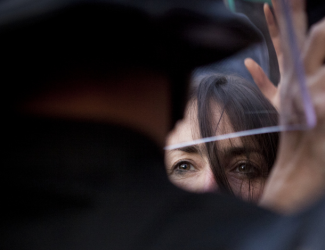
Philippe Leroyer | Flickr (CC BY-NC-ND 2.0)

Special Focus

AWID is an international, feminist, membership organisation committed to achieving gender equality, sustainable development and women’s human rights

Women Human Rights Defenders

WHRDs are self-identified women and lesbian, bisexual, transgender, queer and intersex (LBTQI) people and others who defend rights and are subject to gender-specific risks and threats due to their human rights work and/or as a direct consequence of their gender identity or sexual orientation.

WHRDs are subject to systematic violence and discrimination due to their identities and unyielding struggles for rights, equality and justice.

The WHRD Program collaborates with international and regional partners as well as the AWID membership to raise awareness about these risks and threats, advocate for feminist and holistic measures of protection and safety, and actively promote a culture of self-care and collective well being in our movements.


Risks and threats targeting WHRDs  

WHRDs are exposed to the same types of risks that all other defenders who defend human rights, communities, and the environment face. However, they are also exposed to gender-based violence and gender-specific risks because they challenge existing gender norms within their communities and societies.

By defending rights, WHRDs are at risk of:

  • Physical assault and death
  • Intimidation and harassment, including in online spaces
  • Judicial harassment and criminalization
  • Burnout

A collaborative, holistic approach to safety

We work collaboratively with international and regional networks and our membership

  • to raise awareness about human rights abuses and violations against WHRDs and the systemic violence and discrimination they experience
  • to strengthen protection mechanisms and ensure more effective and timely responses to WHRDs at risk

We work to promote a holistic approach to protection which includes:

  • emphasizing the importance of self-care and collective well being, and recognizing that what care and wellbeing mean may differ across cultures
  • documenting the violations targeting WHRDs using a feminist intersectional perspective;
  • promoting the social recognition and celebration of the work and resilience of WHRDs ; and
  • building civic spaces that are conducive to dismantling structural inequalities without restrictions or obstacles

Our Actions

We aim to contribute to a safer world for WHRDs, their families and communities. We believe that action for rights and justice should not put WHRDs at risk; it should be appreciated and celebrated.

  • Promoting collaboration and coordination among human rights and women’s rights organizations at the international level to  strengthen  responses concerning safety and wellbeing of WHRDs.

  • Supporting regional networks of WHRDs and their organizations, such as the Mesoamerican Initiative for WHRDs and the WHRD Middle East and North Africa  Coalition, in promoting and strengthening collective action for protection - emphasizing the establishment of solidarity and protection networks, the promotion of self-care, and advocacy and mobilization for the safety of WHRDs;

  • Increasing the visibility and recognition of  WHRDs and their struggles, as well as the risks that they encounter by documenting the attacks that they face, and researching, producing, and disseminating information on their struggles, strategies, and challenges:

  • Mobilizing urgent responses of international solidarity for WHRDs at risk through our international and regional networks, and our active membership.

Related Content

Snippet - Homepage CSW69_EN

AWID at CSW69 Beijing+30 | #FreezeFascisms

Our collective presence disrupts institutional practices of exclusion in such spaces while supporting movements to organize around feminist alternatives to systems of oppression.

Join the conversations from March 10-21, 2025, as we collectively transform CSW69 into spaces for and about resistance and solidarity.

Learn more

Leila Hessini

Biography

Leila is a transnational feminist leader, strategist, and advisor with over 25 years of organizing, advocacy and philanthropic experience advancing human rights, gender equality, and sexual and reproductive rights and justice.  She was born in Algeria and educated in the U.S., France, and Morocco; over her professional career, she has lived and worked in forty countries across Africa, Europe, Latin America and Asia.  Leila currently serves as a Senior International Fellow at the Asfari Institute for Civil Society and Citizenship at the American University of Beirut in Lebanon and as Senior Strategist for various feminist movements and organizations as well as the the Urgent Action Fund-Africa and Trust Africa on an initiative on Reimagining Feminist and Pan-African Philanthropies.
 
From 2017-2023, Leila held the position as Vice-President of Programs at Global Fund for Women where she oversaw its strategic grantmaking, movement-strengthening, global advocacy and philanthropic collaborations. At GFW, she doubled its grantmaking to over $17 million, launched its feminist and gender-based movements and crises work, created an adolescent girls program led by a girls’ advisory council and led its philanthropic advocacy work.  Prior to that she served on the senior leadership team of Ipas from 2002 to 2016 where she published extensively on abortion rights and justice, lead global advocacy efforts and partnered with feminist groups working on self-management, community strategies and stigma reduction around bodily integrity and sexual and reproductive rights.
 
Leila is currently researching shifts in the philanthropic sector including recognizing non-institutional practices of giving resources in the Global South and efforts to decolonize practices in the Global North.  She has written extensively on the political nature of veiling across North Africa and the Middle East, abortion practices in majority Muslim contexts and feminist approaches to sexual and reproductive health, rights and justice.
 
Leila holds an MPH in public health and a MA in Middle Eastern and North African Studies, studied Islamic law in Morocco and pursued doctoral studies in sociology in France. She studied Arabic and speaks French and English fluently.  She is a mother of two feminist young women, an avid scuba diver, mountain bike rider, skier, and outdoor enthusiast.

Position
Co-Treasurer
Add to stories
Off

Snippet Forum Stories Gen Intro (ES)

¿Qué significa un Foro de AWID para las personas que estuvieron ahí? ¿Qué es esta magia que sucede cuando feministas de todo el mundo se reúnen para celebrar, elaborar estrategias, aprender y compartir la alegría?

AWID habló con más de cuarenta participantes del Foro para oír sus historias de las transformaciones que experimentaron ellxs mismxs como activistas, y que también cambiaron a sus organizaciones y a los movimientos a los que pertenecen. También aprendimos sobre qué cosas deberíamos mantener y desarrollar para que un Foro de AWID sea diferente, y de qué manera podemos mejorar.

Este informe contiene aprendizajes y consejos invaluables para cualquier persona que quiera organizar encuentros presenciales regionales y temáticos, y para nosotrxs en nuestro trabajo de planificación del 15° Foro Internacional de AWID.

¡Desliza para que descubras más!

Ayanda Denge

«Soy una maravilla... ¡Por lo tanto, he nacido de una madre! Cuando comienzo a balbucear, Mi vida ha sido como ninguna otra...» - Ayanda Denge (lee el poema completo más abajo)

Ayanda Denge fue unx mujer trans, trabajadorx sexual, activista, poeta. Era una xhosa de Puerto Elizabeth, en el Cabo Oriental de Sudáfrica. Después de viajar por diferentes ciudades del país, se mudó a Ciudad del Cabo.

Como comprometida y ferviente activista por la justicia social, luchó por los derechos de lxs trabajadorxs sexuales, de las personas trans y de quienes viven con VIH y SIDA. Era también conferencista motivacional para concientizar sobre el cáncer, y hacía campaña por viviendas sociales económicas, en especial, para la gente pobre y de clase trabajadora. Ayanda se erguía, alta como una montaña, contra los distintos y, a menudo, abusivos rostros de la discriminación.

«Ser transgénero no es una dosis doble, sino una dosis triple de estigmatización y discriminación. Te discriminan por tu identidad sexual, te discriminan por tu trabajo, y te discriminan por tu estatus de VIH.» - Ayanda Denge, 2016

Ayanda presidía la organización Sex Workers Education and Advocacy Taskforce (SWEAT) [ Grupo de Trabajo para la  Educación y la  Defensa de Trabajadorxs Sexuales], y trabajaba también como coordinadora de promoción comunitaria en Sisonke, un movimiento nacional de trabajadorxs sexuales de Sudáfrica.

«Desde nosotrxs, desde nuestra sede regional, hasta SWEAT, de la que integro la Junta Directiva, o hasta Sisonke, un movimiento de trabajadorxs sexuales de Ciudad del Cabo,   todxs nos amalgamamos, tenemos un solo grito y es un grito que  ha sido reconocido internacionalmente por lxs trabajadorxs sexuales internacionales. Queremos la descriminalización del trabajo sexual.» - Ayanda Denge, 2016

Vivía en la Ahmed Kathrada House, que estaba siendo ocupada por la campaña Reclaim the City [Recuperar la Ciudad] en favor de las viviendas sociales. En 2018, Ayanda fue elegida líder de la casa. El 24 de marzo de 2019 fue apuñalada en su habitación. El año anterior, otrx residente había sido asesinadx.

Reclaim the City señala una conexión entre la seguridad de lxs residentes de la casa, el corte del servicio de electricidad por parte del gobierno provincial, y el derecho humano al agua:

«No podemos separar la seguridad de las mujeres y de las personas LGBTQI que están viviendo en la casa ocupada de la negativa a reestablecer los servicios de electricidad y agua en la Ahmed Kathrada House por parte del gobierno de la Provincia del Cabo Occidental.

De noche, la casa está completamente oscura. Necesitamos luces para protegernos unxs a otrxs. Es como si la Provincia quisiera castigar a la gente pobre y de clase trabajadora, cuyo único crimen es necesitar un hogar. Si bien pueden estar en desacuerdo con nuestros motivos por ocuparla, deberían avergonzarse de priorizar la política en detrimento de la seguridad y la dignidad de lxs residentes de esta ciudad.

Descansa en paz, camarada Ayanda Denge. Te recordaremos mientras mantenemos viva la llama de la lucha por una vivienda decente y bien ubicada.»

Poema de Ayanda:

Soy una maravilla…
¡Por lo tanto, nací de una madre!
Cuando comienzo a balbucear,
Mi vida ha sido como ninguna otra.
Nacida en el dolor
Nutrida por la lluvia
Para mí ganar
Era vivir en un desagüe.
Mientras se me cae una lágrima
Me pongo de pie y empuño mi lanza.
Las voces hacen eco, no temas
Habrá desafíos dentro del año,
Desafíos de daño se ciernen sobre mí;
La comunidad aplaude porque asume que he ganado mi carrera;
Pero en realidad mi trabajo avanza a paso de tortuga;
De rodillas me inclino y pido gracia.
Porque el Señor
Es mi espada
Para recordar a la humanidad
Que Él brinda cordura.
¿Por qué Señor soy esta maravilla?
El Señor me responde con la lluvia y el trueno,
Por cuestionar a mi padre
Que tiene en el libro de los corderos
Un nombre llamado Ayanda.
Desde las calles mi vida nunca fue dulce
La gente que tenía que encontrar;
A veces yo nunca saludaba,
Aun a pesar de que tenía que comer;
Optaba por inclinarme
En lugar de sentarme

Escucha el poema en la voz de Ayanda

«Porque mi vida representa la de una flor de loto, ya que de las turbias y turbulentas aguas florecí para ser hermosa y fuerte...» - Ayanda Denge, mira y escucha


Tributos:

«Ayanda, quiero decirte que todavía eres una sobreviviente, en nuestros corazones y nuestras mentes. Te has ido, pero estás en todas partes, porque eres amor. Qué hermoso es ser amadx, y dar amor. Y Ayanda, ese es el regalo que nos has dado. Gracias por todo el amor, verdaderamente te necesitábamos. De ahora en adelante, te prometo que todxs nos comprometeremos a continuar la lucha a la que tanta energía y tiempo dedicaste. Y nos comprometeremos a  buscar justicia por este horrible final de tu vida.» - transcripción de un mensaje en un tributo de despedida a Ayanda

«Ayanda era una activista por naturaleza. Sabía cuáles eran sus derechos y no le importaba pelear por los derechos de otrxs. Para mí, no fue una sorpresa que se involucrara en muchas organizaciones, y era sabido que era una persona de la gente. Ella representaba no solo los derechos de las personas LGBTI, representaba los derechos de todxs.» - hermana de Ayanda


FRMag - The Story of An Unhappy Tale

The Story of An Unhappy Tale

by Gabriela Estefanía Riera Robles

Juliana. How I would love to be called Juliana! The name is full of power and presence, full of force and vehemence. (...)

Read

< artwork by Borislava Madeit and Stalker Since 1993

Snippet - Section Two Funding Resources in One Place - EN

A Universe of Funders & Funding Commitments

Fatima Qureshi

Biography

Culturellement nomade, née à Hong Kong et enracinée dans un héritage turco-pakistanais, l'amour de Fatima pour les récits - tant pour les lire que pour les cocréer - a alimenté sa passion pour l'activisme à travers la communication. Forte de sa formation en journalisme, Fatima a travaillé pendant 7 ans dans les domaines de la communication numérique et médiatique avec des ONG qui offrent des opportunités d'éducation et de l’aide juridique aux réfugié·e·s et demandeur·se·s d'asile, ainsi qu'avec le mouvement féministe musulman qui applique une perspective féministe et fondée sur les droits dans la compréhension et la quête d’égalité et de justice au sein de la tradition juridique musulmane. Elle rédige régulièrement des tribunes sur les questions féministes dans les pays du Sud.

Grâce à la narration dans cette ère ultra digitale des réseaux sociaux, Fatima continue de collaborer avec des animateur·rice·s communautaires et des activistes de terrain pour créer du contenu audiovisuel dans le but de cultiver des ponts de compréhension vers la libération collective et la décolonisation. Les jours où elle ne travaille pas, elle regarde attentivement des films féministes indépendants venant d’Iran, du Maroc et du Pakistan, et les autres jours elle interprète de la poésie orale avec ses camarades à Kuala Lumpur.

Position
Responsable des communications numériques et des partenariats de l'ICM
Add to stories
Off

Snippet AWID Forum Location Announcement Title (EN)

Announcing the AWID Forum Date & Location

Club de Cine Feminista - Club de Cine Feminista

Ya está disponible nuestro primer programa del Club de Cine Feminista: «Tenderness is the Sharpest Resistance» [«La ternura es la resistencia más intensa»], que es una serie de películas sobre realidades feministas de Asia-Pacífico curada por Jess X. Snow.

MIRAR

Snippet2 - WCFM Regional focus: - EN

globe icon

Regional focus:

Filter for funders that support initiatives in your geographical area.

Faten Nabhan

Add to stories
Off

Snippet Discover Forum Stories (ES)

This image is in the cover of the Forum Stories report. It shows 4 overlapping speech bubles, yellow, pink, purple and turquoise. Each contains the illustration of one or two people in conversation.

Los movimientos feministas han cambiado y se han adaptado enormemente desde la última vez que nos reunimos de esta manera - así que para recordar por qué son importantes los Foros de AWID, pedimos a activistas de todo el mundo que reflexionaran y compartieran sus historias, impresiones y recuerdos. Esto es lo que aprendimos.

Descubre las historias del foro 

Film club - The Turtle's rage

La carapace de mon père (2012) Allemand | Arabe avec sous-titres anglais

LA CARAPACE DE MON PÈRE raconte l'histoire d'un homme mystérieux dont la vie a été modelée par la fuite, l’expulsion, la vie en exil et un retour raté en Palestine. Le film comporte la quête d’une fille cherchant à obtenir des réponses de la part de son père.


Discussion en direct avec Pary El-Qalqili, réalisatrice de « La carapace de mon père » 

Snippet - Take the quiz

Take the Quiz!

"Where is the money for feminist organizing?"

How much do you know about feminist resourcing? 📊 Take AWID's "Where is the Money for Feminist Organizing?" quiz to test your knowledge:


Take the quiz onlineDownload and print it


Who are AWID's members?

A dynamic network of people around the world, AWID members are researchers, academics, students, educators, activists, business people, policy-makers, development practitioners, funders, and more. Our members - of every age - are those who make AWID a unique global feminist association.

Membership with AWID is open to anyone who shares our values

We offer different types of memberships geared to income level and whether you are an individual or an organization. Currently we have over 5000 members, individual and institutional, from 164 countries.

Our members are an important part of our work

We collaborate for advocacy on specific issues, members vote in elections for our Board, and can also participate in and contribute to our Priority Areas through webinars, surveys, or urgent actions, for example.

Our institutional membership draws from a broad range of organizations interested in advancing gender justice and women’s human rights, including women’s rights organizations, from the local to the global levels, grassroots networks, major international institutions, government departments, university programs and more. 63% of our members are from the global South and 38% are under the age of 30.

Learn more about our membership

Quelles mesures seront mises en place pour protéger la santé publique et contenir les risques d'épidémie de la Covid19 ?

Nous surveillons attentivement ce risque parmi d'autres, et nous publierons des informations détaillées concernant la santé et la sécurité dès l'ouverture des inscriptions afin que vous puissiez prendre une décision en toute connaissance de cause. En outre, le format hybride est conçu de façon à offrir une expérience de participation significative aux personnes qui préféreront ne pas voyager ou qui ne sont pas en mesure de le faire.