
Lorraine Gradwell
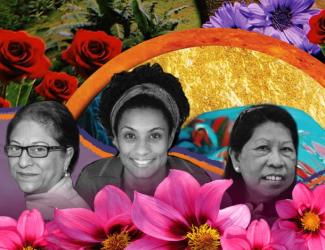
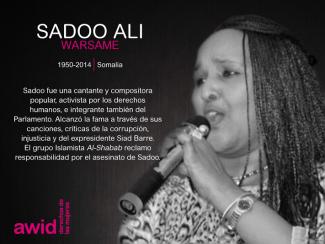
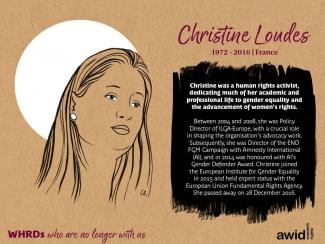
AWID’s Tribute is an art exhibition honouring feminists, women’s rights and social justice activists from around the world who are no longer with us.
This year’s tribute tells stories and shares narratives about those who co-created feminist realities, have offered visions of alternatives to systems and actors that oppress us, and have proposed new ways of organising, mobilising, fighting, working, living, and learning.
49 new portraits of feminists and Women Human Rights Defenders (WHRDs) are added to the gallery. While many of those we honour have passed away due to old age or illness, too many have been killed as a result of their work and who they are.
This increasing violence (by states, corporations, organized crime, unknown gunmen...) is not only aimed at individual activists but at our joint work and feminist realities.
The portraits of the 2020 edition are designed by award winning illustrator and animator, Louisa Bertman.
AWID would like to thank the families and organizations who shared their personal stories and contributed to this memorial. We join them in continuing the remarkable work of these activists and WHRDs and forging efforts to ensure justice is achieved in cases that remain in impunity.
“They tried to bury us. They didn’t know we were seeds.” - Mexican Proverb
It took shape with a physical exhibit of portraits and biographies of feminists and activists who passed away at AWID’s 12th International Forum, in Turkey. It now lives as an online gallery, updated every year.
To date, 467 feminists and WHRDs are featured.
Metzineres

To strengthen our collective voice and power for more and better funding for feminist, women's rights, LBTQI+ and allied organizing globally
The solidarity economy (including cooperative economy and gift economy) is an alternative framework that is allowing for different forms in different contexts, open to continual change.
This framework is grounded in the principles of:
The producers in a solidarity economy develop economic processes that are intimately related to their realities, preservation of the environment and mutual cooperation.
According to feminist geographer Yvonne Underhill-Sem, the gift economy is an economic system in which goods and services flow between people without explicit agreement of their value or future reciprocity.
Behind gifting is human relationship, generation of goodwill, and attention to the nurturance of the whole society and not just one’s immediate self and family, it is about the collective.
For example, in the Pacific region, this includes: collecting, preparing, and weaving terrestrial and marine resources for mats, fans, garlands, and ceremonial items; and raising livestock and storing seasonal harvests.
The incentives for women to be involved in economic activities are diverse, ranging from the fulfillment of career aspirations and making money for a long-term comfortable life to making money to make ends meet, paying off debt, and escaping from the drudgery of routine life.
To accommodate the diverse environments that women operate in, the concept of solidarity economy is in continual development, discussed and debated.
|
383 personnes. |
El 11 de julio de 2024, tuvimos una conversación increíble con grandes feministas sobre el estado del ecosistema de financiación y el poder de la investigación "¿Dónde está el dinero?".
Le agradecemos de manera especial a Cindy Clark (Thousand Currents), Sachini Perera (RESURJ), Vanessa Thomas (Black Feminist Fund), Lisa Mossberg (SIDA) y Althea Anderson (Hewlett Foundation).
Recuerda: ¡la encuesta permanecerá abierta hasta el 31 de agosto de 2024!
La crisis económica global actual ofrece claras evidencias de que las políticas económicas de las últimas tres décadas no han funcionado.
La devastación causada por la crisis en los hogares más vulnerables del Norte y del Sur Globales nos recuerda que la formulación de políticas económicas y la realización de los derechos humanos (económicos, sociales, políticos, civiles y culturales) han estado separados durante demasiado tiempo. Las políticas económicas y los derechos humanos no tienen por qué ser fuerzas opuestas sino que pueden existir de manera simbiótica.
Las políticas macroeconómicas afectan el funcionamiento de la economía en su totalidad, e influyen sobre la disponibilidad y la distribución de los recursos. En este contexto, las políticas fiscales y monetarias son fundamentales.
Estas políticas afectan los principales precios como las tasas de interés y de cambio que a su vez influyen de manera directa sobre otros elementos como el nivel de empleo, el acceso a créditos que se puedan pagar y el mercado de la vivienda.
Aplicar un marco de referencia de derechos humanos a las políticas macroeconómicas les permite a los Estados cumplir mejor con su obligación de respetar, proteger y promover los derechos económicos y sociales. Los derechos humanos son estándares universales que gozan de consenso internacional. Estas normas legales se expresan en tratados de Naciones Unidas como la Declaración Universal de Derechos Humanos (DUDH), el Pacto Internacional sobre Derechos Civiles y Políticos (PIDCP) y el Pacto Internacional sobre Derechos Económicos, Sociales y Culturales (PIDESC).
El artículo 1 de la DUDH dice que «Todos los seres humanos nacemos libres e iguales en dignidad y derechos».
Aunque la DUDH fue escrita hace más de seis décadas, su relevancia perdura. Muchas de las ideas que expresa se refieren a preocupaciones y temáticas centrales a las que continuamos enfrentándonos en todo el mundo: el rechazo a los tratos crueles, inhumanos o degradantes (artículo 5), protección contra toda discriminación (artículo 7), la propiedad (artículo 17), igual salario por trabajo igual. (artículo 23.2) y el acceso a la educación (artículo 26.1) son asuntos pertinentes tanto en países ubicados al norte como al sur del Ecuador.
En un sentido más específico, la legislación internacional obliga a los Estados a respetar, proteger y promover los derechos humanos, que incluyen a los derechos económicos y sociales, de las personas bajo su jurisdicción. Esto cobra una relevancia particular en este momento de crisis financiera. En Estados Unidos, la regulación estatal se desvirtúa en función de intereses particulares. El fracaso en cuanto a extender el rol de supervisión de los gobiernos en el contexto de cambios sociales y económicos es también un fracaso frente a la obligación de proteger los derechos humanos.
Para realizar los derechos económicos y sociales, los Estados deben cumplir con los principios fundamentales de derechos humanos. Algunos de esos principios pueden tener consecuencias importantes para la gobernabilidad de las instituciones y mercados financieros, pero esas posibilidades todavía no se han explorado del todo.
Los derechos económicos y sociales tienen una base institucional y legal concreta. Las declaraciones globales, tratados internacionales, pactos y en varios casos también las constituciones nacionales han incorporado aspectos del marco de referencia de los derechos económicos y sociales, por lo que ofrecen una infraestructura institucional en el derecho doméstico e internacional.
Algunas personas consideran que tal vez no resulte útil pensar en una justicia global por las complejidades institucionales que implica. Sin embargo, esto pasa por alto el hecho de que las instituciones globales ya ejercen impactos tanto positivos como negativos sobre la justicia social.
Resulta útil identificar las consecuencias que tienen algunos elementos de los marcos alternativos para la gobernabilidad económica y específicamente los que cuentan con el apoyo de instituciones existentes. Los derechos económicos y sociales constituyen uno de esos marcos de referencia específicos. Se trata de un marco de referencia en continua evolución que requiere de conversaciones y deliberaciones permanentes para abordar sus áreas aún no desarrolladas y sus potenciales deficiencias.

 La Couverture
|
 La puissante
|
 Le lierre
|
 Le hurlement
|

Production et entrepreneuriat |
 L’Artisan·e
|
Lxs actores anti-derechos han logrado ejercer un impacto sustancial sobre nuestro marco de derechos humanos y sobre la interpretación progresiva de estas normas, especialmente las relacionadas con el género y la sexualidad.
Cuando se trata del impacto de lxs actores conservadorxs sobre los espacios políticos internacionales, el panorama general de la situación actual es de inmovilidad y retrocesos.
Hemos visto cómo se diluyen los acuerdos y compromisos existentes; se estancan las negociaciones; o se debilitan en forma sostenida las agencias de Naciones Unidas, los organismos de revisión de los tratados y los Procedimientos Especiales, al mismo tiempo que se logra introducir un lenguaje regresivo en documentos internacionales de derechos humanos.
La CSW, que se celebra anualmente en marzo, ha sido durante mucho tiempo uno de los lugares más en disputa dentro del sistema de las Naciones Unidas. En marzo de 2015, los actores conservadores marcaron el tono ya antes de que comenzaran los eventos o las negociaciones: el documento final de la Comisión fue una Declaración muy débil, consensuada antes de que las activistas por los derechos de las mujeres siquiera hubieran arribado a la sede de la CSW.
En la CSW de 2016, el nuevo Caucus de la Juventud fue infiltrado por un gran número de actores que se hicieron oír contra el aborto, la salud y los derechos sexuales y reproductivos, y que a gritos hicieron callar a las organizaciones juveniles progresistas. Una vez más, las intensas negociaciones dieron como resultado un texto deslucido, que incluía lenguaje regresivo sobre «la familia».
Precisamente ahora que los derechos humanos de las mujeres han cobrado una importancia urgente, la CSW se ha convertido en un espacio despolitizado y debilitado. Utilizarla para lograr avances en los derechos resulta cada vez más difícil, ya que la energía de lxs progresistas se agota tratando de defender los logros obtenidos frente a la reacción conservadora.
Como organismo intergubernamental responsable de la promoción y protección de los derechos humanos en todo el mundo, el CDH es un punto de entrada fundamental para lxs actores conservadores. En los últimos años, este mecanismo ha sido el escenario de una serie de acciones anti-derechos que han resultado perjudiciales.
En concordancia con otrxs actores anti-derechos, una estrategia de los Estados y bloques de Estados conservadores es negociar agresivamente para eliminar lenguaje positivo e introducir enmiendas hostiles a las resoluciones, sobre todo a las que tratan de derechos relacionados con género y sexualidad.
Por ejemplo, durante la sesión de junio de 2016 del CDH, los Estados miembros de la Organización para la Cooperación Islámica y sus aliados atacaron una resolución sobre la discriminación contra las mujeres. Las negociaciones fueron muy tensas y tuvieron como resultado que se eliminaran múltiples referencias a temas como el derecho de las mujeres y las niñas a ejercer control sobre su sexualidad, su salud sexual y reproductiva y sus derechos reproductivos; la necesidad de derogar las leyes que perpetúan la opresión patriarcal hacia las mujeres y las niñas en las familias y aquellas que penalizan el adulterio o perdonan la violación dentro del matrimonio.
El CDH también ha sido el espacio en el que se desplegaron iniciativas conservadoras perniciosas para cooptar las normas de derechos humanos e introducir un lenguaje conservador de «derechos humanos», como ocurrió con las resoluciones sobre «valores tradicionales» lideradas por Rusia y, más recientemente, con toda la agenda sobre «Protección de la Familia».
En 2015 varias organizaciones religiosas y de derecha religiosas decidieron abrir un nuevo frente y comenzaron a hacer incidencia en el Comité de Derechos Humanos, el órgano responsable de la supervisión del cumplimiento del Pacto Internacional de Derechos Civiles y Políticos (PIDCP), un instrumento fundamental de derechos humanos.
Cuando el Comité anunció que estaba redactando una nueva interpretación autorizada sobre el derecho a la vida, grupos anti-derechos se movilizaron con la esperanza de incorporar su discurso anti-aborto en el tratado.
Más de 30 actores no estatales conservadores enviaron aportes escritos, defendiendo que su discurso engañoso sobre el «derecho a la vida» — según el cual la vida comienza con la concepción y el aborto constituye una violación a ese derecho — se incorporara en la interpretación del artículo 6 del Comité.
Esta incidencia de los grupos conservadores frente al Comité de Derechos Humanos constituye un giro estratégico ya que históricamente estos actores han intentado socavar e invalidar la labor esencial de los órganos de monitoreo de los tratados, entre ellos el propio Comité de Derechos Humanos.

Lxs actores anti-derechos participaron en el cabildeo por los nuevos Objetivos de Desarrollo Sostenible (ODS) en 2015, centrándose de nuevo en los derechos relacionados con el género y la sexualidad. Tuvieron un éxito limitado en sus intentos por incorporar lenguaje regresivo en la Agenda 2030.
Aun después de haber logrado rechazar lenguaje progresista en el texto final, lxs actores conservadorxs redefinieron su estrategia. En un intento por evadir la responsabilidad estatal y socavar la universalidad de los derechos, varios estados han formulado diversas reservas a los ODS.
En nombre del Grupo Africano, Senegal afirmó que los estados de esta región solo «implementarían los objetivos en consonancia con los valores culturales y religiosos de sus países».
La Santa Sede también hizo algunas reservas, «confiada en que la promesa de ‘Nadie va a quedarse atrás’» se leería «incluyendo el derecho a la vida de la persona, desde la concepción hasta la muerte natural».
Arabia Saudita dio un paso más, declarando que no seguiría ninguna norma internacional relativa a los ODS que hiciera referencia a la orientación sexual o la identidad de género, que considera «contrarias a la ley islámica».
Lxs actores anti-derechos están ocupando cada vez más espacio en la Asamblea General de la ONU (AG). En su sesión 71 (2016), la AG fue escenario de una ferviente manifestación antiderechos en contra del nuevo mandato creado por la resolución del Consejo de Derechos Humanos sobre la orientación sexual y la identidad de género (OSIG) en junio de 2016: el Experto Independiente sobre esta temática. Hubo cuatro intentos de socavar este mandato en el marco de la AG.
Primero , el Grupo Africano lideró un intento de aprobar una resolución hostil al mandato en el Tercer Comité, que en esencia se proponía aplazar indefinidamente su implementación. Si bien este intento no fue exitoso, constituyó una táctica novedosa y preocupante. Al bloquear retroactivamente desde la AG la implementación de un mandato creado por el Consejo de Derechos Humanos lxs actores anti-derechos buscan socavar directamente la autoridad del CDH frente a la Asamblea General. Después se dirigieron al Quinto Comité (responsable de asuntos administrativos y presupuestarios) para atacar el mandato.
En una acción sin precedentes, varios Estados intentaron (de nuevo, sin éxito) bloquear el financiamiento para todxs lxs expertos en derechos humanos de las Naciones Unidas, incluido el nuevo experto sobre OSIG.
Si bien ninguno de estos esfuerzos logró bloquear la creación e implementación del nuevo mandato, el apoyo significativo que recibieron, lo novedoso de la estrategia empleada y las sólidas alianzas construidas con criterios regionales a través de negociaciones marcan dificultades que habrá que enfrentar en el futuro.