Left
Half
Left

Special Focus

AWID is an international, feminist, membership organisation committed to achieving gender equality, sustainable development and women’s human rights

Memory as Resistance: A Tribute to WHRDs no longer with us

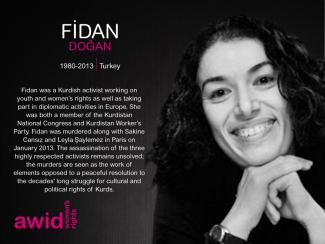
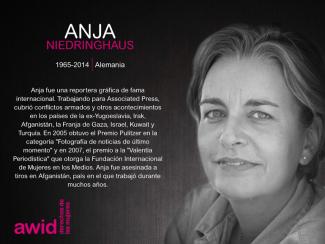
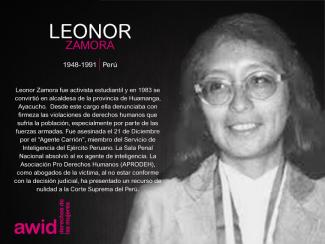
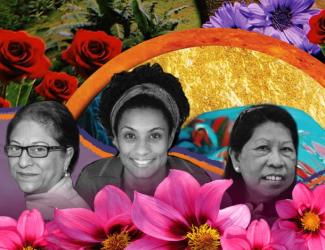
AWID’s Tribute is an art exhibition honouring feminists, women’s rights and social justice activists from around the world who are no longer with us. 


In 2020, we are taking a turn

This year’s tribute tells stories and shares narratives about those who co-created feminist realities, have offered visions of alternatives to systems and actors that oppress us, and have proposed new ways of organising, mobilising, fighting, working, living, and learning.

49 new portraits of feminists and Women Human Rights Defenders (WHRDs) are added to the gallery. While many of those we honour have passed away due to old age or illness, too many have been killed as a result of their work and who they are.

This increasing violence (by states, corporations, organized crime, unknown gunmen...) is not only aimed at individual activists but at our joint work and feminist realities.

The stories of activists we honour keep their legacy alive and carry their inspiration forward into our movements’ future work.

Visit the online exhibit

The portraits of the 2020 edition are designed by award winning illustrator and animator, Louisa Bertman

AWID would like to thank the families and organizations who shared their personal stories and contributed to this memorial. We join them in continuing the remarkable work of these activists and WHRDs and forging efforts to ensure justice is achieved in cases that remain in impunity.

“They tried to bury us. They didn’t know we were seeds.” - Mexican Proverb 


The Tribute was first launched in 2012

It took shape with a physical exhibit of portraits and biographies of feminists and activists who passed away at AWID’s 12th International Forum, in Turkey. It now lives as an online gallery, updated every year.

To date, 467 feminists and WHRDs are featured.

Visit the online exhibit
Related Content

Snippet FEA Principles of Work (FR)

Principes

DE TRAVAIL

حالة التمويل للحركات النسوية ووقائعها تتغير بسرعة. هل هذا الاستطلاع لمرة واحدة؟

كلا. يبني هذا الاستطلاع على المعلومات التي حشدتها جمعية حقوق المرأة في التنمية حول كيفية الحصول على تمويل أكبر وأفضل للحركات النسوية وحركات التغيير الاجتماعي وهذه الدورة الثالثة لاستطلاع "أين التمويل للتنظيمات النسوية". نهدف للقيام بالاستطلاع مرة كل ثلاثة أعوام.

Nicole Barakat

nicole barakat -verge exhibition april 2018
We transcend time and place, Hand cut found paper (2017)
nicole barakat -verge exhibition april 2018
We will remember who we are and We will persist Cotton embroidered hand cut lamé on wool silk cloth (2018)
nicole barakat -verge exhibition april 2018
​​We will return home, Silk embroidered hand cut lamé on cotton velveteen (2018)
verge march 18 - document photography
We will heal in the now, Hand cut silk, wool, lamé, cotton, direct digital print silk satin on linen (2018)


we are infinite

An exhibition by Nicole Barakat, embodying her reconnection with the diaspora of objects from her ancestral homelands in the South West Asia and North Africa (SWANA) region.
 
Barakat presents a collection of textile works as manifestations of her practice of engaging with displaced, and often stolen objects held within Western museum collections including the Louvre, British Museum and Nicholson Museum. 
 
To by-pass the gatekeepers and breach the vitrines holding these ancestral objects, Barakat reclaims pre-colonial, non-linear, receptive forms of knowing that are often devalued and dismissed by colonial and patriarchal institutions - engaging with coffee cup divination, dream-work, intuitive listening and conversations with the objects themselves (source).

About Nicole Barakat

Nicole Barakat portrait
Nicole Barakat is a queer femme, SWANA artist born and living on Gadigal Country (so-called Sydney, Australia). She works with deep listening and intuitive processes with intentions to transform the conditions of everyday life. Her work engages unconventional approaches to art-making, creating intricate works that embody the love and patience that characterises traditional textile practices. 

Her works include hand-stitched and hand-cut cloth and paper drawings, sculptural forms made with her own hair, cloth and plant materials as well as live work where she uses her voice as a material. 

Nicole’s creative practice is rooted in re-membering and re-gathering her ancestral knowing, including coffee divination and more recently working with plants and flower essences for community care and healing. 

Questions (Forum page)

Des questions ?

Vous avez des questions concernant le Forum de l’AWID ou les activités connexes ? Nous avons des réponses ! 

Trouver des réponses

Mereani Naisua Senibici

Mereani Naisua Senebici, que l’on appelait aussi « Sua », a été membre de l’Association des jeunes femmes chrétiennes (YWCA) des Fidji pendant de longues années.

En plus d’avoir travaillé avec divers groupes de femmes dans des contextes multiraciaux, ruraux et urbains, elle s’est impliquée dans le soutien et la promotion des droits des femmes et des jeunes femmes.

Au YWCA de Lautoka, elle travaillait avec des femmes d’origine indienne et comptait parmi les pionnières du développement de la pratique sportive et la participation des femmes et athlètes trans localement.

« Les membres du YWCA des Fidji ont profondément aimé Sua pour son dévouement et son soutien inébranlable envers tous les efforts déployés par l’organisation » – Tupou Vere

Mereani faisait partie de la House of Sarah (HoS), une initiative de l’Association of Anglican Women (AAW) lancée en 2009, un organisme de sensibilisation autour des violences basées sur le genre et de soutien des femmes victimes de violence. Ayant commencé sa pratique en tant que bénévole dévouée, elle offrait notamment son soutien aux femmes dans tout le Pacifique.
Mereani s’est éteinte en 2019.

« Une personne qui aimait les gens, qui était présente sur tous les fronts de l’autonomisation des femmes et du travail du mouvement au niveau communautaire. Repose en paix, Sua. » – Tupou Vere

Body

Snippet FEA No feminist economies without feminist unions (EN)

No feminist economies without feminist unions!

Through labor and union organizing, Sopo, Sabrina and Linda are not only fighting for the rights of essential workers, women workers, migrant workers and sex workers, but the rights of all workers.

The fight to end workers’ exploitation is a feminist struggle, and shows us that there are no feminist economies without feminist unions.

Snippet - WITM Who should - PT

Quem deve realizar este inquérito?

O inquérito destina-se a grupos, organizações e movimentos que trabalham especificamente ou principalmente pelos direitos das mulheres, pessoas LBTQI+ e pela justiça de género, em todos os contextos, em todos os níveis e em todas as regiões. Se este for um dos pilares principais do seu grupo, da sua comunidade, da sua rede ou de qualquer outro tipo de organização, quer esteja registada ou não, seja nova ou já estabelecida, convidamo-lo a participar neste inquérito.

* De momento, não solicitamos respostas de indivídues ou de fundos feministas e de mulheres.

Perguntas Frequentes

Tendencias anti-derechos en los sistemas regionales de derechos humanos

Chapter 6

En la Comisión Africana y en el Sistema Interamericano, los actores antiderechos impulsan nociones esencialistas de cultura y género para impedir el avance de los derechos y socavar las responsabilidades. Como vemos, los actores anti-derechos están ejerciendo su influencia sobre los sistemas regionales de derechos humanos, así como en los espacios internacionales.

2019 JUN 27 Meeting of the Summit Implementation Review Group in Colombia
© Juan Manuel Herrera/OAS/Flickr
2019 JUN 27 Reunión del Grupo de Revisión de la Implementación de Cumbres en Colombia

La Comisión Africana de Derechos Humanos y de los Pueblos ha comenzado a definir a los derechos sexuales y de las mujeres como un menoscabo a su capacidad de ocuparse de los «derechos reales» y como contrarios a los «valores africanos», con lo cual se establece un precedente anti-derechos preocupante. La anulación del estatus de observador de la Coalición de Lesbianas Africanas es un ejemplo de esta tendencia y muestra la forma en que el espacio para el involucramiento feminista panafricanista está siendo restringido.

En la Organización de Estados Americanos (OEA) y en el Sistema Interamericano de Protección de los Derechos Humanos, las estrategias anti-derechos incluyen la oenegización de grupos religiosos, la utilización de discursos seculares, y la cooptación de marcos de discriminación. La influencia antiderechos se ha materializado de diversas maneras, que incluyen la intimidación de activistas trans y la obstrucción de la introducción de lenguaje progresista en las resoluciones.

Índice de contenidos

  • Silenciamiento de feministas en el Sistema Africano de Derechos Humanos
  • Grupos anti-derechos en América Latina: Asamblea General de la Organización de Estados Americanos (OEA) y el Sistema Interamericano de Protección de los Derechos Humanos

Leer el capítulo completo

FRMag - The Triple

The Triple Cripples: Let’s talk about sex, baby!

by Nandini Tanya Lallmon 

Olajumoke ‘Jay’ Abdullahi and Kym Oliver are revolutionary feminists in more ways than one. (...)

Read

artwork: “Bloomed” by Titash Sen >

Juli Dugdale

Juli Dugdale was an Australian feminist who practiced intergenerational leadership rooted in principles of feminism, inclusion and equality. She was a leader, peer and mentor for many women and especially young women around the world. 

Juli was a dedicated staff member, volunteer and fervent advocate for young women’s leadership with the Young Women's Christian Association (YWCA) movement for over 30 years.

She offered a strong link between the Australian movement and the World YWCA Office. Her trust in the leadership capacity of young women led to a multi-year partnership with the Australian Department of Foreign Affairs and Trade and the creation of the Rise Up manual, a global guide for young women’s transformative leadership, launched in 2018.

Juli passed away in Geneva on 12 August 2019.


Tributes:

“For those who got to work with Juli, it was a privilege. For those who didn’t, be assured that her legacy continues in the work we do every day and in the mission of the YWCA movement.” - YWCA Australia

“Juli Dugdale will forever hold a deep place in many people's hearts in the YWCA movement, especially here in Aotearoa and across the Pacific. Juli had a special relationship with the Pacific and was an incredible supporter of the young women there. She was humble, gracious, loving, caring, dedicated, passionate and had a generous heart. She embodied the YWCA's vision of 'transformative leadership' with extraordinary vision and foresight, and helped empower generations of young women leaders around the world.” - YWCA New Zealand

Snippet FEA Story 1 Maps Economies of Care (ES)

Los mapas de Brasil en blanco, España en amarillo mostaza y Colombia en rosa sobre un fondo color vino o burdeos.

AWID Community Blurb

Join our online community!

The AWID Community is an online social networking platform specifically for AWID. It is a feminist space for connection, resistance and celebration. A space for critical feminist conversations, collective power and solidarity. It is also a space for post-event dialogues, navigating difficult political learnings and community care.

Join AWID membership to be part of the AWID Community today.

L’histoire derrière Crear, Résister, Transform par Coumba Toure

Une expérience magique de narration féministe animée par la féministe panafricaine Coumba Touré, dans la tradition séculaire des griots d’Afrique de l’Ouest

Et nous nous réunissons à nouveau 
Nous avons rassemblé nos histoires, notre force 
nos chansons
nos larmes 
notre rage 
nos rêves 
nos succès
nos échecs
nous les avons rassemblés dans un grand bol pour le partage 
pendant une lune de pensées 
Aussi, nous restons en contact 
Nous nous secouons l'esprit 
nous nous caressons l'âme
Alors que nos mains sont toujours liées 
Et que nos baisers et nos câlins sont interdits 
Pourtant, nous nous renforcons d’heure en heure 
Tissant ensemble nos voix
Franchissant les barrières sonores
comme nous parlons en langues 
Nous sommes de plus en plus fortes 
Nous connaissons ce qui nous différencie des autres 
et les différences entre nous, 
alors nous cousons nos beautés en patchwork de pensées
De nos apprentissages les plus profonds 
de nos pouvoirs 
Parfois, nous sommes entourées de terreur, 
Par la confusion, la malhonnêteté
Mais nous nous purifions dans l'océan de l'amour 
Nous sommes des tisserands de rêves 
Pour vêtir un nouveau monde 
Fil après fil 
Aussi petites que nous soyons, 
comme de petites fourmis construisant nos mouvements 
comme de petites gouttes construisant nos rivières 
Nous faisons des pas en avant et des pas en arrière  
dansons notre chemin de retour à un mental sain 
Nous soutenons le rythme de nos coeurs 
Continuez à battre, 
s'il vous plaît, ne vous arrêtez pas
ainsi nous  sommes les transmetteurs d'une générosité oubliée 
Goutte après gouttes, grandissant comme l'océan
grandissant comme la rivière qui coule de nos âmes 
montrant notre force pour être l'eau qui lavera ce monde 
et nous nous rassemblons à nouveau, 

peux-tu nous sentir ? 
Je mentirais si je disais que ça va
Que cela ne me dérange pas de ne pas vous voir.
Vos voix non filtrées et non enregistrées me manquent 
Nos murmures et nos cris me manquent. 
Nos cris de la révolution avortée 
Nous voulonsêseulement donner naissance à de nouveaux mondes 
Alors luttons pour effacer les frontières entre nous 
Sil vous plait n’arrêtez pas

FRMag - My queer Ramadan

Mi ramadán queer

por Amal Amer

Rezo con mi familia por primera vez en seis años envueltx en un keffiyah que recogí de un contenedor de basura. (...)

Leer

arte: «Angels go out at night too» [Los ángeles también salen de noche], Chloé Luu >

Maritza Quiroz Leiva

Maritza Quiroz Leiva fue una activista social afrocolombiana, líder comunitaria y defensora de los derechos humanos de las mujeres. Como una de las 7,7 millones de colombianxs desplazadxs internamente por 50 años de conflicto armado, Maritza dedicó su trabajo de incidencia a apoyar los derechos de otras personas, en particular dentro de la comunidad afrocolombiana, que sufrían similares desplazamientos y violaciones de derechos.

Maritza era líder adjunta del Comité de Víctimas de Santa Marta, y una voz importante para quienes buscaban justicia en su comunidad, exigiendo reparaciones por las torturas, los secuestros, los desplazamientos y la violencia sexual que experimentaban las víctimas durante el conflicto armado. También trabajó activamente en el movimiento nacional por la redistribución de la tierra y la justicia agraria.

El 5 de enero de 2019 Maritza fue asesinada por dos individuos armados que irrumpieron en su casa. Tenía 60 años.

Maritza se sumó así a lxs otrxs cinco activistas y líderes sociales colombianxs que fueron asesinadxs durante la primera semana de 2019. En Colombia, ese año fueron asesinadxs un total de 107 defensorxs de derechos humanos.