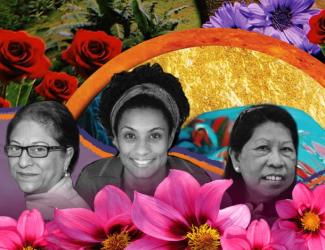
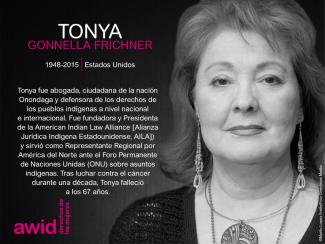
AWID’s Tribute is an art exhibition honouring feminists, women’s rights and social justice activists from around the world who are no longer with us.
In 2020, we are taking a turn
This year’s tribute tells stories and shares narratives about those who co-created feminist realities, have offered visions of alternatives to systems and actors that oppress us, and have proposed new ways of organising, mobilising, fighting, working, living, and learning.
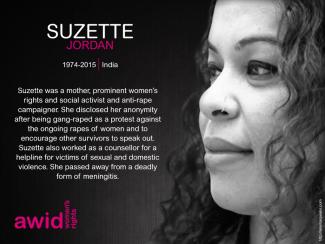
49 new portraits of feminists and Women Human Rights Defenders (WHRDs) are added to the gallery. While many of those we honour have passed away due to old age or illness, too many have been killed as a result of their work and who they are.
This increasing violence (by states, corporations, organized crime, unknown gunmen...) is not only aimed at individual activists but at our joint work and feminist realities.
The stories of activists we honour keep their legacy alive and carry their inspiration forward into our movements’ future work.
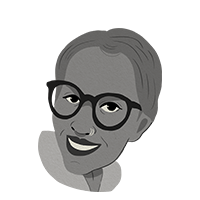
The portraits of the 2020 edition are designed by award winning illustrator and animator, Louisa Bertman.
AWID would like to thank the families and organizations who shared their personal stories and contributed to this memorial. We join them in continuing the remarkable work of these activists and WHRDs and forging efforts to ensure justice is achieved in cases that remain in impunity.
“They tried to bury us. They didn’t know we were seeds.” - Mexican Proverb
The Tribute was first launched in 2012
It took shape with a physical exhibit of portraits and biographies of feminists and activists who passed away at AWID’s 12th International Forum, in Turkey. It now lives as an online gallery, updated every year.
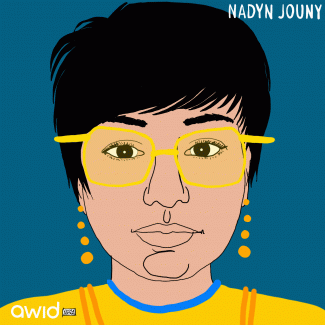
The personal is political - and fiery and courageous Nadyn Jouny personified this feminist mantra. Nadyn experienced firsthand the pain of structural violence in legal systems that strip women of their rights.
When she decided to file for divorce, the religious Shitte courts under the Lebanese Personal Status laws, denied her custody of her young son Karam. Nadyn, like so many other women across Lebanon and other countries, was caught in the impossible pain of leaving an unwanted and abusive relationship and also losing the rights to her child. But Nadyn fought back, as she would until her last day.
She used her media savvy to become an outspoken voice to women fighting discriminatory family laws in Lebanon and internationally. Nadyn co-founded the self-funded group, “Protecting Lebanese Women” (PLW) and banded with many other Lebanese mothers facing similar custody issues. Together, they advocated to raise awareness of the injustices they were facing, protesting in front of the religious courts for their rights and bringing international media attention to extreme injustices they were facing.
Nadyn also worked with ABAAD - Resource Center for Gender Equality, another women’s rights organization in Lebanon, to campaign for women’s rights, equality in family law and custody and against forced and early marriages.
For many of her colleagues, she came to “symbolize a Lebanese mother’s fight against suppression and misogyny of all sorts," using “her personal experiences and her individual journey of empowerment to give hope to others that they can be a catalyst for positive change.”- ABAAD - Resource Centre for Gender Equality, Lebanon
On October 6, 2019 Nadyn was tragically killed in a car accident on her way to protest unfair tax increases in a country already facing spiralling financial crisis. Nadyn Jouny was only 29 years old at the time of her death.
FRMag - Freeing the Church
Liberar a la Iglesia, descolonizar la Biblia para las mujeres de Papúa Occidental
por Rode Wanimbo
«Señor, somos indignas. Somos las que pecaron, porque Eva comió el fruto en el Edén. Solo somos mujeres que cultivan batatas, cuidan cerdos y dan a luz niñxs. Creemos que tú moriste en la cruz para liberarnos. Gracias, en el nombre de Jesús, amén». (...)
A dynamic network of people around the world, AWID members are researchers, academics, students, educators, activists, business people, policy-makers, development practitioners, funders, and more. Our members - of every age - are those who make AWID a unique global feminist association.
Membership with AWID is open to anyone who shares our values
We offer different types of memberships geared to income level and whether you are an individual or an organization. Currently we have over 5000 members, individual and institutional, from 164 countries.
Our members are an important part of our work
We collaborate for advocacy on specific issues, members vote in elections for our Board, and can also participate in and contribute to our Priority Areas through webinars, surveys, or urgent actions, for example.
Our institutional membership draws from a broad range of organizations interested in advancing gender justice and women’s human rights, including women’s rights organizations, from the local to the global levels, grassroots networks, major international institutions, government departments, university programs and more. 63% of our members are from the global South and 38% are under the age of 30.
L’histoire derrière Crear, Résister, Transform par Coumba Toure
Une expérience magique de narration féministe animée par la féministe panafricaine Coumba Touré, dans la tradition séculaire des griots d’Afrique de l’Ouest
Et nous nous réunissons à nouveau
Nous avons rassemblé nos histoires, notre force
nos chansons
nos larmes
notre rage
nos rêves
nos succès
nos échecs
nous les avons rassemblés dans un grand bol pour le partage
pendant une lune de pensées
Aussi, nous restons en contact
Nous nous secouons l'esprit
nous nous caressons l'âme
Alors que nos mains sont toujours liées
Et que nos baisers et nos câlins sont interdits
Pourtant, nous nous renforcons d’heure en heure
Tissant ensemble nos voix
Franchissant les barrières sonores
comme nous parlons en langues
Nous sommes de plus en plus fortes
Nous connaissons ce qui nous différencie des autres
et les différences entre nous,
alors nous cousons nos beautés en patchwork de pensées
De nos apprentissages les plus profonds
de nos pouvoirs
Parfois, nous sommes entourées de terreur,
Par la confusion, la malhonnêteté
Mais nous nous purifions dans l'océan de l'amour
Nous sommes des tisserands de rêves
Pour vêtir un nouveau monde
Fil après fil
Aussi petites que nous soyons,
comme de petites fourmis construisant nos mouvements
comme de petites gouttes construisant nos rivières
Nous faisons des pas en avant et des pas en arrière
dansons notre chemin de retour à un mental sain
Nous soutenons le rythme de nos coeurs
Continuez à battre,
s'il vous plaît, ne vous arrêtez pas
ainsi nous sommes les transmetteurs d'une générosité oubliée
Goutte après gouttes, grandissant comme l'océan
grandissant comme la rivière qui coule de nos âmes
montrant notre force pour être l'eau qui lavera ce monde
et nous nous rassemblons à nouveau,
peux-tu nous sentir ?
Je mentirais si je disais que ça va
Que cela ne me dérange pas de ne pas vous voir.
Vos voix non filtrées et non enregistrées me manquent
Nos murmures et nos cris me manquent.
Nos cris de la révolution avortée
Nous voulonsêseulement donner naissance à de nouveaux mondes
Alors luttons pour effacer les frontières entre nous
Sil vous plait n’arrêtez pas
Nous sommes ravi.es d'annoncer le lancement du nouveau podcast de l'AWID, NOTRE FLAMME FÉMINISTE. Notre série narrative dévoile plus de 40 ans de mouvements féministes et réinvente une voie à suivre.
Dans notre saison pilote, vous entendrez cinq histoires captivantes qui font partie d'une constellation d'activisme féministe aujourd'hui. Animé par Gopika Bashi,notre directrice adjointe des programmes à l'AWID, chaque épisode explore des réalités féministes uniques mais interconnectées qui améliorent la justice de genre et les droits humains.
Produit par notre partenaire de podcast Webby Hueman Group Media, vous pouvez vous abonner à NOTRE FLAMME FÉMINISTE et écouter notre premier épisode ici.
Retrouvez-nous sur Apple Podcasts, Spotify ou partout où vous obtenez vos podcasts. Partagez avec votre réseau ! Aidez-nous à diffuser des histoires qui allument notre feu féministe et nous poussent à l'action.
Doris Valenzuela Angulo fue una activista social afrodescendiente, líder y defensora de los derechos humanos, de Buenaventura, Colombia. Fue parte de Comunidades Construyendo Paz en los Territorios (CONPAZ), una red nacional de organizaciones de comunidades afectadas por el conflicto armado que propugnan la no violencia y la justicia socioambiental.
Doris desafiaba la constante violencia paramilitar y las presiones de los megaproyectos para desplazar a su comunidad, así como la complicidad del Estado. Enfrentando uno de los contextos más difíciles de su país, tuvo un rol de liderazgo en una iniciativa de resistencia no violenta sin precedentes llamado «Espacio Humanitario Puente Nayero», una zona urbana para la cohesión comunitaria, la seguridad, la creatividad y la acción colectiva.
Esta singular lucha no violenta de las familias que pertenecían al «Espacio Humanitario Puente Nayero» atrajo la atención y el apoyo de organismos locales e internacionales. Hacia septiembre de 2014, la Comisión Interamericana de Derechos Humanos había establecido medidas cautelares de protección para la comunidad, y había ordenado al Estado colombiano hacer lo necesario para preservar sus vidas y su integridad personal. Sin embargo, las amenazas y la violencia de los paramilitares continuaron. Doris centró sus energías en evitar el reclutamiento forzoso de niñxs y jóvenes por parte de los neo-paramilitares, y siguió haciéndolo a pesar del asesinato de su hijo Cristian Dainer Aragón Valenzuela en julio de 2015. Doris también se convirtió en blanco de ataques, y recibía amenazas por su activismo y el trabajo que realizaba continuamente.
Las persistentes agresiones y amenazas contra su vida forzaron a Doris a abandonar Colombia. Residió en España desde febrero de 2017 hasta febrero de 2018, e integró el Programa de Protección Temporal de Defensores y Defensoras de los Derechos Humanos de Amnistía Internacional para activistas cuyas vidas están en riesgo.
En abril de 2018, Doris fue asesinada por su ex-marido en Murcia, España. Tenía solamente 39 años.
Tributos:
«Doris, pasar un año entero contigo nos ha enseñado cómo una persona puede tener la capacidad de transformar y generar esperanza ante hechos profundamente negativos y devastadores sucedidos durante tu vida...Seguimos con nuestro compromiso en la defensa de todos los derechos humanos. Siempre nos guiará tu valentía y tu luz.» Montserrat Román, Amnistía Internacional Grupo La Palma
Fragmento de «Palabras para Doris Valenzuela Angulo» por Elsa López
«Tú lo sabías. Siempre lo supiste. Y a pesar de todo te levantaste firme contra tantas injusticias, tantas miserias, tanta persecución.Te alzaste, altiva y feroz, contra aquellos que querían hacerte de nuevo abandonar tus esperanzas, humillarte y rendirte. Puesta en pie clamaste por tu libertad y la nuestra que era la tuya. Nada ni nadie paralizó tus esfuerzos por cambiar el mundo y hacerlo más generoso y habitable. Tú, viva entre nosotras, más viva hoy que nunca entre nosotras a pesar de la muerte. Viva siempre por tus gestos, tu valor, tu grandeza al clamar por una tierra prometida que llegaste a invocar con cada uno de tus gritos por todos los desiertos que habitaste. Tú. Siempre viva. Doris Valenzuela Angulo.
Son sólo palabras. Lo sé. Yo también lo sé. Pero las palabras nos unen, nos protegen, nos dan fuerza y aliento para seguir caminando hacia la luz que tanto defendías.»
FRMag - Our neighbourhood, our network
Notre quartier, nos réseaux, notre force
par Marta Plaza Fernández
Le pouvoir de tisser des réseaux où nous nous soutenons les unes les autres: telle est la réalité féministe dont je veux vous faire part. (...)
Jurema Araújo es una profesora y poeta de Río de Janeiro. Colaboró con la revista Urbana, editada por los poetas Brasil Barreto y Samaral (que en paz descanse) y con el libro Amor e outras revoluções con una variedad de escritorxs. En colaboración con Angélica Ferrarez y Fabiana Pereira, coeditó O livro negro dos sentidos, una antología creativa sobre la sexualidad de las mujeres negras de Brasil. Jurema tiene 54 años, tiene una hija, tres perras, una gata y un montón de amistades.
¿Lo chupas conmigo?
El mango es mi fruta favorita.
Abro la boca
y lo chupo todo,
su pulpa atrapada entre mis dientes,
mordidas suaves para no lastimarla;
la aprieto entre la lengua y el paladar,
después lo saco para chuparle cada parte
con el jugo chorreando por mi boca
empapándome en este néctar sabroso
y lo meto todo de nuevo en mi boca
porque el mango es semilla y miel,
es fibra y sabor.
Y cuando se termina, estoy en trance,
pegajosa, endulzada,
con los labios todos mojados.
Oooh, para qué es el mango si no es para embadurnarse
Chupa Comigo?
A fruta que eu mais gosto é manga!
Porque eu abro a boca
E meto toda pra chupar!
Se os dentes a prendem
Fazem macio para não machucar
E eu pressiono entre minha língua e meu céu
Depois tiro pra sugar cada parte
Sentindo o caldo escorrer boca afora
Me molhando com esse néctar gostoso
E metendo toda na boca de novo
Pois manga é caroço e é mel,
É fiapo e sabor
E quando acaba, estou extasiada
Melada, docinha
Com os lábios molhados!
Aaahhh, manga é pra se lambuzar!
Presentando El libro negro de los sentidos
Lo voy a admitir: cuando Angélica y Fabi me invitaron a ser curadora de una colección de textos eróticos de mujeres negras, no sabía qué era la curaduría. Entendía bien lo erótico, pero la curaduría… Sonreí, sintiéndome cohibida y halagada. Creo que les agradecí –al menos espero haberlo hecho– y pensé: ¡¿qué mierda es eso?! Esta palabra elegante de la que tendría que aprender el significado mientras lo hacía, ¿qué es?
A estas alturas, ya sé qué significa ser curadora: es hacer el amor con los textos de otra persona, con el arte de otra persona, con la intención de armar un libro. Y eso es exactamente lo que hice. Desnudé cada texto de cada autora de este libro con lascivia literaria. Y me involucré en las palabras y los sentidos de otras. Fui penetrada por poemas que no escribí; historias que ni siquiera me atrevía a imaginar me dieron vuelta, metiéndose con mis sentimientos, con mi libido. Y fue un maravilloso y extraordinario orgasmo: etéreo, corporal, sublime, al mismo tiempo intelectual y sensible.
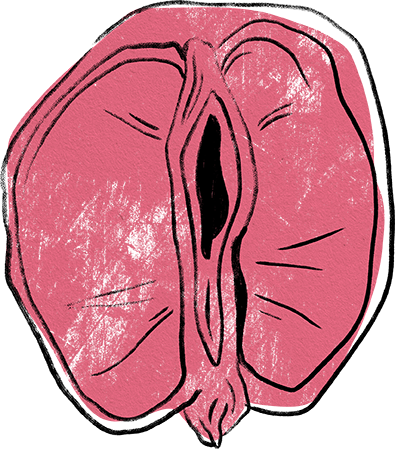
Estos textos palpitaban como un clítoris endurecido por el deseo, empapados, chorreando placer en cada lectura. Palabras que me tragaron con su significado pícaro, haciéndome sumergirme más profundamente en este universo húmedo.
Estas mujeres negras fueron hasta el fondo de su excitación y convirtieron en arte sus fantasías eróticas más profundas. Estos trabajos están impregnados con la forma propia de cada escritora de vivir la sexualidad: libremente, negra, para nosotras, a nuestra manera, empoderadas.
Elegí desplegar los textos a lo largo de diferentes partes del libro, cada una organizada de acuerdo al contenido más delicado, explosivo, evidente o implícito que presentaban.
Para abrir la puerta a esta «esencia negra invulvolucrada» tenemos nuestra sección Preliminares, con textos que introducen a lxs lectorxs a este mundo de deleites. Es una caricia delicada general para presentar los temas abordados por los textos en el resto del libro.
Luego viene el calor de Tacto, abordando lo que puede sentir la piel. Esa energía que quema o congela nuestros cuerpos, hace que nuestras hormonas exploten y comienza a despertar a los otros sentidos. Y aunque muchxs somos voyeurs, el contacto de la piel con una boca húmeda y cálida es excitante, como recorrer la suavidad de quien sea que esté contigo. Nos seduce un contacto firme o suave que nos produce piel de gallina y esa hermosa incomodidad que corre desde el cuello bajando por la espalda y sólo se detiene al día siguiente. Y el calor de los labios, la boca, la lengua húmeda en la piel –oh, la lengua en la oreja, hmmm– o piel sobre piel, las ropas moviéndose sobre el cuerpo, casi como una extensión de la mano de lx otrx. Si no hay urgencia, esa excitación más salvaje de la presión de un agarre fuerte, un poco de dolor, o mucho, quién sabe.
La sección Sonido –¿o melodía?– nos muestra que la atracción también sucede a través de oir: la voz, los susurros, la música que permite la conexión entre los cuerpos y puede convertirse en tema de deseo. Para algunxs, alguien con una voz hermosa sólo necesitaría sus cuerdas vocales, porque ese sonido áspero, o pesado o melodioso sería sexo auditivo. Sus insultos en voz alta o sus palabras dulces susurradas al oído serían suficiente para darnos escalofríos desde el cuello al coxis.
En Sabor, sabemos que la lengua hace un buen trabajo saboreando los lugares más escondidos y recorriendo el cuerpo para deleitarse. A veces este órgano es utilizado, descaradamente, para saborear el néctar de lx otrx. La idea de alguien compartiendo su frutilla o un delicioso mango jugoso a mordiscos y lamidas –o lamidas y mordiscos– nos derrite. Pero nada es más delicioso que saborear las cuevas y colinas de la persona con la que estás. Hundir la lengua hasta el fondo para saborear un trozo de fruta… o pasar horas saboreando la cabeza de una verga en tu boca, o chupar un pecho delicioso para saborear los pezones. Se trata de memorizar a alguien por su Sabor.
Hay textos en los cuales es la nariz lo que dispara el deseo. El Aroma, mis queridxs lectorxs, puede despertarnos a los deleites del deseo. A veces conocemos a una persona que huele tan bien que queremos tragarla directamente por la nariz. Cuando recorres el cuerpo de la otra persona con tu nariz, comenzando por el cuello, ¡guau, qué escalofrío deliciosamente incómodo que corre por la espalda y desnuda el alma! La desvergonzada nariz entonces va hacia la parte de atrás del cuello y captura la esencia de lx otrx de tal manera que en ausencia de esa persona, oler su misma esencia evoca, o al contrario, nos invade con memorias olfativas que traen de nuevo el excitante aroma de esa persona.
Después llegamos a Mirada –para mí, el traidor de los sentidos–, en el cual percibimos el deseo desde un punto de «vista». Es a través de la vista que los textos presentan el deseo y la excitación, a través de los cuales se provocan los otros sentidos. A veces una sonrisa es todo lo que hace falta para enloquecernos. ¿El intercambio de miradas? Esa mirada que dice «Te quiero». Esa mirada de posesión que llega a su fin cuando dejas de coger, o no. Esa es muy especial; atrae a lx otrx que no será capaz de apartar la mirada por mucho tiempo. ¿O la mirada de reojo, cuando unx mira para otro lado cuando lx otrx gira su cabeza, como un juego del gato y el ratón? Una vez que nos atrapan con las manos en la masa, no hay nada más que hacer salvo desplegar una amplia sonrisa.
Finalmente, la explosión. Recorriendo Todos los sentidos, los textos mezclan sentimientos que parecen como una alerta, así que ahí está el mayor placer, ese orgasmo.
Por supuesto, no hay nada que separe explícitamente estos poemas y relatos. Algunos son sutiles. La excitación involucra a todos nuestros sentidos y, lo más importante, a nuestras cabezas. Ahí es donde sucede, y conecta todo nuestro cuerpo. Organicé los poemas según cómo me llegaron en cada lectura. Sientan la libertad de no estar de acuerdo. Pero para mí, hay un sentido a través del cual va el deseo y luego explota. Es exquisito darse cuenta de cuál es.
Ser capaz de convertir la excitación en arte significa liberarnos de todo el prejuicio, prisiones, y estigma en los que nos ha atrapado esta sociedad centrada en la blanquitud.
Cada vez que una escritora negra transforma lo erótico en arte, rompe estas dañinas cadenas racistas que paralizan su cuerpo, reprimen su sexualidad y nos convierten en el objeto de la codicia de otrxs. Escribir poesía erótica es recuperar el poder sobre su propio cuerpo y pasear sin miedo por los placeres del deseo por sí misma, por otrxs, por la vida.
Lo erótico literario es quiénes somos convertido en arte. Aquí mostramos lo mejor de nosotrxs, nuestras visiones del amor empapado por el placer, sazonado por lo erógeno, extendido por nuestros cuerpos y traducido por nuestra conciencia artística. Somos múltiples y compartimos esta multiplicidad de sensaciones en palabras que chorrean excitación. Sí, incluso nuestras palabras chorrean nuestro deseo sexual, empapando nuestros versos, convirtiendo nuestras urgencias sexuales en párrafos. Acabar/correrse, para nosotras, es un descubrimiento.
Es necesario hacer que nuestras mentes, nuestros cuerpos y nuestra sexualidad sean negras, restaurar nuestro placer, y recuperar nuestros orgasmos. Solo entonces seremos libres. Todo este proceso es un descubrimiento y tiene lugar dolorosamente. Pero hay felicidad en descubrir que somos muy diferentes del lugar donde nos habían puesto.
Siento que soy de ustedes, que soy nuestra. Saboreen, deleitense, tengan un festín con estas hermosas palabras junto a nosotras.
Este texto es una adaptación de la introducción a “O Livro Negro Dos Sentidos” [El libro negro de los sentidos], una colección de poemas eróticos de 23 escritoras negras.
ExplorarCorporalidades Transnacionales
Esta edición en alianza con Kohl: una publicación para Body and Gender Research analizará soluciones, propuestas y realidades feministas para transformar nuestro mundo actual, nuestros cuerpos y nuestras sexualidades.
نصدر النسخة هذه من المجلة بالشراكة مع «كحل: مجلة لأبحاث الجسد والجندر»، وسنستكشف عبرها الحلول والاقتراحات وأنواع الواقع النسوية لتغيير عالمنا الحالي وكذلك أجسادنا وجنسانياتنا.
📅 Miércoles 12 de marzo de 2025
🕒 De 12:00 a 01:30 pm, EST
🏢 PNUD, 304 E 45th St. Doha Room, 11th Floor (FF Building)
Organizan: PNUD, Femena, SRI y AWID
Snippet Forum Stories Gen Intro (ES)
¿Qué significa un Foro de AWID para las personas que estuvieron ahí? ¿Qué es esta magia que sucede cuando feministas de todo el mundo se reúnen para celebrar, elaborar estrategias, aprender y compartir la alegría?
AWID habló con más de cuarenta participantes del Foro para oír sus historias de las transformaciones que experimentaron ellxs mismxs como activistas, y que también cambiaron a sus organizaciones y a los movimientos a los que pertenecen. También aprendimos sobre qué cosas deberíamos mantener y desarrollar para que un Foro de AWID sea diferente, y de qué manera podemos mejorar.
Este informe contiene aprendizajes y consejos invaluables para cualquier persona que quiera organizar encuentros presenciales regionales y temáticos, y para nosotrxs en nuestro trabajo de planificación del 15° Foro Internacional de AWID.
Mena Mangal était une éminente journaliste de télévision, défenseure des droits des femmes et conseillère culturelle du Wolesi Jirga, la chambre basse du parlement national afghan.
Pendant plus d’une décennie, Mena a travaillé pour Ariana TC, la chaîne en pashto Lamar de Tolo TV et la chaîne de télévision nationale privée Shamshad TV. Mena était principalement présentatrice d’émissions sur les droits des femmes et la culture.
« La défenseure des droits des femmes Wazhma Frogh a dit que Mangal « se faisait entendre » et s’exprimait ouvertement en faveur de la défense de son peuple. »
Loin des écrans, elle dirigeait également des plateformes sur les réseaux sociaux, promouvant les droits à l’éducation et au travail des filles et femmes afghanes. Sur le plan de sa vie privée, Mena a longuement écrit sur le mariage arrangé qu’elle a été forcée d’accepter en 2017, et le long processus qui s’en est suivi pour finalement obtenir le divorce.
Dans un post sur Facebook, Mena avait écrit qu’elle recevait des menaces de mort de sources inconnues, mais qu’elle continuerait néanmoins son travail.
Elle a été attaquée le 11 mai 2019 par des hommes armés inconnus et tuée en plein jour et dans un espace public, dans le sud-est de Kaboul.
« La situation nous inquiète, car elle a un impact direct sur les femmes qui travaillent en dehors de la maison... Les femmes journalistes changent de profession du fait de l’augmentation des risques auxquels elles sont confrontées. » - Robina Hamdard, défenseure des droits des femmes à Kaboul
FRMag - The Story of An Unhappy Tale
The Story of An Unhappy Tale
by Gabriela Estefanía Riera Robles
Juliana. How I would love to be called Juliana! The name is full of power and presence, full of force and vehemence. (...)
Les jeunes féministes sont au cœur de l’action de l’AWID.
De fait, 38 % de nos membres sont ont moins de 30 ans.
Nous estimons que les jeunes féministes représentent le présent et l’avenir de la lutte pour les droits des femmes. Nous encourageons les jeunes femmes à devenir des leaders du mouvement et notre programme « Activisme des jeunes féministes » est transversal à tous les autres aspects de notre travail.
Dans le même temps, en définissant les jeunes féministes comme l'un de nos domaines prioritaires, nous apportons de nouvelles perspectives aux débats actuels et veillons à ce que les jeunes activistes puissent exprimer clairement leurs priorités et leurs inquiétudes.
La liga conspirativa de escritorxs | Wazina Zondon
Conocida también como la Red Teta Research, la liga conspirativa de escritorxs se fundó en 2021 en el contexto de los círculos de escritura semanales de Kohl. La Red consiste en un grupo transnacional de escritorxs queer y feministas que participan en procesos colectivos de escritura, reflexión y creación de universos.
Wazina Zondon es una afgana criada en Nueva York. Su trabajo de colección de historias y de narración se centra en las memorias y ritos colectivos de iniciación en la diáspora. Actualmente, trabaja en Faith: in Love/faith in love, donde (re)rastrea la historia de amor de su madre y su padre y la huella amorosa heredada de la familia.
El amor es contrabando en el infierno,
porque el amor es ácido
que devora las rejas.
Pero tú, yo y el mañana
nos tomaremos de las manos y haremos votos
para que la lucha se multiplique
La sierra de arco tiene dos cuchillas.
La escopeta tiene dos cañones.
Estamos preñadxs de libertad.
Somos una conspiración.
Es nuestro deber luchar por la libertad.
Es nuestro deber ganar.
Debemos amarnos y apoyarnos mutuamente.
No tenemos nada que perder, salvo nuestras cadenas.
- «Amor» por Assata Shakur
«Si podemos heredar un trauma, ¿podemos heredar una huella relacionada con el amor?»
Esta es la pregunta que se hace Wazina Zondon en sus memorias colectivas Loveprint (Improntas de amor). Loveprint es un deambular, una superposición, una desviación que (re)crea, en la intersección entre entrevistas y ensayos personales, las historias y reflexiones de nuestra familia sobre el amor, la pareja y el romance. Guiadxs por Wazina, la liga conspirativa de escritorxs se reunió e intentó reproducir literalmente este proyecto en forma de escritura colectiva, donde nuestras historias, nuestros géneros e identidades sexuales se complementan y contradicen entre sí. Con nuestras voces superponiéndose, fuimos completando las oraciones de lxs otrxs para crear una conversación, un memorial, pedazos de nosotrxs mismxs que hablan de unx «nosotrxs».
¿Cuáles son los orígenes de tu huella de amor?
Soy lo que han llamado un «accidente feliz». Se ha dicho mucho sobre esto: una vida imprevista que al mismo tiempo es totalmente deseada. Siento que esto moldeó mi forma de amar; no solo me enamoro, también me arriesgo a los resbalones que llevan a las caídas. Quizá fue esto lo que me convirtió en un tipo de persona amor fati.
Me dijeron que era una niña no deseada. Así que crecí hasta convertirme en una adulta no deseada. Los orígenes de mi huella de amor se basan en ser no deseada permanentemente. No soy fruto del amor ni de ningún sentimiento feliz; soy, más bien, dolor y carga. No tengo una impronta amorosa, al menos no en este sentido.
Sé con certeza que mis padres estuvieron enamoradxs en algún momento, pero la salud mental es un demonio, y hasta que unx no se enfrenta a sus demonios,
no hay quien gane.
Nunca asociaré el «amor» con mis padres o con la familia normativa. El amor bajo el que crecí fue un amor lleno de violencia y de responsabilidades que no busqué o para las que ni siquiera estaba preparada. Durante mucho tiempo sentí que la vida y el amor consistían en cargar una roca gigante cuesta arriba. Si bien mis padres «se amaban», crecí en un ambiente tóxico de violencia, celos e inseguridad. Crecí anhelando estabilidad; y esto es lo que soy ahora. Soy una persona que se arriesga pero nunca en mi «espacio de amor».
No sé por qué mi madre eligió albergar a una niña (yo) dentro de ella Ella no ama de esta forma.
Mi madre me dice que si tengo que pensar en «encontrar» el amor, que nunca tome su matrimonio como modelo. Mi huella de amor proviene en cambio de mi crianza de perros durante las últimas dos décadas (18 años para ser precisa). Al revés también es cierto: me criaron. En su compañía entiendo cada vez más sobre el amor y sus múltiples capas.
No he conocido el amor por una «huella». En nuestra casa no hablábamos de amor. Tuve que enseñarme a mí misma a amar. Fue un trabajo arduo. Aún así, fallo y sigo intentándolo, y fallo todos los días. Quizá el fracaso sea mi impronta de amor.
Mi impronta de amor es el cuidado, la calidez y la comprensión que
doy a quienes me rodean, sea unx extrañx, unx amigx,
unx familiar, unx amante. Mi impronta de amor es política – no es calculada ni pensada.
Nací bajo un fuerte bombardeo.
Mi impronta de amor es
lo opuesto a eso.
Lecciones aprendidas sobre el amor
Sé más de lo que no es el amor que de lo que es.
El amor no es ni ansiedad ni pánico.
El amor no es pedir permiso para vivir o respirar. Siempre se trata del amor, y no hay amor sin libertad.
Todo lo que haces tiene que ver con usar tu corazón, excepto el amor. El amor consiste en utilizar tu cabeza.
A veces temo que mi idioma de amor se pierda con la traducción.
--- Hay muchas maneras
de trazar los orígenes
de cómo
cómo no
amar
no amar
amar lo justo
amar demasiado
algo de amor
alguna pérdida
amar
amar lo perdido ---
No soporto la idea de la pareja. Tampoco soporto la idea de vivir sola mientras envejezco. Estoy cansada de hacer los quehaceres sola, de mudarme de casa sola, de pagar el alquiler y las cuentas sola... Me imagino que me da un ACV sola y me da miedo. No tengo planes de «ponerme en pareja». Quiero un mundo en el que pueda casarme con unx amigx, comprar una casa con unx amigx, no tener sexo.
Amar a muchxs personas no corrompe un amor
compartido entre dos; y que el amor sea romántico
o no, realmente no es tan importante.
Cuando reflexiono sobre el deplorable estado de mis relaciones, me doy cuenta de que estoy en la relación para la que me prepararon. Con toda mi «radicalidad» todavía no he desaprendido las normas de género de mierda.
Mi necesidad de estabilidad se siente «muy poco radical». Quiero salir de este etiquetado. Quiero algo que nunca tuve. Quiero que sea hermoso. Quiero sentirme hermosa y segura, y sólo la estabilidad me hace sentir eso. Segura, sana, sabiendo que el hogar no tiene que ver ni con la violencia ni con la discordia.
--- Impronta amorosa – amo oler los libros ver dónde
se imprimieron
Intento pensar en el origen de mi comprensión
y práctica del amor
¿Necesitamos el origen, no es lo mismo que la pureza?
No hay pureza ni origen del amor.
¿Por qué la comprensión y la práctica vienen
a la mente y no la «emoción»? ---
Cuando llamo a mis padres, no cuelgo el teléfono después de despedirnos,
de esa manera puedo escuchar los sonidos del hogar.
¿Qué necesitamos para ser/sentirnos amadxs al momento de morir?
Durante mi entierro suní, quiero que todas las mujeres y los hombres acudan juntxs a mi entierro. ¿Qué es eso de no poder ir a despedirse de lxs muertxs de otro sexo? Será suní porque mi madre querría que lo fuera. Será ecológico: una lápida no será necesaria. Me encantan todos los rituales de entierro. El Corán está bien, pero además quiero música. Me gustan mucho Asmahan, Um Kulthum y The Stone Roses.
Tengo una lista de reproducción de lunes a viernes, y dos diferentes para los fines de semana: una para los sábados, y otra para los domingos. Me gustaría que aquellxs que me amaron reprodujeran la música que yo solía escuchar, respetando los días – con cierto margen de tolerancia siempre que se ciñan a las listas de reproducción.
Quiero estar rodeada de quien o quienes me han amado, aunque haya sido por un momento. Que la música me envuelva así como flores frescas recién cortadas. No quiero que me descubran muerta; quiero morir en medio de una risa junto a seres queridxs.
Quiero ser recordada como alguien que amó.
No necesito sentirme amada en la muerte. Necesito que las personas que me rodean sientan que las he amado, incluso después de mi partida. Ser amadx en la muerte tiene que ver con quienes están vivxs. Así que pienso más en cómo nos unimos como una comunidad vital y amorosa ante la muerte de aquellxs a quienes amamos y con quienes vivimos. De qué manera mantenemos sus recuerdos en nosotrxs. Cómo nos convertimos en archivos de sus vidas.
--- A veces, sólo se puede amar a las personas en el momento de su muerte ---
Tengo que recordar que el cuerpo está conectado a un espacio. Mi familia es muy pequeña y, aunque venimos de diferentes lugares, es como si cada generación se trasladara a un lugar nuevo. Quizá es por eso que la muerte no está conectada con un lugar en especial, un cementerio. En nuestra familia es habitual enterrar a lxs muertxs sin nombres ni lápidas, o distribuir las cenizas al viento. Me siento en paz con este tipo de conmemoración sin espacio. La idea de que mis cenizas nutran a una nueva vida me hace sentir amada y recordada a través de la recreación. Mi abuela murió a principios de este año debido a complicaciones después de vacunarse. Dos horas después de su muerte, mi familia se sentó a reírse hasta las lágrimas de sus bromas, de su manera divertidísima de contar historias. Nos reímos y amamos, y fue como si ella estuviera sentada de nuevo con nosotrxs. Esto es lo que me haría sentir en paz: fertilizar la tierra, abonar las conversaciones y el recuerdo colectivo.
---Había
dos calles que utilizaba
para caminar
para correr
para jugar
para quedarme
Había
cinco horas en las que el sol
estaba caliente
el cielo era azul
y la tierra era verde
Había
una flor que podía
oler
tocar
apretar
aplastar
Estaban
lxs amigxs que podía
acariciar
La comida
que podía
tragar
El lenguaje
que saldría de mis
labios
Es probable que aún existan
esos muchos lugares
y cosas
y personas
después de mí ---
Quizá sea suficiente con la promesa de que seré «conmemorada espacialmente» como una planta y cuidada, por turnos, hasta que me convierta en un árbol. Sin nombre, sin lápida – solo una planta o un árbol, y saber que me cuidarán. En cuanto a mi cuerpo, quiero ser cremada sin ningún tipo de ritual, y que las cenizas de mis huesos sean liberadas en el mar Arábigo.
Necesito que mi cuerpo sea tratado de forma tan subversiva como vivió.
No quiero que me entierren junto a mi familia, en ese pequeño nicho junto a todas esas personas que nunca me conocieron. Atrapada en la muerte como lo estuve en vida. Quiero ser cremada, y que mis cenizas sean finalmente liberadas.
Quiero que me permitan pasar para no quedar suspendida en un estado intermedio y poder ser una presencia, un proceso activo, una invasión.
Esto es lo que te pido:
Que me sueltes y dejes pasar
Que no dejes que la nostalgia enturbie este momento porque solo te pediré que tus gestos sean normales
Para sustentarme ya he robado los suaves destellos y atesorado las pequeñas y grandes formas en que me amabas. Me mantuve viva gracias a ellas
Que fijes un tiempo limitado para tu duelo
Que recuerdes que no hay distinción en la belleza del amar; es infinita y se regenera sin el cuerpo
Quiero ser recordada por el amor que le doy al mundo.
Quiero que mi cuerpo sea donado, y que mis órganos sirvan para alimentar el amor en otra(s) vida(s).
--- El aroma del jazmín ---
ExplorarCorporalidades Transnacionales
Esta edición en alianza con Kohl: una publicación para Body and Gender Research analizará soluciones, propuestas y realidades feministas para transformar nuestro mundo actual, nuestros cuerpos y nuestras sexualidades.
نصدر النسخة هذه من المجلة بالشراكة مع «كحل: مجلة لأبحاث الجسد والجندر»، وسنستكشف عبرها الحلول والاقتراحات وأنواع الواقع النسوية لتغيير عالمنا الحالي وكذلك أجسادنا وجنسانياتنا.