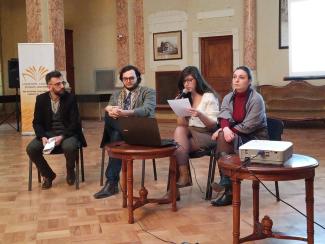
Jean-Marc Ferré | Flickr (CC BY-NC-ND 2.0)
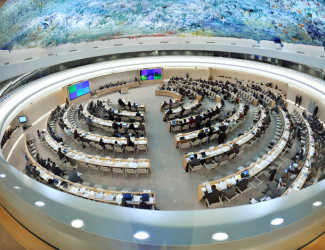
A general view of participants at the 16th session of the Human Rights Council in Geneva, Switzerland.

Special Focus

AWID is an international, feminist, membership organisation committed to achieving gender equality, sustainable development and women’s human rights

Human Rights Council (HRC)

The Human Rights Council (HRC) is the key intergovernmental body within the United Nations system responsible for the promotion and protection of all human rights around the globe. It holds three regular sessions a year: in March, June and September. The Office of the UN High Commissioner for Human Rights (OHCHR) is the secretariat for the HRC.

The HRC works by:

  • Debating and passing resolutions on global human rights issues and human rights situations in particular countries

  • Examining complaints from victims of human rights violations or activist organizations on behalf of victims of human rights violations

  • Appointing independent experts (known as “Special Procedures”) to review human rights violations in specific countries and examine and further global human rights issues

  • Engaging in discussions with experts and governments on human rights issues

  • Assessing the human rights records of all UN Member States every four and a half years through the Universal Periodic Review

Learn more about the HRC


AWID works with feminist, progressive and human rights partners to share key knowledge, convene civil society dialogues and events, and influence negotiations and outcomes of the session.

With our partners, our work will:

◾️ Monitor, track and analyze anti-rights actors, discourses and strategies and their impact on resolutions

◾️ Raise awareness of the findings of the 2017 and 2021 OURs Trends Reports.

◾️Support the work of feminist UN experts in the face of backlash and pressure

◾️Advocate for state accountability
 
◾️ Work with feminist movements and civil society organizations to advance rights related to gender and sexuality.
 

Related Content

Я прошла(-шел) опрос, но передумала(-л) и хочу отозвать ответы – что мне делать?

Если по какой-либо причине вы хотите, чтобы ваш ответ был отозван и удален, вы имеете на это право. Пожалуйста, свяжитесь с нами через форму здесь, указав «Опрос «Где деньги?»» в качестве заголовка вашего сообщения, и мы удалим ваш ответ.

Fahmida Riaz

« Après
Après l’amour la première fois,
Nos corps et nos esprits nus
Une galerie des glaces,
Complètement désarmés, absolument fragiles,
Nous nous couchons dans les bras de l’autre
Respirant attentivement,
Avec la crainte de briser
Ces figurines en cristal. » - Fahmida Riaz

Fahmida Riaz a brisé les tabous sociaux en écrivant sur le désir des femmes dans ses poèmes, créant des récits alternatifs à propos du corps des femmes et de leur sexualité, et établissant de nouveaux standards dans la littérature urdu.

Son travail s’est confronté à de sévères critiques de la part des conservateurs, qui l’ont accusée d’utiliser des expressions érotiques et « pornographiques » dans son langage poétique.  

Fahmida a finalement été mise sur liste noire et accusée de sédition en vertu de l’article 124A du Code pénal pakistanais sous la dictature de Zia-ul-Haq. Forcée à l’exil en 1981, elle a passé presque sept ans en Inde avant de retourner au Pakistan. 

Dans la préface de « Badan Dareeda » (Un corps ravagé), un recueil de poèmes publié en 1974, elle écrit :

Si, en effet, je suis forcée à me tenir aujourd’hui devant ce maqtal et me confronte à la potence, je dois y faire face, la tête haute. Mes poèmes sont la trace d’une tête mutilée : des sons émanant même lorsque suspendue par des cordes… Un corps ravagé a pris la forme de razmia, ou  d’un son de rupture. Et si cette rupture est effectivement choquante pour les gens, c’est que la poète a atteint son intention : elle a réussi à la perturber. (traduction de l’urdu vers l’anglais par Asad Alvi) 

La splendeur de Fahmida résidait dans sa défiance de toute logique ou toute catégorie particulière de genre, nation, religion ou culture. Elle refusait d’être mise dans le rôle d’une « femme poète », brisant les définitions traditionnelles de la poésie féminine, des concepts et des thématiques (variant entre conscience politique, corps, culture, désir, religion, foyer), et renversant les inhibitions assignées à son genre.   

« Il faut que vous compreniez que la culture ne peut avoir d’essence. Les cultures changent, circulent entre elles, formant de nouvelles cultures. La culture est née de cette façon. Il n’y a pas de conflits de cultures. »

Fahmida a écrit plus de 15 livres de poésie et de fiction, dont son poème ‘Taaziyati Qaraardaaden’ («Résolutions de condoléances» en anglais) qui pourrait servir d'hommage approprié à sa vie et à son héritage et de collection de poèmes (Apna Jurm To Saabit He «Mon crime est prouvé») publié en 1988 durant son exil.

Fahmida Riaz est née à Meerut, en Inde, le 28 juillet 1946 et est décédée le 21 novembre 2018 à Lahore, au Pakistan. 

Upasana Agarwal

Forgotten Song
Forgotten Song
Ode to the Moon
Ode to the Moon
Vapour and Fire
Vapour and Fire

About Upasana Agarwal

Upasana Agarwal

Upasana is a non binary illustrator and artist based out of Kolkata, India. Their work explores identity and personal narratives by using a visual remnant or evidence of the contexts they work with. They are especially drawn to patterns which to them communicate complex truths about the past, present and future.  When Upasana is not illustrating they organise and run a queer and trans community art centre in the city. 

Snippet FEA Get Involved Story 4 (EN)

GET INVOLVED!

Follow Solidarity Network Union on Facebook and Twitter

Support the work of Solidarity Network Union donating here

Follow OTRAS on Twitter, Instagram and Facebook

Support the work of OTRAS by donating here

FRMag - United against violence

United against the violence

by Karina Ocampo

In a hidden corner of Chiapas, Mexico, women and sexual dissidents have come to organize our actions. (...)

Read

< artwork by Sonia Carolina Madrigal Loyola

Posso compartilhar o inquérito com outras pessoas?

Claro que sim! Encorajamo-lo a compartilhar a ligação do nosso inquérito com as suas redes. Quanto mais perspetivas diversas recolhermos, melhor será a nossa compreensão do cenário financeiro para a organização feminista.

Sylvia Rivera

Sylvia Rivera was a civil rights activist, a transvestite and sex worker.

Known as the New York Drag queen of color, Silvia was fierce and tireless in her advocacy, in defense of those who  were marginalized and excluded as the “gay rights” movement mainstreamed in the United States in the early 1970’s.

In a well-known speech on Christopher Street Day in 1973, Sylvia, shouted through a crowd of LGBT community members: 

“You all tell me, go and hide my tail between my legs.
I will no longer put up with this shit.
I have been beaten.
I have had my nose broken.
I have been thrown in jail.
I have lost my job.
I have lost my apartment.
For gay liberation, and you all treat me this way?
What the fuck’s wrong with you all?
Think about that!” 

In 1969, at age 17, Silvia took part in the iconic Stonewall Riots by allegedly throwing the second Molotov cocktail to protest the police raid of the gay bar in Manhattan. She continued to be a central figure in the uprisings that followed, organizing rallies and fighting back police brutality.

In 1970, Sylvia worked together with Marsha P. Johnson to establish Street Transvestite Action Revolutionaries (S.T.A.R.), a political collective and organisation that would set up projects of mutual support for trans people living on the streets, those struggling with drug addiction and in prisons and in particular for trans people of color and those living in poverty. 

Defiant of labels, Silvia lived life in a way that challenged people in the gay liberation movement to think differently. She said: 

“I left home at age 10 in 1961. I hustled on 42nd Street. The early 60s was not a good time for drag queens, effeminate boys or boys that wore makeup like we did. Back then we were beat up by the police, by everybody. I didn't really come out as a drag queen until the late 60s. when drag queens were arrested, what degradation there was. I remember the first time I got arrested, I wasn't even in full drag. I was walking down the street and the cops just snatched me. People now want to call me a lesbian because I'm with Julia, and I say, "No. I'm just me. I'm not a lesbian." I'm tired of being labeled. I don't even like the label transgender. I'm tired of living with labels. I just want to be who I am. I am Sylvia Rivera. 

Through her activism and courage, Sylvia offered a mirror that reflected all that was wrong within society, but also the possibility of transformation. Sylvia was born in 1951 and passed away in 2002. 

Entender el contexto de las amenazas anti-derechos

Capítulo 2

El creciente poder de los actores anti-derechos no se está desarrollando en un vacío. Entender el auge del ultranacionalismo, del poder corporativo irrestricto, del incremento de la represión y de la disminución del espacio cívico resulta clave para contextualizar las amenazas anti-derechos que enfrentamos actualmente.

Protester holding a flyer that reads "Danger - Trump and the Far Right."
© Alisdare Hickson / Flickr
Danger - Trump and the Far Right.

Hoy en día, una cantidad considerablemente mayor a la mitad de la población mundial está gobernada por líderes de extrema derecha. En este escenario, lxs defensorxs de derechos humanos y lxs feministas están trabajando arduamente para «mantenerse firmes» y proteger el multilateralismo y el sistema internacional de derechos humanos. También enfrentan el riesgo de que su compromiso acarree represalias violentas. Al mismo tiempo, estas instituciones están cada vez más sujetas a los intereses del sector privado. Las grandes empresas (en particular, las corporaciones transnacionales) están ocupando asientos en la mesa de negociación y posiciones de liderazgo en una gran cantidad de instituciones multilaterales, incluida la ONU. Este nexo de ultranacionalismo, espacio cívico restringido y captura corporativa está teniendo un tremendo impacto sobre la posibilidad de que, alguna vez, logremos obtener derechos humanos para todxs.

Índice de contenidos

  • Nacionalismo y ultranacionalismo
  • Captura corporativa: el poder corporativo irrestricto está poniendo los derechos en riesgo
  • Represalias y espacio cívico restringido para lxs activistas feministas y lxs defensorxs de los derechos humanos de las mujeres y personas LGBTIQ+
  • Historia de movimiento de resistencia: El artículo 16 de la CEDAW: un camino hacia la reforma de las leyes de familia discriminatorias en contextos musulmanes

Lee el informe completo

Snippet FEA We are living in a world right (ES)

Incluso en tiempos de crisis climática, los gobiernos continúan alentando el crecimiento de las industrias agrícolas a gran escala. Estas actividades envenenan la tierra, amenazan la biodiversidad y destruyen la producción de alimentos y los medios de vida locales. Mientras tanto, aunque las mujeres producen la mayoría de nuestros alimentos en el mundo, casi no poseen tierra.

¿Qué pasaría si percibiéramos la tierra y la Naturaleza no como una propiedad privada para ser explotada, sino como una totalidad con la cual aprender y coexistir en armonía? ¿Y si repararíamos nuestras relaciones con la tierra y adoptaríamos alternativas más sostenibles que nutran tanto al planeta como a sus comunidades?

Nous Sommes la Solution (Somos la Solución, NSS) es uno de los muchos movimientos liderados por mujeres que se esfuerzan por lograr este objetivo.

Esta es su historia.

FRMag - Resistance from the Kitchen

Nuestra arepa: Cocina en resistencia

por Alejandra Laprea

Vivo en un país de lo imposible, donde no caen bombas pero padecemos una guerra. (...)

Leer

arte: «Entretejidas», Surmercé >

Membership why page - Loyiso Lindani

Tengo la convicción de que las mujeres empoderadas dotan de empoderamiento a otras mujeres, y es por ello que la he pasado tan bien como afiliada de AWID. Todo lo que sé y lo que entiendo de feminismo e interseccionalidad se ha ampliado gracias a los contactos que tuve como parte del Equipo de la Calle de la Comunidad AWID. Espero que más mujeres se sumen y compartan temas e ideas que ayuden a otras mujeres. - Loyiso Lindani, Sudáfrica.

Cynthia Cockburn

Cynthia Cockburn fue una socióloga feminista, escritora, académica, fotógrafa y activista por la paz.

Estudió los aspectos relacionados con el género en la violencia y el conflicto e hizo importantes contribuciones al movimiento por la paz gracias a sus investigaciones sobre masculinidad y violencia, así como gracias a su activismo local e internacional.

Cynthia aportó un análisis feminista potente sobre la militarización y la guerra, y fue una de las académicas cuyos escritos y estudios demostraron claramente cómo la violencia de género desempeñaba un papel clave en la perpetuación de la guerra. Al trabajar en estrecha colaboración con activistas por la paz en distintos países en conflicto, sus conclusiones abarcaron diversos contextos, entre ellos: Irlanda del Norte, Bosnia y Herzegovina, Israel/Palestina, Corea del Sur, Japón, España y el Reino Unido. También logró incluir en sus investigaciones y escritos académicos una interpretación sobre cómo la violencia se experimenta como un continuo de tiempo y escala y cómo se percibe de forma muy diferente cuando se analiza desde la perspectiva de género.

En sus propias palabras: "El género nos ayuda a ver la continuidad, la conexión entre los casos de violencia".

Cynthia conectó su trabajo de investigación con el activismo que sostuvo a nivel local e internacional con los movimientos por la desmilitarización, el desarme y la paz. Ayudó a iniciar el campamento de paz de las mujeres de Greenham Common, que defendía el desarme nuclear universal en Gran Bretaña, y formó parte también de la creación del capítulo londinense de Women in Black [Mujeres de Negro]. A lo largo de las décadas, Cynthia organizó y participó en vigilias semanales locales y en el coro político Raised Voices [Elevar las Voces], para el que, además de cantar, escribió varias letras de canciones que forman parte de su repertorio.

Su activismo la llevó a apoyar también el trabajo de la Women’s International League for Peace and Freedom [Liga Internacional de Mujeres por la Paz y la Libertad] (WILPF, por su siglas en inglés), el European Forum of Socialist Feminists [Foro Europeo de Feministas Socialistas] y Women Against Fundamentalism [Mujeres contra el Fundamentalismo].

"Cynthia arrojó claridad feminista, tejió comunidades feministas, cantó canciones de paz, escuchó, escuchó, escuchó, observó los pájaros - y detuvo el tráfico. Siempre estaré agradecida y en deuda con ella, la otra 'Cynthia'" - Cynthia Enloe.

Cynthia nació en julio de 1934 y falleció en septiembre de 2019, a la edad de 85 años.

Promouvoir les programmes féministes : principales avancées en matière de genre et de sexualité

Chapitre 1

Alors que les fondamentalismes, les fascismes et autres systèmes d’oppression se métamorphosent et trouvent de nouvelles tactiques et stratégies pour consolider leur pouvoir et influence, les mouvements féministes persévèrent et célèbrent leurs victoires nationales, régionales et internationales.

© GovernmentZA / Flickr A group of women re-enact the 1956 women's march to Pretoria protesting against pass laws.
© GovernmentZA / Flickr
A group of women re-enact the 1956 women's march to Pretoria protesting against pass laws.

La [MB1] reconnaissance en 2019 par le Conseil des droits de l’Homme du droit à l’intégrité et à l’autonomie corporelles, par exemple, a marqué une étape cruciale. Des résolutions du Conseil sur la discrimination envers les femmes et les filles admettent cependant un recul lié à des groupes de pression rétrogrades, des conceptions idéologiques ou un détournement de la culture ou la religion pour s’opposer à l’égalité de leurs droits. Des avancées féministes sont aussi notées dans le travail des Procédures spéciales, qui soulignent notamment l’obligation des États de contrer les doctrines de l’idéologie du genre, rappellent à l’ordre les antidroits qui détournent des références à la « culture », et signalent que les convictions religieuses ne peuvent pas servir à justifier la violence ou la discrimination.

Sommaire

  • Niveau national
  • Sphères mondiales
  • Exercice : Cartographions et célébrons nos victoires!

 Lire le chapitre complet >

Snippet - GII Intro (EN)

Gender Impact Investing & The Rise of False Solutions:

An Analysis for Feminist Movements

Gender Impact Investing (GII) is now trending as a solution to gender inequality. Yet, as our report indicates, it is actually part of the problem. Public and private institutions marketing GII equate it with promotion of gender equality and with increased resources for women and girls.

Neither claim is evidence-based.

Rather, GII is another expression of subjecting our lives and societies to the same financial logic that has shaped, and continues shaping, the profound inequalities in our world.

With this report, AWID offers the readers - feminists, gender justice advocates and stakeholders in gender impact investing - a critical analysis and substantiated evidence to understand GII, its narratives, and economic and political implications for feminist movements.

FRMag - Armenians

Arménien·ne·s, le féminisme est notre passé et notre avenir

par Sophia Armen 

Que cela vous plaise ou non, les ungerhouis font partie intégrante de nos histoires de résistance et elles ne disparaîtront pas de sitôt.  (...)

Lire

Snippet - Blog post Quote_EN

"We believe that this is the time for us to continue to organize from a place of solidarity, hope and radical imaginations."

- Beijing+30 & CSW: Feminist meaning-making at a time of polycrisis

Read here