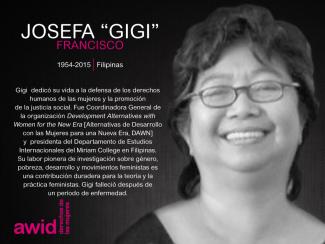
Josefa "Gigi" Francisco
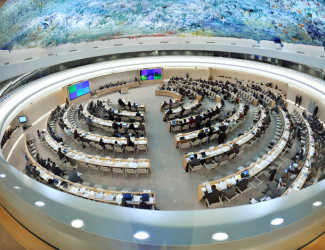
The Human Rights Council (HRC) is the key intergovernmental body within the United Nations system responsible for the promotion and protection of all human rights around the globe. It holds three regular sessions a year: in March, June and September. The Office of the UN High Commissioner for Human Rights (OHCHR) is the secretariat for the HRC.
Debating and passing resolutions on global human rights issues and human rights situations in particular countries
Examining complaints from victims of human rights violations or activist organizations on behalf of victims of human rights violations
Appointing independent experts (known as “Special Procedures”) to review human rights violations in specific countries and examine and further global human rights issues
Engaging in discussions with experts and governments on human rights issues
Assessing the human rights records of all UN Member States every four and a half years through the Universal Periodic Review
AWID works with feminist, progressive and human rights partners to share key knowledge, convene civil society dialogues and events, and influence negotiations and outcomes of the session.
Dear feminist movements,
You welcomed us with open arms when it was announced during the 2016 AWID Forum in Bahia that we would be AWID’s new Co-EDs. It was a moment that felt full of possibility, we were building a feminist oasis that would help sustain our collective struggles forward. We left Bahia with a sharp sense of responsibility, to do our best in your service and to lead AWID in ways that would be most supportive and impactful for you.
It is now time for us to step aside for new leadership!
Over five years into our journey, we are stepping down as AWID’s Co-EDs. Our decision comes as we wrap up the current strategic cycle. We see this as an ideal moment to step aside and support a leadership refresh. We believe that transformative feminist leadership is cyclical.
We so appreciate the opportunity we had to play a role in AWID’s 40 year history, holding and shepherding the organization through the difficult context of global pandemic, and so many spiraling crises.
Feminist movements, we know you will be part of our next journey, whatever that may be. You have consistently taught us about strength and resilience. We may move to different roles, but we will collectively continue to move together.
We have vivid memories of those of you in Indonesia, Malaysia, Nepal, Thailand, Taiwan and beyond who met us to co-create the AWID Forum with so much generosity and spark. Without a doubt, our greatest regret from the last five years is that we could not give you an in-person Forum.
Once we came to the difficult (albeit necessary) decision to cancel the AWID Forum, we focused on grappling with the existential questions so many of our organizations were facing: how do we shift our ways of working to be relevant, account for the exhaustion, sickness, and grief affecting all of us in different ways? How do we build meaningful relationships when we are limited to being online? There are still no straightforward answers to these questions, but feminist movements, you have shown the way.
We were so proud to see the ways feminists were leading responses to mitigate the impacts of COVID-19 on our communities. Feminists are frontline responders in crisis and we will continue to demand recognition and resources for this work. You often responded enthusiastically to our outreach, showing up in amazing ways in our Feminist Bailout campaign and later in the Crear Resister Transform festival. You jumped into collaborative advocacy with us – whether influencing human rights spaces, policy makers or funders.
We give a special shout-out of love and respect to the current and former AWID team (both our staff and Board members) whom we’ve had the honor to work with over these years. We’ve learned from each one of you and felt deep gratitude for everything you have contributed to AWID over the years.
We came into this role as AWID’s first pair of Co-Executive Directors. We learned from the many activist and community traditions of collective leadership and the feminist organizations who had done this before us. We know that we couldn’t have done this job without each other. We were able to leverage each other’s strengths and have each other’s backs to do the best job we could.
We came into role together and are leaving together, even as we will be staggering our departure dates. We are both committed to supporting a smooth transition and deliberate onboarding of the new leadership this year.
Feminist movements, you are in great hands with the AWID team. They’ve got this. And we are proud to be leaving the organization in such a strong and resilient place. Hopefully, we’ll see many of you at the AWID Forum in 2024 – you’ll recognize us as the kicked back, relaxed folks in the audience!
Love and appreciation for all that you’ve done with and for us. Your impact on our lives stretches well beyond the last 5 years, and no doubt will continue to stretch far into the future.
Cindy & Hakima
A conversation on international advocacy and global governance
✉️ By registration only. Register here
📅 Friday, March 14, 2025
🕒 2.30pm EST
🏢 Blue Gallery, The Blue Building, 222 East 46th Street
🎙️Facilitated by: Anissa Daboussi, Manager, Advancing Universal Rights and Justice team
Organizer: SRI, AWID
No hay nada como estar en un espacio compartido, intercambiar energías corporales, mirar a alguien a los ojos y establecer conexiones, ver el mundo y hacer algo juntxs. Eventos como el Foro se encuentran entre los más fuertes del movimiento feminista mundial...
- Jac s m Kee, Malasia
Mobilisant des coiffeurs·ses transgenres de la classe ouvrière et des reines de beauté, les leaders dynamiques du seul parti politique LGBT au monde mènent une quête historique pour élire une femme trans au Congrès philippin.
« La vie... c’est vivre dans la joie, se lever avec un but, sentir son énergie créative, répondre à son appel. » – Sylvia Robinson
Cet espace de performances créatrices foisonnantes rassemblait des initiatives d’éducation, d’engagement citoyen, d’arts, de services sociaux et spirituels et de pratiques de développement durable. Sylvia considérait cet endroit comme une maison où « il existe un équilibre et une synergie avec les activités dont les gens ont besoin pour entretenir la vie ».
Elle comptait également parmi les membres fondateur·trice·s du Georgia Avenue Community Development Taskforce, dans le nord-ouest de la capitale, un groupe de quartier actif dans le domaine de la justice sociale et de l’organisation qui veillait à ce que la communauté ait son mot à dire dans le redéveloppement et l’embourgeoisement du secteur.
« Nous demandons des logements abordables. Nous demandons que les petits commerces qui sont ici depuis longtemps ne soient pas balayés par de nouvelles enseignes. Nous demandons des espaces verts et des lieux où les gens peuvent se rencontrer. Nous demandons à ce que le paysage urbain soit amélioré, avec des rues en meilleur état et des éclairages publics. » – Sylvia Robinson, à propos du travail de la Taskforce
Avant de devenir organisatrice, et après avoir obtenu son diplôme en informatique, Sylvia avait travaillé dans le domaine des systèmes de contrôle du trafic aérien pendant plus d’une décennie. Elle s’est ensuite orientée vers le conseil relatif à la consommation d’alcool et de drogue, s’impliquant davantage dans le travail communautaire.
« Cette implication dans la communauté, c’était ma vocation. » – Sylvia Robinson
Née à Washington D.C. le 14 août 1961, Sylvia est décédée le 18 septembre 2017 après avoir lutté contre le cancer.
« L’esprit et l’héritage de Sylvia continueront d’inspirer cette communauté pour de nombreuses années. » – ECAC
Estimados movimientos feministas:
En nombre de la Junta Directiva de AWID, me enorgullece presentarles a las próximas Co-directoras Ejecutivas: Faye Macheke e Inna Michaeli
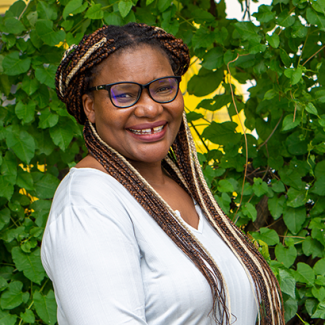 |
Faye Macheke es una apasionada feminista panafricana, que participa en movimientos por los derechos de las mujeres, la justicia racial, los derechos laborales y de las personas migrantes, y la justicia ambiental. Su activismo se ha alimentado del legado de la lucha contra el apartheid en Sudáfrica y del período posterior a la época del apartheid en Zimbabue. En 2019 Faye se incorporó a AWID como Directora de Finanzas, Operaciones y Desarrollo. Aporta una amplia experiencia en liderazgo feminista, estrategia y todos los aspectos del desarrollo organizativo. Faye es una comprometida integrante de la Junta Directiva de UAF-África y de otras organizaciones por los derechos de las mujeres. Vive en Ciudad del Cabo, Sudáfrica. |
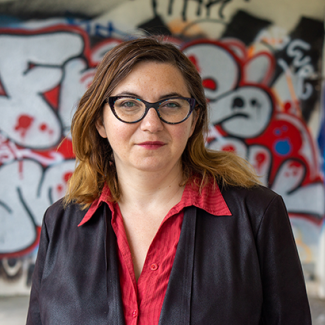 |
Inna Michaeli es una activista y socióloga feminista lesbiana queer, con muchos años de profundo compromiso con las luchas feministas y LGBTQI+, con educación política y activismo por y para mujeres migrantes y con la liberación de Palestina y la solidaridad con su pueblo. Inna se unió a AWID en 2016 y se desempeñó en diferentes funciones, más recientemente, como Directora de Programas. Contribuye con su extensa experiencia en investigación y construcción de conocimiento, promoción de políticas, y desarrollo organizativo. Inna integra la Junta Directiva de Jewish Voice for Peace (Alemania). Reside en Berlín, Alemania. |
Esta decisión es el resultado de un riguroso proceso que contó con la total participación de la Junta Directiva y el personal de AWID. La Junta reconoció y homenajeó las aptitudes y los talentos del personal de AWID, abriendo una búsqueda interna para la contratación. En consecuencia, se presentaron juntas, como equipo, dos candidatas brillantes que personifican la integridad, la ética del cuidado y los valores feministas interseccionales que impulsan el trabajo de AWID. Faye e Inna propusieron una valiente e interesante visión para enfrentar los desafíos de este momento: construir una comunidad feminista global, resistir y desestabilizar los sistemas de opresión y apoyar a los movimientos feministas para que prosperen.
Este año, en que AWID celebra sus 40 años, nos emociona que Inna y Faye co-lideren a AWID en sus estrategias y en una nueva fase de evolución y superación de las fronteras, apoyando a los movimientos feministas de todo el mundo.
Designar y apoyar a las Co-directoras Ejecutivas de AWID para que lideren la organización es una responsabilidad fiduciaria que, como Junta Directiva, tomamos muy seriamente. La forma en que desarrollamos esos procesos es también un reflejo de la brillante y diversa membresía de AWID, que elige a la Junta de AWID.
Al despedirnos de Cindy y Hakima, nosotrxs, la Junta Directiva, damos la bienvenida en forma unánime y entusiasta a Faye e Inna como nuestras próximas Co-directoras Ejecutivas a partir del 5 de septiembre de 2022. Manténganse atentxs a las actualizaciones sobre nuestra transición de liderazgo en los próximos meses.
Sobre todo, ¡gracias por su continuo apoyo!
Con solidaridad feminista y amor,
Margo Okazawa-Rey
Presidenta de la Junta Directiva de AWID
Boil them down to communications language preferences
Du 2 au 5 décembre 2024, à Bangkok, en Thaïlande ! Nous nous rassemblerons au Centre national de convention de la Reine Sirikit (QSNCC) et aussi virtuellement en ligne.
some text some text some text some text some text some text some text some text some text some text some text some text
some text some text some text some text some text some text some text some text some text some text some text some text
“I’m no adherent to the concept of the ‘Third World’. I make films so that people - no matter what race or color they are - can understand them. For me there are only exploiters and the exploited, that’s all. To make a film means to take a position.” - Sarah Maldoror
Her groundbreaking film and “revolutionary picture” Sambizanga (1972) follows Angolan militants’ anti-colonial liberation struggle, as well as captures a woman’s perspective in a historical moment she finds herself in.
“For many African filmmakers, cinema is a revolutionary tool, a political education to raise consciousness. It is inscribed in the evolution of a Third Cinema striving to decolonize thought and advocate radical changes in society.” - Sarah Maldoror
Throughout her career, Sarah - together with a number of African and Caribbean artists - co-founded (1956) the first Black theatre troupe in France. She made around 40 films, comprising important documentaries that amplify the lives and work of black artists, including her friend and poet Aimé Césaire who wrote to her:
“To Sarah Maldo
who, a camera in hand,
fights oppression, alienation
and flies in the face
of human bullshit.”
Sarah was also committed to giving African women more ownership of the filmmaking process. In an interview, she pointed out:
"African women must be everywhere. They must be in the images, behind the camera, in the editing room and involved in every stage of the making of a film. They must be the ones to talk about their problems."
Sarah left an incredibly powerful legacy to be carried forward.
Born 19 July 1929, Sarah passed away on 13 April 2020 from complications of the coronavirus.
Watch Sambizanga and read a film review in a 1973 New York Times article


Je t’appartiens depuis aussi longtemps que je peux me souvenir. Jeune fille, j’ignorais qu’il y avait un mot – féministe – pour nous toustes qui aspirons à vaincre et à démanteler le patriarcat, qui cherchons refuge dans les bras de l’inclusion et de l’intersectionnalité, qui traitons les gens comme des égaux, peu importent leur genre, leur race, leur sexualité, leur religion et leur ethnicité, qui apprenons constamment pour mieux faire, pour mieux être et pour nous servir de nos privilèges pour élever les autres.
Quand j’avais 14 ans, mon professeur de français au Collège, un trentenaire de 1,80 m, a agressé une élève de ma classe devant tout le monde. L’élève, une de mes amies d’enfance, et plusieurs autres filles de la classe sont allées voir la direction pour le dénoncer, les parents s’en sont mêlés et la classe entière, forte de ses trente élèves, a soutenu la fille. Mais toutes nos tentatives pour lui faire porter la responsabilité de son acte ont échoué, l’administration a gardé le silence sur l’histoire de la fille et il n’a jamais été renvoyé ni poursuivi. Les filles de ma classe et moi-même étions outrées, donc nous avons fait ce que toute jeune féministe en rage ferait : nous avons jeté des œufs sur sa voiture! Et bien que les œufs se lavent facilement et que la peinture utilisée pour écrire « Sale porc » et « Khamaj » (ordure) sur sa carrosserie pouvait être grattée, je n’oublierai jamais comment nous nous sentions après cela. [MB1] Libérées, enragées, heureuses, solidaires et puissantes. Ce même sentiment m’envahit à chaque nouvel événement féministe auquel je prends part depuis. L’adolescente féministe en moi a grandi et rejoint Women Deliver, l’AWID, Unootha, animé des ateliers féministes à l’université et même été poursuivie pour son affiliation féministe à 19 ans, mais ça, je le garde pour une autre lettre.
Les mouvements et les espaces féministes m’offrent la sécurité et l’autonomisation. Ce sont les mères que nous aurions aimé avoir et le lien dont nous avions besoin pour nous connecter et nous organiser, malgré nos différences contre un ennemi commun qui mine tout le monde, le patriarcat. C’est grâce à toi que j’ai appris à être résiliente et à mettre toutes mes forces et mes compétences au service des autres en les soutenant, en mettant la lumière sur les marginalisées et en tendant le micro à celles qu’on n’entend jamais.
Ce que j’aime le plus chez vous, les mouvements féministes, c’est que parfois vous merdez, vous négligez et marginalisez aussi, vous avez des biais - comme tout autre mouvement - mais ce qui vous rend différents, c’est que vous vous efforcez toujours de mieux faire. La redevabilité ne vous effraie pas, et vous êtes un collectif en constante évolution qui reflète la manière dont l’altruisme et la philanthropie dans l’effort vers l’équité de genre changent à mesure que le temps passe.
Puissiez-vous continuer à croître, puissiez-vous faire mieux, puissiez-vous être toujours enragés, puissiez-vous continuer à rugir, puissiez-vous toujours aimer, puissiez-vous toujours parler des langues différentes et puissiez-vous toujours avoir le pouvoir.
Avec amour, lumière et rage,
Lina
Please calculate your costs of travel to Bangkok, accommodations and per diem, visa, any accessibility needs, and incidentals, on top of a registration fee that will be announced soon. Hotels in the Sukhumvit area in Bangkok range from USD$50 to $200 per night, double occupancy.
AWID members receive a discount at registration, so if you are not a member yet, we invite you to consider becoming a member and joining our global feminist community.
Un réseau complexe et mouvant d’antidroits exerce une influence croissante dans les sphères internationales et les politiques locales. Souvent soutenu·e·s par des financements d’origine imprécise, ces acteur·rice·s renforcent leur impact en créant des alliances tactiques entre thématiques, régions et croyances.