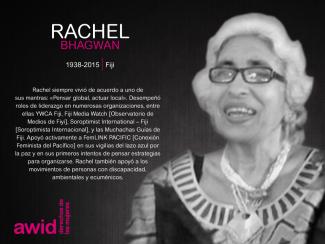
Rachel Bhagwan

In September 2016, the 13th AWID international Forum brought together in Brazil over 1800 feminists and women’s rights advocates in a spirit of resistance and resilience.
This section highlights the gains, learnings and resources that came out of our rich conversations. We invite you to explore, share and comment!
One of the key takeaways from the 2016 Forum was the need to broaden and deepen our cross-movement work to address rising fascisms, fundamentalisms, corporate greed and climate change.
With this in mind, we have been working with multiple allies to grow these seeds of resistance:
And through our next strategic plan and Forum process, we are committed to keep developing ideas and deepen the learnings ignited at the 2016 Forum.
AWID Forums started in 1983, in Washington DC. Since then, the event has grown to become many things to many peoples: an iterative process of sharpening our analyses, vision and actions; a watershed moment that reinvigorates participants’ feminisms and energizes their organizing; and a political home for women human rights defenders to find sanctuary and solidarity.
Get started with these resources.
COP30 Political Education Toolbox Play the Climate Justice Organizing Deckgame
Read the Feminist Economic Alternatives Brief Download the Climate Justice Zine
Dans le monde entier et au sein des mouvements sociaux, les personnes désireuses d’innover ont tendance à se sentir seules et impuissantes face au « statu quo du mouvement ». Historiquement, les Forums de l’AWID ont joué un rôle dans le soutien de ces innovateur·trices en leur offrant une plateforme où leurs idées et pratiques sont accueillies et renforcées par les pensées et actions d’autres personnes de différentes régions et communautés qui les ont déjà explorées. Sara Abu Ghazal, féministe palestinienne au Liban, nous parle de ce qu’ont représenté les Forums pour toute une nouvelle génération de féministes de la région MENA (Moyen-Orient et Afrique du Nord) qui ont introduit de nouvelles façons de s’organiser, de nouvelles conceptions du féminisme et de nouvelles questions dans le paysage régional des droits des femmes.
con Manal Tamimi, Bubulina Moreno, Karolina Więckiewicz y Anwulika Ngozi Okonjo
Esta política rige para todas las páginas alojadas en https://www.awid.org/ y para cualquier otro sitio web bajo el control de AWID (el «Sitio web») y para las suscripciones a estos sitios. No se aplica a páginas alojadas por otras organizaciones distintas a AWID, hacia las cuales podemos dirigir un hipervínculo y cuyas políticas de privacidad pueden ser diferentes. Por favor, lee la siguiente política para que puedas comprender nuestra política de privacidad en cuanto a su naturaleza, propósito, uso y divulgación de tu información personal e identificable que es recogida a través de este sitio web.
En general, puedes navegar este sitio web sin enviarnos información personal. Sin embargo, en algunas circunstancias, te pediremos esa información personal.
Cuando te encuentras en el sitio web y se te pide información personal, estás compartiendo esa información sólo con AWID.
1.1.1 La información que nos das para recibir actualizaciones de AWID:
Cuando te registras para usar el sitio (por ejemplo, te suscribes para recibir correos electrónicos o para solicitar membresía) nos das la información necesaria acerca de ti, como tu nombre, país, idioma, para recibir actualizaciones por correo electrónico. Nos das esta información a través de formularios seguros y es almacenada en servidores seguros.
1.1.2 La información de pago que nos das para hacerte miembrx o para anotarte en algún evento:
Además, puede ser necesario que nos des información sobre el pago cuando te haces miembrx o cuando te anotas para eventos. AWID no almacena en sus servidores ninguna información relativa a tarjetas de crédito y usa portales seguros para procesar la información relativa a pagos.
1.1.3 La información opcional que decidiste darnos (con consentimiento)
Cuando te comunicas con AWID o nos das información opcional a través de formularios en el sitio web o utilizas el sitio para comunicarte con otrxs miembrxs, recogemos información sobre tu comunicación y cualquier otra información que elijas dar.
1.1.4 Información que nos das a través de los formularios de contacto o cuando te comunicas directamente con nosotrxs
Cuando te comunicas con nosotrxs, recogemos tu comunicación y toda otra información que decidas darnos.
Además, cuando interactúas con el Sitio web, nuestros servidores pueden llevar un registro de actividad que no te identifica personalmente («Información no personal»). Por lo general, recogemos las siguientes categorías de información no personal:
Para más información sobre las cookies, por favor consulta All about cookies.
Si no deseas recibir cookies puedes cambiar fácilmente tu navegador web para que rechace las cookies o notificarte cuando recibes una nueva cookie. Puedes mirar aquí cómo hacerlo.
AWID utiliza la información que recogemos acerca de ti para:
Si te has subscrito a los boletines electrónicos de AWID o a nuestras actualizaciones por correo electrónico o si te has hecho miembrx, te enviaremos comunicaciones regularmente en la forma especificada en el área correspondiente del sitio web. Puedes cancelar la suscripción de cualquiera de los boletines electrónicos o actualizaciones de correo electrónico en cualquier momento siguiendo los pasos indicados para ello en nuestros correos.
Es importante para AWID que tu información de identificación individual sea precisa. Siempre estamos buscando cómo hacer más fácil que puedas revisar y corregir la información que AWID tiene acerca de ti en nuestro sitio web. Si cambias tu dirección de correo electrónico, o si cualquier otra información que tengamos es incorrecta o desactualizada, por favor escríbenos a esta dirección.
Con excepción de lo explicado más abajo, AWID no revelará ninguna información personal acerca de ti que sea identificable, y no venderá ni alquilará a tercerxs listados conteniendo tu información. AWID podrá revelar información cuando tenga tu permiso para hacerlo o bajo circunstancias especiales, por ejemplo cuando crea de buena fe que la ley se lo exige.
De manera permanente implementamos y actualizamos las medidas administrativas, técnicas y de seguridad física para proteger tu información de accesos no autorizados, pérdida, destrucción o alteración. Algunas de las salvaguardas que usamos para proteger tu información son cortafuegos, encriptación de datos y controles de acceso a la información. Si sabes o tiene razones para creer que tus credenciales de membresía a AWID se han perdido, han sido robadas, malversadas o comprometidas de alguna forma o en caso de que sepas o sospeches de uso no autorizado de tu cuenta de membresía a AWID, por favor ponte en contacto con nosotrxs a través de nuestra página.
Esta política puede cambiar periódicamente. La política modificada será publicada en este sitio web y al final del texto se actualizará la fecha de Última actualización. Se enviará un correo electrónico con la actualización de la política revisada y si no estás de acuerdo con ella tendrás la opción de cancelar tu suscripción o suscripciones con nosotrxs. También puedes escribirnos aquí. ¡Agradecemos tus opiniones!
Última actualización: mayo de 2019

avec Nazik Abylgaziva, Amaranta Gomez Regalado, Cindy Weisner et Lucineia Freitas.
*Sitios web en inglés
**Sitio web en francés
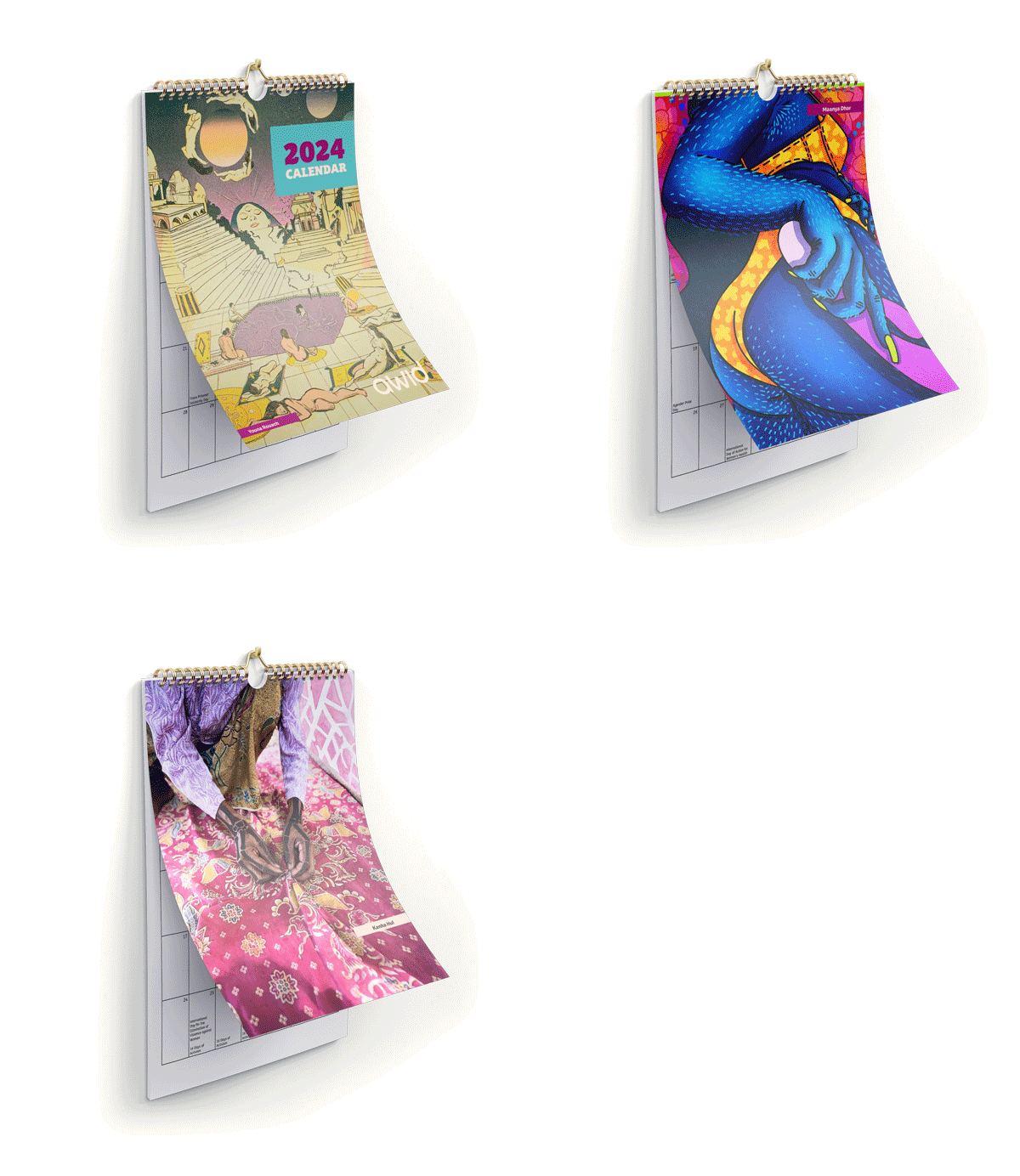
Ce calendrier nous invite à nous immerger dans le monde inspirant de l'art féministe. Chaque mois, au fur et à mesure de son déploiement délicat, il présentera les œuvres vivantes d'artistes féministes et queer de nos communautés. Leurs créations ne sont pas de simples images; ce sont des récits profonds qui résonnent avec des expériences de lutte, de triomphe et de courage indéfectible établissant notre quête collective. Ces histoires visuelles, débordantes de couleurs et d'émotions, servent à combler les distances et à tisser ensemble nos expériences diverses, nous rapprochant dans nos missions partagées.
Ce calendrier constitue notre appel à vous : utilisez-le, imprimez-le, partagez-le. Laissez-le être votre partenaire quotidien dans votre parcours, un rappel constant de notre interconnexion et de nos visions partagées pour un monde meilleur.
Laissez-le vous inspirer, tout comme il nous inspire, afin d’avancer ensemble.

Obtenez-le dans votre langue préférée ! |
| English |
| Français |
| Español |
| Português |
| عربي |
| Русский |
| Thai |
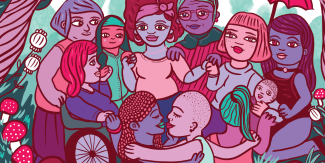
Un juego práctico con el que los colectivos pueden analizar las alternativas económicas feministas y los sistemas de cuidados como respuesta a las crisis. Destinado a todos los movimientos que trabajan en torno a la crisis climática mundial mediante una estrategia basada en escenarios de la vida real. Una vía creativa para elaborar estrategias en reuniones, talleres y encuentros comunitarios.
Este informe recuerda y celebra el primer año del nuevo plan estratégico de AWID, cuando dimos nuestros primeros pasos hacia los resultados deseados: el apoyo a los movimientos feministas para que prosperen, la impugnación de las agendas antiderechos, y la creación conjunta de realidades feministas.

Trabajamos con feministas para desestabilizar las agendas antiderechos, y logramos importantes victorias, peleadas y ganadas dentro del sistema de Naciones Unidas, cuando se logró la inclusión de lenguaje innovador sobre discriminación estructural, derechos sexuales y obligaciones de los Estados en una cantidad de resoluciones. Sí, el sistema multilateral está en crisis y necesita un sólido fortalecimiento, pero estas victorias son importantes, ya que contribuyen a la legitimidad de las demandas feministas, brindando a los movimientos feministas más puntos de presión y más impulso para promover nuestras agendas.
Ensayamos y pusimos a prueba distintas formas de construir conocimientos con los movimientos feministas a través de seminarios en línea, podcasts y conversaciones «en vivo». Desarrollamos guías de facilitación con educadorxs populares para recuperar saberes en pos de la justicia social y de género, incluso sobre un tópico tan aparentemente opaco como los flujos financieros ilícitos. Auspiciamos blogs y opiniones sobre cómo los grupos feministas obtienen fondos y recursos, y señalamos las amenazas que enfrentan nuestros sistemas de derechos humanos.
Dentro de AWID, pusimos en práctica y aprendimos de nuestro enfoque de liderazgo compartido, y relatamos la historia de las dificultades y tribulaciones de dirigir conjuntamente una organización global virtual. No tenemos una respuesta definitiva sobre cómo es un liderazgo feminista, pero un año más tarde sabemos que el compromiso continuo con la experimentación y el aprendizaje colectivos nos ha permitido seguir construyendo una organización con la cual nos entusiasma contribuir.
Al recordar este año, queremos agradecer a todxs nuestrxs amigxs y promotorxs, colegas y compañerxs, que han aportado su tiempo y han compartido su bagaje de conocimiento y sabiduría con nosotrxs. Queremos agradecer a nuestrxs afiliadxs, que han ayudado a construir nuestro plan estratégico y se han unido a nosotrxs para formular demandas feministas. No podríamos hacer este trabajo sin ustedes.