Special Focus

AWID is an international, feminist, membership organisation committed to achieving gender equality, sustainable development and women’s human rights

AWID Forum: Co-creating Feminist Futures

In September 2016, the 13th AWID international Forum brought together in Brazil over 1800 feminists and women’s rights advocates in a spirit of resistance and resilience.

This section highlights the gains, learnings and resources that came out of our rich conversations. We invite you to explore, share and comment!


What has happened since 2016?

One of the key takeaways from the 2016 Forum was the need to broaden and deepen our cross-movement work to address rising fascisms, fundamentalisms, corporate greed and climate change.

With this in mind, we have been working with multiple allies to grow these seeds of resistance:

And through our next strategic plan and Forum process, we are committed to keep developing ideas and deepen the learnings ignited at the 2016 Forum.

What happens now?

The world is a much different place than it was a year ago, and it will continue to change.

The next AWID Forum will take place in the Asia Pacific region (exact location and dates to be announced in 2018).

We look forward to you joining us!

About the AWID Forum

AWID Forums started in 1983, in Washington DC. Since then, the event has grown to become many things to many peoples: an iterative process of sharpening our analyses, vision and actions; a watershed moment that reinvigorates participants’ feminisms and energizes their organizing; and a political home for women human rights defenders to find sanctuary and solidarity.

Learn more about previous Forums

Related Content

حالة التمويل للحركات النسوية ووقائعها تتغير بسرعة. هل هذا الاستطلاع لمرة واحدة؟

كلا. يبني هذا الاستطلاع على المعلومات التي حشدتها جمعية حقوق المرأة في التنمية حول كيفية الحصول على تمويل أكبر وأفضل للحركات النسوية وحركات التغيير الاجتماعي وهذه الدورة الثالثة لاستطلاع "أين التمويل للتنظيمات النسوية". نهدف للقيام بالاستطلاع مرة كل ثلاثة أعوام.

Efua Dorkenoo

Affectueusement connue sous le nom de « Mama Efua », Efua a lutté contre les mutilations génitales féminines (MGF) pendant trois décennies et a contribué à attirer l'attention et l'action de la communauté internationale pour mettre fin à cette pratique néfaste.

En 1983, Efua a cofondé FORWARD (fondation pour la santé, la recherche et le développement des femmes), qui est devenue une organisation de premier plan dans la lutte contre les MGF. Son livre intitulé « Cutting the Rose: Female Genital Mutilation »  (couper la rose), publié en 1994, est considéré comme le premier ouvrage sur les mutilations génitales féminines. Il figure parmi « Les 100 meilleurs livres africains du XXe siècle » de l’Université de Columbia.

Originaire du Ghana et infirmière de formation, Efua a rejoint l'OMS en 1995 et a réussi à faire en sorte que les mutilations génitales féminines fassent partie des agendas politiques des États membres de l'OMS. Elle a également travaillé en étroite collaboration avec le gouvernement nigérian pour élaborer une politique nationale globale qui servirait de base légale aux lois nigérianes contre les mutilations et qui est toujours en vigueur à ce jour.

Son travail de pionnière a abouti à une campagne menée par l'Afrique intitulée « The Girl Generation », qui s'est engagée à mettre fin aux MGF en une génération. Efua a montré comment une seule personne peut devenir la voix unificatrice d'un mouvement : « Une identité partagée peut aider à rassembler des activistes d'horizons différents dans un but commun ». Ces mots, emplis de sagesse, sont plus pertinents que jamais.

 

Efua Dorkenoo, Ghana

Mai 2015: les consultations sur la version préliminaire du document final ont lieu

Sessions de consultation complémentaires sur la version préliminaire du document final

  • Le 7 mai, les co-facilitateurs ont publié la version révisée du document final de la troisième Conférence sur FdD (en anglais).
  •  Pour permettre d’améliorer le document final, des sessions complémentaires ad hoc portant sur cette version révisée du document final ont été organisées du 12 au 15 mai 2015, puis du 26 au 29 mai 2015, au siège de l’ONU à New York.

Snippet FEA Union Otras (EN)

UNION OTRAS

The Sex Workers' Trade Union Organisation (Organización de Trabajo Sexual, OTRAS) is the first union of sex workers in the history of Spain. It was born out of the need to ensure social, legal and political rights for sex workers in a country where far-right movements are on the rise.

After years of struggles against the Spanish legal system and anti-sex workers groups who petitioned to shut it down, OTRAS finally obtained its legal status as a union in 2021.

Its goal? To decriminalize sex work and to ensure decent working conditions and environments for all sex workers.

The union represents over 600 professional sex workers, many of whom are migrant, trans, queer and gender-diverse.

Our values - bodily autonomy

Bodily autonomy, integrity and freedoms<

We celebrate everyone's right to choose their identities, relationships, goals, work, dreams and pleasures, and what they do with their mind, body and spirit. We believe in working towards access to resources, information and safe and enabling environments that allow this to happen.

Snippet - WITM Who should - PT

Quem deve realizar este inquérito?

O inquérito destina-se a grupos, organizações e movimentos que trabalham especificamente ou principalmente pelos direitos das mulheres, pessoas LBTQI+ e pela justiça de género, em todos os contextos, em todos os níveis e em todas as regiões. Se este for um dos pilares principais do seu grupo, da sua comunidade, da sua rede ou de qualquer outro tipo de organização, quer esteja registada ou não, seja nova ou já estabelecida, convidamo-lo a participar neste inquérito.

* De momento, não solicitamos respostas de indivídues ou de fundos feministas e de mulheres.

Perguntas Frequentes

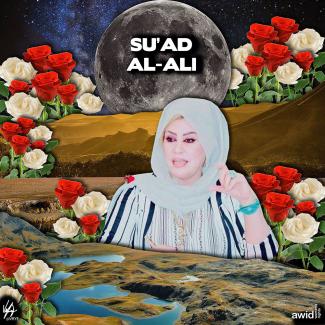
Su’ad Al-Ali

Su’ad was a strong advocate of women’s and children’s rights, and was the head of Al-Weed Al-Alaiami - an Iraqi human rights organisation.

She participated in the July 2018 demonstrations that took place in Basra and several other Iraqi cities protesting unemployment and demanding jobs and proper public services for citizens, as well as calling for the elimination of rampant corruption.

On 25 September 2018, Su’ad was assassinated in the Al-Abbasiyah district in downtown Basra. A video of the incident showed a person approaching her as she was getting into her car, firing a bullet at the back of her head and pointing another bullet at her driver Hussain Hassan, who was injured in the shoulder. Al-Ali was 46 and the mother of four children.


Su'ad Al Ali, Iraq

What are some of the debates and conflict areas?

Snippet FEA Union Otras Photo 4 (ES)

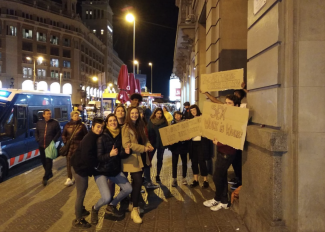
Foto de un grupo de personas protestando de noche.

Membership why page - Angelina Mootoo quote

Al unirme a AWID, espero poder ayudar a la movilización del movimiento feminista. No solo para las mujeres privilegiadas, sino para TODAS las mujeres y activistas feministas.- Angelina Mootoo, feminista interseccional y caribeña, Guyana/EEUU

AWID Community Jobs board - ES

Bolsa de Empleos Comunitaria

¿Estás buscando trabajo? Una de las ventajas de unirse a la Comunidad AWID es tener acceso a nuestra bolsa de empleos co-creada por la comunidad. Podrás explorar nuevas oportunidades y también tendrás la oportunidad de compartir vacantes y convocatorias de propuestas con todos los miembros.

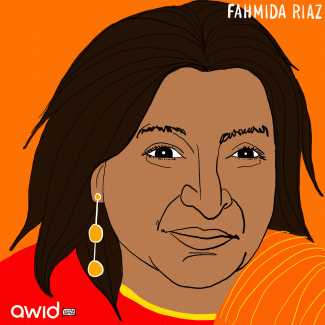
Fahmida Riaz

“Afterwards
After love the first time,
Our naked bodies and minds
A hall of mirrors,
Wholly unarmed, utterly fragile,
We lie in one another's arms
Breathing with care,
Afraid to break
These crystal figurines.” - Fahmida Riaz

Fahmida Riaz broke social taboos by writing about female desire in her poetry, creating alternative narratives about women’s bodies and sexuality, and setting new standards in Urdu literature.

Her work faced harsh criticism from conservatives, who accused her of using erotic and “pornographic” expressions in her poetic language. 

Fahimida was eventually blacklisted and charged with sedition under Section 124A of the Pakistan Penal Code) during the dictatorship of Zia Ul Haq. Forced into exile in 1981, she spent almost seven years in India before returning to Pakistan. 

As part of the preface to “Badan Dareeda” ('The Torn-Bodied'), a collection of poetry published in 1974, she wrote: 

If, indeed, I am forced to stand before this maqtal today and face the gallows, I should face them with my head held high. My poems are the trace of a mangled head: emanating sounds even as it is suspended from ropes... A Body Torn has taken the form of a razmia, or the sound of rupture. And if such rupture indeed shocks a people, then consider the poet as having achieved her purpose: she has managed to disturb them. (translation from Urdu by Asad Alvi)

The brilliance of Fahmida was in defying any singular logic or categories of gender, nation, religion or culture. She refused to be put in the role of a ‘woman poet’, breaking with traditional definitions of feminine poetry and concepts and themes (ranging from political consciousness, body, culture, desire, religion, home) and knocking down inhibitions put on her gender. 

“You have to understand that culture can have no essence. Cultures move, flowing into one another, forming new cultures. Culture is born this way. There is no clash of cultures.” 

Fahmida authored more than 15 books on poetry and fiction including her poem ‘Taaziyati Qaraardaaden’ (‘Condolence Resolutions’) that might serve as an appropriate tribute to her life and legacy and a collection of poems (Apna Jurm To Saabit He ‘My Crime Stands Proven’) published in 1988 during her time in exile. 

Fahmida Riaz was born in Meerut, India on 28 July 1946 and passed away on 21 November 2018 in Lahore, Pakistan.

No puedo presentar una propuesta escrita, ¿aceptan otros formatos?

Como expresión de nuestro compromiso con hacer que todos los aspectos del Foro AWID sean accesibles, aceptaremos propuestas en forma de audio/video cuando se trate de personas/organizaciones/grupos que no puedan enviarlas por escrito. Si decides enviar tu propuesta en formato de audio/video, por favor responde las preguntas en el mismo orden en que aparecen en el Formulario para Presentar Actividades.

Para presentar un archivo de audio/video, por favor escríbenos utilizando nuestro formulario de contacto. Seleccione «propuesta de actividad» como asunto de mensaje.

Contactanos

Snippet FEA Principles of Work (FR)

Principes

DE TRAVAIL

Questions (Forum page)

Des questions ?

Vous avez des questions concernant le Forum de l’AWID ou les activités connexes ? Nous avons des réponses ! 

Trouver des réponses

Snippet - Join CSW69 Conversations Intro_FR

Rejoignez-nous en prenant part aux conversations #FreezeFascisms!

 (#BloquerLesFascismes) !

Alors que nous affrontons de multiples crises dans le monde entier, nos mouvements œuvrent sans relâche à construire une influence qui dépasse les structures de pouvoir traditionnelles. La vague de décrets présidentiels américains vise à nous intimider, mais aucune idéologie fasciste, quelle que soit son ampleur, ne peut effacer notre existence et notre résistance.

Nous vous invitons à rejoindre la campagne de solidarité pour dénoncer et résister aux forces fascistes qui sapent les mouvements féministes et de justice de genre dans vos communautés !

  • Déclenchez des conversations au sein d’un espace courageux : partagez vos initiatives de lutte et de résistance aux fascismes à votre échelle sur la plateforme de la Communauté AWID. Pas encore membre ? Rejoignez-nous ici. 
  • Soutenez les mouvements qui ont été touchés : relayez les collectes de fonds, les ressources disponibles, les efforts d’entraide en utilisant #FreezeFascisms #BloquerLesFascismes (nous sommes toujours sur X, Instagram, Facebook, LinkedIn, mais aussi sur Bluesky !) 
  • Mobilisez-vous autour d’alternatives : nous avons créé une communauté de pratiques à adopter pour des alternatives économiques féministes et un financement autonome. Inscrivez-vous pour en faire partie ici(en anglais)

Navleen Kumar

"No era una persona. Era una potencia". - Así recuerda unx compañerx activista a Navleen Kumar.

Nacida el 15 de octubre de 1994, Navleen Kumar fue una ferviente activista por el derecho a la tierra y la justicia social de la India.

Con integridad y compromiso, trabajó durante más de una década para proteger y restaurar las tierras de los pueblos indígenas (adivasi) en el distrito de Thane, un área arrebatada por los propietarios y promotores inmobiliarios a través de medios como la coerción y la intimidación. Luchó contra esta injusticia y estos crímenes a través de intervenciones legales en diferentes tribunales, y descubrió que la manipulación de los registros de las tierras era una característica recurrente en la mayoría de los casos de adquisición de terrenos. En uno de los casos, el de los Wartha (una familia tribal), Navleen descubrió que la familia había sido engañada con la complicidad de funcionarixs gubernamentales.

Así, a través de su trabajo, ayudó a restituir la tierra a la familia Wartha, y siguió dedicándose a otros casos de transferencias de tierras adivasi.
 
"Su  artículo sobre el impacto de la alienación de la tierra en las mujeres y las niñas y niños adivasi traza la historia y las complejidades de la alienación tribal desde la década de los 70, cuando las familias de clase media comenzaron a trasladarse a los suburbios de Mumbai, que se extendían mientras el valor de la propiedad en la ciudad aumentaba de forma exponencial.

Los complejos de viviendas proliferaron en estos suburbios, y lxs integrantes de las comunidades tribales, que eran analfabetxs, pagaron el precio por ello. El costo de las tierras de primera, cerca de las líneas de ferrocarril, alcanzó un precio elevado y los constructores se abalanzaron sobre este cinturón como buitres, arrebatando de forma ilegal las tierras a las comunidades tribales y otrxs residentes locales ". - Jaya Menon, Comisión de Justicia y Paz.

Durante el curso de su activismo, Navleen recibió numerosas amenazas y sobrevivió a varios atentados contra su vida. A pesar de ello, siguió trabajando no sólo en lo que era importante para ella, sino que además contribuyó a cambiar la vida y la realidad de las muchas personas a las que apoyó en su lucha por la justicia social.

Navleen murió apuñalada el 19 de junio de 2002 en su edificio de departamentos. Dos gánsteres locales fueron arrestados por su asesinato.