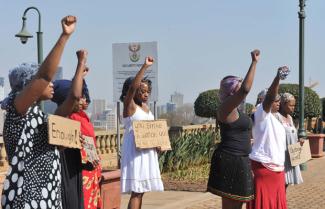
Anit-Racism Movement (ARM) / Flickr (CC BY-NC-ND 2.0)
Priority Areas
Supporting feminist, women’s rights and gender justice movements to thrive, to be a driving force in challenging systems of oppression, and to co-create feminist realities.
Around the world, feminist, women’s rights, and allied movements are confronting power and reimagining a politics of liberation. The contributions that fuel this work come in many forms, from financial and political resources to daily acts of resistance and survival.
AWID’s Resourcing Feminist Movements (RFM) Initiative shines a light on the current funding ecosystem, which range from self-generated models of resourcing to more formal funding streams.
Through our research and analysis, we examine how funding practices can better serve our movements. We critically explore the contradictions in “funding” social transformation, especially in the face of increasing political repression, anti-rights agendas, and rising corporate power. Above all, we build collective strategies that support thriving, robust, and resilient movements.
Our Actions
Recognizing the richness of our movements and responding to the current moment, we:
Create and amplify alternatives: We amplify funding practices that center activists’ own priorities and engage a diverse range of funders and activists in crafting new, dynamic models for resourcing feminist movements, particularly in the context of closing civil society space.
Build knowledge: We explore, exchange, and strengthen knowledge about how movements are attracting, organizing, and using the resources they need to accomplish meaningful change.
Advocate: We work in partnerships, such as the Count Me In! Consortium, to influence funding agendas and open space for feminist movements to be in direct dialogue to shift power and money.
Our individual and institutional members come from ALL regions of the world and 163 countries. Our latest members join us from France, South Sudan, the United Kingdom, and Lebanon. All of our members bring with them a rich and diverse array of perspectives, experiences, knowledge, energy and inspiration!
Did you know about our weekly member profiles?
One of the benefits of being an AWID member, is having your story featured on awid.org, in our newsletters which go out to 35,000 subscribers, and via our social media channels which have over 60,000 followers.
If you have any difficulties and require support with the sign-up process, please do not hesitate to contact us at membership@awid.org
What Our Members Say
"We have found AWID to be a very exciting network and we are involved in many of its platforms." - Engabu Za Tooro (AWID institutional member)
"I am looking forward to a fruitful engagement with the team. Feeling great. Thanks for accepting me as a member." - R. Chakraborty (AWID individual member)
"Thank you so much AWID, your work is tremendous. I really appreciated your efforts." - E. Khan (AWID individual member)
Meet Sabrina Sanchez, remarkable trans migrant woman, sex worker, organizer, transfeminist and one of the founders of the union OTRAS.
Originally from Mexico City, she migrated to Spain 17 years ago after getting a degree in communications and started working as a sex worker.
It didn’t take long before she became involved with trans activism and sex worker activism in Barcelona. After joining the collective Asociación de Profesionales del Sexo (Association of Sex Workers, Aprosex), she started working in its secretariat and founded the Spanish sex workers union OTRAS.
Fun fact: she’s also a car mechanic and serious runner!
Challenging the economic growth model
Context
Contesting the premise that a country’s economy must always ‘grow or die’, de-growth propositions come to debunk the centrality of growth measured by increase in Gross domestic product (GDP).
Definition
A de-growth model proposes a shift towards a lower and sustainable level of production and consumption. In essence, shrinking the economic system to leave more space for human cooperation and ecosystems.
The proposal includes
Downsizing resource-, energy- and emission-intensive superfluous production, particularly in the North (e.g. the automotive and military industries)
Directing investments instead into the care sector, social infrastructure and environmental restoration
Feminist perspective
Feminist perspectives within de-growth theory and practice argue that it also needs to redefine and revalidate unpaid and paid, care and market labour to overcome traditional gender stereotypes as well as the prevailing wage gaps and income inequalities that devalue care work.
Learn more about this proposition
In “The Future WE Want: Occupy development” Christa Wichterich argues that in order to break up the hegemonic logic of unfettered growth and quick returns on investment, three cornerstones of another development paradigm must combine: care, commons and sufficiency in production and consumption.
Equitable, Ecological Degrowth: Feminist Contributions by Patricia Perkins suggests developing effective alternative indicators of well-being, including social and economic equity and work-time data, to demonstrate the importance of unpaid work and services for the economy and provide a mechanism for giving credit to those responsible.
We are thrilled to announce the launch of AWID’s new podcast THAT FEMINIST FIRE. Our narrative series unravels over 40 years of feminist movements—and reimagines a way forward.
In our pilot season, you’ll hear five compelling stories that are part of a constellation of feminist activism today. Hosted by our very own Gopika Bashi, Deputy Director of Programmes at AWID, each episode explores unique but interconnected feminist realities that are achieving greater gender justice and human rights.
Produced by our Webby-winning podcast partner Hueman Group Media, you can subscribe toTHAT FEMINIST FIREand listen to our first episode here.
Find us on Apple Podcasts, Spotify, or wherever you get your podcasts. Share with your network! Help us spread stories that ignite our feminist fire and move us to action.
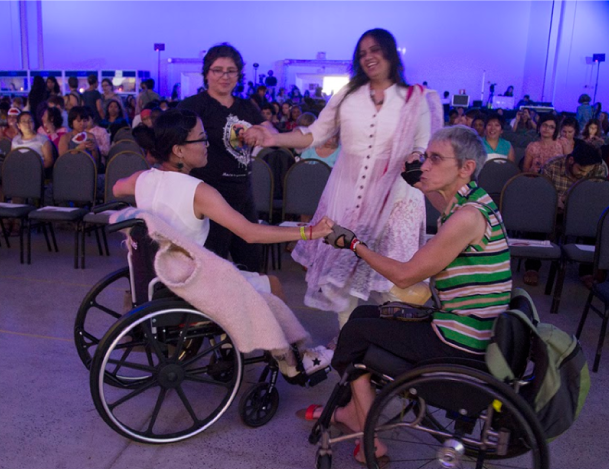
All our change processes rely on the relationships we build at spaces like the AWID Forums where you dance together, your humour comes through, your real self, you tell stories. That is what makes the difference. - Nicky Mcintyre, USA
Selection of Forum activities
For each AWID Forum we call for contributions from a wide range of feminist and social justice movements to propose activities and create the Forum program.
For the 14th AWID international Forum, we want to make the program truly representative of the diversity of the movements.
That is why we put in place a new and engaging way to choose the proposals that will generate the final Forum program: the Participatory Selection Process (PSP).
What is the Participatory Selection Process (PSP)?
The Participatory Selection Process is the final step in reviewing the activity proposals and selecting those that will be part of the official Forum program.
This is how it works:
Activity proposals have originally been submitted via our Call for Forum Activities, open to everyone - groups and individuals - interested in presenting their feminist reality at the Forum.
Out of all the activities submitted, AWID staff pre-selects the ones best reflecting the Forum theme and presenting a creative approach for audience engagement.
Activities are then reviewed and short-listed by different Forum Committees to ensure a good diversity of regions, movements and ideas.
The selected proposals are then reviewed and rated by individuals and groups whose proposals have also been short-listed. The proposals which receive the most votes from fellow candidates will become part of the final Forum program.
The whole activity selection process at a glance:
Step
Step 1:
Call for Forum Activities: Application submissions
Step 2:
First screening
Step 3:
Shortlisting
Step 4:
Participatory Selection Process
Timeline
December 2019 - mid.February 2020
January-February 2020
Summer 2020
timeline to be adjusted
People involved
Everyone interested in co-creating the Forum program
50-60 most voted activities selected for the final Forum program
Why did AWID decide to organize a PSP for the 14th AWID Forum activities?
We think a PSP is relevant for the AWID Forum because:
It places at the centre of the decision making process the communities who live the feminist realities that will be showcased and discussed at the Forum
It is consistent with our identity and our role as a movement support/ accompaniment organization.
It is in line with our vision of the Forum as co-created with different feminist and social justice movements, who shape the Forum through their participation in committees (content and methodology, access, artivist and host country), creating and facilitating activities as partners with AWID and also making decisions about the Program through the PSP.
It allows for greater diversity in the textures that will make up the Forum fabric (or in the voices that will compose the Forum song). It ensures we go beyond AWID itself and the movement partners that we already know and work with. It opens the door to the unexpected.
How did AWID come up with this PSP idea?
This is the first time AWID is considering such a process.
The initial idea came from AWID’s Co-EDs and staff. Before committing to a decision, we consulted some of the community funds that have been implementing participatory selection processes for years. These included FRIDA: The Young Feminists Fund, the International Trans Fund, UHAI - East Africa’s fund for sexual minorities and sex workers - and the Central American Women’s Fund. We consulted them to learn from their extensive experiences and get their feedback.
Pre-selected activities
Financial autonomy, breaker of silence
ORGANISATION DES FEMMES AFRICAINES DE LA DIASPORA (OFAD)ASSOCIATION LES PETITES MERESPRODADPHEASSOCIATION AMBE KUNKO (AAK)
Contribution of feminist organisations to the fight against violent extremism in Niger
Femmes Actions et Développement (FAD)
Self-financing: home banking for women
Rassemblement des Femmes pour le développement endogène et solidaire RAFDES
Food and food sovereignty for rural women Association Song-taaba des Femmes Unies pour le Développement (ASFUD)
Feminist leaders, investing in positive masculinity, creating a new balanced social order: how to change mentalities?
Une societe cooperative, la chefferie traditionnelle des localites, les autorites administratives et les autres associations femininesONG Centre Solidarite "Investir dans les Filles et les Femmes
Co-creating the sponsorship methodology.
NEGES MAWON
Millennium of opportunities to save the earth (MOST) by supporting climate justice for local and Indigenous communities in Congo Basin.
Jeunesse Congolaise pour les Nations Unies (JCNU), Association Genre et Environnement pour le Développement (AGED)
Envisioning an Asian Queer Feminist Politics
ASEAN Feminist LBQ Womxn NetworkSayoni
Supporting the Self-Managed: Abortion Doulas, Acompanantes, and Radical Networks of support
inroads
Online Feminisms: How Women Are Taking Back The Tech
Feminism In India
Committee on the Elimination of Discrimination Against Sex Workers
Asia Pacific Network of Sex Workers (APNSW), The International Women's Rights Action Watch Asia Pacific (IWRAW AP)
Sustainable Feminist Leadership and Organizing - Personal and Collective Experiences
HER Fund, Institute for Women's Empowerment (IWE) ,Kalyanamita,AAF
Caribbean Realities: Black Sauna Radio
WE-Change Jamaica
Telephone Helplines Care and Women Experience
Generation Initiative for Women and Youth Network (GIWYN),Youth Network for Community and Sustainable Development (YNCSD),Community Health Rights Network (CORENET)
Sensuality as resistance; body movement workshop
UHAI EASHRI
Lesbian Disco Eastern European Style
Sapfo Collective
Queering Communications for an Open Internet
Astraea Lesbian Foundation for Justice
Is the Way you Think about Sexual and Reproductive Health (SRHR) Ableist? Good Practices for Disability Inclusive SRHR Programmes and Advocacy.
Asia Pacific Network of Women with Disabilities and Allies
Decolonizing Non-Violent Communication
API Equality-LA, Sayoni,ASEAN Feminist LBQ Womxn Network
Feminist centred approaches to prosecuting sexual harassment in the world of work
Women's Legal Centre
Women in Conflict in Myanmar
Women's League of Burma, Rainfall
Caribbean Feminist Spaces, Creative Expressions & Spiritual Practices for Community Transformation
CAISO: Sex and Gender Justice
POP-UPS: Just Power: Popular Education Tools for a Feminist Future
JASS/Just Associates
UnAnonYmous: Queering Black African Diaspora Feminist Practices Sobriety
Digital Witchcraft: Magical Thinking for Cyberfeminist Futures
The Digital Witchcraft Institute
Building Womanifestos: Grassroot Women's Agenda for Change in Asia Pacific
Asia Pacific Forum on Women Law and Development
Designing your astral travels
EuroNPUD, narcofeminists as a loose group
Collective Care
RENFA Rede Nacional de Feministas Antiproibicionistas
Music of our movements
Radical imagination
From waste to Ecofriendly coal
KEMIT ECOLOGY SARL
Collective care and insurgency of feminist antiracist movements under authoritarian and violent contexts
CFEMEA - Feminist Center of Studies and Advisory Services,CRIOLA - black women`s organization,Iniciativa Mesoamericana de Mujeres Defensoras
Breaking Patriarchal Religion's Stranglehold on Family Laws that Affect Our Lives #FreeOurFamilyLaws
Musawah
Feminist approach to claim and control over lands within investment
Badabon Sangho, APWLD
Women's Global Strike: Our resistance, our future
Asia Pacific Forum on Women, Law & Development, ESCR-Net, Women's March Global
Towards an Inclusive ‘Mother Earth’
Disability Rights Fund, Open Society Foundation
From Inclusion to Infiltration: Strategies for Building Intersectional Feminist Movements
Mobility International USA (MIUSA)
The hidden stories of women with invisible disabilities: Art in action
The Red Door, Merchants of Madness, Improving Mental Wellbeing through Art
Public-Private Partnership and Women´s Human Rights: learnings from case studies in the Global South
Development Alternatives with Women for a New Era (DAWN)
The Interconnected Journey: Our Bodies, Our Sci-Fi! <3
The Interconnected Journey Project, Laboratorio de Interconectividades
Compiling and Building: Alternative feminist vision to challenge the dominant world economic order
IWRAW Asia Pacific
Self-publication as a feminist act
International Women* Space
Good Practices of legal protection for gender & sexual minorities in Pakistan and their Intersectionality
Activists Alliance Foundation,Khawja Sirah Society, Wajood Society,Wasaib Sanwaro
Feminist Approaches to Counter Trafficking
IWRAW Asia Pacific,Business & Human Rights Resource Center
Critiquing individualism and state policies: transnational organizing against targeted violence
Masaha: Accessible Feminist Knowledge
Decolonizing Intimacy: How Queer Identities Challenge Heteronormative Family Structures
WOMANTRA
Yeki Hambe - Sex worker theatre
Sex Worker Education and Advocacy Task Force
Creating the Indigenous feminist reality: honoring the sacred feminine and building new paths for Indigenous women
Cultural Survival, International Funders in Indigenous Peoples
Eyes on Anti-prohibitionism by Brazillian Women
Mulheres Cannabicas, Tulipas do Cerrado
Black Feminist Truth Commission: Addressing Injustices to Revolutionize Intersectional Feminism as the New Reality
Black Women in Development
Community care is self care: true stories are told in safer spaces
Eurasian Harm Reduction Association, Metzineres,Urban Survivor’s Union,Salvage women and children from drug abuse
NO MOVES BARRED:Dancing connections between Disability,trans & sexual rights against violence
National Forum of Women with Disabilities, Autonomy foundation, Nazyk kyz
The Impact of Corporate Capture on Feminist Realities: Developing Tools for Action ESCR-Net | Economic, Social, Cultural Rights Network
Reimagining AIDS: building a feminist HIV response
Frontline AIDS, Aidsfonds, IPPI (Indonesian Network of Women Living with HIV),UHAI-EASHRI (East African Sexual Health and Rights Initiative)
Advancing Economic Justice towards Realizing Our Vision of a Feminist Planet
International Network for Economic, Social and Cultural Rights, ESCR-Net
Sex Workers Cafe
Hydra e.V.
Adopting an ecofeminist approach in dealing with climate change and food security
Umphakatsi Peace Ecovillage,Human Rights Educational Centre
Connecting the grassroots with the international: experience from creative sex worker mobilisation in Europe
International Committee on the Rights of Sex Workers in Europe, STRASS - French Sex Worker Union, APROSEX, Red Edition
Experiment with how innovative tech can help us feel safer when navigating our cities
Soul City Institute for Social Justice, Safetipin,Womanity Foundation
question “Are hierarchies within organisations UNfeminist?”
Gay and Lesbian Coalition of KenyaNational, Gay and Lesbian Human Rights Commission
We all are different, but we do have joint shared values
UNWUD (Ukrainian network of women who use drugs), JurFem Association, Women's Prospects
A World Without Class
Bunge La Wamama Mashinani (Grassroots Women's Parliament)
Women Empower the Community
Institute for Women's Empowerment (IWE),Solidaritas Perempuan,ASEC Indonesia,Komunitas Swabina Pedesaan Salassae (KSPS)
Feminist Organizing: Transformational Leadership - Women Workers in Latin America Creating a Feminist Labor Movement and a Feminist World of Work
Solidarity Center
Acting Out, Acting Up : Disability-Feminism decolonising narratives of Stigma thro' Participatory theatre
Rising Flame,National Indigenous Disabled Women Association, Nepal,The Spectrum & Union of Abilities,The Red Door
Valuing and centering rest, pleasure and play
ATHENA Network
The African feminist judgment project
The Initiative for strategic Ligation in Africa (ISLA)
Voices from the frontlines: Bolstering collective power to end the incarceration of women worldwide
International Drug Policy Consortium,Equis Justicia para las Mujeres,National Council for Incarcerated and Formerly Incarcerated Women and Girls,Women and Harm Reduction International Network
Queer Youth Organising: imagining in an era of human rights and sustainable development
African Queer Youth Initiative,Success Capital Organisation
Our Struggles Our Stories Our Strengths
Oriang Lumalaban,Pambansang Koalisyon ng Kababaihan sa Kanayunan
Breaking barriers for collective Indigenous climate action in Southeast Asia
Cuso International,Asia Indigenous Peoples' Pact
Love Positive Women: Going beyond romantic love to deep community love and social justice
Eurasian Women's Network on AIDS
Intersex and Feminism
Intersex Russia
Understanding the reproductive health experiences and needs of transgender and gender diverse people
Asia Pacific Transgender Network (APTN)
Because She Cares: Critical conversations on HIV activism as (un)caring work
Because We Care Collaborative
The Mississippi Food Systems Manifesto
Center for Ideas, Equity & Transformative Change,National Council of Appropriate Technology - Gulf South, MS Food Justice Collaborative,Malcolm X Grassroots Movement
Kurdish Women's Movement co-presidency experience as an example of a radical feminist realization: Co-presidency is our PURPLE line!
The Free Women’s Movement (TJA)
WOES -"Walking on Egg Shells"
Eldoret Women For Development (ELWOFOD),Mama Cash,Young women against Women Custodial Injustices Network
FREEDOM
Prison Isn’t Feminist: Exploring the impact and alternatives to reliance on police and incarceration
Migrant Sex Workers Project, Showing Up For Racial Justice
Bondo without Blood: A Feminist Reimagining of Sierra Leonean Rites of Passage
Purposeful
Liberated Land & Territories: A Pan-African Conversation
Thousand Currents (USA), Abahlali baseMjondolo (South Africa), Nous Sommes la Solution (west Africa/regional), Movilización de Mujeres Negras por el Cuidado de la Vida y los Territorios Ancestrales (Colombia), and Articulation of Black Rural Quilombola Communities (Brazil)
Popular Education and Organizing for a Feminist Economy
Jamaica Household Workers Union (JHWU),United for a Fair Economy,Centro de Trabajadores Unidos en la Lucha (CTUL)
So You Wish To Mobilise With An Empty Wallet? Let’s Make It Happen!
Breakthrough India
Experience sharing establishing a network for women human rights defenders in East Africa: Ugandan perspective
Women Human Rights Defenders Network Uganda
Building Inclusive Movements: Going Beyond Tokenism
Rising Flame
Justice & Healing for Survivors of GBV: an interactive debate on restorative justice and the anatomy of an apology
One Future Collective
Collective actions to ending transphobia through a feminist lens
Asia Pacific Transgender Network,Iranti,Transgender Europe
LBQ women & Asylum
Sehaq
Abortion and Disability: Towards an Intersectional Human Rights-Based Approach
Women Enabled International
Learn how to support the self-organizing of undocumented, migrant, and criminalized and sex workers communities
Buttrerfly (Asian and Migrant Sex Workers Support Network)
Self Care: A Fundamental Tool for Sustaining LGBTQI & Feminist Organizing
United and Strong Inc.,S.H.E Barbados,Lez Connect
Reclaiming Young African Feminist VOICES-REALITIES-POWER for climate justice
Young Feminist organization Gasy Youth Up, Young African Feminist Dialogues
Women in action & solidarity: performing our realities (Asia & Africa)
Young Feminist organization Gasy Youth Up ( co-founder) , Young African Feminist Dialogues ( member)
Women in action & solidarity: performing our realities (Asia & Africa)
Women Performing the World (Asia/Africa)
Challenging patriarchy: Workers in entertainment sector
Women Forum for Women in Nepal (WOFOWON)
The non-citizens: issues of women's citizenship in the context of migrant, vulnerable communities in South Asia
NEthing
Visioning for voice in migration and climate crises
Women's Refugee Commission, The Feminist Humanitarian Network, ActionAid
In It Together: Women's Funds and Feminist Movements Co-Creating Feminist Realities
Mama Cash, Global Fund for Women, Urgent Action Fund - Africa
Co-creating magic with young feminist movements - participatory practices that spark joy
Feminist organizing, FRIDA The Young Feminist Fund (Community), Teia
Protection right of woman’s in difficult realities 3 organizations of women from marginally communities
NGO Asteria, Ermolaeva Irena and Bayazitova Renata. NGO Ganesha Musagalieva Tatiana. NGO Ravniy Ravnomu Kucheryavyh Tanya
Feminnale - traditions against art and expression
Bishkek Feminist Initiatives
Resistance through knowledge, arts and activism: creation of a feminist library in Armenia
FemHouse, Armenia
Conquering the UN System with Feminist Strategies (You Don’t Need to be a Lawyer to Have Fun)
Kazakhstan Feminist Initiative "Feminita", IWRAW Asia Pacific, ILGA World
Data. Huh. What is it good for? Feminist data and organizing for feminist outcomes
International Women's Development Agency, Women's Rights Action Movement, Fiji Women's Rights Movement
Criminalized Women’s voice, leadership and influence on laws, policies and practices in Kenya
Keeping Alive Societies Hope-KASH, Katindi Lawyers and Advocates, Vocal Kenya
From Colombia to the world, African women's changing force
Proceso de Comunidades Negras en Colombia -PCN, Solidarité Féminine por la Paix el le Develppment Integral -SOFEPADI,
Afro Queer Listening Lounge and Story-Telling Booth
AQ Studios, None on Record, AfroQueer Podcast
Learning from diversity
Circulo de Mujeres con Discapacidad -CIMUDIS, Alianza Discapacidad por nuestros Derechos -ADIDE, Fundación Dominicana de Ciegos -FUDCI, Filial Puerto Rico de Mujeres con Discapacidad
Football as a feminist tool
Fundación GOLEES (Género, Orgullo, Libertad y Empoderamiento de Ellas en la Sociedad)
Migratory constellations
LasVanders
Ecofeminist dialogues to defend territories
CIEDUR (Centro Interdisciplinario de Estudios sobre el Desarrollo), Equit, Foro permanente de Manaos y Amazonia
La Frida BikesMoviment
La Frida Bike
Witchcraft, shamanism and other insurgent knowledge against patriarchy.
Colectiva Feminista MAPAS-Mujeres Andando Proceso por Autonomías Sororales
Experiences, learnings and challenges in managing holistic security of horizontal feminist organisations and of gender-dissidence in times of social and political crisis. The experience of the popular uprising in Chile of 18 October.
Fudación Comunidades en Interfaz
Food that we all know about
Las Nietas de Nonó, Parceleras Afrocaribeñas por la Transformación barrial (PATBA)
Practices of resistance against climate change of Indigenous women in Peru and Guatemala
Thousand Currents, Red de Mujeres Productoras de la Agricultura Familiar, Asociación de Mujeres Ixpiyakok (ADEMI, Ixpiyakok Women's Association)
Building Feminist Cities
CISCSA, Articulacion Feminista Marcosur
Stand in my place
Alianza Discapacidad por nuestros Derechos - ADIDE, Circulo de Mujeres con Discapacidad -CIMUDIS
Clearing the way for women's fullness of life, healing collective and historical traumas
Grupo de Mujeres Mayas Kaqla
Zapoteca Indigenous women challenged by nature
Houses of Care and Healing for Women Human Rights Defenders as part of Integral Feminist Protection: A Feminist Reality
Iniciativa Mesoamericana De Defensoras de Derechos Humanos, Consorcio Oaxaca para el Diálogo Parlamentario y la Equidad A.C, Red Nacional De Defensoras De Derechos Humanos en Honduras, Coletivo Feminista de Autocuidado
Healing your unicornix voice: Weaving ancient and digital technologies to sharpen the tongue
Feminist trajectories for an assisted motherhood protocol for women with disabilities
Circulo emancipador de mujeres y niñas con discapacidad de Chile, CIMUNIDIS, WEI
School for trans feminist children
Fundación Selena
REDTRASEX: Experience of Organization and Struggle for the Rights of Women Sex Workers in Latin America and the Caribbean
RedTraSex Red de mujeres trabajadoras sexuales LAC
Gender based violence and the world of sex work in Mexico
Brigada Callejera de Apoyo a la Mujer, "Elisa Martínez", A.C., Red Mexicana de Organizaciones Contra la Criminalización del VIH. Red Mexicana de Trabajo Sexual
Migration forces us to draw the path as we walk
Asociación de Trabajadoras del Hogar a Domicilio y de Maquila. ATRAHDOM
New narratives for Black women: body, healing and pleasure
Weaving memories and networks - Black Feminists strengthening Black feminisms in LAC
Red de Mujeres Afrolatinoamericanas, Afrocaribeñas y de la Diáspora, Articulação de Organizações de Mulheres Negras Brasileiras (AMNB), Voces Caribeñas
We know that first time travel can be exciting but also stressful. In recognition of the many challenges involved, we will be providing more information and details about how to get to Bangkok when Registration opens early next year.
Introduction to the films from Nuestramérica
By Alejandra Laprea
What a difficult task, that of condensing all the power and diversity of voices being raised in Latin America to tell the other stories emerging in this vast territory, to speak of the feminist realities we are building in our movement and other community-based organizations.
I spent a long time trying to establish parameters for the search and selection of these films, with the idea that they would enable you to get a little closer to so many dreams and projects that are slowly coming into being in the territories Nuestroamericanos, of our Americas, as we like to call them ourselves. It was a tough job trying to establish parameters, such as geographic location, linguistic justice, and representation of diverse communities — Indigenous, Afro-descendants, migrants — and the many causes and claims for which they raise their voices. I arrived at the conclusion that making such a compilation would be the work of years, one of those projects always under construction.
And so I decided to search for works that have emerged out of organizing and activism, as well as films that will perhaps spark major debates that we are yet to have.
In this selection of films you will find the voices of filmmakers who are not content with simply recording the feminist realities that palpitate in every corner of this vast and diverse territory. These are works that from their very conceptualization are questioning for what, by whom, and how films and videos are made. They understand film to be an instrument of struggle, something more than images to be enjoyed on a screen. These are individual or collective filmmakers who see film and video making as an instrument to promote discussion, open a debate, and thus serve as a resource for popular and feminist pedagogies.
Seen in this light, this small film selection is a journeythrough feminist realities on two levels; on one level are the stories you will see, and on another level, there is the experimentation of filmmakers who are seeking and creating other feminist realities through the ways in which they are making films and telling stories.
Enjoy this journey through films that Resist, Create, and Transform.
Lima is Burning
Direction: Giovana García Soto
Docu-fiction
Spanish with English subtitles
In Lima is Burning our work plays with documentary and fiction to take us into the life of Gía, a non-binary person, who uses performance art as a tool to denounce and transgress, as a vital manifesto against transfobia in every space, including gays spaces. With Gía we also take a look at transfeminism as a safe community in which Gía feels embraced, where she shares feelings and affections.
Giovana Garcia Sojo is a young peruvian audiovisual producer, specialized in low-budget production, creation for children and adolescents in cinema and cinematographic script by the International School of Cinema and Television - EICTV in San Antonio de Baños - Cuba. Giovana has developed her path as a director towards women and feminized identities, Lima is Burning is one of her first works.
Yo, Imposible / Being Impossible
Director: Patricia Ortega
Fiction
Spanish with English subtitles
Patricia Ortega, director of «Yo, Imposible» [“Being Impossible”] explores through the character of Ariel, a young girl whose intersex body was surgically violated as a child, the many ways that society attempts to normalize sexual and gender diversity.
The film tells the story of how Ariel discovers she was born intersex and subjected to several surgeries to normalize her genitals. This discovery leads the character to rediscover her body and reconstruct her identity. The audience is led to question a society dominated by heteronormativity which renders others invisible and condemns them to a life of unhappiness.
Patricia Ortega is a Venezuelan filmmaker living in Argentina who studied at the International School of Film and Television in Cuba, where she specialized in film directing. Patricia uses fiction to address extreme situations that women or feminized bodies go through, and how they overcome them.
«Yo, Imposible»' takes a position vis-à-vis the dominant conception of a world in which only the masculine and feminine exist, which makes others invisible. “They are not sick. They are just genetically different. Interventions are done on their genitals and bodies through hormones without their consent, which is a violation of their human rights and identity, forcing them to fit into established categories'' - Patricia Ortega
Cubanas, mujeres en revolución [Cuban Women in Revolution]
Director: Maria Torrellas Liebana
Documentary
Spanish with English subtitles
María Torrellas narrates the story of the Cuban Revolution through the women who brought it to life, Vilma Espín, Celia Sánchez, and Haydee Santamaría, among others.
For women, telling the story of the Cuban Revolution is not something of the past, but a daily struggle that Torrellas shows through the voices of Cuban rural women, professionals, students, and workers in the present. In “Cuban Women in Revolution” we encounter the current challenges facing Cuban women such as the persistence of old prejudices, new forms of violence, and the constant challenge of creating new feminist realities for themselves and the next generations in a territory besieged by USA imperialism for more than 70 years.
Maíia Torrellas
María Torrellas is a journalist and documentary filmmaker. She has a long trajectory of filmmaking and has won, among others, the Santiago Alvarez in Memoriam award for her documentary “Memoria de una hija de Oshun” [Memory of a Daughter of Oshun].
“In the documentary I have woven together the struggles of yesterday’s heroines with those of today’s women. The women tell their own stories and also describe those whose struggles they most admire. It made an impression on me to hear the words ‘The Revolution gave us everything’ or ‘What would have become of my family without the Revolution?’ from voices of compañeras who are poor, rural, or Black.” - María Torrellas
Serie documental Cuidanderas [Mini documentary series Women Healers/Carers]
Directors: Gabriela Arnal and Marzel Ávila for Fondo de Acción Urgente - LAC
Ecuador 2019
Spanish with English subtitles
CUIDANDERAS joins the words cuidar (to care for) and curanderas (women healers) synthesizing the identities of a series of women in Latin American territories, women who put their bodies and all their energy into protecting the Commons, what Pachamama gives us, with the commitment that we use it as wisely as the rest of living beings doThis mini series of documentary films presents the stories of three collectives of Latin American women who are committed to caring for their territories, healing their bodies, and confronting extractivist and racist projects in Ecuador, Colombia, and Bolivia.
GUARDIANAS DE LA AMAZONIA [GUARDIANS OF THE AMAZON]
Province of Orellana, Ecuador. For centuries the Waorani women have been engaged in a struggle for their territory in the Amazon and the preservation of their Indigenous culture. Today they confront threats by the oil industry and their death-production model. From the jungle, leaders from the Waorani Women’s Association of the Ecuadoran Amazon (AMWAE, in Spanish) share the motivation behind their resistance and show their greatest power: their inexhaustible joy.
COMADRES DEL PACÍFICO COLOMBIANO [BLACK SISTERHOOD OF THE PACIFIC]
Buenaventura, Colombia. In the largest and most violent port city in Colombia, plagued by decades of armed conflict, racism, and machismo, a group of women refuse to give in to fear and continue to resist in the face of adversity. The Butterflies with New Wings network is made up of Black women from the Pacific coast of Colombia who work together to protect their territory, recuperate their ancestral traditions, and heal the wounds of systematic and structural violence.
HERMANAS DEL ALTIPLANO [SISTERS OF THE HIGHLANDS]
Indigenous, rural, and regantes (women in charge of irrigation) in Bolivia are calling for the care and protection of bodies-earth-territories, as they are faced with an extractive production model which threatens their lives, health, physical and sexual integrity, and the survival of their communities and territories. The Network of Defenders of Mother Earth is made up of women from 12 Indigenous communities who are defending the right to water and denouncing mining companies’ violations of human rights and the rights of Nature while working to recuperate their ancestral ways of knowledge and practices of collective care.
“CUIDANDERAS, a combination of the words cuidar (to care for) and curanderas (women healers), presents the stories of Latin American women defenders who are caring for their territories and healing their bodies. The collective power of these women has changed the history of their communities in Ecuador, Colombia, and Bolivia as they confront extractivist and racist production models.”
Yo aborto, tú abortas, todxs callamos [I abort, you abort, we all keep silent]
Director: Carolina Reynoso
Argentina 2013
Spanish
If there is one thing that has marked feminist movements across the continent of Latin America that is the call for abortion to be made available, safe, and free. From North to South feminist movements are rising up and taking to the streets fighting for the liberation of our first territory, our bodies, which is why this selection must include a documentary on abortion to fully understand the power of the women of Nuestramérica.
Yo aborto, Tu Abortas, Todxs Callamos [I abort, you abort, we all keep silent] presents the stories of seven women from different social classes, including the director of the documentary herself, who reflect on something they have all experienced in their own bodies: clandestine abortion.
Through their stories, the film aims to bust myths regarding the voluntary interruption of pregnancy, de-stigmatize the topic, and show one of the most common forms of violence in the Americas in a new light.
Carolina Reynoso
Director, researcher, and producer of feminist films. She is also a feminist activist who organizes workshops on screenwriting from a gender perspective so that more films are made showing other counterhegemonic realities and stories. Carolina Reynoso strikes a balance between activism and creation in each one of her works.
“We are a group of filmmakers who make documentaries in order to continue fighting to make abortion available, safe, and free in Argentina. The film presents the testimonies of seven women from different social classes, including the director of the documentary herself, who reflect on something they have all experienced in their own bodies: clandestine abortion.” -The filmmaking team
Historias Urgentes: Resistencia en ollas Comunes [Urgent Stories: Resistance in the Soup Kitchens]
Nosotras Audiovisuales, collective of Chilean women filmmakers
Chile 2020
Spanish
“Urgent Stories” is a series created by women to make their needs and important experiences visible to the people living in the territories that today comprise Chile. This film series aims to keep alive the flame ignited by the social uprising of October 2019, the flame ofChile in all its diversity that woke up and said, ‘Enough!’
«Resistencia en ollas comunes» [Resistance in the Soup Kitchens] is the first of these “Urgent Stories.” Through the voices of four women from Iquique, Valparaiso, Chillan and Santiago, it shows how by collectively assuming care work they are on the front lines of resistance, creating other feminist realities for themselves and the communities where Latin American women live.
Nosotras audiovisuales
This organization was formed in 2017 to link together women involved in the Chilean filmmaking scene. It helps women filmmakers to network, collaborate, and share information along with their works and perspectives on the field.
Nosotras Audiovisuales contributes to the Chilean uprising by documenting it and collectively generating new material.
Se trata de Mujeres [It’s about Women]
Micol Metzner
Argentina 2019
Spanish
Based on her personal experience, director Micol Metzner presents a film mixing documentary with fiction, aligning her filmmaker’s voice with that of thousands of women who have been victims of trafficking across the continent and showing how solidarity among women is the best form of protection.
Micol Metzner
Filmmaker trained at the Instituto de Arte Cinematográfico de Avellaneda [Avellaneda Institute of Film Arts]. Art director and editor. Metzner belongs to the Video Cluster of the City of Buenos Aires, a community space and multisectorial cooperative for independent projects.
She facilitates filmmaking workshops in working class neighbourhoods and spaces of enclosure (youth group homes and women’s prisons). She is a member of the film production house MVM.
“The production house MVM was born out of the necessity to express a lot of things that we regularly protest on the streets about while also doing it in a creative way through drawing, film, and photography.The production house MVM is a place that interrogates language, image, film from a feminist perspective. It is also a place for processing everything we have gone through and using art to make things sometimes to heal, sometimes to generate public debate as happened with this short film…I didn’t imagine that was going to happen, but when we showed it, a lot of things were set in motion. Discussions happen that are even more enriching than the short film itself. That this can happen based on something we made is so good…” - Micol Metzner
Follow us on Social Media to receive news about upcoming events and screenings:
As an online participant, you can facilitate activities, connect and converse with others, and experience first-hand the creativity, art and celebration of the AWID Forum. Participants connecting online will enjoy a rich and diverse program, from workshops and discussions to healing activities and musical performances. Some activities will focus on connection among online participants, and others will be truly hybrid, focusing on connection and interaction among online participants and those in Bangkok.
Promouvoir les programmes féministes : principales avancées en matière de genre et de sexualité
Chapitre 1
Alors que les fondamentalismes, les fascismes et autres systèmes d’oppression se métamorphosent et trouvent de nouvelles tactiques et stratégies pour consolider leur pouvoir et influence, les mouvements féministes persévèrent et célèbrent leurs victoires nationales, régionales et internationales.
La reconnaissance en 2019 par le Conseil des droits de l’Homme du droit à l’intégrité et à l’autonomie corporelles, par exemple, a marqué une étape cruciale. Des résolutions du Conseil sur la discrimination envers les femmes et les filles admettent cependant un recul lié à des groupes de pression rétrogrades, des conceptions idéologiques ou un détournement de la culture ou la religion pour s’opposer à l’égalité de leurs droits. Des avancées féministes sont aussi notées dans le travail des Procédures spéciales, qui soulignent notamment l’obligation des États de contrer les doctrines de l’idéologie du genre, rappellent à l’ordre les antidroits qui détournent des références à la « culture », et signalent que les convictions religieuses ne peuvent pas servir à justifier la violence ou la discrimination.
Sommaire
Niveau national
Sphères mondiales
Exercice : Cartographions et célébrons nos victoires!