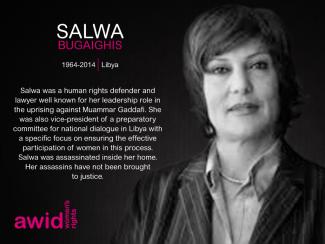
Salwa Bugaighis
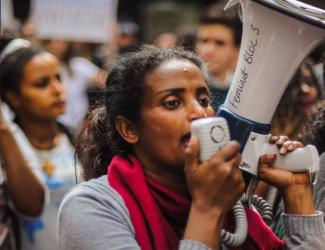
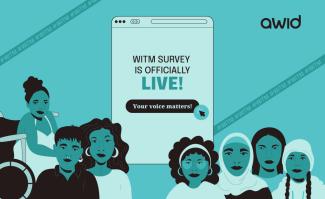
The “Where is the Money?” #WITM survey is now live! Dive in and share your experience with funding your organizing with feminists around the world.
Learn more and take the survey
Around the world, feminist, women’s rights, and allied movements are confronting power and reimagining a politics of liberation. The contributions that fuel this work come in many forms, from financial and political resources to daily acts of resistance and survival.
AWID’s Resourcing Feminist Movements (RFM) Initiative shines a light on the current funding ecosystem, which range from self-generated models of resourcing to more formal funding streams.
Through our research and analysis, we examine how funding practices can better serve our movements. We critically explore the contradictions in “funding” social transformation, especially in the face of increasing political repression, anti-rights agendas, and rising corporate power. Above all, we build collective strategies that support thriving, robust, and resilient movements.
Create and amplify alternatives: We amplify funding practices that center activists’ own priorities and engage a diverse range of funders and activists in crafting new, dynamic models for resourcing feminist movements, particularly in the context of closing civil society space.
Build knowledge: We explore, exchange, and strengthen knowledge about how movements are attracting, organizing, and using the resources they need to accomplish meaningful change.
Advocate: We work in partnerships, such as the Count Me In! Consortium, to influence funding agendas and open space for feminist movements to be in direct dialogue to shift power and money.
Jemutai is a passionate plant lover who finds inspiration in the natural world and its intricate web of interconnections. This fascination with the universe's interrelatedness is mirrored in their approach to work, community building, care and support.
She believes in the vibrant presence of their ancestors within them and lives to experience, remember, uphold, appreciate and celebrate their struggles, triumphs and values.
As an intersectional queer feminist and human rights activist, Jemutai has dedicated their career to advocating for equity and inclusivity. They are passionate about Organizational Development, with a background in Grants Making and Administration, and now pursuing a path in creating impactful experiences for convenings and providing operational leadership and support, ensuring that spaces are inclusive, safe and curated with precision and care.
Jemutai is also a strong believer in the philosophy of Ubuntu – the idea that "I am because we are." This belief in our shared humanity and mutual interdependence informs their collaborative approach and commitment to fostering a supportive, inclusive environment for all, especially structurally silenced and marginalized people.
Regularly updated and searchable directory of 200+ funders across different sectors and regions that support vital gender justice work.
In fact, 38% of our members are under the age of 30.
We believe that young feminists are both the present and the future of the struggle for women’s rights. We promote young leaders in the global women’s rights movement and our Young Feminist Activism program cuts across all aspects of our work.
At the same time, by defining young feminist activists as one of our Priority Areas, we contribute new analysis to current debates and ensure that young feminist activists are able to articulate their priorities and voice their concerns.
Filter your search by funders’ priority support areas that speak to your organizing efforts
The Sixth High-level Dialogue on Financing for Development, 7-8 October 2013 focused on reviewing the progress of MDG’s, and identifying gaps to be addressed in discussions on the new development framework.
A report by the MDG’s Gap Task Force launched during the session pointed to the failure to meet MDG 8 (Global Partnership for Development) as a major factor in the challenges to meeting the MDGs. The report showed that more focus should be given to developing stronger global partnerships that would ensure binding commitments for the new development framework post 2015.
This new report shines a light on the resourcing realities of feminist and women’s rights organizations amid unprecedented political and financial upheaval. Drawing on over a decade of analysis since AWID last Where is the Money? report it takes stock of the gains, gaps, and growing threats in the funding landscape.
We have always worked towards ensuring that our Forums are co-developed with partners, movements and our priority constituencies.
For our upcoming Forum, we aim to deepen and strengthen that spirit and practice of co-creation and collaboration. We also recognize the need to improve the balance between the inclusion of many voices and experiences with room for participants and staff to breathe, take pause and enjoy some downtime.
This Forum will be different in the following ways:
With avenues for civil society (especially those not based in Geneva) to participate in the Human Rights Council becoming more limited because of the financial crisis, spaces to put pressure and hold governments accountable for rights violations are increasingly closed. These measures include charges for hybrid participation and interpretation for side events, visa obstacles, and the limited availability of hybrid informal negotiations on draft resolutions.
Below are resolutions, key resolutions, panels and taking place in these sessions, related to gender and sexuality:
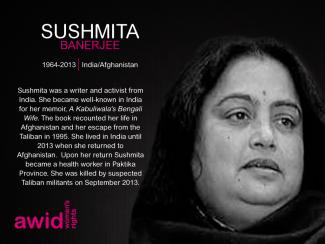
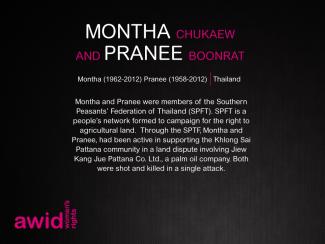
AWID’s Tribute is an art exhibition honouring feminists, women’s rights and social justice activists from around the world who are no longer with us.
This year’s tribute tells stories and shares narratives about those who co-created feminist realities, have offered visions of alternatives to systems and actors that oppress us, and have proposed new ways of organising, mobilising, fighting, working, living, and learning.
49 new portraits of feminists and Women Human Rights Defenders (WHRDs) are added to the gallery. While many of those we honour have passed away due to old age or illness, too many have been killed as a result of their work and who they are.
This increasing violence (by states, corporations, organized crime, unknown gunmen...) is not only aimed at individual activists but at our joint work and feminist realities.
The portraits of the 2020 edition are designed by award winning illustrator and animator, Louisa Bertman.
AWID would like to thank the families and organizations who shared their personal stories and contributed to this memorial. We join them in continuing the remarkable work of these activists and WHRDs and forging efforts to ensure justice is achieved in cases that remain in impunity.
“They tried to bury us. They didn’t know we were seeds.” - Mexican Proverb
It took shape with a physical exhibit of portraits and biographies of feminists and activists who passed away at AWID’s 12th International Forum, in Turkey. It now lives as an online gallery, updated every year.
To date, 467 feminists and WHRDs are featured.