Sabriya Simon
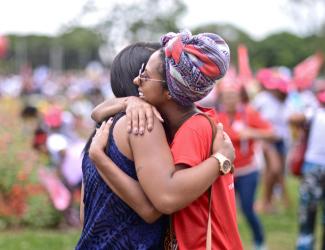
Marcha da Mulheres Negras 2016

Priority Areas

Supporting feminist, women’s rights and gender justice movements to thrive, to be a driving force in challenging systems of oppression, and to co-create feminist realities.

Co-Creating Feminist Realities

While we dream of a feminist world, there are those who are already building and living it. These are our Feminist Realities!

What are Feminist Realities?

Feminist Realities are the living, breathing examples of the just world we are co-creating. They exist now, in the many ways we live, struggle and build our lives.

Feminist Realities go beyond resisting oppressive systems to show us what a world without domination, exploitation and supremacy look like.

These are the narratives we want to unearth, share and amplify throughout this Feminist Realities journey.

Transforming Visions into Lived Experiences

Through this initiative, we:

  • Create and amplify alternatives: We co-create art and creative expressions that center and celebrate the hope, optimism, healing and radical imagination that feminist realities inspire.

  • Build knowledge: We document, demonstrate & disseminate methodologies that will help identify the feminist realities in our diverse communities.

  • Advance feminist agendas: We expand and deepen our collective thinking and organizing to advance just solutions and systems that embody feminist values and visions.

  • Mobilize solidarity actions: We engage feminist, women’s rights and gender justice movements and allies in sharing, exchanging and jointly creating feminist realities, narratives and proposals at the 14th AWID International Forum.


The AWID International Forum

As much as we emphasize the process leading up to, and beyond, the four-day Forum, the event itself is an important part of where the magic happens, thanks to the unique energy and opportunity that comes with bringing people together.

We expect the next Forum to:

  • Build the power of Feminist Realities, by naming, celebrating, amplifying and contributing to build momentum around experiences and propositions that shine light on what is possible and feed our collective imaginations

  • Replenish wells of hope and energy as much needed fuel for rights and justice activism and resilience

  • Strengthen connectivity, reciprocity and solidarity across the diversity of feminist movements and with other rights and justice-oriented movements

Learn more about the Forum process

We are sorry to announce that the 14th AWID International Forum is cancelled

Given the current world situation, our Board of Directors has taken the difficult decision to cancel Forum scheduled in 2021 in Taipei. 

Read the full announcement

Find out more!

Related Content

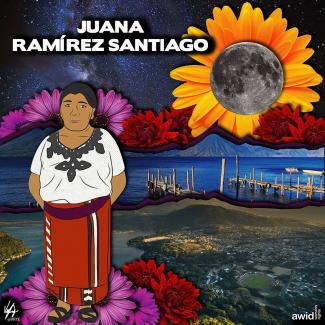
Juana Ramírez Santiago

Juana was one of the founders and current Board Member of Red de Mujeres Ixiles de Nebaj, an Indigenous women’s rights organization that is a member of the Mesoamerican Initiative of WHRDs (IM-Defensoras).

She was also a midwife and a mother of 7 children. Juana had received death threats that were reported to the Prosecutor’s office. Juana is the third Indigenous WHRD murdered in the area during 2018. The Guatemala Ombudsman reports that a total of 20 HRDs were killed in the country this year. 

Juana Ramírez Santiago was shot dead by unidentified attackers while crossing a bridge in Nebak, Quiché, Guatemala. Investigations to identify the perpetrators are ongoing.


Juana Ramírez Santiago, Guatemala

كيف يمكنني تمويل مشاركتي في منتدى جمعية حقوق المرأة في التنمية؟

إذا كانت مجموعتك أو مؤسستك تتلقى تمويلًا، فقد ترغب في مناقشة الأمر مع الممول/ة الخاص بك الآن إذا كان قادرًا على دعم سفرك ومشاركتك في المنتدى. تخطط العديد من المؤسسات لميزانياتها للعام المقبل في وقت مبكر من عام 2023، لذا من الأفضل عدم تأخير هذه المحادثة للعام المقبل.

Dilma Ferreira Silva

Dilma Ferreira Silva was a leading Amazonian rights activist who fought for decades for the rights of people affected by dams.

She herself was among the 32,000 people displaced by the Tucuruí, a mega-hydroelectric power plant, built in Brazil during the 1964-1985 military dictatorship.

In 2005 Dilma was invited to join the Movement of Dam-Affected Peoples in Brazil (MAB), and in 2006 she formed the women’s collective, eventually becoming regional coordinator of the movement.

In speaking about her activism, her colleagues commented:

“She stood out very fast because she was always very fearless in the struggle.” 

Dilma lived in the rural settlement of Salvador Allende,50 kilometers from Tucuruí, and dedicated her life to better protect communities and the land affected by the construction of mega projects. She was especially concerned with the gendered impacts of such projects and advocated for women’s rights.

At a national MAB meeting in 2011, Dilma spoke to women affected by the dams, saying:

“We are the real Marias, warriors, fighters who are there, facing the challenge of daily struggle”.

In the following years, Dilma organized grassroots MAD groups and worked with the community to form farming cooperatives that created a better distribution of food for the community. They improved the commercialization of fishing, and developed a cistern project for safe drinking water. She was also an advocate for farmers whose lands were being coveted by ‘grileiros’ (land grabbers). 

On 22nd March 2019, at the age of 48, Dilma, her husband and their friend were all brutally murdered. The three killings came as part of a wave of violence in the Amazon against the Movimento dos Trabalhadores Sem Terra (translates as ‘landless workers’ movement’), environmental and indigenous activists. 
هل تختلف عملية التقديم الافتراضية عن عملية التقديم الشخصية؟

ليس هناك اختلاف، نفس الطريقة ونفس الموعد النهائي. يرجى استخدام نفس النموذج لإرسال مقترحك سواء كان ذلك شخصيًا أو عبر الإنترنت أو كليهما (هجين).

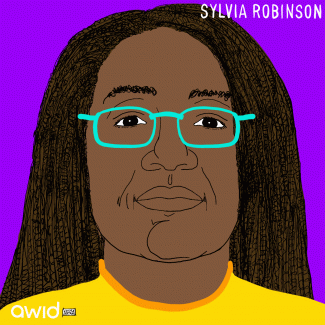
Sylvia Robinson

"Life is...about living in joy - waking up with purpose, feeling our creative energy, answering your calling." - Sylvia Robinson

Sylvia Robinson, a tireless community organizer and leader, was the founder and Executive Director of The Emergence Community Arts Collective (ECAC) in Washington DC.

This hub and performance space combine education, civic engagement, arts, social and spiritual services, and sustainable environmental practices. Sylvia envisioned it as a home where “there was a balance and synergy with the activities that people needed in order to sustain life.” 

She was also one of the founding members of the Georgia Avenue Community Development Taskforce, a neighborhood group that works on social justice and organizing in Northwest DC  to make sure the community has a voice in redevelopment and gentrification in the area. 

“We're asking for affordable housing. We're asking that the small businesses that have been here for a long time don't get wiped out by new retail. We're asking for green space and space for people to get together to socialize. We're asking for streetscape improvements—better roads and lighting in the corridor.” - Sylvia Robinson about the Taskforce

Prior to becoming an organizer and after receiving a degree in computer science, Sylvia worked in air traffic control systems for over a decade. She then moved into drug and alcohol counselling, becoming increasingly engaged in community work.

“It was my call to be involved in community.”  - Sylvia Robinson

Born in Washington D.C. on 14 August 1961, Sylvia passed away on 18 September 2017 after a battle with cancer.

“Sylvia's spirit and legacy will continue to inspire this community for many years to come.” - ECAC

ماذا لو لم أتمكن من الحضور شخصيا؟ هل ستكون الفعالية هجينة؟

نعم! نحن نستكشف حاليًا تقنيات مبتكرة للسماح بالاتصال والمشاركة الهادفين.

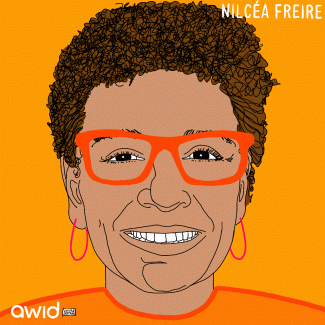
Nilcéa Freire

Nilcéa Freire was a Brazilian feminist activist, politician and academic. A persevering advocate for women’s rights and those of underrepresented minorities in the country, her life and work carried a long history of struggles and victories.

"While resisting we have to keep pushing for progress, and what we can achieve at this time, in my view, will be through the stupendous organization of young white women, and especially black women, in all of the state capitals and large cities of Brazil." - Nilcéa Freire

In 1999 she became the first woman to occupy the position of Dean at the State University of Rio de Janeiro. Here, she spearheaded the implementation of the first affirmative action policy for students graduating from public schools, requiring reserved places specifically for low-income black students in a public university. This system was adopted in dozens of other public universities. 

Some years later, Nilcéa headed the Special Secretariat of Policies for Women in the government of former president Luiz Inácio Lula da Silva. In this capacity, she led the first National Women’s Conference. Over 12,000 women from across the country participated and the result of this collective work was embodied in the National Plan for Policies for Women. 

Her commitment to women, Afro-Brazilians and indigenous peoples was also strongly reflected in her work to promote their rights through initiatives of the Brazil Ford Foundation office where she was a regional director. 

The feminist activist Manoela Miklos recounted Nilcéa to be "a woman without equal". 

At the age of 66, Nilcéa passed away in Rio de Janeiro on 29 December 2019 of cancer.


"Without words for the news of the death of dear Nilcea Freire. It is too sad to know that she left so early. She was always part of the ranks of those who do not settle for the injustices of the world. She was the Minister of Women, an activist, always active in the feminist cause. Much missed!” - Jandira Feghali, Federal Deputy

Watch Brazilian feminist Nilcea Freire on why we need to show solidarity with Brazil

Rising together - Logo and Button - EN

Call for Activities: Deadline extended to February 1st 2024!

AWID Forum - Rising together

Co-create the The 15th AWID International Forum in Bangkok, Thailand.

Submit your activity now!

Tribute test

This year we are honoring 18 Women Human Rights Defenders from the Latin America and the Caribbean region. Alone 15 of those were murdered, among which 6 are journalists and 4 LGBTQI and/or sex workers’ rights defenders. Please join us in commemorating the life and work of these women by sharing the memes below with your colleagues, friends and networks and by tweeting using the hashtag #AWIDTribute.


Snippet - Intro WITM - EN

Where is the Money for Feminist Organizing? Survey Results

Thanks to our global feminist community! From May to August 2024, nearly 1,200 organizations working for Women's rights, gender justice, and LBTQI+ equality shared their experiences in the WITM survey. The results offer a unique picture of how feminist movements are resourced and where gaps remain.

Stay tuned for the upcoming report for more analysis!
 

Learn more about the insights

Why and how to renew your AWID membership

Meet Other Members

Our individual and institutional members come from ALL regions of the world and 163 countries. Our latest members join us from France, South Sudan, the United Kingdom, and Lebanon. All of our members bring with them a rich and diverse array of perspectives, experiences, knowledge, energy and inspiration! 

Did you know about our weekly member profiles?

One of the benefits of being an AWID member, is having your story featured on awid.org, in our newsletters which go out to 35,000 subscribers, and via our social media channels which have over 60,000 followers.

Recently featured:

Meet Angila Ashitua, a young woman from Vihiga county in Western Kenya.

Meet other members


Connect, Inspire, Mobilize!

How?

  • By engaging with other members through our online members' forum and directory.
  • By learning more about AWID's work and issues concerning women's rights and social justice through our publications and resources.
  • By participating in our e-learning sessions. Take a look at highlights from our webinar on Data, Resources and Women's Rights!
  • By supporting Women Human Rights Defenders (WHRDs) at risk

And much more!

You can renew your membership for 1, 2 or 3 years and we offer free individual and institutional membership for those with low incomes and budgets.

Renew your membership today

If you have any difficulties and require support with the sign-up process, please do not hesitate to contact us at membership@awid.org


What Our Members Say

"We have found AWID to be a very exciting network and we are involved in many of its platforms." - Engabu Za Tooro (AWID institutional member)

"I am looking forward to a fruitful engagement with the team. Feeling great. Thanks for accepting me as a member." - R. Chakraborty (AWID individual member)

"Thank you so much AWID, your work is tremendous. I really appreciated your efforts." - E. Khan (AWID individual member)

Snippet - WITM about research col 2 - EN

 The full “Where is the Money for Feminist Organizing” report will be published in 2026.

To learn more how AWID has been shining a light on money for and against feminist movements check out the work of our Resourcing Feminist Movements Initiative here.

Challenging the economic growth model

Context

Contesting the premise that a country’s economy must always ‘grow or die’, de-growth propositions come to debunk the centrality of growth measured by increase in Gross domestic product (GDP).

Definition

A de-growth model proposes a shift towards a lower and sustainable level of production and consumption. In essence, shrinking the economic system to leave more space for human cooperation and ecosystems.

The proposal includes

  • Downsizing resource-, energy- and emission-intensive superfluous production, particularly in the North (e.g. the automotive and military industries)
  • Directing investments instead into the care sector, social infrastructure and environmental restoration

Feminist perspective

Feminist perspectives within de-growth theory and practice argue that it also needs to redefine and revalidate unpaid and paid, care and market labour to overcome traditional gender stereotypes as well as the prevailing wage gaps and income inequalities that devalue care work.


Learn more about this proposition

  • In “The Future WE Want: Occupy development” Christa Wichterich argues that in order to break up the hegemonic logic of unfettered growth and quick returns on investment, three cornerstones of another development paradigm must combine: care, commons and sufficiency in production and consumption.
  • Equitable, Ecological Degrowth: Feminist Contributions by Patricia Perkins suggests developing effective alternative indicators of well-being, including social and economic equity and work-time data, to demonstrate the importance of unpaid work and services for the economy and provide a mechanism for giving credit to those responsible.

Part of our series of


  Feminist Propositions for a Just Economy

How do you define external funding?

External funding includes grants and other forms of funding from philanthropic foundations, governments, bilateral, multilateral or corporate funders and individual donors – from both within your country or abroad. It excludes resources that groups, organizations and/or movements generate autonomously such as, for example, membership fees, the voluntary contributions of staff, members and/or supporters, community fundraisers, venue hires or sale of services. For ease and clarity, definitions of the different types of funding as well as short descriptions of different donors are included in the survey.

Media Centre

AWID in the media

News compilation regarding AWID's work and organization.


Press releases

Press kits and statements


Social Media Kits


Videos

Conferences, talks, seminars video recordings

Impunity for violence against women defenders of territory, common goods, and nature in Latin America
March 16, 2018
Rural women's resistance to closing civic space
March 15, 2018
 
Empowering rural women in mining affected environments
March 13, 2018
Feminist Perspectives on Accountability
March 13, 2018
Gender Perspectives on Corporate Accountability
March 12, 2018


Media contact

Contact email

+1 416 594 3773

I don't feel comfortable sharing the name of my group and our contact information with AWID, should I still fill out the survey?

Absolutely. These questions are optional, we value your right to remain anonymous. Please fill the survey regardless of your decision to share the name and contact information of your group, organization and/or movement.