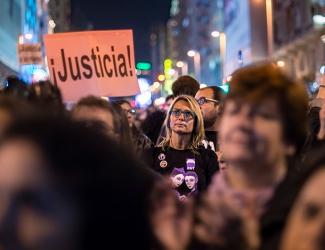
Mass demonstration in Madrid on International Women's Day
Multitudinaria manifestación en Madrid en el día internacional de la mujer
Priority Areas
Supporting feminist, women’s rights and gender justice movements to thrive, to be a driving force in challenging systems of oppression, and to co-create feminist realities.
Across the globe, feminist, women’s rights and gender justice defenders are challenging the agendas of fascist and fundamentalist actors. These oppressive forces target women, persons who are non-conforming in their gender identity, expression and/or sexual orientation, and other oppressed communities.
Discriminatory ideologies are undermining and co-opting our human rights systems and standards, with the aim of making rights the preserve of only certain groups. In the face of this, the Advancing Universal Rights and Justice (AURJ) initiative promotes the universality of rights - the foundational principle that human rights belong to everyone, no matter who they are, without exception.
We create space for feminist, women’s rights and gender justice movements and allies to recognize, strategize and take collective action to counter the influence and impact of anti-rights actors. We also seek to advance women’s rights and feminist frameworks, norms and proposals, and to protect and promote the universality of rights.
Our actions
Through this initiative, we:
Build knowledge: We support feminist, women’s rights and gender justice movements by disseminating and popularizing knowledge and key messages about anti-rights actors, their strategies, and impact in the international human rights systems through AWID’s leadership role in the collaborative platform, the Observatory on the Universality of Rights (OURs)*.
Advance feminist agendas: We ally ourselves with partners in international human rights spaces including, the Human Rights Council, the Commission on Population and Development, the Commission on the Status of Women and the UN General Assembly.
Create and amplify alternatives: We engage with our members to ensure that international commitments, resolutions and norms reflect and are fed back into organizing in other spaces locally, nationally and regionally.
Mobilize solidarity action: We take action alongside women human rights defenders (WHRDs) including trans and intersex defenders and young feminists, working to challenge fundamentalisms and fascisms and call attention to situations of risk.
Related Content
Moving Conversation
Thank you, Ángela and Pilar.
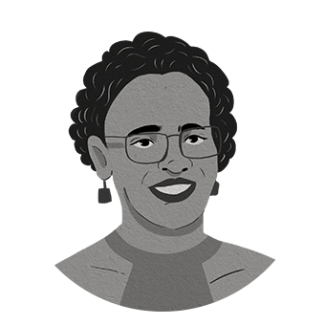
Yannia Sofía Garzón Valencia I am a Black woman and a community weaver. I live in Santander de Quilichao in Cauca, Colombia. I am interested in the creative processes that organize sustainable collective life. I like exchanging thoughts and cooking, investigating and analyzing, planting seeds and learning from plants, reading and playing. I am currently coordinating the observatory of gender-based violence against afro-descendant communities in Colombia (@VigiaAfro).
The three of us were “sharing” the afternoon in a neighborhood south of Bogota.
There was an unusually large green playing area and we sat on little wooden stools under an elderberry tree. We were finally experiencing that other form of love – that pleasure of being together and listening to each other. For me, these kinds of chats are among the expressions of love that life had only recently allowed me to enjoy. I had not known this other form of love – the kinds found outside workshops, activist spaces, classrooms, or workplaces – to be possible. Yet we three friends spent the afternoon amongst ourselves and we did not pretend to be blind to the color of our respective skins. Rather, it was a lived factor that allowed us to intimately discuss the similarities and differences in our childhood and youthful experiences.
Those chats were unrelated to any upcoming activities of the Black movement in Colombia, but they still nourish me and acquire new meanings. Our closeness was woven through coming together, recognizing each other, and identifying the uniqueness of our liberations. And by realizing there is not just one but many paths to liberation – those paths we inhabited every time we said “no” and rebelled. Far from feeling discomfort, we met in an authenticity made of weakness and strength, one which brought us closer instead of separating us.
Our purpose on that beautiful afternoon was to just be – to have an awareness of simply being amongst ourselves. We walked through our pasts so that the memories that stayed with us were those we decided to keep as ours, and not those that fear let through and found a place for. We remembered exact fragments of TV shows, and sang songs written by artists who had taught us about loving well, hating well, cursing like the worst villain, and suffering like the best leading lady.
We told each other about our school pranks, and what remained in our subconscious after being exposed to the many ways the media repeats the same thing – after the teachers and nuns at school overexposed us to stories so that we would identify with and appropriate Cinderella’s aspirations for our own lives. This would set the tone for the rest of our story: the drama of the impoverished and diminished girl who is yet to achieve her full value through an act that redeems her condition. And that act can only be brought about by the gaze of a male who, at the very least, is white, hence deserving of what is between our thighs – his “main aspiration” – and the “perfect realization of our dreams,” which we are told should then be our main aspiration.
There were three of us there that afternoon. Each had been brought up in a different part of the country, but it was fascinating that we could all still quote fragments and situations from songs and soap operas that often – as we realized by getting to know each other – shared codes or symbols that were replicated, with a few variations, in our homes, in our first relationships, and in our neighborhoods and schools. Brought up by “dramas” (is that what that very successful genre is called?) where the more you suffer, the more you deserve, the issue of “how and in which situations it is acceptable and legitimate to suffer” becomes an important mandate on how the person who suffers should be seen, what they should do, and whom they should be. Some of us managed to liberate ourselves and “learn” a definition of love that could only be learnt in adulthood, shattering illusions, and accepting natural sin. And becoming aware of the industrial production of a virgin, which we may refuse to look like as she has no place in our understanding, and the disappointment this alienation brings.
After singing, we reviewed our early sexual explorations. I never thought that most people experienced them before the age of nine and that even in adulthood, those experiences, those memories, remain a heavy burden. Even today, in thousands of places, millions of girls and boys see their innocence curtailed by lack of trust and the ignorance we present them with when they try to explore their bodies. Blaming curiosity is a most efficient control mechanism. We went back to the brief conversations we had when we changed the history of our lives from cursed Black beings to a perspective that rebirthed us. We remembered how many of our aunts and female cousins left their homes, their core, their roots, to seek a future outside, elsewhere.
The future comes with a price: it demands that those relationships that marked our childhood are reshaped and confined to oblivion. They are our foundations, but they are not relevant if we want to move ahead. For us, advancing was to learn by heart what we do to ourselves with the opportunities we find elsewhere. That it is elsewhere, and not within us, that opportunities lie, that we are available, that we need to be outside. However, for many of our aunts and female cousins, the few opportunities to enroll and stay in an evening class or take a sabbatical from domestic work were paid for by becoming the first sexual experience of relatives living in the future. A future for which others before them had also paid for, and whose price they had already forgotten. The demand for this payment arrived with the same inevitability as a public utility service bill. We will not take up that legacy.
In Colombia and Latin America, there was an etiquette manual called La urbanidad de Carreño (Carreño’s Etiquette Manual). It was mandatory reading until the 90s in both public and private schools. The manual conditioned how bodies were perceived and my mother, taken in and brought up by Carmelite nuns, knew it by heart. The first time I read it I had to stop more than once to rub my stomach, which hurt from laughing so much. It has ridiculous instructions such as: take a shower with your eyes closed and turn off the lights to wear your nightclothes. Different chapters address how one is to behave at home, in the street, and during a dinner or lunch party – in short, the norms of good taste and etiquette. The ethical core of good citizens was the urbanity that allowed one to distance oneself from rural life. The same manual indicated that shouting a greeting to an acquaintance on the other side of the street was indecorous; good manners dictate that you must cross the street. By the same token, men must remove their coats and place them over puddles of water if accompanying a woman whose shoes should not get wet. I thought about greeting someone across a river, and how it is so hot where we live that we don’t require coats.
"She learned that to care for her belly, she needed to keep her tissues warm, to avoid the cold that comes through the soft spot on the top of the head, through the feet, the ears, so it would not hurt particularly at moontime. For that, you need to be careful about what you eat and what you don’t eat, how you dress and how you walk, as all that has to do with girls’ health. The woman elder says that, from her devoted grandfather, she learnt that cramps became more common when houses no longer had floors made of mud and/or wood. When concrete and tiles came, when the material making up the house allowed the cold to come in through the feet, tension also grew in the belly tissue."
The manual’s author, Mr. Carreño is the opposite of the grandfather of a woman elder born in Turbo. She told me once that her grandfather was a wise man, that he told her about birthing and how to take care of her body. She learned that to care for her belly, she needed to keep her tissues warm, to avoid the cold that comes through the soft spot on the top of the head, through the feet, the ears, so it would not hurt, particularly at moontime. For that, you need to be careful about what you eat, how you dress, and how you walk, as all that has to do with a girl’s health. The woman elder said that, from her devoted grandfather, she learnt that cramps became more common when houses no longer had floors made of mud and/or wood. When concrete and tiles came, when the material making up the house allowed the cold to come in through the feet, tensions in the belly tissue also grew.
Surprised again. Such a distance between Don Carreño and the wise grandfather in terms of being aware of life – as distant as the mandates of proper behavior that stifle your impulses and senses, even the most common sense that values health. At that moment, I was able to understand one of the many ways that concrete obstructs the earth’s breathing, and our own as part of her. I had not realized there was, and still is, the architecture and materials for taking care of our bodies. In Colombia, as well as in other countries, the materials used to make houses are taken as indicators of multidimensional poverty. A house built with concrete moves the home away from being considered poor. This is just one disappointing example of how progress pushes us to abandon the relationship between our environment and our body. Good taste and urbanity pushes us outside: to move forward, they lie, you have to go out there.
It bothered us to realize that neither our mothers nor fathers had spoken to us about menstruation, except when the brown stain had already smeared our knickers. They failed to preserve us from the shame that was supposed to be a natural feeling once menstruation had come. Along with menstruation came the belly cramps often endured in silence, because there was work to be done; some cramps were due to cysts, hematomas, or fibroids that killed the grandmothers who had discovered and forgotten the healing treatments, and then were forgotten themselves. That our mothers and fathers’ breaths turned colder and colder, but the Outside froze familiarity and, instead of warming our bellies, passed judgment with advice similar to warnings of the only thing men care about. This was applied to all men – legitimizing the plundering role of the phallus, as if its only option was to take what we have between our legs. The multiple versions of that truth were replaced by an unmovable and deeply-set naturalization: telling all women that we must preserve ourselves for one of them, for the one that will first introduce his penis inside us, for the one that will give us something in exchange, and that we are women only because we aspire to and let him put it inside us. As a girl I explored little penises and clitorises and, in between games among girls, the question was whispered: whose turn is it to play man and whose turn is it to play woman? And the answer: the beginnings of little orgasms, regardless of with whom. I guess the same must happen among male bodies.
The experiences and explorations of our aunts, female cousins, and acquaintances focused on the body and its nudity as taboo. They avoided expressing and naming it, to the point of covering it up, assigning new names to its excreting, expelling, procreating, and, just for us women, its receiving functions. Once I heard a woman elder in a workshop say that when she was living with her grandmother, her memory was of this old woman sleeping with one eye open, the other closed, and a rifle by the mattress. The softest night sound was enough for her to grab the rifle and aim. This is a common situation in the Colombian Pacific, where some harmful behaviors are normalized. Married and single men who like a young woman would enter her room at night – we call it gateada. It was a risk: if those with authority in the home realized what was happening, abuse or not, the man could be hurt or even killed.
This practice of taking the law into one’s own hands has failed to put an end to gateadas, even today. In that same workshop – as I kept telling my sisters – other participants said that neither they nor their mothers would leave their daughters alone with their fathers at bath time, unless the girls were wearing underwear. I remembered then my father’s voice saying, when I was seven, your mother never let me bathe you. After sharing this, another woman responded that, in contrast, her father would give her a bath naked in the courtyard of her childhood home until she turned seven, and then her eldest brother did it until she turned nine. She never felt anything strange in the way they looked at her; for them, it was just another task in caring for the most spoiled child in the home. She remembered being seen for what she was: a daughter child, a sister child, who did not like the water.
Once again childhoods, yesterday and today. We were surprised by that story, and it comforted us. Even I had seen things being different elsewhere; my daughter’s father bathed her in the tub until she was almost two. Even before turning two, he would give her a few soft slaps upwards on her bum, to make it bigger, as he said. Here, we could also speak of other dimensions of how we construct our bodies, but that is a different story. For me, it was one care task, among many, that we agreed to divide between ourselves before the baby was born. And the decision to not see every man as a lurking rapist does not mean they are not rapists, but instead that they can stop being so. There are also men and male bodies that have been brought up to never be rapists.
This is still happening. It happened to a friend of ours and to my own daughter. I thought: how can it be that some women are coupled with men they cannot trust to care for their daughters? I am sure that my mum loved my dad. And even though we seldom speak about the woman she was before becoming my mum, I know her experiences of abuse cannot be compared to the brutality and over-tolerance of those of today. But that is still a decision many women in many places make, and that leads to other questions. How often, how repeated were cases of abuse in our extended families to make women openly, or in indiscernible ways, forbid their partners from bathing their daughters? Is it related to the media overexposure we are subject to almost from birth? What makes family ties blur and turn into just bodily-satisfaction exchanges? Is it the proximity to urban values that cares so much about the right shapes of female bodies as objects of desire, and pushes male bodies to behave like owners and conquerors, fulfilling the mandate to mimic media representations so they feel safe in their identity? Is it concrete and other codes, like the Carreño etiquette, that sustain it? Is it encouraged by the need to forget certain relationships as the price of progress, that insistence on “doing for the outside?” What happens to what we learned in our times, those of us who, in secret or not, undertook sexual explorations as children? Were they erased by guilt? Were they the seeds of mistrust and shame in nudity? Were they the seeds of mistrust and shame of being inside oneself? Indeed, aren’t these learnings possibilities to trust in, understand the nudity of bodies as part of respecting oneself and others? These questions emerge in trusted spaces, where the fear to say what one thinks and feels is driven away by the intention of accompaniment. I imagine how many of us there are in all corners of this planet and I am certain these are not new questions, that messages in them are repeated, and that we find ourselves living the answers.
ExploreTransnational Embodiments
This journal edition in partnership with Kohl: a Journal for Body and Gender Research, will explore feminist solutions, proposals and realities for transforming our current world, our bodies and our sexualities.
نصدر النسخة هذه من المجلة بالشراكة مع «كحل: مجلة لأبحاث الجسد والجندر»، وسنستكشف عبرها الحلول والاقتراحات وأنواع الواقع النسوية لتغيير عالمنا الحالي وكذلك أجسادنا وجنسانياتنا.
Feminist and women’s rights organizations don’t just rely on institutional funding, we resource ourselves. Our organizing is powered by passion, political commitment, solidarity and collective care.
These resources are self- generated and autonomous, and often invisible in our budgets, but they are the backbone of our organizing.
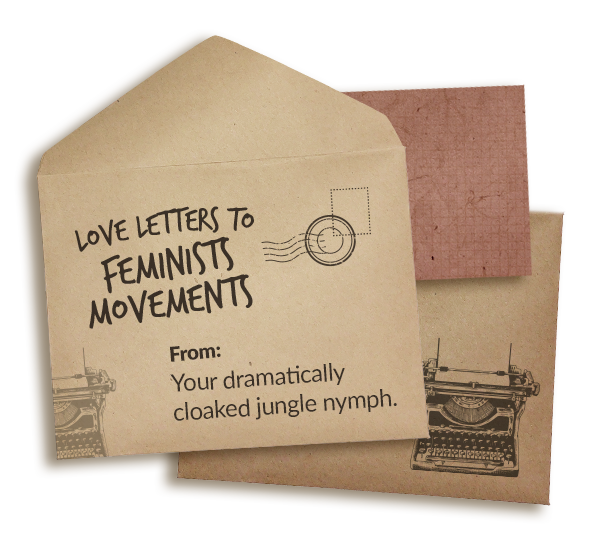
I know you are so close. You can feel it can't you? How things need to shift and you need to centre yourself.
This is a letter to tell you to do it. Choose your healing. Choose to be OK. Better than OK. Choose to be whole, to be happy. To cry tears for yourself and no one else. Choose to shut out the world and tell them that 'you will be back in 5 mins'. Or five days. Or five years.
Or never.
Choose to not take it all on. Choose to take none of it on. Because none of it is yours. It was never yours. They told you since you were born that it was yours. Your family's problems. Your lovers' problems. Your neighbours' problems. The globe's problems. The constant whisper that these problems belong to you. They are yours. Yours to hold, yours to shoulder. Yours to fix.
That was a lie.
A bamboozle
A long con.
A scam.
The problems of the universe are not yours.
The only problems that are yours are your own. Everyone else can take a hike.
Allow yourself to drop everything and sprint off into the jungle. Befriend a daisy clad nymph, start a small library in the roots of a tree. Dance naked and howl at the moonlight. Converse with Oshun at the river bed.
Or simply drink a cup of tea when you need to take a moment to breathe.
Give yourself permission to disappear into the mist and reappear three countries over as a mysterious chocolatier with a sketchy past and penchant for dramatic cloaks and cigars.
Or stop answering work calls on weekends.
Let yourself swim to deserted island with a lover and dress only in the coconut shells from coconut rum that you make and sip at sunset.
Or say no when you don't have the capacity to create space for someone.
The options for holding yourself are endless.
Whatever you do, know the world will always keep spinning. That's the beauty and the pain of it. No matter who or what you choose over yourself and your soul the world will always keep spinning.
Therefore, choose you.
In the morning when that first light hits, choose you. When it’s lunchtime and it’s time to cry on company time, choose you. In the evening, when you are warming up leftovers because you didn’t have time to cook again, choose you. When anxiety wakes you up and existence is silent at 3:45 am.
Choose you.
Because the world will always keep twirling on a tilt and you deserve to have someone always trying to make it right side up for you.
Snippet - COP30 - Feminist Demands for COP30 Col 1
What We Reject:
Market-based false solutions
Ecosystem service trading
Green neoliberal economies mining
Geo-engineering
Fossil fuels
Military spending over climate funds
Climate finance as loans
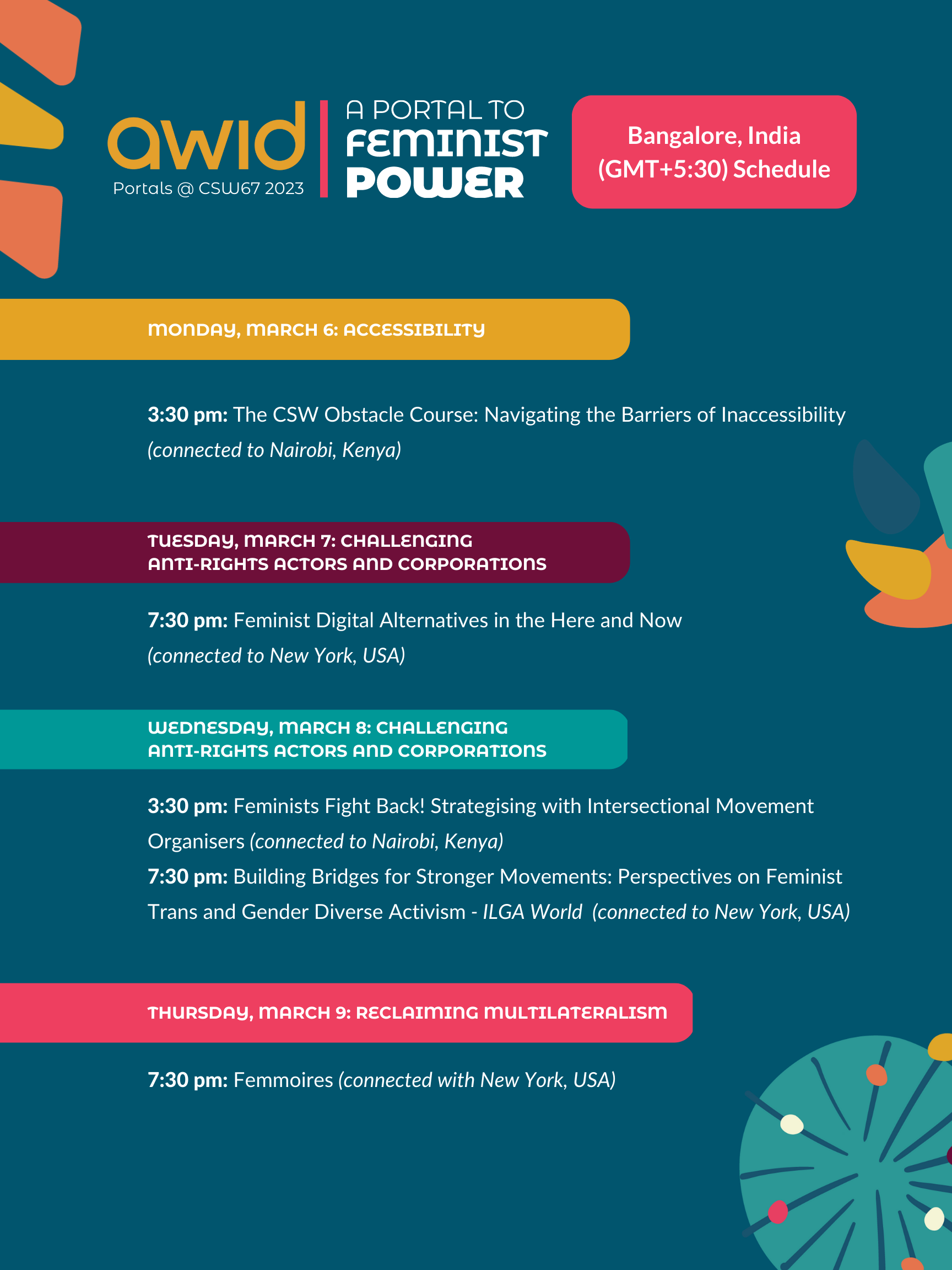
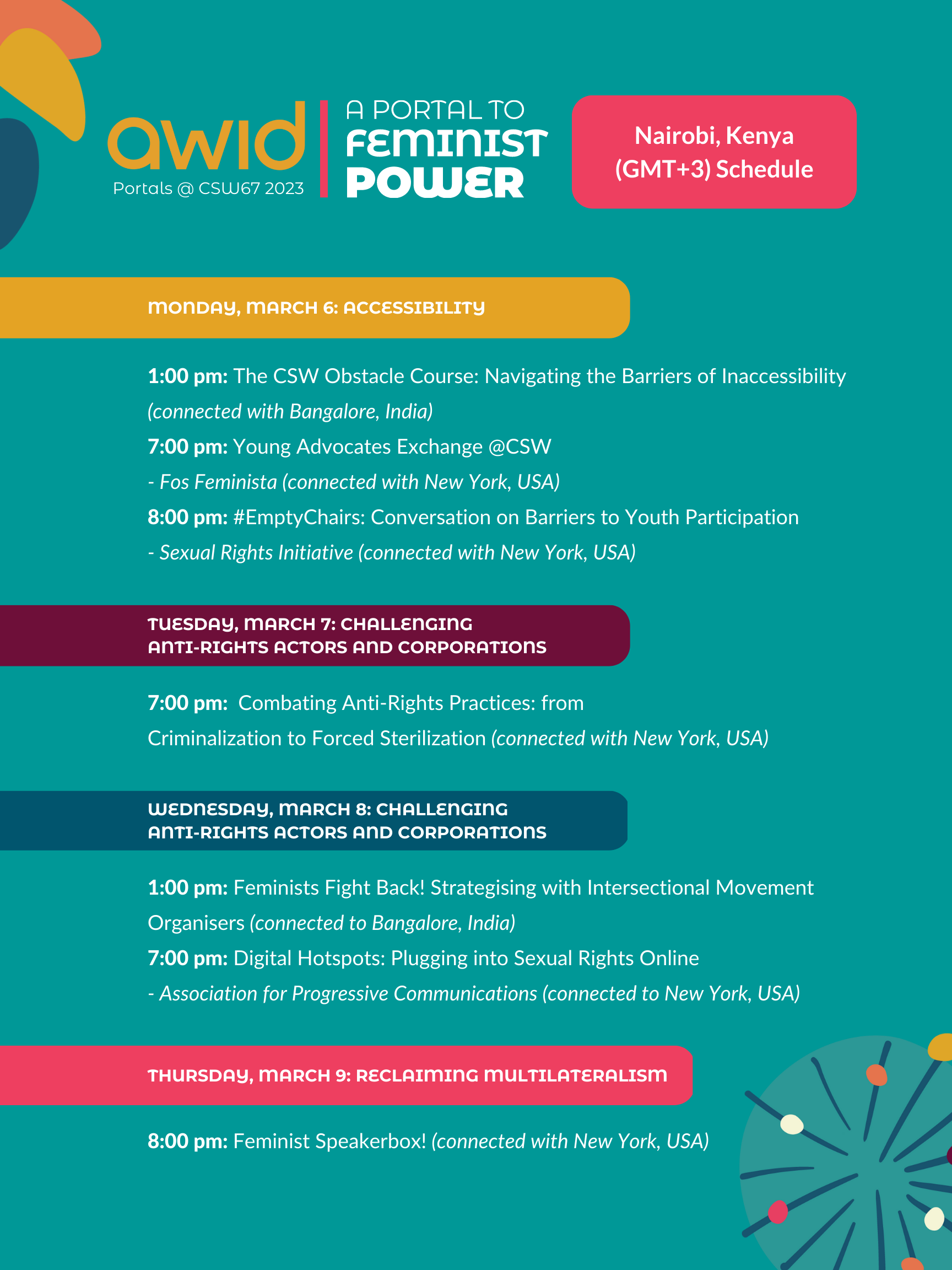
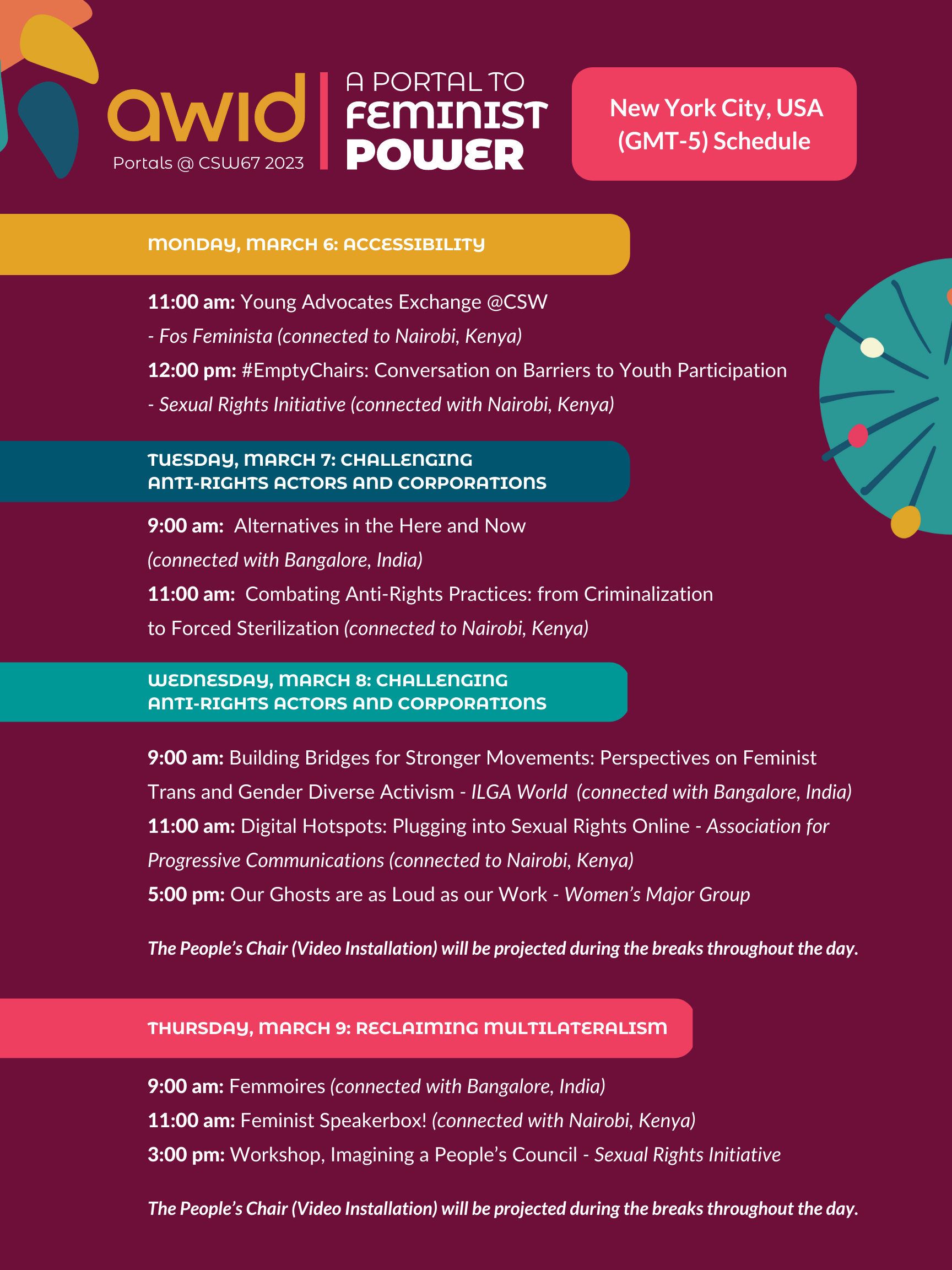
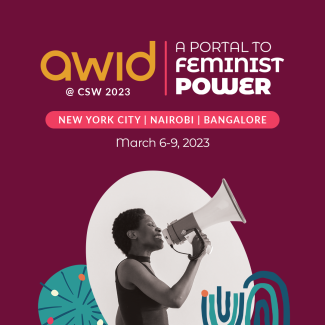
AWID at CSW67: a Portal to Feminist Power
Imagine opening a door which takes you into a conversation with feminist activists in other continents. This portal will transcend the barriers of UN CSW by pushing beyond language barriers, unaffordable travel, unequal protection from COVID19, and racist visa regimes.
This week, we’re putting a virtual spin on CSW by connecting and amplifying feminist activists' voices, to challenge the discriminatory barriers that limit participation and influence. By setting up connecting “portals” in New York City, Nairobi & Bangalore, we'll host a physical-virtual hybrid space for feminists to connect their struggles and build collective power.
The 61st Human Right Council takes place amid, what has been called by the UN Secretary-General, an ‘imminent financial collapse.’ Powerful member states’ refuse to pay up their contributions to the UN: the United States alone accounts for 95% of the USD 1.6 billion shortfall in the UN’s 2025 budget. This continues to erode the Council’s ability to deliver on its mandate, limiting its capacity to support human rights mechanisms, monitor accountability, and respond to global crises.
This lack of accountability is starkly obvious with the global surge of military spending and ongoing genocides in Gaza, Sudan and Myanmar. From the farcical “Gaza Peace Plan,” and unbridled imperial intervention in Venezuela, led by the US, the mask that “there is just no money” for people- social support, healthcare, education is off.
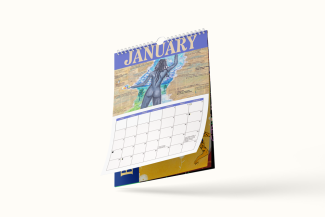
The 2026 AWID Feminist Calendar
Consider this calendar a gift, one that goes out to you and 9,500 members of our global feminist community. A gift of hope, renewed connection, action and community in a time of immense injustice and violence.
Let its stories remind you that across borders and struggles, we are many, we are powerful, and together we are building the worlds we deserve.
The Human Rights Council (HRC) is the key intergovernmental body within the United Nations system responsible for the promotion and protection of all human rights around the globe. It holds three regular sessions a year: in March, June and September. The Office of the UN High Commissioner for Human Rights (OHCHR) is the secretariat for the HRC.
The HRC works by:
Debating and passing resolutions on global human rights issues and human rights situations in particular countries
Examining complaints from victims of human rights violations or activist organizations on behalf of victims of human rights violations
Appointing independent experts (known as “Special Procedures”) to review human rights violations in specific countries and examine and further global human rights issues
Engaging in discussions with experts and governments on human rights issues
Assessing the human rights records of all UN Member States every four and a half years through the Universal Periodic Review
AWID works with feminist, progressive and human rights partners to share key knowledge, convene civil society dialogues and events, and influence negotiations and outcomes of the session.
With our partners, our work will:
◾️ Monitor, track and analyze anti-rights actors, discourses and strategies and their impact on resolutions