
Haleh Sahabi

Young feminist activists play a critical role in women’s rights organizations and movements worldwide by bringing up new issues that feminists face today. Their strength, creativity and adaptability are vital to the sustainability of feminist organizing.
At the same time, they face specific impediments to their activism such as limited access to funding and support, lack of capacity-building opportunities, and a significant increase of attacks on young women human rights defenders. This creates a lack of visibility that makes more difficult their inclusion and effective participation within women’s rights movements.
AWID’s young feminist activism program was created to make sure the voices of young women are heard and reflected in feminist discourse. We want to ensure that young feminists have better access to funding, capacity-building opportunities and international processes. In addition to supporting young feminists directly, we are also working with women’s rights activists of all ages on practical models and strategies for effective multigenerational organizing.
We want young feminist activists to play a role in decision-making affecting their rights by:
Fostering community and sharing information through the Young Feminist Wire. Recognizing the importance of online media for the work of young feminists, our team launched the Young Feminist Wire in May 2010 to share information, build capacity through online webinars and e-discussions, and encourage community building.
Researching and building knowledge on young feminist activism, to increase the visibility and impact of young feminist activism within and across women’s rights movements and other key actors such as donors.
Promoting more effective multigenerational organizing, exploring better ways to work together.
Supporting young feminists to engage in global development processes such as those within the United Nations
Collaboration across all of AWID’s priority areas, including the Forum, to ensure young feminists’ key contributions, perspectives, needs and activism are reflected in debates, policies and programs affecting them.
As part of our commitment to accessibility in all aspects of the AWID Forum we are accepting audio/video formats for those individuals/organizations/groups who can't submit a written application.
If you choose to send your proposal in an audio/video format, kindly follow the same order to answer the questions as detailed in the Activity Proposal Form.
To submit an audio/video file please Contact us, selecting Forum Call for Activities as the subject of your email.

Housing is a right | Care sustains Life
The WITM survey is focused on the feminist resourcing realities of the last 3 years (2021 to 2023), and has five key sections:
It consists of mandatory* and optional questions, most of which are multiple-choice. You will have a chance to share more on issues that are important to you by responding to the open question(s) at the end of the survey.

To respond to the questions quickly and easily, we advise that you have your key financial information at hand (e.g., your annual budgets from 2021 to 2023). However, if you wish to save your responses and come back to the survey later, you are able to do this whenever needed.
The AWID Forum registration fees for all forum participants cover:

Estamos emocianadxs de presentarte a Clemencia Carabalí Rodallega, una feminista afrocolombiana extraordinaria.
Ha trabajado incansablemente durante tres décadas por la salvaguarda de los derechos humanos, los derechos de las mujeres y la construcción de paz en zonas de conflito en la Costa Pacífica de Colombia.
Clemencia ha hecho contribuciones significativas a la lucha por la verdad, la reparación y la justicia para las víctimas de la guerra civil de Colombia.
Recibió el Premio Nacional por la Defensa de los Derechos Humanos en 2019, y también participó en la campaña de la recién electa afrocolombiana y amiga de mucho tiempo, la vicepresidenta Francia Márquez.
Aunque Clemencia ha enfrentado y continúa enfrentando muchas dificultades, incluso amenazas e intentos de asesinato, sigue luchando por los derechos de las mujeres y comunidades afrocolombianas en todo el país.

To make the complexity of resourcing diverse forms of feminist organizing visible
More than just an event, the AWID Forum is part of our Feminist Realities Journey, with many spaces to come together, online and offline, for sharing, discussing, strategizing and co-creating feminist realities.
Learn more about the Feminist Realities Journey and everything that will happen before the Forum. Join our mailing list to stay tuned for Post-Forum announcements!
We are exploring options to participate virtually at the Forum and we will share information when we know what we can offer.

 |
 |
 |
 |
 |
|
|
|
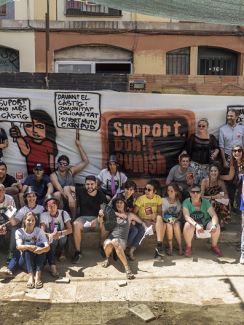
Des militants de Metzineres en action |
 Le financement des mouvements féministes est indispensable à la mise en place d’une présence plus juste et pacifique et d’un avenir libéré. Au cours de la dernière décennie, les bailleurs de fonds se sont engagés à verser bien plus d’argent en faveur de l’égalité des genres, mais 1 % seulement des financements philanthropiques et de développement a réellement été destiné à financer directement les changements sociaux menés par des féministes (ressource en anglais).
Pour viser l’abondance, et rompre ce cycle d’insuffisance chronique, l’enquête WITM est une invitation pour les activistes féministes et défenseur·ses de la justice de genre à se lancer dans l’aventure de la collecte de données probantes et d’arguments en faveur de la mobilisation de davantage d’argent, de meilleure qualité, et de réappropriation du pouvoir au sein de l’écosystème actuel du financement. En solidarité avec les mouvements qui continuent à être invisibilisés, marginalisés et empêchés d’accéder à des financements de base, à long terme, flexibles et reposant sur la confiance, l’enquête WITM souligne l’état actuel de la mobilisation de ressources, remet en question les fausses solutions, et identifie les changements à opérer au sein des modèles de financement afin que les mouvements s’épanouissent et relèvent les défis complexes de notre époque.
AWID is closely monitoring the global COVID 19 situation and for now anticipates continuing with the Forum as planned.
If at any moment the situation demands something different, we will let you know right away.
The 14th AWID International Forum is scheduled to take place 20-23 September 2021 in Taipei,.

Effective as of 25 Apr 2023.
Please click here to view the previous version of our Privacy Policy.
This Privacy Policy describes how the Association for Women’s Rights in Development and our subsidiaries and affiliates (“AWID,” “we,” “us” or “our”) handles personal information that we collect through our website that links to this Privacy Policy (the “Site”), as well as through social media, our marketing activities, our live events and other activities described in this Privacy Policy (“Service”).
Index
Personal information we collect
How we use your personal information
How we share your personal information
Your choices
Other sites and services
Security
International data transfers
Children
Changes to this Privacy Policy
How to contact us
Notice to European users
Information you provide to us. Personal information you may provide to us through the Service or otherwise includes:
Automatic data collection. We, our service providers, and our business partners may automatically log information about you, your computer or mobile device, and your interaction over time with the Service, our communications and other online services, such as:
Cookies and similar technologies. Some of the automatic collection described above is facilitated by cookies, which are small text files that websites store on user devices and that allow web servers to record users’ web browsing activities and remember their submissions, preferences, and login status as they navigate a site. Cookies used on our sites include both “session cookies” that are deleted when a session ends, “persistent cookies” that remain longer, “first party” cookies that we place and “third party” cookies that our third-party business partners and service providers place.
We may use your personal information for the following purposes or as otherwise described at the time of collection:
Service delivery and business operations. We may use your personal information to:
Research and development. We may use your personal information for research and development purposes, including to analyze and improve the Service. As part of these activities, we may create aggregated, de-identified and/or anonymized data from personal information we collect. We make personal information into de-identified or anonymized data by removing information that makes the data personally identifiable to you. We may use this aggregated, de-identified or otherwise anonymized data and share it with third parties for our lawful business purposes, including to analyze and improve the Service and promote our business.
Marketing. We and our service providers may collect and use your personal information to send you direct marketing communications. You may opt-out of our marketing communications as described in the Opt-out of marketing section below.
Compliance and protection. We may use your personal information to:
With your consent. In some cases, we may specifically ask for your consent to collect, use or share your personal information, such as when required by law.
Cookies and similar technologies. In addition to the other uses included in this section, we may use the Cookies and similar technologies described above for the following purposes:
Retention. We generally retain personal information to fulfill the purposes for which we collected it, including for the purposes of satisfying any legal, accounting, or reporting requirements, to establish or defend legal claims, or for fraud prevention purposes. To determine the appropriate retention period for personal information, we may consider factors such as the amount, nature, and sensitivity of the personal information, the potential risk of harm from unauthorized use or disclosure of your personal information, the purposes for which we process your personal information and whether we can achieve those purposes through other means, and the applicable legal requirements.
When we no longer require the personal information we have collected about you, we may either delete it, anonymize it, or isolate it from further processing.
We may share your personal information with the following parties and as otherwise described in this Privacy Policy or at the time of collection.
Affiliates. Our corporate parent, subsidiaries, and affiliates, for purposes consistent with this Privacy Policy.
Service providers. Third parties that provide services on our behalf or help us operate the Service or our business (such as hosting, information technology, customer support, email delivery, marketing, consumer research and website analytics).
Payment processors. Any payment card information you use to make a purchase on the Service is collected and processed directly by our payment processors, such as Stripe. Stripe may use your payment data in accordance with its privacy policy, https://stripe.com/en-gb/privacy. You may also sign up to be billed by your mobile communications provider, who may use your payment data in accordance with their privacy policies.
Third parties designated by you. We may share your personal data with third parties where you have instructed us or provided your consent to do so. We will share personal information that is needed for these other companies to provide the services that you have requested. Moreover, you may choose to translate user-generated content using Google Translate. Google may use your user-generated content in accordance with its privacy policy, https://policies.google.com.Professional advisors. Professional advisors, such as lawyers, auditors, bankers and insurers, where necessary in the course of the professional services that they render to us.
Authorities and others. Law enforcement, government authorities, and private parties, as we believe in good faith to be necessary or appropriate for the compliance and protection purposes described above.
Other users. Your profile and other user-generated content data (except for messages) may be visible to other users of the Service. For example, other users of the Service may have access to your information if you chose to make your profile or other personal information available to them through the Service, such as when you provide comments, reviews, survey responses, or share other content. This information can be seen, collected and used by others, including being cached, copied, screen captured or stored elsewhere by others (e.g., search engines), and we are not responsible for any such use of this information.
In this section, we describe the rights and choices available to all users. Users who are located in the United Kingdom, Switzerland, and the European Economic Area can find additional information about their rights below.
Opt-out of marketing communications. You may opt-out of marketing-related emails by following the opt-out or unsubscribe instructions at the bottom of the email, or by contacting us. Please note that if you choose to opt-out of marketing-related emails, you may continue to receive service-related and other non-marketing emails.
Declining to provide information. We need to collect personal information to provide certain services. If you do not provide the information we identify as required or mandatory, we may not be able to provide those services.
Delete your content or end your membership. You can choose to delete certain content you have provided to us. If you wish to request to end your membership, please contact us.
The Service may contain links to websites, mobile applications, and other online services operated by third parties. In addition, our content may be integrated into web pages or other online services that are not associated with us. These links and integrations are not an endorsement of, or representation that we are affiliated with, any third party. We do not control websites, mobile applications or online services operated by third parties, and we are not responsible for their actions. We encourage you to read the privacy policies of the other websites, mobile applications and online services you use.
We employ a number of technical, organizational and physical safeguards designed to protect the personal information we collect. However, security risk is inherent in all internet and information technologies and we cannot guarantee the security of your personal information.
We are headquartered in the United States and may use service providers that operate in other countries. Your personal information may be transferred to the United States or other locations where privacy laws may not be as protective as those in your state, province, or country.
Users in the United Kingdom, Switzerland, and the European Economic Area should read the important information provided below about transfer of personal information outside of the European Union.
The Service is not intended for use by anyone under 18 years of age. If you are a parent or guardian of a child from whom you believe we have collected personal information in a manner prohibited by law, please contact us. If we learn that we have collected personal information through the Service from a child without the consent of the child’s parent or guardian as required by law, we will comply with applicable legal requirements to delete the information.
We reserve the right to modify this Privacy Policy at any time. If we make material changes to this Privacy Policy, we will notify you by updating the date of this Privacy Policy and posting it on the Service or other appropriate means. Any modifications to this Privacy Policy will be effective upon our posting the modified version (or as otherwise indicated at the time of posting). In all cases, your use of the Service after the effective date of any modified Privacy Policy indicates your acknowledgment that the modified Privacy Policy applies to your interactions with the Service and our business.
Where this Notice to European users applies. The information provided in this “Notice to European users” section applies only to individuals located in the EEA or the UK (EEA and UK jurisdictions are together referred to as “Europe”).
Personal information. References to “personal information” in this Privacy Policy should be understood to include a reference to “personal data” (as defined in the GDPR) – i.e., information about individuals from which they are either directly identified or can be identified. It does not include “anonymous data” (i.e., information where the identity of individual has been permanently removed). The personal information that we collect from you is identified and described in greater detail in the section “Personal information we collect”.
Our legal bases for processing. In respect of each of the purposes for which we use your personal information, the GDPR requires us to ensure that we have a “legal basis” for that use.
We have set out below, in a table format, the legal bases we rely on in respect of the relevant Purposes for which we use your personal information – for more information on these Purposes and the data types involved, see How we use your personal information above.
|
|
|
|
|
|
|
|
|
|
|
|
|
|
|
|
|
|
|
|
Retention. We retain personal information for as long as necessary to fulfill the purposes for which we collected it, including for the purposes of satisfying any legal, accounting, or reporting requirements, to establish or defend legal claims, or for compliance and protection purposes, unless specifically authorized to be retained longer.
To determine the appropriate retention period for personal information, we consider the amount, nature, and sensitivity of the personal information, the potential risk of harm from unauthorized use or disclosure of your personal information, the purposes for which we process your personal information and whether we can achieve those purposes through other means, and the applicable legal requirements.
When we no longer require the personal information, we have collected about you, we will either delete or anonymize it or, if this is not possible (for example, because your personal information has been stored in backup archives), then we will securely store your personal information and isolate it from any further processing until deletion is possible. If we anonymize your personal information (so that it can no longer be associated with you), we may use this information indefinitely without further notice to you.
Other information
No obligation to provide personal information. You do not have to provide personal information to us. However, where we need to process your personal information either to comply with applicable law or to deliver our Services to you, and you fail to provide that personal information when requested, we may not be able to provide some or all of our Services to you. We will notify you if this is the case at the time.
No Automated Decision-Making and Profiling. As part of the Services, we do not engage in automated decision-making and/or profiling, which produces legal or similarly significant effects. We will let you know if that changes by updating this Privacy Policy.
Security. We have put in place procedures designed to deal with breaches of personal information. In the event of such breaches, we have procedures in place to work with applicable regulators. In addition, in certain circumstances (including where we are legally required to do so), we may notify you of breaches affecting your personal information.
Your rights
General. European data protection laws give you certain rights regarding your personal information. If you are located in Europe, you may ask us to take any of the following actions in relation to your personal information that we hold:
Exercising These Rights. You may submit these requests by email. See the How to contact us section above for our contact details. We may request specific information from you to help us confirm your identity and process your request. Whether or not we are required to fulfill any request you make will depend on a number of factors (e.g., why and how we are processing your personal information), if we reject any request you may make (whether in whole or in part) we will let you know our grounds for doing so at the time, subject to any legal restrictions. Typically, you will not have to pay a fee to exercise your rights; however, we may charge a reasonable fee if your request is clearly unfounded, repetitive or excessive. We try to respond to all legitimate requests within a month. It may take us longer than a month if your request is particularly complex or if you have made a number of requests; in this case, we will notify you and keep you updated.
Your Right to Lodge a Complaint with your Supervisory Authority. In addition to your rights outlined above, if you are not satisfied with our response to a request you make, or how we process your personal information, you can make a complaint to the data protection regulator in your habitual place of residence.
The Information Commissioner’s Office
Water Lane, Wycliffe House
Wilmslow - Cheshire SK9 5AF
Tel. +44 303 123 1113
Website: https://ico.org.uk/make-a-complaint/
Data Processing outside Europe; we are a US-based company and many of our service providers, advisers, partners or other recipients of data are also based in the US. This means that, if you use the Services, your personal information will necessarily be accessed and processed in the US. It may also be provided to recipients in other countries outside Europe.
It is important to note that that the US is not the subject of an ‘adequacy decision’ under the GDPR – basically, this means that the US legal regime is not considered by relevant European bodies to provide an adequate level of protection for personal information, which is equivalent to that provided by relevant European laws.
Where we share your personal information with third parties who are based outside Europe, we try to ensure a similar degree of protection is afforded to it in accordance with applicable privacy laws by making sure one of the following mechanisms is implemented:
You may contact us if you want further information on the specific mechanism used by us when transferring your personal information out of Europe.
While in Sao Paulo, Brazil, you can visit the Ocupação 9 de Julho and have a collaborative meal. You can buy their products in their online store from abroad.
Visit the Association of Afro-Descendant Women of the Northern Cauca’s online store where you can find beautiful handcrafted products.
There are several ways to support Metzineres: you can make a financial donation, donate materials and services, or propose a training course, workshop, or activity (for more information, see here).
Articulate feminist visions, proposals and agendas for resourcing justice.
Events in Indonesia, in late 2019 - in particular, signs of intensifying militarization and backlash against LGBTQ rights - led us to question AWID’s ability to maintain a reasonably safe and welcoming environment for the diversity of participants we aspire to bring together at the Forum.
After careful consideration the AWID Board of Directors decided to change the venue for the 14th International AWID Forum, in November 2019 from Bali to Taipei.
Taipei offers a strong degree of logistical capacities, and is accessible for many travellers (with a facilitated e-visa process for international conferences).
For more details: