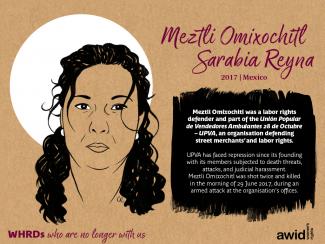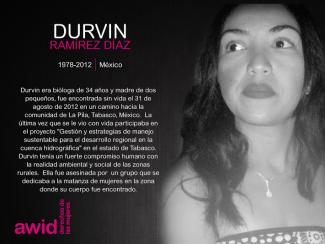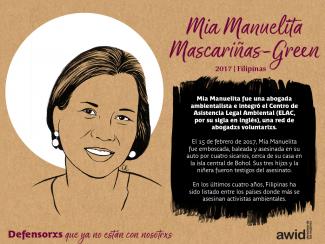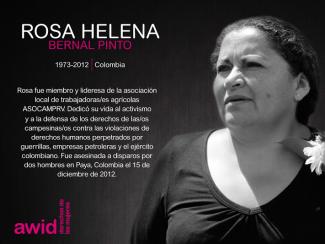
Women Human Rights Defenders
WHRDs are self-identified women and lesbian, bisexual, transgender, queer and intersex (LBTQI) people and others who defend rights and are subject to gender-specific risks and threats due to their human rights work and/or as a direct consequence of their gender identity or sexual orientation.
WHRDs are subject to systematic violence and discrimination due to their identities and unyielding struggles for rights, equality and justice.
The WHRD Program collaborates with international and regional partners as well as the AWID membership to raise awareness about these risks and threats, advocate for feminist and holistic measures of protection and safety, and actively promote a culture of self-care and collective well being in our movements.
Risks and threats targeting WHRDs
WHRDs are exposed to the same types of risks that all other defenders who defend human rights, communities, and the environment face. However, they are also exposed to gender-based violence and gender-specific risks because they challenge existing gender norms within their communities and societies.
By defending rights, WHRDs are at risk of:
- Physical assault and death
- Intimidation and harassment, including in online spaces
- Judicial harassment and criminalization
- Burnout
A collaborative, holistic approach to safety
We work collaboratively with international and regional networks and our membership
- to raise awareness about human rights abuses and violations against WHRDs and the systemic violence and discrimination they experience
- to strengthen protection mechanisms and ensure more effective and timely responses to WHRDs at risk
We work to promote a holistic approach to protection which includes:
- emphasizing the importance of self-care and collective well being, and recognizing that what care and wellbeing mean may differ across cultures
- documenting the violations targeting WHRDs using a feminist intersectional perspective;
- promoting the social recognition and celebration of the work and resilience of WHRDs ; and
- building civic spaces that are conducive to dismantling structural inequalities without restrictions or obstacles
Our Actions
We aim to contribute to a safer world for WHRDs, their families and communities. We believe that action for rights and justice should not put WHRDs at risk; it should be appreciated and celebrated.
-
Promoting collaboration and coordination among human rights and women’s rights organizations at the international level to strengthen responses concerning safety and wellbeing of WHRDs.
-
Supporting regional networks of WHRDs and their organizations, such as the Mesoamerican Initiative for WHRDs and the WHRD Middle East and North Africa Coalition, in promoting and strengthening collective action for protection - emphasizing the establishment of solidarity and protection networks, the promotion of self-care, and advocacy and mobilization for the safety of WHRDs;
-
Increasing the visibility and recognition of WHRDs and their struggles, as well as the risks that they encounter by documenting the attacks that they face, and researching, producing, and disseminating information on their struggles, strategies, and challenges:
-
Mobilizing urgent responses of international solidarity for WHRDs at risk through our international and regional networks, and our active membership.
Related Content
Colectivo Morivivi
Colectivo Moriviví est un collectif artistique de femmes. Notre production artistique comprend du muralisme, du muralisme communautaire et des performances/actions de manifestation. Notre travail consiste à démocratiser l'art et à amener les récits des communautés portoricaines dans la sphère publique afin de créer des espaces où ils seront validés. Nous croyons qu’à travers l'artivisme, nous pouvons promouvoir la sensibilisation aux questions sociales et renforcer notre mémoire collective.


Dans le cadre de sa participation au Groupe de Travail d’Artistes d'AWID, le Colectivo Moriviví a réuni un groupe divers de membres, partenaires et personnel pour faciliter un processus collaboratif visant à imaginer, documenter et déterminer le contenu d'une fresque communautaire par le biais d'un processus de co-création en plusieurs étapes. Le projet a commencé par une conceptualisation à distance avec des féministes de différentes régions du monde réuni·e·s par l'AWID, avant d'évoluer vers sa re-contextualisation et sa réalisation à Porto Rico. Nous avons eu l'honneur de bénéficier de la contribution des artistes locaux·ales Las Nietas de Nonó(@lasnietasdenono), de la participation des femmes locales à la session de peinture communautaire, du soutien logistique de la municipalité de Caguas et du soutien supplémentaire du FRIDA | The Young Feminist Fund.
La fresque explore la transcendance des frontières en présentant les corps tels des cartes, dans une étreinte qui met en évidence l'intersection des différentes manifestations, pratiques et réalités féministes.
Nous remercions également Kelvin Rodríguez, qui a documenté et capturé les différentes étapes de ce projet à Porto Rico :


À propos du Colectivo Morivivi

Le groupe a débuté dans les festivals d'art urbain locaux. Au fur et à mesure que notre travail devenait plus populaire, les organisations et les dirigeant.e.s communautaires ont commencé à nous contacter. Au départ, nous étions huit lycéen·ne·s qui voulaient peindre une fresque ensemble. Cependant, en huit ans de travail acharné, nous avons été confronté·e·s à de nombreux défis. Nous sommes aujourd’hui dans une période de transition. Au cours de l'année qui vient, nous souhaitons restructurer le collectif en interne. Notre objectif est d'ouvrir de nouvelles opportunités pour les collaborateurs·trices et d'étayer notre processus de prise de décisions par un nouveau système d'évaluation. À long terme, nous aspirons à devenir une école alternative de pratiques artistiques pour celles et ceux souhaitant s'immerger dans la production artistique communautaire.
FRMag - United against violence
United against the violence
by Karina Ocampo
In a hidden corner of Chiapas, Mexico, women and sexual dissidents have come to organize our actions. (...)
< artwork by Sonia Carolina Madrigal Loyola
Yamile Guerra
Yamile Guerra was a well-known lawyer, community leader and political activist in the Santander region of Colombia.
She was actively working to resolve disputes between local communities and developers, advocating against illegal land appropriation. Yamile had occupied various political posts, including as the Secretary General for the Santander government in Bogota and also aspired for the Mayor’s Office of Bucaramanga. In the last few years of her life, Yamile became increasingly active in environmental causes, particularly in the defense of the biodiverse wetlands of Santurbán against development, a region which supplies nearly 2 million people with freshwater.
According to her family and friends, Yamile received daily threats against her life and had asked the authorities for protection.
“She was very very aware of this issue [land litigation] and she said many times that she felt insecure.” - Alixon Navarro Munoz, journalist and friend of Guerra family
On July 20, 2019 Yamile was shot to death by two men in Floridablanca, Santander. She had just finished discussing a land dispute with them. A suspect was later arrested for her murder and admitted to being paid to carry out her assassination. According to reports, Yamile was the third member of her family to have been killed in relation to land disputes. Her father, Hernando Guerra was murdered several years previously.
Yamile’s assassination is part of a wave of violence and systematic killing of hundreds of social activists and human rights defenders in Colombia. According to the Institute for Development and Peace Studies (INDEPAZ), at the time of Yamile’s death, over 700 community leaders and human rights activists had been killed since the country signed a peace agreement in August 2016. Most were murdered for confronting illegal drug trafficking and mining operations, with indigenous people, Afro-Colombians and women human rights defenders being most at risk.
Less than a week after Yamile’s death, thousands of Colombians marched all over towns and cities, holding up black and white photos of activists who had been killed, with signs that read: "Without leaders there can be no peace" and "No more bloodshed”.
Yamile Guerra was only 42 years old at the time of her assassination.
What Our Members Say - ES
Lo que dicen nuestrxs miembrxs
Anti-Rights Trends in Regional Human Rights Systems
Chapter 6
In the African Commission and the Inter-American System, anti-rights actors push essentialist notions of culture and gender to hamper progress on rights and undermine accountability. As we see, anti-rights actors are exerting influence in regional human rights systems, as well as international spaces.

2019 JUN 27 Meeting of the Summit Implementation Review Group in Colombia
The African Commission on Human and Peoples' Rights has begun framing women’s and sexual rights as jeopardising its ability to deal with “real rights” and contrary to “African values”, setting a worrying anti-rights precedent. The withdrawal of the Coalition of African Lesbians’ observer status is an example of this trend, and points to the way space for feminist, Pan-Africanist engagement is being stifled.
In the Organization of American States (OAS) and the Inter-American Human Rights System, anti-rights strategies include the NGOization of religious groups, the use of secular discourses, and the co-optation of discrimination frameworks. Anti-rights influence has materialized in a number of ways, including the intimidation of trans activists and the blocking the introduction of progressive language in resolutions.
Table of Contents
- Silencing Feminists in the African Human Rights System
- Anti-rights Groups in Latin America: Organization of American States (OAS) General Assembly and the Inter-American Human Rights System
Snippet FEA We are living in a world right (ES)
Incluso en tiempos de crisis climática, los gobiernos continúan alentando el crecimiento de las industrias agrícolas a gran escala. Estas actividades envenenan la tierra, amenazan la biodiversidad y destruyen la producción de alimentos y los medios de vida locales. Mientras tanto, aunque las mujeres producen la mayoría de nuestros alimentos en el mundo, casi no poseen tierra.
¿Qué pasaría si percibiéramos la tierra y la Naturaleza no como una propiedad privada para ser explotada, sino como una totalidad con la cual aprender y coexistir en armonía? ¿Y si repararíamos nuestras relaciones con la tierra y adoptaríamos alternativas más sostenibles que nutran tanto al planeta como a sus comunidades?
Nous Sommes la Solution (Somos la Solución, NSS) es uno de los muchos movimientos liderados por mujeres que se esfuerzan por lograr este objetivo.
Esta es su historia.
FRMag - Resistance from the Kitchen
Nuestra arepa: Cocina en resistencia
por Alejandra Laprea
Vivo en un país de lo imposible, donde no caen bombas pero padecemos una guerra. (...)
arte: «Entretejidas», Surmercé >Rita Joe
Binta Sarr
Binta Sarr fue una activista por la justicia social, económica, cultural y política, y una ingeniera hidráulica en Senegal. Después de 13 años en la administración pública, Binta dejó ese camino para trabajar con mujeres rurales y marginadas.
Fue de este compromiso que surgió la Association for the Advancement of Senegalese Women [Asociación para el Avance de las Mujeres Senegalesas] (APROFES, por sus siglas en inglés), un movimiento y organización de base que Binta fundó en 1987. Uno de sus principales enfoques fue la formación de dirigentes, en relación no solo con las actividades económicas, sino también con los derechos de las mujeres y el acceso a los puestos de toma de decisiones.
"Las poblaciones de base deben organizarse, movilizarse, asumir el control ciudadano y exigir la gobernabilidad democrática en todos los sectores del espacio público. La prioridad de los movimientos sociales debe ir más allá de la lucha contra la pobreza y debe centrarse en programas de desarrollo articulados y coherentes en consonancia con los principios de los derechos humanos, teniendo en cuenta al mismo tiempo sus necesidades y preocupaciones tanto a nivel nacional como subregional y desde una perspectiva de integración africana y mundial". - Binta Sarr
Partiendo de la convicción de Binta de que el cambio fundamental de la condición de la mujer requiere una transformación de las actitudes masculinas, APROFES adoptó un enfoque interdisciplinario, al utilizar la radio, los seminarios y el teatro popular, además de proporcionar una educación pública innovadora y brindar apoyo cultural a las acciones de sensibilización. Su compañía de teatro popular representó piezas originales sobre el sistema de castas en el Senegal, el alcoholismo y la violencia conyugal. Binta y su equipo también analizaron la conexión crucial entre la comunidad y el mundo en general.
"Para APROFES, se trata de estudiar y tener en cuenta las interacciones entre lo micro y lo macro, lo local y lo global y también, las diferentes facetas del desarrollo. Desde la esclavitud hasta la colonización, el neocolonialismo y la mercantilización del desarrollo humano, la mayor parte de los recursos de África y del Tercer Mundo (petróleo, oro, minerales y otros recursos naturales) están todavía bajo el control de carteles financieros y las otras multinacionales que dominan este mundo globalizado". - Binta Sarr
Binta fue una de las integrantes fundadoras de la sección femenina de la Asociación Cultural y Deportiva Magg Daan. Recibió distinciones del Gobernador Regional y del Ministro de Hidrología por su "devoción por la población rural".
Nacida en 1954 en Guiguineo, un pequeño pueblo rural, Binta falleció en septiembre de 2019.
Tributos:
"La pérdida es inconmensurable, el dolor es pesado y profundo, pero resistiremos para no llorar a Binta; no lloraremos a Binta, mantendremos la imagen de su amplia sonrisa en todas las circunstancias, para resistir e inspirarnos en ella, para mantener, consolidar y desarrollar su obra..." - Página de Facebook de Aprofes, 24 de septiembre de 2019.
"¡Adiós Binta! Creemos que tu inmenso legado será preservado." - Elimane FALL , presidente de ACS Magg-Daan
Snippet - CSW69 Image - FR

Suscríbete para recibir nuestras noticias
Snippet - GII Intro (EN)
Gender Impact Investing & The Rise of False Solutions:
An Analysis for Feminist Movements
Gender Impact Investing (GII) is now trending as a solution to gender inequality. Yet, as our report indicates, it is actually part of the problem. Public and private institutions marketing GII equate it with promotion of gender equality and with increased resources for women and girls.
Neither claim is evidence-based.
Rather, GII is another expression of subjecting our lives and societies to the same financial logic that has shaped, and continues shaping, the profound inequalities in our world.
With this report, AWID offers the readers - feminists, gender justice advocates and stakeholders in gender impact investing - a critical analysis and substantiated evidence to understand GII, its narratives, and economic and political implications for feminist movements.
FRMag - Armenians
Arménien·ne·s, le féminisme est notre passé et notre avenir
par Sophia Armen
Que cela vous plaise ou non, les ungerhouis font partie intégrante de nos histoires de résistance et elles ne disparaîtront pas de sitôt. (...)
Karen Brandow
Laurie Carlos
Laurie Carlos était une comédienne, réalisatrice, danseuse, dramaturge et poétesse aux États-Unis. Artiste hors pair et visionnaire, c’est avec de puissants modes de communication qu’elle a su transmettre son art.
« Laurie entrait dans la pièce (n’importe quelle pièce/toutes les pièces) avec une perspicacité déroutante, un génie artistique, une rigueur incarnée, une féroce réalité – et une détermination à être libre... et à libérer les autres. Une faiseuse de magie. Une devineresse. Une métamorphe. Laurie m’a dit un jour qu’elle entrait dans le corps des gens pour trouver ce dont ils et elles avaient besoin. » - Sharon Bridgforth
Elle a employé plusieurs styles de performance alliant les gestes rythmiques au texte. Laurie encadrait les nouveaux·elles comédien·ne·s, performeur·euse·s et dramaturges, et a contribué à développer leur travail dans le cadre de la bourse Naked Stages pour les artistes émergent·e·s. Associée artistique au Penumbra Theatre, elle a participé à la sélection de scripts à produire, dans l’objectif « d’intégrer des voix plus féminines dans le théâtre ». Laurie faisait également partie des Urban Bush Women, une compagnie de danse contemporaine reconnue qui contait les histoires de femmes de la diaspora africaine.
Elle fit ses débuts à Broadway dans le rôle de Lady in Blue, en 1976, dans la production originale et primée du drame poétique For colored girls who have considered suicide / when the rainbow is enuf de Ntozake Shange. L’oeuvre de Laurie inclut White Chocolate, The Cooking Show et Organdy Falsetto.
« Je raconte les histoires à travers le mouvement – les danses intérieures qui se produisent spontanément, comme dans la vie – la musique et le texte. Si j’écris une ligne, ce n’est pas forcément une ligne qui sera dite ; ce peut être une ligne qui sera bougée. Une ligne à partir de laquelle de la musique est créée. Le geste devient phrase. Tant de ce que nous sommes en tant que femmes, en tant qu’êtres, tient aux gestes que nous exprimons les un·e·s par rapport aux autres, tout le temps, et particulièrement dans les moments d’émotion. Le geste devient une phrase, ou un état de fait. Si j’écris “quatre gestes” dans un script, cela ne signifie pas que je ne dis rien;cela veut dire que j’ai ouvert la voie à ce que quelque chose soit dit physiquement. » Laurie Carlos
Laurie est née et a grandi à New York, a travaillé et vécu à Minneapolis-Saint-Paul. Elle est décédée le 29 décembre 2016, à l’âge de 67 ans, après un combat contre le cancer du côlon.
Hommages :
« Je pense que c’était exactement l’intention de Laurie. De nous sauver. De la médiocrité. De l’ego. De la paresse. De la création artistique inaboutie. De la paralysie par la peur.
Laurie voulait nous aider à briller pleinement.
Dans notre expression artistique.
Dans nos vies. » - Sharon Bridgforth pour le Pillsbury House Theatre
« Quiconque connaissait Laurie aurait dit que c’était une personne singulière. Elle était sa propre personne. Elle était sa propre personne, sa propre artiste ; elle mettait en scène le monde tel qu’elle le connaissait avec un vrai style et une compréhension fine, et elle habitait son art. » – Lou Bellamy, Fondatrice de la Penumbra Theatre Company, pour le Star Tribune
Lire un hommage complet par Sharon Bridgforth (seulement en anglais)