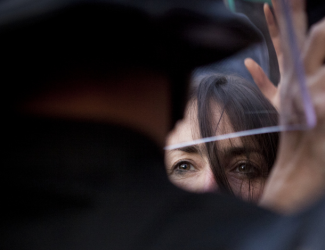
Philippe Leroyer | Flickr (CC BY-NC-ND 2.0)

Special Focus

AWID is an international, feminist, membership organisation committed to achieving gender equality, sustainable development and women’s human rights

Women Human Rights Defenders

WHRDs are self-identified women and lesbian, bisexual, transgender, queer and intersex (LBTQI) people and others who defend rights and are subject to gender-specific risks and threats due to their human rights work and/or as a direct consequence of their gender identity or sexual orientation.

WHRDs are subject to systematic violence and discrimination due to their identities and unyielding struggles for rights, equality and justice.

The WHRD Program collaborates with international and regional partners as well as the AWID membership to raise awareness about these risks and threats, advocate for feminist and holistic measures of protection and safety, and actively promote a culture of self-care and collective well being in our movements.


Risks and threats targeting WHRDs  

WHRDs are exposed to the same types of risks that all other defenders who defend human rights, communities, and the environment face. However, they are also exposed to gender-based violence and gender-specific risks because they challenge existing gender norms within their communities and societies.

By defending rights, WHRDs are at risk of:

  • Physical assault and death
  • Intimidation and harassment, including in online spaces
  • Judicial harassment and criminalization
  • Burnout

A collaborative, holistic approach to safety

We work collaboratively with international and regional networks and our membership

  • to raise awareness about human rights abuses and violations against WHRDs and the systemic violence and discrimination they experience
  • to strengthen protection mechanisms and ensure more effective and timely responses to WHRDs at risk

We work to promote a holistic approach to protection which includes:

  • emphasizing the importance of self-care and collective well being, and recognizing that what care and wellbeing mean may differ across cultures
  • documenting the violations targeting WHRDs using a feminist intersectional perspective;
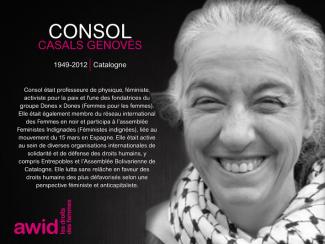
  • promoting the social recognition and celebration of the work and resilience of WHRDs ; and
  • building civic spaces that are conducive to dismantling structural inequalities without restrictions or obstacles

Our Actions

We aim to contribute to a safer world for WHRDs, their families and communities. We believe that action for rights and justice should not put WHRDs at risk; it should be appreciated and celebrated.

  • Promoting collaboration and coordination among human rights and women’s rights organizations at the international level to  strengthen  responses concerning safety and wellbeing of WHRDs.

  • Supporting regional networks of WHRDs and their organizations, such as the Mesoamerican Initiative for WHRDs and the WHRD Middle East and North Africa  Coalition, in promoting and strengthening collective action for protection - emphasizing the establishment of solidarity and protection networks, the promotion of self-care, and advocacy and mobilization for the safety of WHRDs;

  • Increasing the visibility and recognition of  WHRDs and their struggles, as well as the risks that they encounter by documenting the attacks that they face, and researching, producing, and disseminating information on their struggles, strategies, and challenges:

  • Mobilizing urgent responses of international solidarity for WHRDs at risk through our international and regional networks, and our active membership.

Related Content

Pourquoi l’AWID a-t-elle décidé de changer le lieu du Forum de Bali à Taipei ?

Fin 2019, les événements en Indonésie - notamment les signes d’intensification de la militarisation et de reculs des droits LGBTQ – nous ont amené·e·s à questionner la capacité de l’AWID à maintenir un environnement sécurisé et accueillant pour les divers·es participant·e·s que nous voulons rassembler au Forum.

Après un examen attentif, la Direction de l’AWID a décidé en novembre 2019 de faire évoluer le lieu de tenue du 14ème Forum international de l’AWID, de Bali à Taipei.

Taipei dispose de fortes capacités logistiques et est accessible pour beaucoup de voyageurs·ses (avec une facilitation de procédure de visa électronique pour les conférences internationales).

Pour plus d’informations :


Comment puis-je accéder à l’enquête?

L’enquête est disponible sur KOBO, une plateforme en source libre de collecte, gestion et visualisation de données. Pour y participer, il vous suffit de cliquer ici sur le lien de l’enquête et de suivre les indications pour répondre aux questions. 

From “WID” to “GAD” to Women’s Rights: The First Twenty Years of AWID

In 2002 AWID celebrated its 20th anniversary. Given the challenging political, economic and funding environment in which women's organizations must survive, a milestone such as this is worthy of recognition.

In the past two decades the geo-political landscape has been transformed and development theories have come and gone, but approaches to ensure women benefit from development processes have endured.

In its twenty-year history, AWID grew from a volunteer organization for U.S. "Women in Development" (WID) specialists to an international network striving to support proactive and strategic gender equality research, activism and policy dialogue.

On the occasion of its 20th anniversary, this paper charts not only the changes in AWID's organizational structure and goals but also the shifts in policy approaches to gender equality in a changing global environment, through the lens of a membership organization committed to improving the lives of women and girls everywhere.

Snippet FEA NSS has a vision of an Africa (EN)

Nous Sommes la Solution has a vision of an Africa where, in solidarity, rural women involved in decision-making can grow, process, sell and consume family farming products  while preserving the environment, for a harmonious and sustainable development.”

Elisa Badayos

Elisa was the coordinator for the human rights organization Karapatan in Negros Oriental Province in the Philippines.

She also served as an organiser of urban poor communities in Cebu Province, and worked with Desaparecidos, an organization of families of the disappeared.

Elisa and two of her colleagues were killed on November 28, 2017 by two unidentified men at Barangay San Ramon, Bayawan city in the Negros Oriental province during a mission to investigate alleged land rights abuses in the area.

She is survived by four children.


Elisa Badayos, Philippines

How many questions are in the survey?

There are 47 questions in total, of which 27 are mandatory* and the remaining 20 are optional. The majority of questions are multiple-choice. We invite you to respond to all the questions.

Mujeres indígenas por la defensa de los derechos

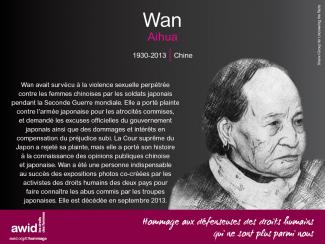
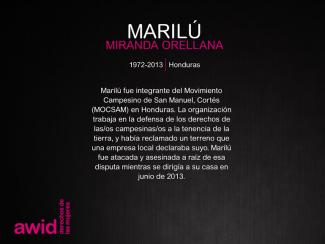
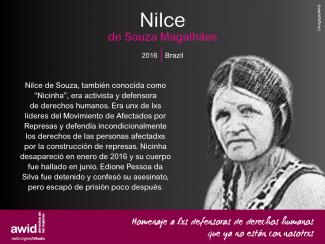
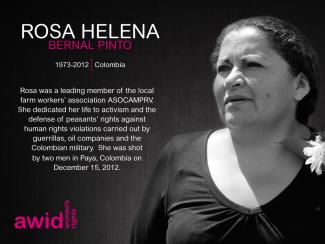
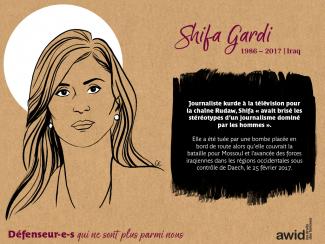
Estas defensoras lucharon por los derechos sobre la tierra, de las mujeres y de los pueblos indígenas; haciendo frente a las industrias extractivas, escribiendo poesía y promoviendo el amor. Una de ellas desapareció hace ya 19 años. Únete a nosotras para recordar y honrar a estas defensoras de derechos humanos, su trabajo y su legado, compartiendo los memes aquí incluidos; y tuiteando las etiquetas #WHRDTribute y #16Días.


Por favor, haz click en cada imagen de abajo para ver una versión más grande y para descargar como un archivo.  


Snippet FEA Objectives NSS - Traditional Knowledge (ES)

CONOCIMIENTOS TRADICIONALES

Brown hands with yellow seeds in the palms
Utilizar y promover los conocimientos y prácticas tradicionales transmitidos de generación en generación, que apoyen la soberanía alimentaria y la preservación de las semillas campesinas

Guadalupe Campanur Tapia

Guadalupe fue una activista ambiental comprometida en la lucha contra el crimen en Cherán, México.

En abril de 2011 ayudó a derrocar el gobierno local, y participó en patrullas locales de seguridad, que abarcaban los bosques municipales. Era unx de lxs líderes indígenas de Cherán que llamaban a la población a defender sus bosques contra la tala forestal ilegal y despiadada. Su trabajo en defensa de adultxs mayores, niñxs y trabajadorxs la convirtió en un ícono de su comunidad.

Fue asesinada en Chilchota, México, aproximadamente 30 kilómetros al norte de su ciudad natal de Cherán.


Guadalupe Campanur Tapia, Mexico

¿Tengo que responder todas las preguntas a la vez o puedo hacerlo a lo largo de algún tiempo?

Si deseas guardar las respuestas y retomar la encuesta más tarde, puedes hacerlo todas las veces que lo necesites. KOBO guardará tus respuestas en la esquina superior izquierda de la página de la encuesta y recargará tu registro cuando regreses a la encuesta. Solo asegúrate de continuar desde la misma computadora y navegador.

Trans* rights require stronger protection

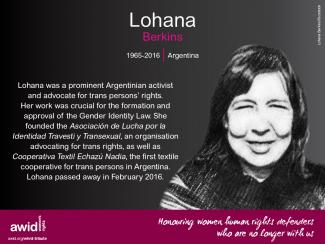
These transgender women were murdered because of their activism and their gender identity. There are insufficient laws recognizing trans* rights, and even where these laws exist, very little is being done to safeguard the rights of trans* people. Please join AWID in honoring these defenders, their activism and legacy by sharing the memes below with your colleagues, networks and friends and by using the hashtags #WHRDTribute and #16Days.


Please click on each image below to see a larger version and download as a file 


Snippet FEA NSS Quote (FR)

« Les savoirs et pratiques indigènes ont toujours soutenu la souveraineté alimentaire, et ce savoir-faire est entre les mains des femmes [...] L'écoféminisme pour moi, c'est le respect de tout ce que nous avons autour de nous » -

Mariama Sonko

Winnie Madikizela- Mandela

Winnie a été décrite comme une « militante enflammée » qui a combattu le régime de l’apartheid en Afrique du Sud.

Son engagement lui a valu d’être emprisonnée et placée en cellule d’isolement de nombreuses fois.

Affectueusement surnommée Ma’Winnie, elle était connue pour être quelqu’un qui parlait ouvertement des défis auxquels les femmes noires étaient confrontées pendant et après l’apartheid et cela, après avoir elle-même subi ces brutalités en tant que mère, épouse et militante pendant la lutte. Elle a su transcender l'idée couramment répandue selon laquelle le leadership est fondé sur le genre, la classe ou la race. Bien qu’étant une personnalité controversée, elle était connue par son nom xhosa, « Nomzamo », qui signifie « celle qui supporte les épreuves ».

Ma’Winnie continue d’être une source d’inspiration pour de nombreuses personnes, en particulier des jeunes femmes sud-africaines.

Sa mort a impulsé la naissance d’un mouvement qui a pour mantra : « Elle n’est pas morte, elle s’est multipliée ».


Winnie Madikizela-Mandela, South Africa