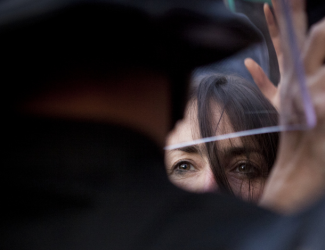
Philippe Leroyer | Flickr (CC BY-NC-ND 2.0)

Special Focus

AWID is an international, feminist, membership organisation committed to achieving gender equality, sustainable development and women’s human rights

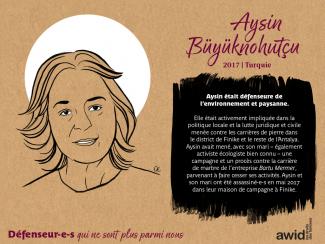
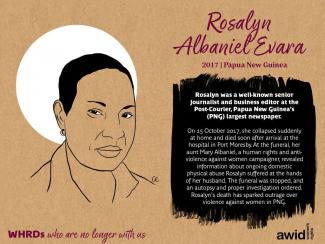
Women Human Rights Defenders

WHRDs are self-identified women and lesbian, bisexual, transgender, queer and intersex (LBTQI) people and others who defend rights and are subject to gender-specific risks and threats due to their human rights work and/or as a direct consequence of their gender identity or sexual orientation.

WHRDs are subject to systematic violence and discrimination due to their identities and unyielding struggles for rights, equality and justice.

The WHRD Program collaborates with international and regional partners as well as the AWID membership to raise awareness about these risks and threats, advocate for feminist and holistic measures of protection and safety, and actively promote a culture of self-care and collective well being in our movements.


Risks and threats targeting WHRDs  

WHRDs are exposed to the same types of risks that all other defenders who defend human rights, communities, and the environment face. However, they are also exposed to gender-based violence and gender-specific risks because they challenge existing gender norms within their communities and societies.

By defending rights, WHRDs are at risk of:

  • Physical assault and death
  • Intimidation and harassment, including in online spaces
  • Judicial harassment and criminalization
  • Burnout

A collaborative, holistic approach to safety

We work collaboratively with international and regional networks and our membership

  • to raise awareness about human rights abuses and violations against WHRDs and the systemic violence and discrimination they experience
  • to strengthen protection mechanisms and ensure more effective and timely responses to WHRDs at risk

We work to promote a holistic approach to protection which includes:

  • emphasizing the importance of self-care and collective well being, and recognizing that what care and wellbeing mean may differ across cultures
  • documenting the violations targeting WHRDs using a feminist intersectional perspective;
  • promoting the social recognition and celebration of the work and resilience of WHRDs ; and
  • building civic spaces that are conducive to dismantling structural inequalities without restrictions or obstacles

Our Actions

We aim to contribute to a safer world for WHRDs, their families and communities. We believe that action for rights and justice should not put WHRDs at risk; it should be appreciated and celebrated.

  • Promoting collaboration and coordination among human rights and women’s rights organizations at the international level to  strengthen  responses concerning safety and wellbeing of WHRDs.

  • Supporting regional networks of WHRDs and their organizations, such as the Mesoamerican Initiative for WHRDs and the WHRD Middle East and North Africa  Coalition, in promoting and strengthening collective action for protection - emphasizing the establishment of solidarity and protection networks, the promotion of self-care, and advocacy and mobilization for the safety of WHRDs;

  • Increasing the visibility and recognition of  WHRDs and their struggles, as well as the risks that they encounter by documenting the attacks that they face, and researching, producing, and disseminating information on their struggles, strategies, and challenges:

  • Mobilizing urgent responses of international solidarity for WHRDs at risk through our international and regional networks, and our active membership.

Related Content

Snippet - COP30 - Resistance Hubs Section Column 2 - EN

The following partners are organizing COP30 hubs:

  1. Caribbean Feminist Climate Justice Movement, Barbados
  2. Gender Interactive Alliance (GIA), Pakistan
  3. Women’s Initiative for Sustainable Environment (WISE), Nigeria
  4. Réseau des Acteurs du Développement Durable (RADD)*, Cameroon
  5. MASIPAG, The Phillippines

*Website in French

CFA 2023 - Suggested Activities Format - ES

Formatos de actividad sugeridos


Panel: en las discusiones de panel, explora un tema o un desafío desde diferentes perspectivas, o comparte un aprendizaje o una experiencia, con preguntas del público a continuación, si el tiempo lo permite.


Programa de entrevistas: puedes tener una conversación más espontánea al estilo de un programa de entrevistas. Estos programas de entrevistas pueden ser una conversación entre varias personas, facilitadas por la persona que presenta el programa. Las preguntas del público pueden determinar la dirección de la conversación.


Conversación: estas pueden tomar la forma de «world café», de pecera y de otras metodologías que facilitan el involucramiento activo de lxs participantes en las conversaciones. Es un formato sumamente participativo.


Taller: actividades o clases interactivas que invitan a lxs participantes a adquirir nuevas habilidades en cualquiera y todas las áreas de la vida y el activismo.


Sesión estratégica: esta es una invitación a pensar en profundidad sobre un tema o una estrategia, junto con otras personas. Un espacio para aprender unxs de otrxs: qué funciona, qué no funciona, y cómo desarrollamos estrategias nuevas y colectivas para crear los mundos que soñamos.


Círculo para compartir [«birds of a feather»]: ideal para grupos pequeños, en un ambiente más íntimo, para oírse unxs a otrxs, iniciar una conversación y tratar con cuidado temas que pueden ser específicos, sensibles y complejos.


Artes – Taller participativo: actividades participativas de arte y expresión creativa. Ya sea a través de artes visuales, teatro, cine, pintura mural, danza, música, creación de artesanías y obras de arte colectivas, etc., apreciamos todas las ideas que celebren el arte y la creatividad feministas como formas de cambio social, sanación, expresión y transformación.


Artes – Performances, instalaciones y exhibiciones: son bienvenidas todas las propuestas que ofrezcan a lxs participantes del Foro nuevas experiencias y perspectivas, que expandan nuestros horizontes y que nos desafíen e inspiren para pensar, sentir y organizarnos de manera innovadora.


Sanación: actividades diversas diseñadas tanto para grupos como para personas individuales: desde aprender técnicas de relajación hasta hablar sobre la prevención del desgaste, desde prácticas informadas por el trauma para el cuidado de nuestro cuerpo, nuestra mente y nuestra alma hasta la reparación de fisuras dentro de nuestros movimientos.

Background

Why this resource?

While active participants on the front lines of protests and uprisings in the Middle East and North Africa (MENA), women became invisible, absent from processes of formation of the new states, and excluded from decision-making roles, responsibilities, and positions in the aftermath of the uprisings. Except in rare cases, men dominated leadership positions in transitional structures, including the constitutional reform and electoral committees[i]. Subsequent elections brought very few women to parliamentary and ministerial positions.

Additionally, a strong and immediate backlash against women and women’s rights has clearly emerged in the aftermath. The rise of new religious fundamentalist groups with renewed patriarchal agendas aiming to obliterate previous gains of the women’s movements even in countries with longer histories of women’s rights, such as Tunisia, has been very alarming.

The varying contexts of governance and transition processes across the MENA countries presents an important opportunity for women human rights defenders to shape the future of these democracies. However, the lack of prioritization of women’s rights issues in the emerging transitions and the aforementioned backlash have posed a variety of complex challenges for the women’s movements. Faced with these enormous challenges and possibilities, women’s rights activists have been struggling to forge ahead a democratic future inclusive and only possible with women’s rights and equality. The particular historical and contextual legacies that impact women’s movements in each country continue to bear on the current capacities, strategies, and overall preparedness of the women’s movements to take on such a challenge. Burdened with daily human rights violations in one context, with lack of resources and tools in another, with organizational tensions in a third, in addition to the constant attacks on them as activists, women human rights defenders have voiced their desire to be more equipped with knowledge and tools to be effective and proactive in engaging with these fast-changing environments. Conceptual clarity and greater understanding of notions and practices of democratization, transitional justice tools and mechanisms, political governance and participation processes, international and local mechanisms, movement building strategies, constitutional reform possibilities, and secularization of public space and government are important steps to defining future strategic action.

It is clear that feminists and women’s rights activists cannot wait for women’s rights to be addressed after transitions – issues must be addressed as the new power configurations are forming. Experiences of earlier moments of transition, namely from colonial rule, have clearly demonstrated that women’s rights have to be inherently part of the transition movement towards a more just and equal society.

What is included?

This publication represents a research mapping of key resources, publications and materials on transitions to democracy and women’s rights in different countries of the world that have undergone such processes, such as: Indonesia, Chile, South Africa, Nepal, Mexico, Argentina, Poland, Ukraine, as well as within the Middle East and North Africa (MENA). It provides bibliographic information and short summaries of resources which succinctly identify the contextual changes and challenges facing women in those particular transitional moments, as well as clearly delineates the ways in which women’s rights activists sought to confront those challenges and what lessons were learned.

A key criterion in the selection process was the primacy of a women’s rights/feminist perspective; the few exceptions to this rule offer a unique and, we hope, useful, perspective on the issues that women’s rights organizations and activists face in the region.  The texts have been selected to provide a wide range of information, relevant to women human rights defenders working from the grassroots to the international level, across issues (including different case studies and examples), from different perspectives (international human rights bodies, academic institutions, NGO contributions, activists’ experiences, etc.), and at a wide range of levels of complexity, in order to respond to the needs of as many readers as possible.

The mapping clusters resources under six major categories:

  • Transitions to Democracy
  • Political Participation
  • Movement Building
  • Transitional Justice
  • Constitutional/Legal Reform
  • Responses to Fundamentalisms


[i]This and other context points are drawn from the report from Pre AWID Forum meeting on Women’s Rights in Transitions to Democracy: Achieving Rights, Resisting Backlash, collaboratively organized by AWID, the Equality Without Reservation Coalition, Global Fund for Women and Women’s Learning Partnership

#10 - Sexting like a feminist Tweets Snippet ES

Cómo me gusta la poesía…

Roses are red, violets are blue, the revolution is coming and so are you

Las rosas son rojas
Las violetas son azules
Viene la revolución
Y te vienes tú

Snippet - COP30 - Deckgame card - EN

🎯 Deckgame: Organize. Strategize. Mobilize.

A hands-on deckgame for collectives to explore feminist economic alternatives and systems of care as crisis response. This deckgame is for all movements navigating global climate crises through play and strategy based on real-life scenarios. A creative avenue to strategize in meetings, workshops, and community gatherings!

Coming soon

Clone of Clone of CFA 2023 - Hybrid like never before: in person - ES

Híbrido como nunca antes

Por primera vez, el Foro de AWID ofrece tres modos de participación:

Participación presencial

Lxs participantes se reunirán en Bangkok, Tailandia. ¡No podemos esperar!

Twitter Test

#6 - Sexting like a feminist Tweets Snippet FR

Toujours être volontaire à explorer de nouvelles expériences!

Image of a tweet with the photo of American tv Host Steve Harvey. Text says - Me: Sir, have you tried pegging? Him: No, I haven't. Me: Think about it, cuz I would love to screw you the way the workplaces screw employees out of a livable wage.

Moi : Monsieur, avez-vous essayé le pegging?
Lui : Non, madame.
Moi : Pensez-y, parce que j’aimerais bien vous baiser comme ces entreprises qui baisent leur personnel pour un salaire à peine minimum.

Snippet - COP30 Join thousands CTAs - FR

Rejoignez des milliers des personnes qui exigent une véritable justice climatique :

Suivez la campagne: 

Instagram| BlueSky

Rejoignez-nous

Devenir membre| Rejoignez notre communauté

Ne ratez rien des actualités

Abonnez-vous pour les actualités

Des questions ?
Contactez : communications @ awid.org

Body

CFA 2023 - Submit application card - thai

เรายินดีรับข้อเสนอกิจกรรมจากหลากหลายสาขาที่เชื่อมโยงกับแนวคิดสตรีนิยมและความยุติธรรมทางเพศ ในแบบฟอร์มใบสมัครนั้น ท่านจะสามารถทำเครื่องหมายเลือกประเด็นหลักที่เหมาะกับกิจกรรมของท่านได้ มากกว่าหนึ่งหัวข้อ

ส่งใบสมัคร

Funding Ideas

This page provides ideas and inspiration for how you can fund your participation at the 14th AWID International Forum. 

As you plan the activity you would like to do at the Forum, please also consider how you will fund your participation. Typical Costs include: accommodation, travel, visa, forum registration fees, etc.

It is important to note that this Forum will have many ‘open spaces’ and moments for movements to learn and exchange, but fewer formal sessions. (See “Ways to describe the Forum in your fundraising” below for language to use in your outreach.) 

Work with your current funders:

Reach out to your current donors first : Your best option is always a current funder that you have.

Make sure to do it in advance : We recommend contacting them by early 2020 at the latest. Many funders who support feminist organizations have some budget allocated for Forum travel. Others may be able to include it in renewal grants or through other travel funds.

If your group has funders, tell them that you want to attend the AWID Forum to learn, experience, exchange and network- even if your activity does not get selected for the final program. In order to be able to support your participation, your donors will need to know about it well in advance so tell them right away! (they are already deciding which funds they will distribute in 2020).

Seeking new funders:

If you do not currently have donor support or are not able to secure grants for Forum travel, consider reaching out to new donors. 

Deadlines and requirements vary by funder, and a  grant review process can take many months. If you’re considering applying for new grants, do so as soon as possible.

Creative inspiration:

Feminist movements have long gotten creative with funding our own activism. Here are some ideas that we have gathered to inspire alternative ways of fundraising:

  • Mobilize your community to support participation: fundraise with small contributions from members through community dinners, dance parties, and local shows, events and tours
  • Mobilize your networks by organizing giving circles and crowdsourcing using various online tools like gofundme, indiegogo, plumfund, or kickstarter
  • Cultivate local sources of income, including from individual donors and membership dues    
  • Consider co-funding through strategic partnerships with other community and social justice groups.

For more inspiration, see AWID’s ongoing series on autonomous resourcing, including specific ideas for conference raising participation funds. 

Access Fund:

AWID strives to make the Forum a truly global gathering with participation from diverse movements, regions and generations. To this end, AWID mobilizes resources for a limited Access Fund (AF) to assist Forum participants with the costs of attending the Forum.

AWID’s Access Fund will provide support to a limited number of Forum participants and session/activity facilitators. You can indicate in your application if you would like to apply to the AWID Access Fund. This is not guaranteed, and we strongly encourage you to seek alternative funding for your participation and travel to the Forum.

Even if you apply for the AWID Access Fund, we encourage you to continue to explore other options to fund your participation in the Forum.  Access Fund decisions will be confirmed by the end of June 2020. Please remember that these resources are very limited, and we will be unable to support all applicants. 


Ways to describe the Forum in your fundraising: 

As you reach out to funders or your own networks, here is some sample messaging that may be helpful. Feel free to adapt it in whatever way is useful for you!

The AWID Forum is a co-created feminist movement space that energizes participants in their own activism, and strengthens connections with others across multiple rights and justice movements. Participants get to draw from wells of hope, energy and radical imagination, as well as deepen shared analysis, learning, and build cross-movement solidarity to develop more integrated agendas and advance joint strategies.

Our organization is seeking funds to attend the Forum in order to connect with other activists and movements from around the world, strengthen our strategies, and share our work. We are inspired by past participants, who have described the power of this global feminist gathering:

“Over four days … voices weaved together into a global perspective on the state of gender equality. And when I say global, I mean simultaneous translation into seven languages kind of global  ....”

“It was reminding us that we are not alone. The Forum provided a means of translating collectivity into our movements. Whether across ideologies, identities or borders, our strength is in our vision and our support of one another.”

It is important to note that this Forum will have many ‘open spaces’ and moments for movements to learn and exchange, but fewer formal sessions. While many attendees will not be presenting in formal sessions, there will be invaluable space to learn, strategize, and experience feminist movements’ collective power in action.

Budget considerations: 

When calculating your costs and how much you need to raise, it is important to factor in costs that may come up. Here’s an example of key items to consider:

  • Airfare
  • Forum registration fees (please note that even if you are granted Access Funds by AWID, you will have to cover your registration fee yourself)
  • Visa costs
  • Travel health insurance
  • Local travel to and from the airport (taxis or other transportation)
  • Layover costs, such as hotels and meals if your plane travel requires a long layover
  • Accommodation, including giving yourself a day to recover on either end if you have traveled far
  • Technology, including WiFi access or fees for international communication as needed during travel (AWID will provide WiFi during the Forum)
  • Materials costs for any items (visuals, reports, artwork!) you want to bring, share, or exchange at the Forum 
  • Incidentals and/or per diems to cover food and other items that come up (all lunches and coffee/tea breaks, plus one dinner will be provided by AWID during Forum days) 
  • Accessibility, such as any additional support that may be important to make your travel more comfortable, safe, and secure

We look forward to seeing you at the Forum!


The Forum is a collaborative process

The AWID Forum will now take place 11-14 January 2021 in Taipei .

It is more than a four-day convening. It is one more stop on a movement strengthening journey around Feminist Realities that has already begun and will continue well beyond the Forum dates.

Join us on this journey!

Zuhour Mahmoud | Snippet EN

Portrait of Zuhour Mahmoud

Zuhour Mahmoud is the Communication Strategist at Kohl. She is a writer and an editor, and an occasional DJ based in Berlin. Her work focuses on critical approaches to music, technology and politics and their life cycles within the digital sphere.

Snippet 3 - What's happening at HRC61 Intro

Expected Resolutions Relevant to Gender and Sexuality

  • The rights of the child (EU & GRULAC)

  • Birth registration and the right of all to recognition as a person before the law (Mexico, Turkiye)

  • Adequate housing as a component of the right to an adequate standard of living and the right to non-discrimination in this context (Germany, Finland)

  • Negative impact of unilateral coercive measures on the enjoyment of human rights (Non-Aligned Movement)

  • Effects of foreign debt and other international  financial obligations on the enjoyment of human rights (mandate renewal) (Cuba)

  • Rights of persons with disabilities, digital technologies, and inclusive disability infrastructure (Mexico, New Zealand)

  • Rights of the child (focus: Children in armed conflict) (Uruguay on behalf of a group of States from Latin America and the Caribbean and European Union)

  • Right to work (Egypt, Greece)

  • Right to food (Cuba)

  • Promotion of the enjoyment of cultural rights of all and respect for cultural diversity (Cuba)

  • Human rights situation in the Occupied Palestinian Territory, including East Jerusalem and the obligation to ensure accountability and justice (Organisation of Islamic Cooperation)

  • Right of the Palestinian people to self-determination (Organisation of Islamic Cooperation)

  •  Israeli settlements in the Occupied Palestinian Territory, including East Jerusalem and in the occupied Syrian Golan (Organisation of Islamic Cooperation)