
Claudia Pia Baudracco

WHRDs are self-identified women and lesbian, bisexual, transgender, queer and intersex (LBTQI) people and others who defend rights and are subject to gender-specific risks and threats due to their human rights work and/or as a direct consequence of their gender identity or sexual orientation.
WHRDs are subject to systematic violence and discrimination due to their identities and unyielding struggles for rights, equality and justice.
The WHRD Program collaborates with international and regional partners as well as the AWID membership to raise awareness about these risks and threats, advocate for feminist and holistic measures of protection and safety, and actively promote a culture of self-care and collective well being in our movements.
WHRDs are exposed to the same types of risks that all other defenders who defend human rights, communities, and the environment face. However, they are also exposed to gender-based violence and gender-specific risks because they challenge existing gender norms within their communities and societies.
We work collaboratively with international and regional networks and our membership
We aim to contribute to a safer world for WHRDs, their families and communities. We believe that action for rights and justice should not put WHRDs at risk; it should be appreciated and celebrated.
Promoting collaboration and coordination among human rights and women’s rights organizations at the international level to strengthen responses concerning safety and wellbeing of WHRDs.
Supporting regional networks of WHRDs and their organizations, such as the Mesoamerican Initiative for WHRDs and the WHRD Middle East and North Africa Coalition, in promoting and strengthening collective action for protection - emphasizing the establishment of solidarity and protection networks, the promotion of self-care, and advocacy and mobilization for the safety of WHRDs;
Increasing the visibility and recognition of WHRDs and their struggles, as well as the risks that they encounter by documenting the attacks that they face, and researching, producing, and disseminating information on their struggles, strategies, and challenges:
Mobilizing urgent responses of international solidarity for WHRDs at risk through our international and regional networks, and our active membership.
Comme le remarque l’activiste et chercheuse Soma Kishore Parthasarathy, il existe des conceptualisations diverses de la notion de biens communs.
De manière conventionnelle, ils sont définis comme des ressources naturelles se trouvant en dehors du domaine privé et dont l'usage est affecté à ceux et celles qui en dépendent. Aujourd’hui, ce concept a été élargi pour comprendre, outre les ressources naturelles, les ressources liées aux savoirs, au patrimoine, à la culture, aux espaces virtuels, et même au climat. Le concept de biens communs est antérieur au régime de la propriété privée et il représentait le fondement de l'organisation de la société. Les définitions données actuellement par les entités gouvernementales limitent ce cadre aux ressources foncières et matérielles.
Le concept de biens communs repose sur la pratique culturelle du partage d'espaces de vie et des ressources envisagés comme des cadeaux de la nature, destinés au bien commun et à la viabilité de ces biens communs.
Les biens communs de l’humanité sont de plus en plus menacés par les nations et les forces du marché qui les colonisent, les exploitent et les occupent.
Dans certains contextes favorables, les «biens communs» ont le potentiel d’habiliter les femmes, en particulier les femmes opprimées économiquement, à jouir d’autonomie par rapport à la manière de négocier leurs multiples besoins et aspirations.
Le patriarcat est renforcé lorsque les femmes et d'autres genres opprimés se voient refuser l'accès aux biens communs et au contrôle de ces derniers.
Par conséquent, une économie féministe cherche à rétablir les droits légitimes des communautés vis-à-vis de ces ressources communes. Cette autonomie leur permet de subvenir à leurs besoins, tout en faisant progresser des systèmes de gouvernance plus égalitaires par rapport à l'utilisation de ces ressources. Une économie féministe reconnaît le rôle des femmes et offre l’égalité des chances par rapport à la prise de décision : les femmes ont un accès égalitaire à ces ressources.
La Coopérative Textile Nadia Echazú porte le nom d'une pionnière dans la lutte pour les droits des personnes trans en Argentine. À bien des égards, le travail de la coopérative célèbre la vie et l'héritage de Nadia Echazú, qui a eu une carrière militante remarquable.
La Coopérative Textile Nadia Echazú porte le nom d'une pionnière dans la lutte pour les droits des personnes trans en Argentine. À bien des égards, le travail de la coopérative célèbre la vie et l'héritage de Nadia Echazú, qui a eu une carrière militante remarquable.
Peu de temps après sa mort, ses collègues militantes ont fondé la coopérative en son nom, pour honorer la marque profonde qu'elle a laissée sur l'activisme trans et travesti en Argentine.
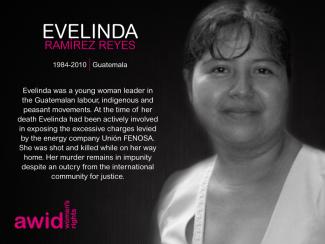
Elle organisait également les communautés urbaines pauvres dans la province de Cebu et travaillait avec Desaparecidos, une organisation de familles de disparu-e-s.
Le 28 novembre 2017, lors d'une mission d'enquête sur des violations des droits fonciers dans la région, Elisa et deux de ses collègues ont été abattu-e-s par deux hommes non identifiés à Barangay San Ramon, ville de Bayawan, dans la province de Negros Oriental.
Elle laisse quatre enfants derrière elle.


Опрос доступен на английском, арабском, испанском, португальском, русском и французском языках!
En dépit de la rigidité de leur doctrine et de leur vision du monde, les acteurs anti-droits ont fait preuve d’ouverture dans la construction de nouveaux types d’alliances stratégiques ainsi que dans l’utilisation de nouvelles techniques d’organisation et modes d’argumentation. En conséquence, ils sont de plus en plus influents dans les espaces internationaux.
Les ultraconservateurs qui agissent à ce niveau ont fait considérablement évoluer leurs stratégies. Ils ne limitent pas leurs ambitions à la modification de certains aspects marginaux des accords et à la lutte contre l’utilisation de certaines formulations. Ils œuvrent également à la transformation conceptuelle du cadre lui-même et à l’élaboration de norme et de référentiels alternatifs. Ils cherchent enfin à ouvrir les brèches qui renforceront leur influence.
Les ultraconservateurs travaillent à la création et à la pérennité de leurs relations avec des délégués d’États membres de l’ONU en leur proposant régulièrement des formations – notamment pendant le Global Family Policy Forum (Forum mondial sur la politique familiale) qui se tient tous les ans – ainsi que du matériel de formation ciblé.
Ces formations régulières et ces ressources donnent systématiquement aux délégués des informations relatives à des sujets de débat et à des techniques de négociation dans le but d’approfondir leur contribution aux objectifs anti-droits au sein du système relatif à ceux-ci. Les délégués reçoivent également des compilations ciblées de « formulations consensuelles » et de références à des informations pseudo-scientifiques ou à des statistiques dans le but de renforcer leur argumentaire.
La transmission organisée de ces messages explique en partie pourquoi les délégués de certains États membres adoptent des positions ultraconservatrices dans les débats internationaux sur les droits humains en totale contradiction avec leurs propres lois et politiques nationales.
Les abondantes réunions régionales et internationales entre acteurs anti-droits contribuent à créer des liens plus étroits entre les organisations de la société civile (OSC) ultraconservatrices, les États et blocs d’États et certains organismes intergouvernementaux puissants. Le Congrès mondial international des familles est une bonne illustration de rassemblements de ce type.

Ces rencontres renforcent les liens personnels et les alliances stratégiques, des éléments clés de la construction et de la pérennité des mouvements. Elles facilitent l’existence de relations transnationales et interreligieuses dynamiques qui se créent autour de questions et d’intérêts communs. Celles-ci permettent aux acteurs anti-droits de mettre en œuvre une approche plus entreprenante et de formuler un ensemble plus complet de revendications en matière de politique internationale.
Des États et blocs d’États tentent depuis toujours de saper les consensus internationaux ou le principe de responsabilité des États définis en vertu des normes internationales relatives aux droits humains. À cette fin, ils émettent des réserves quant aux accords sur les droits humains, menaçant ainsi le caractère universel de leur applicabilité.
La Convention sur l'élimination de toutes les formes de discrimination à l'égard des femmes (CEDAW) est le texte qui a provoqué l’émission du plus grand nombre de réserves. La plupart d’entre elles sont fondées sur des conflits présumés avec le droit religieux. Le droit international relatif aux droits humains est très clair concernant les références à la tradition, à la culture ou à la religion : celles-ci ne peuvent en aucun cas justifier de violations des droits humains. Nombre des réserves émises à propos de la CEDAW ne sont pas valables car elles sont « incompatibles avec l’objet et le but » de la CEDAW. Néanmoins, les États se servent constamment de ces réserves pour ne pas assumer leurs responsabilités en matière de droits humains.
Ces acteurs émettent des « réserves » de plus en plus nombreuses sur les documents et accords de l’ONU qui ne sont pas des traités officiels, notamment sur les résolutions du Conseil des droits de l’homme et de l’Assemblée générale.
Il est alarmant de constater que certains acteurs rétrogrades actifs au sein du système onusien ont commencé à coopter les références existantes en matière de droits et à élaborer et promouvoir un langage consensuel qui revêt un caractère profondément anti-droits. L’objectif est de créer puis de propager ce langage qui légitime des normes patriarcales, hiérarchiques, discriminatoires et culturellement relativistes dans les espaces internationaux consacrés aux droits humains.
Dans ce but, un certains nombre de déclarations ont été rédigées, parmi lesquelles la Déclaration mondiale de la famille et les Articles de San José, qui se veulent les représentantes d’une version moins contraignante du droit des droits humains. Des signatures sont recueillies auprès de multiples acteurs de la société civile, d’États et d’institutions et sont ensuite utilisées comme des outils de plaidoyer et de lobbying.
Dans le cadre d’un virage stratégique vers le recours à des arguments non religieux, les acteurs anti-droits ont considérablement investi dans leurs propres groupes de réflexion axés sur les « sciences sociales ». Relayées par des médias conservateurs en plein essor, les idées de ces think tanks sont largement diffusées par des groupes conservateurs issus de la société civile. Les mêmes supports servent ensuite de matériel de base pour le travail de plaidoyer auprès du système international relatif aux droits humains.
Bien que les objectifs et la motivation des conservateurs découlent de leurs interprétations extrémistes de la religion, de la culture et de la tradition, leurs arguments rétrogrades sont souvent appuyés par des études qui s’arrogent une forme d’autorité intellectuelle. Ils élaborent ainsi un contre-discours, savant mélange de doctrine traditionaliste et de sciences sociales.
Il s’agit de l’une des stratégies les plus efficaces de la droite religieuse, et elle représente un investissement majeur pour l’avenir du processus organisationnel des acteurs anti-droits. Le recrutement des jeunes et le développement de leurs compétences en leadership – des processus qui s’opèrent en premier lieu au niveau local par le biais des églises et des campus – sont une priorité pour de nombreux conservateurs qui tentent d’influencer les politiques internationales.
Cette stratégie leur a permis de s’infiltrer dans les espaces du système onusien notamment consacrés à la jeunesse, parmi lesquels la Commission de la condition de la femme, et de créer une opposition conséquente aux réseaux et organisations progressistes de jeunes.

Que ce soit auprès des mécanismes d’experts faisant autorité – parmi lesquels les Procédures spéciales et les organes chargés de la surveillance de l’application des traités de l’ONU – ou auprès des organes opérationnels comme les agences de l’ONU, les groupes anti-droits ont conscience que leur influence potentielle est beaucoup plus faible qu’au sein des mécanismes politiques.
En conséquence, les groupes anti-droits répandent un certain nombre d’idées, parmi lesquelles le fait que les agences des Nations Unies « outrepassent leur mandat », que le Comité de la CEDAW et d’autres organes créés en vertu d'instruments relatifs aux droits humains n’ont pas le pouvoir d’interpréter les traités ou encore que les Procédures spéciales sont activées par des experts partisans qui ne respectent pas l’étendue de leur mandat. Les groupes anti-droits exercent également des pressions pour compromettre le financement d’agences comme le Fonds des Nations Unies pour la population (FNUAP).
Cette délégitimation des mécanismes de l’ONU encourage l’impunité des États. Les gouvernements soumis à un examen international sont alors en mesure de justifier leurs actes en arguant du fait que le mécanisme de révision lui-même est défaillant ou trop exigeant.
Les forces conservatrices non étatiques investissent de plus en plus dans les médias sociaux et dans d’autres plateformes en ligne pour promouvoir leurs activités, leurs campagnes et diffuser le plus largement possible leurs informations sur les espaces internationaux relatifs aux droits humains. L’organisation espagnole CitizenGo, par exemple, se veut la version conservatrice de change.org et publie des pétitions et des campagnes épistolaires. Une pétition récente contre la création par l’ONU d’une journée internationale de l’avortement sans risque a rassemblé plus de 172 000 signatures.
S’inspirer des stratégies d’organisation des groupes féministes et d’autres acteurs progressistes.
Adapter à la sphère internationale les stratégies qui ont porté leurs fruits au niveau national.
Passer de la « protestation symbolique » contre le cadre des droits humains à une stratégie d’infiltration subversive du système.
En comprenant les stratégies déployées par les acteurs anti-droits, nous pouvons les contrer plus efficacement.
Télécharger le chapitre complet (en anglais)
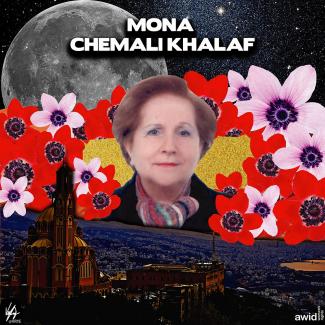
Mona was an economist and an independent consultant on gender and development issues.
She was a former Professor of Economics and Director of the Institute for Women's Studies in the Arab World at the Lebanese American University.
She passed away suddenly on January 6, 2018.
Friends and former colleagues say of Mona: “When we celebrate her life, the best thing we can do is commit to continuing what she started: gender equality no matter what.”
Глобальный опрос «Где деньги для феминистских объединений?» является ключевым элементом третьего этапа нашего исследования, ориентированного на конкретные действия: «Где деньги для феминистских объединений» (короткое название – «Где деньги?»). Результаты опроса будут доработаны и обстоятельно изучены в ходе бесед с активистами и донорами, а также сопоставлены с другими имеющимися аналитическими материалами и исследованиями о состоянии ресурсов феминистских движений и инициатив по достижению гендерного равенства во всем мире.
Полный отчет организации «Где деньги для феминистских объединений?» будет опубликован в 2026 году.
 Чтобы узнать больше о том, как AWID освещает вопросы финансирования феминистских движений, ознакомьтесь с историей инициативы «Где деньги?» и нашими предыдущими отчетами здесь.
Our new research paper The Devil is in the Details addresses knowledge gaps around religious fundamentalisms within the development sector, and aims to improve understanding of how they constrain development and women’s rights in particular. It provides recommendations for ways development actors can avoid inadvertently strengthening and instead challenge fundamentalisms. [CTA download link: Read the full paper]
| Graphic1 | 1. Control of women’s bodies, sexuality, and choice are “warning signs” of rising fundamentalisms. |
| 2. Neoliberal economic policies have a particularly negative impact on women, and fuel the growth of religious fundamentalisms. | Graphic2 |
| Graphic3 | 3. Choosing religious organizations as default for partnerships builds their legitimacy and access to resources, and supports their ideology, including gender ideology. |
| 4.Everyone has multiple identities and should be defined by more than just their religion. Foregrounding religious identities tends to reinforce the power of religious fundamentalists. | Graphic4 |
| Graphic5 | 5. Religion, culture, and tradition are constantly changing, being reinterpreted and challenged. What is dominant is always a question of power. |
| 6. Racism, exclusion, and marginalization all add to the appeal of fundamentalists’ offer of a sense of belonging and a “cause”. | Graphic6 |
| Graphic7 | 7. There is strong evidence that the single most important factor in promoting women’s rights and gender equality is an autonomous women’s movement. |
The Devil is in the Details details the grave human rights violations, and violations of women’s rights in particular, caused by state-sponsored fundamentalism, as well as by fundamentalist non-state actors such as militias, religious community organizations, and individuals. Fundamentalist reinforcement of regressive, patriarchal social norms are leading to the rise of violence against women, girls, and women human rights defenders (WHRDs). The paper highlights these key insights for addressing the problem:
Development actors are in a position to take a strong role in this. The collective capacity of development actors to recognize and collaboratively address religious fundamentalisms is vital for advancing social, economic, and gender justice and the human rights of all people in sustainable development. It is vital to promote intersectional feminist understandings of power and privilege, and to apply these to questions of religion and culture. Women’s organizations already have knowledge and strategies to counter fundamentalisms development actors should build on this, and invest in cross-issue coalitions to help them reach new heights.
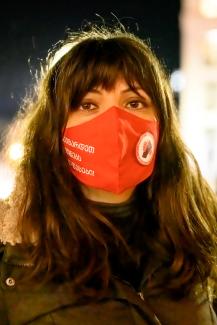
Ursula fue una novelista estadounidense que trabajó principalmente con los géneros de fantasía y ciencia ficción.
Encontró la fama con La mano izquierda de la oscuridad, novela en la cual imagina una sociedad futura donde la gente es ambisexual: no tienen un sexo fijo. Indaga en los efectos del género y el sexo en la sociedad, y fue uno de los primeros grandes libros feministas de ciencia ficción. Ursula fue una inspiración por su escritura subversiva y original y también por los temas sobre feminismo y libertad a los que les daba tanta importancia.
En un discurso que pronunció en 1983 en el Mills College, en California, les dijo a las graduadas: «¿Por qué una mujer libre con formación universitaria debería o luchar contra el macho o servirlo? ¿Por qué ella debería vivir su vida en los términos de él? Espero que ustedes vivan sin la necesidad de dominar y sin la necesidad de ser dominadas».

Есть много причин, по которым ваше участие в опросе очень важно. Это возможность поделиться своим опытом привлечения финансирования для деятельности вашей организации; заявить о себе как об эксперте в вопросах движения денежных средств и их получателей; внести свой вклад в коллективную и последовательную адвокацию среди доноров, чтобы привлечь более объемное и эффективное финансирование. За последние два десятилетия исследования AWID в этой области зарекомендовали себя как ключевой ресурс для активисток(-тов) и доноров. Мы приглашаем вас присоединиться к нам в реализации третьей части инициативы «Где деньги?», чтобы осветить реальное состояние ресурсного обеспечения, оспорить ошибочные решения и указать на то, как необходимо изменить финансирование, чтобы движения процветали и реагировали на сложные вызовы нашего времени.