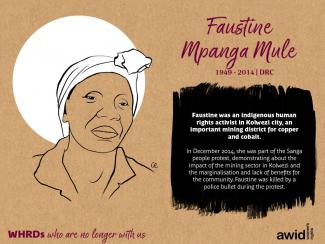
Faustine Mpanga Mule
Over the past few years, a troubling new trend at the international human rights level is being observed, where discourses on ‘protecting the family’ are being employed to defend violations committed against family members, to bolster and justify impunity, and to restrict equal rights within and to family life.
The campaign to "Protect the Family" is driven by ultra-conservative efforts to impose "traditional" and patriarchal interpretations of the family, and to move rights out of the hands of family members and into the institution of ‘the family’.
Since 2014, a group of states have been operating as a bloc in human rights spaces under the name “Group of Friends of the Family”, and resolutions on “Protection of the Family” have been successfully passed every year since 2014.
This agenda has spread beyond the Human Rights Council. We have seen regressive language on “the family” being introduced at the Commission on the Status of Women, and attempts made to introduce it in negotiations on the Sustainable Development Goals.
AWID works with partners and allies to jointly resist “Protection of the Family” and other regressive agendas, and to uphold the universality of human rights.
In response to the increased influence of regressive actors in human rights spaces, AWID joined allies to form the Observatory on the Universality of Rights (OURs). OURs is a collaborative project that monitors, analyzes, and shares information on anti-rights initiatives like “Protection of the Family”.
Rights at Risk, the first OURs report, charts a map of the actors making up the global anti-rights lobby, identifies their key discourses and strategies, and the effect they are having on our human rights.
The report outlines “Protection of the Family” as an agenda that has fostered collaboration across a broad range of regressive actors at the UN. It describes it as: “a strategic framework that houses “multiple patriarchal and anti-rights positions, where the framework, in turn, aims to justify and institutionalize these positions.”
Coumba Toure
Cindy Clark, AWID
DJ Miss Ray
DJ Luana Flores
Phoenix Inana
Notre objectif est de recueillir 2 000 réponses à l’enquête, soit près du double de la dernière enquête WITM de 2011.
Ce rapport retrace et célèbre la première année du nouveau plan stratégique de l'AWID, et fait un retour en arrière sur nos premiers pas vers les objectifs visés, à savoir soutenir les mouvements féministes pour qu'ils prospèrent, remettent en question les programmes anti-droits et co-créent des réalités féministes.
Télécharger le rapport annuel 2018
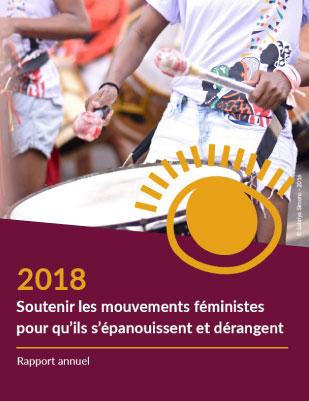
Nous avons travaillé avec les féministes pour bousculer les programmes anti-droits et avons remporté d'importantes victoires au sein du système des Nations Unies avec l’inclusion, dans un certain nombre de résolutions, de termes novateurs sur la discrimination structurelle, les droits sexuels et les obligations des États. Oui, le système multilatéral est en crise et a besoin d'être sérieusement renforcé, mais ces victoires sont importantes car elles contribuent à la légitimité des revendications féministes et fournissent aux mouvements féministes davantage de points de pression et d'élan pour faire avancer nos programmes.
Nous avons essayé et testé différentes façons d’acquérir des connaissances avec les mouvements féministes à travers des webinaires, des podcasts et des discussions ‘en direct’. Nous avons développé des guides d’animation avec des éducateurs et éducatrices populaires pour récupérer des connaissances dans l'intérêt de la justice sociale et la justice de genre, même sur un sujet aussi opaque en apparence que les flux financiers illicites. Nous avons sollicité des blogs et des opinions sur la façon dont les groupes féministes se financent et se ressourcent, ainsi que fait la lumière sur les menaces qui pèsent sur nos systèmes de droits humains.
Au sein de l’AWID, nous avons pratiqué le leadership partagé et tiré des leçons de cette approche, et narré le récit des épreuves et des tribulations propres à la codirection d’une organisation mondiale virtuelle. Nous n’avons pas de réponse définitive quant à la forme que revêt le leadership féministe, mais un an plus tard, nous avons conscience que cet engagement continu envers l’apprentissage et l’expérimentation nous a permis de continuer à bâtir une organisation à laquelle nous sommes tou-te-s ravi-e-s de contribuer.
À l’heure où nous revenons sur l’année qui vient de s’écouler, nous souhaitons remercier tou-te-s nos ami-e-s et allié-e-s, collègues et camarades qui ont donné de leur temps et partagé avec nous leur richesse de savoir et de sagesse. Nous souhaitons remercier nos membres qui ont contribué à l’élaboration de notre plan stratégique et se sont joint-e-s à nous pour formuler des revendications féministes. Ce travail ne pourrait être réalisé sans vous.
Основываясь на 20-летней истории привлечения более объемного и качественного финансирования для достижения социальных изменений под руководством феминисток(-ов), AWID приглашает вас принять участие в новом опросе:
(далее – «Где деньги?»)
Пожалуйста выберите язык, на котором вы хотите отвечать на вопросы в правом верхнем углу страницыNotre plan stratégique, intitulé “ Les réalités féministes ”, est arrivé à son terme à la fin de l’année 2022. Au cours des cinq dernières années, ce cadre audacieux nous a incité·es à aller au-delà des avenirs féministes et à reconnaître les solutions féministes et les modes de vie qui existent déjà, ici et maintenant. Des réalités qu’il convient de mettre en avant, de célébrer et de populariser. Le projet de récits multimédias Les économies féministes que nous adorons et la plateforme de connaissances Our:Resource sur les modalités autonomes d’obtention de ressources pour l’activisme féministe sont deux exemples de ce travail visionnaire, toujours profondément collectif avec une grande diversité de mouvements féministes.
Téléchargez le rapport annuel 2022
En faisant le bilan de ces derniers mois, nous vous invitons à célébrer avec nous des aboutissements heureux et des débuts prometteurs. Les changements et les transitions sont parties prenantes de la vie et des mouvements, que nous voulons accueillir avec intention et soins.
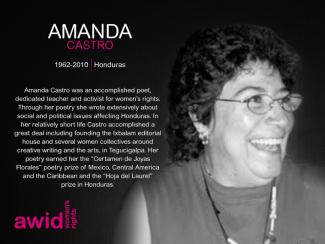
Avant de prendre sa retraite, elle a occupé de nombreux postes de haut niveau, notamment celui de membre de la cour d’appel et juge en chef adjointe de l’Ouganda. Elle a été la première femme ougandaise à occuper le poste de magistrat en chef entre 1973 et 1986 et la première femme à être nommée juge à la Haute Cour de justice en 1986.
Elle fut l'une des premières femmes à recevoir le titre de chevalier pontifical de l'histoire de l'Église catholique en Afrique. Elle est morte d'une crise cardiaque.

Facebook: @AWIDWomensRights
Instagram: @awidwomensrights
Twitter ES: @awid_es
LinkedIn: Association for Women's Rights in Development (AWID)

Para reivindicar o seu poder como especialista sobre o estado dos recursos de movimentos feministas;
Ritu es una tecnóloga feminista que aporta su experiencia en el sector sin fines de lucro, movida por la pasión de utilizar enfoques innovadores para encontrar soluciones tecnológicas en clave feminista. Con una maestría en Tecnología de las Aplicaciones Informáticas del Instituto de Tecnología de la India, su función en AWID abarca una diversidad de responsabilidades. Desde la supervisión de la seguridad digital y la gestión de servidores, hasta la administración de las bases de datos, pasando por el desarrollo de capacidades, la evaluación de tecnologías, la implementación de software y soluciones en la nube, Ritu vela por la resiliencia y la efectividad de la infraestructura de las tecnologías de la información de AWID. Antes de incorporarse a AWID, desempeñó un papel fundamental en la promoción de iniciativas tecnológicas en los sectores del medio ambiente y de la promoción de la salud, impulsada por su afán de aprovechar la tecnología en aras del bien social.

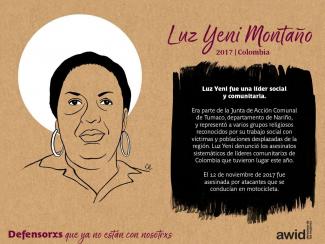
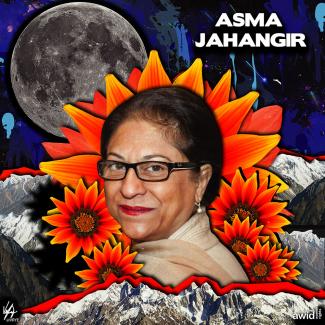
Asma was a leading Pakistani rights activist, fearless critic of the military’s interference in politics and a staunch defender of the rule of law.
She was the founding chairwoman of the Human Rights Commission of Pakistan, an independent group, and was a trustee of the International Crisis Group. She won international awards and served as the United Nations rapporteur on human rights and extrajudicial killings.
She is remembered fondly by colleagues and friends at AWID
“With her life, Asma rewrote the history that many of us were told as women. Asma changed the world. She changed it in Pakistan, and she changed it in our imaginations."
Priscilla a près de deux décennies d'expérience de travail dans le secteur non lucratif et des organisations de justice sociale qui travaillent sur les droits des femmes et des jeunes, la conservation, la consolidation de la paix et le développement. Elle s’intéresse à la mise en place de processus et de systèmes progressifs qui aident les organisations à respecter leurs valeurs et principes pour s’épanouir, et à l’obtention de moyens permettant aux organisations et aux personnes qui collectent des fonds d’allouer et de sécuriser les ressources nécessaires à la réalisation d’un travail de qualité. Priscilla a rejoint l'AWID en 2018 en tant que responsable de la mobilisation des ressources, pour ensuite assumer le rôle de directrice des opérations et des partenariats financiers à partir de juillet 2023.
Priscilla est titulaire d'un master en politique internationale de l’École des Études Orientales et Africaines (SOAS). Elle tient une pile, de plus en plus grande, de livres pour lesquels elle essaie toujours de trouver du temps pour les lire. Elle siège au sein du conseil d'administration de la Hodan Somali Community, une organisation caritative basée à Londres.