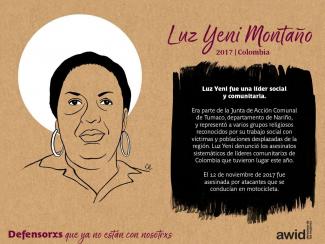
Luz Yeni Montaño
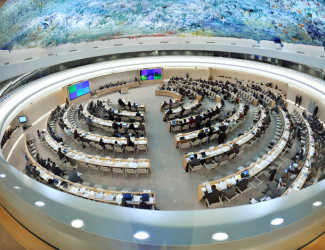
The Human Rights Council (HRC) is the key intergovernmental body within the United Nations system responsible for the promotion and protection of all human rights around the globe. It holds three regular sessions a year: in March, June and September. The Office of the UN High Commissioner for Human Rights (OHCHR) is the secretariat for the HRC.
Debating and passing resolutions on global human rights issues and human rights situations in particular countries
Examining complaints from victims of human rights violations or activist organizations on behalf of victims of human rights violations
Appointing independent experts (known as “Special Procedures”) to review human rights violations in specific countries and examine and further global human rights issues
Engaging in discussions with experts and governments on human rights issues
Assessing the human rights records of all UN Member States every four and a half years through the Universal Periodic Review
AWID works with feminist, progressive and human rights partners to share key knowledge, convene civil society dialogues and events, and influence negotiations and outcomes of the session.
المجموعات، المنظمات والحركات التي تعمل خصوصاً وبالأساس على حقوق النساء، حقوق الفتيات، العدالة الجندرية، حقوق مجتمعات الميم - عين وحلفائها/يفاتها في جميع المناطق وعلى جميع المستويات، إن كانت مجموعات جديدة أو قديمة.
The information contained in this communication is confidential and is intended solely for the addressee.
This communication may contain information proprietary to the Association for Women’s Rights in Development (AWID), and may not be reproduced or disseminated in whole or in part without AWID's written consent.
AWID does not warrant that any information contained herein is complete or correct. This communication is not an offer to enter into any agreement and is not a confirmation of any agreement described herein unless the context clearly indicates the contrary.
AWID is not acting as your adviser in any agreement that may be proposed herein, and this communication does not constitute a recommendation, guidance or proposal to enter into any agreement.
AWID does not guarantee or otherwise assure the expected results of any agreement. This communication may contain views or opinions that are not necessarily those of AWID.
You shall not be entitled to place any reliance on the information contained in this communication for the purposes of entering into any proposed agreement or otherwise.
Внешнее финансирование включает гранты и другие формы финансирования от благотворительных фондов, правительств, двусторонних, многосторонних или корпоративных спонсоров и индивидуальных доноров – как внутри вашей страны, так и из-за рубежа. Сюда не входят ресурсы, которые группы, организации и/или движения генерируют самостоятельно, такие как, например, членские взносы, добровольные взносы "сотрудниц(-ков), участниц(-ков) и/или сторонниц(-ков), сборы через сообщество, сдача помещений в аренду или продажа услуг. Для удобства в опрос включены определения различных видов финансирования и краткие описания различных доноров.
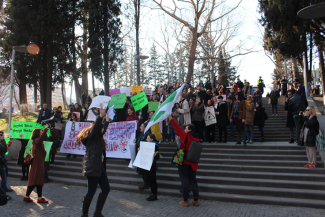
Elle organisait également les communautés urbaines pauvres dans la province de Cebu et travaillait avec Desaparecidos, une organisation de familles de disparu-e-s.
Le 28 novembre 2017, lors d'une mission d'enquête sur des violations des droits fonciers dans la région, Elisa et deux de ses collègues ont été abattu-e-s par deux hommes non identifiés à Barangay San Ramon, ville de Bayawan, dans la province de Negros Oriental.
Elle laisse quatre enfants derrière elle.

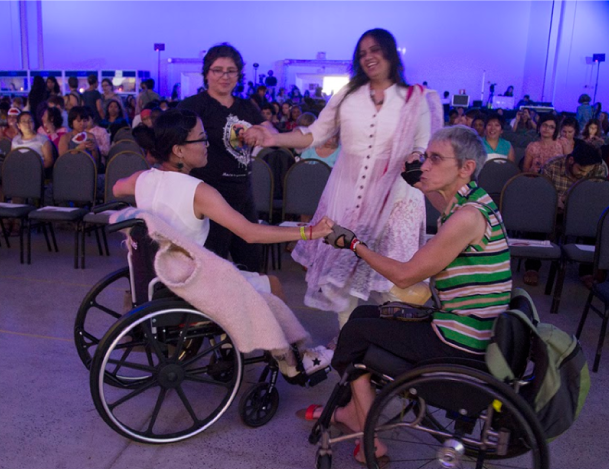
Pour chaque Forum de l’AWID, nous lançons un appel à contributions auprès d’une grande variété de mouvements féministes et de justice sociale. Ces derniers proposent des activités et créent ainsi le programme du Forum.
Pour le 14ème Forum international de l’AWID, nous voulons faire en sorte que le programme soit réellement représentatif de la diversité des mouvements. Voilà pourquoi nous mettons en place une nouvelle façon engageante de choisir les propositions qui feront émerger le programme final du Forum, à savoir : le Processus de sélection participative (PSP).
Le Processus de sélection participative constitue l’étape finale dans l’examen des propositions d’activités, et leur sélection, pour faire partie du programme officiel du Forum.
|
Étape
|
Étape 1 : Appel à activités pour le Forum : dépôt des candidatures |
Étape 2 :
|
Étape 3 :
|
Étape 4 :
|
| Calendrier |
Décembre 2019 - mi-février 2020
|
Janvier - février 2020
|
Été 2020
|
dates à ajuster
|
| Personnes impliquées | Toute personne intéressée pour co-créer le programme du Forum |
Équipe de l’AWID
|
Équipe de l’AWID, Comité contenu et méthodologie, Comité accessibilité |
Candidat·e·s présélectionné·e·s
|
| Nombre d’activités en jeu |
Environ 838 activités envoyées
|
306 propositions sélectionnées
|
126 activités sélectionnées
|
50-60 activités recueillant le plus de votes, retenues pour le programme final du Forum |
Nous pensons qu’un PSP est pertinent pour le Forum, car :
Il place les communautés qui vivent des réalités féministes, lesquelles seront illustrées et discutées lors du Forum, au cœur du processus de prise de décision.
Il est cohérent avec notre identité et notre rôle d’organisation de soutien/accompagnement des mouvements.
Il correspond à notre vision d’un Forum co-créé par différents mouvements féministes et de justice sociale. Ces derniers façonnent le Forum via leur participation dans les comités (contenu et méthodologie, accessibilité, activiste et pays d’accueil), créent et facilitent les activités en tant que partenaires de l’AWID et prennent également des décisions sur le Programme via le PSP.
Il permet de renforcer la diversité des textures qui tisseront le Forum (et des voix qui composeront le chant du Forum). Il assure d’aller au-delà de l’AWID en tant que telle et des mouvements partenaires que nous connaissons, et avec qui nous collaborons déjà. Il laisse la porte ouverte à l’inattendu.
L’idée est initialement venue de l’équipe et des co-directrices de l’AWID. Avant de s’y engager, nous avons consulté certains fonds communautaires qui mettent en place des processus de sélection participative depuis des années. On retrouve parmi eux : le jeune Fonds féministe FRIDA, le Fonds trans international, le Fonds d’Afrique de l’Est pour les minorités sexuelles et les travailleurs·ses du sexe UHAI, ainsi que le Central American Women’s Fund (Fonds d’Amérique centrale pour les femmes). Nous les avons consultés pour en savoir plus sur leurs vastes expériences et avoir leurs retours.
Autonomie Financière, le Briseur du Silence
ORGANISATION DES FEMMES AFRICAINES DE LA DIASPORA (OFAD) ASSOCIATION LES PETITES MERES PRODADPHE ASSOCIATION AMBE KUNKO (AAK)
Contribution des organisations féministes dans la lutte contre l'extrémisme violent au Niger
Femmes Actions et Développement (FAD)
Autofinancement: les femmes à l'épreuve des banques à domicile
Rassemblement des Femmes pour le développement endogène et solidaire RAFDES
Alimentation et souveraineté alimentaire des femmes rurales
Association Song-taaba des Femmes Unies pour le Développement (ASFUD)
Leaders féministes, engagées à investir la masculinité positive, dans la construction d’un nouvel ordre social équilibré, au niveau des localités de la Région du Cavally, Ouest de la Côte d’Ivoire : Comment opérer le changement des mentalités ?
Une societe cooperative, la chefferie traditionnelle des localites, les autorites administratives et les autres associations feminines ONG Centre Solidarite "Investir dans les Filles et les Femmes
Co-creation d'une méthodologie de marrainage
NEGES MAWON
Millénium d'opportunités pour la sauvegarde de la terre (MOST) par l'appui à la justice climatique des communautés locales et autochtones du bassin du Congo
Jeunesse Congolaise pour les Nations Unies (JCNU), Association Genre et Environnement pour le Développement (AGED)
Imaginer une politique féministe queer asiatique
ASEAN Feminist LBQ Womxn Network Sayoni
Soutenir l'autogestion: les doulas, les accompagnantes et les réseaux de soutien à l'avortement
inroads
Féminismes en ligne: Comment les femmes se réapproprient la technologie
Feminism In India
Un comité pour l'élimination des discriminations envers les travailleurs et travailleuses du sexe
Asia Pacific Network of Sex Workers (APNSW), The International Women's Rights Action Watch Asia Pacific (IWRAW AP)
Pour un leadership et des organisations féministes durables : partage d'expériences individuelles et collectives
HER Fund, Institute for Women's Empowerment (IWE) ,Kalyanamita, AAF
Réalités des Caraïbes : La radio Black Sauna
WE-Change Jamaica
Les lignes d'assistance téléphonique pour les femmes
Generation Initiative for Women and Youth Network (GIWYN),Youth Network for Community and Sustainable Development (YNCSD), Community Health Rights Network (CORENET)
La sensualité comme forme de résistance : un atelier corporel
UHAI EASHRI
Discothèque lesbienne d'Europe de l'Est
Sapfo Collective
FitcliqueAfrica: des séjours pour concrétiser des utopies féministes, guérir des traumas, apprendre l'auto-défense
FitcliqueAfrica (Fitclique256 Uganda Limited)
Communication Queer pour un Internet Libre
Astraea Lesbian Foundation for Justice
Votre manière de considérer la santé sexuelle et reproductive est-elle biaisée par du validisme? Des bonnes pratiques pour inclure les personnes handicapées dans ces politiques
Asia Pacific Network of Women with Disabilities and Allies
Décoloniser la Communication Non Violente
API Equality-LA, Sayoni, ASEAN Feminist LBQ Womxn Network
Des approches féministes pour engager des poursuites judiciaires contre le harcèlement au travail
Women's Legal Centre
Femmes en situation de conflit au Myanmar
Women's League of Burma, Rainfall
Espaces féministes des Carïbes, expressions créatives et pratiques spirituelles pour la transformation des communautés
CAISO: Sex and Gender Justice
POP-UPS : Le pouvoir juste. Des outils d'éducation populaire pour un futur féministe
JASS/Just Associates
NonAnonyme : Rendre les pratiques féministes de la diaspora africaine noire sur la sobriété plus "queer"
Sorcellerie digitale: La pensée magique pour des horizons cyberféministes
The Digital Witchcraft Institute
Élaborer des manifestes pour les femmes : les revendications des femmes de terrain pour le changement dans la région Asie-Pacifique
Asia Pacific Forum on Women Law and Development
Concevoir vos voyages astraux
EuroNPUD, narcofeminists as a loose group
Soins collectifs
RENFA Rede Nacional de Feministas Antiproibicionistas
Musique de nos mouvements
Radical imagination
Transformer des déchets en charbon de bois écologique
KEMIT ECOLOGY SARL
Soins collectifs et rébellion des mouvements féministes antiracistes dans des contextes autoritaires et violents
CFEMEA - Feminist Center of Studies and Advisory Services, CRIOLA - black women`s organization, Iniciativa Mesoamericana de Mujeres Defensoras
Briser les carcans religieux et patriarcaux du droit de la famille qui impactent nos vies #FreeOurFamilyLaws
Musawah
Approche féministe pour la revendication des droits fonciers
Badabon Sangho, APWLD
La grève mondiale des femmes : Notre résistance, notre futur
Asia Pacific Forum on Women, Law & Development, ESCR-Net, Women's March Global
Pour une « Terre Mère » inclusive
Disability Rights Fund, Open Society Foundation
De l'inclusion à l'infiltration : Stratégies pour créer de véritables organisations féministes intersectionnelles
Mobility International USA (MIUSA)
Les histoires cachées de femmes porteuses de handicaps invisibles : l'Art en action
The Red Door, Merchants of Madness, Improving Mental Wellbeing through Art
Partenariats publics-privés et droits humains des femmes : Leçons tirées d'études de cas de pays du Sud
Development Alternatives with Women for a New Era (DAWN)
Voyage interconnecté : nos corps, notre science-fiction !
The Interconnected Journey Project, Laboratorio de Interconectividades
Compiler et construire : vision féministe pour contester l'ordre économique mondial dominant
IWRAW Asia Pacific
L'auto-publication comme acte de résistance féministe
International Women* Space
Bonnes pratiques de protection juridique pour les minorités sexuelles et de genre au Pakistan
Activists Alliance Foundation, Khawja Sirah Society, Wajood Society, Wasaib Sanwaro
Approches féministes pour lutter contre le traffic d'être humains
IWRAW Asia Pacific, Business & Human Rights Resource Center
Critique de l'individualisme et des politiques étatiques : mobilisation internationale contre les violences ciblées
Masaha: Accessible Feminist Knowledge
Décoloniser l'intimité : comment les identités queer défient les structures familiales hétéronormatives
WOMANTRA
Yeki Hambe - Le théatre des travailleurs et travailleuses du sexe
Sex Worker Education and Advocacy Task Force
Créer une réalité féministe autochtone : Honorer le féminin sacré et ouvrir de nouvelles voies pour les femmes autochtones
Cultural Survival, International Funders in Indigenous Peoples
Femmes brésiliennes contre la prohibition
Mulheres Cannabicas, Tulipas do Cerrado
Commission pour la vérité féministe noire : tenir compte des injustice pour révolutionner le féminisme intersectionnel
Black Women in Development
Le soin communautaire c'est aussi prendre soin de soi : les vraies histoires se racontent dans des espaces de confiance
Eurasian Harm Reduction Association, Metzineres, Urban Survivor’s Union, Salvage women and children from drug abuse
Pas de mouvement interdit : danser les liens entre droits sexuels et ceux des personnes handicapées et trans pour contrer la violence
National Forum of Women with Disabilities, Autonomy foundation, Nazyk kyz
L'impact de l'accaparemment du pouvoir par les entreprises sur les réalités féministes: développer des outils pour l'action
ESCR-Net | Economic, Social, Cultural Rights Network
Réimaginer le SIDA : élaborer une stratégie féministe face au VIH
Frontline AIDS, Aidsfonds, IPPI (Indonesian Network of Women Living with HIV), UHAI-EASHRI (East African Sexual Health and Rights Initiative)
Faire progresser la justice économique pour concrétiser notre vision d'un monde féministe
International Network for Economic, Social and Cultural Rights, ESCR-Net
Café des travailleurs et travailleuses du sexe
Hydra e.V.
Approche écoféministe du changement climatique et de la sécurité alimentaire
Umphakatsi Peace Ecovillage, Human Rights Educational Centre
Relier les actions locales et internationales : l'expérience d'une mobilisation innovante par les travailleurs et travailleuses du sexe en Europe
International Committee on the Rights of Sex Workers in Europe, STRASS - French Sex Worker Union, APROSEX, Red Edition
Faire l'expérience d'une innovation technologique qui peut renforce notre sécurité lorsque nous circulons dans l'espace public
Soul City Institute for Social Justice, Safetipin, Womanity Foundation
Les hiérarchies dans nos organisations sont-elles NON-féministes?
Gay and Lesbian Coalition of Kenya National, Gay and Lesbian Human Rights Commission
Nous sommes tous et toutes différent.e.s mais nous partageons des valeurs communes
UNWUD (Ukrainian network of women who use drugs), JurFem Association, Women's Prospects
Un monde sans classes
Bunge La Wamama Mashinani (Grassroots Women's Parliament)
Les femmes renforcent le pouvoir des communautés
Institute for Women's Empowerment (IWE), Solidaritas Perempuan, ASEC Indonesia, Komunitas Swabina Pedesaan Salassae (KSPS)
Organisations féministes et leadership transformationnel : Les travailleuses en Amérique latine créent un mouvement ouvrier féministe
Solidarity Center
Féminisme et handicap : théatre participatif pour décoloniser les récits qui stigmatisent
Rising Flame, National Indigenous Disabled Women Association, Nepal, The Spectrum & Union of Abilities, The Red Door
Donner de la valeur et ancrer le repos, le plaisir et le jeu
ATHENA Network
Le projet de jugement féministe africain
The Initiative for strategic Ligation in Africa (ISLA)
Voix du front : renforcer le pouvoir collectif pour mettre fin à l'incarcération des femmes dans le monde
International Drug Policy Consortium, Equis Justicia para las Mujeres, National Council for Incarcerated and Formerly Incarcerated Women and Girls, Women and Harm Reduction International Network
Activisime des jeunes queer : pour une ère de droits humains et de développement durable
African Queer Youth Initiative, Success Capital Organisation
Nos luttes, nos histoires, nos ressources
Oriang Lumalaban, Pambansang Koalisyon ng Kababaihan sa Kanayunan
Asie du Sud-Est : Franchir les obstacles pour une action autochtone collective pour le climat
Cuso International, Asia Indigenous Peoples' Pact
Dépasser l'amour romantique pour renforcer la justice sociale et l'amour au sein de la communauté
Eurasian Women's Network on AIDS
Intersexualité et féminisme
Intersex Russia
Comprendre les expériences et les besoins en matière de santé reproductive des personnes de diverses identités de genre
Asia Pacific Transgender Network (APTN)
Conversations sur la mobilisation contre le VIH comme un espace de discrimination
Because We Care Collaborative
Le Manifeste des systèmes alimentaires du Mississippi
Center for Ideas, Equity & Transformative Change, National Council of Appropriate Technology - Gulf South, MS Food Justice Collaborative, Malcolm X Grassroots Movement
Coprésidence du mouvement des femmes kurdes comme exemple de féminisme radical abouti
The Free Women’s Movement (TJA)
Infortunes : Marcher sur des oeufs
Eldoret Women For Development (ELWOFOD), Mama Cash, Young women against Women Custodial Injustices Network
LIBERTÉ
La prison n'est pas féministe : explorer l'impact et les alternatives à la police et à l'incarcération
Migrant Sex Workers Project, Showing Up For Racial Justice
La société Bondo : pour des rites de passage sans mutilations en Sierra Leone
Purposeful
Terres et territoires libérés : Un dialogue panafricain
Thousand Currents (USA), Abahlali baseMjondolo (South Africa), Nous Sommes la Solution (west Africa/regional), Movilización de Mujeres Negras por el Cuidado de la Vida y los Territorios Ancestrales (Colombia), and Articulation of Black Rural Quilombola Communities (Brazil)
L'éducation populaire et la mobilisation pour une économie féministe
Jamaica Household Workers Union (JHWU), United for a Fair Economy, Centro de Trabajadores Unidos en la Lucha (CTUL)
Se mobiliser avec un portefeuille vide? C'est possible !
Breakthrough India
Partage d'expériences autour de la création d'un réseau pour les femmes défenseuses des droits humains en Afrique de l'Est : L'expérience ougandaise
Women Human Rights Defenders Network Uganda
Clinique technologique
Stichting Syrian Female Journalists Netowrk
Construire des mouvements inspirants : Dépasser le stade de la représentation symbolique
Rising Flame
Justice et guérison pour les survivant·e·s de violences basées sur le genre: un débat interactif sur la justice resaurative et sur l'anatomie du pardon
One Future Collective
Actions collectives pour mettre un terme à la transphobie : une perspective féministe
Asia Pacific Transgender Network, Iranti, Transgender Europe
Femmes lesbiennes, bisexuelles et queer et demande d'asile
Sehaq
Avortement et handicap : vers une approche intersectionnelle fondée sur les droits humains
Women Enabled International
Apprendre à soutenir l'auto-gestion de communautés de personnes sans papiers, migrantes, travailleuses du sexe et criminalisées
Buttrerfly (Asian and Migrant Sex Workers Support Network)
Le souci de soi : un outil fondamental pour la durabilité des mouvements féministes et LGBTQI
United and Strong Inc., S.H.E Barbados, Lez Connect
Donner la place aux voix, aux réalités et au pouvoir collectif des jeunes féministes en faveur de la justice climatique
Young Feminist organization Gasy Youth Up, Young African Feminist Dialogues
Femmes solidaires et en action : incarner nos réalités (Asie et Afrique)
Women Performing the World (Asia/Africa)
Défier le patriarcat : les travailleurs et travailleuses dans le secteur des loisirs et du divertissement
Women Forum for Women in Nepal (WOFOWON)
Non-citoyennes: la question de la citoyenneté des femmes dans le contexte des communautés migrantes et vulnérables en Asie du Sud
NEthing
Visualiser comment faire entendre nos voix dans le contexte de la crises climatique et migratoire
Women's Refugee Commission, The Feminist Humanitarian Network, ActionAid
Dans le même bateau : les fonds pour les femmes et les mouvements de femmes cocréent des réalités féministes
Mama Cash, Global Fund for Women, Urgent Action Fund - Africa
Co-création de magie avec des mouvements de jeunes féministes : pratiques participatives qui inspirent la joie
Feminist organizing, FRIDA The Young Feminist Fund (Community), Teia
Droit de protection de femmes vivant des réalités difficiles : le cas de 3 organisations de femmes de communautés marginales
NGO Asteria, Ermolaeva Irena and Bayazitova Renata. NGO Ganesha Musagalieva Tatiana. NGO Ravniy Ravnomu Kucheryavyh Tanya
Feminnale (biennale féministe) - Les traditions contre l'art et les formes d'expression
Bishkek Feminist Initiatives
Résistance grâce au savoir, aux arts et à l'activisme : création d'une bilbliothèque féministe en Arménie
FemHouse, Armenia
À la conquête du système onusien grâce à des stratégies féministes (il ne faut pas être avocat.e pour s'amuser)
Kazakhstan Feminist Initiative "Feminita", IWRAW Asia Pacific, ILGA World
Les données, à quoi ça sert ? Vers des données élaborées d'une perspective féministes pour répondre à nos besoins !
International Women's Development Agency, Women's Rights Action Movement, Fiji Women's Rights Movement
Criminalisation de la voix, du leadership et de l'influence des femmes sur les lois, les politiques et les pratiques au Kenya
Keeping Alive Societies Hope-KASH, Katindi Lawyers and Advocates, Vocal Kenya
De la Colombie vers le monde, la force de changement des femmes africaines
Proceso de Comunidades Negras en Colombia -PCN, Solidarité Féminine por la Paix el le Develppment Integral -SOFEPADI,
Salon d"écoute AfroQueer et stand d'enregistrement d'histoires
AQ Studios, None on Record, AfroQueer Podcast
Revendiquer l'intégrité corporelle
GBV Prevention Network : Coordinated by Raising Voices
Apprenons de la diversité
Circulo de Mujeres con Discapacidad -CIMUDIS, Alianza Discapacidad por nuestros Derechos -ADIDE, Fundación Dominicana de Ciegos -FUDCI, Filial Puerto Rico de Mujeres con Discapacidad
Le football comme outil féministe
Fundación GOLEES (Género, Orgullo, Libertad y Empoderamiento de Ellas en la Sociedad)
Constellations migrantes
LasVanders
Dialogues écoféministes pour la défense
CIEDUR (Centro Interdisciplinario de Estudios sobre el Desarrollo), Equit, Foro permanente de Manaos y Amazonia
Le mouvement «La Frida Bikes»
La Frida Bike
Sorcellerie, chamanisme et autres savoirs insurrectionnelles contre le patriarcat.
Colectiva Feminista MAPAS-Mujeres Andando Proceso por Autonomías Sororales
Expériences, apprentissages et défis relatifs à la gestion de la sécurité holistique des organisations horizontales féministes et de la dissidence liée à l'identité de genre en période de crise sociale et politique. L'expérience du soulèvement populaire du 18 octobre au Chili.
Fudación Comunidades en Interfaz
La nourriture que nous connaissons tou·te·s
Las Nietas de Nonó, Parceleras Afrocaribeñas por la Transformación barrial (PATBA)
Pratiques de résistance des femmes autochtones du Pérou et du Guatemala face au changement climatique
Thousand Currents, Red de Mujeres Productoras de la Agricultura Familiar, Asociación de Mujeres Ixpiyakok (ADEMI, Ixpiyakok Women's Association)
Construire des villes féministes
CISCSA, Articulacion Feminista Marcosur
Mets-toi à ma place
Alianza Discapacidad por nuestros Derechos - ADIDE, Circulo de Mujeres con Discapacidad -CIMUDIS
Déblayer la voie pour que les femmes puissent vivre pleinement, guérir les traumatismes collectifs et historiques
Grupo de Mujeres Mayas Kaqla
Des femmes autochtones zapotèques défiées par la nature
Foyers de soins et de réparation pour les défenseuses des droits humains dans le cadre de l'approche d'une protection intégrale féministe : une réalité féministe
Iniciativa Mesoamericana De Defensoras de Derechos Humanos, Consorcio Oaxaca para el Diálogo Parlamentario y la Equidad A.C, Red Nacional De Defensoras De Derechos Humanos en Honduras, Coletivo Feminista de Autocuidado
Guérir ta voix de licorne : tisser des technologies ancestrales et digitales pour aiguiser la langue
Pistes féministes vers un protocole de maternité assistée pour les femmes en situation de handicap
Circulo emancipador de mujeres y niñas con discapacidad de Chile, CIMUNIDIS, WEI
Ecole pour enfants trans féministes
Fundación Selena
REDTRASEX: Expérience d'organisation et de lutte pour les droits des travailleuses du sexe d'Amérique Latine et des Caraïbes
RedTraSex Red de mujeres trabajadoras sexuales LAC
Violence de genre dans le monde du commerce du sexe
Brigada Callejera de Apoyo a la Mujer, "Elisa Martínez", A.C., Red Mexicana de Organizaciones Contra la Criminalización del VIH. Red Mexicana de Trabajo Sexual
La migration nous oblige à tracer notre chemin au fur et à mesure que nous marchons
Asociación de Trabajadoras del Hogar a Domicilio y de Maquila. ATRAHDOM
Nouveaux récits pour les femmes noires : corps, guérison et plaisir.
Tisser des souvenirs et des réseaux - Les féministes noires renforcent les féminismes noirs en Amérique latine et aux Caraïbes
Red de Mujeres Afrolatinoamericanas, Afrocaribeñas y de la Diáspora, Articulação de Organizações de Mulheres Negras Brasileiras (AMNB), Voces Caribeñas

Por enquanto, o inquérito no KOBO está disponível em árabe, inglês, francês, português, russo e espanhol. Terá a oportunidade de selecionar um dos idiomas no início do inquérito.

Mona was an economist and an independent consultant on gender and development issues.
She was a former Professor of Economics and Director of the Institute for Women's Studies in the Arab World at the Lebanese American University.
She passed away suddenly on January 6, 2018.
Friends and former colleagues say of Mona: “When we celebrate her life, the best thing we can do is commit to continuing what she started: gender equality no matter what.”

Oeuvrez pour le renforcement des mouvements pour les droits des femmes et contribuez aux transformations en faveur des droits humains.
The feminist reality that I want to share is about weaving networks in which we uphold one another. Networks which come together in different ways, which emerge from our shared vulnerability, and which make all of us stronger.
The streets of Chamberí, my neighbourhood in Madrid, became much more of a home following the gatherings in the plazas organized by the citizens movement that originated in a rally on May 15, 2011. I think about how, during those years, we met each other and were able to associate faces, voices, smiles with so many neighbours who previously were only silhouettes without names or pasts, and who we passed by without seeing or hearing each other. I think about how we’ve become involved and dedicated; how we’ve woven a palpable, tangible community; how we’ve been advancing hand in hand towards building a new more inhabitable world, which we want and that we urgently need to create.
A group of activists and utopian neighbours, (in the best sense of the word utopian) – that moves us to action to do something real – that group for me was practically the first that reacted differently when I shared a part of my history and identity with them. With these women I shared my psychiatric diagnosis, my multiple hospital stays, the number of daily pills that accompanied me, my disability certificate, my difficulty in preserving that vital link that periodically disintegrates in my hands.
These neighbours, friends, comrades, links, loves –did not only not distance themselves from me once they got to know someone who many others had labelled as problematic, manipulator, egotistical – but became my principal network of affection and mutual support. They decided to navigate with me when the sea became agitated with storms. These people have given a different meaning to my days.
Building our feminist reality also encompasses carrying the “I believe you, sister” that we use when a friend has suffered a macho attack to the violence experienced by psychiatrized women at the hands of the very psychiatric system and institutions that are supposed to help us (and instead are often the new abuser who traumatizes and hurts us all over again). And this reality must include respect for our decisions, without taking away our agency and capacity to direct our own steps to one space or another; to listen to our narratives, desires, needs…without trying to impose others that are alien to us. It means not delegitimizing our discourse, not alluding to the label of our diagnosis, nor our madness.
With these transformation, each stay in the psychiatric institute did erase the ties that we had been able to build, but instead this network stayed by my side, its members took turns so that each day there would be no lull in calls, in visits, so that I could feel them as close as one can feel another person separated by locked doors (but unfortunately open for abuse) within the confines of the psychiatric ward. Through the warmth and kindness from my people I could rebuild that vital link that had once again been broken.
The even bigger leap happened when I was already aware of the numerous violent acts and abuse (where among other assaults, I spent days strapped to a bed, relieving myself where I lay), I decided that I would not go back to being interned.
This network of care, these women neighbours-friends-loves-comrades, they respected my refusal to return to the hospital and supported me through each crisis I’ve been through since then. Without being interned, without violence.
They took turns accompanying me when my link to life was so broken that I felt such a huge risk which I couldn’t handle on my own. They organized WhatsApp group check-ins. They coordinated care and responsibilities so that no one would feel overwhelmed - because when an individual feels overloaded, they make decisions based on fear and the need for control instead of prioritizing accompaniment and care.
That first crisis that we were able to surmount together in this way – without being admitted to the psychiatric institute, represented a dramatic change in my life. There were months when my life was at risk, of intense suffering and of so much fear for my people and for me. But we overcame it together, and all that I thought was that if we could get over that crisis, then we could also find ways to face all the difficulties and crises that may come.
These feminist realities that we’re building day by day keep expanding, growing and taking different forms. We’re learning together, we’re growing together. Distancing ourselves from a welfare mentality, one of the first lessons was that, in reality, there wouldn’t be anyone receiving care (because of a psychiatric label) or anyone helping, from the other side of the sanity/insanity line. We learnt – we’re learning – to move to a different key – that of mutual support, of providing care and being cared for, of caring for each other.
We’ve also explored the limits of self care and the strength of collectivizing care and redistributing it so it’s not a burden that paralyzes us; we learnt – and we keep learning today – about joy and enjoying care that is chosen.
Another recent learning is about how difficult it was to start integrating money as another component of mutual support that we all give and receive. It was hard for us to realize how internalized capitalism kept on reverberating in our relationship with money, and that even though no one expected any payment for the containers of lentils we cooked amongst us when eating and cooking were difficult tasks, our expectation regarding money was different. Phrases like “how much you have is how much you’re worth” become stuck inside of us without critically analyzing them. It’s easy to keep thinking that the money each one has is related to the effort made to earn it, and not due to other social conditioning distant from personal merit. In fact, within this well-established mutual support network – redistributing money based on needs without questioning – was still a remote reality for our day to day. That’s why this is something that we’ve recently started to work on and think through as a group.
We want to get closer to that anti-capitalist world where mutual support is the way that we have chosen to be in the world; and that entails deconstructing our personal and collective relationship with money and internalized capitalism.
In these feminist realities we also know that learning never stops, and that the road continues to be shaped as we travel upon it. There is still much to do to keep caring for ourselves, to keep expanding perspectives and to make ourselves more aware of the persistent power imbalances, of privileges that we hold and continue to exercise, without realizing the violence that they reproduce.
Though we’ve already travelled so far, we still have a long way to go to get closer to that new world that we hold in our hearts (and for some within our crazy little heads too). Racism, classism, adult-centrism, fat-phobia, and machismo that persists among our partners.
Among the pending lessons, we’ve needed for a long time already to build a liveable future in which feminism is really intersectional and in which we all have space, in which the realities and oppressions of other sisters are just as important as our own. We also need to move forward horizontally when we build collectively – getting rid of egos, of protagonisms, to live together and deal with the need for recognition in a different way. And to also keep making strides grounded in the awareness that the personal is always, always political.
How we relate to and link with each other cannot be relegated to the private domain, nor kept silent: other loves are possible, other connections and other families are necessary, and we are also inventing them as we go.
This new world which we want to create, and that we need to believe in – is this kind world – in which we can love, and feel pride in ourselves – and in which all worlds will fit. We’ll keep at it.
Looking at activists and feminists as healers and nourishers of the world, in the midst of battling growing right wing presence, white supremacy and climate change. This piece highlights how our feminist reality puts kindness, solidarity, and empathy into action by showing up and challenging the status quo to liberate us all.

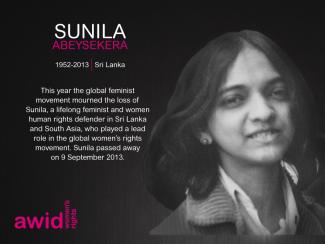
يركّز استطلاع "أين المال" على وقائع التمويل للتنظيمات النسوية، تسأل أغلبية الأسئلة عن تمويل مجموعتكم/ن بين الأعوام 2021-2023. سوف تحتاجون أن تكون لديكم/ن معلومات معيّنة عند تعبئة الاستطلاع مثل ميزانيتكم/ن السنوية ومصادر التمويل الأساسية.