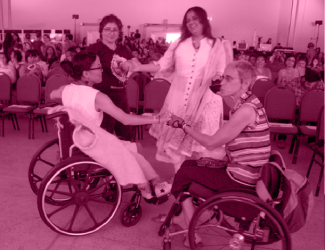
Ana Fabricia Cordóba Cabrera
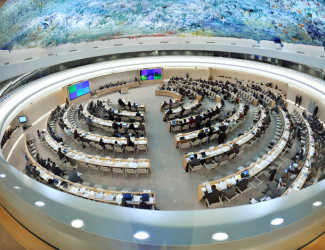
The Human Rights Council (HRC) is the key intergovernmental body within the United Nations system responsible for the promotion and protection of all human rights around the globe. It holds three regular sessions a year: in March, June and September. The Office of the UN High Commissioner for Human Rights (OHCHR) is the secretariat for the HRC.
Debating and passing resolutions on global human rights issues and human rights situations in particular countries
Examining complaints from victims of human rights violations or activist organizations on behalf of victims of human rights violations
Appointing independent experts (known as “Special Procedures”) to review human rights violations in specific countries and examine and further global human rights issues
Engaging in discussions with experts and governments on human rights issues
Assessing the human rights records of all UN Member States every four and a half years through the Universal Periodic Review
AWID works with feminist, progressive and human rights partners to share key knowledge, convene civil society dialogues and events, and influence negotiations and outcomes of the session.
Tributo: Recordamos a lxs activistas feministas que cambiaron nuestro mundo
En esta galería en línea, rendimos homenaje a más de 450 valientes feministas y activistas de todas las regiones del mundo y 88 países que ya no están con nosotrxs.
Lxs traemos a todxs a nuestra memoria colectiva y llevamos su legado de lucha como nuestra antorcha en los movimientos feministas y por los derechos de las mujeres.
Usa los filtros para refinar tu búsqueda
الاستطلاع هذا مخصّص للمجموعات، المنظمات والحركات التي تعمل بالأساس أو فقط على حقوق النساء، أفراد مجتمع الميم - عين، والحقوق الجندرية، في جميع السياقات، على جميع المستويات، وفي جميع المناطق. إن كان واحد من هذه المبادئ اساسًا لمجموعتكم/ن، تنظيمكم/ن أو شبكتكم/ن، أو أي نوع تنظيم آخر، إن كان مسجلاً أم لا، جديداً أو طويل العمر، ندعوكم/ن للإجابة على الاستطلاع.

*في الوقت الحالي، لا نطلب من الأفراد أو الصناديق النسوية أو النسائية تعبئة الاستطلاع.
تعرف على المزيد حول الاستطلاع: راجع/ي الأسئلة الشائعة
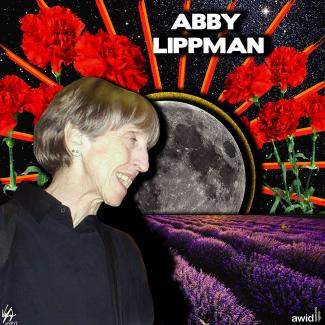
Abby fue una feminista y activista por los derechos humanos pionera, y antes epidemióloga de McGill University.
Abby era conocida por defender causas sociales, y por sus lúcidas críticas a las tecnologías reproductivas y otros temas médicos. En particular, hizo campaña contra lo que ella denominó la «genetización» de las tecnologías reproductivas, contra la terapia de reemplazo hormonal, y a favor de más y mejor investigación antes de la aprobación de descubrimientos tales como las vacunas contra el virus del papiloma humano.
Cuando falleció, sus amigxs y colegas la describieron afectuosamente como una «ardiente defensora» de la salud de las mujeres.

Este modelo económico explota desenfrenadamente la naturaleza e intensifica las desigualdades norte, donde sus grandes corporaciones se benefician y sur, de donde extraen los recursos.
Lee nuestro reporte de INDUSTRIAS EXTRACTIVAS
Hay alternativas sostenibles para el medioambiente y los derechos humanos de la mujer.
Укрепить наш коллективный голос и влияние на увеличение и улучшение финансирования феминистских организаций, организаций по защите прав женщин, ЛГБТКИ+ и смежных организаций по всему миру
Marielle était une femme politique brésilienne, féministe lesbienne et militante des droits humains.
Marielle était une critique virulente de la brutalité policière et des exécutions extrajudiciaires. Sa politique, ouvertement féministe, centrée sur les personnes noires et les favelas était une source d’espoir pour les groupes marginalisés de Rio de Janeiro, actuellement gouvernée par un gouvernement conservateur et un maire évangélique.
Le 14 mars 2018, après avoir prononcé un discours à Rio de Janeiro, Marielle Franco et son chauffeur ont été assassinés, abattus par balles. Suite à la nouvelle de leur mort, les foules sont descendues dans les rues en criant « Marielle presente! » (Marielle est ici !) et ont exigé que justice soit faite.
En savoir plus sur Marielle et la situation au Brésil

In our 14th Forum, we will celebrate and amplify Feminist Realities that are around us, in all stages of development.
We want to make this Forum our Feminist Reality - a place where you can inhabit a different world, where you bring your victories, the solutions you have devised; what makes you feel stronger, hopeful and ready to go on. It will be different from any other convening you have previously attended.
We urge you to join us in co-creating this world. It will be worth it!
Each Forum has a theme that reflects the needs of our membership and movements, and responds to our analysis of the current context.
Currently fascisms, fundamentalisms, authoritarianism and unfettered corporate power are gaining momentum globally. We see these threats converging with the State to shape public norms, narratives, and policies, entrenching a culture of fear, hate and incitement to violence in public discourse. States, previously the target of advocacy and rights claims, in many cases no longer feel accountable and in some cases themselves don’t have the power to uphold rights.
AWID’s 2016 Forum centered on Feminist Futures and the conditions needed to bring such futures about. It was clear then, and remains evident now, the enormous challenge for many social justice movements to think outside of the current system for structural solutions. Imaginations can become narrowed from long experiences of inequality and oppression. But what we also heard then and we see all around us is that feminist movements are indeed living and promoting rights-and justice-oriented realities and solutions in big and small ways.
Indeed we see an urgency to mobilize from a place of hope, rather than from a lowest common denominator - hope that is grounded in the certainty that across the globe, however imperfectly, are experiences and practices that embody more just ways of being in the world and that by sharing, strengthening and building on these experiences, we can help them grow their influence.
These are not impossible dreams, but lived realities. This sense of possibility is a spark to re-examine and re-appreciate the transformative dimensions in our work.
At AWID, we understand feminist realities as the living, breathing examples of the worlds we know are possible. We understand these diverse feminist realities as reclamations and embodiments of hope and power. They are embedded in the multiple ways that show us that there is a different way of living, thinking and doing-- from the daily expressions of how we live and relate to each other, to alternative systems of governance and justice. Feminist Realities resist dominant power systems such as patriarchy, capitalism, and white supremacy.
These are powerful propositions that orient us toward a vision of what is possible, and show how feminist organizing is blazing a path toward justice in movements and communities around the world.
In a deeply marginalized Black community in Jackson, Mississippi, an experiment in solidarity and cooperative economics is taking place through Cooperation Jackson. An ambitious plan to build community ownership outside of capitalist modes of production.
In West Africa, women farmers are resisting land grabbing and refusing industrialized agriculture projects, boldy claiming We Are The Solution, in a campaign to build agro-ecological solutions that center women farmers and their knowledges as the solutions to feed communities and mitigate climate change
Similarly, in India, 5,000 women have come together to develop community-based food sovereignty systems based on local knowledge, including grain and seed banks
Women in Mexico have created a moneyless economy project created by and for women and everyone they know. In El Cambalache everything has the same value: people exchange things they no longer need for things they want as well as knowledge, abilities and mutual aid that people would like to share. El Cambalache was built on the anti-systemic, anti-capitalist values of local social movements
In Rojava, Kurdish people are building democracy without the state and Kurdish women offer Jineology as a framework for challenging patriarchy, capitalism and the state, creating systems and institutions to put this framework into practice
In the UK, Anarcho Agony Aunts are a sex and dating advice show, covered from a feminist, antifascist, anarchist perspective. Hosts Rowan and Marijam are reclaiming space from the alt-right in giving people (mostly men) a space to ask tricky questions in a judgment-free zone.
The African Feminist Judgment Project drafts and disseminates alternative judgments for important African landmark cases on a range of legal issues. At the heart of the project is propositional feminist judicial practice and alternative feminist judgments that contribute to African jurisprudence, legal practice and judicial decision-making
The Usha Cooperative in India was founded when mainstream banks refused services to sex workers in Sonagachi. Sex workers self-organized to prioritize their economic concerns and set up their own financial institution. The Usha Cooperative is cooperative bank of over 20,000 sex workers and has provided over USD 4.7M in loans to 7,231 sex workers in a span of one year. With a membership entirely of sex workers, the bank provides real ownership and influence over the cooperative’s governance and management, pioneering ways for individuals and communities on the margins to build economic power on their own terms.
In Puerto Rico, a community land trust is helping to transform an informal settlement around a polluted and flood prone river channel into a sustainable community. It provides a new model for improving informal settlements in cities without them then becoming unaffordable for the original residents.
In several Latin American countries activists are providing peer-to-peer counselling and accompaniment on medical abortion, reclaiming women´s right to decide over their bodies as well as to medical knowledgde. (for safety reasons, no links are provided.
Learn more about these anchors
Building on those realities, we expect the 2020 Forum to:
The Forum is more than a four-day convening. It is one more stop on a movement strengthening journey around Feminist Realities that has already begun and will continue well beyond the Forum dates.
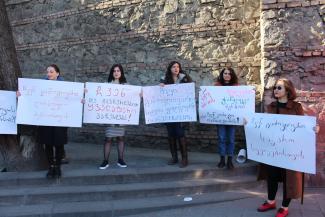
Te presentamos el Sindicato Red de Solidaridad, un sindicato de servicios y salud liderado en su mayoría por mujeres. Surgiendo como respuesta a la creciente precariedad, salarios insuficientes y entornos laborales hostiles que enfrentan diariamente lxs trabajadorxs en Georgia, el Sindicato Red de Solidaridad lucha por lugares y condiciones de trabajo dignos.
¿Su objetivo? Crear un movimiento obrero democrático nacional. Para hacerlo, se ha asociado con otros sindicatos locales y regionales y ha creado lentamente una red de sindicatos, empoderando por el camino a cada vez más trabajadoras para que se conviertan en líderes sindicales.
Su enfoque político es holístico. Para el Sindicato Red de Solidaridad, los temas de derechos laborales están directamente conectados con agendas y reformas políticas y económicas nacionales más amplias. Por eso están presionando por la justicia fiscal, los derechos de las mujeres y personas LGBTQIA+, y luchando contra el desmantelamiento del estado de bienestar georgiano.
Solidarity Network también forma parte de Huelga Social Transnacional (Transnational Social Strike, TSS), una plataforma política e infraestructura inspirada en la organización de migrantes, mujeres y trabajadores esenciales que trabaja para construir conexiones entre los movimientos laborales a través de las fronteras y fomentar la solidaridad global.

Barin was a member of the all-women fighting unit of the Kurdish People’s Protection Unit (YPG)
She was killed while on active duty.
Lebanese journalist Hifaa Zuaiter wrote: “Barin represents everything we have heard about the courage of the Kurdish female fighters, and her death is far more than the killing of a rival, or the result of a political or ethnic struggle. The horror of displaying her body only because she is a woman stems from the fact that she dared to threaten male hegemony by becoming a female fighter on a battlefield meant for men”.

Nos esforzamos para hacer que el Foro de AWID sea un encuentro verdaderamente global, con participación de un conjunto diverso de movimientos, regiones y generaciones. Con este fin, AWID moviliza recursos para un Fondo Acceso (FA) limitado para ayudar a algunxs participantes con los costos de asistir al Foro.
El 14° Foro Internacional de AWID tendrá lugar entre el 11 y el 14 de enero de 2021 en Taipei, Taiwán.
Para este Foro de AWID no habrá proceso de postulación.

Además, AWID va a financiar a aproximadamente 100 participantes del país anfitrión del Foro. Lxs integrantes de los Comités del Foro (Contenidos y Metodología, Acceso y Anfitrionxs así como el Grupo de Trabajo de Artistas también tendrán apoyo del Fondo Acceso.
Hemos preparado una lista con otras ideas sobre cómo puedes financiar tu participación en el Foro de AWID en la página de Ideas sobre financiamiento.