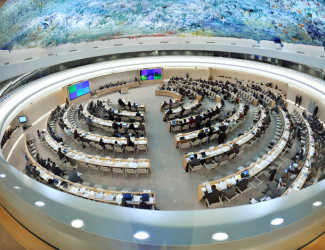
The Human Rights Council (HRC) is the key intergovernmental body within the United Nations system responsible for the promotion and protection of all human rights around the globe. It holds three regular sessions a year: in March, June and September. The Office of the UN High Commissioner for Human Rights (OHCHR) is the secretariat for the HRC.
The HRC works by:
Debating and passing resolutions on global human rights issues and human rights situations in particular countries
Examining complaints from victims of human rights violations or activist organizations on behalf of victims of human rights violations
Appointing independent experts (known as “Special Procedures”) to review human rights violations in specific countries and examine and further global human rights issues
Engaging in discussions with experts and governments on human rights issues
Assessing the human rights records of all UN Member States every four and a half years through the Universal Periodic Review
AWID works with feminist, progressive and human rights partners to share key knowledge, convene civil society dialogues and events, and influence negotiations and outcomes of the session.
With our partners, our work will:
◾️ Monitor, track and analyze anti-rights actors, discourses and strategies and their impact on resolutions
Na busca da abundância, e para acabar com esta escassez crónica, o inquérito WITM é um convite para os defensores do feminismo e da justiça de género se envolverem no percurso da recolha coletiva de testemunhos e de casos para mobilizar mais recursos financeiros de melhor qualidade e recuperar o poder no ecossistema de financiamento neste momento. Em solidariedade com os movimentos que continuam invisibilizados, marginalizados e sem acesso a financiamento central, de longo prazo, flexível e baseado em fundos fiduciários, o inquérito WITM destaca o estado efetivo dos recursos, desafia soluções falsas e aponta.
Snippet FEA Get Involved Story 3 (FR)
ENGAGEZ-VOUS!
Suivez le travail de la coopérative sur Facebook ou Instagram, partagez leurs campagnes et gardez un oeil sur leurs actions et événements de collecte de fonds!
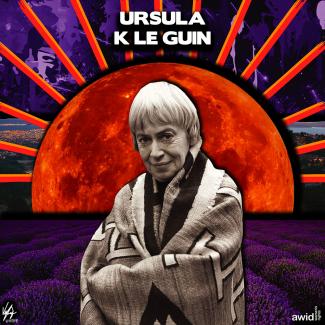
Ursula fue una novelista estadounidense que trabajó principalmente con los géneros de fantasía y ciencia ficción.
Encontró la fama con La mano izquierda de la oscuridad, novela en la cual imagina una sociedad futura donde la gente es ambisexual: no tienen un sexo fijo. Indaga en los efectos del género y el sexo en la sociedad, y fue uno de los primeros grandes libros feministas de ciencia ficción. Ursula fue una inspiración por su escritura subversiva y original y también por los temas sobre feminismo y libertad a los que les daba tanta importancia.
En un discurso que pronunció en 1983 en el Mills College, en California, les dijo a las graduadas: «¿Por qué una mujer libre con formación universitaria debería o luchar contra el macho o servirlo? ¿Por qué ella debería vivir su vida en los términos de él? Espero que ustedes vivan sin la necesidad de dominar y sin la necesidad de ser dominadas».
Ключевая цель исследования – осветить финансовое положение различных феминистских движений, инициатив за права женщин, гендерную справедливость, ЛГБТКИ+ и смежных движений по всему миру и, основываясь на этом, еще больше усилить аргументы в пользу увеличения объема денежных средств и передачи власти феминистским движениям.
Snippet FEA how important essential workers are (EN)
The COVID-19 pandemic showed the world how important essential workers are. We’re talking about cleaners, nurses, paramedics, domestic workers, transport workers, grocery shop workers, among others. Their work is to tend to and guarantee the wellbeing of others, and they make our economies function.
But while they take care of us…
Cláusula de exención de responsabilidad: Comunicaciones con el equipo de AWID
Si has recibido correos electrónicos de integrantes del equipo de AWID, nos gustaría que tengas presente lo siguiente:
La información contenida en esta comunicación es confidencial y está destinada exclusivamente la persona que lo recibe.
Esta comunicación podría contener información que es propiedad de la Asociación para los Derechos de las Mujeres y el Desarrollo (AWID, por sus siglas en inglés). Esta información no puede reproducirse ni diseminarse ni parcialmente ni en su totalidad sin el consentimiento escrito de AWID.
AWID no garantiza que la información aquí contenida sea completa o correcta. Esta comunicación no es una oferta para elaborar ningún tipo de acuerdo y no es una confirmación de ningún acuerdo descrito en este documento, a menos que el contexto indique claramente lo contrario.
AWID no está actuando en calidad de asesora de ningún acuerdo que pueda surgir de este documento, y esta comunicación no constituye una recomendación, guía o propuesta para elaborar un acuerdo.
AWID no garantiza o asegura los resultados esperados de cualquier acuerdo. Esta comunicación puede contener puntos de vista y opiniones que pueden no corresponderse con aquellos de AWID.
No tendrá derecho a utilizar la información contenida en esta comunicación con fines de llegar a cualquier tipo de propuesta de acuerdo u otro.
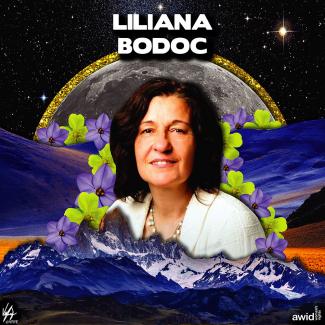
Liliana était enseignante argentine, tisseuse et également une écrivaine reconnue.
Sa trilogie « La saga des confins » a reçu plusieurs prix. Son œuvre est la seule dans le domaine littéraire fantastique à avoir eu recours et ré-imaginé la mythologie autochtone sud-américaine.
L’engagement de Liliana envers le féminisme s’est exprimé à travers les voix féminines diverses, riches et fortes de ses écrits, et en particulier dans le cadre de ceux à destination du jeune public. Elle a également pris position publiquement en faveur de l'avortement, de la justice économique et de l’égalité de genre.
هل يمكن أن تعبئ مجموعة واحدة الاستطلاع أكثر من مرة واحدة؟
كلا. نطلب فقط تعبئة استطلاع واحد لكل مجموعة.
Snippet FEA collaborator and allies Photo 3 (ES)
Llamado a todxs lxs artistas y activistas creativxs a reunirse en una nueva comunidad slack
Nuestros pensamientos acompañan a las numerosas personas de todo el mundo que se ven más afectadas por las repercusiones de la pandemia global del COVID-19, en especial, en las comunidades marginalizadas que han sido oprimidas históricamente.
Esta es una invitación destinada a artistas y activistas creativxs que quieran reunirse en un espacio virtual para conectarse, construir comunidad y apoyarse mutuamente en estos tiempos difíciles. Con este objetivo, hemos creado una comunidad de Slack nueva, para compartir en forma segura pensamientos, aprendizajes, trucos de vida, recursos, consejos, temores y ansiedades, recordatorios esperanzadores y alegres, y para charlar en general sobre cómo estamos.
Después de completar el formulario, le enviaremos una invitación personal a la comunidad.
Sobre esta comunidad:
Para quienes Slack es una herramienta nueva, y después de que se inscriban, les daremos sesiones y materiales de orientación.
Dado que aquí estamos trabajando en tres idiomas (inglés, español y francés), te pedimos que escribas en el idioma que te resulte más cómodo y utilices herramientas de traducción en línea (Google Translate u otras) para participar de las conversaciones.
La creación conjunta de nuestras realidades feministas comienza con nosotrxs mismxs y con cómo nos tratamos mutuamente. Nos esforzamos por crear y proteger espacios seguros para nuestras comunidades, tanto en línea como en forma presencial. También creemos que los espacios seguros y amigables son de propiedad y creación conjuntas. Esperamos que nuestrxs integrantes actúen de manera ética, responsable y consistente con los valores de AWID, y asuman la responsabilidad colectiva de garantizar una atmósfera de respeto y solidaridad recíprocos.
Disparadores semanales:
Como parte de nuestras conversaciones en curso, en Slack ofreceremos disparadores semanales, para facilitar el diálogo e inspirar los procesos artísticos en forma amable. Este puede ser un proceso introspectivo, pero para aprovechar al máximo esta comunidad, lxs invitamos a interactuar con lxs demás integrantes y compartir ideas, como parte de nuestras discusiones . La intención es invitar a la gente a responder de manera libre y gradual, escribiendo o produciendo arte como mejor lo sientan.
Esperamos mantener conversaciones relevantes y oportunas con ustedes, y, por lo tanto, apreciaremos tus sugerencias y comentarios. En general, los temas estarán centrados en las experiencias y perspectivas de artistas, escritorxs y creadorxs,que generarán un espacio donde lxs integrantes puedan describir e imaginar el clima global actual (y el que vendrá) a través de la lente de las realidades feministas.
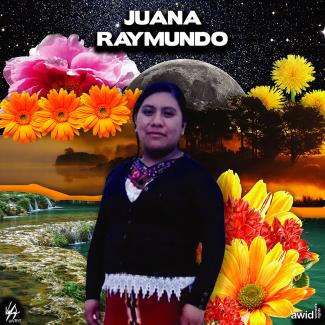
Juana was an Indigenous Mayan Ixil, professional nurse and coordinator of the Farmers’ Development Committee (Comité de Desarrollo Campesino – CODECA).
CODECA is a human rights organisation of Indigenous farmers dedicated to promoting land rights and rural development for Indigenous families) in the Nebaj Quiché micro-region. She first joined CODECA as a member of its youth branch (Juventud de CODECA). At the time of her death had been elected to be part of the Executive Committee of the Movement for the Liberation of Peoples (MLP).
Juana’s body was found by neighbours by a small river on the road near Nebaj and Acambalam Village, Guatemala. According to CODECA, her body showed signs of torture.
Да, доступ к опросу можно получить с помощью смартфона.
Snippet FEA Meet the Solidarity Network (FR)
SYNDICAT RÉSEAU SOLIDARITÉ
Nous vous présentons le syndicat Réseau Solidarité, un syndicat de la santé et des services dirigé majoritairement par des femmes. Émergeant en réponse à la précarité croissante, aux salaires insuffisants et aux environnements de travail hostiles auxquels les travailleur·euses géorgien·es sont confrontés quotidiennement, le Syndicat Réseau Solidarité se bat pour des lieux et des conditions de travail décents.
Son objectif? Créer un mouvement syndical national démocratique. Pour ce faire, il s'est associé à d'autres syndicats locaux et régionaux et a lentement constitué un réseau de syndicats, permettant à de plus en plus de travailleuses de devenir dirigeantes syndicales en cours de route.
Son approche politique est holistique. Pour le syndicat Réseau Solidarité, les questions relatives aux droits du travail sont directement liées aux programmes et réformes politiques et économiques nationaux plus larges. C'est pourquoi iels font pression pour la justice fiscale, les droits des femmes et des personnes LGBTQIA+, et luttent contre le démantèlement de l'État-providence géorgien.
Le syndicat Réseau Solidarité fait également partie de Grève Sociale Transnationale (Transnational Social Strike, TSS), une plate-forme et infrastructure politique inspirée par l'organisation des migrant·e·s, des femmes et des travailleur·euses essentiel·les qui s'efforcent de créer des liens entre les mouvements ouvriers à travers le monde et de fomenter la solidarité globale.
Tenir les cieux à bout de bras
Une série de films sur les Réalités féministes en Afrique et dans la diaspora africaine
par Gabrielle Tesfaye
Quand j’ai créé mon court-métrage d’animation The Water Will Carry Us Home, mon esprit était branché sur un monde magique de résilience téméraire et de sirènes ancestrales transformant leurs cicatrices/plaies les plus profondes en une nouvelle vie. Le film se déroulant à l’époque du commerce transatlantique de l’esclavage, j’ai eu envie de montrer l’histoire de l’esclavage américain, telle qu’elle n’a jamais été racontée précédemment. Je voulais offrir à mes ancêtres la commémoration qu’iels n’ont jamais reçue, et j’avais comme motivation de m’approprier l’histoire qui continue à nous dépeindre comme des victimes désemparées. Je voulais simplement raconter la vérité. En me réappropriant et en réimaginant notre histoire et notre point de vue, je guérissais en même temps les traumatismes générationnels dont nous souffrons aujourd’hui. C’est cet important travail que font de très nombreuses femmes du continent africain et de la diaspora africaine, donnant vie à nos Réalités féministes collectives.
J’ai mené des recherches très systématiques pour la réalisation de ce film, et en consultant ce qui avait été écrit, j’ai vu ce qui ne l’avait pas été. À plusieurs reprises, j’ai eu l’impression d’être confrontée à un mur en essayant de trouver quelque chose qui n’y était pas, et c’est dans ces lacunes que j’ai pris conscience que les conteuses d’aujourd’hui comblent les vides. Les histoires les plus utiles se cachent dans l’art contemporain, dans les films et dans le folklore de la diaspora africaine.
The Water Will Carry Us Home s’est ainsi déplacé dans le monde entier, dans les cœurs de la diaspora. Le film m’a également menée ici, en tant que commissaire des projections de films africains et de la diaspora pour l’initiative de cocréation de Réalités féministes de l’AWID. En sélectionnant ces films, j’étais à la recherche d’histoires totalement uniques, crues et représentatives du pouvoir féministe en action. Avec les trois courts-métrages et le long, ces films révèlent des histoires parmi des communautés d’Afrique et de la diaspora, notamment en Éthiopie, en Ouganda, en République démocratique du Congo, en Afrique du Sud et au Kenya. Ces films présentent les femmes africaines comme elles sont réellement : autogouvernées et autonomisées par l’objectif sans filtre de leur travail.
The Water Will Carry Us Home carried itself around the world into the hearts of the Diaspora. It also led me here, as the curator of the African and Diaspora film screenings of AWID’s Co-Creating Feminist Realities initiative. Whilst curating this collection of films, I looked for stories that were completely unique, raw and representational of feminist power in action. Consisting of three shorts and one feature, they reveal stories through many communities in Africa and the diaspora, including Ethiopia, Uganda, The Democratic Republic of Congo, South Africa and Kenya. These films reposition African women as what they truly are- self governing and empowered through the unfiltered lens of their work.
« Un récit incroyablement beau, attentif et finement observateur de la connexion entre l'Afrique et sa diaspora formée par la traite transatlantique d’esclaves. L'univers visuel qu'il crée est tout simplement magnifique... un écho de la fusion des traditions spirituelles et du temps non linéaire qui montre comment nous vivons encore les moments du passé qui ont formé de « nouveaux » mondes de négritudes pour la diaspora. »
- Jessica Horn, stratège féministe panafricain·e, écrivain·e et cocréateur·rice de The temple of her skin (Le temple de sa peau)
«...vraiment unique, brut et représentatif du pouvoir féministe en action. »
- Collectif Hers is Ours (La sienne est nôtre), organisateur du Festival Outsider Moving Art & Film
Notre documentaire Women Hold Up the Sky, créé par la WoMin African Alliance, raconte l’histoire de femmes activistes en Ouganda et en République démocratique du Congo qui réclament activement leurs droits fonciers menacés localement par les mines et autres activités d’extraction. Le film expose certes la corruption liée à l’extractivisme, mais partage enfin ce qui fait tant défaut sur les écrans : la manière dont les femmes africaines de la base s’organisent activement, créent des stratégies et mènent des analyses au sein de leur communauté, pour créer des alternatives axées sur les femmes et menées par la communauté. Margaret Mapondera, de WoMin, l’explique de manière très poétique : ce sont les « gardiennes des terres, des forêts, des eaux, des rivières et des territoires; les façons selon lesquelles les femmes détiennent et transmettent leurs histoires/les histoires des femmes de notre passé et de nos avenirs; les manières à la fois puissantes et transformatrices d’être femme s’incarnent dans leurs relations entre elles, avec l’environnement et avec elles-mêmes ».
« Une œuvre cinématographique rafraîchissante et indispensable qui met en évidence les nombreuses façons dont les femmes africaines se rassemblent pour créer des alternatives dirigées par les femmes et axées sur la communauté… Le combat est engagé et les femmes en détiennent la clé. »
-Collectif Hers is Ours (La sienne est nôtre), organisateur du Festival Outsider Moving Art & Film
Pumzi, de la réalisatrice Wanuri Kahiu acclamée par la critique, établit un pont entre l’Afrique et la science-fiction en se centrant sur le climat et l’environnementalisme. Pumzi imagine un monde futuriste où l’humanité aura été contrainte de s’installer sur une autre planète. Si Pumzi semble afro-futuriste et nouveau pour l’Afrique en surface, Kahiu révèle que la science-fiction et le fantastique ont toujours existé dans les récits africains, mais qu’ils n’ont simplement jamais été reconnus. Kahiu crée un monde où les femmes cherchent les vérités et sont les héroïnes qui nous guident dans un monde nouveau, soit à l’opposé des images qui placent les femmes en tant que victimes de la guerre et de la destruction. À l’inverse, Pumzi rédige le récit de femmes africaines qui se sauvent elles-mêmes et résolvent leurs propres problèmes, qui ne s’arrêtent à aucun prix dans la poursuite des visions énigmatiques qu’elles insufflent dans leurs rêves.
« Un film de science-fiction africain pionnier, situant les femmes comme scribes du futur et ouvrant nos visions vers d'autres mondes, d'autres univers que nous pourrions occuper en tant qu'Africain·e·s - un exercice toujours important à réaliser lorsqu’on envisage les modes de sortie de crises actuelles. »
- Jessica Horn, stratège féministe panafricain·e, écrivain·e et cocréateur·rice de The temple of her skin (Le temple de sa peau)
Le seul long métrage du programme, Finding Sally, se déroule dans l’Éthiopie des années 1970, à l’époque de la Terreur rouge. Il documente l’étonnante histoire de la tante de la réalisatrice Tamara Mariam Dawit, l’activiste Sally Dawit. Le film nous raconte l’incroyable aventure de Sally, jeune et courageuse activiste qui évolue dans les années les plus violentes de l’histoire de l’Éthiopie. L’histoire de Sally révèle non seulement la gravité de l’époque, mais ses réflexions sur sa propre évolution en tant que jeune femme. Dawit a intentionnellement fait abstraction des voix d’hommes dans son film, pour se centrer sur le point de vue et le regard des femmes. L’histoire de l’Éthiopie a si souvent, et si longtemps, été racontée par des hommes que la réalisation de cette puissante histoire protège la réalité en rendant honneur au point de vue féministe. Dawit explique que « [l]es femmes pendant la révolution et la guerre ne sont souvent mentionnées qu’en tant qu’épouse de quelqu’un, ou que cuisinière ou secrétaire. Je voulais observer et montrer l’activisme autour de la révolution, uniquement à travers les mémoires et les voix des femmes ». Finding Sally démontre la réappropriation de l’histoire que réclament les cinéastes actuelles. C’est un embrasement de pouvoir féministe et de nos réalités connectées, à travers l’histoire.
« La responsabilité nous incombe, de nous souvenir de ces femmes qui nous ont précédé·e·s et de leur brillant travail, pour ne pas être oubliées comme les milliers de femmes qui l’ont déjà été en menant le bon combat. Sally est une sacrée femme, pourvu qu’elle ne soit jamais oubliée. »
- Collectif Hers is Ours (La sienne est nôtre), organisateur du Festival Outsider Moving Art & Film
Ces films constituent maintenant une partie importante de ma psyché. Ils me poussent à continuer à créer des alternatives puissantes vers la justice depuis l’intérieur. Ils affirment que je suis une femme dans un monde de femmes, tenant les cieux à bout de bras et construisant activement des Réalités féministes indestructibles. Ces films sont davantage que des histoires d’Africaines. Tout le monde peut s’y référer, ils sont source d’inspiration et donnent l’exemple de Réalités féministes pour nous toustes dans le monde entier.
Gabrielle Tesfaye:
Gabrielle Tesfaye est une artiste interdisciplinaire initiée à la peinture, à l'animation, au cinéma, à la marionnette et à l'installation interactive. Son travail prend source dans la diaspora africaine, l'afro-futurisme, les pratiques artistiques anciennes et la narration culturelle.
Suivez-nous sur les réseaux sociaux pour recevoir des informations sur les prochains événements et projections :
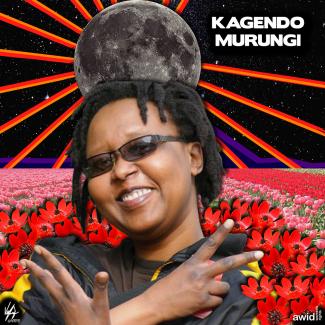
Kagendo es cariñosamente recordada por su familia y amigxs como una férrea activista feminista africana, artista y realizadora cinematográfica
Dedicó más de 20 años a defender los derechos y la dignidad de las personas LGBTIQ y de género no normativo de África. Lxs colegas de Kagendo la recuerdan como alguien con una personalidad jovial, convicciones férreas y amor a la vida. Kagendo murió por causas naturales en su hogar de Harlem, el 27 de diciembre de 2017.
Al producirse su fallecimiento, la escritora y activista keniata Shailja Patel destacó «el compromiso de toda la vida de Kagendo para establecer una relación entre todas las formas de opresión, mostrando de qué manera el colonialismo alentó la homofobia en el continente africano, para convertir así a Kenia en un país donde las personas queer y las mujeres libres puedan vivir y progresar».
 Na última década, os financiadores investiram significativamente mais dinheiro na igualdade de género; no entanto, apenas 1% do financiamento filantrópico e de desenvolvimento