Norma Angelica Bruno Roman
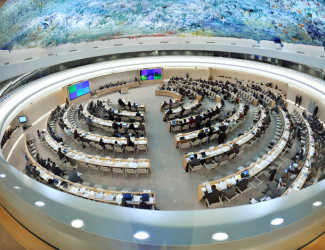
The Human Rights Council (HRC) is the key intergovernmental body within the United Nations system responsible for the promotion and protection of all human rights around the globe. It holds three regular sessions a year: in March, June and September. The Office of the UN High Commissioner for Human Rights (OHCHR) is the secretariat for the HRC.
Debating and passing resolutions on global human rights issues and human rights situations in particular countries
Examining complaints from victims of human rights violations or activist organizations on behalf of victims of human rights violations
Appointing independent experts (known as “Special Procedures”) to review human rights violations in specific countries and examine and further global human rights issues
Engaging in discussions with experts and governments on human rights issues
Assessing the human rights records of all UN Member States every four and a half years through the Universal Periodic Review
AWID works with feminist, progressive and human rights partners to share key knowledge, convene civil society dialogues and events, and influence negotiations and outcomes of the session.
Magaly Quintana era conocida por muchxs en Nicaragua como 'La Maga'. Fue una historiadora feminista, activista y defensora inquebrantable de los derechos de las mujeres que exigía justicia para las víctimas de femicidio.
Magaly se comprometió a documentar y elaborar estadísticas sobre las mujeres y niñas que fueron asesinadas como resultado de la violencia sexual en el país.
Magaly también criticó al gobierno por la reforma de la Ley 779 que trata la violencia contra las mujeres. Como resultado del arduo trabajo de los movimientos de mujeres nicaragüenses, esta ley, antes de su reforma, incluía importantes disposiciones para penalizar el femicidio. Magaly argumentó que estas reformas legislativas debilitaban la ley, y limitaban la definición de los femicidios a homicidios, invisibilizando, como resultado, los delitos violentos contra las mujeres.
La organización feminista de Magaly se fundó a principios de los ‘80. Fue la directora de Mujeres Católicas por el Derecho a Decidir, que defiende el derecho al aborto terapéutico tras su prohibición en 2006. En 2018, apoyó las protestas contra el gobierno de Daniel Ortega.
Magaly nació en mayo de 1952 y falleció en mayo de 2019.
"Hasta luego, mi querida Magaly Quintana. Muchas gracias, gracias por tu legado. Te veremos de nuevo, tan fuerte y poderosa como siempre."- Erika Guevara Rosas (Directora Americana de Amnistía Internacional).
Alors que nous affrontons de multiples crises dans le monde entier, nos mouvements œuvrent sans relâche à construire une influence qui dépasse les structures de pouvoir traditionnelles. La vague de décrets présidentiels américains vise à nous intimider, mais aucune idéologie fasciste, quelle que soit son ampleur, ne peut effacer notre existence et notre résistance.
Nous vous invitons à rejoindre la campagne de solidarité pour dénoncer et résister aux forces fascistes qui sapent les mouvements féministes et de justice de genre dans vos communautés !
Par María Bonita - Venezuela
Nos ancêtres femmes forment un cercle
Sacré, vivant, puissant
Nous sommes au milieu
Et sentons leur force.
Le tambour bat le son de la terre
Notre peau s’habille de couleurs
Nous sommes vertes, rouges, oranges, bleues, violettes, noires
Le tambour bat le son de la terre
La voix vibre, le cri envahit, le chant retentit, berce le sommeil, éveille la conscience.
Le tambour bat le son de la terre
Et le regard se fait complice, ami, profond.
Le tambour bat le son de la terre
Nous ne sommes qu’un seul cœur battant au rythme de l’âme, il nous invite à bouger, nous inspire le désir, nous montre un chemin
Celle du rassemblement communautaire, celle du pouvoir populaire, celle de l’auto-gouvernement, celle de la révolution des femmes, celle du soin subversif.
Le tambour bat le son de la terre
Et je vous invite à entrer, à être voix, peau, regard, graine, feu, chanson, communion.
Le tambour bat le son de la terre
Et je vous invite à la découvrir, à l’aimer, la connaître et la défendre depuis le coeur de la communauté.
Cela fait 25 ans qu’elles habitent ces mêmes rues poussiéreuses, au sommet d’une colline qui porte le nom d’un lion; elles viennent d’endroits différents, beaucoup ont une tradition paysanne, elles ont la peau couleur rébellion, couleur cactus cardon, parce que l’esprit semi-aride de Lara vit en elles. C’est de là que leur vient leur amour de la vie, leur appréciation, le soin et la protection apportés à l’eau et au territoire, car elles sont les héritières des lignées de Gayón, Ayaman, des communautés autochtones qui ont vécu et vivent dans le nord de l'État de Lara.
Elles ont appris dès leur plus jeune âge que la maternité est un rôle auquel il n’est pas facile d’échapper. S’occuper des enfants, de la maison, du mari, laver, repasser, cuisiner, nettoyer - elles insistent: tout devait être impeccable.
Et c’était ça la vie, ça et la violence, les insultes, la maltraitance, les coups, les réclamations et les reproches auxquels il fallait s’attendre, cela semblait presque naturel, c’est ainsi que se déroulaient leurs journées, leur quotidien. Elles vivaient dans des petites maisons en tôle dans ces rues de terre battue, sans électricité ni eau courante, c’était la pauvreté, la précarité, quand un homme est arrivé, oui, un homme, un projet, une révolution inhabituelle parce qu’elle s’est faite sans guerre.
Alors on les invita à sortir, on les invita à descendre dans les rues et à occuper l’espace public. Au cours de ce processus, elles ont arraché des portes et des fenêtres, elles ont brisé des chaînes, ont lâché leurs cheveux, elles se sont senties libres, libres comme des esclaves en fuite, des rebelles des Caraïbes, des défenseuses de la liberté.
Et ces concepts d'indépendance et de souveraineté sont des notions que celleux qui ont eu la chance d'étudier connaissent, mais le sentir, se sentir comme les protagonistes d'un processus de transformation sociale - c'est une victoire importante que nous nous devons de mentionner et que nous ne pouvons pas oublier.
Au sommet de cette colline, on peut sentir la complicité des femmes, le feu partagé, les années de lutte. On raconte que l'une d'entre elles se promenait avec son ombrelle l'après-midi et s’arrêtait de maison en maison pour prendre un café et parler aux gens, les inviter à se joindre à la cause et les convaincre…
Nous allons créer un conseil communautaire !
Allons de l'avant ensemble en tant que communauté !
Élaborons des plans pour l'éducation, le sport, la santé, la nutrition, un comité pour les femmes et l'égalité des genres, l'économie !
Nous pouvons former notre propre gouvernement populaire pour que notre quartier soit beau !
Et c'est ainsi que les maisons sont arrivées, le cabinet médical, la garderie, l'électricité, l'eau potable. Ce sont là quelques-unes des réalisations de la communauté, quelques-uns de nos rêves communs devenus réalité.
Et vous pourriez vous demander comment une cuentera, une conteuse, est arrivée sur une colline portant le nom d'un lion...
Et je vous répondrai: je suis née turbulente, me battant sans cesse, «tu es née vagabonde» dirait ma grand-mère, «tu es née prête» ajouterait le Comandante Chávez, à force de marcher, de râler, de me battre et douter de cet homme militaire. Son projet communautaire, son concept d’autonomie gouvernementale et le fait que le peuple gère ses propres ressources, que tout le pouvoir aille aux communautés, ont fini par me convaincre.
Mais je savais qu'il manquait quelque chose, parce que les femmes, les femmes de la communauté continuent à construire le pouvoir du peuple et à se battre cœur et âme contre l’impérialisme et le capitalisme, mais il y a quelque chose qui fait mal et qui continue de nous affecter. Les blessures du patriarcat sont toujours présentes.
Alors un jour, je me suis retrouvée à pleurer, le tambour battit le son de la terre et nos ancêtres parlèrent.
Je me suis retrouvée entourée d’un groupe de femmes qui m’ont soutenue, qui m’ont contenue lorsque je débordais devant elles, lorsque j’avais mal et me libérais en même temps. C’est ainsi que j’ai découvert que l’amour entre femmes vous guérit, vous sauve, que notre amitié est profondément politique et que la sororité est une manière d’être, de vivre la vie. À partir de ce moment-là, je ne me suis plus jamais sentie seule, je ne me suis plus jamais sentie comme une île parce que je sais qu’il y a un groupe de femmes qui me portent, m’emmènent, m’aiment, prennent soin de moi et moi d’elles. Je sais que mon féminisme né de l’expérience mystique de femmes pour la vie me permet de me sentir connectée, aimée par des femmes que je ne reverrai peut-être pas. Alors comment ne pas souhaiter que cela arrive aux autres? Cet éveil, cette naissance d’un nouveau cœur est un don des déesses qui doit être partagé.
C'est pourquoi j'ai décidé de me joindre à ces femmes et parcourir les communes, je me suis mise à marcher, à faire d'autres expériences, nous avons commencé à débattre de la santé, de l'éducation, de l'alimentation, nous avons commencé à prêcher le verbe anti-patriarcal et à réclamer des communautés libres de machisme. Nous avons insisté pour récupérer la sagesse ancestrale, l’intuition, nous avons décidé de défendre la vie en parlant de l'avortement et nous nous retrouvons à rire, à pleurer, à débattre, à réfléchir, je retrouve macu, la china, yenni, carolina, maria, ramona, irma et même notre sœur yenifer qui nous a quittées il y a peu.
Ceci est mon hommage à ces femmes, les femmes de la colline, les femmes lionnes, elles qui ont semé leur graine tout au fond de moi avec une telle puissance qu’elles se mêlent dorénavant aux battements de mon cœur.
C’est certain, elles tracent un chemin, et sans elles il n’y aurait ni soins familiaux, ni soins collectifs. Elles sont aussi une force sur ce territoire qui se bat contre l’embargo, la violence patriarcale, la trahison politique, la bureaucratie et la corruption.
C’est certain, elles tracent un chemin
C’est certain, elles sont des boussoles
C’est certain, elles sont le coeur de la communauté
Merci.
par Gabriela Estefanía Riera Robles
Juliana. Comme j’aimerais m’appeler Juliana! C’est un prénom plein de pouvoir et de présence, plein de force et de véhémence. (...)
< illustration : «Born Fighters», par Borislava Madeit et Stalker Since

Janet Benshoof était une avocate des droits humains oeuvrant aux États-Unis et défenseure de l’égalité des femmes et de leurs droits sexuels et reproductifs.
Elle a milité pour l’élargissement de l’accès à la contraception et à l’avortement dans le monde entier, et s’est battue contre des décisions anti-avortement dans le territoire américain de Guam. Arrêtée en 1990 pour son opposition à la loi anti-avortement la plus restrictive de son pays, elle a remporté une mise en demeure [MB1] au tribunal local à Guam qui a bloqué la loi, pour ensuite remporter l’affaire devant la Cour d’Appel de Ninth Circuit, décision qui devait supprimer définitivement celle-ci.
« Les femmes à Guam sont dans une situation absolument dramatique. Je n’ai nullement l’intention d’arrêter d’en parler », Janet Benshoof pour People Magazine
Janet a créé plusieurs précédents juridiques, dont l’approbation par l’US Food and Drug Administration de la contraception d’urgence, ainsi que l’application du droit international afin de garantir leurs droits aux victimes de viol lors des poursuites pour crimes de guerre de l’époque de Saddam Hussein, devant la Cour Suprême iraqienne.
Janet était présidente et fondatrice du Global Justice Center, ainsi que fondatrice du Center for Reproductive Rights, la première organisation internationale pour les droits humains, centrée sur le choix reproductif et l’égalité. Elle a siégé pendant 15 ans en tant que directrice du projet pour les droits reproductifs de l’American Civil Liberties Union, où elle a mené de nombreuses procédures juridiques qui ont contribué à façonner la loi constitutionnelle des États-Unis sur l’égalité de genre, la liberté d’expression et les droits reproductifs.
« Janet était connue pour son brillant esprit juridique, son sens de l’humour vif et son courage face à l’injustice », Anthony D. Romero.
Nommée l’une des « 100 avocat·e·s les plus influent·e·s d’Amérique » par le National Law Journal, Janet a reçu de nombreux prix et distinctions.
Née en mai 1947, Janet est décédée en décembre 2017.
✉️ Sur inscription uniquement. Inscrivez-vous ici
📅 Mardi 11 mars 2025
🕒 18.00h-20.00h EST
🏢 Chef's Kitchen Loft with Terrace, 216 East 45th St 13th Floor New York
Organisé par : AWID

We’ve been together for over 20 years and how deeply I’ve treasured your love and support. It is interesting to think that you too are a similar age to AWID - both trying to figure out how to engage and support the community on a similar timeline. To the mothers in the movement, your leadership and guidance has been unmatched. I think of Prudence Mabele, Kate Thompson, Darien Taylor, Patricia Perez, Martha Tholanah, Deloris Dockery, Iris De La Cruise, Doris Peltier, Cecilia Chung and so many more. While not perfect (as none of us are), you always put your community first and champion the inclusion of ALL women living with HIV in feminist spaces.
I love the way you have held me when no one else has been able to, but more importantly how we hold each other. While you understand stigma, discrimination, violence and pain, you also understand joy, love and forgiveness. As feminists living with HIV, we are glorious and powerful in our intersectionality. We understand that feminism includes and is led by communities - our Black, Brown and Indigenous sisters, communities who are trans and gender diverse, sex workers, queer/lesbian, those who have been incarcerated, and those who use drugs - as set out in the GIPA (Greater Involvement of People Living with HIV) principles. Your feminism is all encompassing. We talk about the hard issues and about criminalized communities, because as people living with HIV, we ourselves are criminalized.
I would be remiss if I didn’t send special love to the young women living with HIV, the heartbeat of the movement. I see you Kia Lebejia, Keren Dunaway, Liz Onyango, Faith Ona, Sara Thapa Maga, Doreen Moraa, Yana Panfilova and millions of others incredible activists living with HIV. You are the power that will continue to propel us forward and allow us to be seen as important in mainstream feminst movements. Thank you for taking our movement further to ALWAYS include trans and gender diverse folks, to talk about the links between climate change and sexual and reproductive health and rights.
I love, love, love, love you so much. For better or for worse, let’s move forward together because this is our community - this is my community.
With love,
Jessica Whitbread
You can now watch the AWID Feminist Film Club program “Feminist Embodiments of Hope and Power” - a film series on Feminist Realities from the SWANA region curated by Esra Ozban
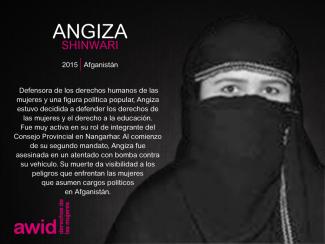
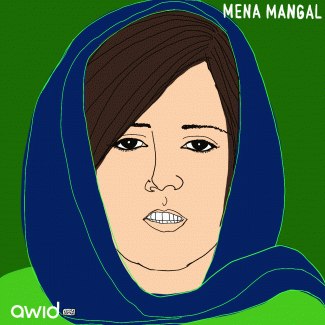
Mena Mangal was a prominent TV journalist, women’s rights advocate and cultural adviser to Wolesi Jirga, the lower house of Afghanistan's national parliament.
For more than a decade, she worked for Ariana TV, Tolo TV's Pashto-language channel Lamar, and the private Afghan national television broadcaster Shamshad TV. As a presenter, Mena focused on women’s rights and cultural talk shows.
"Women's rights activist Wazhma Frogh said Mangal "had a loud voice" and actively spoke out as an advocate for her people."
Off-screen, she also ran popular social media pages that advocated for the rights of Afghan girls and women to education and work. In terms of her private life, Mena wrote extensively about being forced into an arranged marriage in 2017 and the process she had to go through to finally obtain a divorce.
In a Facebook post, Mena wrote she was receiving death threats from unknown sources but would continue to carry out her work.
On 11 May 2019, she was attacked by unknown gunmen and shot dead in broad daylight in a public space in Southeast Kabul.
"We are concerned about the situation because it has a direct impact on women who work outside their homes...Female journalists are changing their professions due to the increasing risks they are facing." - Robina Hamdard, Kabul-based women’s rights activist.
Join as an AWID member now and participate in our next member event:
“Forum Dreaming” on June 20th.

¿Cómo comienza un movimiento?
los fantasmas nos expulsan de una casa, una familia, y una nación
llegamos fatigadas a un espacio (a veces un domicilio real) pero fundamentalmente a un estado de ser
precedidas por una estrella fugaz
quizás nuestra llegada no está acompañada por la fatiga,
quizás está acompañada por el miedo
quizás nuestra llegada no está acompañada por el miedo
quizás está acompañada por la rabia
ante cuestiones que siguen repitiéndose:
una puñalada en el corazón (léase pena)
una bala en la espalda (léase traición)
desapariciones forzadas
cuerpos sentenciados por el matrimonio, la desfiguración y la fatiga crónica,
sin embargo, llegamos, nos reunimos, susurramos, hablamos y lloramos.
Así es como nuestros movimientos comienzan cuando llegamos unas a otras
Nos convertimos en semillas,
Así es como nuestros movimientos comienzan cuando nos plantamos unas a otras
Convirtiéndonos en flores, a veces solo espinas, a veces frutas,
somos el oasis de las otras
para cantar por las batallas
para preparar remedios
para ubicar los rostros de nuestras amantes, la forma de sus sonrisas, el sonido de su risa
el secreto de convertir los silencios en lenguaje
las detalladas instrucciones de las brujas
nuestro movimiento es para todas nosotras,
cuando llegamos como semillas con el propósito de florecer.
Sara AbuGhazal
www.badiya.blog