In September 2016, the 13th AWID international Forum brought together in Brazil over 1800 feminists and women’s rights advocates in a spirit of resistance and resilience.
This section highlights the gains, learnings and resources that came out of our rich conversations. We invite you to explore, share and comment!
What has happened since 2016?
One of the key takeaways from the 2016 Forum was the need to broaden and deepen our cross-movement work to address rising fascisms, fundamentalisms, corporate greed and climate change.
With this in mind, we have been working with multiple allies to grow these seeds of resistance:
Movements can also benefit from new methodologies on Visioning Feminist Futures (Coming up soon!)
And through our next strategic plan and Forum process, we are committed to keep developing ideas and deepen the learnings ignited at the 2016 Forum.
What happens now?
The world is a much different place than it was a year ago, and it will continue to change.
The next AWID Forum will take place in the Asia Pacific region (exact location and dates to be announced in 2018).
We look forward to you joining us!
About the AWID Forum
AWID Forums started in 1983, in Washington DC. Since then, the event has grown to become many things to many peoples: an iterative process of sharpening our analyses, vision and actions; a watershed moment that reinvigorates participants’ feminisms and energizes their organizing; and a political home for women human rights defenders to find sanctuary and solidarity.
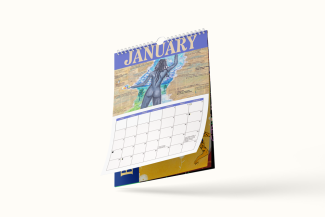
Considera este calendario como un obsequio, que te llega a ti y a 9500 afiliades de nuestra comunidad feminista mundial. Un obsequio de esperanza, conexiones renovadas, acción y comunidad en un momento de inmensas injusticias y violencias.
Que estas historias te recuerden que a través de las fronteras y a lo largo de las luchas, somos muches, somos fuertes y, en conjunto, construimos los mundos que merecemos.
Cette campagne est menée par 8 organisations partenaires sur différents continents, et construit des alternatives féministes à la crise climatique, aux écocides et aux génocides.
Across the globe, feminist, women’s rights and gender justice defenders are challenging the agendas of fascist and fundamentalist actors. These oppressive forces target women, persons who are non-conforming in their gender identity, expression and/or sexual orientation, and other oppressed communities.
Discriminatory ideologies are undermining and co-opting our human rights systems and standards, with the aim of making rights the preserve of only certain groups. In the face of this, the Advancing Universal Rights and Justice (AURJ) initiative promotes the universality of rights - the foundational principle that human rights belong to everyone, no matter who they are, without exception.
We create space for feminist, women’s rights and gender justice movements and allies to recognize, strategize and take collective action to counter the influence and impact of anti-rights actors. We also seek to advance women’s rights and feminist frameworks, norms and proposals, and to protect and promote the universality of rights.
Our actions
Through this initiative, we:
Build knowledge: We support feminist, women’s rights and gender justice movements by disseminating and popularizing knowledge and key messages about anti-rights actors, their strategies, and impact in the international human rights systems through AWID’s leadership role in the collaborative platform, the Observatory on the Universality of Rights (OURs)*.
Advance feminist agendas: We ally ourselves with partners in international human rights spaces including, the Human Rights Council, the Commission on Population and Development, the Commission on the Status of Women and the UN General Assembly.
Create and amplify alternatives: We engage with our members to ensure that international commitments, resolutions and norms reflect and are fed back into organizing in other spaces locally, nationally and regionally.
Mobilize solidarity action: We take action alongside women human rights defenders (WHRDs) including trans and intersex defenders and young feminists, working to challenge fundamentalisms and fascisms and call attention to situations of risk.
Related Content
CFA 2023 - Submit application card - FR
Nous acceptons les candidatures dans toute la gamme des domaines thématiques et des intersections importantes pour les mouvements féministes et de justice de genre.
Louise Malherbe es una comisaria y programadora cinematográfica y crítica de cine radicada en Berlín. Trabajó como programadora de cine para Metropolis Cinema Association de Beirut, y actualmente coordina el proyecto Reel Streams, el cual se orienta a apoyar la difusión del cine independiente en la región árabe. Es jefa de programación del Festival de Cine de Soura, un festival de cine queer enfocado en la región de Asia sudoccidental y Norte de África, escribe crítica de cine para Manifesto XXI y, recientemente, comenzó a desempeñarse como comisaria de cine y festivales para Cinema Akil.
Lisez nos recherches sur le financement, sur les défenseuses des droits humains, sur la création de mouvements, sur les fondamentalismes, la justice économique et beaucoup plus
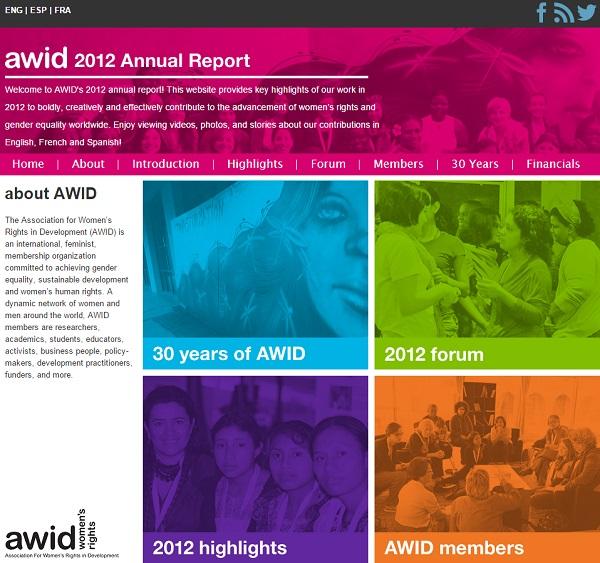
Our 2012 Annual Report provides key highlights of our work during the year to boldly, creatively and effectively contribute to the advancement of women’s rights and gender equality worldwide.
Enjoy viewing videos, photos, and stories about our contributions.