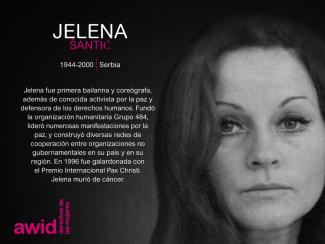
Jelena Santic

In September 2016, the 13th AWID international Forum brought together in Brazil over 1800 feminists and women’s rights advocates in a spirit of resistance and resilience.
This section highlights the gains, learnings and resources that came out of our rich conversations. We invite you to explore, share and comment!
One of the key takeaways from the 2016 Forum was the need to broaden and deepen our cross-movement work to address rising fascisms, fundamentalisms, corporate greed and climate change.
With this in mind, we have been working with multiple allies to grow these seeds of resistance:
And through our next strategic plan and Forum process, we are committed to keep developing ideas and deepen the learnings ignited at the 2016 Forum.
AWID Forums started in 1983, in Washington DC. Since then, the event has grown to become many things to many peoples: an iterative process of sharpening our analyses, vision and actions; a watershed moment that reinvigorates participants’ feminisms and energizes their organizing; and a political home for women human rights defenders to find sanctuary and solidarity.
Boil them down to communications language preferences
Crear | Résister | Transform est fait pour vous et pour tou·te·s les superbes activistes féministes et de la justice sociale que nous connaissons. Rassemblons-nous pour partager nos stratégies de résistance, co-créer un peu de magie féministe, et transformer ce monde ensemble.
Avec jusqu'à 2 500 participant·e·s sur place et 3 000 participant·e·s virtuel·e·s/hybrides, il s'agira du plus grand Forum de l'AWID jamais organisé. Nous envisageons de mettre en place de multiples espaces qui vous permettront d'établir des liens significatifs, d'apprendre, d'échanger, d'avoir des échanges stratégiques, de guérir et de fêter. C'est la première fois que nous nous réunissons dans cet espace depuis la pandémie, et nous brûlons d’impatience.
Los discursos anti-derechos continúan evolucionando. Además de utilizar argumentos relacionados con la religión, la cultura y la tradición, los actores antiderechos cooptan el lenguaje de la justicia social y los derechos humanos para ocultar sus verdaderas agendas y ganar legitimidad.
Le Forum international de l'AWID est à la fois un événement communautaire mondial et un espace de transformation personnelle radicale. Rassemblement unique en son genre, le Forum réunira nos mouvements féministes, de défense des droits des femmes, de justice de genre, LBTQI+ et alliés, dans toute leur diversité et leur humanité, afin de nous connecter, nous apaiser et nous épanouir.
Le thème du Forum – S’élever ensemble – nous invite à nous engager pleinement, à nous connecter les un·e·s aux autres de manière ciblée, bienveillante et courageuse. Nous pourrons ainsi ressentir le battement du cœur des mouvements mondiaux et agir ensemble pour relever les défis de notre époque.
For the first time, the AWID Forum offered three modes of participation:
 |
 |
 |
|
En présentiel au Queen Sirikit National Convention Center à Bangkok, Thaïlande |
En ligne dans un espace virtuel (capacité : 3 000 participant·e·s) |
Via des centres névralgiques (Hubs) connectés dans un espace transfrontalier |
Plus de 4000 personnes ayant participé au 15e Forum international de l'AWID en 2024 ont créé une force radicale pour résister aux oppressions, vers la guérison et la libération collectives. Restez à l'écoute pour plus d'articles du forum et les prochaines mises à jour !
En 2020, le conseil d’administration de l’AWID a pris la décision difficile d’annuler le 14ème Forum international de l’AWID, qui devait avoir lieu du 20 au 23 septembre 2021 dans la ville de Taipei.
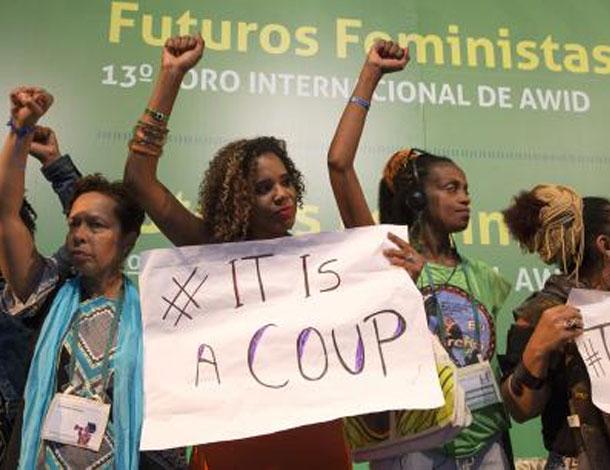
Compte tenu de la complexité du monde d'aujourd'hui, le Forum de l'AWID 2016 ne s'est pas concentré sur un « problème » particulier mais a plutôt exploré comment créer des moyens efficaces de travailler ensemble !
Malgré le contexte difficile dans lequel s’est déroulé le Forum de 2016 (l’épidémie de Zika, la grève au ministère des Affaires étrangères brésilien, la destitution de la présidente Dilma Rousseff et l’instabilité qui a suivi), il a rassemblé plus de 1800 participant-e-s issu-e-s de 120 pays et territoires de toutes les régions du monde.
Téléchargez le rapport d’évaluation
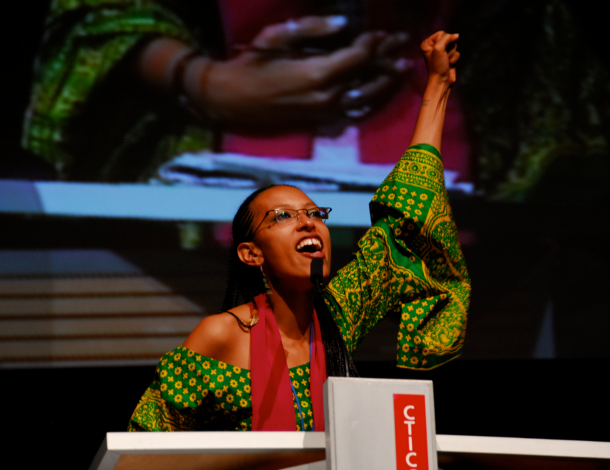
Le 12e Forum de l’AWID s’est tenu à Istanbul en Turquie en 2012, avec pour thème central Transformer le pouvoir économique pour avancer les droits des femmes et la justice. Ce Forum fut le plus important et le plus diversifié de l’histoire, rassemblant quelque 2 239 activistes pour les droits des femmes en provenance de 141 pays différents. Parmi elles-eux, environs 65 % venaient de pays du Sud, près de 15 % étaient des jeunes femmes de 30 ans et moins, alors que 75 % participaient au Forum pour la première fois.
Le Forum s’est focalisé sur la transformation du pouvoir économique pour faire progresser les droits des femmes et la justice en proposant plus de 170 activités incluant des ateliers de formation en économie féministe, en passant par toute une séries d’ateliers de discussion et autres tables rondes solidaires autour de 10 grandes questions cruciales.
Dans l’élan du Forum, nous avons transformé la page qui lui était dédiée en un outil multimédia en ligne qui intègre également les contenus générés par les participant-e-s sur toutes les composantes du Forum.
Visitez l'archive web du Forum 2012
In 2023, feminist and women's rights organizations had a median annual budget of USD 22,000. Behind that median lies disparity and inequality: while a few groups access large-scale resources, the vast majority survive on shoestring budgets.
A closer look at actual budgets reveals major income diversity and inequality.
Our Access Fund will offer a limited number of scholarships to fund the participation of activists who cannot otherwise make it, and don’t have relationships with funders who could cover their participation. So if you have other possibilities, please explore them. We will do our best to offer as many scholarships as we can, and will share more information about this process and how to apply in early 2024.
Décideur·se politique à l’ONU, vous souhaitez apprendre à repérer les principaux groupes et discours antidroits au sein de l’institution ? Vous êtes un·e féministe, à la recherche de contre-arguments éclairs ? Ce résumé vous propose les informations essentielles en 8 pages seulement.
English body
Con 1773 cabilderos de los combustibles fósiles presentes en la COP29 del año pasado, nos dirigimos, junto con otres feministas a Belém (Brasil) del 10 al 21 de noviembre de 2025. Allí continuaremos denunciando las soluciones falsas, llamando la atención sobre la captura corporativa, y exigiendo que los Estados cumplan sus compromisos bajo las Responsabilidades Comunes pero Diferenciadas y las Capacidades Respectivas (en inglés) para impulsar las alternativas económicas feministas.
USD 2,7 billones para gasto militar. USD 300.000 millones para la justicia climática. Estamos aquí para dar vuelta el relato.
¡Creemos que sí! Todavía estamos en las etapas iniciales del proceso de planificación, así que mantente atentx mientras les vamos dando a estos planes.
