None On Record

Special Focus

AWID is an international, feminist, membership organisation committed to achieving gender equality, sustainable development and women’s human rights

Young Feminist Activism

Organizing creatively, facing an increasing threat

Young feminist activists play a critical role in women’s rights organizations and movements worldwide by bringing up new issues that feminists face today. Their strength, creativity and adaptability are vital to the sustainability of feminist organizing.

At the same time, they face specific impediments to their activism such as limited access to funding and support, lack of capacity-building opportunities, and a significant increase of attacks on young women human rights defenders. This creates a lack of visibility that makes more difficult their inclusion and effective participation within women’s rights movements.

A multigenerational approach

AWID’s young feminist activism program was created to make sure the voices of young women are heard and reflected in feminist discourse. We want to ensure that young feminists have better access to funding, capacity-building opportunities and international processes. In addition to supporting young feminists directly, we are also working with women’s rights activists of all ages on practical models and strategies for effective multigenerational organizing.

Our Actions

We want young feminist activists to play a role in decision-making affecting their rights by:

  • Fostering community and sharing information through the Young Feminist Wire. Recognizing the importance of online media for the work of young feminists, our team launched the Young Feminist Wire in May 2010 to share information, build capacity through online webinars and e-discussions, and encourage community building.

  • Researching and building knowledge on young feminist activism, to increase the visibility and impact of young feminist activism within and across women’s rights movements and other key actors such as donors.

  • Promoting more effective multigenerational organizing, exploring better ways to work together.

  • Supporting young feminists to engage in global development processes such as those within the United Nations

  • Collaboration across all of AWID’s priority areas, including the Forum, to ensure young feminists’ key contributions, perspectives, needs and activism are reflected in debates, policies and programs affecting them.

Related Content

Snippet FEA Get Involved Story 3 (FR)

ENGAGEZ-VOUS!

Suivez le travail de la coopérative sur Facebook ou Instagram, partagez leurs campagnes et gardez un oeil sur leurs actions et événements de collecte de fonds!

Snippet - WITM RESOURCES - PT

Recursos

(Disponível em inglês)

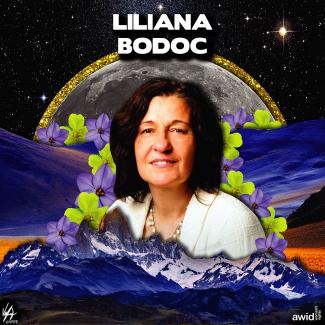
Liliana Bodoc

Liliana était enseignante argentine, tisseuse et également une écrivaine reconnue.

Sa trilogie « La saga des confins » a reçu plusieurs prix. Son œuvre est la seule dans le domaine littéraire fantastique à avoir eu recours et ré-imaginé la mythologie autochtone sud-américaine.

L’engagement de Liliana envers le féminisme s’est exprimé à travers les voix féminines diverses, riches et fortes de ses écrits, et en particulier dans le cadre de ceux à destination du jeune public. Elle a également pris position publiquement en faveur de l'avortement, de la justice économique et de l’égalité de genre.


Liliana Bodoc, Argentina
Main image
FFC - Banners.png
Body

The Feminist Film Club

As part of AWID’s Feminist Realities journey, we invite you to explore our newly launched Feminist Film Club: a collection of short and feature films selected by feminist curators and storytellers from around the world, including Jess X. Snow (Asia/Pacific), Gabrielle Tesfaye (Africa/African Diaspora), and Esra Ozban (South West Asia, North Africa). Alejandra Laprea is curating the Latin & Central American program, which we’ll launch in September during AWID’s Crear, Résister, Transform: A Festival for Feminist Movements. In the meantime, look out for announcements on special films screenings and conversations with filmmakers!

Key impacts on the international human rights system

Anti-rights actors have had a substantive impact on our human rights framework and the progressive interpretation of human rights standards, especially rights related to gender and sexuality.

When it comes to the impact of conservative actors in international policy spaces, the overall picture today is of stasis and regressions.


We have witnessed the watering down of existing agreements and commitment; deadlock in negotiations; sustained undermining of UN agencies, treaty review bodies and Special Procedures; and success in pushing through regressive language in international human rights documents.

Commission on the Status of Women (CSW)

The CSW, held annually in March, has long been one of the most contested sites in the UN system. In March 2015, conservative efforts set the tone before events or negotiations even began; the outcome document of the Commission was a weak Declaration negotiated before any women’s rights activists even arrived on the ground.

At 2016’s CSW, the new Youth Caucus was infiltrated by large numbers of vocal anti-abortion and anti-SRHR actors, who shouted down progressive youth organizations. Again, intensive negotiations resulted in a lacklustre text, which included regressive language on ‘the family.’

Precisely when addressing women’s human rights is of urgent importance, the CSW has been rendered a depoliticized and weakened space. Using it to advance rights has become harder and harder since progressives’ energy is taken up trying to hold the ground against conservative backlash.

Human Rights Council (HRC)

As the intergovernmental body responsible for the promotion and protection of human rights around the globe, the HRC is a key entry point for conservative actors. In recent years, this mechanism has been the scene for a number of damaging anti-human rights moves.

In conversation with other anti-rights actors, one strategy of conservative states, and blocs of states, is to aggressively negotiate out positive language and to introduce hostile amendments to resolutions, most often resolutions focusing on rights related to gender and sexuality.

To take one example, during the June 2016 session of the HRC, opposition was mounted towards a resolution on discrimination against women by the member states of the Organization of Islamic Cooperation (OIC) and allies. During contentious negotiations, multiple provisions were removed, including women’s and girls’ right to have control over their sexuality, sexual and reproductive health, and reproductive rights; and the need to repeal laws which perpetuate the patriarchal oppression of women and girls in families, and those criminalizing adultery or pardoning marital rape.

The HRC has also been the site of pernicious conservative initiatives to co-opt human rights norms and enact conservative “human rights” language, such as that of the Russia-led “traditional values” resolutions, and more recently the “Protection of the Family” agenda.

Human Rights Committee

In 2015, moving their sights to another front, a number of religious right organizations began to target the Human Rights Committee, the treaty monitoring body for the International Covenant on Civil and Political Rights (ICCPR), a pivotal human rights instrument.

Anti-human rights groups mobilized in hopes of cementing their anti-abortion rhetoric into the treaty.

When the Committee announced it was drafting a new authoritative interpretation of the right to life, over 30 conservative non-state actors sent in written submissions, advocating their misleading discourse on ‘right to life’ - that life begins at conception and that abortion is a violation of the right - be incorporated in the Committee’s interpretation of article 6.

Conservative groups targeting the Human Rights Committee was a shift considering that historically anti-human rights actors have repeatedly attempted to undermine and invalidate the essential work of the treaty monitoring bodies, including the Human Rights Committee.

SDG negotiations and Agenda 2030

Anti-human rights actors were involved in lobbying towards the development of the new Sustainable Development Goals (SDGs) in 2015, focusing again on rights relating to gender and sexuality. These efforts had limited traction in their attempts to embed regressive language in Agenda 2030.

However, after successfully pushing back against progressive language in the final text, conservative actors then pivoted to another strategy. In an attempt to evade state accountability and undermine the universality of rights, several states have repeatedly made reservations to the Goals.

On behalf of the African Group, Senegal claimed that African states would only “implement the goals in line with the cultural and religious values of its countries.”

The Holy See also made a number of reservations, stating it was “confident that the related pledge ‘no one will be left behind’ would be read” as meaning “the right to life of the person, from conception until natural death.”

Saudi Arabia went one step further, declaring that the country would not follow any international rules relating to the SDGs that reference sexual orientation or gender identity, describing them as running “counter to Islamic law.”

General Assembly (GA)

Anti-rights actors have made increasing headway at the UN General Assembly (GA).  Most recently, during the 71st session in 2016, the GA was the scene of feverish anti-rights organizing in opposition to the new mandate created by the Human Rights Council resolution on sexual orientation and gender identity in June 2016: the Independent Expert on SOGI. Four separate attempts were made to undercut the mandate in GA spaces.

One approach was to introduce a hostile resolution at the Third Committee[1], led by the African Group, which in essence aimed to indefinitely defer the new mandate. While this approach was not successful, such an attempt in the GA to retroactively block the creation of a mandate brought forward by the Human Rights Council represented a new and troubling tactic - anti-right actors are now working to directly undermine the HRC’s authority respective to the General Assembly.

Another approach targeted the Fifth Committee (responsible for administration and budgetary matters) as an entry point to attack the mandate. In an unprecedented move a number of States attempted (again, unsuccessfully) to block the funding of UN human rights experts, including the new IE on SOGI[2],.

While these multiple efforts were unsuccessful in blocking the creation and continuation of the new mandate, the significant support they received, the novel strategizing employed, and the strong alliances built along regional lines through negotiations point to difficulties ahead.


[1] The Third Committee of the GA deals with agenda items relating to a range of social, humanitarian affairs, and human rights issues.  Each year it discusses and issues resolutions on issues including the advancement of women, the protection of children, family, and youth.

[2] While UN Special Procedures experts (i.e. Special Rapporteurs, Working Group members and Independent Experts) work pro bono, some funds are generally allocated to facilitate country visits on the invitation of the national government, and support staff.


Other Chapters

Read the full report
Snippet FEA how important essential workers are (EN)

The COVID-19 pandemic showed the world how important essential workers are. We’re talking about cleaners, nurses, paramedics, domestic workers, transport workers, grocery shop workers, among others. Their work is to tend to and guarantee the wellbeing of others, and they make our economies function.

But while they take care of us…

Наша группа, организация и/или движение не зарегистрированы – можем ли мы принять участие в опросе?

Безусловно, мы хотим услышать ваше мнение и о вашем опыте привлечения ресурсов.

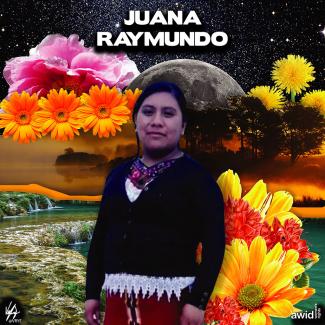
Juana Raymundo

Juana was an Indigenous Mayan Ixil, professional nurse and coordinator of the Farmers’ Development Committee (Comité de Desarrollo Campesino – CODECA).

CODECA is a human rights organisation of Indigenous farmers dedicated to promoting land rights and rural development for Indigenous families) in the Nebaj Quiché micro-region. She first joined CODECA as a member of its youth branch (Juventud de CODECA). At the time of her death had been elected to be part of the Executive Committee of the Movement for the Liberation of Peoples (MLP).

Juana’s body was found by neighbours by a small river on the road near Nebaj and Acambalam Village, Guatemala. According to CODECA, her body showed signs of torture.


Juana Raymundo, Guatemala
Body

Sala de prensa

AWID en los medios

Compilación de noticias sobre la organización y/o el trabajo de AWID


Notas de prensa

Notas de prensa, dosieres y kits


Kits de social media

Contacto para medios

Email de contacto

+1 416 594 3773

Snippet FEA collaborator and allies Photo 3 (ES)

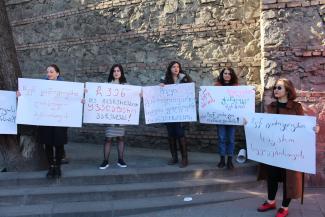
La foto presenta a cinco mujeres (Sopo está en el medio) de pie en lo alto de una escalera, frente a un muro de piedra, sosteniendo carteles en los que están escritos eslóganes georgianos.

Qual é a definição de financiamento externo?

Financiamento externo inclui subsídios e outras formas de financiamento de fundações filantrópicas, governos, financiadores bilaterais, multilaterais ou empresariais, e doadores individuais, tanto a nível nacional como internacional. Não inclui recursos gerados autonomamente por grupos, organizações e/ou movimentos, como, por exemplo, quotas de membres, contribuições voluntárias de colaboradores, membres e/ou apoiantes, angariações de fundos comunitários, aluguer de espaços ou venda de serviços. Para facilitar a consulta, estão incluídas no inquérito definições dos diferentes tipos de financiamento e descrições resumidas de diferentes doadores.

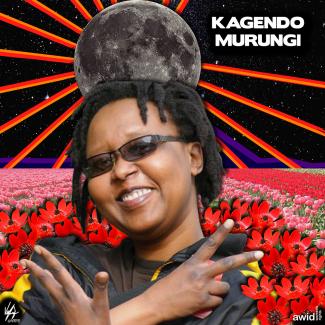
Kagendo Murungi

Kagendo es cariñosamente recordada por su familia y amigxs como una férrea activista feminista africana, artista y realizadora cinematográfica

Dedicó más de 20 años a defender los derechos y la dignidad de las personas LGBTIQ y de género no normativo de África. Lxs colegas de Kagendo la recuerdan como alguien con una personalidad jovial, convicciones férreas y amor a la vida. Kagendo murió por causas naturales en su hogar de Harlem, el 27 de diciembre de 2017.

Al producirse su fallecimiento, la escritora y activista keniata Shailja Patel destacó «el compromiso de toda la vida de Kagendo para establecer una relación entre todas las formas de opresión, mostrando de qué manera el colonialismo alentó la homofobia en el continente africano, para convertir así a Kenia en un país donde las personas queer y las mujeres libres puedan vivir y progresar».


Kagendo Murungi, Kenya
Body

Here are your report and infographics: Toward a feminist funding ecosystem

Snippet FEA Meet the Solidarity Network (FR)

SYNDICAT RÉSEAU SOLIDARITÉ

Nous vous présentons le syndicat Réseau Solidarité, un syndicat de la santé et des services dirigé majoritairement par des femmes. Émergeant en réponse à la précarité croissante, aux salaires insuffisants et aux environnements de travail hostiles auxquels les travailleur·euses géorgien·es sont confrontés quotidiennement, le Syndicat Réseau Solidarité se bat pour des lieux et des conditions de travail décents.

Son objectif? Créer un mouvement syndical national démocratique. Pour ce faire, il s'est associé à d'autres syndicats locaux et régionaux et a lentement constitué un réseau de syndicats, permettant à de plus en plus de travailleuses de devenir dirigeantes syndicales en cours de route.

Son approche politique est holistique. Pour le syndicat Réseau Solidarité, les questions relatives aux droits du travail sont directement liées aux programmes et réformes politiques et économiques nationaux plus larges. C'est pourquoi iels font pression pour la justice fiscale, les droits des femmes et des personnes LGBTQIA+, et luttent contre le démantèlement de l'État-providence géorgien.

Le syndicat Réseau Solidarité fait également partie de Grève Sociale Transnationale (Transnational Social Strike, TSS), une plate-forme et infrastructure politique inspirée par l'organisation des migrant·e·s, des femmes et des travailleur·euses essentiel·les qui s'efforcent de créer des liens entre les mouvements ouvriers à travers le monde et de fomenter la solidarité globale.

لغتي ليست واحدة من لغات الاستطلاع الرسمية ولدي صعوبة بتعبئته. ماذا يمكن أن أفعل؟

تلتزم جمعية حقوق المرأة في التنمية بالعدالة اللغوية ونأسف على عدم توفر الاستطلاع بلغات أخرى في الوقت الحالي. إن كنتم/ن بحاجة لدعم من مترجم/ة أو أردتم/ن تعبئة الاستطلاع بأي لغة أخرى، الرجاء الكتابة لنا عبر البريد الالكتروني: witm@awid.org