

Ana Lilia Gatica Romulo
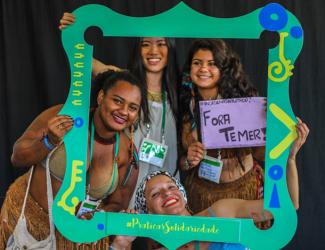
Young feminist activists play a critical role in women’s rights organizations and movements worldwide by bringing up new issues that feminists face today. Their strength, creativity and adaptability are vital to the sustainability of feminist organizing.
At the same time, they face specific impediments to their activism such as limited access to funding and support, lack of capacity-building opportunities, and a significant increase of attacks on young women human rights defenders. This creates a lack of visibility that makes more difficult their inclusion and effective participation within women’s rights movements.
AWID’s young feminist activism program was created to make sure the voices of young women are heard and reflected in feminist discourse. We want to ensure that young feminists have better access to funding, capacity-building opportunities and international processes. In addition to supporting young feminists directly, we are also working with women’s rights activists of all ages on practical models and strategies for effective multigenerational organizing.
We want young feminist activists to play a role in decision-making affecting their rights by:
Fostering community and sharing information through the Young Feminist Wire. Recognizing the importance of online media for the work of young feminists, our team launched the Young Feminist Wire in May 2010 to share information, build capacity through online webinars and e-discussions, and encourage community building.
Researching and building knowledge on young feminist activism, to increase the visibility and impact of young feminist activism within and across women’s rights movements and other key actors such as donors.
Promoting more effective multigenerational organizing, exploring better ways to work together.
Supporting young feminists to engage in global development processes such as those within the United Nations
Collaboration across all of AWID’s priority areas, including the Forum, to ensure young feminists’ key contributions, perspectives, needs and activism are reflected in debates, policies and programs affecting them.
Manifestations mondiales des mouvements pour la justice climatique.
📅 Samedi 15 novembre 2025
📍 Lieux multiples
Site web en anglais

Nous sommes ensemble depuis plus de 20 ans, et je chéris toujours autant votre amour et votre soutien. Il est intéressant de remarquer que vous parvenez à la même étape que l’AWID en tentant toutes, de manière synchrone, de définir comment mobiliser et soutenir la communauté. Aux mères du mouvement : votre leadership et votre orientation sont sans égal. Je pense particulièrement à Prudence Mabele, Kate Thompson, Darien Taylor, Patricia Perez, Martha Tholanah, Deloris Dockery, Iris De La Cruise, Doris Peltier, Cecilia Chung, et bien d’autres encore. Bien que vous ne soyez pas parfaites (comme aucune de nous ne l’est), vous faites toujours passer la communauté en premier et défendez l’inclusion de TOUTES les femmes vivant avec le VIH dans les sphères féministes.
J’aime la manière dont vous m’avez tenue lorsque personne d’autre ne pouvait le faire, et plus important encore, la manière dont nous nous tenons mutuellement. Vous comprenez la stigmatisation, la discrimination, la violence et la douleur, mais également la joie, l’amour et le pardon. En tant que féministes vivant avec le VIH, nous sommes glorieuses et puissantes dans notre intersectionnalité. Nous comprenons que le féminisme inclut et est mené par les communautés - nos sœurs noires, racisées et autochtones, les communautés de personnes trans et de genres divers, queer et lesbiennes, de travailleureuses du sexe, de celles qui ont été incarcérées et celles qui consomment des drogues - comme défini dans le principe GIPA (une participation accrue des personnes vivant avec le VIH). Votre féminisme englobe tout. Nous parlons des questions difficiles et des communautés criminalisées, parce qu’en tant que personnes vivant avec le VIH, nous sommes nous-mêmes criminalisées.
Je manquerais à mes devoirs si je n’envoyais pas plein d’amour aux jeunes femmes vivant avec le VIH, le pouls de notre mouvement. Je parle de vous, Kia Lebejia, Keren Dunaway, Liz Onyango, Faith Ona, Sara Thapa Maga, Doreen Moraa, Yana Panfilova et les millions d’autres activistes incroyables vivant avec le VIH. Vous êtes ce pouvoir qui continuera à nous propulser vers l’avant et permettra que les mouvements féministes traditionnels reconnaissent toute notre importance. Merci de faire progresser notre mouvement, de TOUJOURS inclure les personnes trans et de genres divers, de parler des liens entre changements climatiques et santé des droits sexuels reproductifs.
Je vous aime, vous aime, vous aime, vous aime tellement. Pour le meilleur et pour le pire, continuons à avancer ensemble, parce que c’est notre communauté - c’est ma communauté.
Avec tout mon amour,
Jessica Whitbread
Nouveau
En tant que participant.e en ligne, vous pouvez animer des sessions, vous connecter et converser avec d'autres, et faire l'expérience directe de la créativité, de l'art et de la célébration du Forum de l'AWID. Les participant.e.s connecté.e.s en ligne bénéficieront d'un programme riche et varié, allant des ateliers et des discussions aux séances de guérison et aux spectacles musicaux. Certaines activités seront axées sur la connexion entre les participant.e.s en ligne, tandis que d'autres seront véritablement hybrides, se concentrant sur la connexion et l'interaction entre les participant.e.s en ligne et celles.ceux qui se trouvent à Bangkok.

Les féministes affirment depuis longtemps que le privé et le personnel sont politiques. Le festival Crear, Résister, Transform a créé des espaces de discussion permettant aux féministes d'aborder les questions relatives au corps, au genre et aux sexualités, et a exploré les interconnexions entre ces questions qui sont à la fois des expériences profondément incarnées et un terrain où les droits sont constamment contestés et menacés dans la société.
Le pouvoir des mouvements féministes repose sur la façon dont nous organisons et menons des actions coordonnées, non seulement au sein de nos propres communautés et mouvements, mais aussi pour des causes et aux côtés de groupes alliés œuvrant en défense de la justice sociale. Cet espace a permis aux mouvements de partager et de renforcer mutuellement leurs stratégies d'organisation et leurs tactiques.
La pandémie sanitaire mondiale liée au COVID-19 a mis en évidence les échecs du capitalisme néolibéral comme jamais auparavant, révélé les fissures de nos systèmes ainsi que souligné la nécessité et les possibilités de forger de nouvelles réalités. La reprise économique et sociale féministe doit être le fruit de notre travail commun à toustes. Cette édition du journal, en partenariat avec Kohl : a Journal for Body and Gender Research (Kohl : une revue pour la recherche sur le corps et le genre) explorera les solutions, propositions et réalités féministes afin de transformer notre monde actuel, nos corps et nos sexualités.
Vous pouvez explorer les articles en ligne ou
Télécharger le PDF
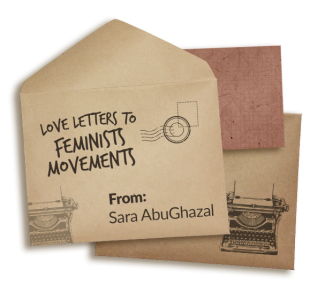
هكذا تبدأ الحركات
أشباحا تطردنا من البيت والعائلة والوطن
فنصل متعبات إلى مساحة (أيضا مكان) وغالبا حالة
وصلت إليها قبلنا نجمة سقطت
ربما نصل أكثر من متعبات
مذعورات
ربما أكثر من مذعورات نصل
غاضبات
من أمور لا تنفك تعيد نفسها
طعنة في القلب (أيضا كسور)
رصاصة في الظهر (أيضا خيانة)
اختفاء قسري
جسد محكوم عليه بزواج أو تشويه أو تعب مزمن
لكننا حين نصل نتجمع ونهمس ونبوح وننوح
هكذا تبدأ حركاتنا، حين نصل إلى الأخريات
فنصبح بذورا
هكذا تبدأ الحركات، حين نزرع بعضا زهورا وأيضا أشواكا وأيضا ثمارا
نحن واحات
لنا كلنا نصنع منها ما نشاء
أغنيات للمعارك
وصفات للشفاء
مخازن لوجوه عشيقاتنا وشكل ابتسامتهن وضحكة انتصاراتهن اليومية
السر لتحويل الصمت الى لغة
تعاليم كل الساحرات
هكذا تكون حركاتنا: لنا كلنا
حين نصل بذورا فنزهر.
سرى أبو غزال
www.badiya.blog

Nous acceptons les candidatures dans toute la gamme des domaines thématiques et des intersections importantes pour les mouvements féministes et de justice de genre. Dans le formulaire de candidature, vous pourrez cocher plus d'un thème correspondant à votre activité/atelier.
Este informe recuerda y celebra el primer año del nuevo plan estratégico de AWID, cuando dimos nuestros primeros pasos hacia los resultados deseados: el apoyo a los movimientos feministas para que prosperen, la impugnación de las agendas antiderechos, y la creación conjunta de realidades feministas.

Trabajamos con feministas para desestabilizar las agendas antiderechos, y logramos importantes victorias, peleadas y ganadas dentro del sistema de Naciones Unidas, cuando se logró la inclusión de lenguaje innovador sobre discriminación estructural, derechos sexuales y obligaciones de los Estados en una cantidad de resoluciones. Sí, el sistema multilateral está en crisis y necesita un sólido fortalecimiento, pero estas victorias son importantes, ya que contribuyen a la legitimidad de las demandas feministas, brindando a los movimientos feministas más puntos de presión y más impulso para promover nuestras agendas.
Ensayamos y pusimos a prueba distintas formas de construir conocimientos con los movimientos feministas a través de seminarios en línea, podcasts y conversaciones «en vivo». Desarrollamos guías de facilitación con educadorxs populares para recuperar saberes en pos de la justicia social y de género, incluso sobre un tópico tan aparentemente opaco como los flujos financieros ilícitos. Auspiciamos blogs y opiniones sobre cómo los grupos feministas obtienen fondos y recursos, y señalamos las amenazas que enfrentan nuestros sistemas de derechos humanos.
Dentro de AWID, pusimos en práctica y aprendimos de nuestro enfoque de liderazgo compartido, y relatamos la historia de las dificultades y tribulaciones de dirigir conjuntamente una organización global virtual. No tenemos una respuesta definitiva sobre cómo es un liderazgo feminista, pero un año más tarde sabemos que el compromiso continuo con la experimentación y el aprendizaje colectivos nos ha permitido seguir construyendo una organización con la cual nos entusiasma contribuir.
Al recordar este año, queremos agradecer a todxs nuestrxs amigxs y promotorxs, colegas y compañerxs, que han aportado su tiempo y han compartido su bagaje de conocimiento y sabiduría con nosotrxs. Queremos agradecer a nuestrxs afiliadxs, que han ayudado a construir nuestro plan estratégico y se han unido a nosotrxs para formular demandas feministas. No podríamos hacer este trabajo sin ustedes.
by Chinelo Onwualu
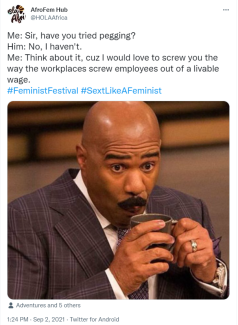
Le 2 septembre 2021, les géniales féministes et activistes pour la justice sociale du festival de l’AWID Crear | Résister | Transform se sont retrouvées, non seulement pour mettre en commun leurs stratégies de résistance, cocréer et transformer le monde, mais également pour parler crûment sur Twitter.
Nous commençons une nouvelle année - 2023. Le COVID-19 continue d'infecter et de réinfecter de très nombreuses personnes dans le monde. Nous assistons à la résurgence de gouvernements droites et fascistes, même dans des endroits auxquels nous ne nous attendions peut-être pas comme la Suède. La guerre, les conflits armés et l'augmentation spectaculaire de la militarisation, du militarisme et des dépenses militaires permettent l'accumulation effrénée du capital par quelques-uns, avec la participation d'alliances apparemment « étranges » qui verrouillent les armes, à la fois visiblement et invisiblement, où les élites économiques et politiques du monde Le Nord et le Sud global en profitent au-delà de notre imagination la plus folle. Entre-temps, notre peuple et l'environnement naturel paient des coûts énormes et subissent toutes les conséquences attendues et inattendues.
Comme vous le savez tous et nous tous à l'AWID, les féministes de multiples mouvements à travers le monde résistent et s'organisent contre les multiples visages de la tyrannie, créant des structures alternatives, mettant en œuvre des stratégies de base et construisant des alliances transnationales. Nous générons de la joie, nous inspirons les unes les autres, chantons et dansons dans et contre la culture dominante du meurtre et du cynisme qui semble avoir englouti une si grande partie du monde.
Nous - le personnel et le conseil d'administration - de l'AWID sommes préparés et inspirés plus que jamais pour relever les défis en renforçant nos relations avec nos membres et nos partenaires organisationnels, en rencontrant et en apprenant à connaître ceux que nous n'avons pas encore rencontrés et en faisant ce que nous faisons le mieux : soutenir les mouvements féministes mondiaux. Bien que nous soyons tristes face au départ de notre ancienne Co-Direction générale Cindy et Hakima, notre merveilleuse nouvelle Co-Direction générale Faye et Inna ainsi que notre personnel engagé et créatif ont embrassé le moment qui englobe à la fois les opportunités et les menaces.
Bien sûr, nous tous à l'AWID et tous les membres de notre mouvement le savons : comme l'écrivait la poétesse et militante américaine des Caraïbes June Jordan aux militantes sud-africaines au plus fort du régime d'apartheid : « Nous sommes celles et ceux que nous attendions » !
Pour la première fois, le Forum de l'AWID propose trois modes de participation :
Les participant.e.s se réuniront à Bangkok, en Thaïlande. Nous sommes impatient.e.s de vous y retrouver!
Nuestro plan estratégico “Realidades Feministas” completó su último año a finales de 2022. Durante los últimos cinco años, este intrépido marco nos empujó a ir más allá de los futuros feministas y a reconocer las soluciones y formas de vida feministas que ya existen aquí y ahora. Realidades que deben ser enaltecidas, celebradas y popularizadas. El proyecto de historias multimedia Las Economías Feministas que Amamos y el centro de conocimiento Our Resource sobre modos autónomos de dotar de recursos al activismo feminista son sólo dos ejemplos de este trabajo visionario, siempre profundamente colectivo y en colaboración con diversos movimientos feministas.
Descargar el informe anual 2022

Con la presente reflexión sobre este año, te invitamos a celebrar con nosotrxs hermosos finales y auspiciosos comienzos. El cambio y las transiciones son una parte inseparable de la vida y de los movimientos, que procuramos abrazar con un sentido de responsabilidad y cuidado.
Tandis que les dirigeant·es du monde entier se réunissent au Brésil, les mouvements féministes manifestent, se rassemblent et bouleversent le statu quo à la COP30 et partout ailleurs ! Nous voilà en route vers Belém au Brésil, aux côtés d’autres féministes, pour assister à la COP30 du 10 au 21 novembre 2025. Nous continuerons d’y dénoncer les fausses solutions.
Notre liste de liste de donateurs est actuellement en cours de révision. Nous savons que les féministes ont encore besoin et méritent des ressources plus nombreuses et de meilleure qualité !
Rejoignez notre liste de diffusion pour rester informé de cette mise à jour.
Vous pouvez également devenir membre et trouver et créer des liens avec des féministes du monde entier.